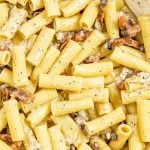
Pasta Alla Gricia
This savory 4-ingredient classic Italian Pasta Alla Gricia recipe is full of so much delicious flavor as perfectly rendered guanciale and Pecorini Romano cheese come together to make a sauce with freshly ground black pepper. It’s a 20-minute meal that is simplicity at its best and a perfect example of why Italian cuisine is known for taking simple ingredients and turning them into iconic dishes that are easy to make and layered in so much flavor.
Servings: 4
Calories: 888kcal
Equipment
Ingredients
- 12 ounces rigatoni or other small shaped dry pasta
- 8 ounces guanciale cut into ¼-inch pieces
- 2 teaspoons black pepper freshly ground
- 6 ounces Pecorino Romano cheese finely grated
Instructions
- Render the guanciale. Add the guanciale (or pancetta) to a large skillet and cook it over medium heat for about 10 minutes until it becomes crispy and golden in color. You really want to be patient when doing this and allow the guanciale to fully render in its fat for the most flavor. Then once it’s nice and crispy, transfer the guanciale to a plate, but leave the fat in the skillet. You'll need about 2 tablespoons of fat, if it's too much, scoop some out.
- Boil the pasta. While the guanciale is rendering in the skillet, bring a large pot of salted water to a boil. Then add the rigatoni and cook till it’s al dente, which is typically about a minute less than the package directions suggest. When the rigatoni is done cooking, reserve 2 cups of the starchy pasta cooking water, and then drain the pasta.
- Start the sauce. Add the freshly ground black pepper to the rendered guanciale fat in the skillet and cook for about a minute. Then add just 1 cup of the reserved pasta water, turn the heat on to high, and bring the mixture to a boil continuing to cook until it reduces by about a half.
- Add the pasta. Add the cooked rigatoni to the skillet. Then toss the pasta together with the rendered fat and pasta water mixture with a wooden spoon adding more of the reserved pasta water if necessary. The rigatoni should be thoroughly coated in the sauce and not dry.
- Add half of the cheese. Stir half of the finely grated Pecorino Romano cheese into the pasta until it’s fully incorporated into the sauce. You want the sauce to be both creamy and look glossy.
- Add the guanciale. Add the crispy guanciale into the pasta and toss to combine.
- Finish with cheese and serve. Garnish with the remaining Pecorino cheese and more freshly ground black pepper. Then serve hot and enjoy!
Video
Notes
- Salt the water generously. Do not be afraid to salt your pasta water well. I’m talking like a full rounded tablespoon. Dry noodles don’t have much flavor and salting the water really well helps to season them as they cook.
- Reserve cooking water. Make sure to reserve the 2 cups of pasta cooking water. The starch in the pasta water works to thicken the sauce and also adds salty savory goodness too along with the guanciale and hard Italian cheese.
- Quality ingredients matter. It’s important to use higher quality products for the most developed flavor in simple Italian recipes with very few ingredients. So using a nice Pecorino and guanciale will make a difference in the outcome of the dish.
- Grated cheese works best. Freshly finely grated Romano cheese melts the best when tossed into the pasta sauce.
- Do not add salt to the sauce. You do not need to add any additional salt to this recipe. Between the salted pasta water, cured meat, and cheese your pasta alla gricia will be well seasoned.
Nutrition
Serving: 1serving | Calories: 888kcal | Carbohydrates: 66g | Protein: 31g | Fat: 55g | Saturated Fat: 24g | Polyunsaturated Fat: 1g | Monounsaturated Fat: 3g | Cholesterol: 105mg | Sodium: 1002mg | Potassium: 240mg | Fiber: 3g | Sugar: 3g | Vitamin A: 182IU | Calcium: 475mg | Iron: 2mg
