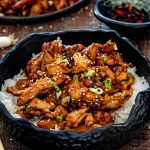
Chicken Bulgogi
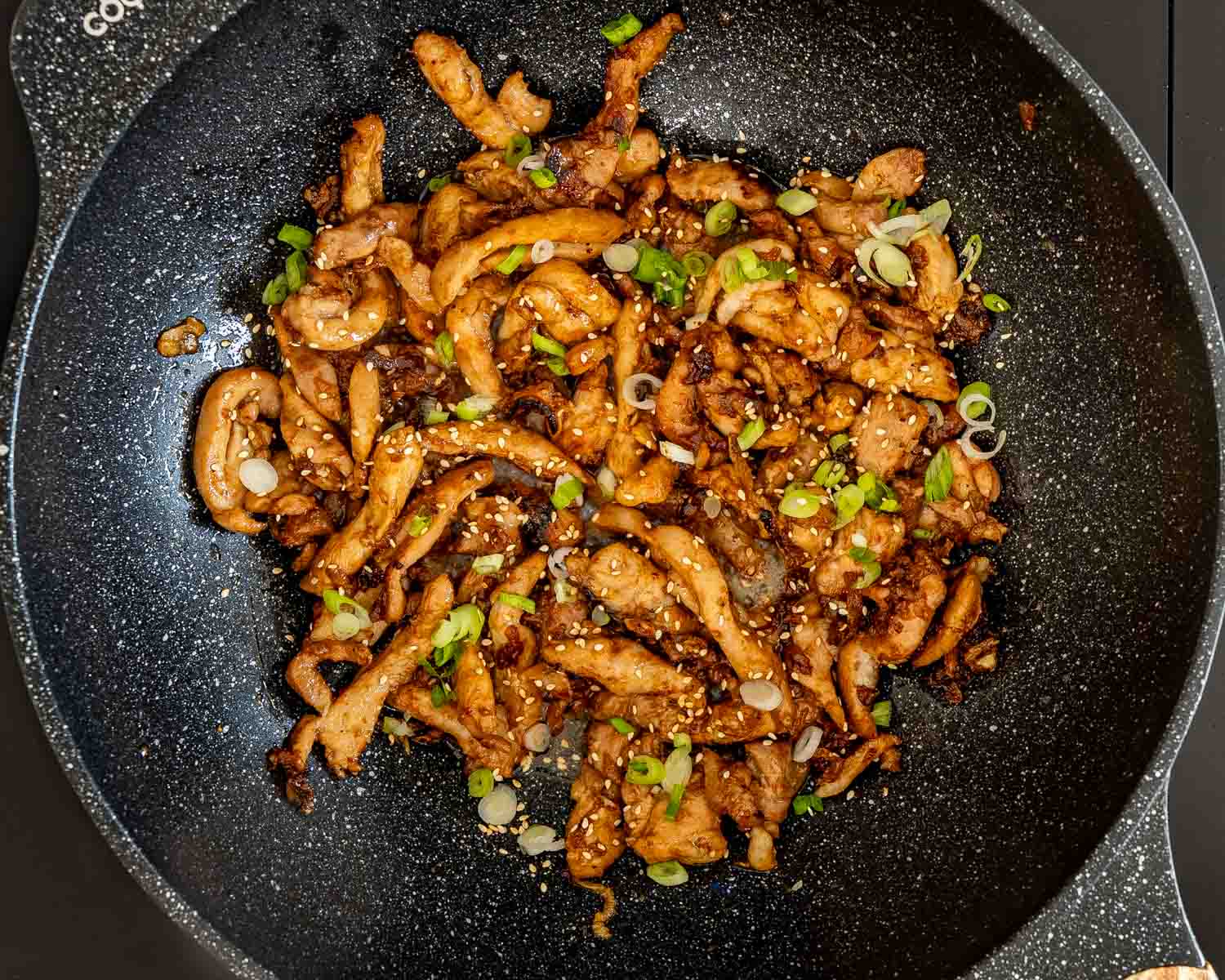
Chicken Bulgogi with thinly sliced chicken thighs marinated in a sweet savory soy, sesame, and Asian pear marinade with gochujang, then cooked at high heat until caramelized and slightly charred. Served over warm rice with sesame seeds and green onions.
Servings: 4
Calories: 590kcal
Ingredients
For the marinade
- 2 pounds boneless skinless chicken thighs thinly sliced
- ¼ cup soy sauce low sodium
- 2 tablespoons brown sugar
- 2 tablespoons toasted sesame oil
- 1 tablespoon mirin
- 1 tablespoon fresh ginger grated
- 5 cloves garlic minced
- ½ Asian pear grated
- 1 teaspoon gochujang
- ½ teaspoon black pepper
For cooking and serving
- 1 tablespoon vegetable oil
- 1 tablespoon sesame seeds
- 3 green onions sliced
- 3 cups cooked rice warm
Instructions
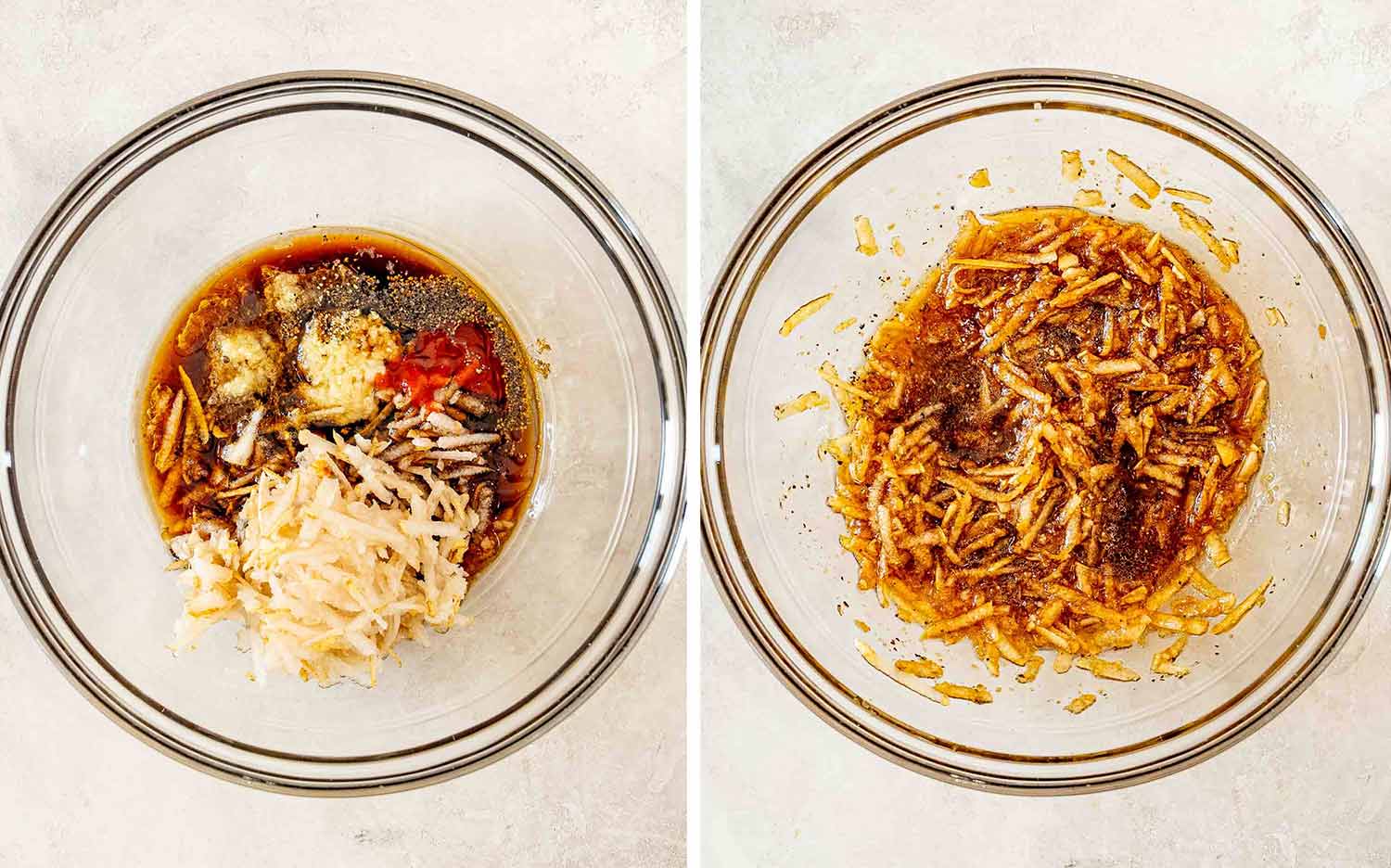
- In a large bowl, whisk together the ¼ cup soy sauce, 2 tablespoons brown sugar, 2 tablespoons sesame oil, 1 tablespoon rice wine, 1 tablespoon grated ginger, 5 cloves minced garlic, the grated ½ Asian pear, 1 teaspoon gochujang, and ½ teaspoon black pepper.
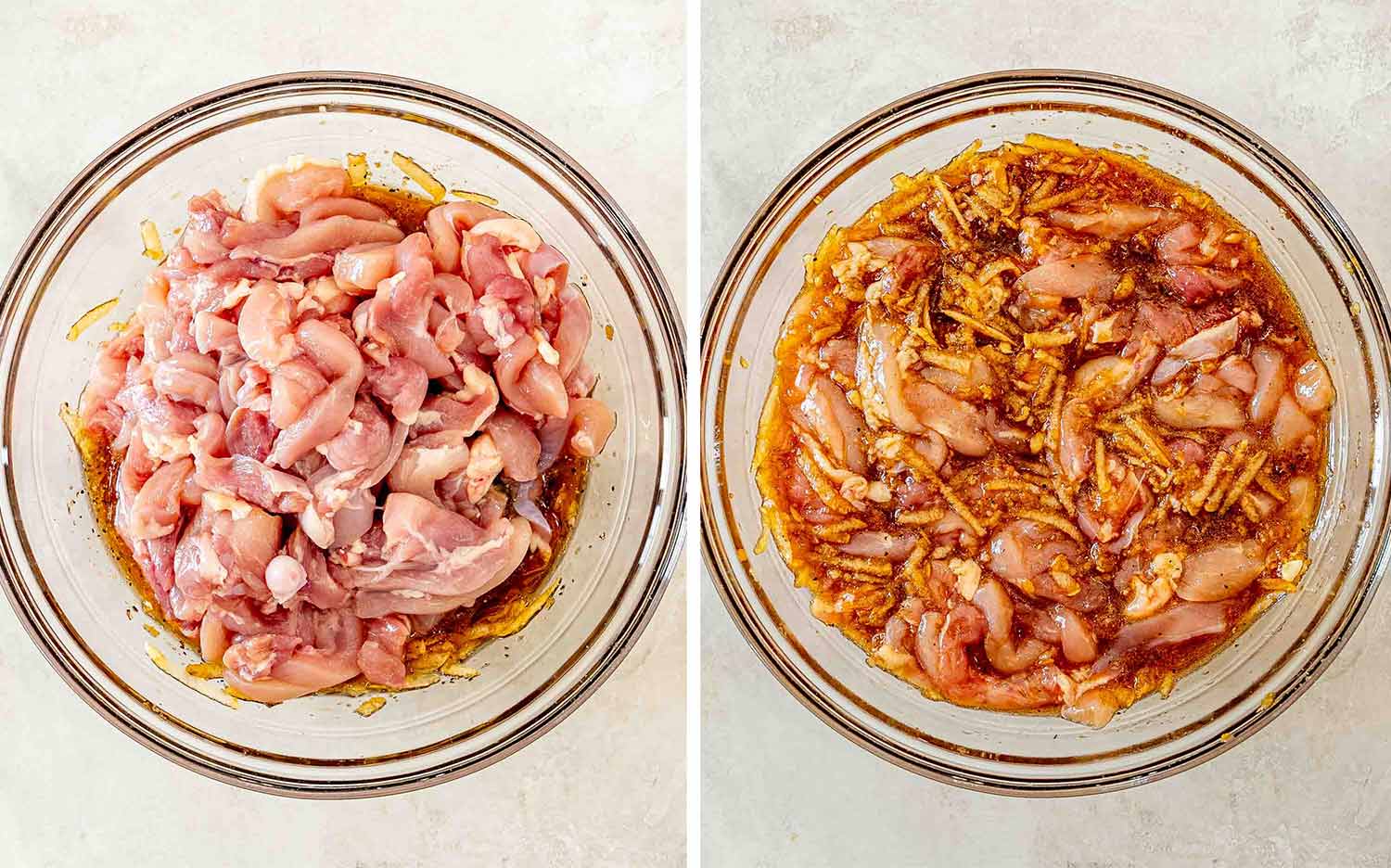
- Add the 2 pounds sliced chicken thighs and toss to coat. Let it marinate for at least 30 minutes, or up to overnight in the fridge. The grated pear is the traditional secret here, its natural enzymes tenderize the chicken while its sweetness balances the savory soy, so do not skip it.
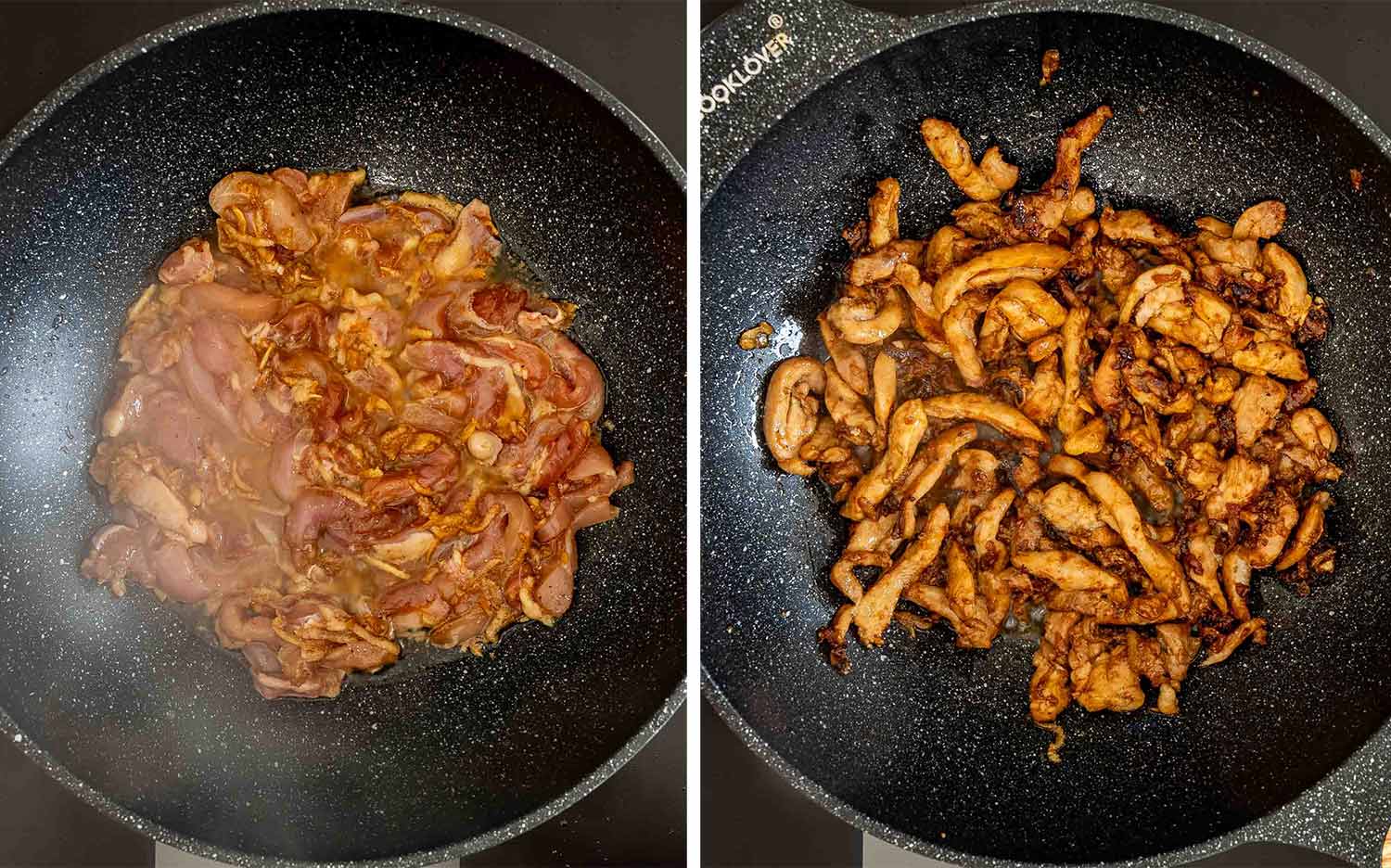
- Heat the 1 tablespoon vegetable oil in a large skillet or wok over high heat until it shimmers. High heat is what gives you those caramelized, slightly charred edges that make bulgogi so good. Lift the chicken from the marinade, letting the excess drip off, and add it to the pan in a single layer. Work in batches if needed, since crowding the pan steams the meat instead of searing it.
- Cook for 4 to 5 minutes, stirring, until the chicken is cooked through and caramelized at the edges. Let some pieces sit undisturbed for a moment to build that char.
- Sprinkle with the 1 tablespoon sesame seeds and sliced green onions, and serve over the 3 cups warm rice.
Notes
- Nutritional information includes rice.
- Asian pear: The traditional secret ingredient that tenderizes the chicken through its natural enzymes while its sweetness balances the savory marinade. Don't skip it. Find it at Asian grocery stores or many regular supermarkets.
- Slice thin against the grain: Thin slices take the marinade better and cook faster at high heat. Against the grain shortens the muscle fibers for more tender chicken.
- Freeze before slicing: 20 minutes in the freezer firms the chicken up and makes thin even slices much easier.
- Marinate longer if you can: Overnight in the fridge gives you significantly deeper flavor. Don't go beyond 24 hours though as the pear enzymes can make the chicken mushy.
- High heat: Non negotiable. Bulgogi needs high heat to caramelize and char. Medium heat gives you pale cooked chicken and that's not what we're making.
- Cook in batches: Crowding the pan drops the temperature and you end up steaming instead of searing. Work in 2 batches if needed.
- Let pieces sit undisturbed: Stirring constantly prevents char from forming. Give the chicken a moment against the pan before moving it.
- Gochujang: At 1 teaspoon it adds subtle background heat and depth rather than aggressive spice. Find it in the Asian aisle or at Korean grocery stores. Worth having in your fridge.
- Mirin substitute: Dry sherry is the closest substitute if you can't find mirin.
- Freeze the marinated chicken: Combine chicken and marinade in a freezer bag and freeze for up to 3 months. The marinating happens as it thaws overnight in the fridge.
- Grill option: Excellent on a grill or grill pan. Watch for flare ups from the sugars in the marinade.
Nutrition
Serving: 1serving | Calories: 590kcal | Carbohydrates: 48g | Protein: 49g | Fat: 21g | Saturated Fat: 4g | Polyunsaturated Fat: 8g | Monounsaturated Fat: 7g | Trans Fat: 0.1g | Cholesterol: 215mg | Sodium: 814mg | Potassium: 751mg | Fiber: 2g | Sugar: 10g | Vitamin A: 154IU | Vitamin C: 4mg | Calcium: 78mg | Iron: 3mg
