Mongolian Beef Ramen
This post may contain affiliate links. Please read my disclosure policy.
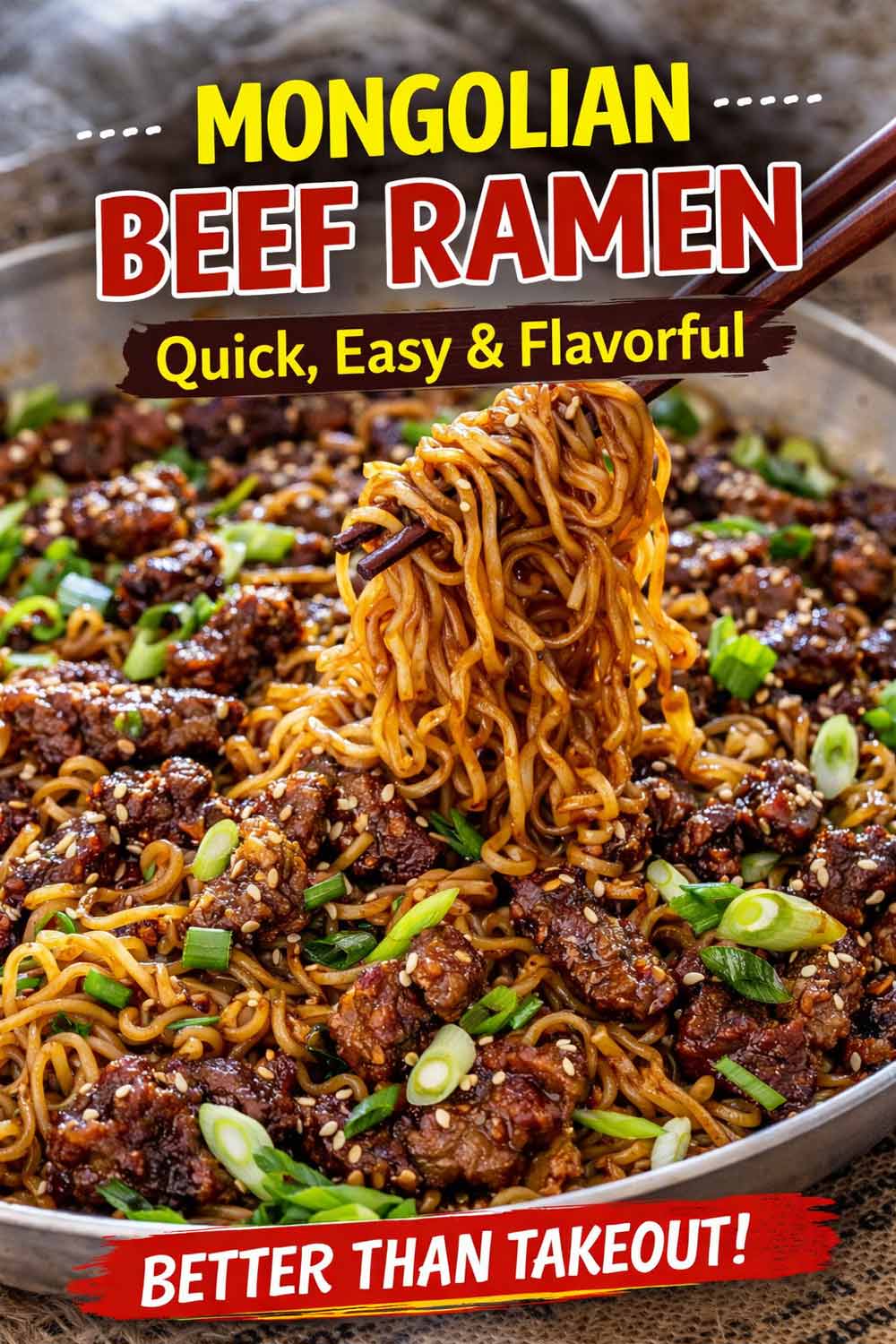
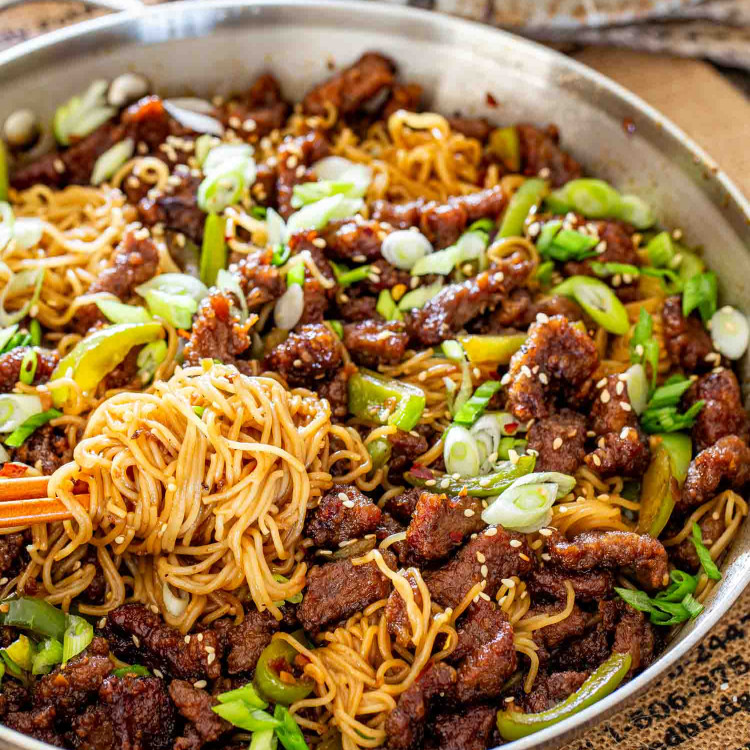
Mongolian Beef Ramen has been one of the most popular recipes on my blog for years, and for good reason. Tender flank steak, glossy sweet savory sauce, and ramen noodles that soak up every bit of it. And now that there’s a new video to go with it, you can actually see just how good this one is.
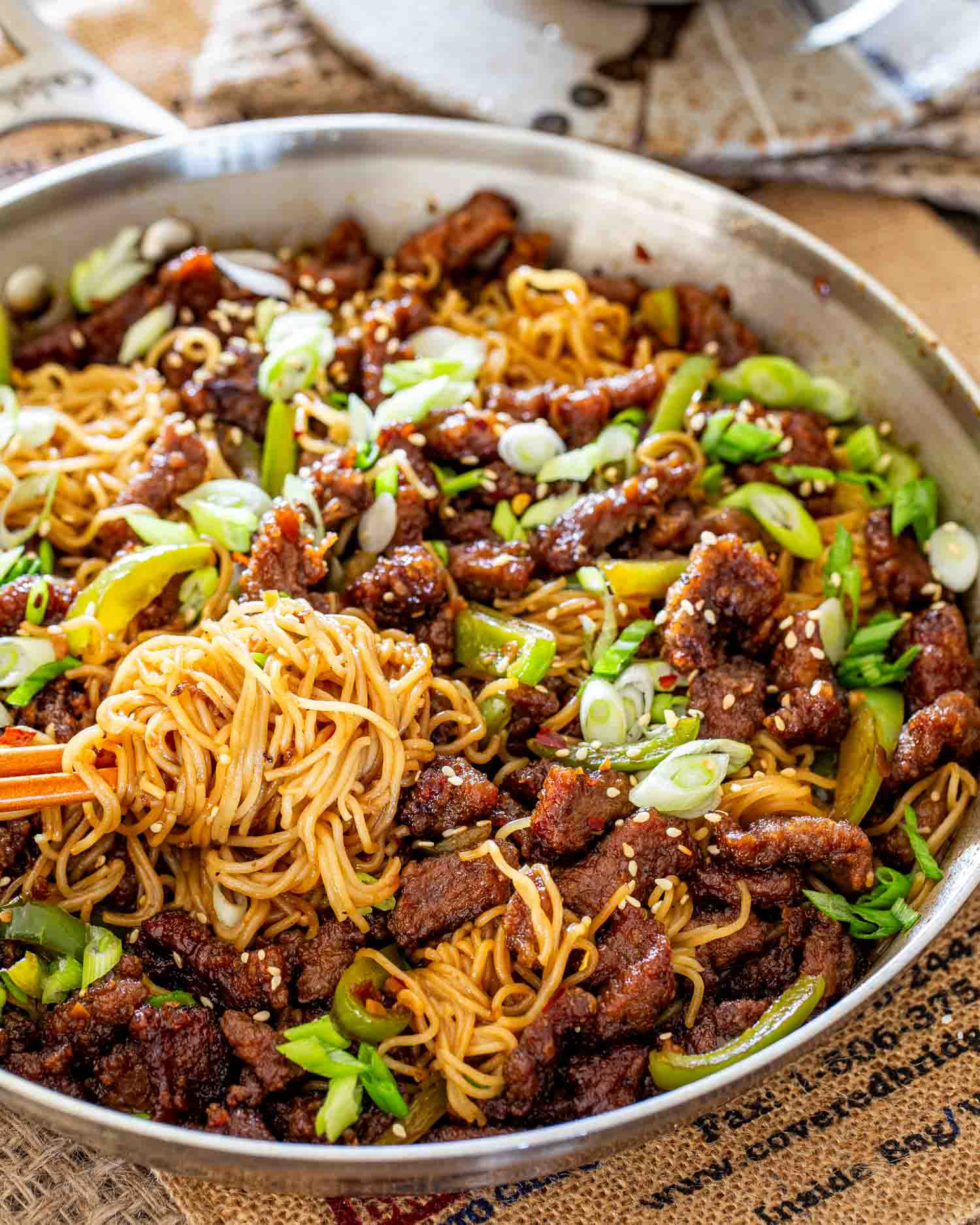

My Favorite Mongolian Beef Ramen
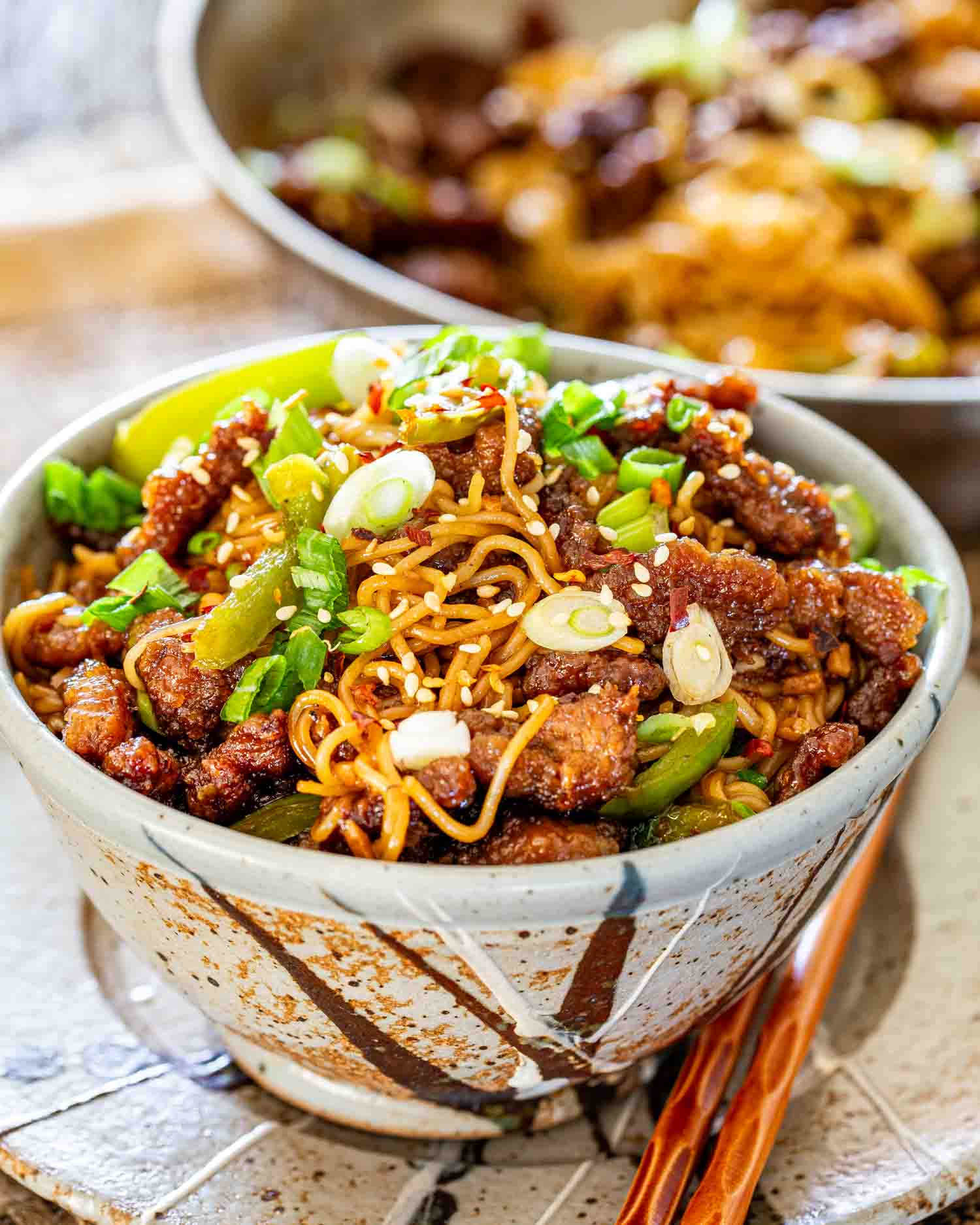
This recipe has been on my blog since 2015, and somehow it refuses to retire. I’ve updated photos, redone videos, tested other versions, and this one still wins. There’s something about tender beef coated in that glossy, sticky sauce that just hits. It’s sweet, salty, a little garlicky, and it clings to those ramen noodles like it means it.
When the noodles go into the pan and everything gets tossed together, that’s the moment. The sauce thickens, the steam rises, and suddenly you’re standing there pretending you’re just checking for seasoning while absolutely sneaking a bite straight from the skillet. It’s messy, it’s saucy, and it’s the kind of dinner that makes you forget you ever had a takeout app.
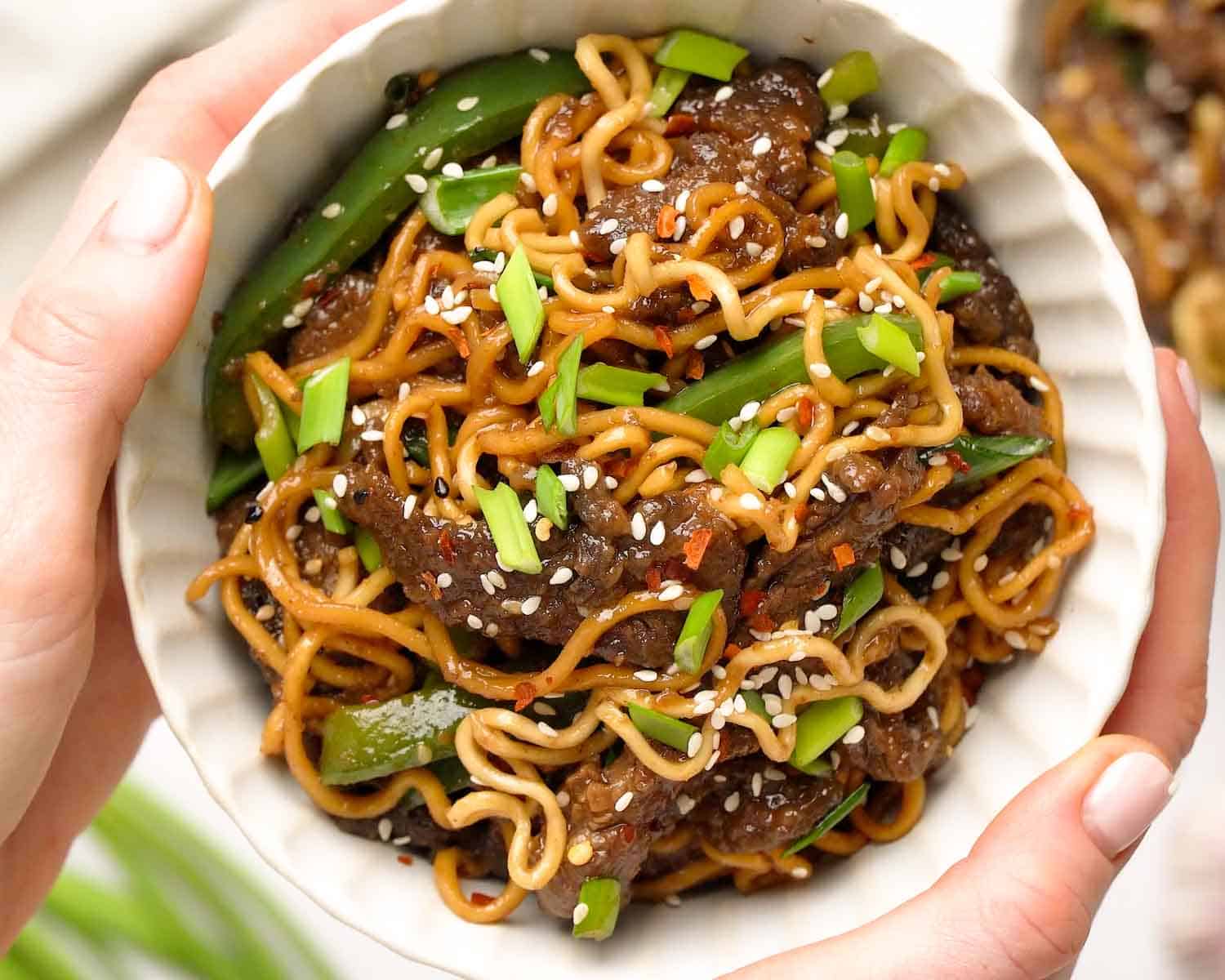
Why You’ll Love My Mongolian Beef Ramen
- The sauce actually clings. It’s thick enough to coat every noodle and slice of beef without turning into soup.
- The beef stays tender. Slice it thin against the grain and it cooks fast, so you get texture without chewiness.
- It’s fast once you start. The whole thing comes together in about 30 minutes, which makes it very weeknight friendly.
- It tastes like takeout, but fresher. You control the sweetness, the salt, and the heat.
- It reheats well. The flavors settle in overnight, and it’s just as good the next day with a quick warm up.
- It looks impressive without being complicated. That glossy sauce and those tangled noodles do most of the work for you.
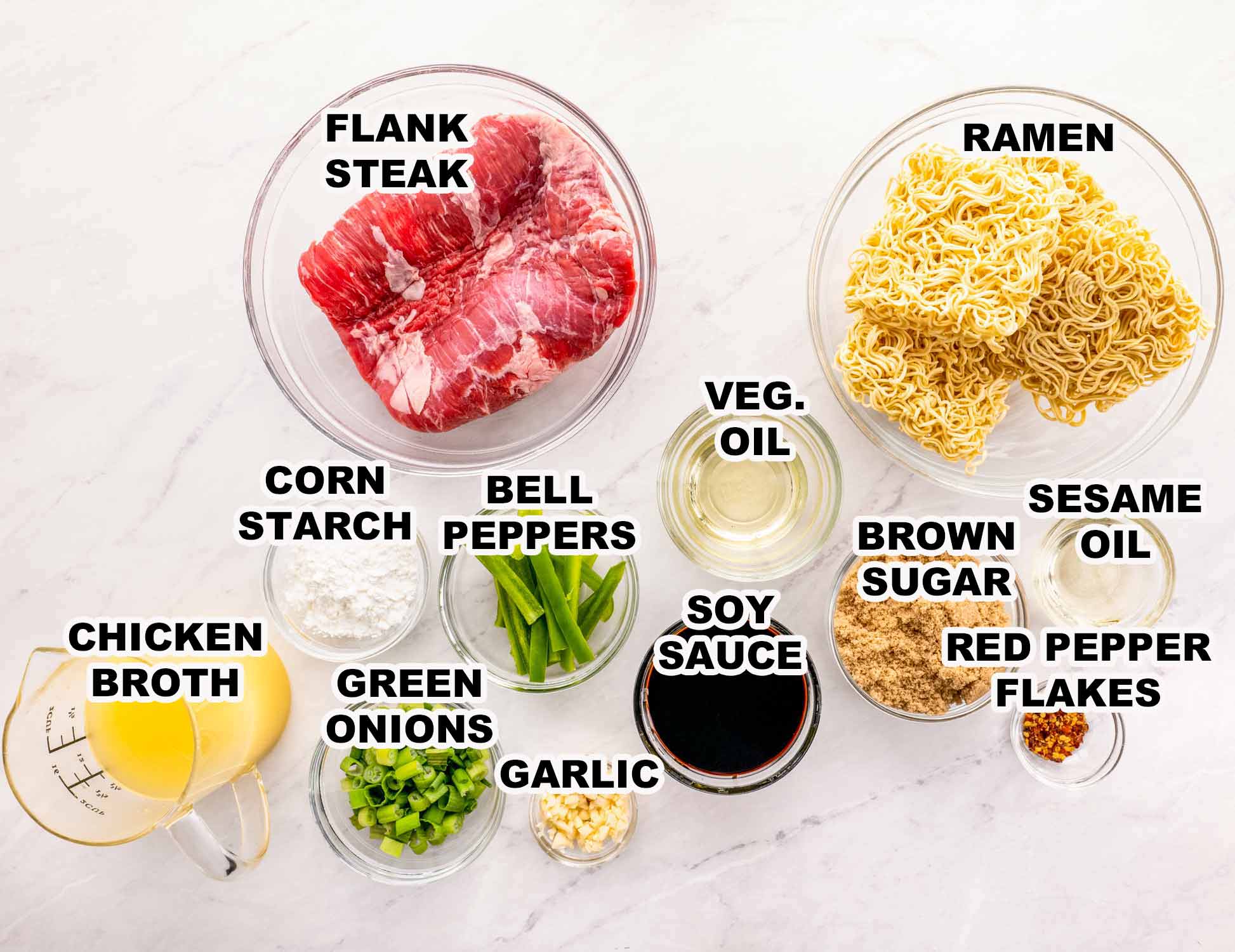
Key Ingredients & Tips
- Flank Steak: Slice it thin and always against the grain. If you slice with the grain, you’ll be chewing longer than you want to. I like to pop the steak in the freezer for 20 to 30 minutes first. It firms up just enough to make clean, even slices.
- Cornstarch: This is not optional. It gives the beef that light coating that helps the sauce cling later. Shake it well so every piece is evenly coated.
- Soy Sauce: Use low sodium. There’s a lot of it in this recipe and you want control. You can always add more salt, but you can’t take it out.
- Brown Sugar: This is what gives Mongolian beef that signature sweet savory balance. Don’t skip it, but you can adjust slightly if you prefer it less sweet.
- Sesame Oil: A little goes a long way. It’s there for depth and that subtle nutty finish. Too much and it takes over.
- Ramen Noodles: Cook them just until tender. They’ll finish cooking once they hit the sauce. If they’re overcooked going in, they’ll turn soft fast.
- Don’t Overcrowd The Pan: Cook the beef in batches. If you pile it all in at once, it steams instead of sears, and you lose that nice texture on the outside.
- Let The Sauce Thicken: Simmer it until it reduces slightly and turns glossy. If it’s thin, it won’t cling to the noodles the way it should.
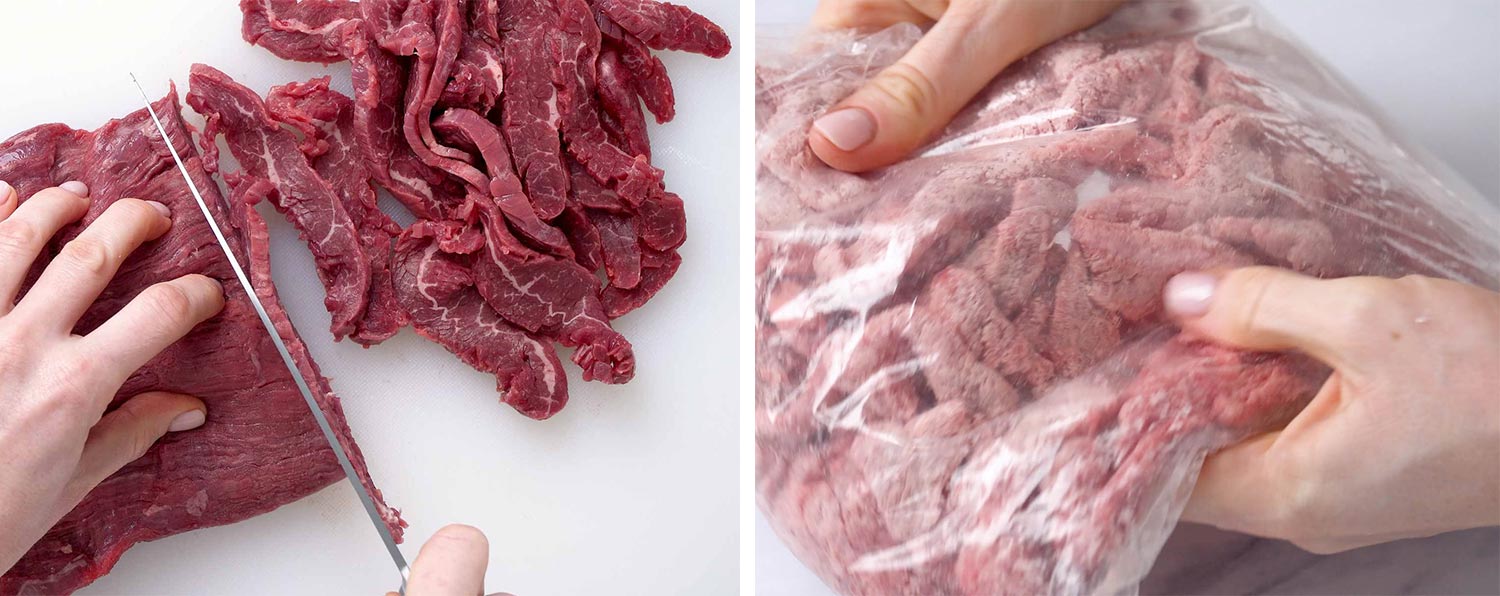
Slice the flank steak thin and against the grain. Toss it with the cornstarch until every piece is lightly coated. This is what gives you that silky texture once it hits the sauce.
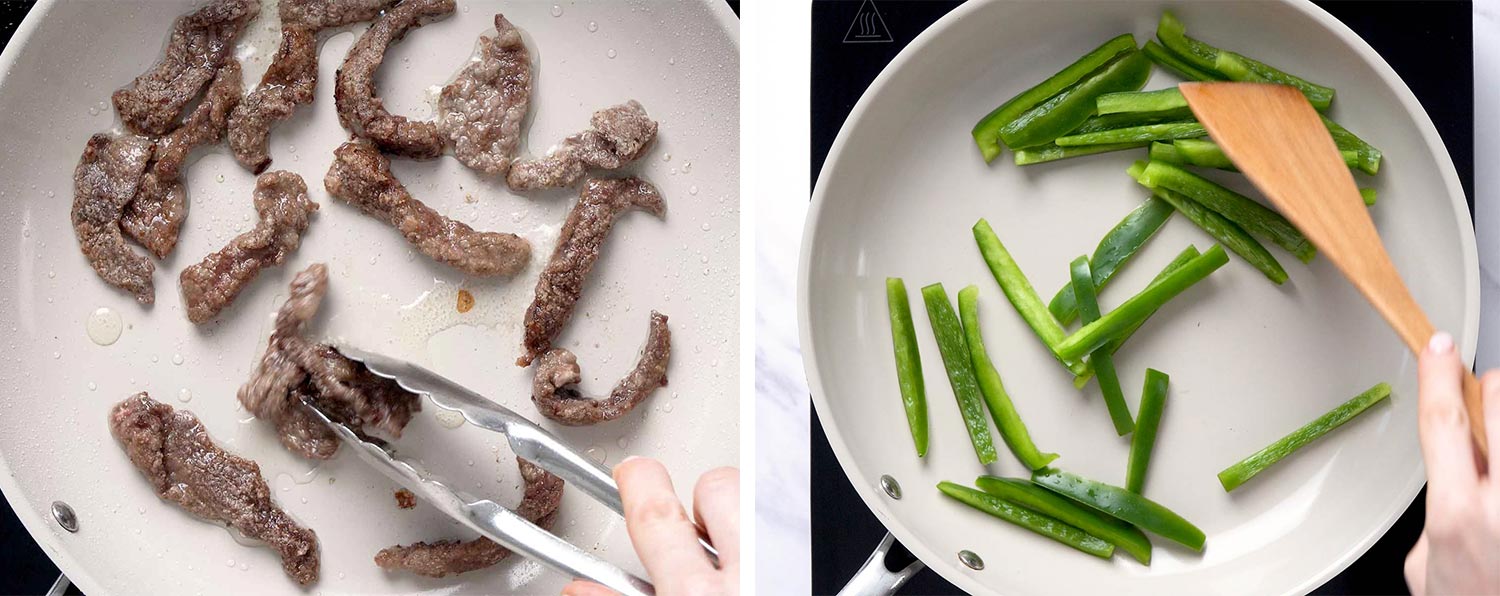
Heat the oil in a large skillet until hot. Add the beef in batches and let it brown without crowding the pan. You want a quick sear, not steam. Once browned, transfer it to a plate and pour off the excess oil. In the same skillet, add the sliced bell pepper and sauté for just a couple minutes. You want it slightly tender but still crisp. It should keep some bite. Remove it to the plate with the beef.
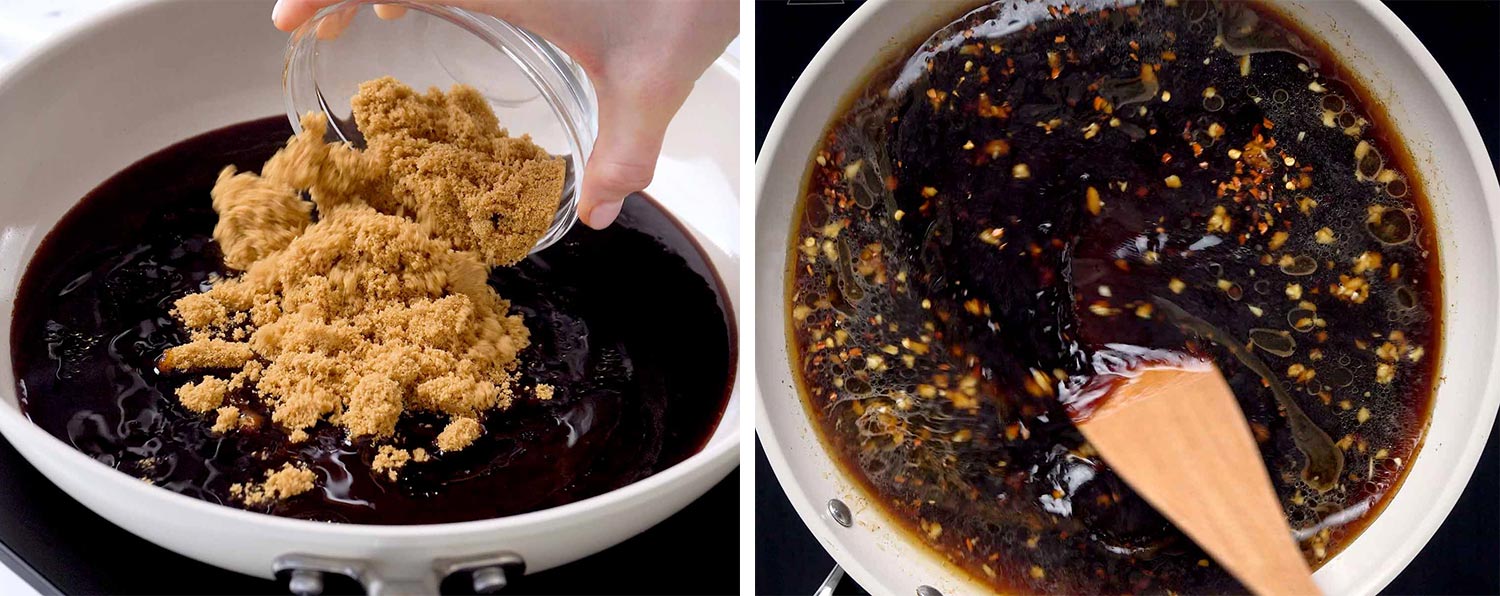
Add the sesame oil, soy sauce, brown sugar, garlic, chicken broth, and red pepper flakes to the skillet. Let it simmer until it thickens slightly and turns glossy. Taste it. It should hit sweet and salty at the same time.
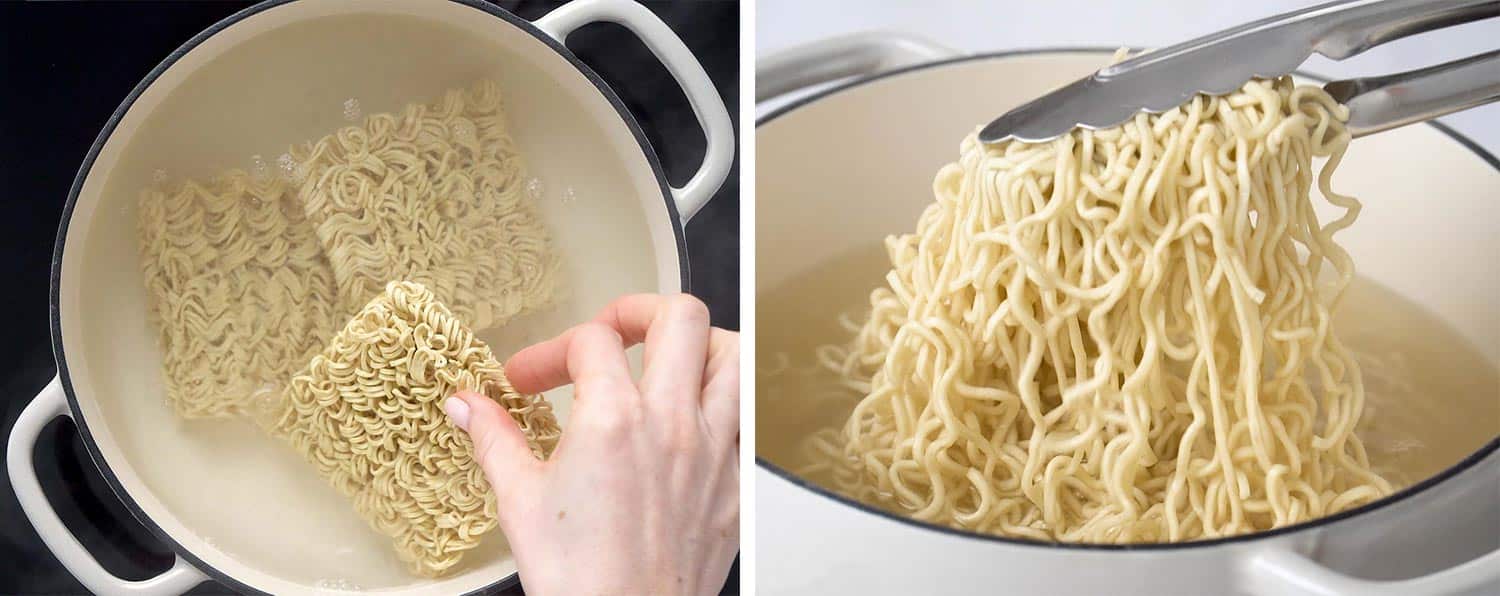
While the sauce reduces, cook the ramen according to package instructions. Drain well.
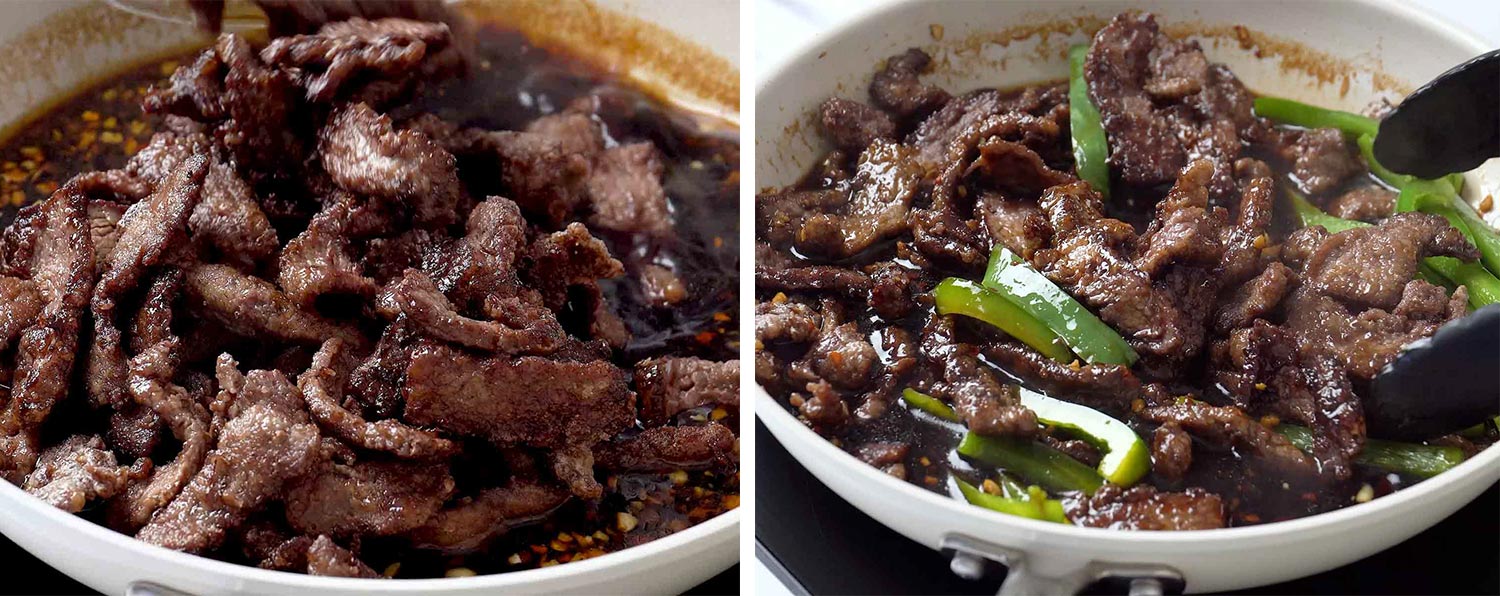
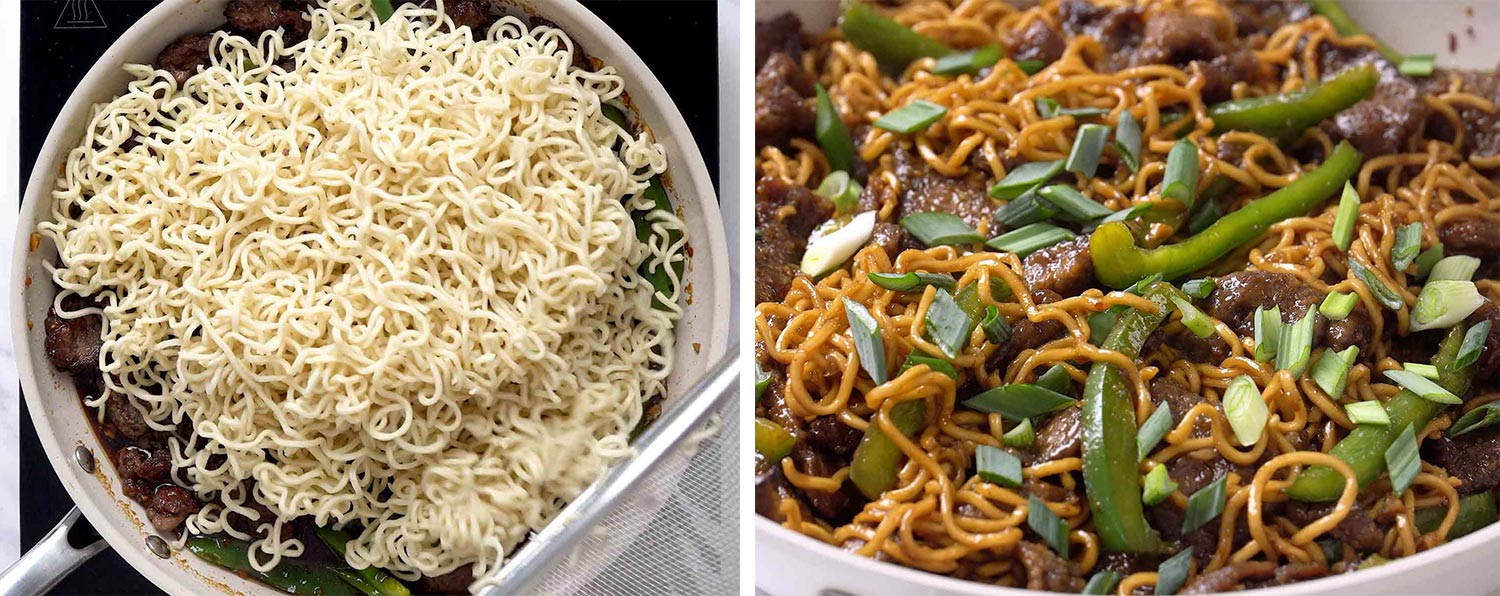
Return the beef and bell peppers to the skillet and toss in the sauce. Add the noodles and use tongs to lift and turn everything until the sauce clings to every strand. It should look glossy and slightly sticky, not soupy.
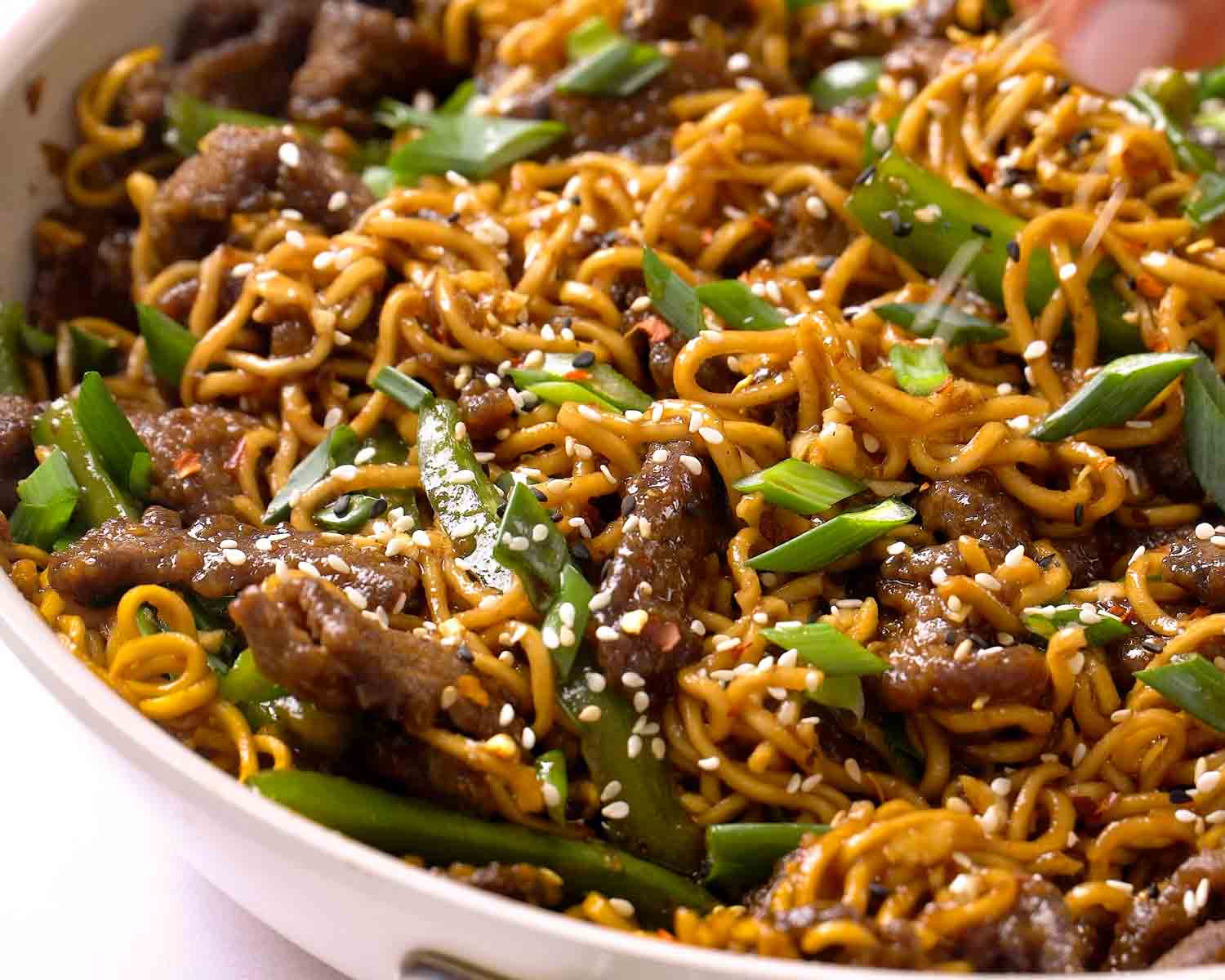
Finish with green onions and sesame seeds. Serve it hot. And yes, it’s going to disappear fast.
Common Mistakes To Avoid
- Slicing the beef the wrong way: If you cut with the grain instead of against it, the beef turns chewy fast. Thin slices, across the grain. Always.
- Skipping the cornstarch: It might look like a small step, but it’s what gives the beef that silky coating and helps the sauce cling later.
- Crowding the pan: If you dump all the beef in at once, it steams instead of browns. Work in batches. That quick sear makes a difference.
- Overcooking the noodles: Ramen cooks fast. If it’s too soft before it hits the sauce, it’ll turn mushy by the time you serve it.
- Reducing the sauce too much: It should be glossy and slightly thick, not sticky candy. Remember, it still needs to coat the noodles.
- Not tasting before combining: Sweet and salty is the whole point here. Taste the sauce while it’s simmering and adjust before you add everything back in.
Substitutions
- If flank steak isn’t what you have, sirloin works beautifully here. It cooks quickly and stays tender as long as you slice it thin and against the grain. Skirt steak is another solid option.
- You can swap the ramen for udon, lo mein, or even spaghetti in a pinch. Just cook whatever noodle you’re using until tender but still with a little bite. The sauce needs something that can hold up to it.
- If you don’t have brown sugar, honey will do the job. Start with a little less and taste as you go. It brings sweetness with a slightly different edge, but it still balances the soy sauce.
- Tamari works well in place of soy sauce if you’re keeping things gluten free. Pair it with rice noodles and you’re set.
- And if steak isn’t happening, you can use ground beef. Brown it well and let the sauce reduce properly so it still clings to everything.
How To Serve It
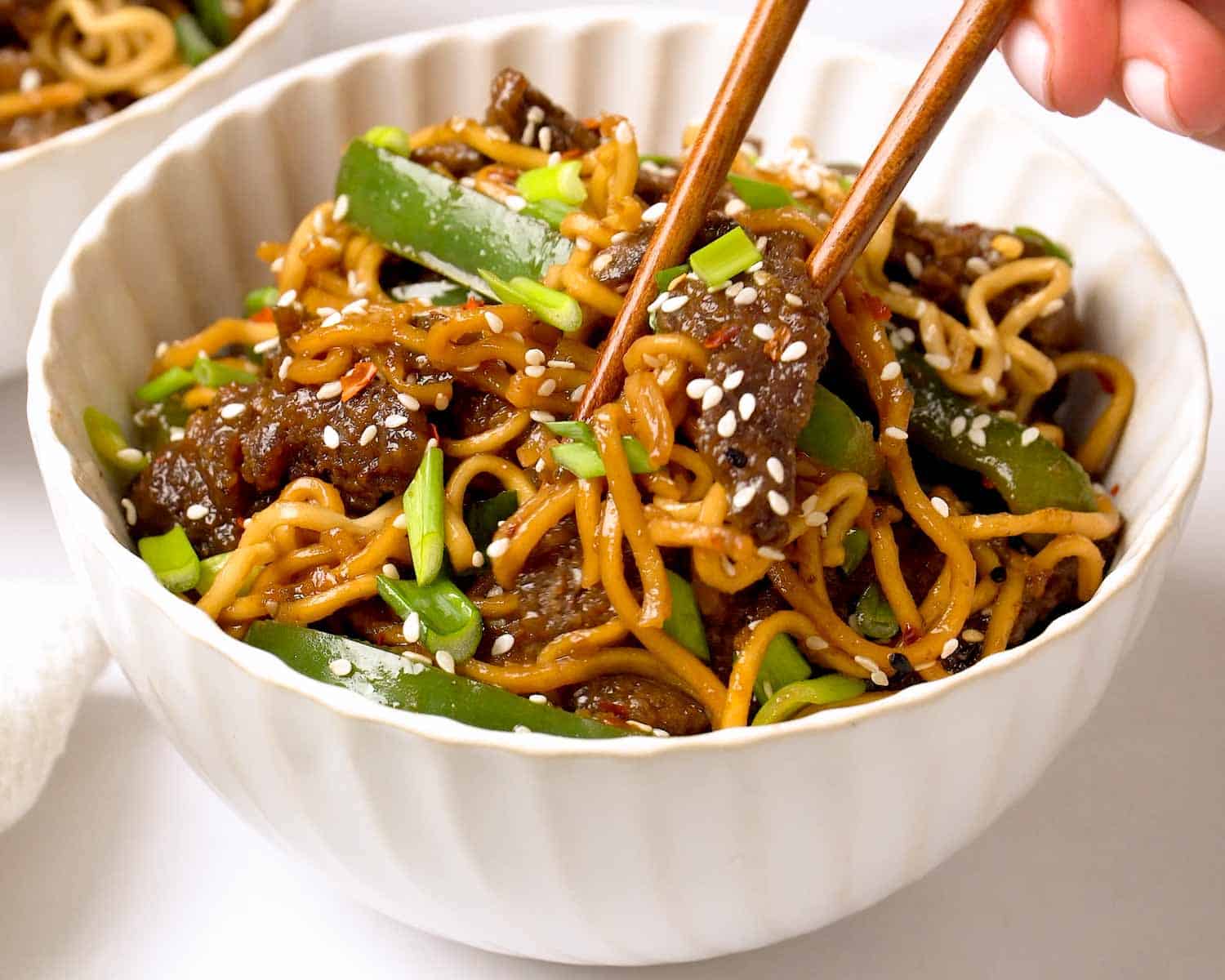
Serve it hot. Not warm. Not sitting around while you call everyone to the table. This is at its best when the sauce is still glossy and clinging to the noodles. If you want to build it into a full dinner spread, here are some sides that work beautifully:
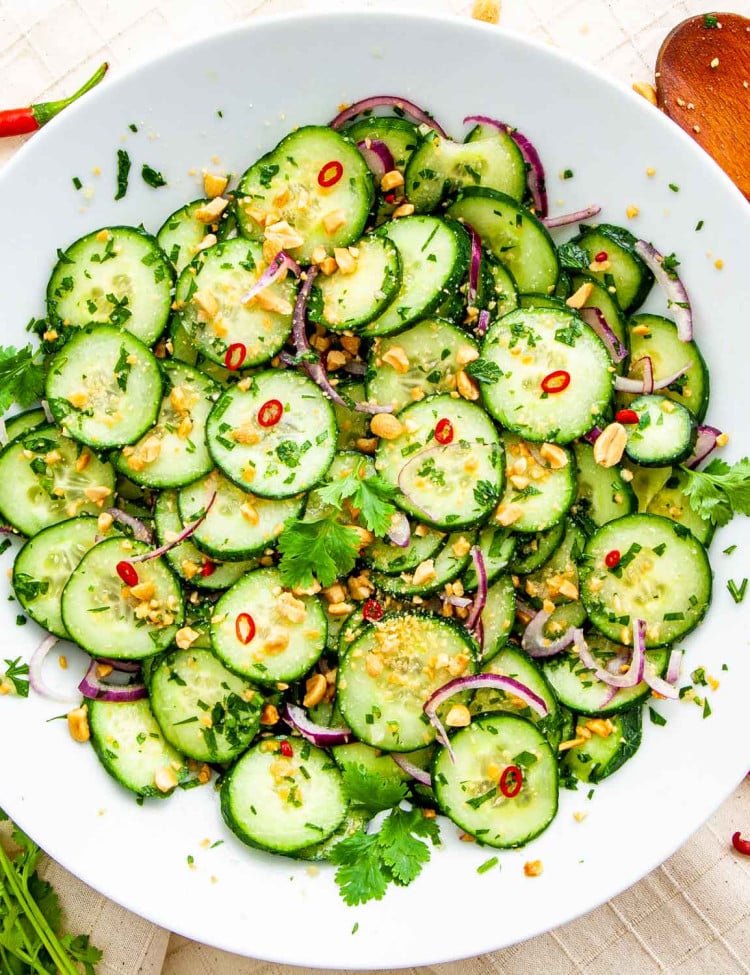
Thai Cucumber Salad

Homemade Egg Rolls
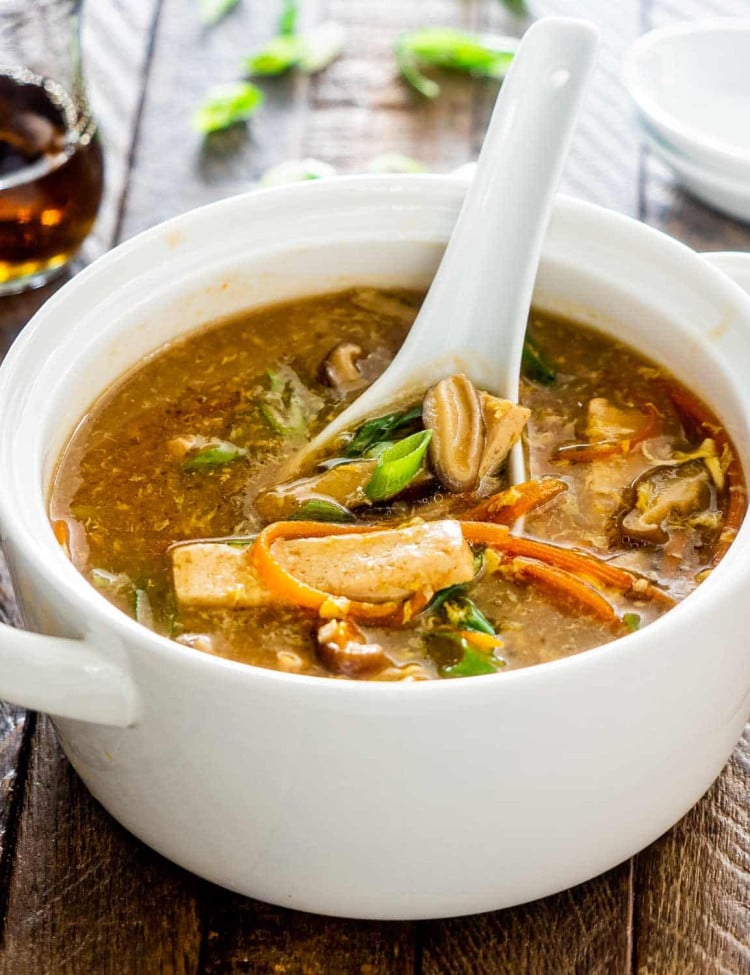
Hot And Sour Soup
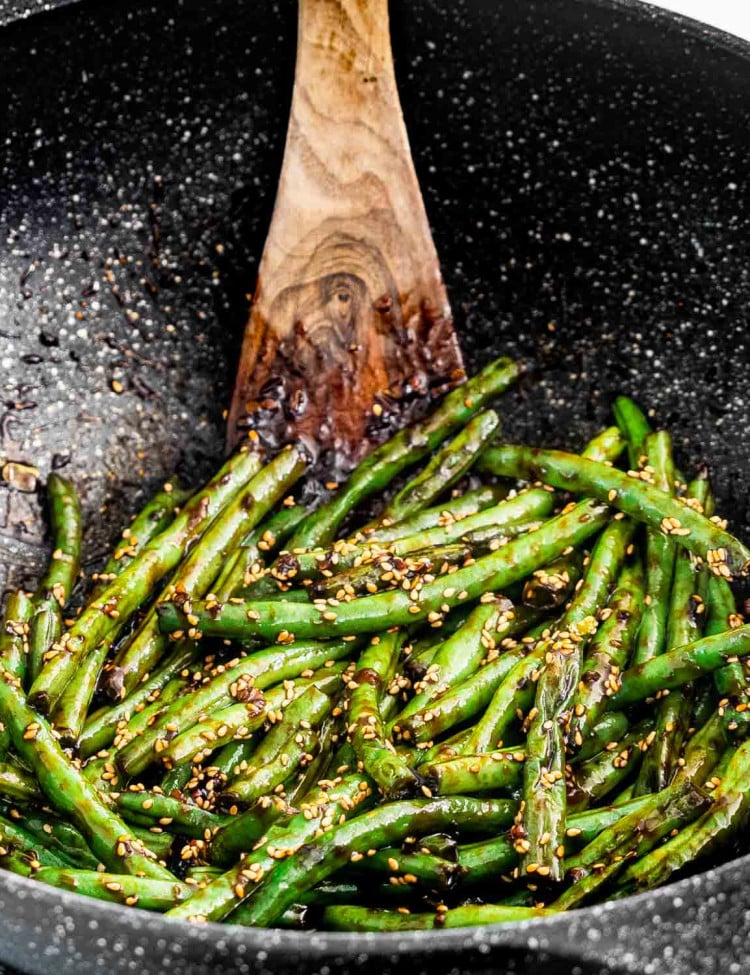
Asian Green Beans
Frequently Asked Questions
Can I use different noodles for Mongolian Beef Ramen?
Yes. Udon, lo mein, or even spaghetti work well here. Just cook them until tender but not overly soft so they can hold the sauce without turning mushy.
How do I keep the beef tender in Mongolian Beef?
Slice it thin and against the grain. That alone makes a huge difference. Also, cook it quickly over high heat and remove it once browned so it doesn’t overcook.
Why is my Mongolian Beef sauce too thin?
It likely hasn’t reduced enough. Let it simmer a few minutes longer until it turns glossy and slightly thickened. It should coat a spoon, not run off like broth.
Can I make Mongolian Beef Ramen without brown sugar?
You can substitute honey or even maple syrup. The sauce still needs sweetness to balance the soy sauce, so don’t skip it entirely.
Can I add vegetables to Mongolian Beef Ramen?
Absolutely. Broccoli, snap peas, shredded carrots, or even mushrooms work well. Just sauté them quickly so they keep some texture.
Is Mongolian Beef Ramen spicy?
As written, it’s mild with just a hint of heat from red pepper flakes. You can increase the spice with more flakes or a drizzle of chili oil at the end.
Why is the sodium high in this recipe?
Mongolian Beef sauce relies heavily on soy sauce, which naturally contains sodium. I use low sodium soy sauce to keep it more balanced, and you can reduce the amount slightly if needed. Just remember that the sweet savory contrast is what makes this dish work, so adjust gradually and taste as you go.
How can I lower the sodium in Mongolian Beef Ramen?
Use low sodium soy sauce or tamari, and choose low sodium chicken broth. You can also replace a portion of the soy sauce with water and add a small splash of rice vinegar or a squeeze of lime to keep the flavor bright without relying entirely on salt.
Other Asian Style Recipes To Try
- Sweet And Sour Meatballs
- Yakisoba
- Three Cup Chicken
- Black Pepper Beef
- Korean Beef Bulgogi
- Beef Lo Mein
- Mongolian Beef
- Asian Ground Beef Noodles
- Beef And Noodles
- Spicy Beef Noodles
Before You Begin! If you make this, please leave a review and rating letting us know how you liked this recipe! This helps our business thrive & continue providing free recipes.
Mongolian Beef Ramen
Video
Ingredients
- 1½ pound flank steak
- ¼ cup cornstarch
- ¼ cup vegetable oil
- 1 green bell pepper (sliced into thin strips)
- 8 ounce ramen noodles (uncooked)
- 3 green onions (chopped)
For Sauce
- 2 tablespoon sesame oil
- ¾ cup soy sauce (low sodium)
- ⅔ cup brown sugar (packed)
- 1¼ cup chicken broth (low sodium, or no sodium added)
- 4 cloves garlic (minced)
- ¼ teaspoon red pepper flakes
Before You Begin! If you make this, please leave a review and rating letting us know how you liked this recipe! This helps our business thrive & continue providing free recipes.
Instructions
- Slice the flank steak into small thin pieces against the grain. In a large ziploc bag add the starch and the beef to it. Close the ziploc bag and shake really well until each pieces is coated with cornstarch.
- In a non stick skillet heat the oil. When the oil is hot, add beef and cook until browned. It will take 2 or 3 batches because you don’t want the steak pieces to stick to each other. Also if you need more oil after the first batch feel free to add more. Remove beef from skillet to a plate and empty the oil from the skillet.
- Add the bell pepper to the skillet and saute it for a couple minutes just until it gets soft. Remove the pepper from the skillet to a plate and set aside.
- In that same skillet add sauce ingredients, the sesame oil, soy sauce, brown sugar, garlic, chicken broth and red pepper flakes. Stir and cook over medium heat until sauce thickens a bit and reduces by about a quarter. It took me about 10 minutes until the sauce thickened and reduced. You don’t want to reduce it too much because you need more sauce for the noodles.
- In the meantime cook the ramen noodles according to package instructions.
- Return the beef and bell pepper to the skillet and toss in the sauce. Add the cooked ramen noodles to the skillet and toss everything together. Top with green onions and serve.
Equipment
Notes
- Slice the beef thin and against the grain. This keeps it tender and quick cooking.
- Don’t skip the cornstarch. It helps the sauce cling and gives the beef that silky finish.
- Cook the beef in batches so it browns instead of steams.
- Let the sauce reduce until glossy but not overly thick. It should coat the noodles without turning sticky.
- Use low sodium soy sauce and low sodium broth to keep the salt balanced.
- Cook the ramen just until tender. It will continue to absorb sauce once tossed together.
- Store leftovers in the fridge for up to 3 days. Reheat gently with a splash of water or broth to loosen the sauce.
Nutrition Information
Notice: Nutrition is auto-calculated for your convenience. Where relevant, we recommend using your own nutrition calculations.