Biscoff Cinnamon Rolls
This post may contain affiliate links. Please read my disclosure policy.
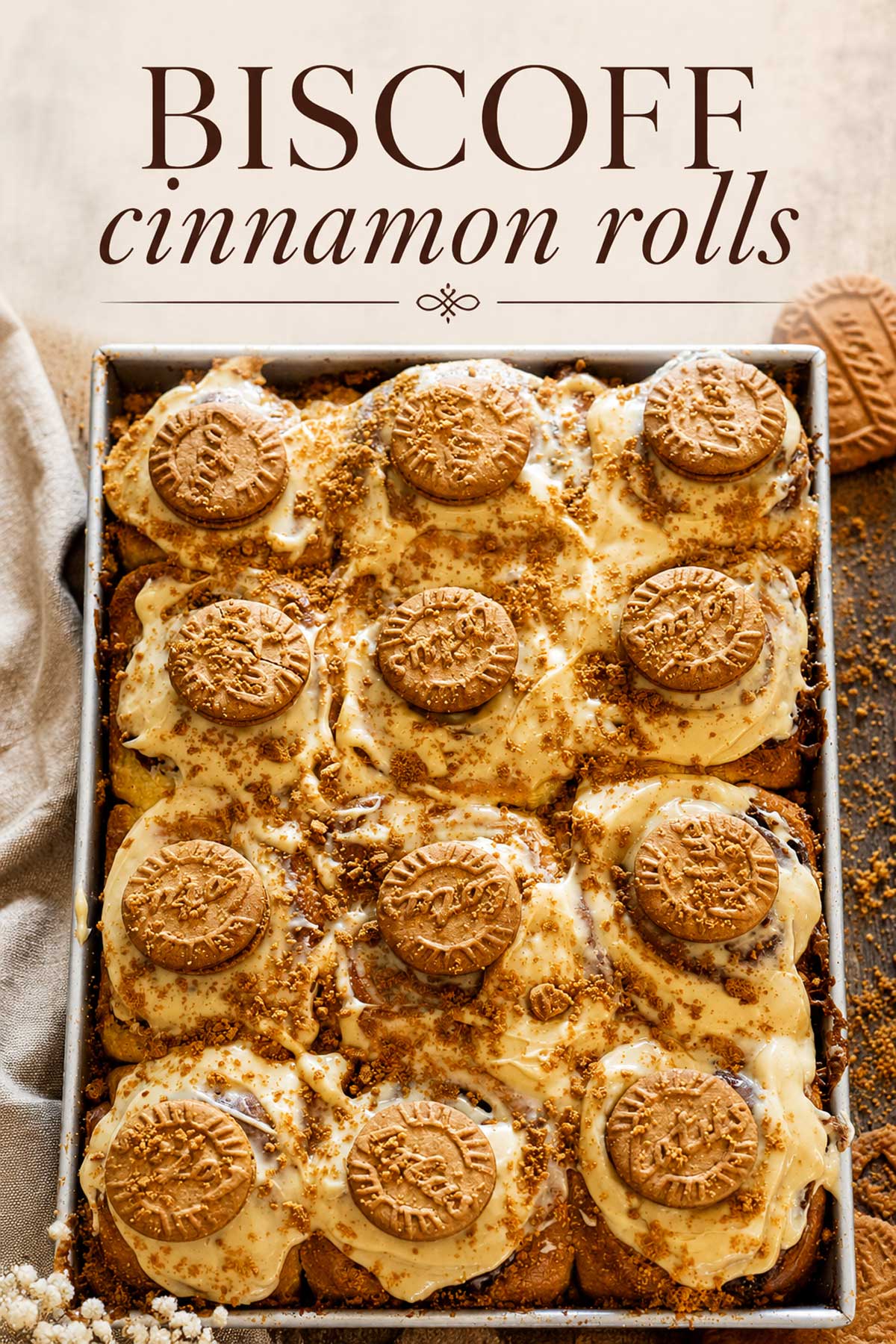
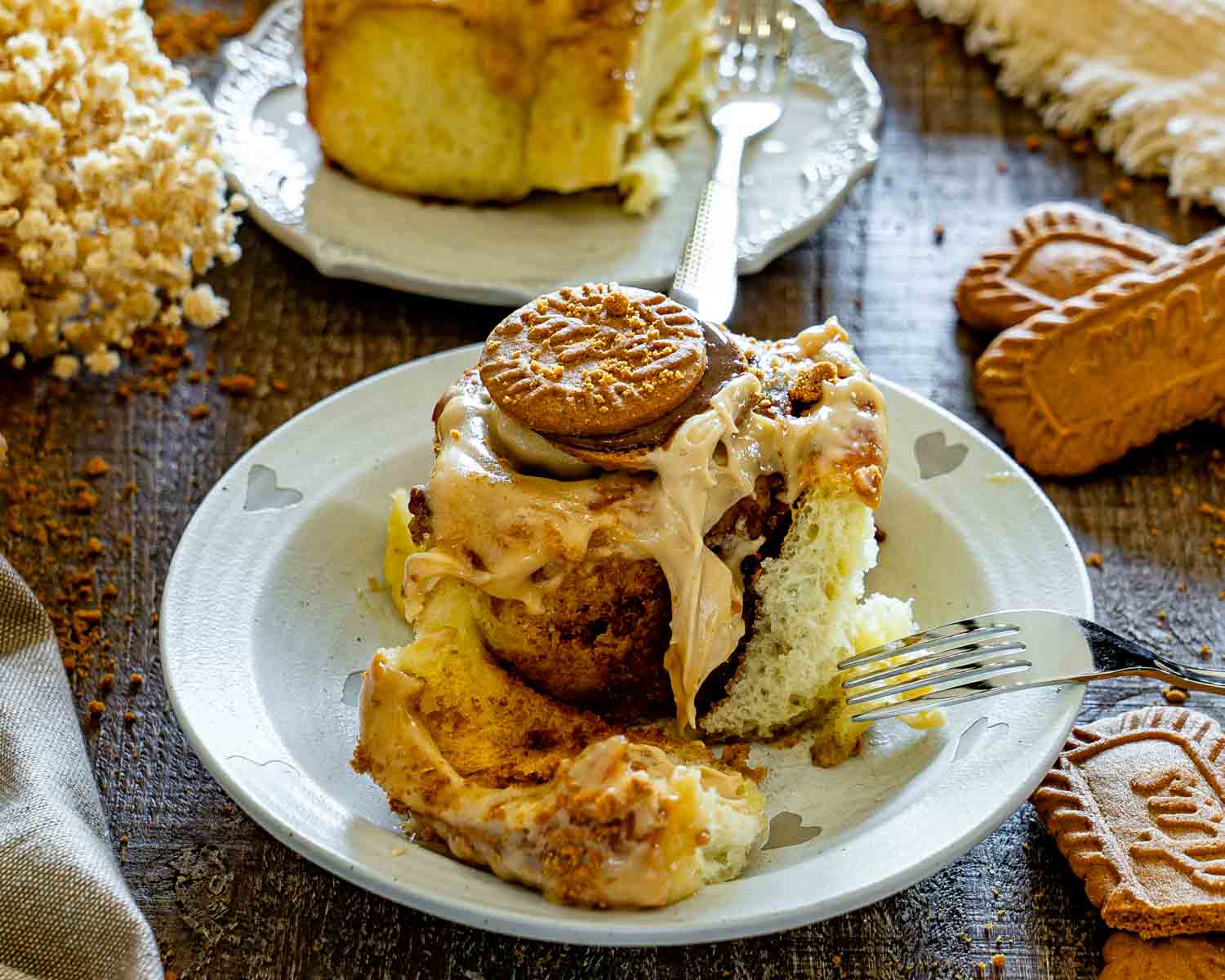
These Biscoff Cinnamon Rolls are soft, pillowy, and loaded with Biscoff spread from the filling all the way to the icing. If you love Biscoff and you love cinnamon rolls, this is the recipe you did not know you needed until right now.
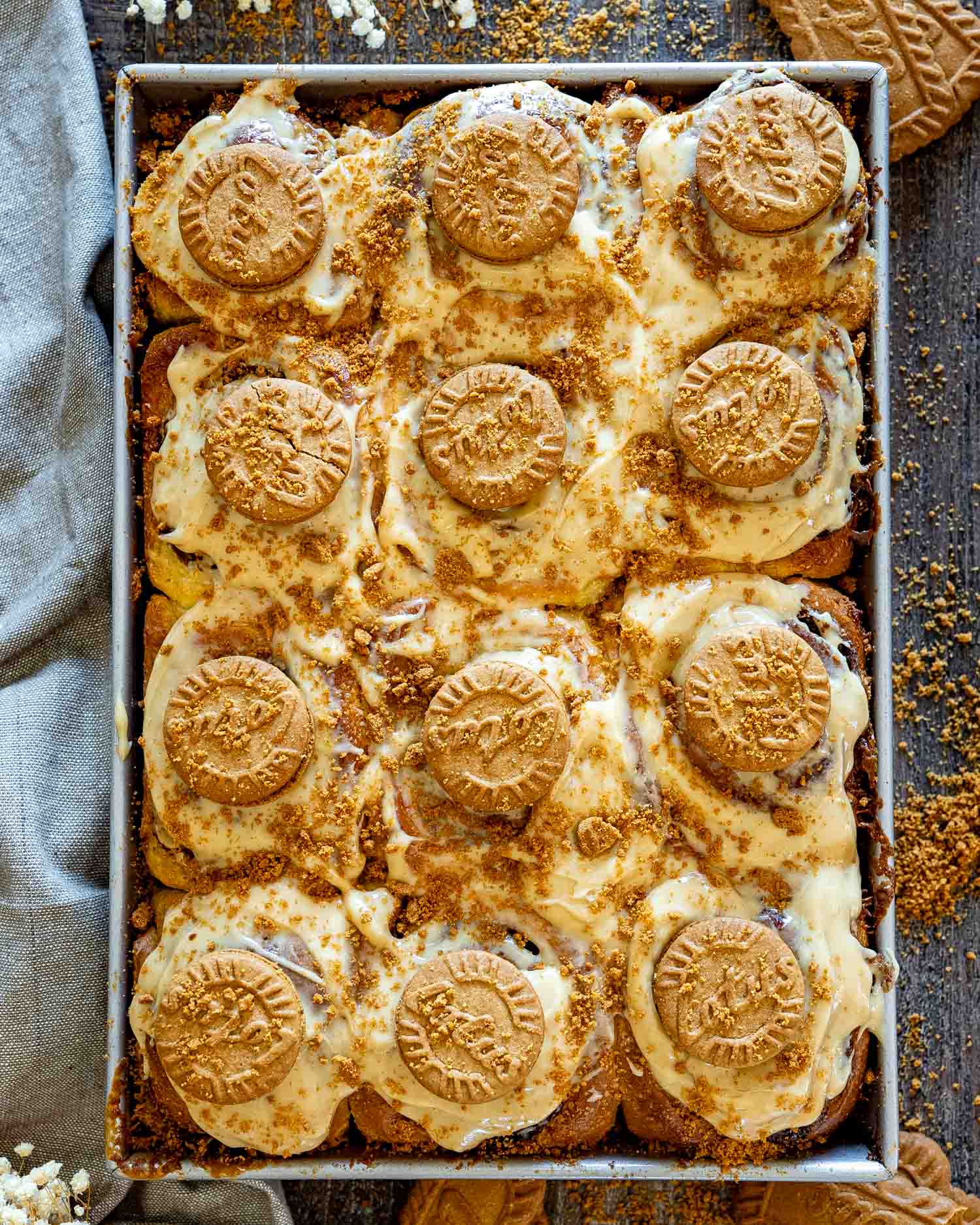
If you love my Cinnabon Cinnamon Rolls and you also have a thing for Biscoff, which if you are a human person you probably do, then this recipe was made specifically for you.
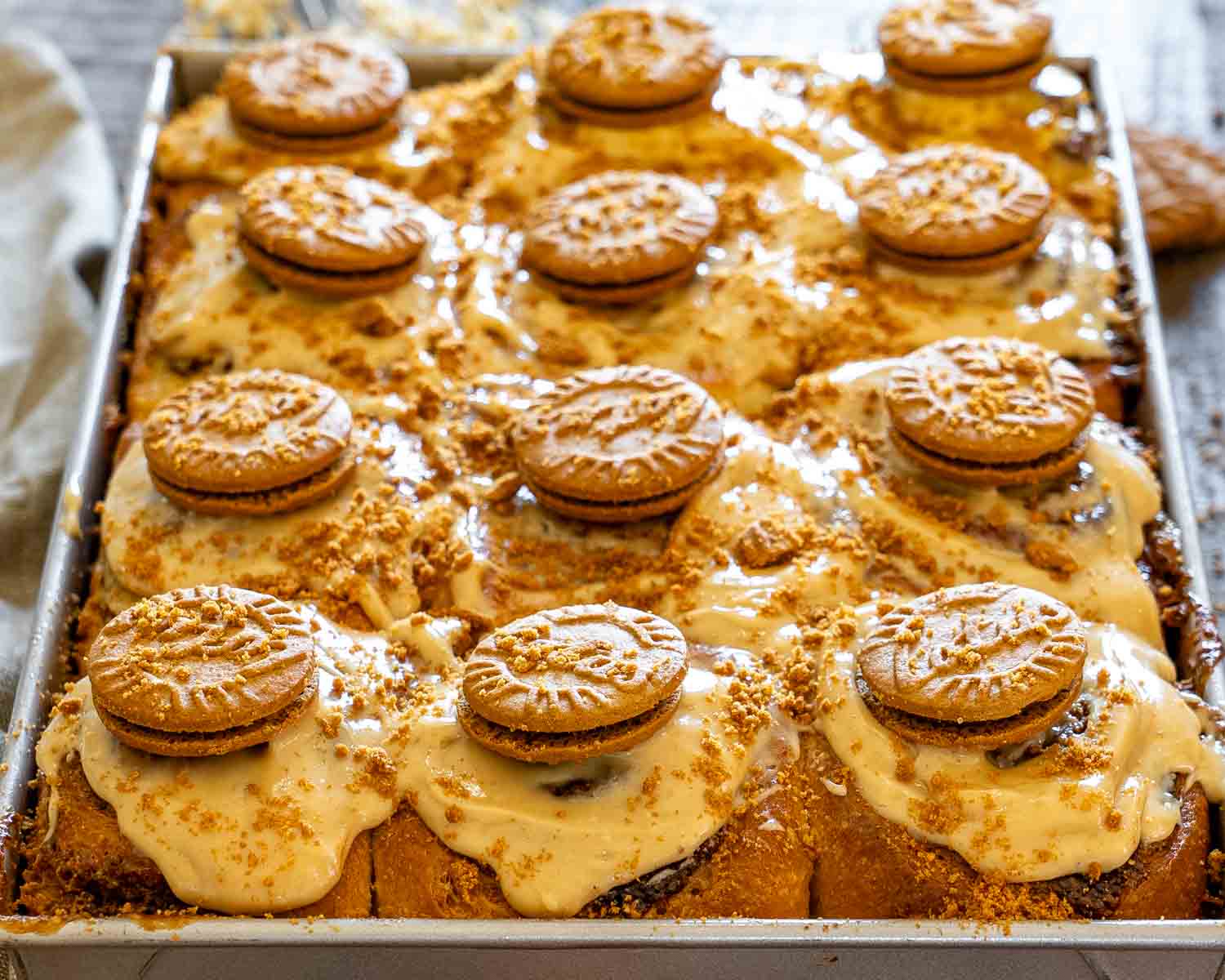
Biscoff spread in the filling, crushed Biscoff cookies layered inside, cream cheese Biscoff icing on top, a whole cookie planted on each roll because why not, and a drizzle of warmed Biscoff spread over everything because we are committed to this theme. These are not subtle rolls. They are not trying to be.
They take a few hours because yeast dough takes a few hours and there is nothing to be done about that. But most of that time is hands off and the result is absolutely worth it.
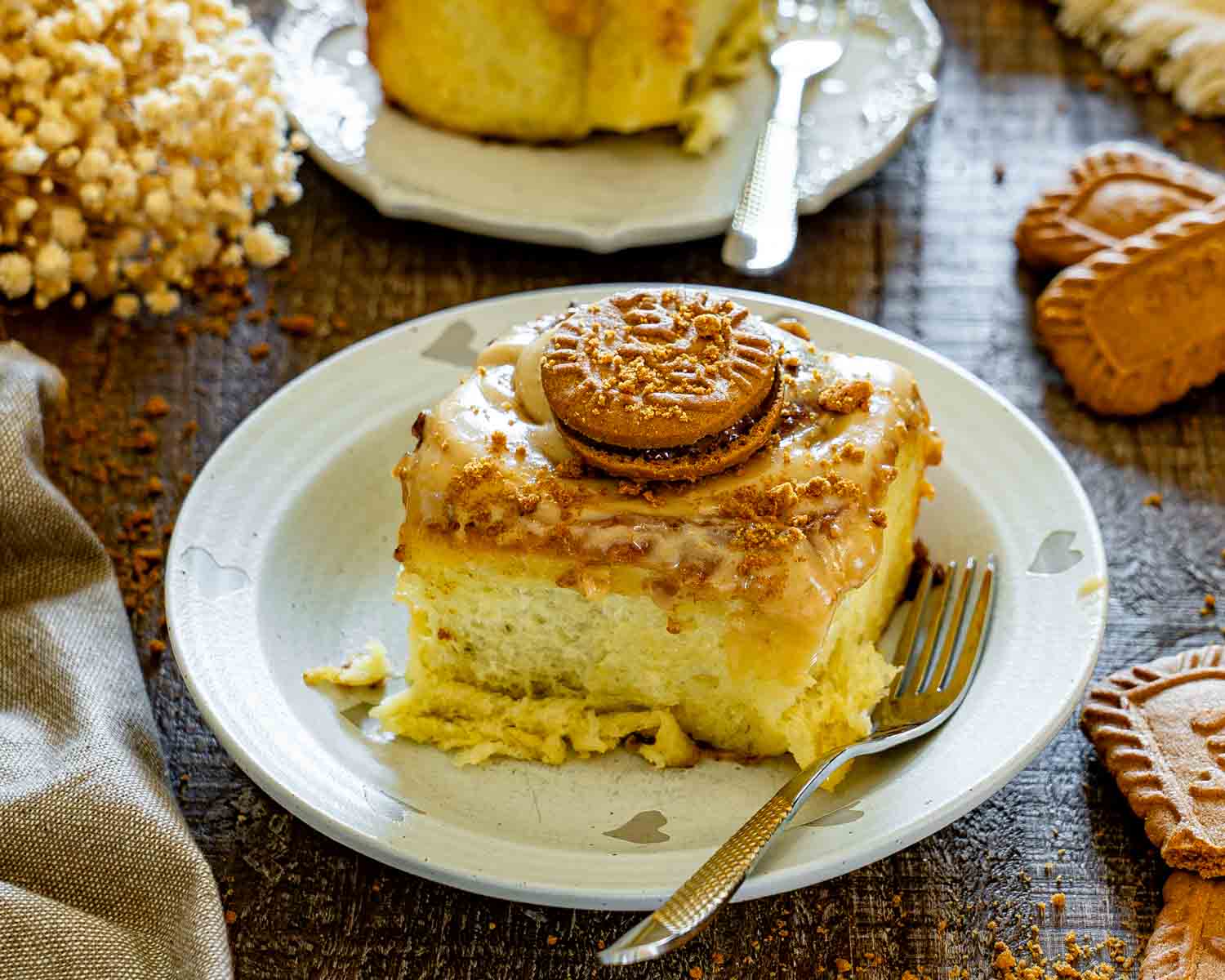
The Heavy Cream Trick
This deserves its own section because it is the difference between good cinnamon rolls and rolls that make people emotional.
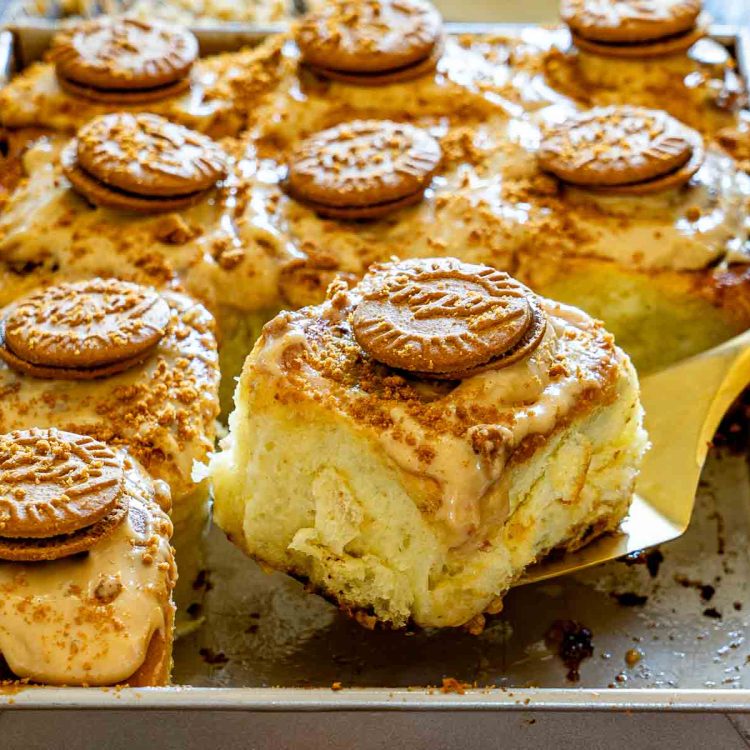
Just before the rolls go into the oven, you pour warmed heavy cream slowly over the top and let it pool in all the gaps between the rolls. As the rolls bake, they absorb that cream and steam from the inside. The result is a roll that is impossibly soft and pillowy all the way through, not just in the center. The bottoms get slightly custardy and rich and the whole thing stays moist for days.
Do not skip this step. It costs you about 30 seconds and it changes everything.
Ingredients in Biscoff Cinnamon Rolls
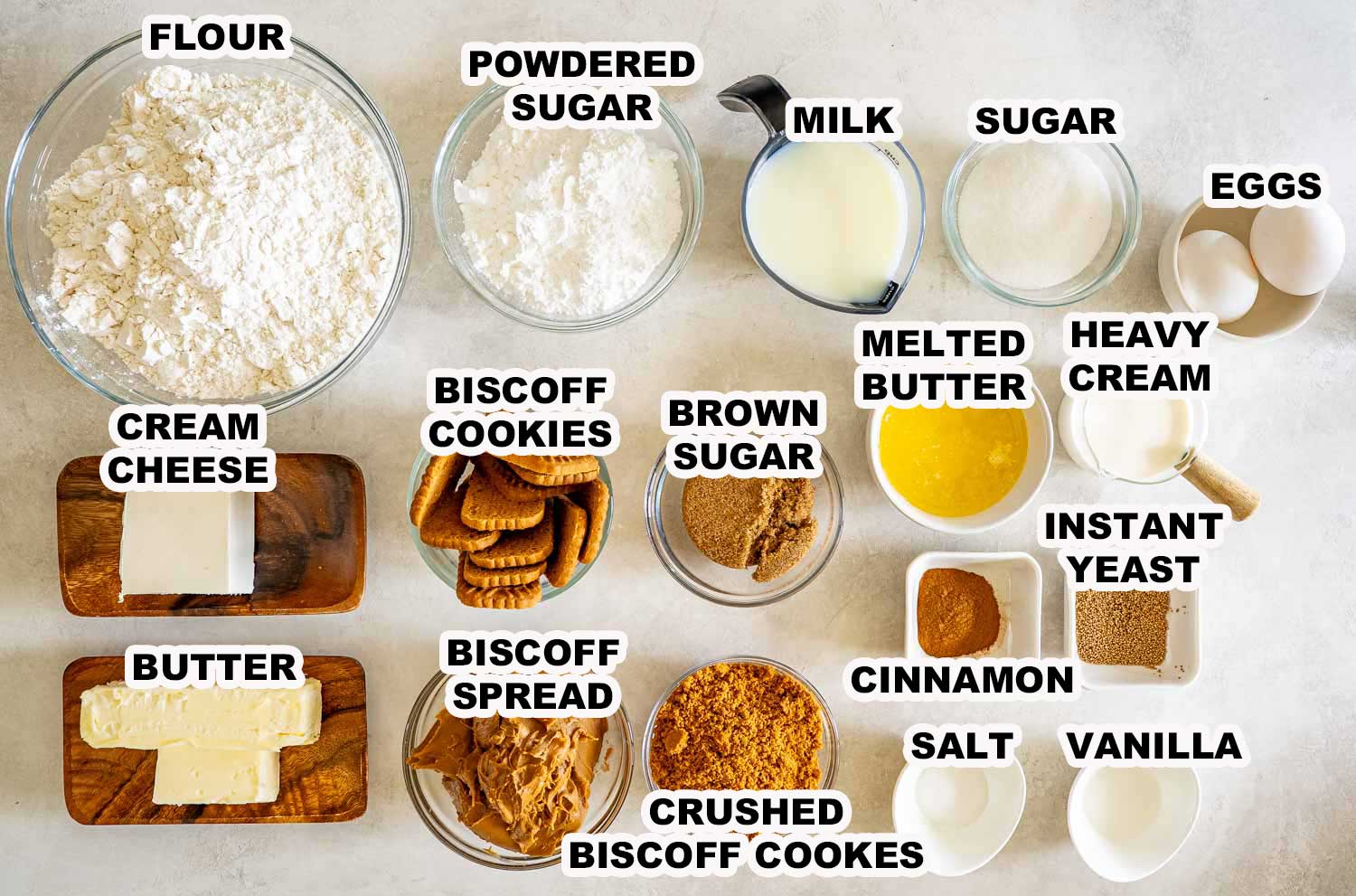
- All purpose flour: Standard flour works perfectly here. Measure by spooning into the cup and leveling off, not scooping directly from the bag, which packs the flour and gives you too much.
- Granulated sugar: Just enough to feed the yeast and add a touch of sweetness to the dough.
- Instant yeast: Goes straight into the dry ingredients, no proofing needed. If you only have active dry yeast, dissolve it in the warm milk first and let it sit for 5 minutes until foamy before proceeding.
- Salt: Do not skip it. Salt controls the yeast and seasons the dough. Under-salted dough tastes flat.
- Warm milk: Around 110°F, warm enough that it feels comfortable on your wrist but not hot enough to kill the yeast.
- Unsalted butter, melted: Adds richness and tenderness to the dough.
- Eggs: Two large eggs for structure and richness.
- Biscoff spread: The star of this recipe and it shows up in 2 places. In the filling mixed with butter, and in the icing. Use the smooth variety for the filling and icing, it spreads more easily than crunchy.
- Unsalted butter, softened: Mixed with the Biscoff spread for the filling. Softened not melted so it stays spreadable.
- Brown sugar and cinnamon: The classic cinnamon roll base that works beautifully alongside the Biscoff flavor.
- Crushed Biscoff cookies: Scattered over the filling for texture and extra flavor in every bite, and over the icing at the end for crunch.
- Heavy cream: Poured over the rolls just before baking. See the heavy cream section above. Do not skip it.
- Cream cheese, softened: The tangy backbone of the icing. Room temperature so it beats smoothly without lumps.
- Powdered sugar, vanilla, and milk: Bring the icing together into something creamy and pourable.
- Whole Biscoff cookies: One per roll on top. Purely decorative, completely necessary.
How to Make Biscoff Cinnamon Rolls
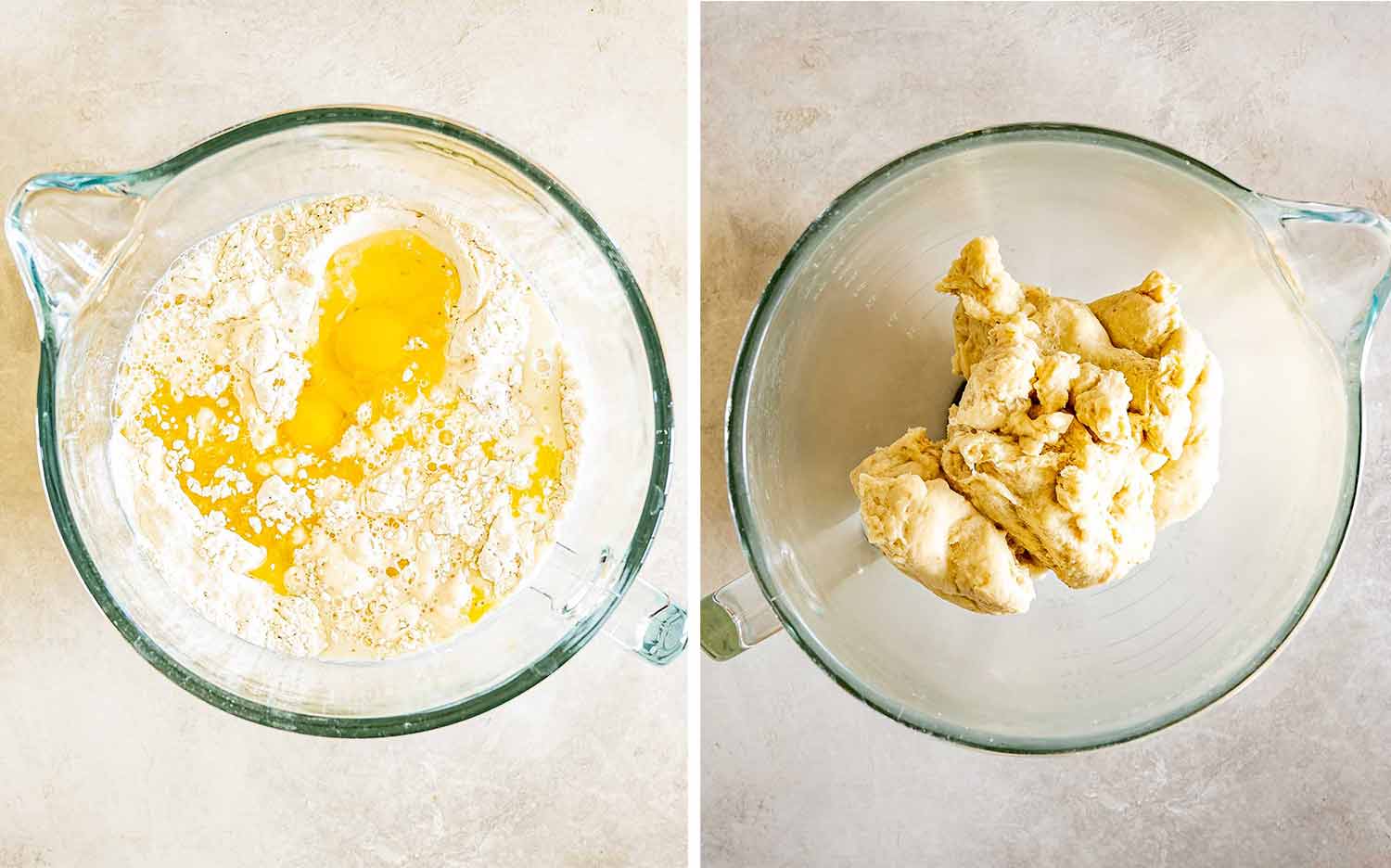
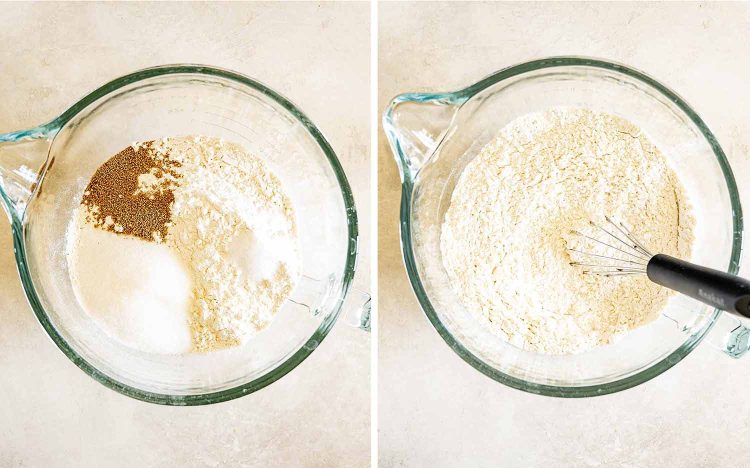
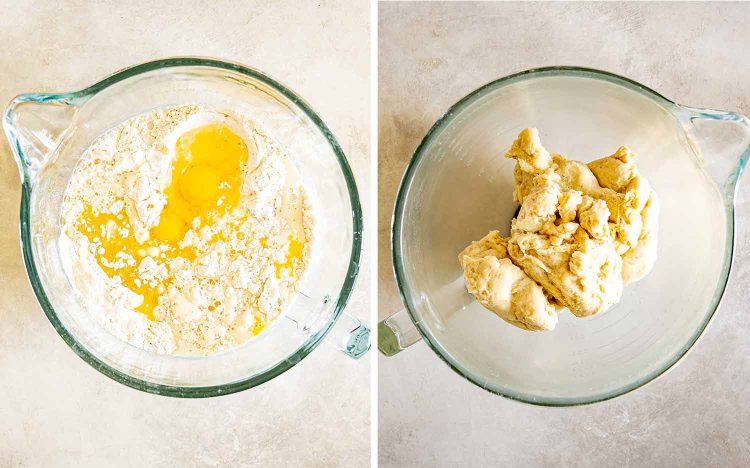
Whisk the flour, sugar, yeast, and salt together in a large bowl. Add the warm milk, melted butter, and eggs and mix until a shaggy dough forms. Knead for 8 minutes by hand or 5 minutes in a stand mixer until the dough is smooth, elastic, and slightly tacky but not sticky. If it sticks to everything it needs a little more flour. If it tears when stretched it needs more kneading.
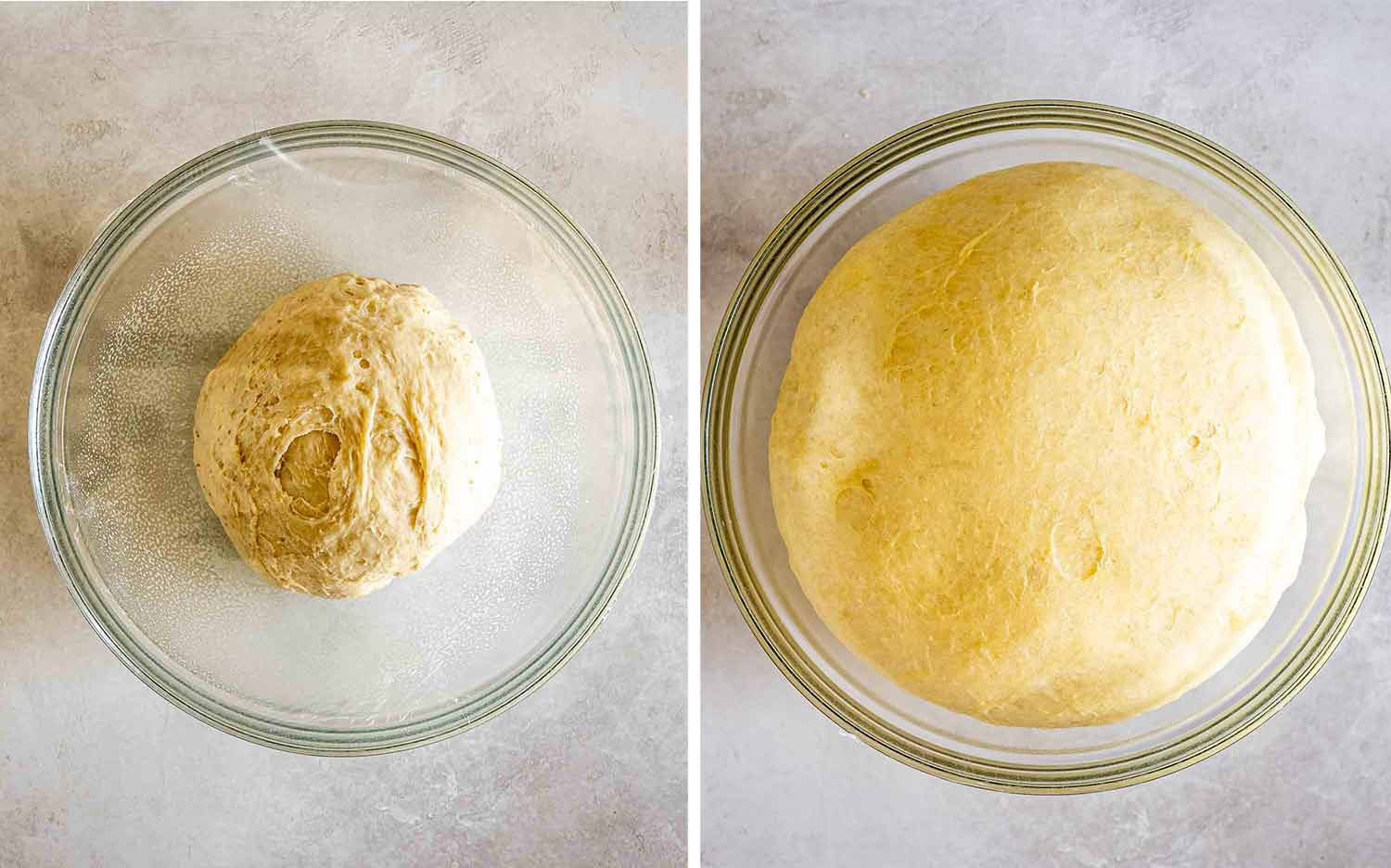
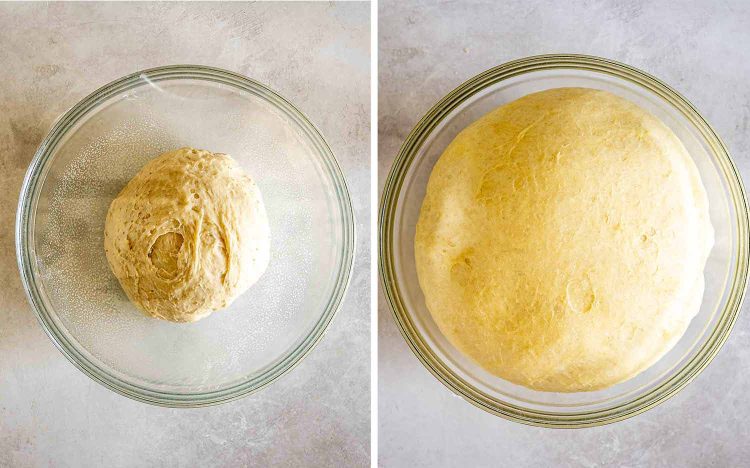
Place the dough in a greased bowl, cover, and let it rise in a warm spot for about an hour until doubled in size. A cold kitchen will slow this down significantly. The inside of an oven with just the light on is a good warm spot if your kitchen runs cool.
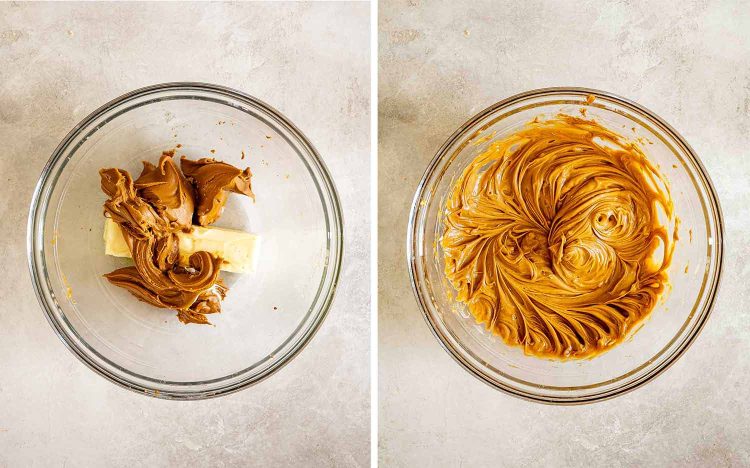
While the dough rises, make the filling. Stir the softened butter and Biscoff spread together until smooth and spreadable. Set aside.
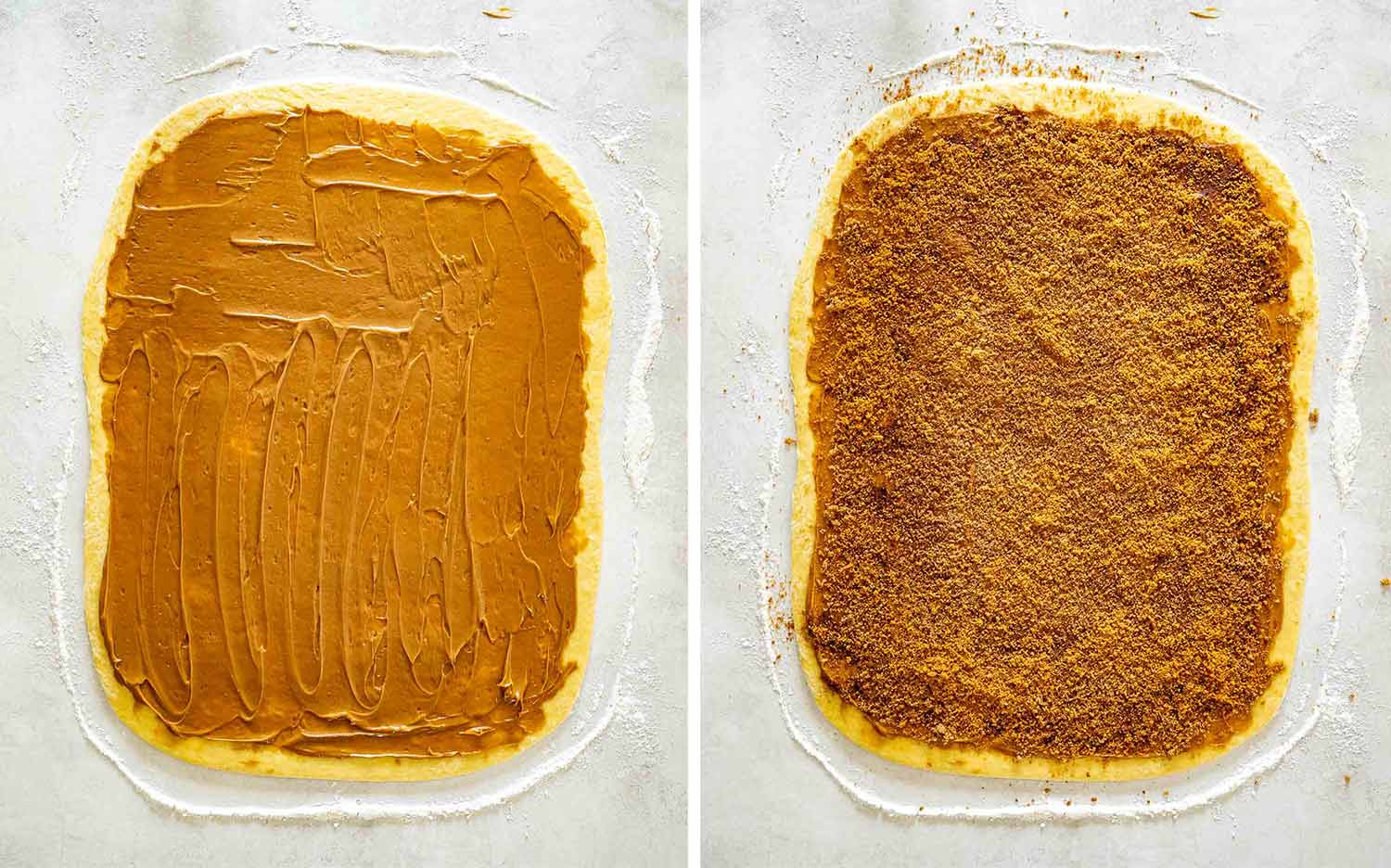
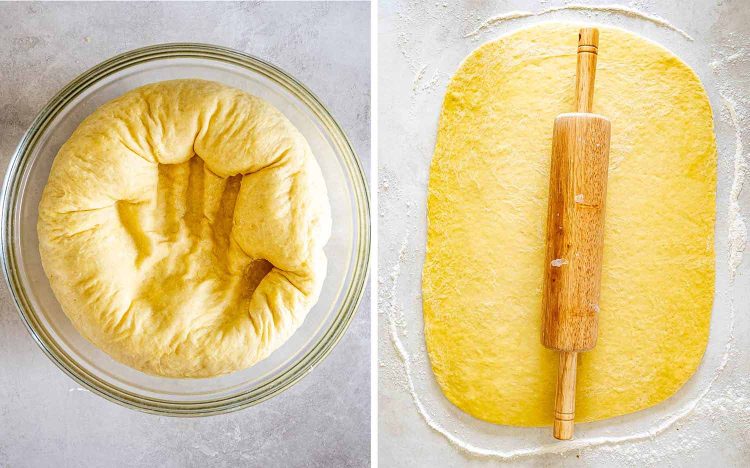
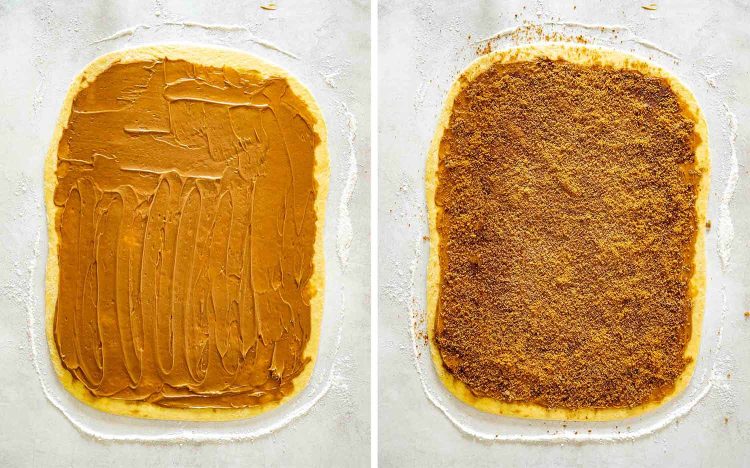
Punch down the risen dough and roll it out on a lightly floured surface into a 16 by 12 inch rectangle. Spread the Biscoff butter mixture evenly all the way to the edges. Sprinkle the brown sugar and cinnamon over the top, then scatter the crushed Biscoff cookies over everything.
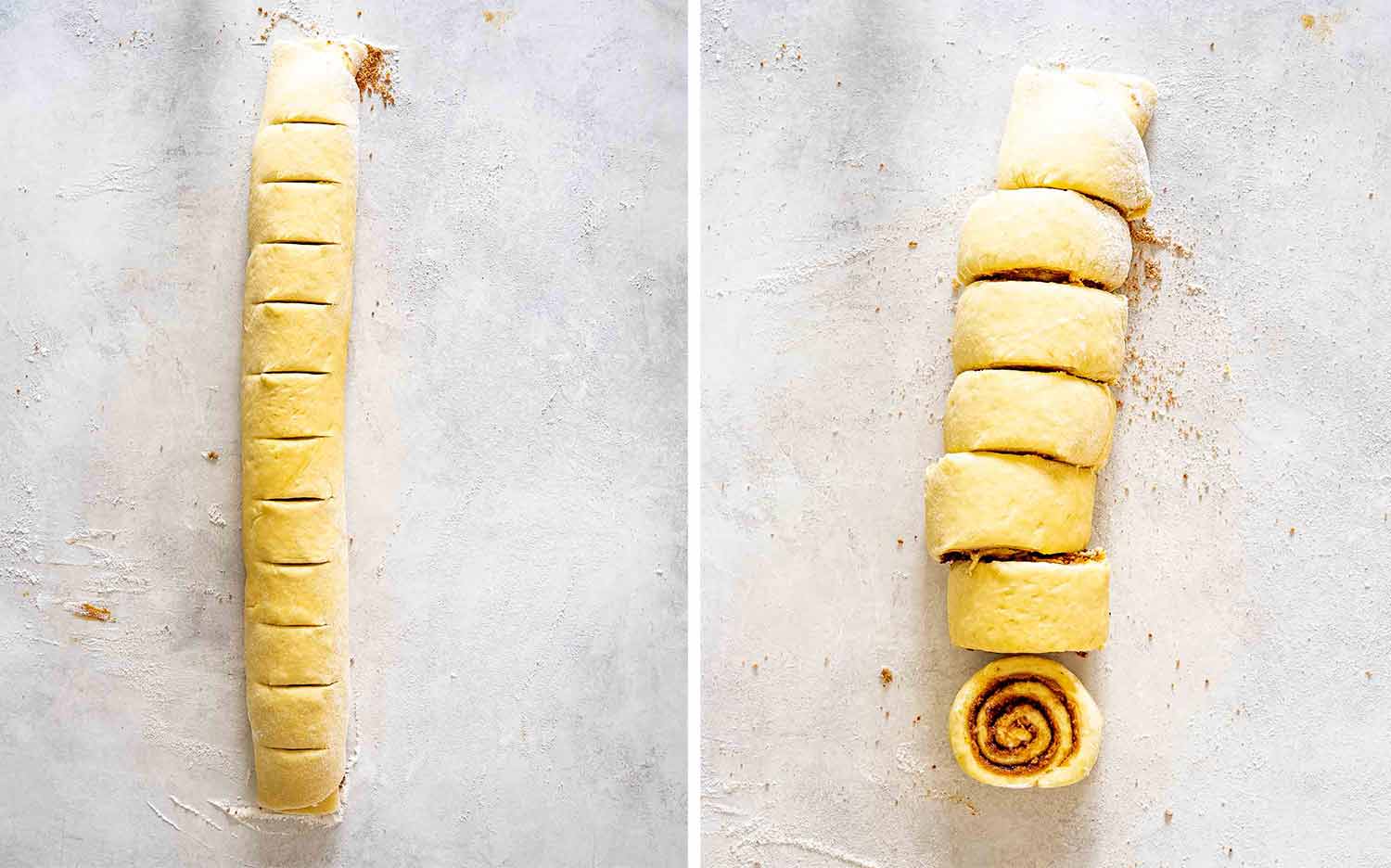
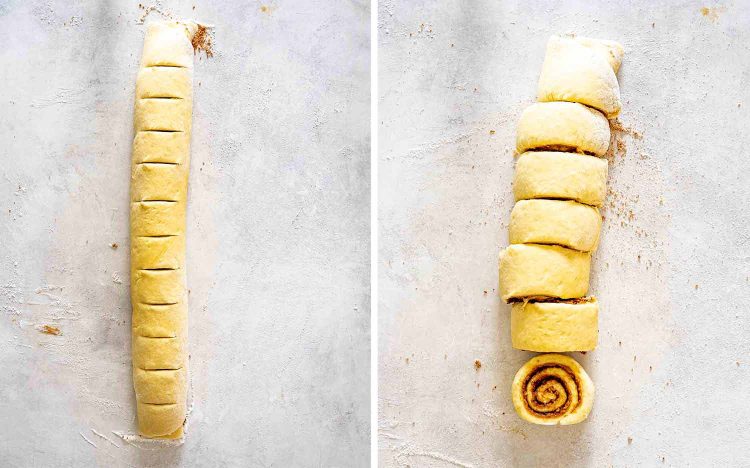
Starting from the long edge, roll the dough up tightly into a log. Use a sharp knife or unflavored dental floss to cut it into 12 even rolls. Dental floss sounds strange but it gives you a clean cut without squishing the rolls flat.
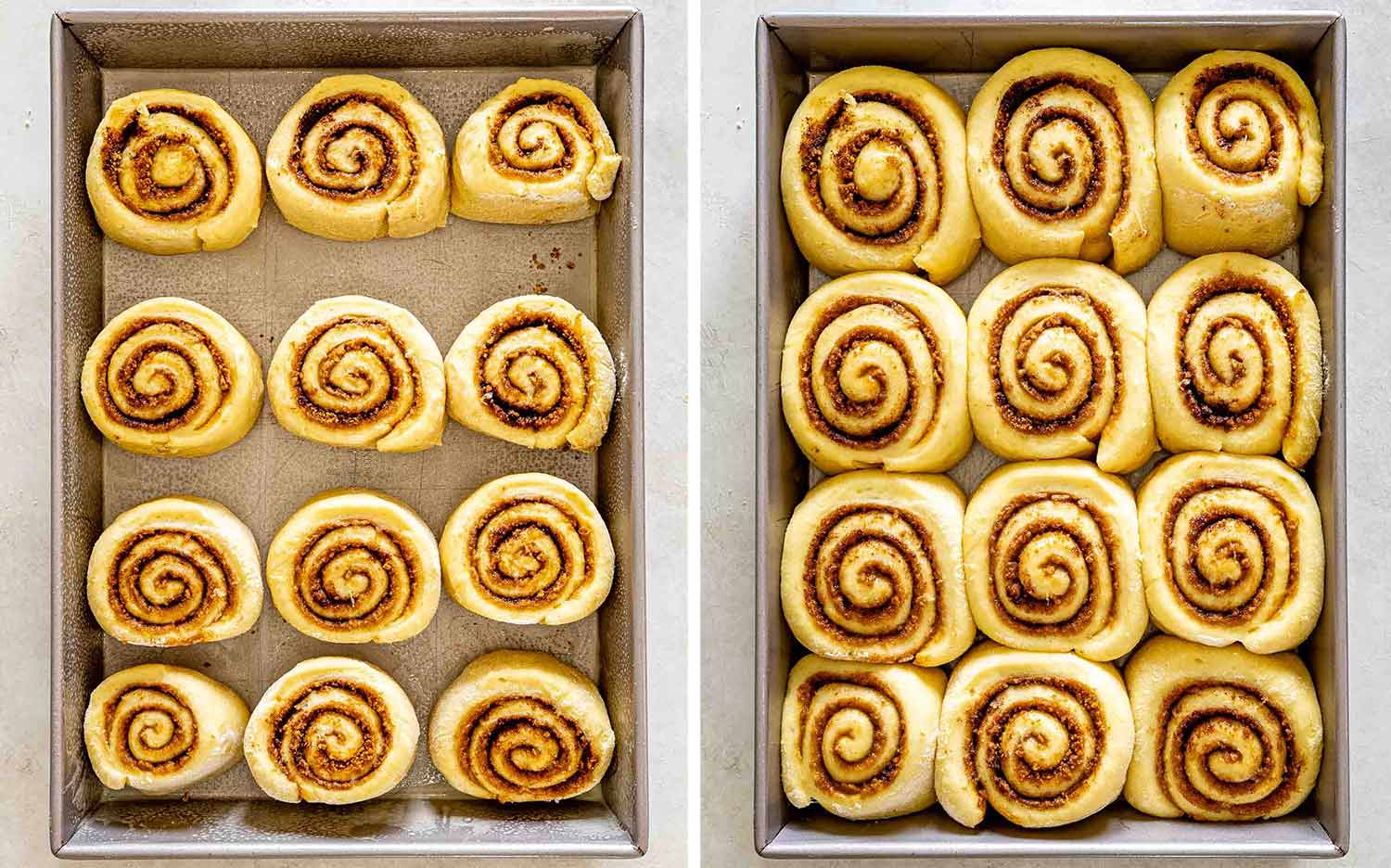
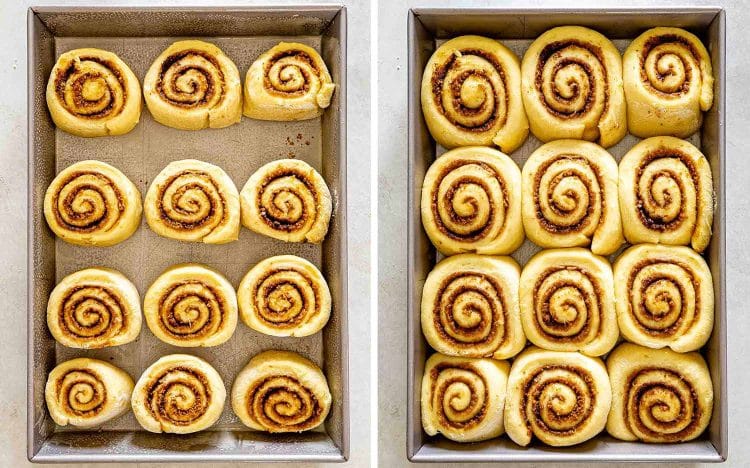
Place the rolls in a greased 9 by 13 inch baking dish, cover, and let them rise again for about 45 minutes until puffy. Near the end of the rise, preheat the oven to 350°F.
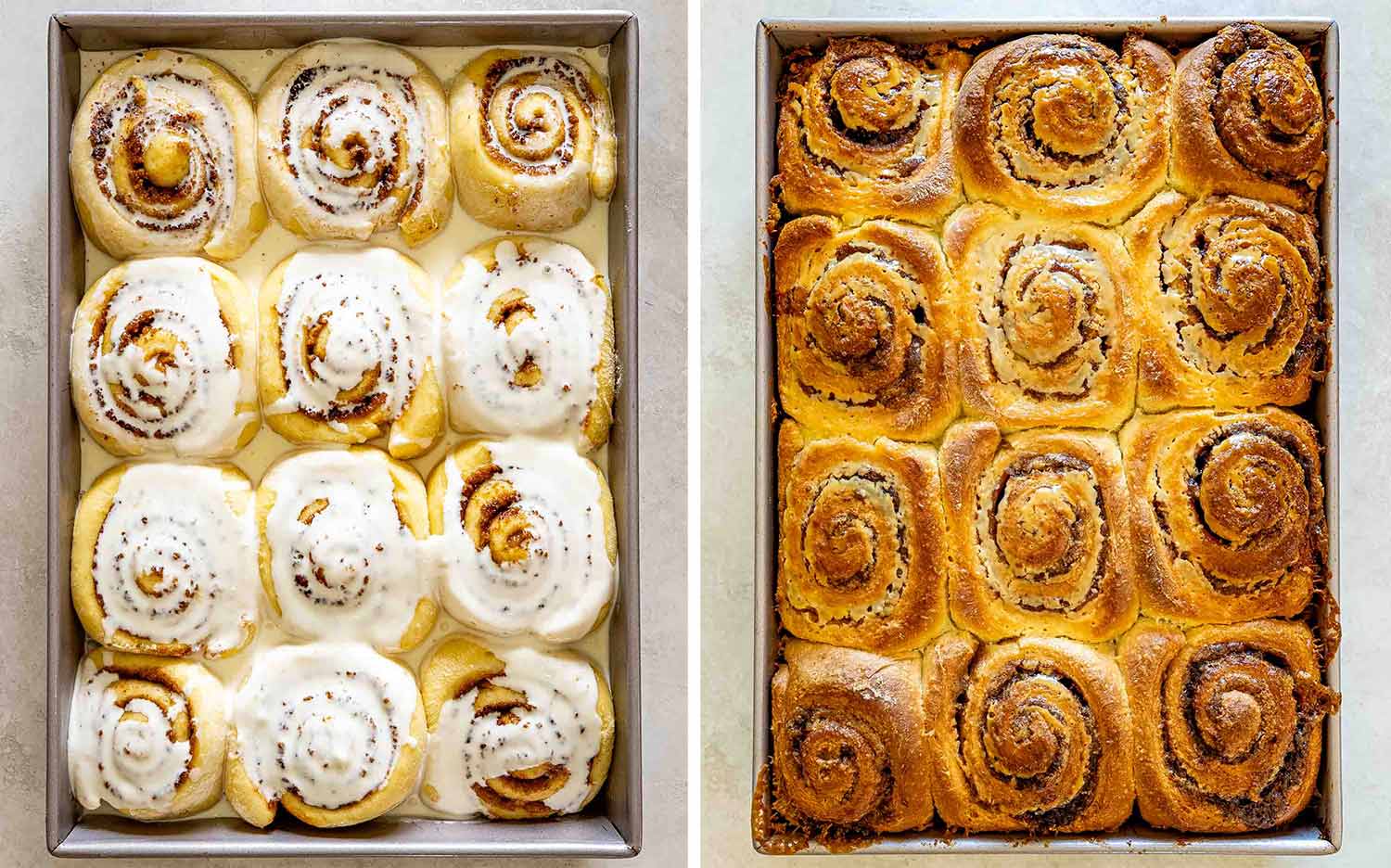
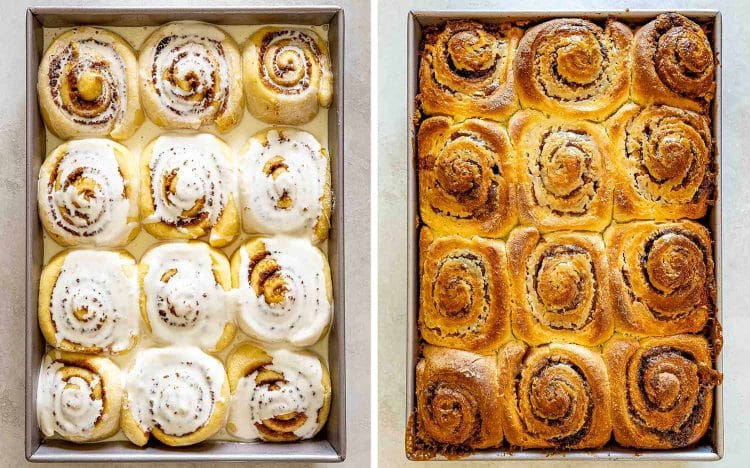
Just before baking, warm the heavy cream slightly and pour it slowly and evenly over the rolls, letting it pool in the gaps. Bake for 22 to 25 minutes until golden and cooked through.
Let the rolls cool for 10 minutes before icing. Hot rolls will melt the icing right off and you will end up with icing soup, which is not the goal.
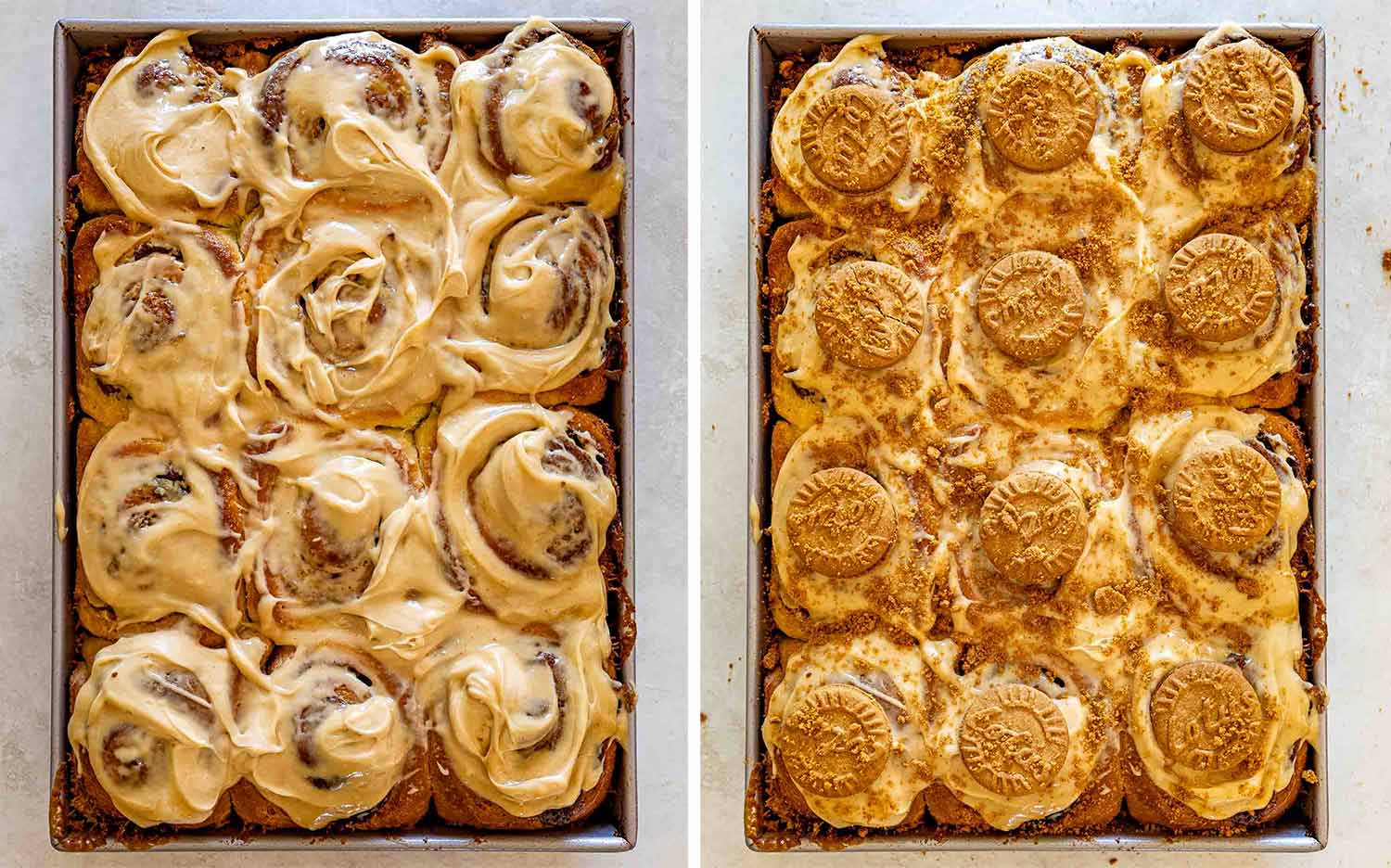
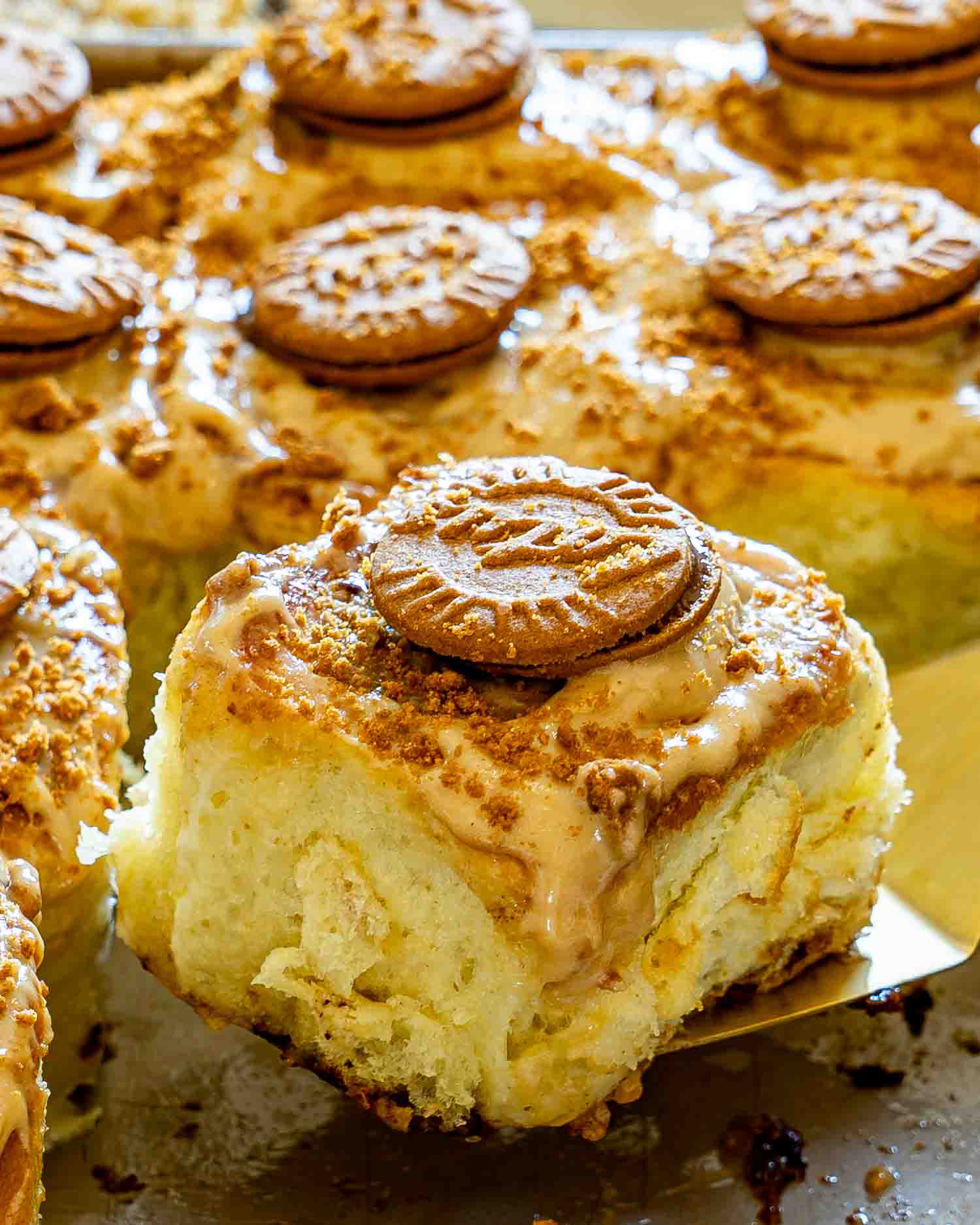
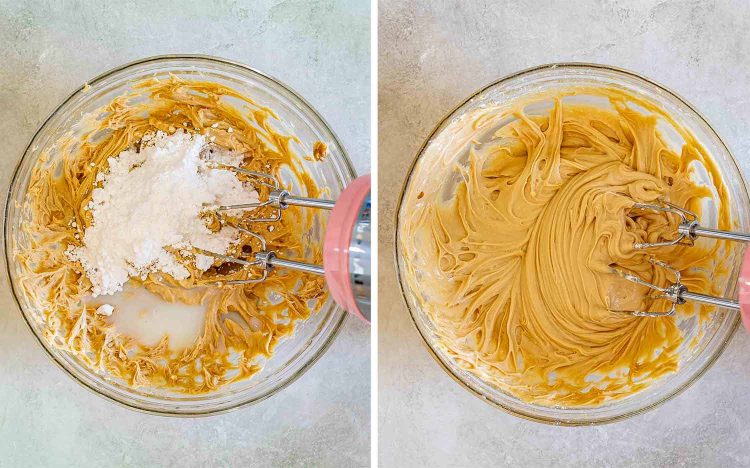
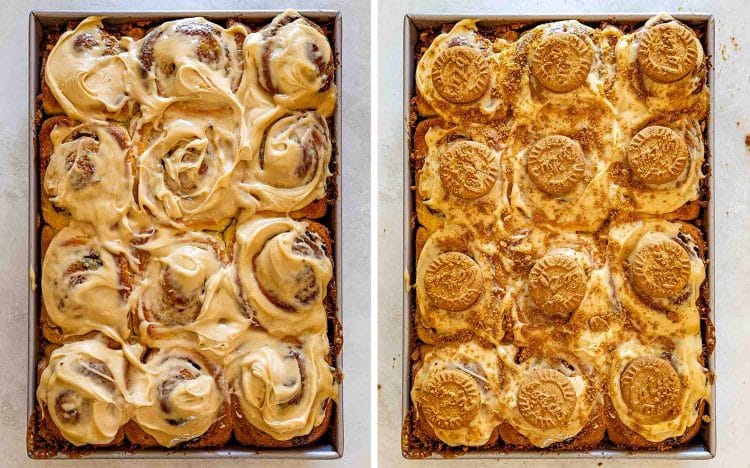
Beat together the cream cheese, butter, and Biscoff spread until smooth. Add the powdered sugar, vanilla, and milk and beat until creamy. Spread generously over the warm rolls. Top each roll with a whole Biscoff cookie, and sprinkle crushed cookies over everything.
Serve immediately or at room temperature. Either way they will be gone fast.
Can I Make These Ahead of Time?
Yes and this is actually one of the better make ahead breakfast recipes there is.
After cutting the rolls and placing them in the baking dish, cover tightly with plastic wrap and refrigerate overnight instead of doing the second rise at room temperature. The cold slows the yeast so the rolls rise slowly in the fridge overnight. In the morning, take them out of the fridge and let them sit at room temperature for 45 minutes to an hour to take the chill off and finish puffing up. Then pour the cream over and bake as directed.
The icing is best made fresh the morning of so it goes on warm rolls.
Tips and Tricks
- Check your milk temperature. Around 110°F is the sweet spot. Too cold and the yeast moves slowly. Too hot and it dies and you will not know until an hour later when the dough has not risen and you are standing there confused.
- Knead until properly developed. The dough should be smooth, elastic, and pass the windowpane test, stretch a small piece between your fingers and if you can see light through it without it tearing the gluten is developed enough.
- Do not rush the rise. Both rises are important. The first rise develops flavor, the second gives you that pillow soft texture. A cold or drafty kitchen will slow both significantly.
- Roll tightly. A loose roll means the filling falls out when you cut and the rolls open up during baking.
- Use dental floss to cut. Slide a piece of unflavored floss under the log, cross the ends over the top and pull. Clean cuts every time without squishing.
- Pour the cream slowly. You want it to distribute evenly and pool in the gaps, not flood the dish all at once.
- Cool before icing. 10 minutes minimum. The rolls should be warm but not hot.
Try These Recipes Next
- Blueberry Rolls
- Strawberry Rolls with Cream Cheese Icing
- Chocolate Espresso Rolls
- Finnish Cardamom Rolls
- Jumbo Bakery Style Cinnamon Rolls
Before You Begin! If you make this, please leave a review and rating letting us know how you liked this recipe! This helps our business thrive & continue providing free recipes.
Biscoff Cinnamon Rolls
Video
Ingredients
For the dough
- 4 cups all purpose flour
- ⅓ cup granulated sugar
- 2¼ teaspoons instant yeast
- 1 teaspoon salt
- 1 cup warm milk
- ⅓ cup unsalted butter (melted)
- 2 large eggs
For the filling
- ½ cup unsalted butter (softened)
- ¾ cup Biscoff spread
- ½ cup brown sugar
- 1 tablespoon ground cinnamon
- ⅓ cup crushed Biscoff cookies
For baking
- ½ cup heavy cream
For the icing
- 4 ounces cream cheese (softened)
- ¼ cup unsalted butter (softened)
- ⅓ cup Biscoff spread
- 1 cup powdered sugar
- 1 teaspoon vanilla extract
- 2 tablespoons milk
For the top
- 12 Biscoff cookies
- ¼ cup crushed Biscoff Cookies
Before You Begin! If you make this, please leave a review and rating letting us know how you liked this recipe! This helps our business thrive & continue providing free recipes.
Instructions
- In a large bowl, whisk together the 4 cups flour, ⅓ cup granulated sugar, 2¼ teaspoons instant yeast, and 1 teaspoon salt.

- Add the 1 cup warm milk, ⅓ cup melted butter, and 2 eggs. Mix until a shaggy dough forms, then knead for about 8 minutes by hand or 5 minutes in a stand mixer, until smooth and elastic.
- Place the dough in a greased bowl, cover, and let it rise in a warm spot for 1 hour, or until doubled in size.
- While it rises, make the filling. Stir together the ½ cup softened butter and ¾ cup Biscoff spread until smooth and spreadable.
- Punch down the dough and roll it out on a floured surface into a 16 by 12 inch rectangle.
- Spread the Biscoff butter mixture evenly over the dough, right to the edges. Sprinkle the ½ cup brown sugar and 1 tablespoon cinnamon over the top, then scatter on the ⅓ cup crushed Biscoff cookies.
- Starting from a long edge, roll the dough up tightly into a log. Cut it into 12 even rolls and place them in a greased 9 by 13 inch baking dish.
- Cover and let the rolls rise again for 45 minutes, until puffy. Near the end of the rise, preheat your oven to 350°F (175°C).
- Just before baking, slowly pour the ½ cup warmed heavy cream over the risen rolls, letting it pool in the gaps between them. Bake for 22 to 25 minutes, until golden and cooked through. Let them cool for 10 minutes before icing, because hot rolls will melt the icing right off.
- For the icing, beat the 4 ounces cream cheese, ¼ cup butter, and ⅓ cup Biscoff spread until smooth. Add the 1 cup powdered sugar, 1 teaspoon vanilla, and 2 tablespoons milk, and beat until creamy.
- Spread the icing over the warm rolls. Top each roll with a whole Biscoff cookie, and sprinkle the ¼ cup crushed Biscoff cookies over everything for crunch.
Equipment
Notes
- Milk temperature: Around 110°F is the sweet spot. Too cold and the yeast moves slowly. Too hot and it kills the yeast and you won’t know until an hour later when nothing has risen and you are standing there confused.
- Instant vs active dry yeast: Instant yeast goes straight into the dry ingredients. If using active dry yeast, dissolve it in the warm milk with a pinch of sugar first and wait 5 to 10 minutes until foamy. If it doesn’t foam the yeast is dead and you need a fresh packet.
- Kneading: The dough should be smooth, elastic, and slightly tacky but not sticky. If it tears when you stretch it, it needs more kneading. If it sticks to everything, add a little more flour.
- The windowpane test: Stretch a small piece of dough between your fingers. If you can see light through it without it tearing, the gluten is developed enough and you are done kneading.
- Don’t rush the rise: Both rises matter. The first develops flavor, the second gives you that pillowy soft texture. A cold kitchen slows both significantly. The inside of an oven with just the light on is a good warm spot.
- Roll tightly: A loose roll means the filling falls out when you cut and the rolls open up during baking.
- Use dental floss to cut: Slide unflavored floss under the log, cross the ends over the top and pull. Clean cuts every time without squishing the rolls flat.
- The heavy cream: Pour it slowly and evenly over the risen rolls just before baking and let it pool in the gaps. This is what makes them impossibly soft. Do not skip this step.
- Cool before icing: 10 minutes minimum after coming out of the oven. Hot rolls will melt the icing right off and you will end up with icing soup.
- Make ahead: After cutting and placing in the dish, cover tightly and refrigerate overnight instead of doing the second rise. In the morning let them sit at room temperature for 45 minutes to an hour before pouring the cream and baking.
- Storage: Cover and store at room temperature for up to 2 days or in the fridge for up to 4 days. Reheat individual rolls in the microwave for 20 to 30 seconds.
- Freeze: Freeze baked rolls without the icing wrapped tightly for up to 2 months. Thaw overnight and warm in the oven at 325°F for about 10 minutes before icing and serving.
Nutrition Information
Notice: Nutrition is auto-calculated for your convenience. Where relevant, we recommend using your own nutrition calculations.
Can I use active dry yeast instead of instant yeast?
Yes. Dissolve it in the warm milk with a pinch of sugar first and let it sit for 5 to 10 minutes until foamy. If it does not foam the yeast is dead and you need a fresh packet before proceeding.
My dough did not rise. What happened?
Almost always the milk was too hot and killed the yeast, or the yeast was old and past its prime. Check the expiry date on your yeast and make sure your milk is warm not hot.
Can I halve the recipe?
Yes. Make a half batch and bake in an 8 by 8 inch dish. Adjust the baking time slightly, start checking at 18 to 20 minutes.
How do I store leftovers?
Store covered at room temperature for up to 2 days or in the fridge for up to 4 days. Reheat individual rolls in the microwave for 20 to 30 seconds. They come back beautifully.
Can I freeze them?
Yes. Freeze baked rolls without the icing, wrapped tightly, for up to 2 months. Thaw overnight at room temperature and warm in the oven at 325°F for about 10 minutes. Ice before serving.