Chicken Bulgogi
This post may contain affiliate links. Please read my disclosure policy.
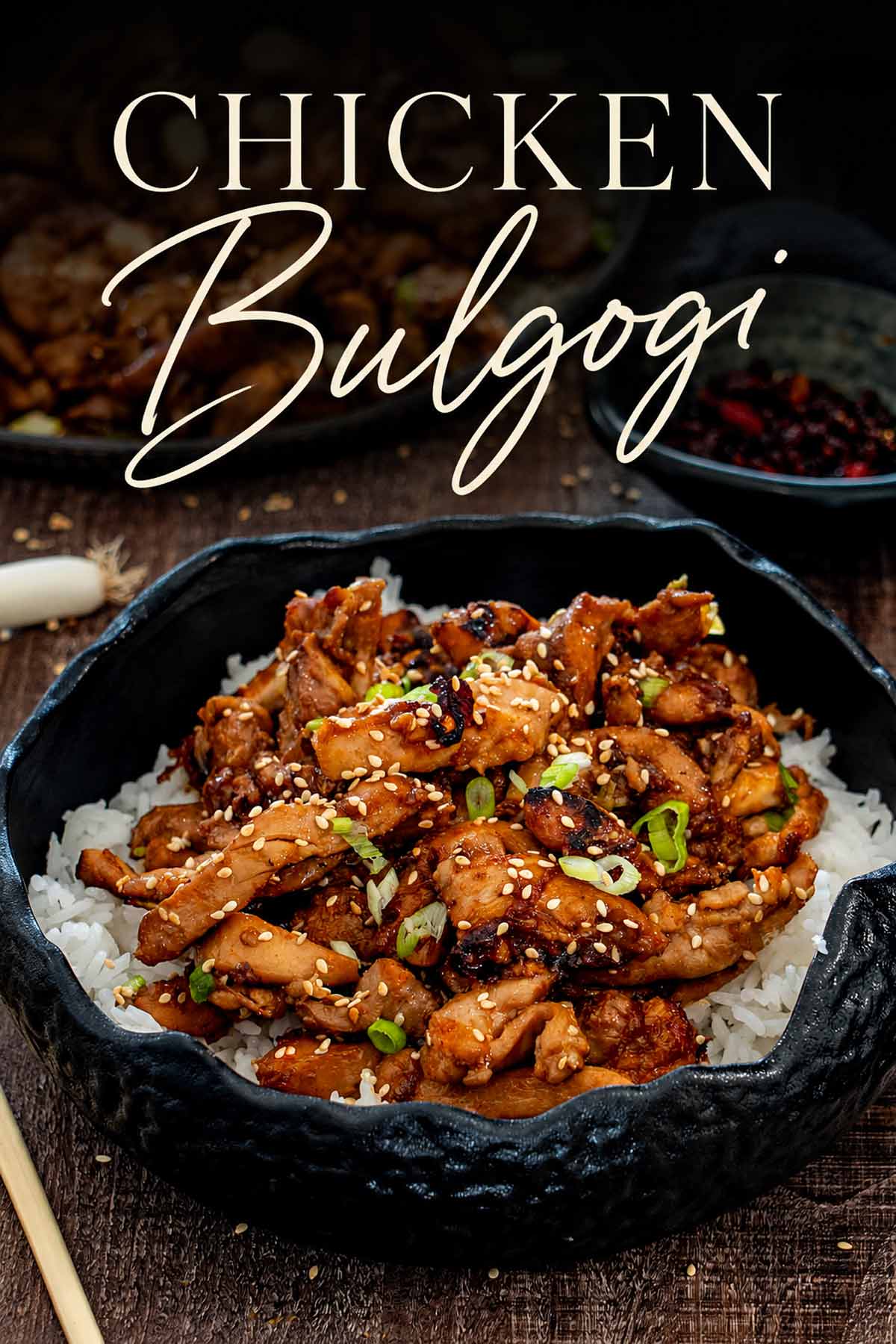
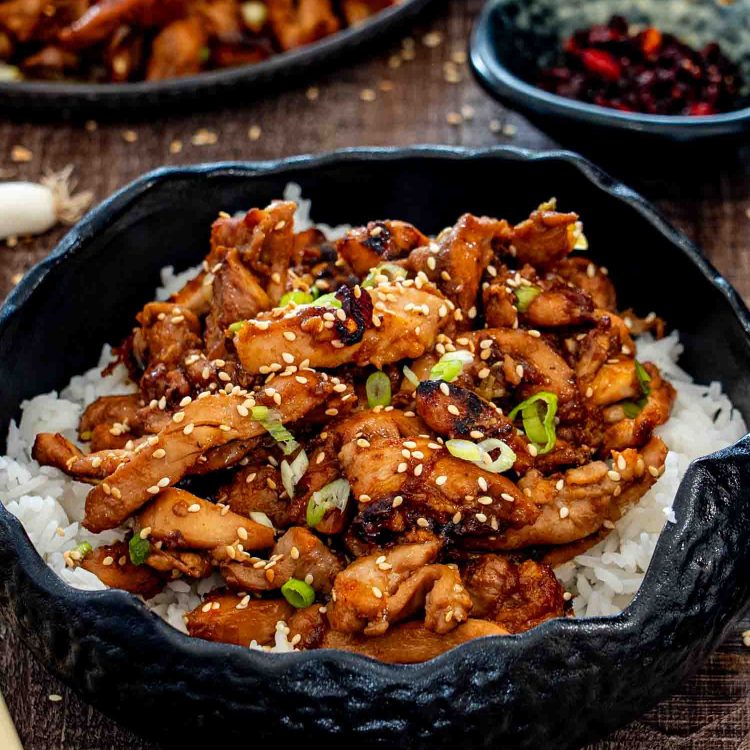
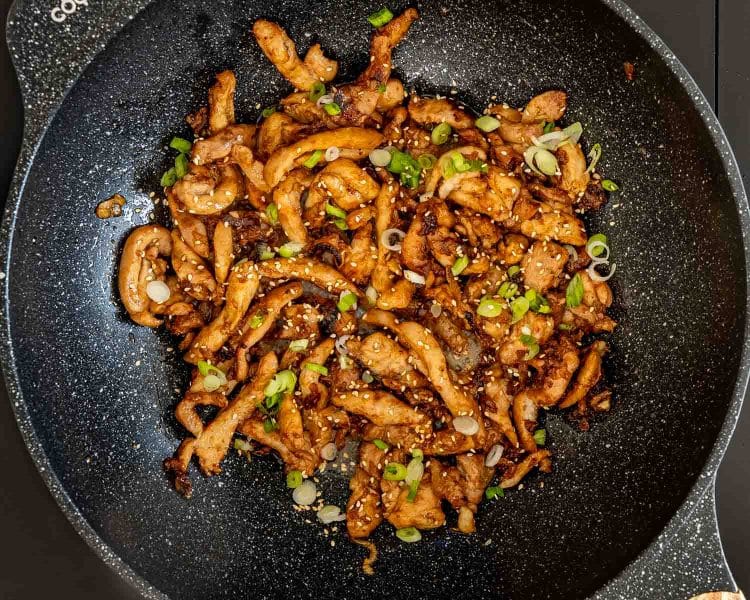
This Chicken Bulgogi has thinly sliced chicken thighs marinated in a sweet savory soy and sesame sauce with grated Asian pear, gochujang, and plenty of garlic, then cooked at high heat until caramelized and slightly charred at the edges. Ready in about an hour including marinating time and better than most Korean restaurants you’d order it from.
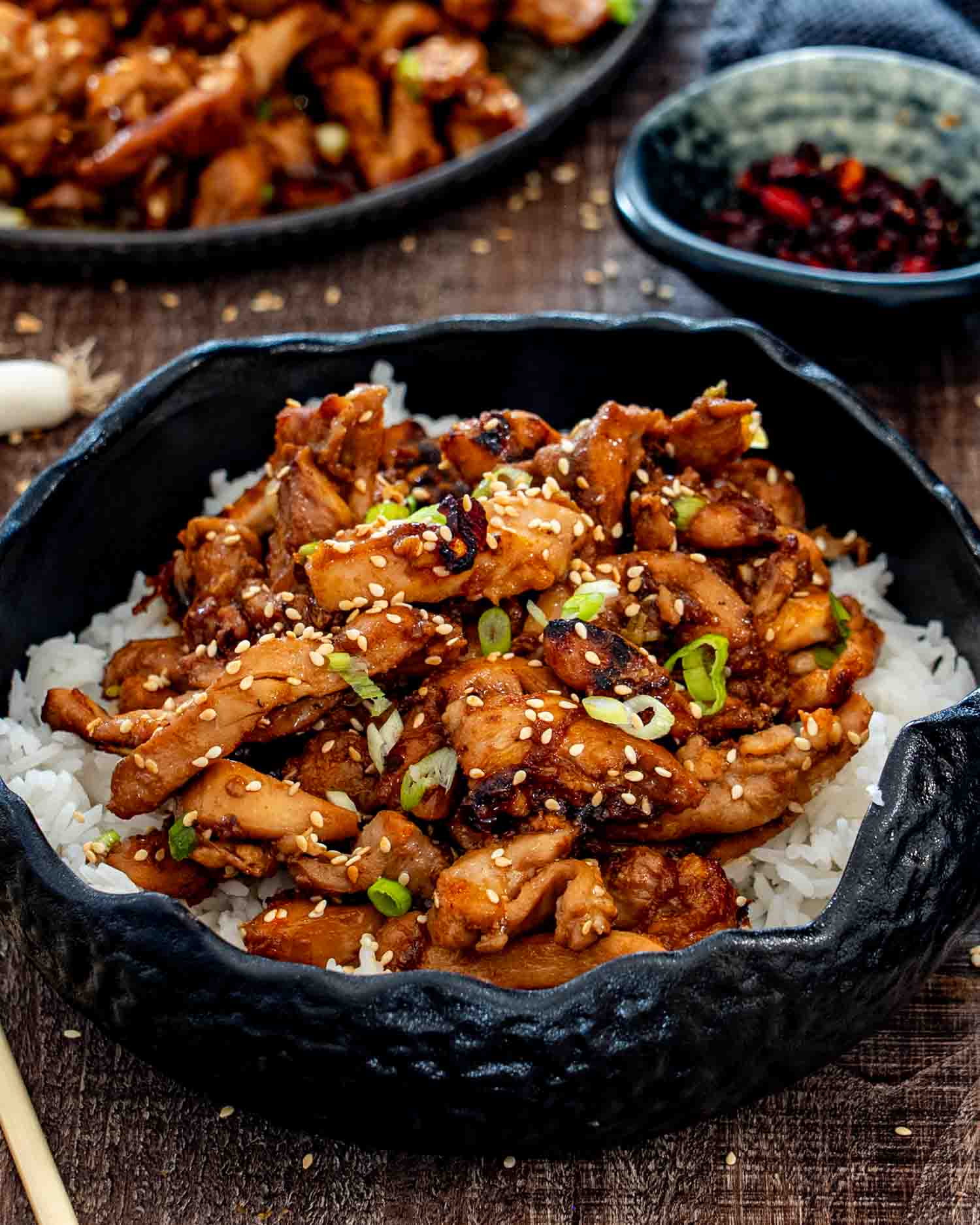
Bulgogi means fire meat in Korean. Which is an excellent name for a dish and also an accurate description of what happens when you cook it properly.
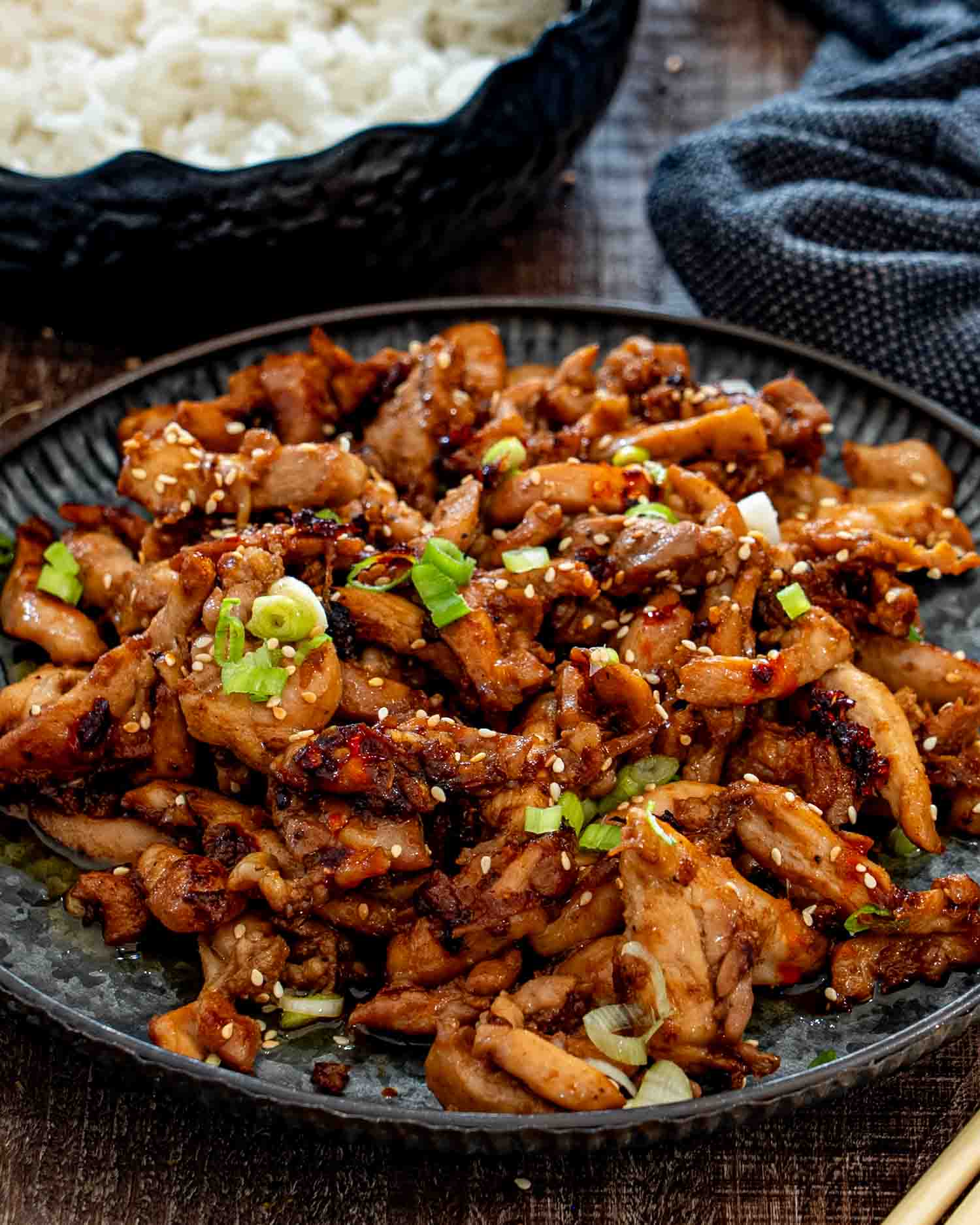
This is traditionally a beef dish but chicken thighs do something genuinely great here. More flavor than breasts, more forgiving at high heat, and at 425°F they caramelize into sticky charred edges that make you want to scrape the pan. Which you will.
The marinade has soy sauce, sesame oil, brown sugar, mirin, ginger, five cloves of garlic which is not a typo, gochujang for background heat, and one ingredient most people haven’t heard of that is entirely responsible for why restaurant bulgogi tastes better than yours. Grated Asian pear. It’s not optional. I’ll explain below and you’re going to want to read it.
The Asian Pear Secret
If you’ve ever wondered why restaurant bulgogi tastes more tender than anything you’ve made at home, this is probably why.
Asian pear contains natural enzymes that break down the proteins in meat, essentially tenderizing it from the inside while it marinates. At the same time the natural sweetness of the pear balances the savory soy and rounds out the whole marinade in a way that nothing else quite does.
You grate it directly into the marinade so it disappears completely into the sauce. You won’t see it, you won’t taste it specifically, but you’ll absolutely taste the difference it makes.
Find Asian pears at most Asian grocery stores and many regular supermarkets. If you genuinely can’t find one, a small amount of grated regular pear or even apple works in a pinch but the result won’t be quite the same. I’d encourage you to find the Asian pear. It’s worth it.
Ingredients in Chicken Bulgogi
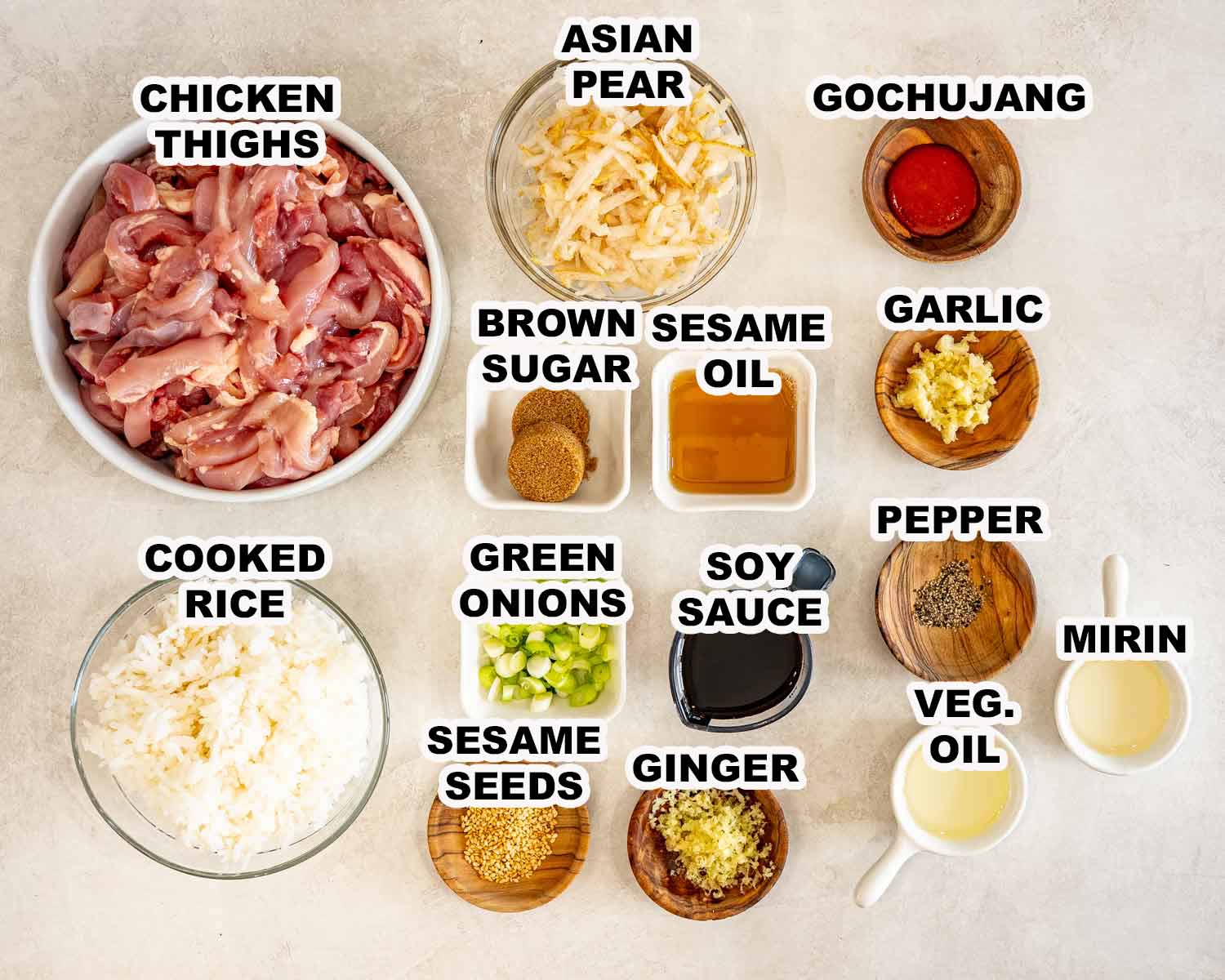
- Boneless skinless chicken thighs (2 pounds, thinly sliced): Thighs over breasts every single time for this dish. More flavor, more moisture, more forgiving at high heat. Slice them thin against the grain for the most tender result. Freeze briefly for 20 minutes before slicing if you want cleaner cuts.
- Soy sauce (low sodium): The savory backbone of the marinade. Low sodium so you control the salt level.
- Brown sugar: Balances the saltiness and contributes to the caramelization you get in the pan.
- Toasted sesame oil: Adds that distinctive nutty toasty flavor that’s part of what makes bulgogi taste like bulgogi. Goes into the marinade not the pan.
- Mirin: A sweet Japanese rice wine that adds depth and a subtle sweetness to the marinade. Find it in the Asian aisle of most grocery stores. Dry sherry is the closest substitute.
- Fresh ginger (1 tablespoon, grated): Fresh only. Ground ginger is not the same here.
- Garlic (5 cloves, minced): Five cloves. This is not a typo.
- Asian pear (½, grated): See the section above. Don’t skip it.
- Gochujang (1 teaspoon): A Korean fermented chili paste that adds a subtle background heat and a depth of flavor you can’t get from regular hot sauce. Find it in the Asian aisle or at any Korean grocery store. It’s worth having in your fridge for many reasons beyond this recipe.
- Vegetable oil: For cooking. High smoke point, neutral flavor.
- Sesame seeds and green onions: For finishing. Don’t skip them, they’re part of the dish not just decoration.
How to Make Chicken Bulgogi
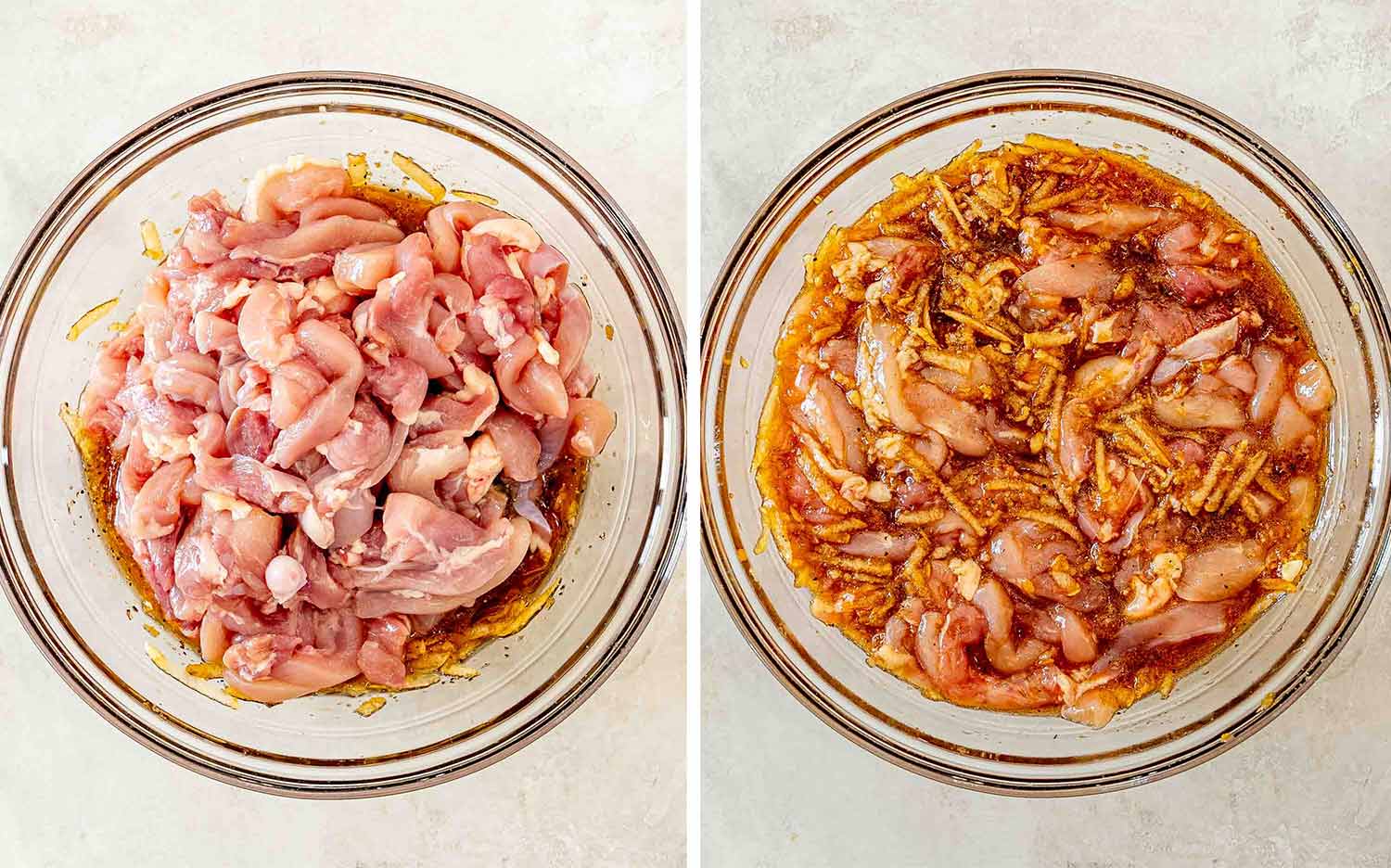
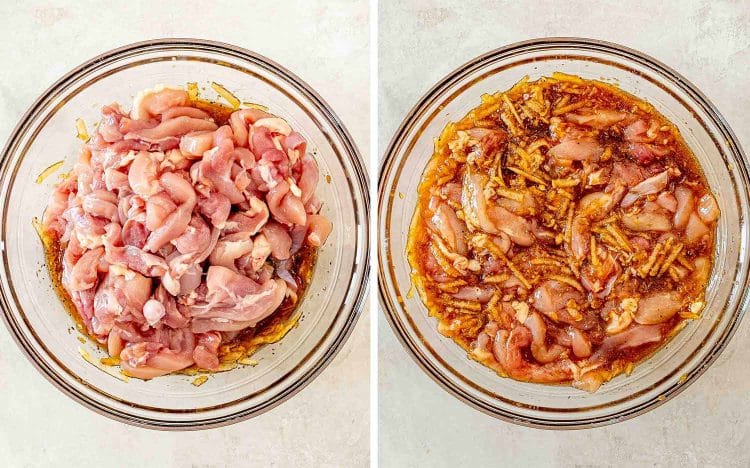
Whisk all the marinade ingredients together in a large bowl. Add the sliced chicken thighs and toss until every piece is well coated. Cover and marinate for at least 30 minutes at room temperature or up to overnight in the fridge. The longer it marinates the deeper the flavor, but even 30 minutes makes a noticeable difference.
Prep everything before you cook. Have the sesame seeds and green onions ready, the rice cooked and warm, the plate nearby. Once the pan is hot this dish moves quickly.
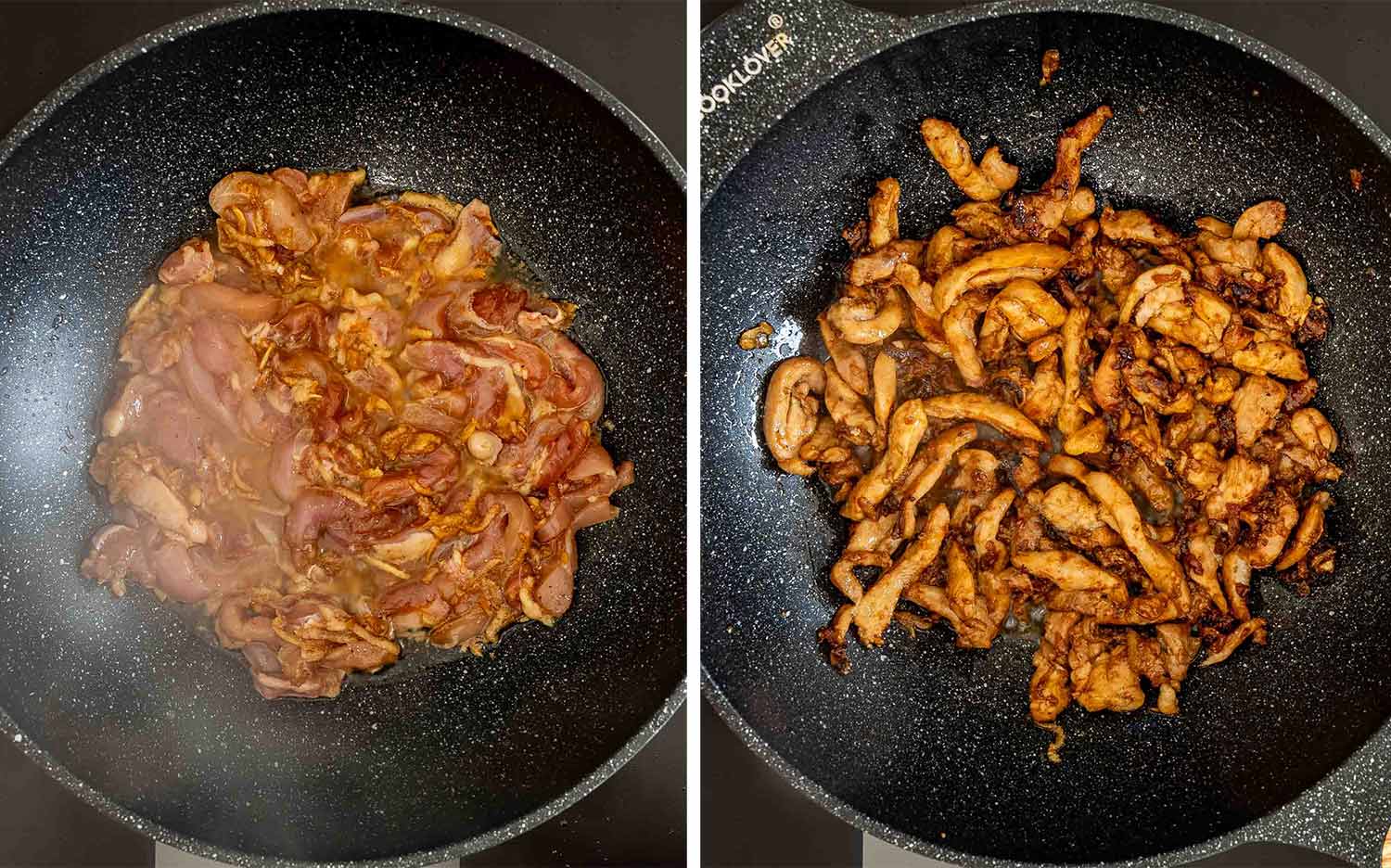
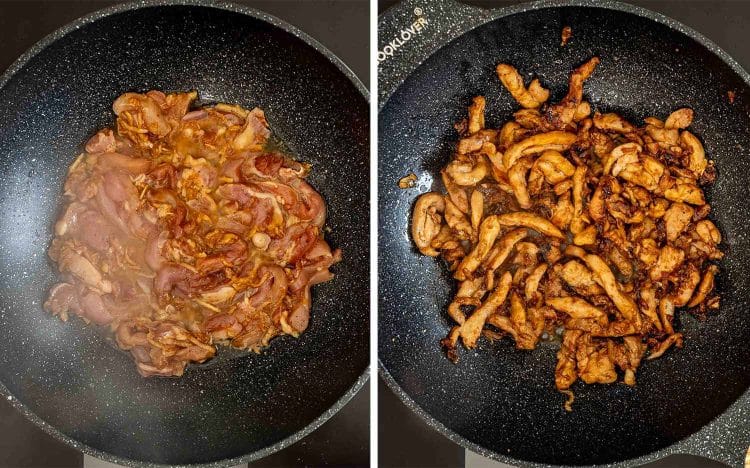
Heat the vegetable oil in a large skillet or wok over high heat until it shimmers. Properly hot. Not medium high, high. This is what gives you those caramelized charred edges that make bulgogi worth eating rather than just cooked chicken in sauce.
Lift the chicken from the marinade letting the excess drip off and add it to the pan in a single layer. Work in batches if your pan isn’t large enough. Crowding drops the temperature and you end up steaming the chicken instead of searing it and that’s a completely different and sadder dish.
Cook for 4 to 5 minutes, stirring occasionally but also letting some pieces sit undisturbed for a moment to build that caramelized char on the bottom. You want dark sticky edges on the chicken and that only happens if you give it time against the hot pan.
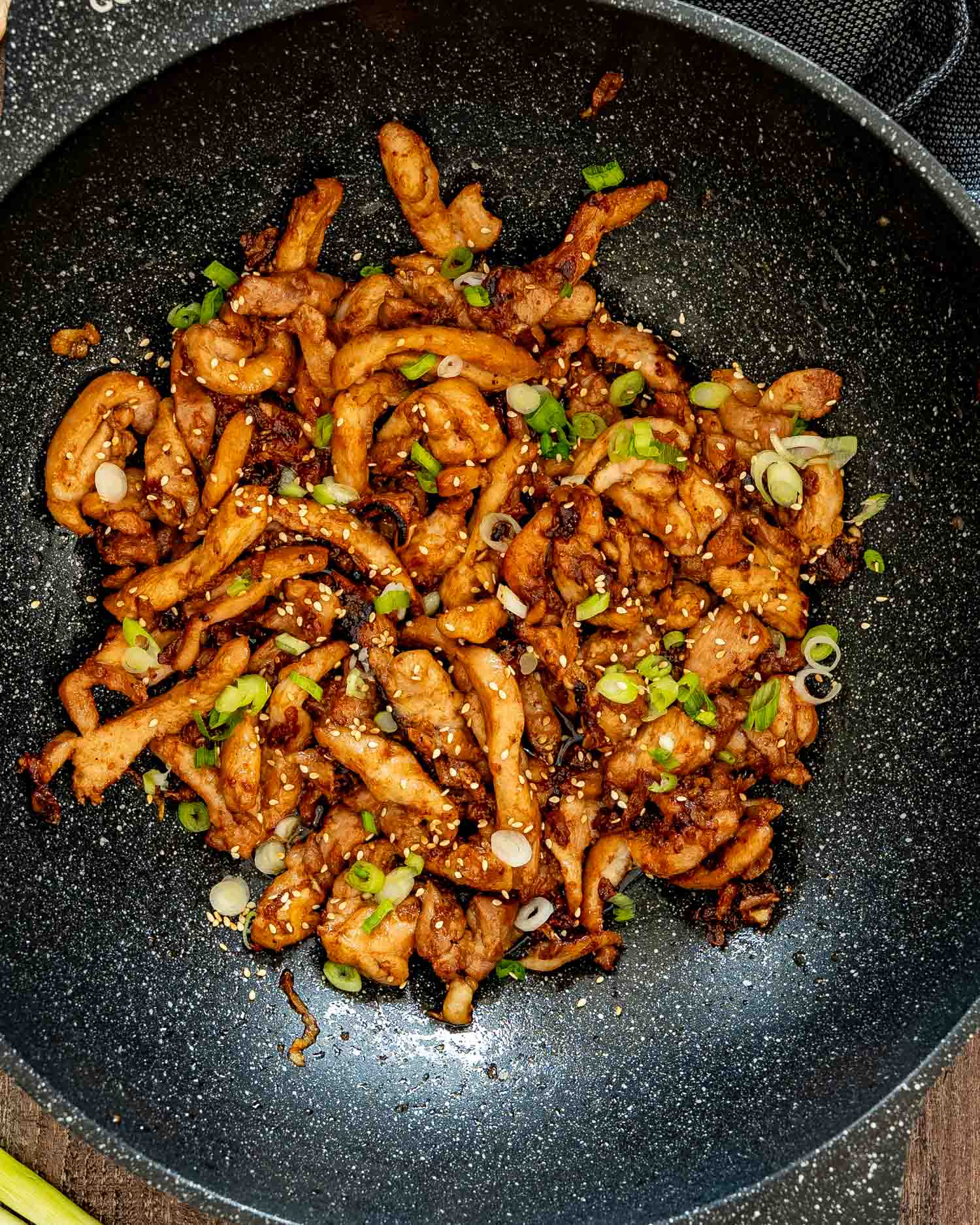
Sprinkle with sesame seeds and green onions and serve immediately over warm rice.
A Few Things That Matter
- Slice the chicken thin and against the grain. Thin slices cook fast and take the marinade better. Against the grain shortens the muscle fibers and gives you more tender chicken.
- Freeze briefly before slicing. 20 minutes in the freezer firms the chicken up and makes thin even slices much easier.
- Don’t skip the Asian pear. Already said this but it deserves repeating. It’s what separates this from just soy sauce chicken.
- Marinate longer if you can. Overnight in the fridge gives you significantly deeper flavor. The pear enzymes work their magic over time.
- High heat throughout. Bulgogi needs high heat to caramelize and char. Medium heat gives you pale cooked chicken and that’s not what we’re making.
- Cook in batches. A crowded pan is a steaming pan. Give the chicken room and work in 2 batches if needed.
- Let some pieces sit undisturbed. Stirring constantly prevents the char from forming. Give the chicken a moment against the pan before you move it.
What to Serve With Chicken Bulgogi
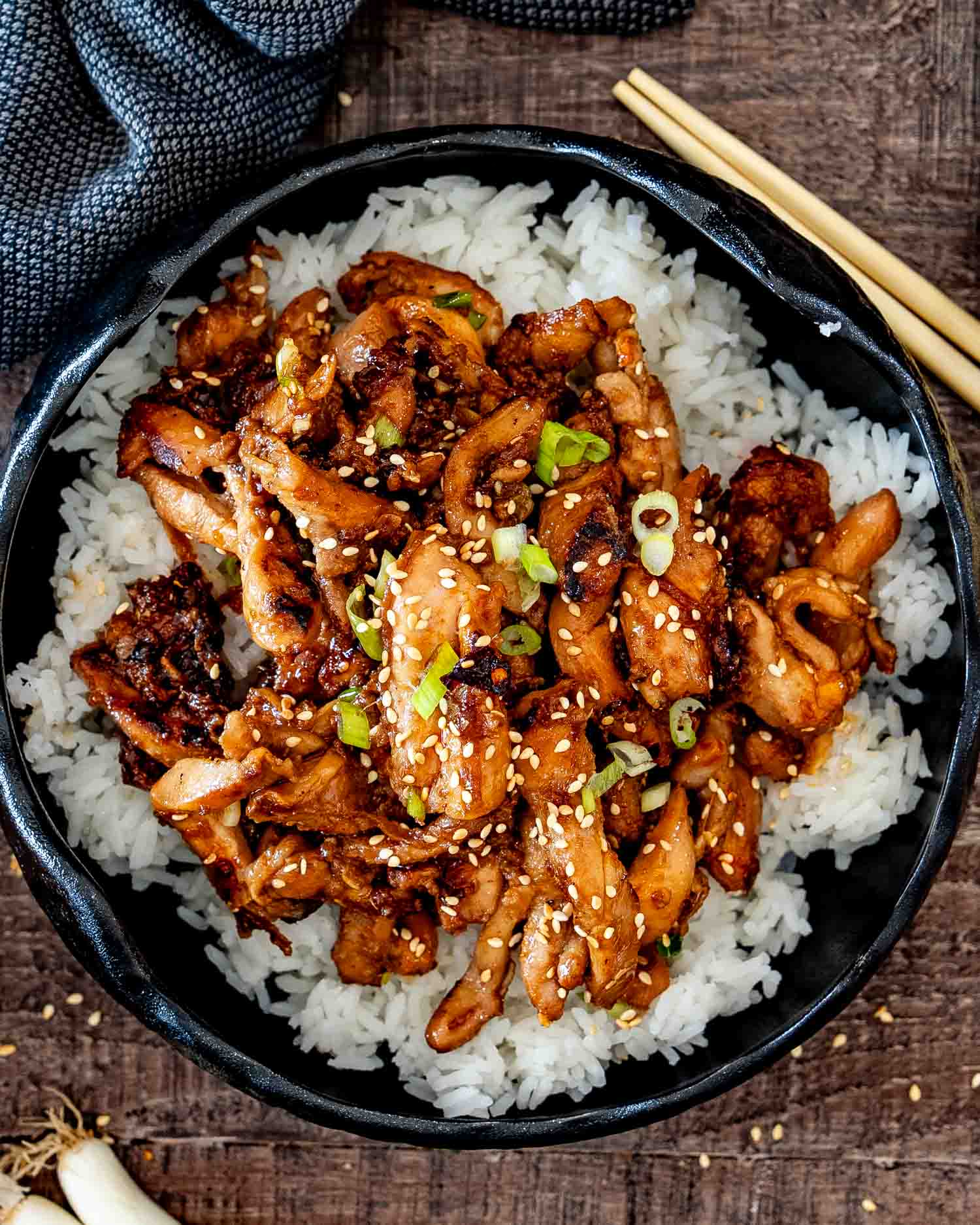
Jasmine rice or short grain white rice is classic. The sticky rice soaks up the caramelized sauce beautifully. Kimchi alongside is very traditional and adds a fermented tang that cuts through the richness of the marinade. A simple cucumber salad or steamed bok choy also work well. If you want to make it a proper spread, serve it with a few simple Korean banchan sides.
Try These Recipes Next
- Easy Korean Beef Bulgogi
- Pork Bulgogi
- Better-Than-Takeout Korean Fried Chicken
- Korean Beef Stir Fry
- Korean Meatballs
Before You Begin! If you make this, please leave a review and rating letting us know how you liked this recipe! This helps our business thrive & continue providing free recipes.
Chicken Bulgogi
Ingredients
For the marinade
- 2 pounds boneless skinless chicken thighs (thinly sliced)
- ¼ cup soy sauce (low sodium)
- 2 tablespoons brown sugar
- 2 tablespoons toasted sesame oil
- 1 tablespoon mirin
- 1 tablespoon fresh ginger (grated)
- 5 cloves garlic (minced)
- ½ Asian pear (grated)
- 1 teaspoon gochujang
- ½ teaspoon black pepper
For cooking and serving
- 1 tablespoon vegetable oil
- 1 tablespoon sesame seeds
- 3 green onions (sliced)
- 3 cups cooked rice (warm)
Before You Begin! If you make this, please leave a review and rating letting us know how you liked this recipe! This helps our business thrive & continue providing free recipes.
Instructions
- In a large bowl, whisk together the ¼ cup soy sauce, 2 tablespoons brown sugar, 2 tablespoons sesame oil, 1 tablespoon rice wine, 1 tablespoon grated ginger, 5 cloves minced garlic, the grated ½ Asian pear, 1 teaspoon gochujang, and ½ teaspoon black pepper.
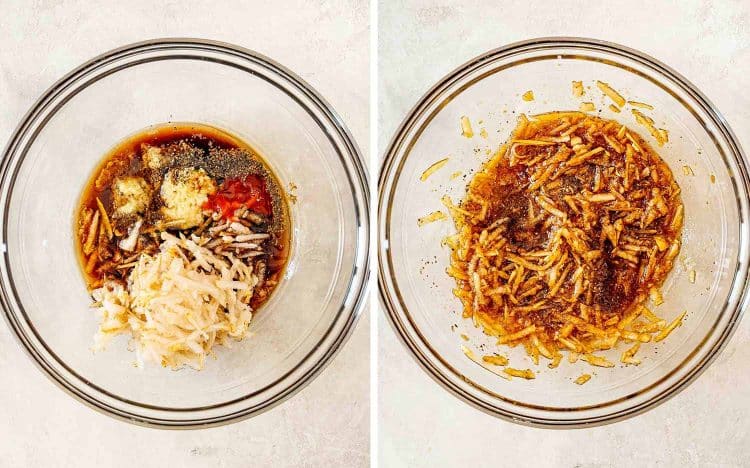
- Add the 2 pounds sliced chicken thighs and toss to coat. Let it marinate for at least 30 minutes, or up to overnight in the fridge. The grated pear is the traditional secret here, its natural enzymes tenderize the chicken while its sweetness balances the savory soy, so do not skip it.
- Heat the 1 tablespoon vegetable oil in a large skillet or wok over high heat until it shimmers. High heat is what gives you those caramelized, slightly charred edges that make bulgogi so good. Lift the chicken from the marinade, letting the excess drip off, and add it to the pan in a single layer. Work in batches if needed, since crowding the pan steams the meat instead of searing it.
- Cook for 4 to 5 minutes, stirring, until the chicken is cooked through and caramelized at the edges. Let some pieces sit undisturbed for a moment to build that char.
- Sprinkle with the 1 tablespoon sesame seeds and sliced green onions, and serve over the 3 cups warm rice.
Notes
- Nutritional information includes rice.
- Asian pear: The traditional secret ingredient that tenderizes the chicken through its natural enzymes while its sweetness balances the savory marinade. Don’t skip it. Find it at Asian grocery stores or many regular supermarkets.
- Slice thin against the grain: Thin slices take the marinade better and cook faster at high heat. Against the grain shortens the muscle fibers for more tender chicken.
- Freeze before slicing: 20 minutes in the freezer firms the chicken up and makes thin even slices much easier.
- Marinate longer if you can: Overnight in the fridge gives you significantly deeper flavor. Don’t go beyond 24 hours though as the pear enzymes can make the chicken mushy.
- High heat: Non negotiable. Bulgogi needs high heat to caramelize and char. Medium heat gives you pale cooked chicken and that’s not what we’re making.
- Cook in batches: Crowding the pan drops the temperature and you end up steaming instead of searing. Work in 2 batches if needed.
- Let pieces sit undisturbed: Stirring constantly prevents char from forming. Give the chicken a moment against the pan before moving it.
- Gochujang: At 1 teaspoon it adds subtle background heat and depth rather than aggressive spice. Find it in the Asian aisle or at Korean grocery stores. Worth having in your fridge.
- Mirin substitute: Dry sherry is the closest substitute if you can’t find mirin.
- Freeze the marinated chicken: Combine chicken and marinade in a freezer bag and freeze for up to 3 months. The marinating happens as it thaws overnight in the fridge.
- Grill option: Excellent on a grill or grill pan. Watch for flare ups from the sugars in the marinade.
Nutrition Information
Notice: Nutrition is auto-calculated for your convenience. Where relevant, we recommend using your own nutrition calculations.
Frequently Asked Questions
Can I use chicken breasts instead of thighs?
I’d stick with thighs if I can. They stay juicier at high heat and have more flavor. Breasts work but they’re more likely to dry out if you push the cook time even slightly. If you use breasts slice them thin and watch the pan closely.
Can I skip the gochujang?
You can but I wouldn’t. It adds a depth and subtle heat that’s hard to replicate with anything else. It’s not aggressively spicy at 1 teaspoon, it just adds complexity. If you’re really heat averse start with half a teaspoon.
What if I can’t find Asian pear?
A small amount of grated regular pear or apple is the closest substitute. The tenderizing enzymes aren’t quite as potent but it gets you closer than skipping it entirely.
Can I grill this instead of cooking it in a skillet?
Yes and it’s excellent on the grill. High heat, grill pan or outdoor grill, cook in a single layer and watch for flare ups from the sugars in the marinade. The char you get on a grill is even better than the skillet version.
Can I marinate longer than overnight?
I wouldn’t go beyond 24 hours. The pear enzymes continue working and the chicken can start to get mushy in texture if it marinates too long.
Can I freeze the marinated chicken?
Yes. Combine the chicken and marinade, put it in a freezer bag, and freeze for up to 3 months. Thaw overnight in the fridge and cook from thawed. The marinating happens as it thaws which is very convenient.