Cinnamon Bread
This post may contain affiliate links. Please read my disclosure policy.
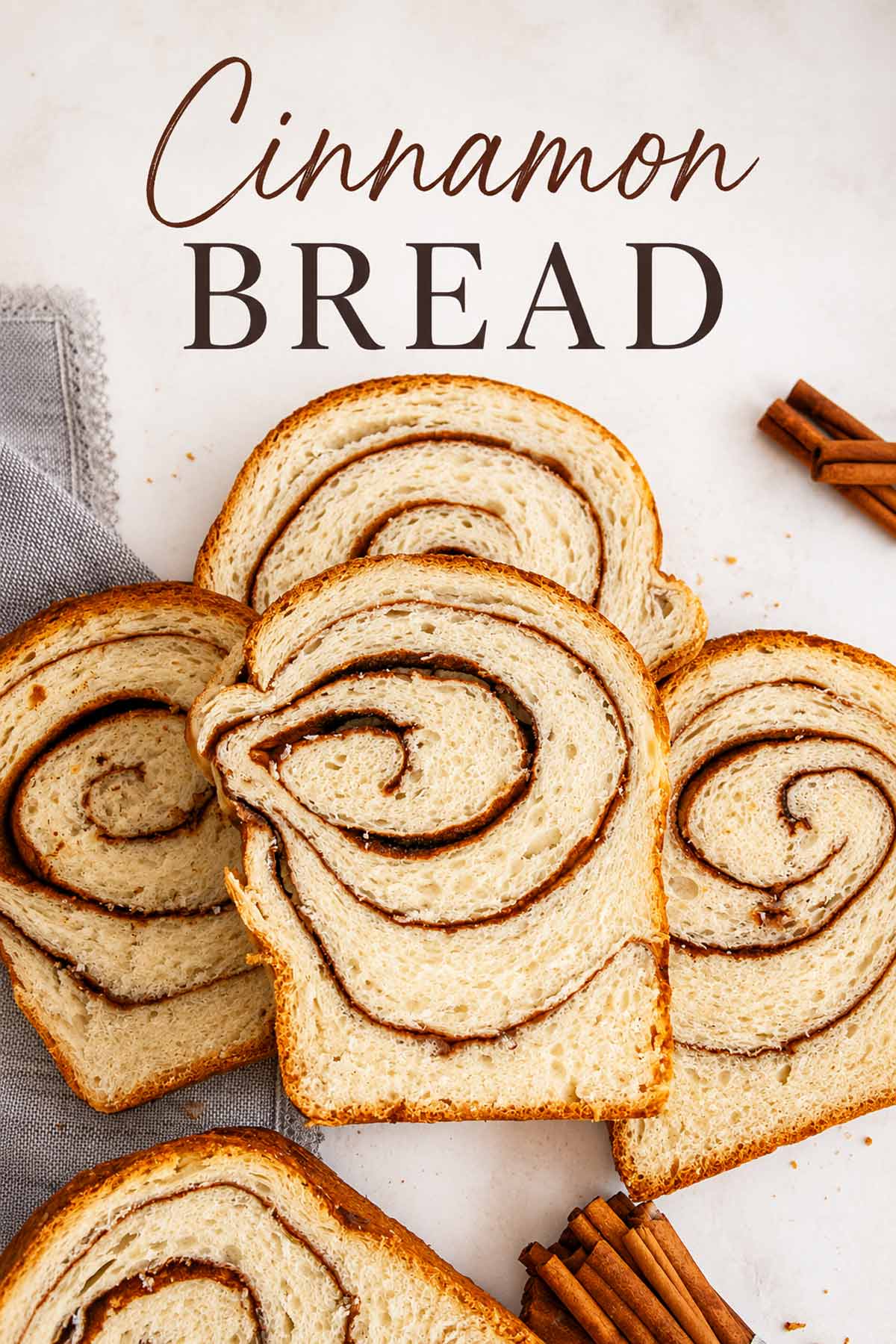
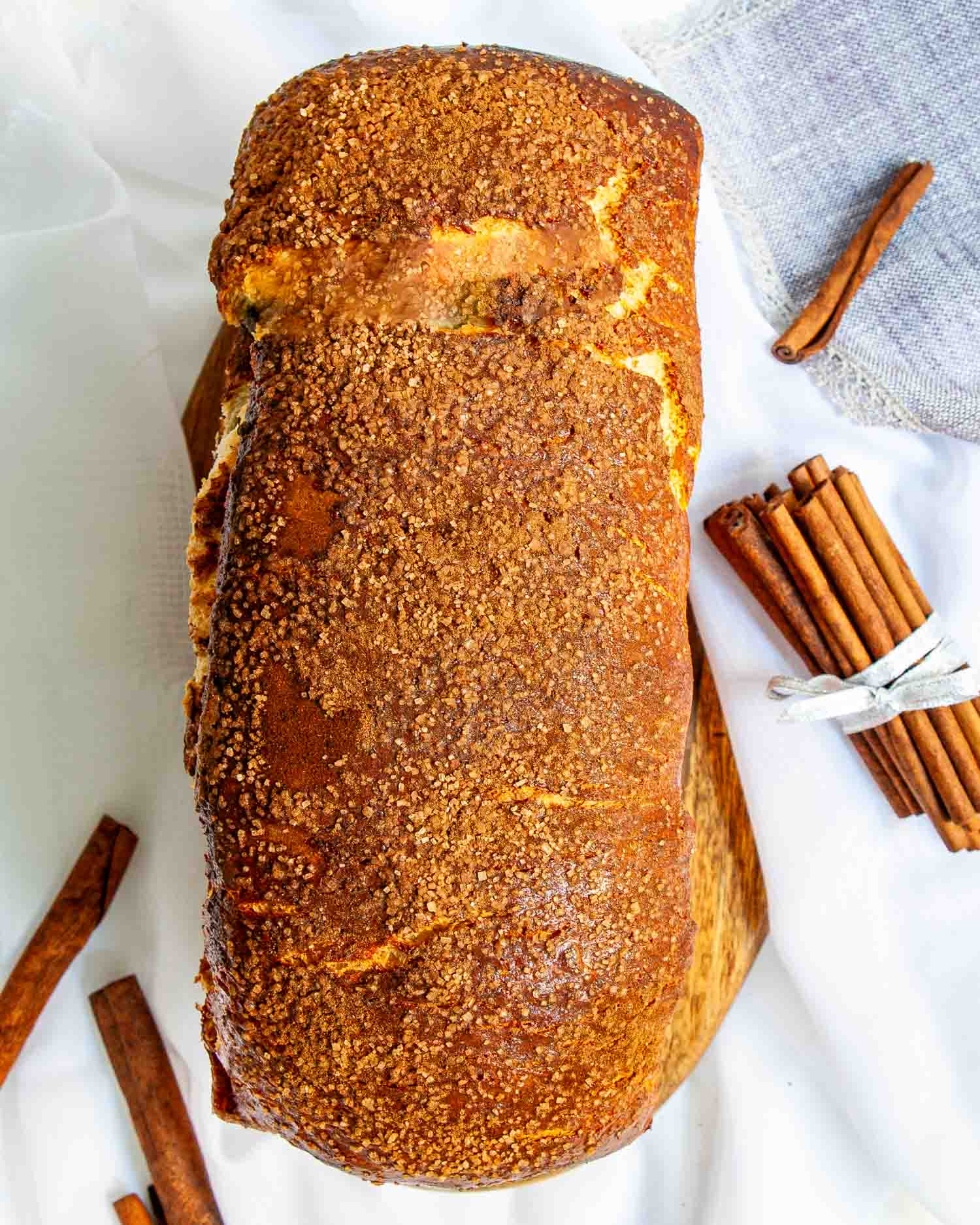
This Cinnamon Bread is a soft, buttery loaf with a cinnamon sugar swirl running right through the middle. It’s a cinnamon roll that gave up on frosting and became breakfast instead. Toasted with butter, it’s the best thing to happen to a Saturday morning.
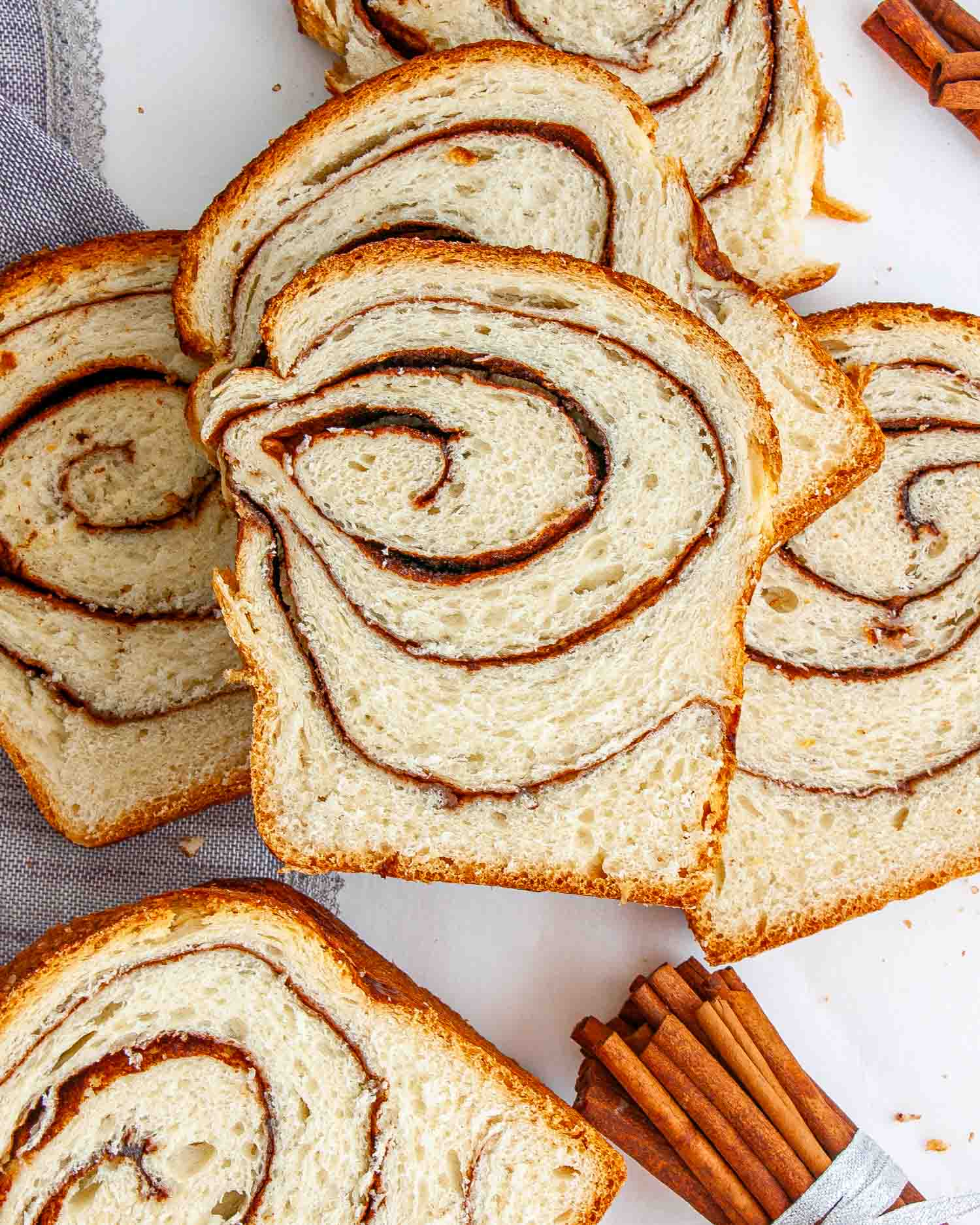
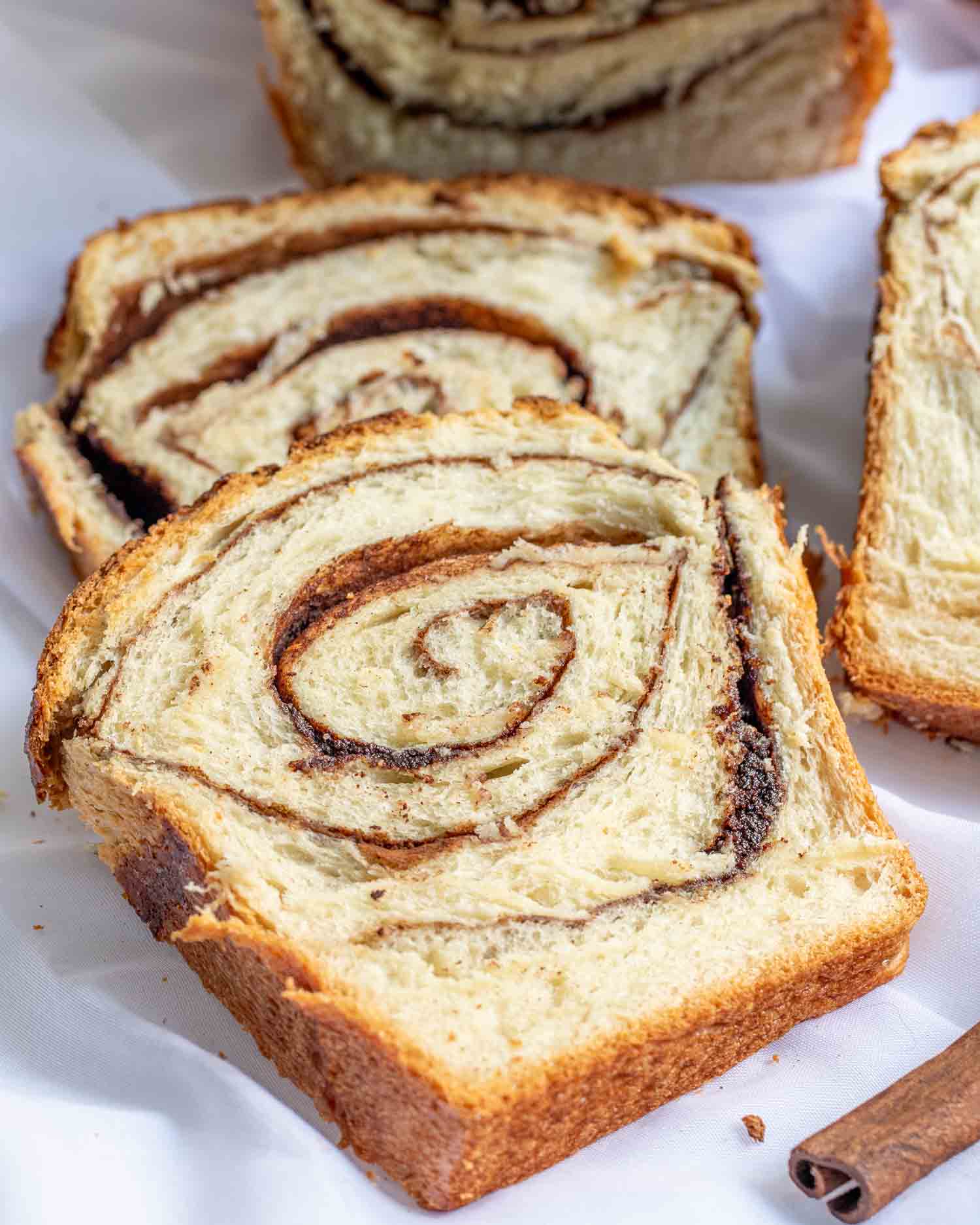
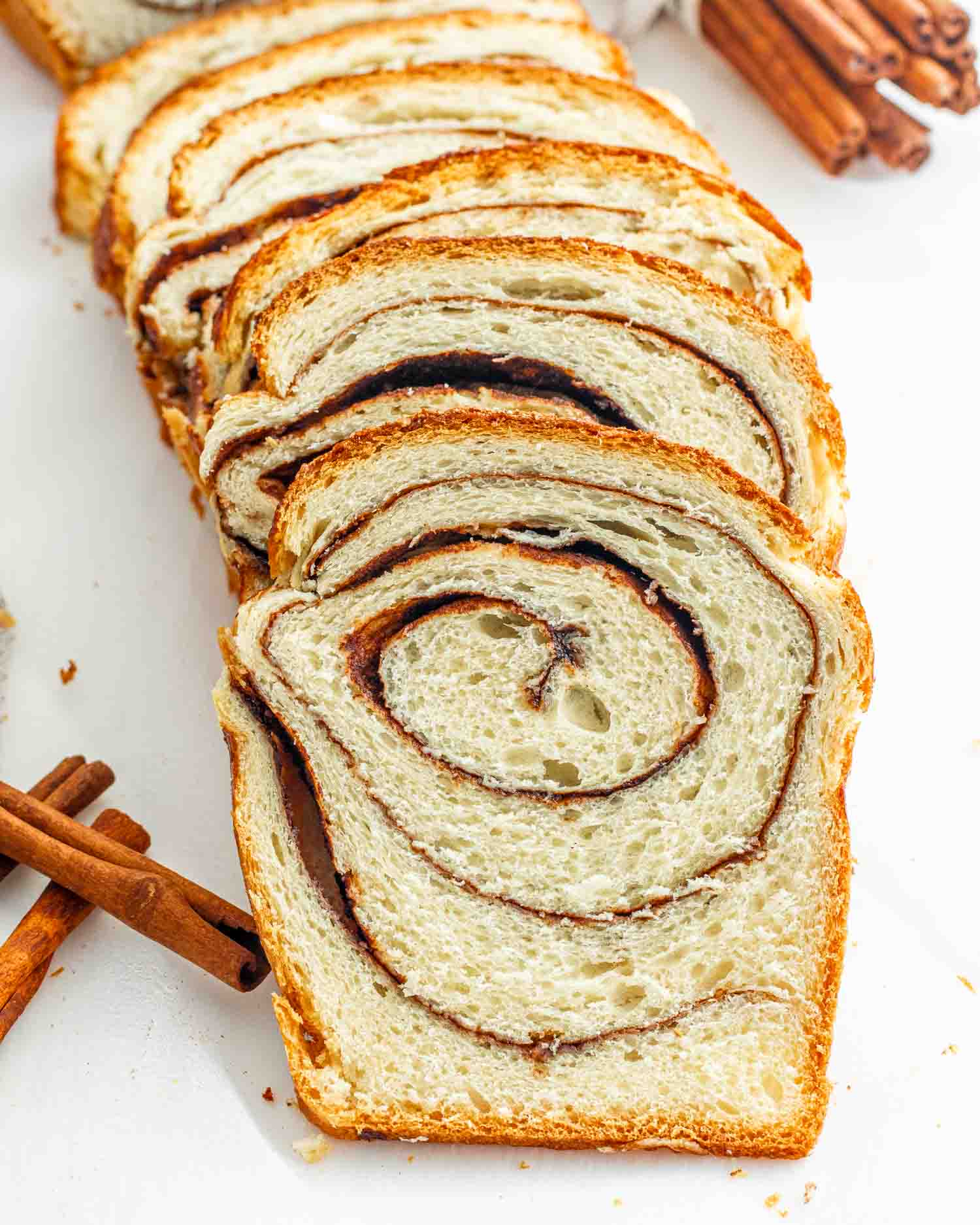
The moment worth making this for is when you cut the first slice and see the swirl.
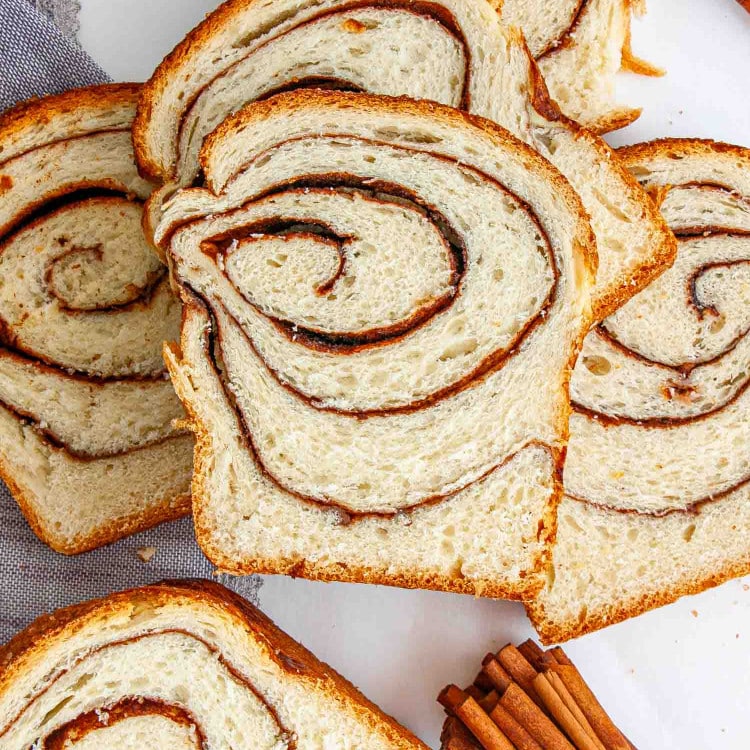
It’s a yeasted loaf enriched with butter and eggs, so the crumb is soft and slightly sweet rather than lean and chewy like sandwich bread. Wound through the middle is a spiral of cinnamon sugar that melts into the dough as it bakes and leaves those dark ribbons in every slice.
Most of the 3 hours is rising, which is to say most of it is you doing something else. The actual work is about 30 minutes spread across the whole thing.
It toasts beautifully too. Fresh it’s soft and lovely. Day 2, toasted, with butter melting into the cinnamon ribbons, is arguably better. And it makes the best French toast you’ll ever have, which is reason enough to bake two loaves.
This one’s been on the blog since 2012 and it’s still the version I make.
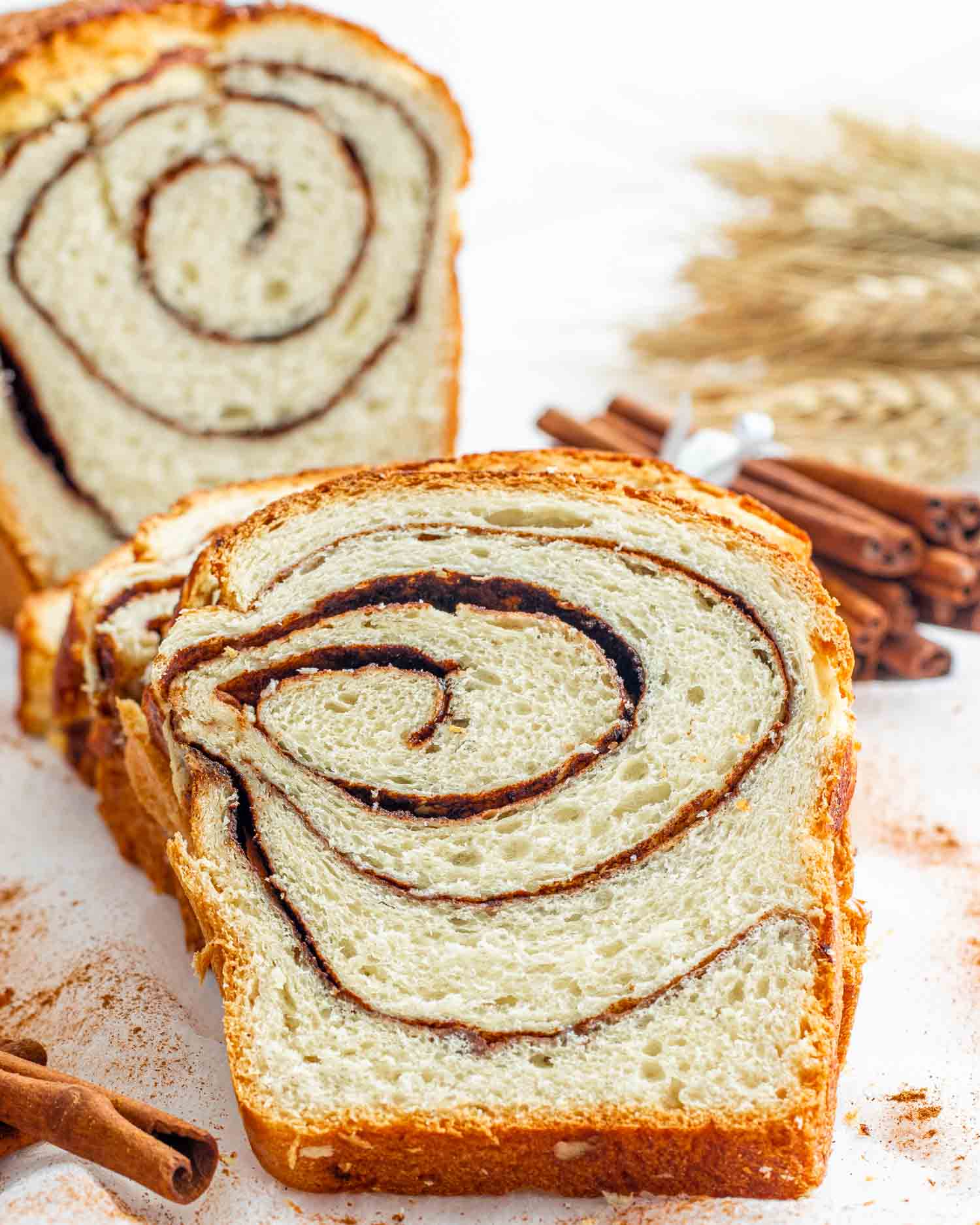
Why The Swirl Pulls Away
That hollow tunnel under the top crust is the most common complaint with any swirl bread. The reason is the sugar in the filling dissolves in the dough’s own moisture and turns to syrup. That syrup sits between two layers of dough and stops them fusing together. Then the loaf expands in the oven, the top lifts, and you’re left with a gap.
So it’s a moisture problem more than a rolling problem, and knowing that changes what you do about it.
- Mix a tablespoon of flour into the cinnamon sugar. It absorbs the syrup as it forms so the filling stays a paste instead of going liquid. This is the single most effective fix and almost nobody mentions it.
- Leave the last inch bare. No filling along the edge you roll toward. Plain dough seals against plain dough and anchors the whole spiral.
- Roll it tightly. Keep tension the entire way so there’s no air trapped between the layers to start with.
- Don’t overload it. More sugar means more syrup. Generous and even beats thick.
A small gap here and there is completely normal and it tastes exactly the same. If yours splits open dramatically every time, start with the flour.
Ingredients in Cinnamon Bread
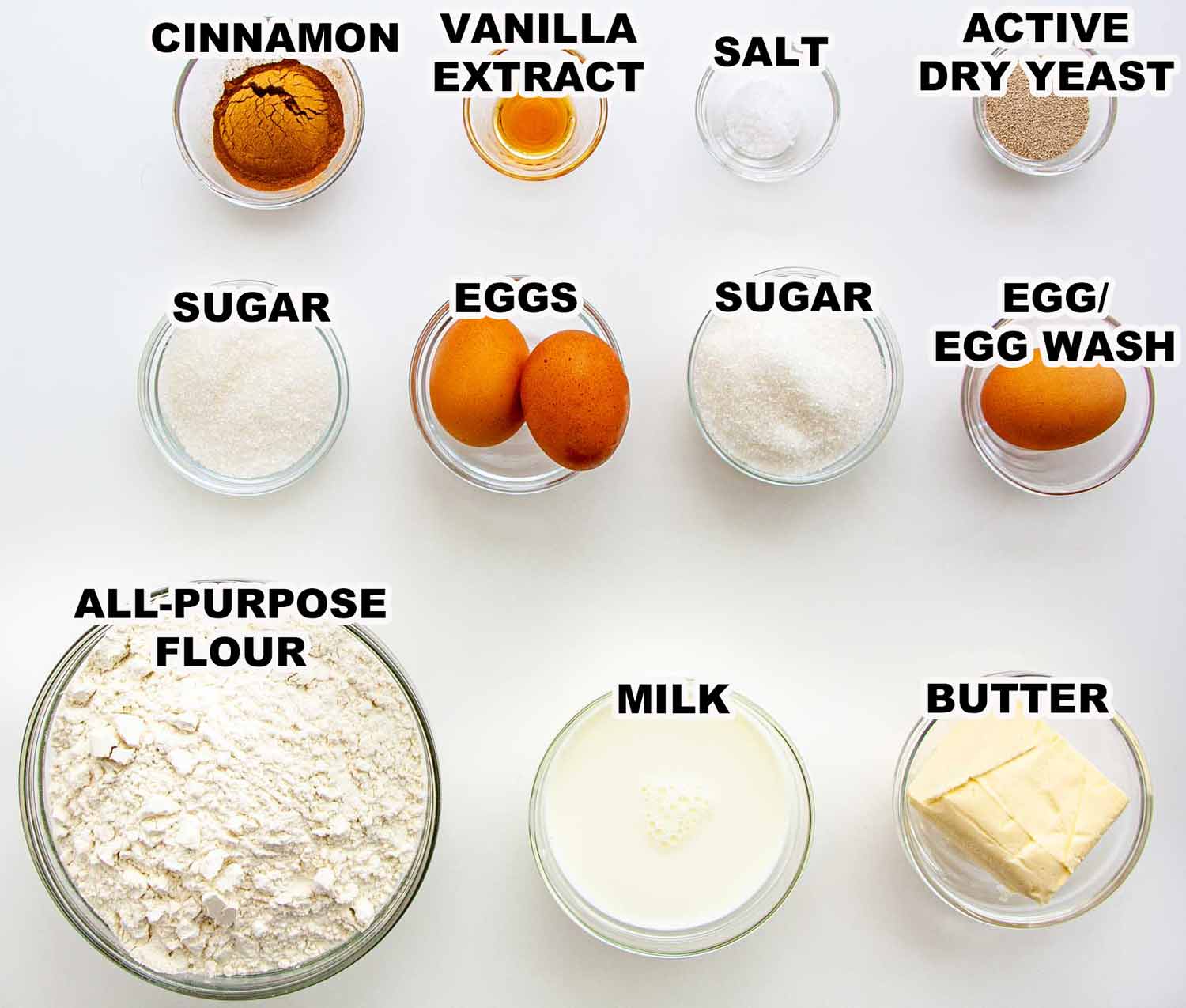
- Milk (1 cup): Warmed with the butter, and it’s what wakes the yeast up. Whole milk gives the softest crumb. Almond or oat milk work if you need it dairy free.
- Unsalted butter (½ cup): This is what makes it an enriched dough. It’s why the crumb is soft and tender rather than chewy, and why the loaf keeps well for days. Half a cup sounds like a lot. It’s doing real work.
- Active dry yeast (2¼ teaspoons, 1 package): Goes into the warm milk to proof, and you’ll know within 10 minutes whether it’s alive. If it doesn’t foam, it’s dead and there’s no saving the loaf later. Instant yeast works too and can go straight in with the flour.
- Eggs (2 large): Structure, richness, and color. They also help the loaf stay soft longer.
- Granulated sugar (½ cup for the dough, ⅓ cup for the filling): The dough sugar makes it gently sweet, more brioche than dessert. The filling sugar is what melts into those dark ribbons.
- Vanilla extract (1 teaspoon): Rounds everything out. Almond extract is an interesting swap if you want something different.
- All purpose flour (3½ cups, plus 1 tablespoon for the filling): Plain flour gives a soft crumb. Bread flour works and gives a chewier, more structured loaf. The extra tablespoon goes into the cinnamon sugar and it’s what keeps the swirl from turning to syrup.
- Salt (1 teaspoon): Add it with the flour rather than directly onto the yeast. Without it the loaf tastes flat in a way that’s hard to place.
- Cinnamon (2 tablespoons): Two tablespoons for one loaf is a proper amount and you’ll taste it. If your cinnamon has been in the cupboard over a year it’s faded, and this is a recipe where you’ll notice.
- Egg (1, beaten, for brushing): Gives you the glossy golden top. Milk works if you’d rather not crack a whole egg for it.
How To Make Cinnamon Bread
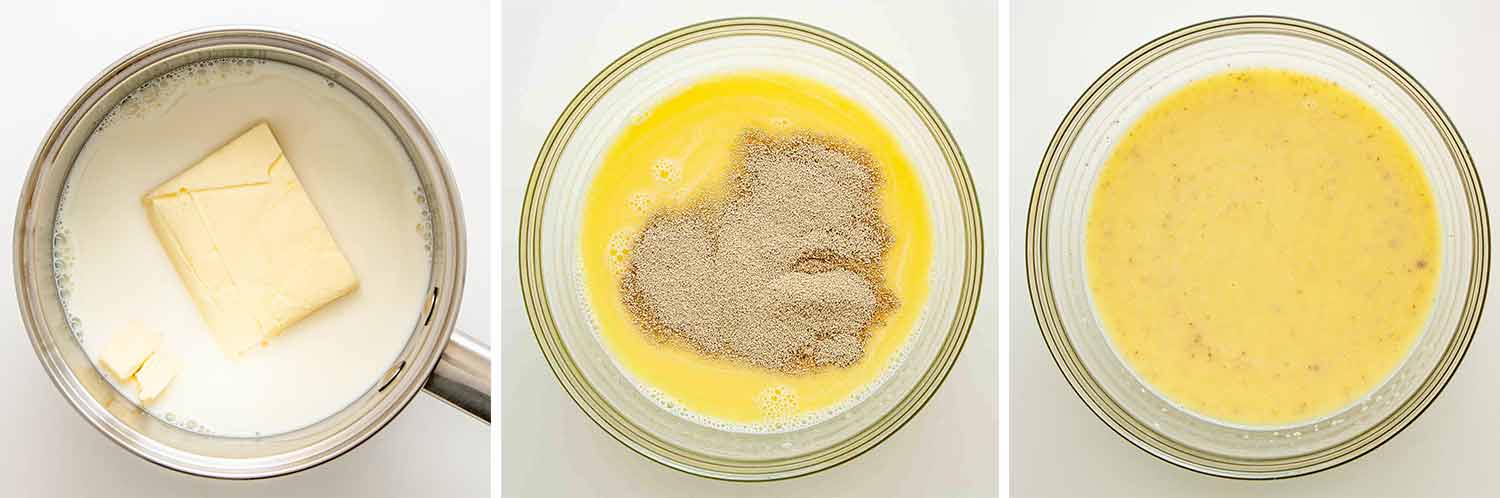
Melt the butter into the milk, then let it cool. Low heat, just until the butter has melted. Then take the pan off the stove and leave it 5 minutes. By the time the butter finishes melting the milk is almost certainly hotter than you want, and yeast starts dying above 120°F. You’re aiming for around 105°F, which feels comfortably warm on your wrist, like bathwater. This is the step that quietly ruins loaves, so give it the 5 minutes.
Proof the yeast. Sprinkle it over the warm milk, whisk it in, and leave it 10 minutes. It should foam up and smell like bread. If it just sits there looking like milk, the yeast is dead. Throw it out and start again, because you can’t rescue it further down the line.
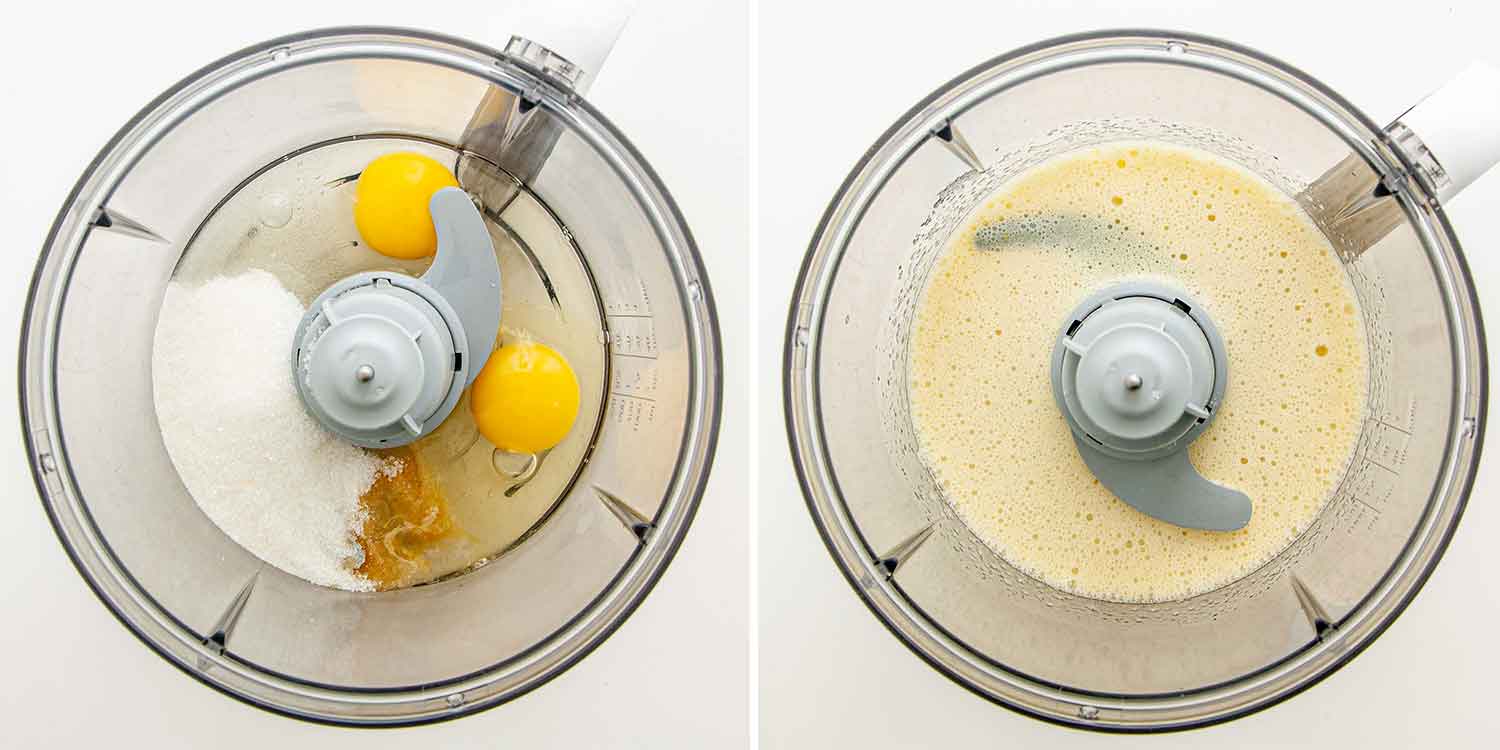
Whisk the eggs, sugar, and vanilla in the mixer bowl with the whisk attachment until pale and fluffy.
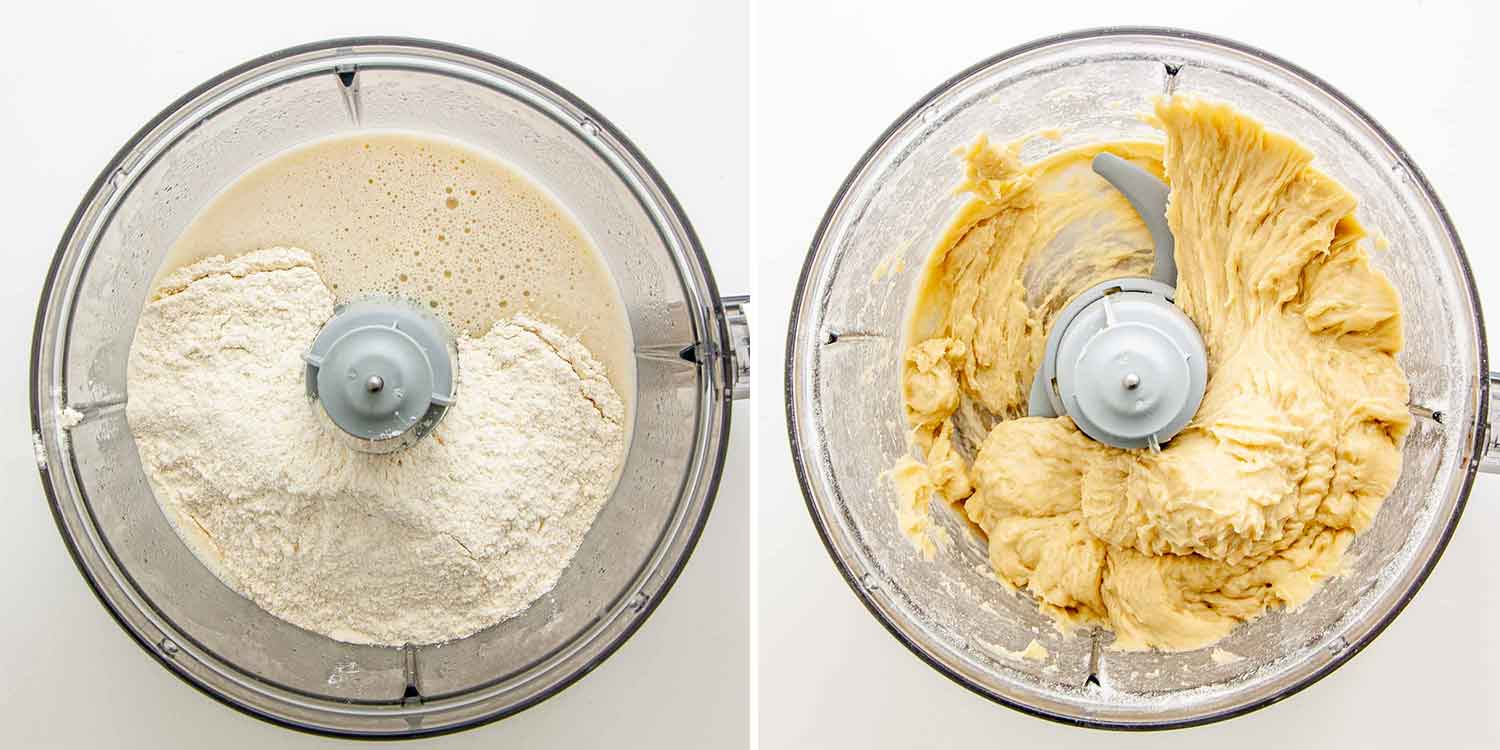
Combine everything. Mix the flour and salt in a separate bowl. Add the yeast mixture to the egg mixture and blend well. Add half the flour, switch to the dough hook, and mix until combined. Now, add the rest and let it run 5 minutes. You want a soft, slightly tacky dough that pulls away from the bowl. If it’s sticking badly add flour a tablespoon at a time, but go easy, because too much makes a dry loaf.
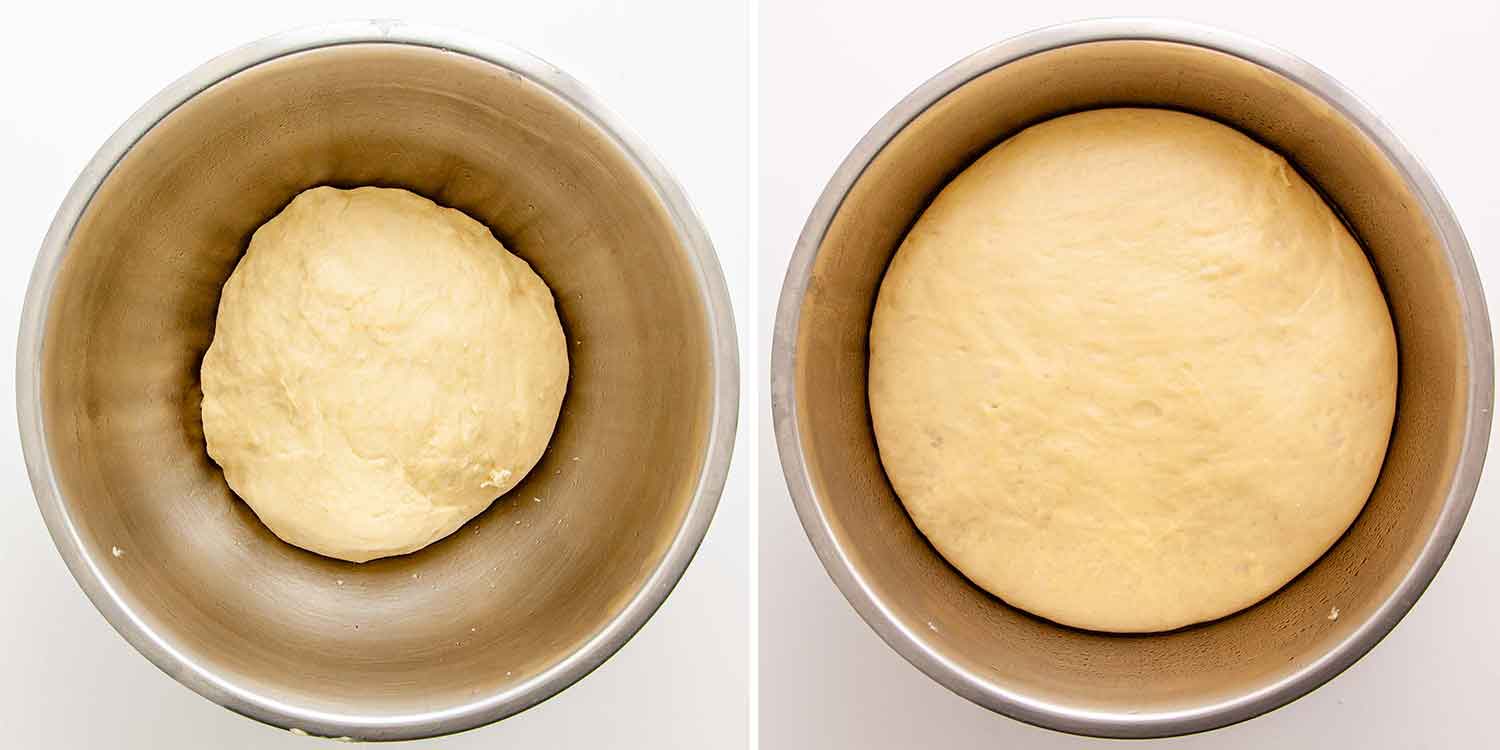
First rise. Oiled bowl, plastic wrap over the top, somewhere warm until doubled. Usually an hour, though a cold kitchen can take 2. Go by size, not the clock. If your kitchen is chilly, the oven with just the light on is a reliable warm spot.
Make the filling. Mix the ⅓ cup sugar, cinnamon, and 1 tablespoon of flour together. The flour is what stops the filling turning to syrup and pulling the swirl apart.
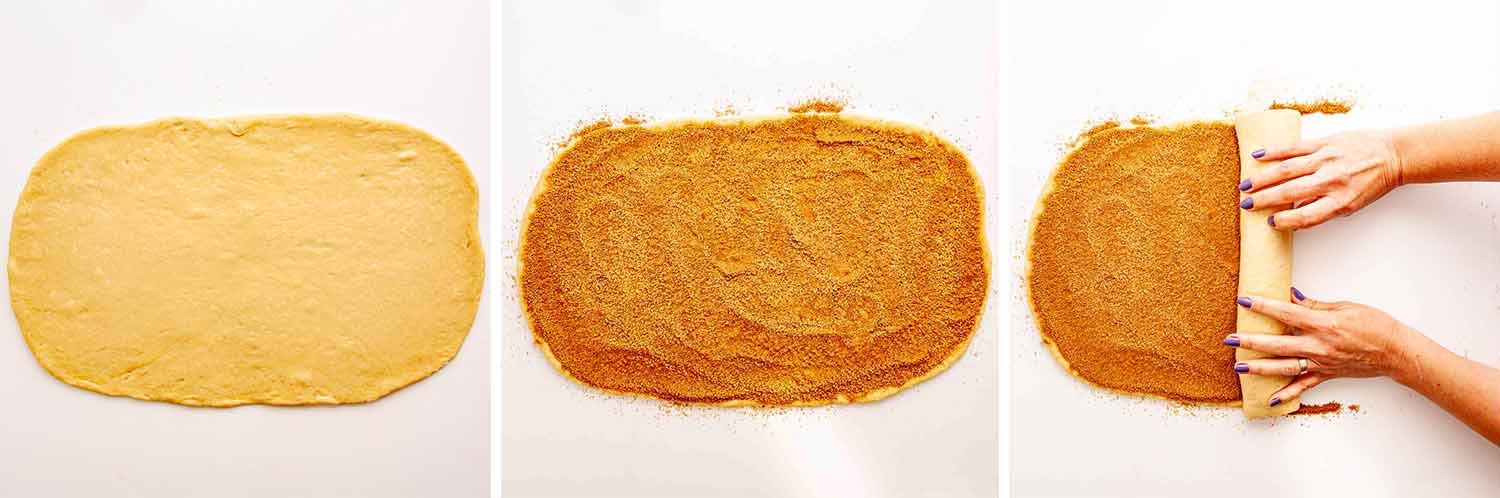
Roll and fill. Grease an 8.5 by 4.5 inch loaf pan. Roll the dough on a floured surface until it’s a bit wider than the pan and about ¼ inch thick. Spread the cinnamon sugar evenly across it, leaving the last inch along the far edge completely bare. That bare strip is what seals the roll to itself.
Roll it up tightly, keeping tension the whole way, then pinch the seam and both ends closed. Seam side down in the pan.
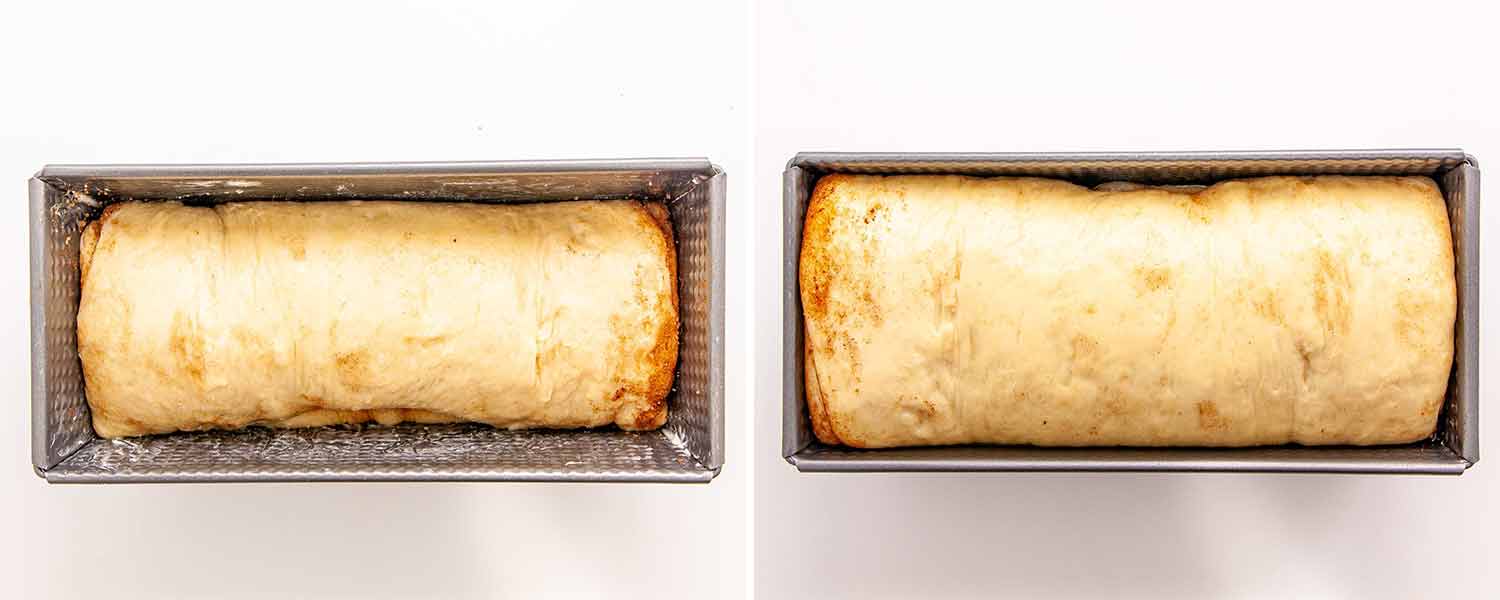
Roll it up and place it seam-side down in your greased loaf pan. Let it rise again, just like the first time. You’re almost there!
Second rise. Cover loosely and let it double again, about an hour. It should crest just above the rim of the pan.
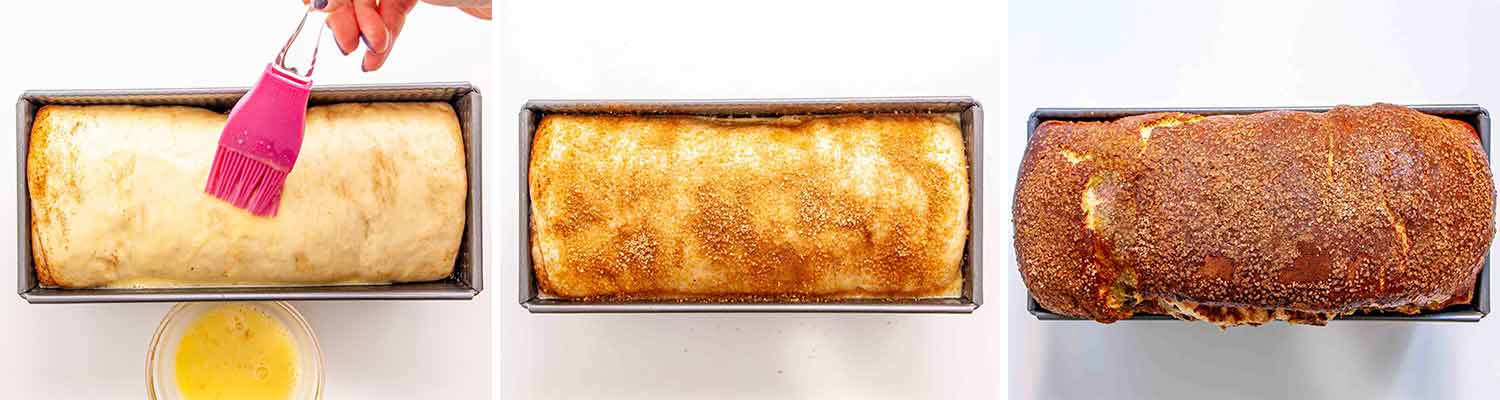
Bake. Oven to 350°F. Brush the top with beaten egg and add a little more cinnamon sugar if you like. Bake 35 to 45 minutes. If the top browns faster than the inside cooks, tent it loosely with foil for the last 10 minutes.
Check the temperature. An instant read thermometer in the center should say 195°F. Worth doing, because a swirl loaf can look perfectly golden on top while the middle is still doughy, and there’s no telling by eye.
Cool 10 minutes in the pan, then turn it out onto a rack. Leave it at least an hour before slicing. Cutting into hot enriched bread compresses the crumb and turns it gummy. I know it’s hard. Wait anyway.
Things Worth Knowing
- Let the milk cool before the yeast goes in. Off the heat, 5 minutes, then check. It’s hotter than you think when the butter finishes melting.
- Proof the yeast first. Ten minutes tells you whether you have bread or a wasted afternoon.
- Flour in the filling. One tablespoon. It’s the difference between a swirl that holds and one that tunnels.
- Leave the last inch bare. Plain dough sealing against plain dough anchors the spiral.
- Go by size, not time. Rise times depend entirely on your kitchen. Doubled is doubled, whether that’s 50 minutes or 2 hours.
- Use the thermometer. 195°F. Swirl loaves hide an underbaked middle better than any other bread.
- Let it cool an hour. Hot enriched bread goes gummy under the knife.
Variations
Raisins. Half a cup scattered over the filling before rolling. Soak them in warm water for 10 minutes first so they don’t pull moisture from the dough. This is by far my favorite addition.
Nuts. Chopped pecans or walnuts through the filling add crunch to the swirl.
Brown sugar filling. Swap the granulated for brown. Deeper, more caramel, slightly stickier.
Cardamom. Half a teaspoon alongside the cinnamon. Less traditional and very good.
Glazed. Powdered sugar and milk drizzled over the cooled loaf takes it toward dessert.
Two smaller loaves. Split the dough between two 8 by 4 pans. Bake 25 to 30 minutes and check the temperature earlier. One for now, one for the freezer.
What To Do With It
Toasted with butter is the answer most mornings, and the butter melting into the cinnamon ribbons is the whole appeal.
But the real reason to bake an extra loaf is French toast. Enriched bread that’s a day or two old soaks up custard perfectly, and the cinnamon is already built in so you barely need to season the eggs. It’s the best French toast bread there is and it isn’t close.
Beyond that, a slice with cream cheese is very good, and it makes a genuinely excellent bread pudding.
Make Ahead And Storage
Room temperature: wrapped tightly or in a bread bag, 4 to 5 days. It stays soft longer than lean breads because of the butter and eggs.
Don’t refrigerate it. The fridge stales bread faster than the counter does, which surprises people. Room temperature or the freezer, nothing in between.
Freezer: 3 months, whole or sliced. Sliced is more useful, since you can pull out 2 pieces and put them straight in the toaster.
Overnight rise: after shaping the loaf in the pan, cover it and refrigerate overnight instead of doing the second rise on the counter. In the morning give it an hour out to come back to temperature and finish rising, then bake. Fresh bread for breakfast without getting up at 5.
Discover More Recipes
Before You Begin! If you make this, please leave a review and rating letting us know how you liked this recipe! This helps our business thrive & continue providing free recipes.
Cinnamon Bread
Ingredients
Dough
- 1 cup milk
- ½ cup butter (unsalted)
- 2¼ teaspoon active dry yeast (1 package)
- 2 large eggs
- ½ cup sugar
- 1 teaspoon vanilla extract
- 3 ½ cups all-purpose flour
- 1 teaspoon salt
Filling
- ⅓ cup sugar
- 2 tablespoon cinnamon
- 1 medium egg (beaten, for brushing)
Before You Begin! If you make this, please leave a review and rating letting us know how you liked this recipe! This helps our business thrive & continue providing free recipes.
Instructions
- Add the 1 cup milk and ½ cup unsalted butter to a saucepan and melt over low heat. Take the pan off the heat and let it cool for about 5 minutes, until it reaches 105°F. It will be hotter than that when the butter finishes melting, and anything above 120°F will kill the yeast.
- Sprinkle the 2¼ teaspoons active dry yeast over the warm milk, whisk it in, and let it rest for 10 minutes until foamy. If it doesn't foam, the yeast is dead and you'll need to start again with fresh yeast.
- In the mixer bowl, whisk the 2 large eggs, ½ cup granulated sugar, and 1 teaspoon vanilla extract with the whisk attachment until light and fluffy.
- In a separate bowl, mix the 3½ cups all purpose flour and 1 teaspoon salt together.
- Add the yeast mixture to the egg mixture and blend well. Add half the flour mixture, switch to the dough hook, and mix until combined. Add the remaining flour and mix for another 5 minutes, until the dough is soft, slightly tacky, and pulling away from the bowl.
- Place the dough in an oiled bowl, cover with plastic wrap, and let it rise in a warm place until doubled in size, about 1 hour.
- Grease an 8.5 by 4.5 inch loaf pan. In a small bowl, mix the ⅓ cup granulated sugar, 2 tablespoons ground cinnamon, and 1 tablespoon all purpose flour together.
- Roll the dough out on a floured surface until it's slightly wider than the loaf pan and about ¼ inch thick. Spread the cinnamon sugar mixture evenly over the dough, leaving the last inch along the far edge bare.
- Roll the dough up tightly, keeping tension as you go, then pinch the seam and both ends sealed. Place it in the loaf pan seam side down.
- Cover loosely and let it rise again until doubled, about 1 hour. It should crest just above the rim of the pan.
- Preheat the oven to 350°F. Brush the loaf with the beaten egg and sprinkle a little extra cinnamon sugar on top if you like.
- Bake for 35 to 45 minutes, until golden brown and an instant read thermometer inserted into the center reads 195°F. If the top browns too quickly, tent it loosely with foil for the last 10 minutes.
- Cool in the pan for 10 minutes, then turn out onto a wire rack. Let it cool for at least 1 hour before slicing.
Equipment
Notes
- Cool the milk before adding the yeast. Off the heat for 5 minutes, then check. It’s hotter than you’d think once the butter has melted.
- Proof the yeast: 10 minutes, and it should foam. No foam means it’s dead. Start over rather than pressing on.
- Flour in the filling: the tablespoon of flour absorbs the syrup that forms as the sugar dissolves. It’s what keeps the swirl from separating.
- Leave the last inch bare: plain dough sealing against plain dough anchors the spiral.
- Roll it tightly: keep tension the whole way so no air is trapped between the layers.
- Go by size, not time: rise times vary with kitchen temperature. Doubled is doubled.
- Check the temperature: 195°F in the center. A swirl loaf hides an underbaked middle well.
- Cool an hour before slicing. Hot enriched bread goes gummy under the knife.
Nutrition Information
Notice: Nutrition is auto-calculated for your convenience. Where relevant, we recommend using your own nutrition calculations.
Originally shared Oct 2012.
Why didn’t my dough rise?
Almost always the yeast. Either it was old, or the milk was too hot when it went in. That’s why the 10 minute proof matters, because you find out before committing 3 more hours. A cold kitchen also slows things considerably, so give it longer before you give up.
Why is there a gap under the swirl?
The sugar dissolves into syrup during the rise and stops the two layers of dough fusing. Mix a tablespoon of flour into the cinnamon sugar to absorb it, leave the last inch of dough bare so it seals to itself, and roll tightly.
Can I use instant yeast instead of active dry?
Yes. Use about 25% less and mix it straight in with the flour rather than proofing it. It rises a bit faster too, so start checking earlier.
Can I make it without a stand mixer?
Absolutely. Mix with a wooden spoon until the first half of the flour is in, then turn it out and knead by hand for 10 to 12 minutes. It’s a soft dough so it’s pleasant to work with.
How do I know when it’s done?
195°F in the center on an instant read thermometer. A swirl loaf can look beautifully golden while the middle is still raw, so I wouldn’t go by color alone.
Can I use bread flour?
You can, and it gives a slightly chewier, more structured loaf. All purpose gives a softer crumb. Both are good, just different.
Can I prepare it the night before?
Yes. Shape the loaf, cover it, and refrigerate overnight instead of the second rise. In the morning give it an hour on the counter, then bake.