German Chocolate Cake
This post may contain affiliate links. Please read my disclosure policy.
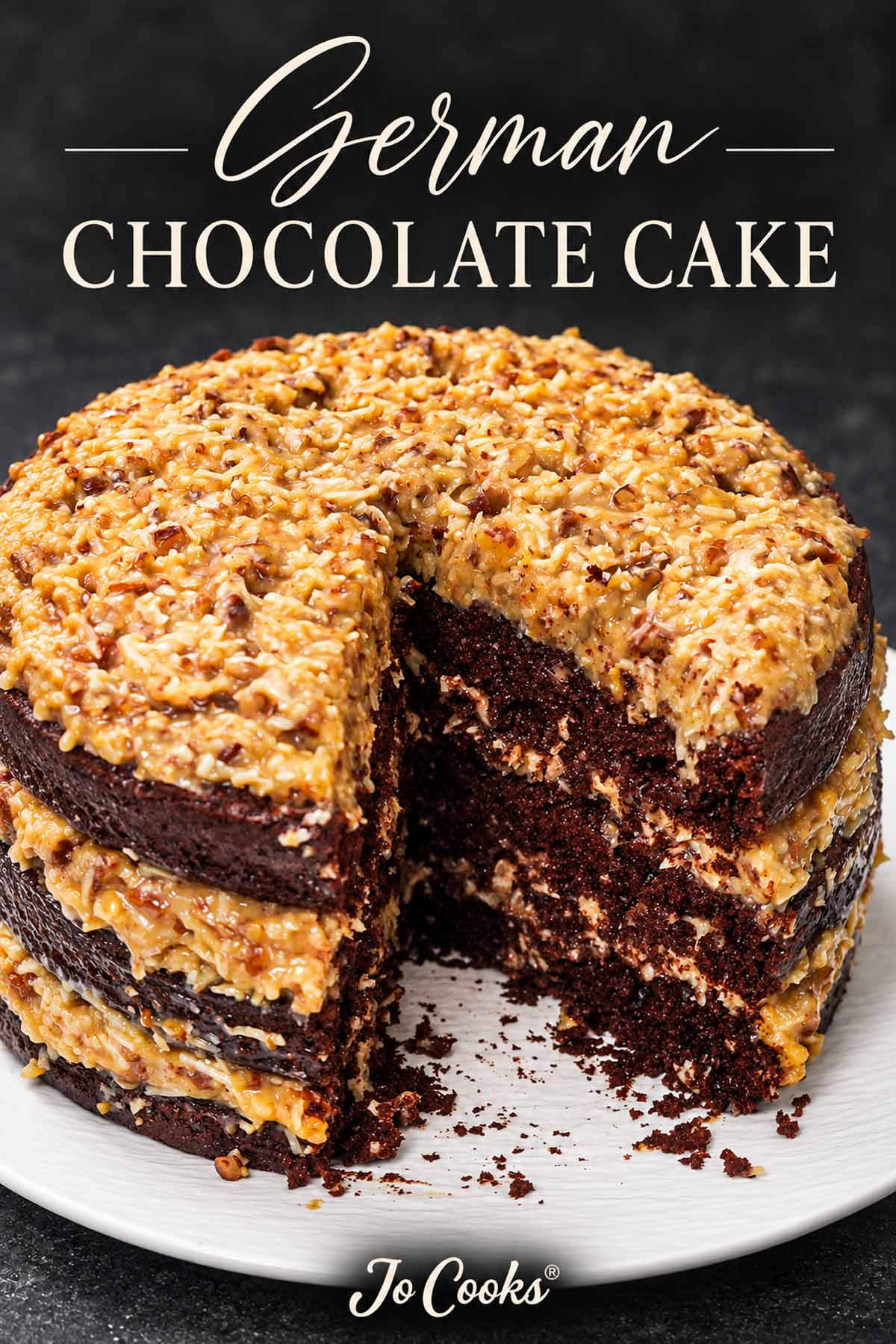
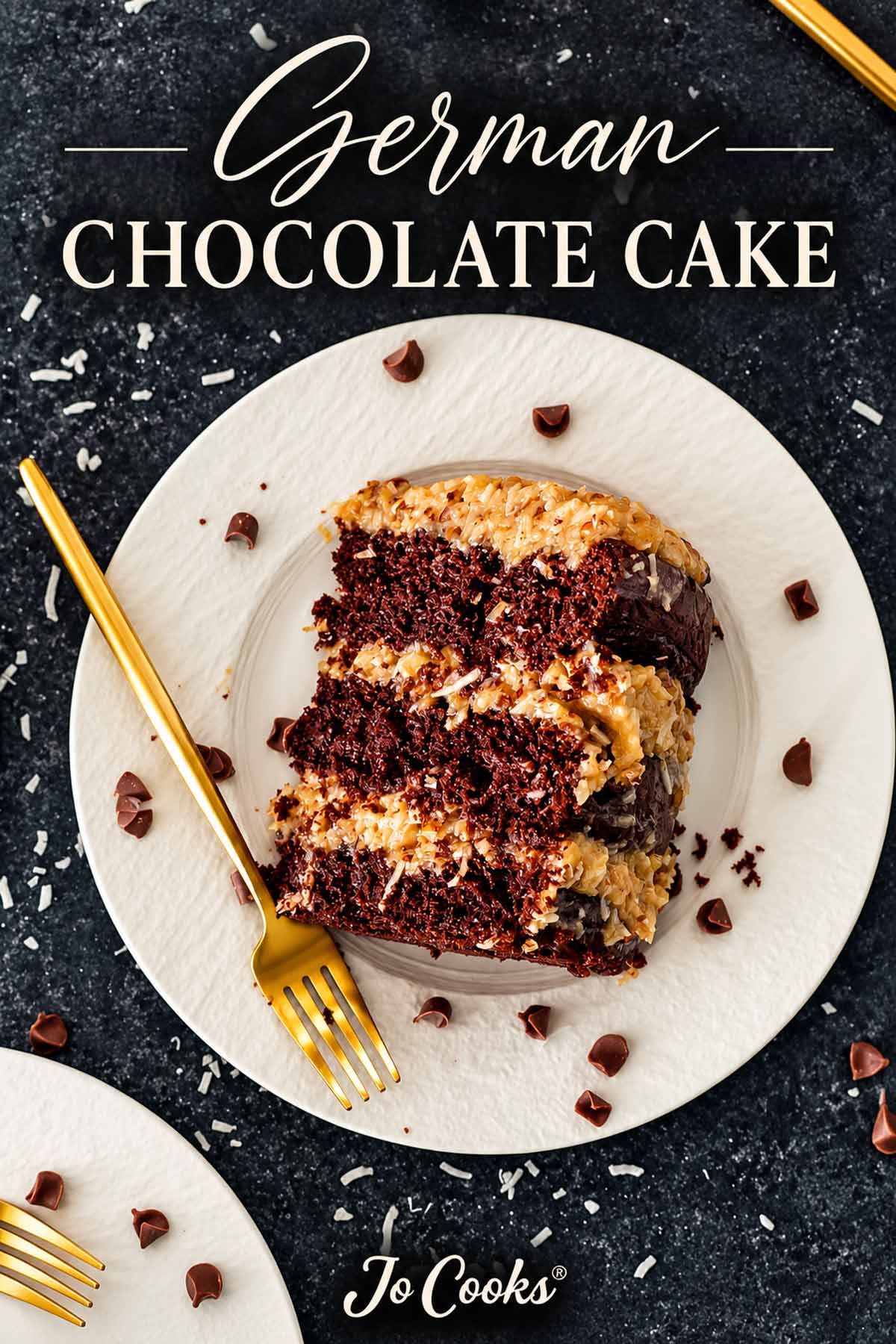
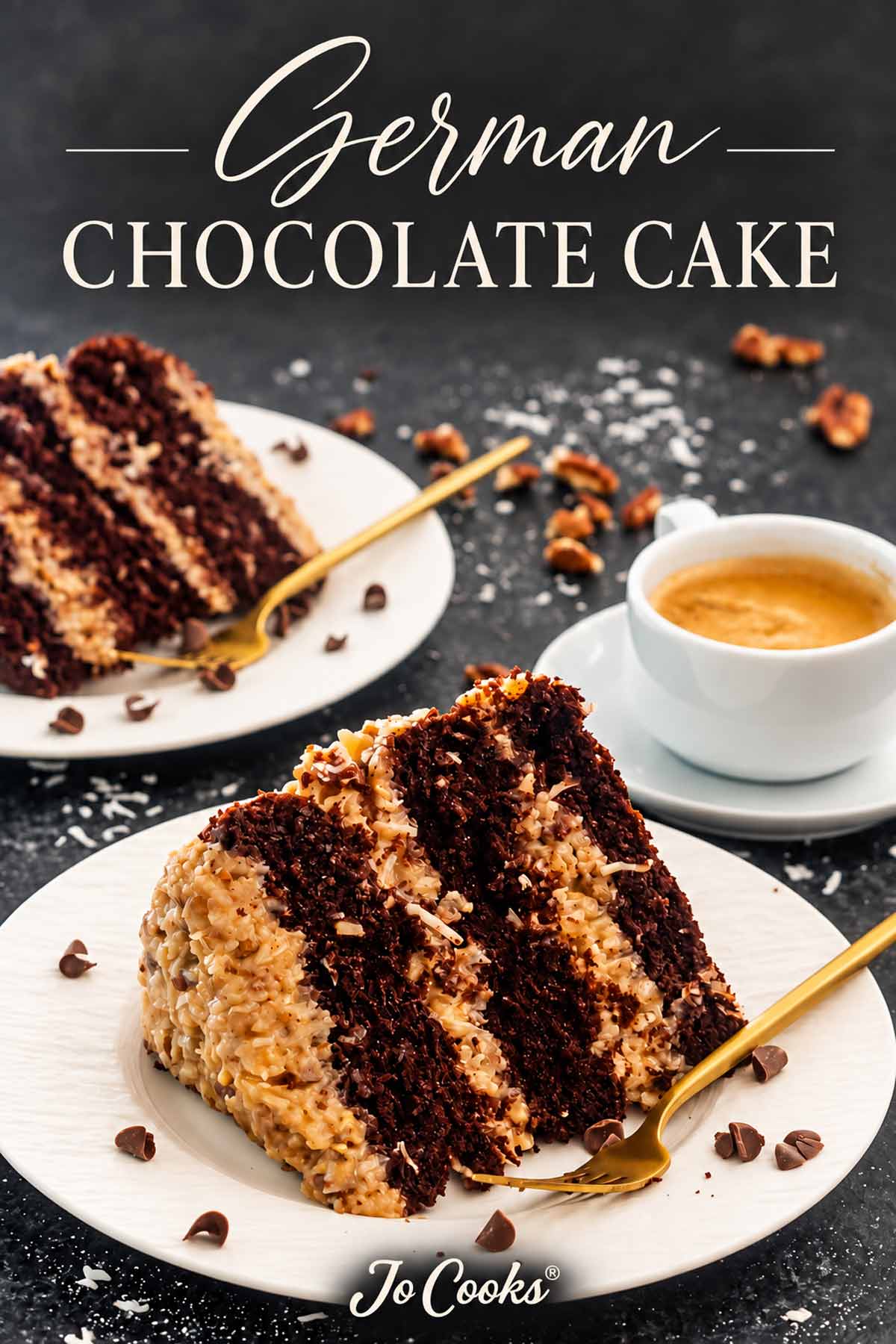
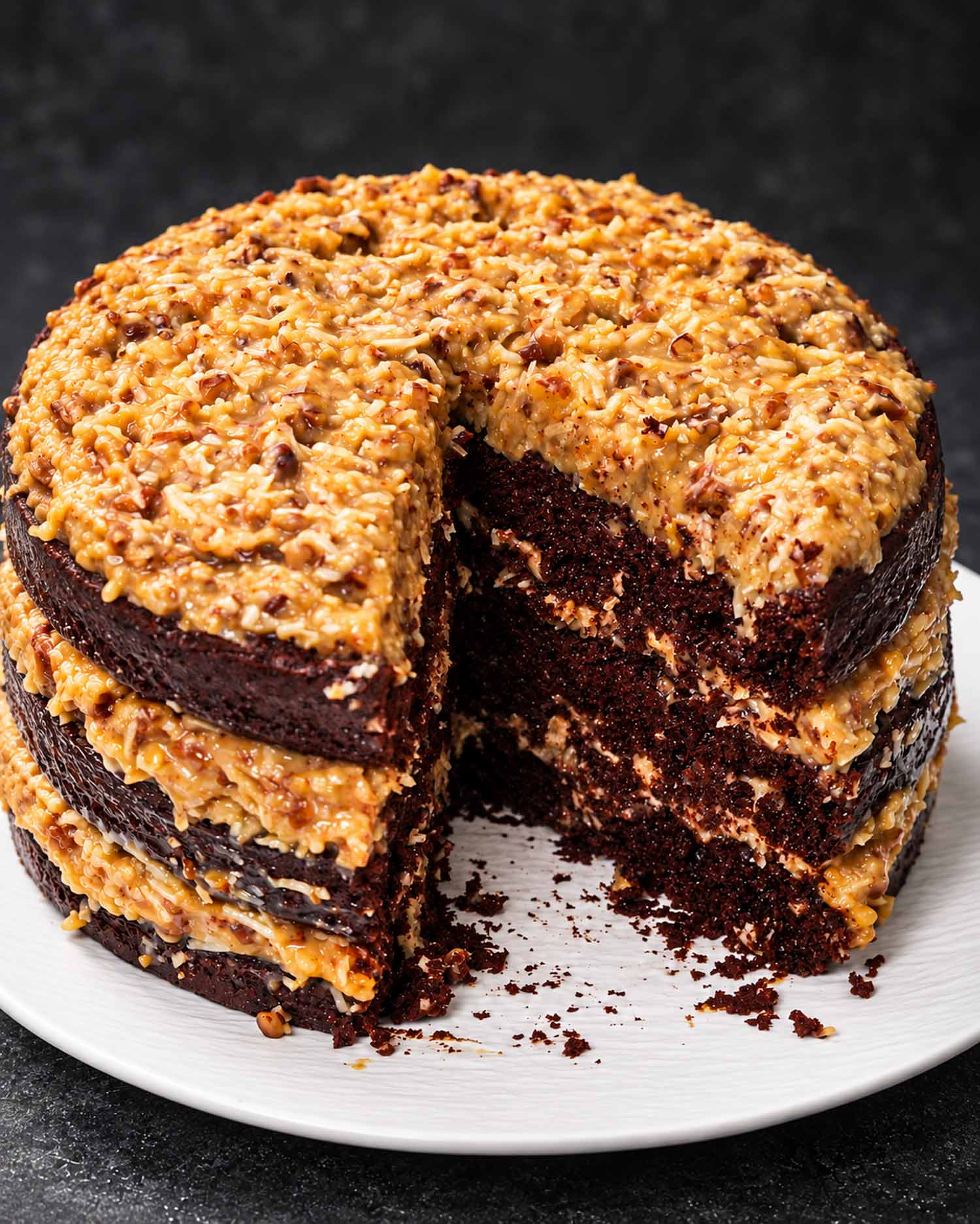
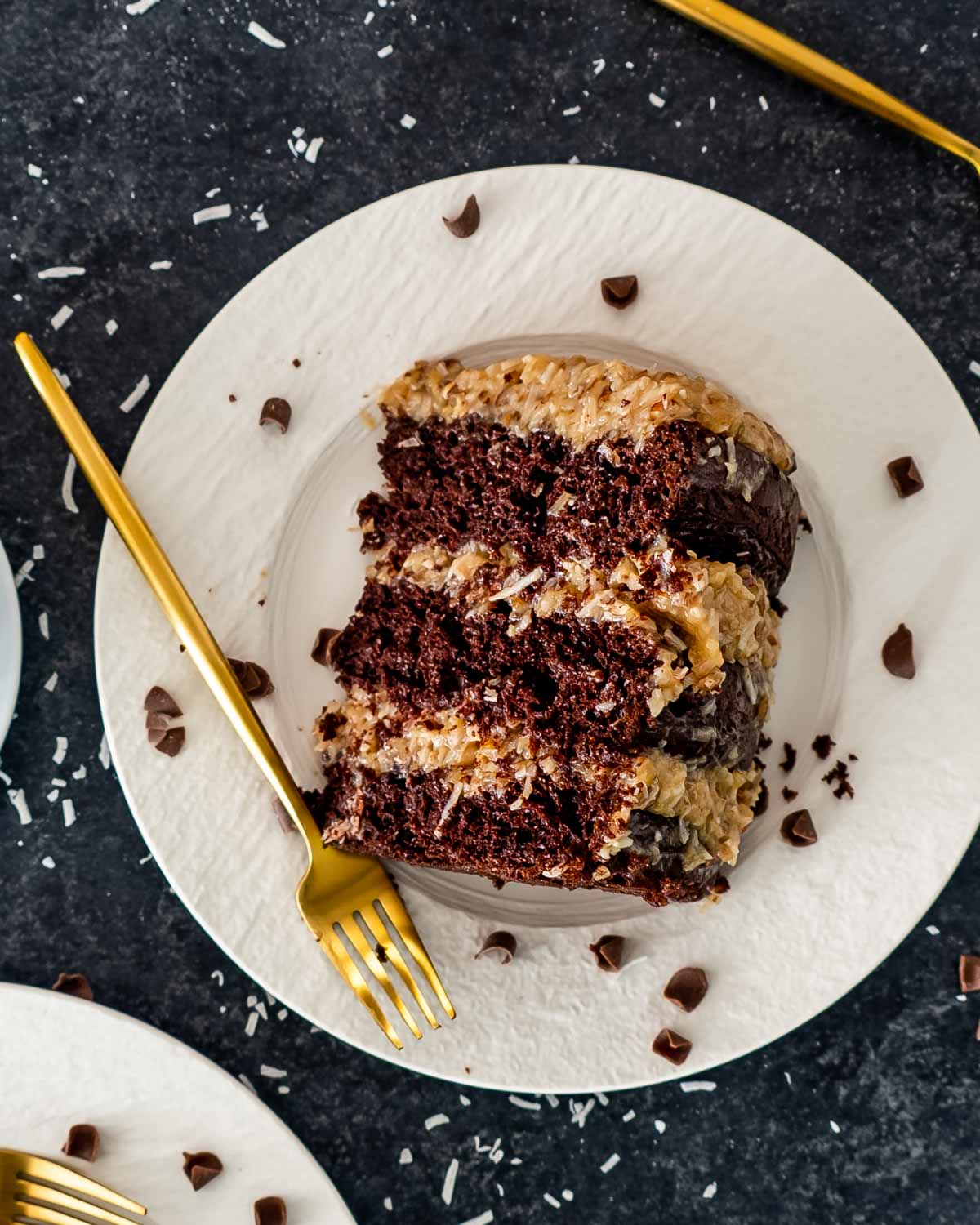
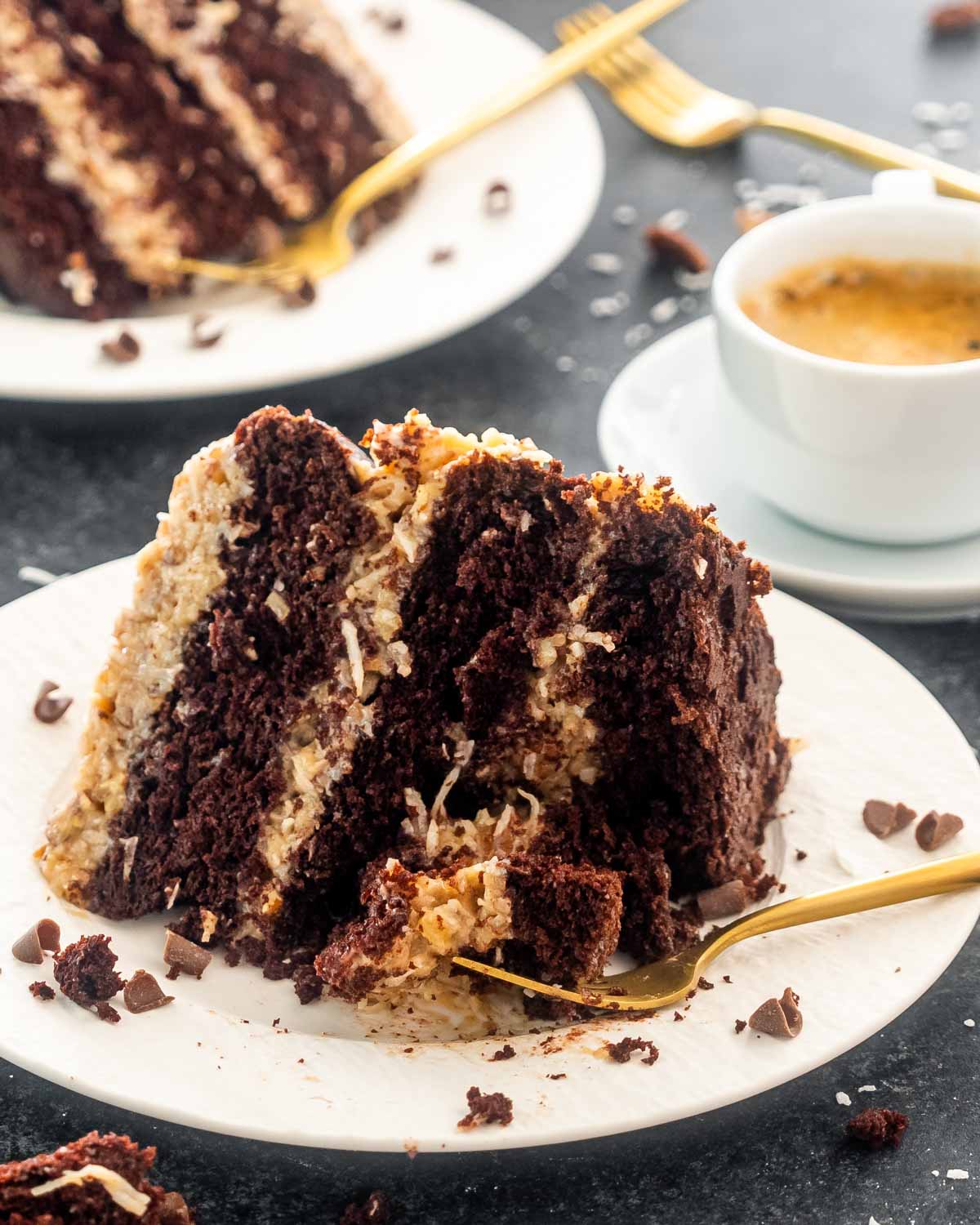
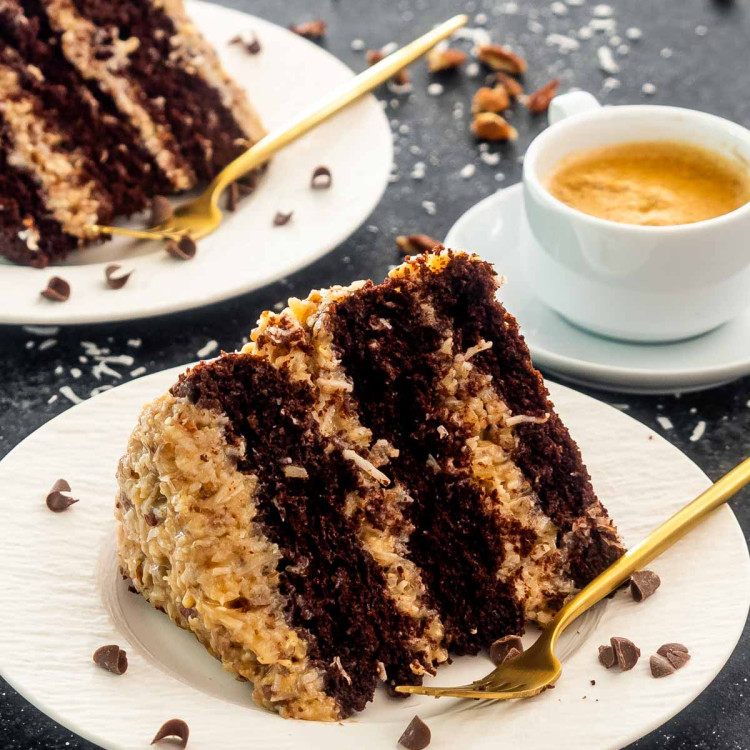
German Chocolate Cake is 3 layers of dark chocolate cake with caramel coconut pecan frosting between every one. That frosting isn’t really a frosting at all, it’s a custard cooked on the stove with egg yolks and evaporated milk. It’s the whole reason anyone makes this cake.

Homemade German Chocolate Cake, Made From Scratch
The chocolate layers are the easy part. Stir, pour, bake. Dark, moist, made with buttermilk and hot coffee, and honestly they’d be perfectly good on their own with a bit of buttercream.
But nobody makes this cake for the chocolate. They make it for what goes between the layers, and that isn’t really a frosting at all. It’s a custard. Egg yolks and evaporated milk cooked on the stove until it goes thick and golden, then loaded up with coconut and pecans.
It takes 12 minutes of standing there stirring it. I’ll be bringing that up again.
The whole thing runs about 3 hours, most of which is waiting for things to cool, and I’d rather tell you that now than have you find out at 6 o’clock with a cake that still needs an hour in the fridge.
Why It’s Called German Chocolate Cake
It isn’t German. Not a bit of it.
It’s named after Samuel German, an American, who in 1852 developed a dark baking chocolate for the Baker’s Chocolate Company. They named it after him: Baker’s German’s Sweet Chocolate.
Fast forward to 1957. A home cook in Texas sends a recipe using that chocolate to a Dallas newspaper. It runs, it takes off, and somewhere in the next few years the apostrophe in German’s falls quietly off the end. German’s Chocolate Cake becomes German Chocolate Cake, and an entire country gets the credit for a dessert it has never eaten.
Germany, to this day, has no idea.
Cocoa Powder or German’s Sweet Chocolate?
Worth being straight with you here.
The 1957 original uses that sweet baking chocolate, melted. It gives a lighter, milder, gentler cake.
Mine doesn’t. Mine uses cocoa powder and hot coffee, which makes the layers darker and considerably more chocolatey. Against a frosting carrying 1½ cups of sugar, I want the cake to put up a fight. The coffee doesn’t taste like coffee, it just makes the chocolate taste more like chocolate.
So this is the modern version. If you want the original, melt 4 ounces of sweet baking chocolate into the wet ingredients and skip the cocoa and the coffee. Both are good cakes. This is the one I make.
Ingredients in German Chocolate Cake
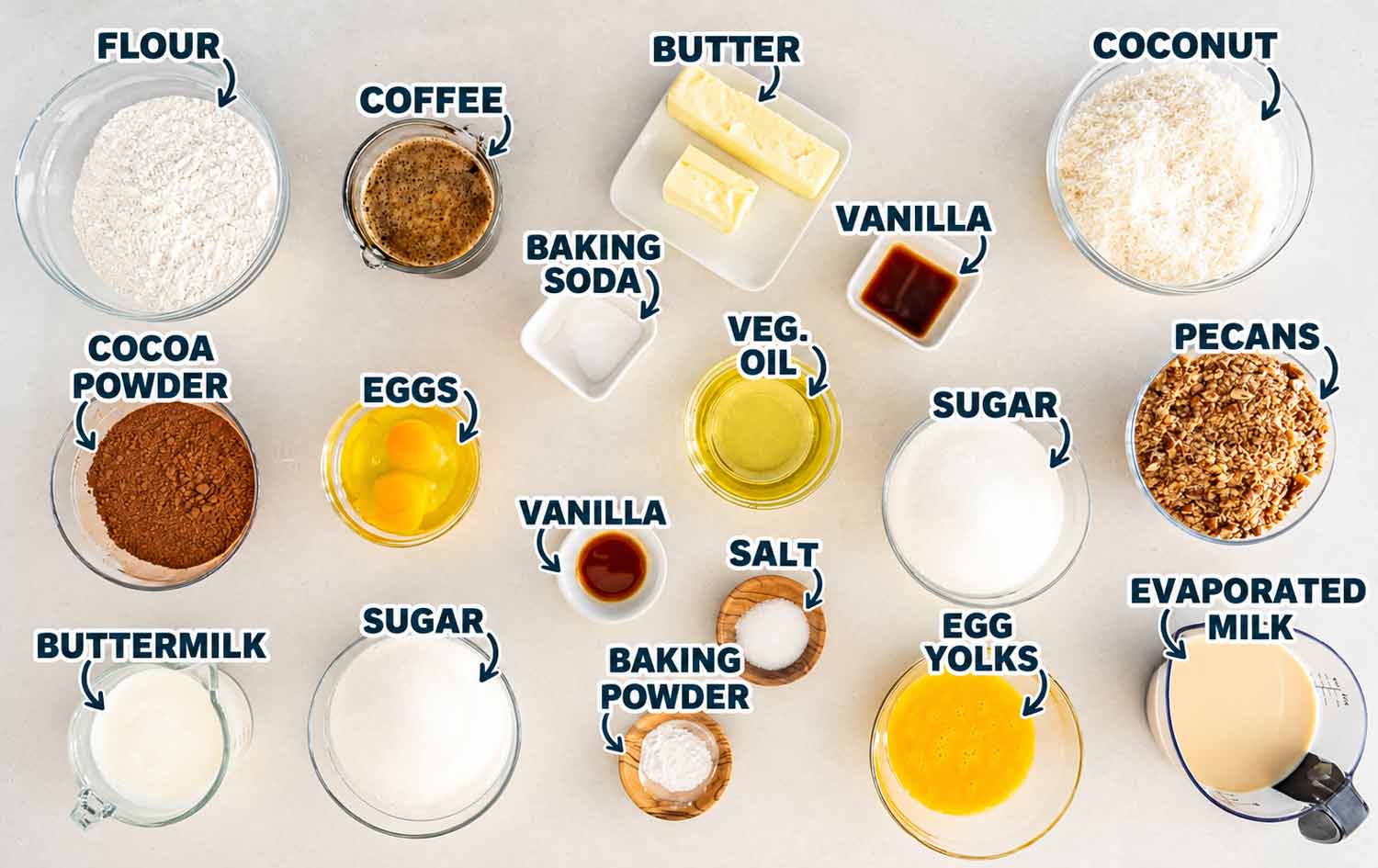
- All purpose flour (2 cups): Nothing fancy. Ordinary flour is all you need here.
- Granulated sugar (3 cups total): 1½ in the cake, 1½ in the frosting. Three cups of sugar is a number best encountered quickly and then walked past without further comment.
- Cocoa powder (¾ cup): Unsweetened. This is where the color and most of the chocolate comes from.
- Baking soda (2 teaspoons) and baking powder (1 teaspoon): Both. The cocoa and buttermilk need the soda, and the powder handles the lift.
- Salt (1 teaspoon): A full teaspoon in a sweet cake looks like a typo. It isn’t. Without it the whole thing tastes oddly flat and you won’t be able to work out why.
- Buttermilk (1 cup): Tenderness, and a bit of tang to argue with the sugar.
- Vegetable oil (½ cup): Oil rather than butter, which is why this cake is still moist on day 3 instead of turning into something you’d use as a doorstop.
- Eggs (2 whole, plus 4 yolks): The whole eggs go in the cake. The 4 yolks go in the frosting, where they do all the thickening. Save the whites for something.
- Vanilla extract (2½ teaspoons total): 1 in the cake, 1½ in the frosting.
- Hot coffee (1 cup): Goes in last, turns the batter alarmingly thin, and causes more panic than anything else on this list. The cake won’t taste like coffee at all, it simply enhances the flavor of the chocolate in the cake.
- Evaporated milk (12 ounces): Not condensed. They sit right next to each other on the shelf looking almost identical, and I would hate for you to discover the difference at step 6.
- Unsalted butter (¾ cup): For the frosting.
- Shredded coconut (2⅔ cups): The sweetened bagged kind. People who insist they don’t like coconut eat this frosting anyway and I’ve stopped mentioning it to them.
- Pecans (2 cups, chopped): Toast them. 8 minutes while the oven is already hot. Smallest effort, largest return, of anything in this recipe.
How To Make German Chocolate Cake
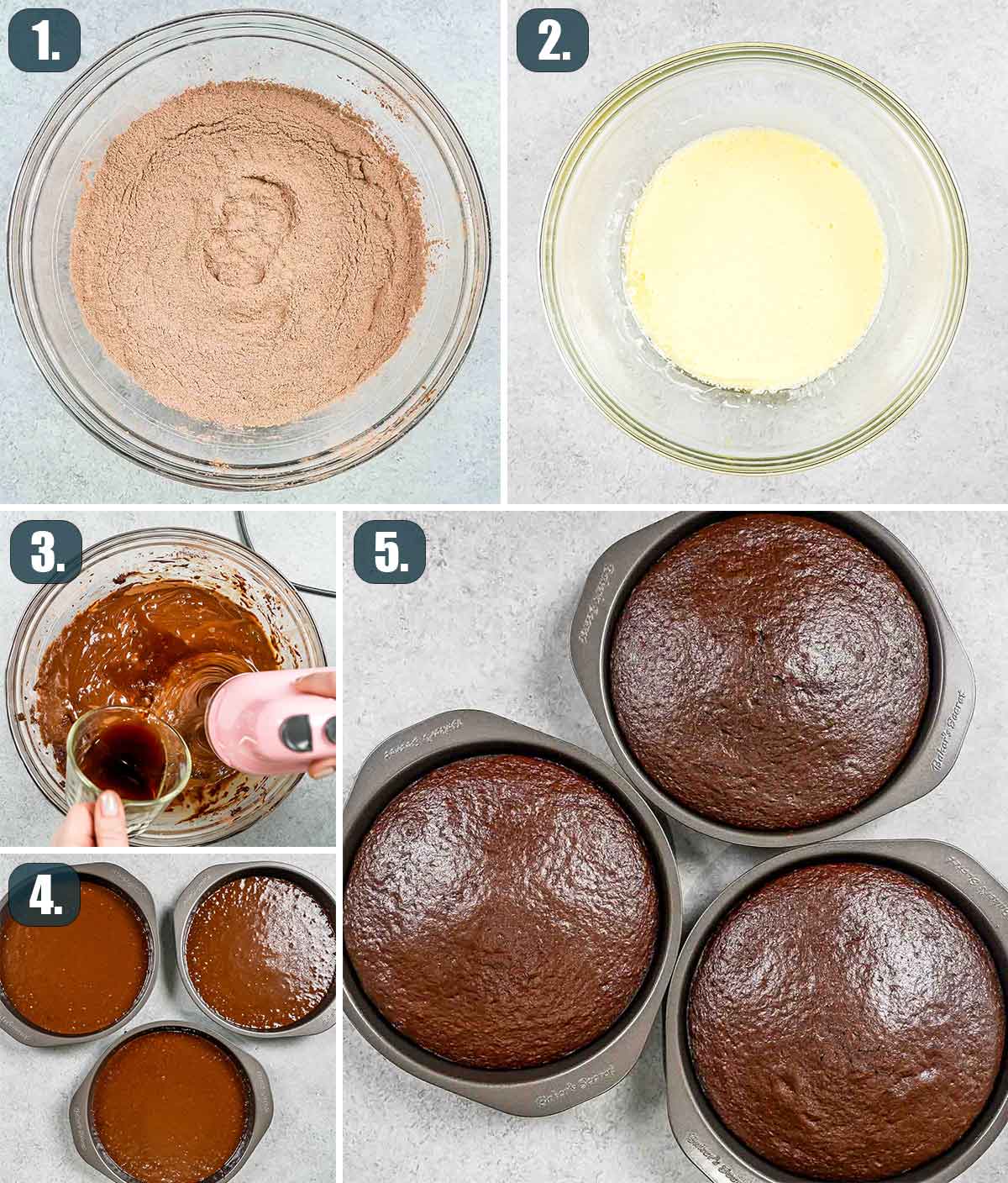
Pans first: Heat the oven to 350°F and grease and line three 8 inch rounds. Do this before you touch the batter, because once it’s mixed you want it in the oven, not waiting around while you hunt for parchment.
Whisk the dry: Flour, 1½ cups of the sugar, cocoa, baking soda, baking powder and salt, all in a big bowl.
Whisk the wet: Buttermilk, oil, the 2 whole eggs, 1 teaspoon vanilla.
Combine: Wet into dry, mix until it just comes together.
Add the coffee: Pour the hot coffee in slowly while mixing. The batter will go very thin and look completely wrong. It is not wrong. This is the moment people reach for the flour bag and I need you to put it down. Thin batter, moist cake. That’s the deal.
Bake: Divide between the 3 pans, 35 to 40 minutes, until a toothpick comes out clean. Cool in the pans 10 minutes, then turn out and leave them until they’re completely, properly, no really cool.
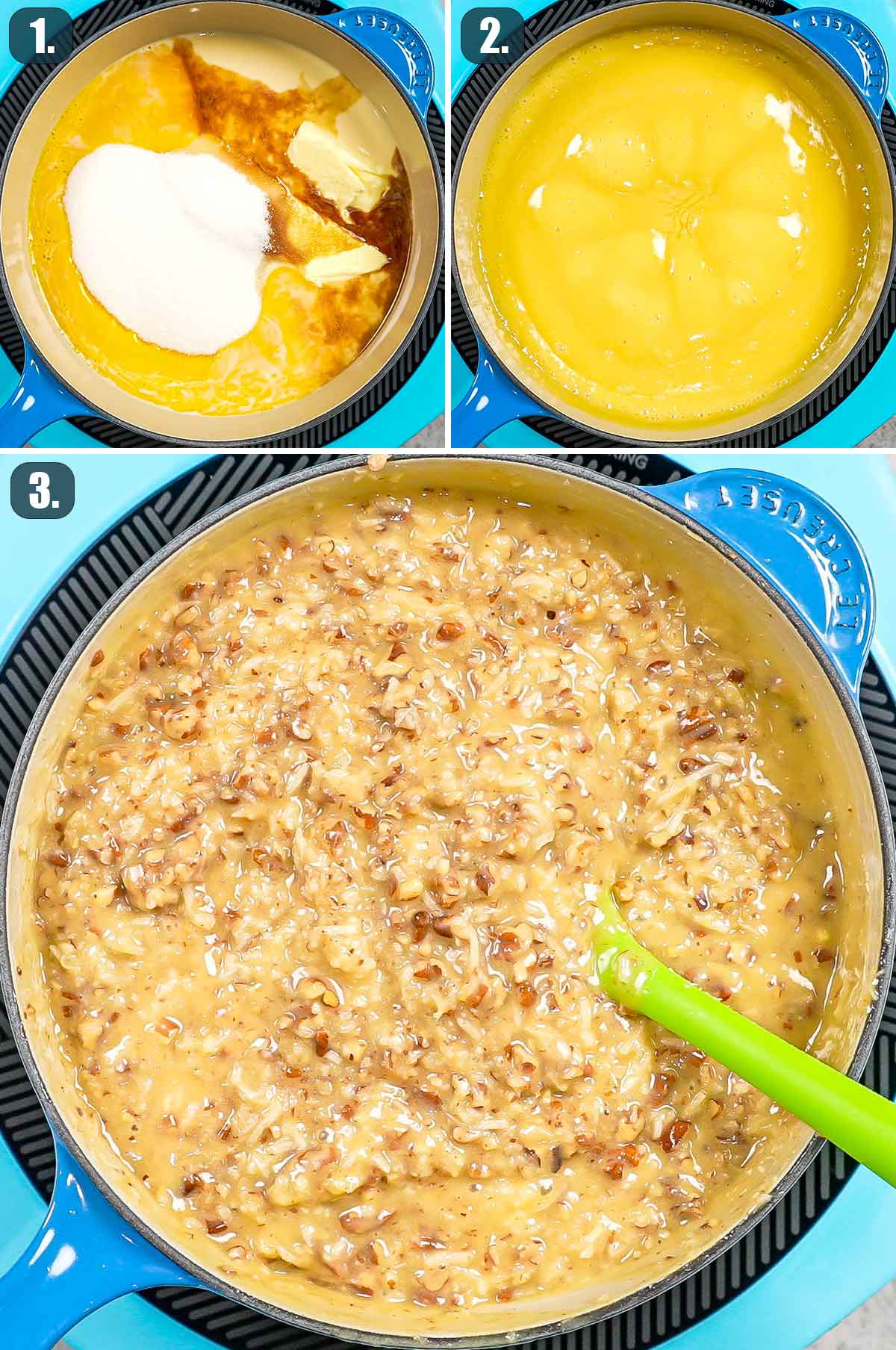
Make the frosting: Butter, evaporated milk, the other 1½ cups sugar, the 4 beaten yolks and 1½ teaspoons vanilla into a saucepan over medium heat. Now stir. Keep stirring. 10 to 12 minutes, until it thickens and turns a warm golden caramel.
Finish it: Off the heat, in go the coconut and pecans. Then leave it to come to room temperature, where it’ll thicken considerably more.
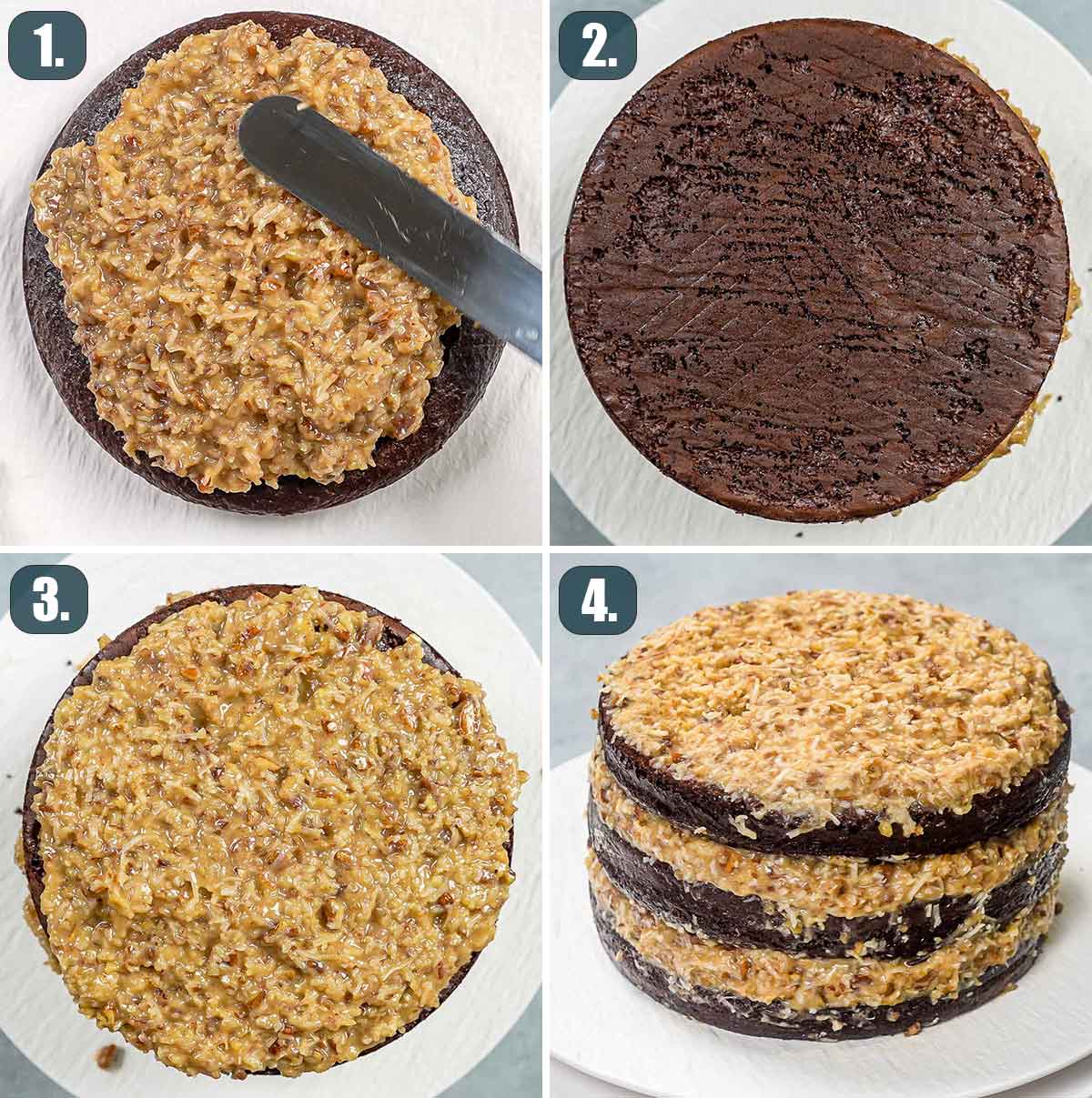
Assemble: Cake, frosting, cake, frosting, cake, and the rest on top. The sides stay bare, which is traditional and also means nobody expects you to be neat.
Chill: An hour in the fridge so the slices hold together instead of leaning.
How To Make Coconut Pecan Frosting That Actually Sets
Here it is again. 12 minutes.
What you’re looking for: it coats the back of a spoon and holds a line when you drag a finger through it. It’ll still look loose at that point and that’s correct. It firms up a lot as it cools.
If it stays runny, it came off the heat early. This is almost always what happened. Twelve minutes of stirring feels like a great deal longer than 12 minutes when you’re the one doing it, and 7 minutes in it looks close enough. It isn’t close enough. Put it back on.
If it looks scrambled, the heat was too high and the yolks cooked instead of thickening. Medium heat, constant stirring, and it behaves.
Don’t stick it in the fridge to hurry it along. It sets hard in there and then it won’t spread, and you’ll be trying to shove cold custard around a cake layer, which is a bad afternoon.
Tips
- Toast the pecans. 8 minutes at 350°F. I said it in the ingredients and I’m saying it again because it’s free.
- Cool the layers completely. All the way. Even slightly warm cake will melt the frosting and the top layer goes for a walk.
- The full 12 minutes on the frosting. Third time I’ve mentioned it and I stand by every one.
- Room temperature eggs and buttermilk. 20 minutes on the counter and everything mixes more evenly.
- It’s better on day 2. The layers settle, the frosting soaks in slightly, and it stops being a cake and starts being the cake.
Make Ahead and Storing
The layers can be baked 2 days ahead. Cool completely, wrap each one well, leave them on the counter. They freeze for 3 months too.
The frosting keeps 3 days in the fridge. Bring it back to room temperature before spreading, because cold frosting drags and tears the cake.
The assembled cake keeps 4 days covered in the fridge. Let slices sit out for a bit before serving. Cold flattens chocolate.
To freeze it whole, freeze uncovered until firm, then wrap. 2 months. Thaw overnight in the fridge.
Try These Recipes Next
- German Beef Rouladen
- German Potato Salad
- Chocolate Cherry Cake
- The Best Chocolate Cake
- Super Moist Carrot Cake
Before You Begin! If you make this, please leave a review and rating letting us know how you liked this recipe! This helps our business thrive & continue providing free recipes.
German Chocolate Cake
Video
Ingredients
Cake batter
- 2 cups all-purpose flour
- 1½ cups granulated sugar
- ¾ cup cocoa powder
- 2 teaspoons baking soda
- 1 teaspoon baking powder
- 1 teaspoon salt
- 1 cup buttermilk
- ½ cup vegetable oil
- 2 large eggs
- 1 teaspoon vanilla extract
- 1 cup hot coffee
Coconut-Pecan Topping
- 12 ounces evaporated milk (1 can)
- 1½ teaspoons vanilla extract
- 1½ cups granulated sugar
- 4 egg yolks (beaten)
- ¾ cup butter (unsalted)
- 2⅔ cups sweetened shredded coconut
- 2 cups pecans (chopped)
Before You Begin! If you make this, please leave a review and rating letting us know how you liked this recipe! This helps our business thrive & continue providing free recipes.
Instructions
- Preheat the oven to 350°F. You will need 3 cake pans, each 8 inches in diameter. Cut out 3 parchment paper circles that will fit inside the cake pans. Spray the bottom of the cake pans with cooking spray, this is so the parchment paper sticks to the pans. Place the parchment papers inside and spray more cooking spray over the parchment paper.
- In a large bowl, whisk together the 2 cups flour, 1½ cups sugar, ¾ cup cocoa powder, 2 teaspoons baking soda, 1 teaspoon baking powder and 1 teaspoon salt.
- In a separate bowl, whisk the 1 cup buttermilk, ½ cup vegetable oil, 2 eggs and 1 teaspoon vanilla.
- Add the wet ingredients to the dry and mix until just combined. Slowly pour in the 1 cup hot coffee while mixing. The batter will be very thin.
- Divide evenly between the 3 pans and bake 35 to 40 minutes, until a toothpick comes out clean. Cool in the pans 10 minutes, then turn out onto a rack and cool completely.
- In a saucepan over medium heat, combine the ¾ cup butter, 12 ounces evaporated milk, 1½ cups sugar, 4 beaten egg yolks and 1½ teaspoons vanilla. Cook, stirring constantly, 10 to 12 minutes, until thickened and golden.
- Remove from the heat and stir in the 2⅔ cups coconut and 2 cups chopped pecans. Cool to room temperature.
- Layer the cakes with frosting between each layer and the rest on top. Refrigerate 1 hour before serving.
Notes
- Total time includes cooling the layers and the frosting plus 1 hour chilling the assembled cake. Plan for about 3 hours.
- The batter is meant to be very thin once the hot coffee goes in. Do not add flour.
- Cool the layers completely before assembling or the frosting melts and the layers slide.
- The frosting needs the full 10 to 12 minutes on the heat. It should coat the back of a spoon and hold a line when you drag a finger through it. It thickens considerably as it cools.
- If the frosting curdles, the heat was too high. Medium heat and constant stirring.
- Toast the pecans at 350°F for 8 minutes first.
- Traditionally the sides are left unfrosted. To frost the sides, increase the frosting by half.
- For the 1957 original, melt 4 ounces of sweet baking chocolate into the wet ingredients and omit the cocoa and coffee.
- Layers keep 2 days at room temperature or 3 months frozen. Assembled cake keeps 4 days refrigerated.
Nutrition Information
Notice: Nutrition is auto-calculated for your convenience. Where relevant, we recommend using your own nutrition calculations.
Frequently Asked Questions
Why is it called German chocolate cake?
Samuel German, an American, made a sweet baking chocolate for Baker’s in 1852. The cake got named after the chocolate. Germany was never consulted.
Can I use different pans?
Two 9 inch rounds work with a slightly longer bake. A 9×13 works too, 40 to 45 minutes, and all the frosting goes on top.
My batter is really thin. Did I do something wrong?
No. The hot coffee does that and it’s exactly what makes the cake moist. Do not add flour.
Do I have to use coffee?
Hot water works. You lose a bit of depth in the chocolate but the cake is still good.
Why won’t my frosting thicken?
It needs the full 10 to 12 minutes on the heat. It looks ready at 7 and it isn’t.
Can I make it ahead?
Yes, and I’d recommend it. Bake the layers up to 2 days ahead, or make the whole cake the day before. It’s better on day 2.
Does the frosting go on the sides?
Traditionally no. Just between the layers and piled on top. Frost the sides if you want, you’ll need about half again as much.