The Best Pumpkin Bread
This post may contain affiliate links. Please read my disclosure policy.
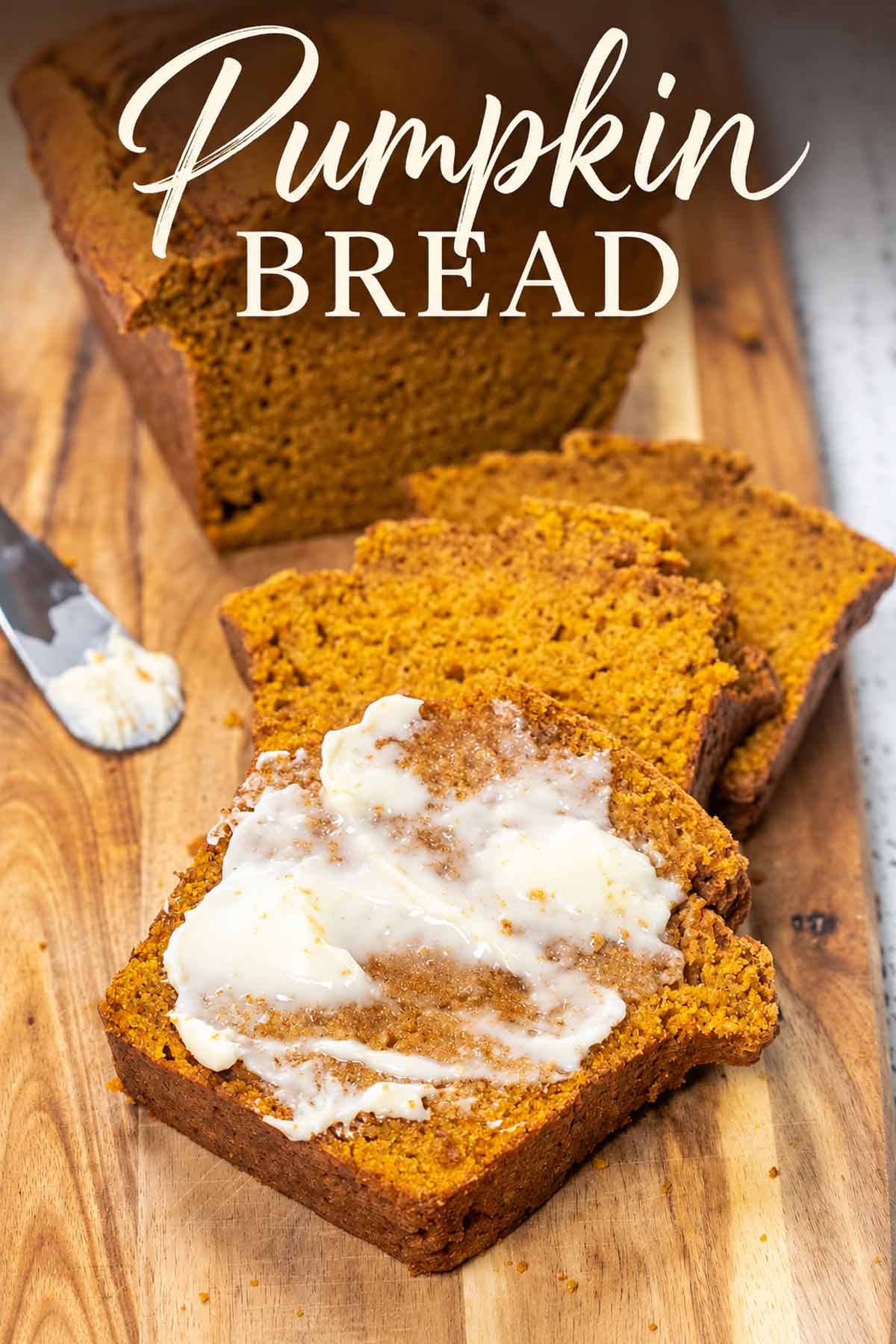
This Pumpkin Bread comes out dense, moist, and properly spiced, with a crackly top and a crumb that holds together. Two bowls, a whisk, and a loaf pan. The only thing that trips people up is knowing when it’s done, and the toothpick test is not the answer.
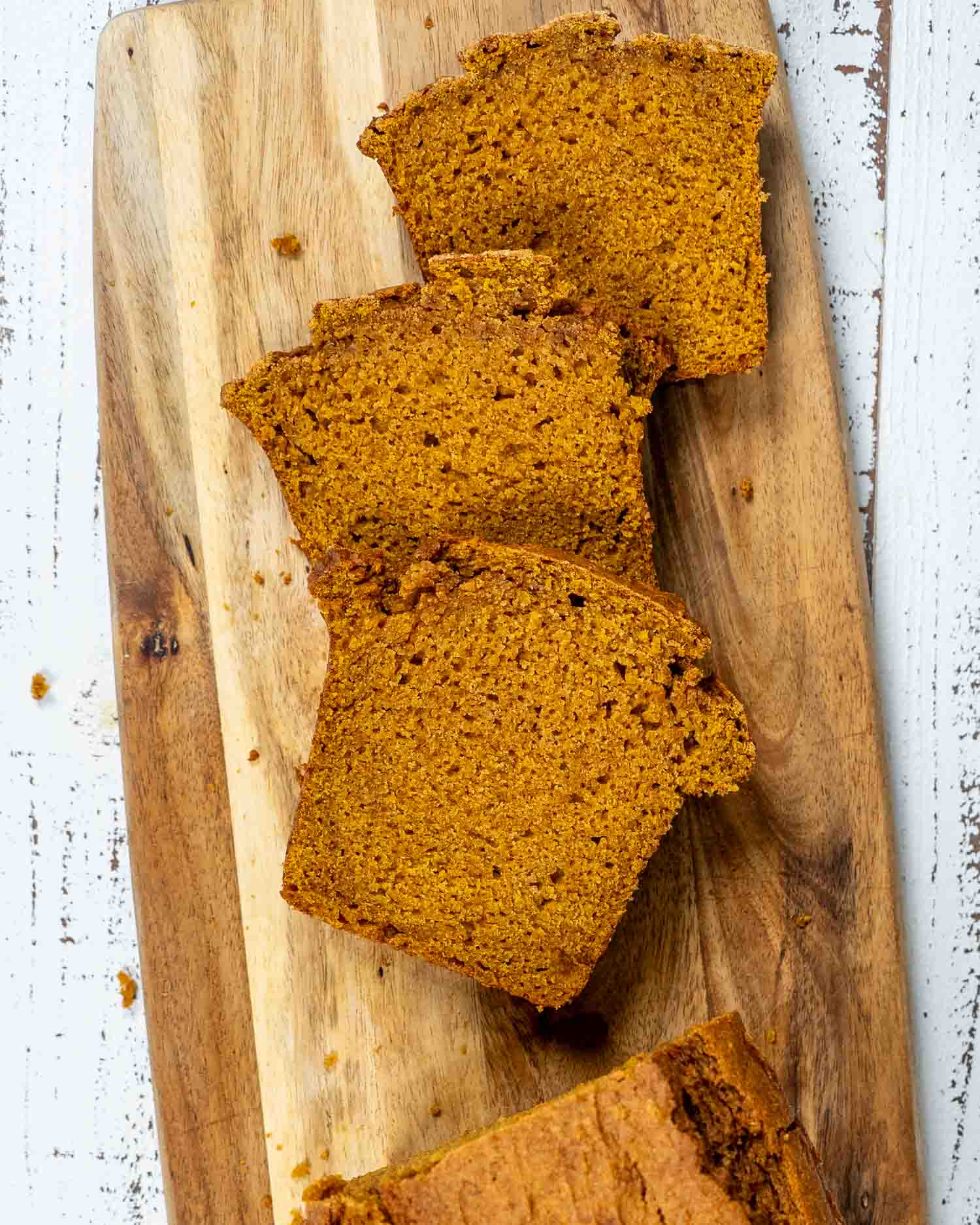
The Pumpkin Bread I Make Every Fall
Pumpkin bread is one of the easiest things you can bake and one of the easiest to get slightly wrong.
The mixing is nothing. Wet ingredients in one bowl, dry in another, stir them together until they’re just combined, into the pan. There’s no creaming, no folding, no mixer required. Ten minutes and it’s in the oven.
Where it goes sideways is the baking. This is a wet batter with a whole can of pumpkin in it, and that much moisture means a toothpick can come out clean while the middle is still not quite there. Then it cools, the crumb tightens, and you get that heavy gummy stripe through the center that nobody wants.
The fix is a thermometer and some patience, both of which are below.
Everything else about it is forgiving. It keeps for days, it freezes beautifully, and it’s better on day 2 once the spices have settled in. Which makes it a good thing to bake on a Sunday when the weather turns.
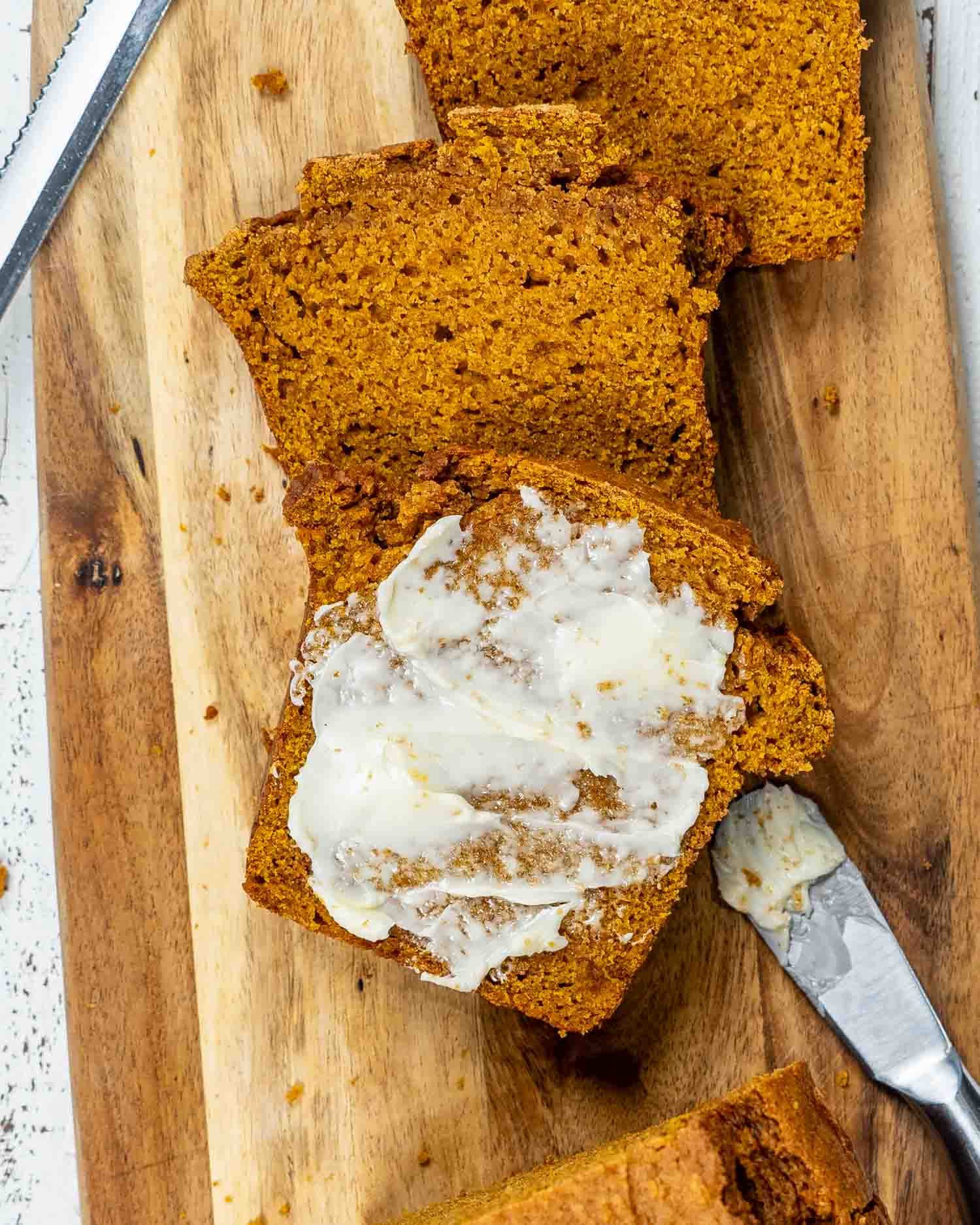
Pumpkin Puree Or Pumpkin Pie Filling?
Get this one wrong and the whole loaf is wrong, and the cans sit next to each other on the shelf looking almost identical.
Pure pumpkin puree is what you want. Cooked pumpkin, and nothing else. Check the ingredient list and it should say pumpkin, full stop.
Pumpkin pie filling is already sweetened and already spiced, and it’s much wetter. Use it here and you’ll get a loaf that’s cloyingly sweet, oddly spiced, and probably won’t set properly because of the extra liquid.
The labels are the trap. Both cans say pumpkin in large letters and the difference is in smaller print underneath. Libby’s makes both, in nearly identical packaging.
Homemade puree works if you’ve roasted a pumpkin, though it tends to hold more water than canned. If yours looks loose, let it drain in a fine sieve for 30 minutes before you use it.
How To Tell When It’s Done
The toothpick test doesn’t work reliably on this bread, and it’s worth understanding why.
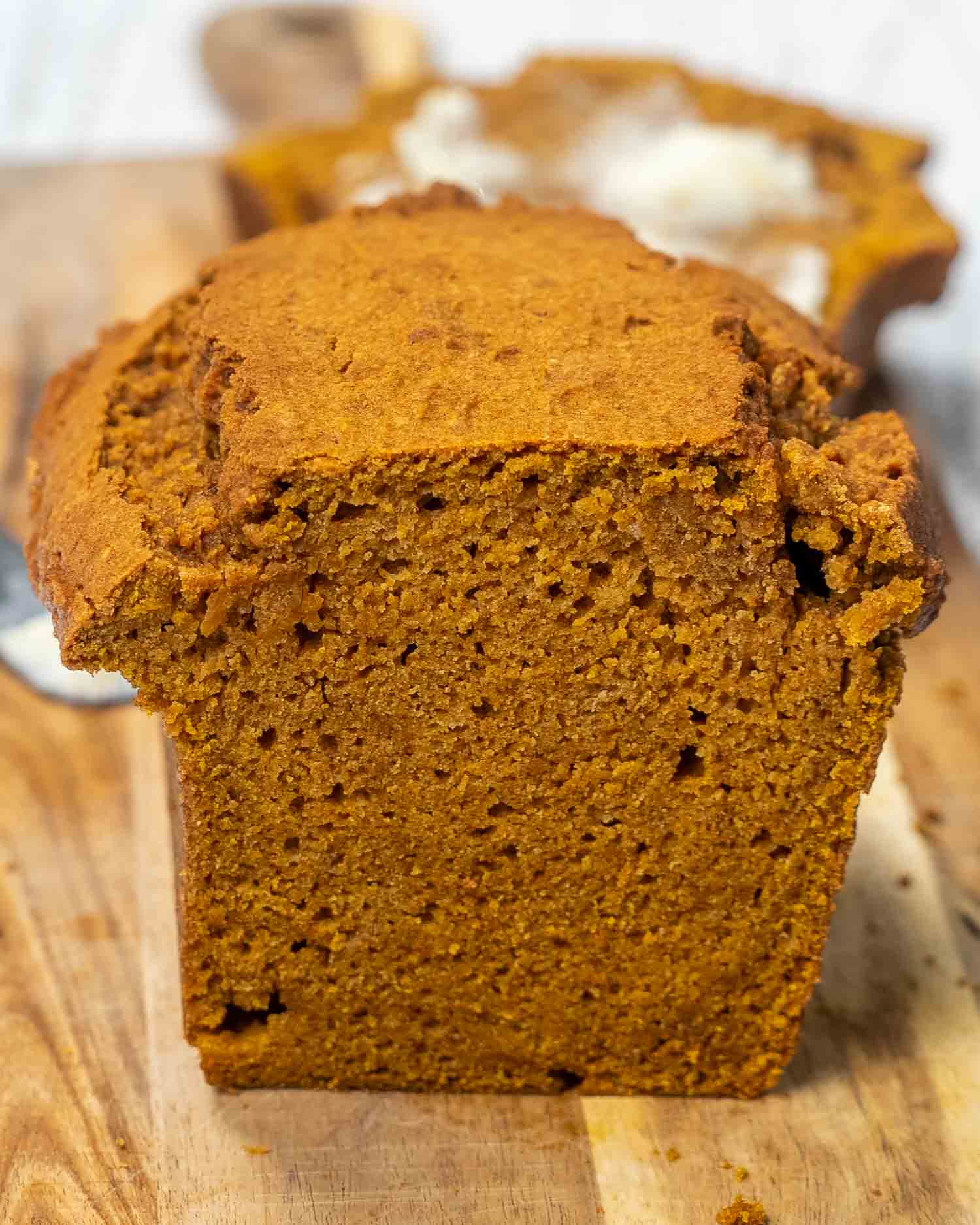
You’ve got a full can of pumpkin in a single loaf, which makes for a very wet batter. A toothpick pushed into a pocket of moist crumb comes out clean even when the surrounding batter hasn’t finished setting. So you pull it, it cools, the structure tightens, and there’s a dense damp band through the middle.
Use a thermometer. Quick breads are done at around 200 to 205°F in the center. That’s the reliable check and it takes 5 seconds.
If you don’t have one, use several signals together rather than one. The top should be domed and cracked down the middle, which is normal and expected. The edges should have pulled slightly away from the sides of the pan. And when you press the center gently it should spring back rather than leaving a dent.
Then let it cool properly. Ten minutes in the pan, then out onto a rack, and then a good 2 hours before you slice it. Quick breads keep setting as they cool, and cutting into a warm loaf compresses the crumb and makes it gummy. This is the step everyone skips and it’s the one that costs you.
Ingredients in Pumpkin Bread
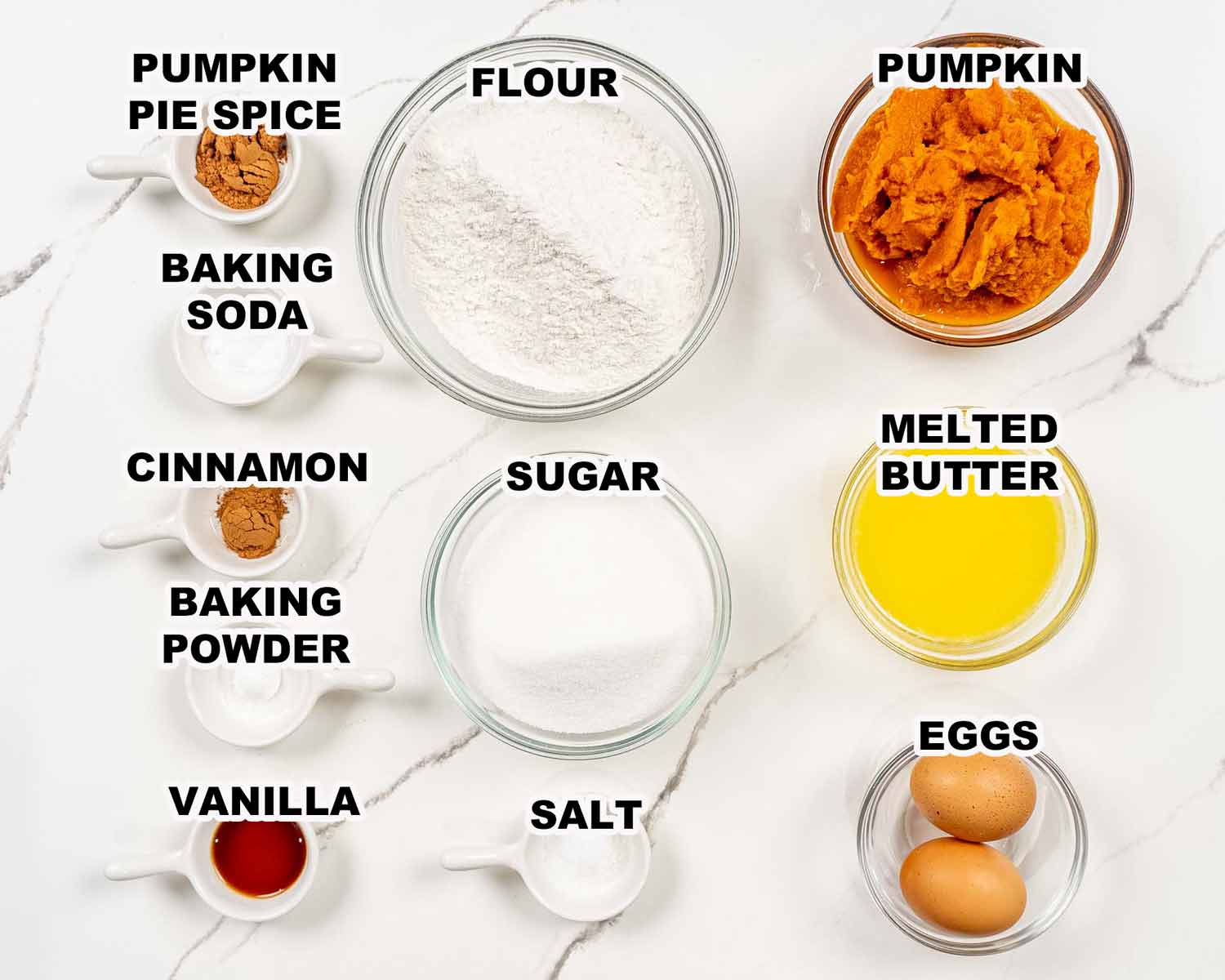
- Granulated sugar (1½ cups): Sweetness, and it’s doing more than that. Sugar holds onto moisture, which is a good part of why this loaf stays soft for days. You can drop it to 1¼ cups if you want it less sweet, though you’ll lose a little of that keeping quality.
- Pure pumpkin (15 ounce can): Pure pumpkin, not pie filling. See above, because this is the one that catches people out. One can is exactly right for one loaf, so there’s nothing left over to find a use for.
- Butter (½ cup, melted): Melted, not softened, which means no mixer and no creaming. Butter gives better flavor than oil here, though oil would give you a marginally moister crumb. Neutral oil works if that’s what you have.
- Eggs (2 large): Structure and richness. Room temperature blends more evenly, though with a melted butter batter it matters less than usual.
- Vanilla extract (1 teaspoon): Rounds out the spices. Pure if you’ve got it.
- All purpose flour (1¾ cups): Spoon it into the measuring cup and level it off rather than scooping. Scooping packs the flour down and you can end up with 20% more than the recipe wants, which is the most common cause of a dry loaf.
- Baking soda (1 teaspoon) and baking powder (½ teaspoon): Both, because soda reacts with the acidity in the pumpkin, powder gives extra lift on its own. If either has been open more than 6 months, test it before you use it. A spoonful of soda in vinegar or powder in hot water should fizz hard.
- Salt (½ teaspoon): Small amount, big job. Sweet baking without salt tastes flat, it simply has no taste.
- Pumpkin spice (2 teaspoons) and ground cinnamon (1 teaspoon): The cinnamon on top of the blend is deliberate, since most pumpkin spice mixes are already cinnamon heavy and this pushes it further. If you don’t have pumpkin spice, use 1½ teaspoons cinnamon, ½ teaspoon ginger, ¼ teaspoon nutmeg, and ⅛ teaspoon cloves.
How To Make Pumpkin Bread
Oven to 325°F, and grease an 8.5 by 4.5 inch loaf pan properly. Butter or baking spray, right into the corners. A strip of parchment across the width with overhang on both sides makes lifting it out afterward considerably easier.
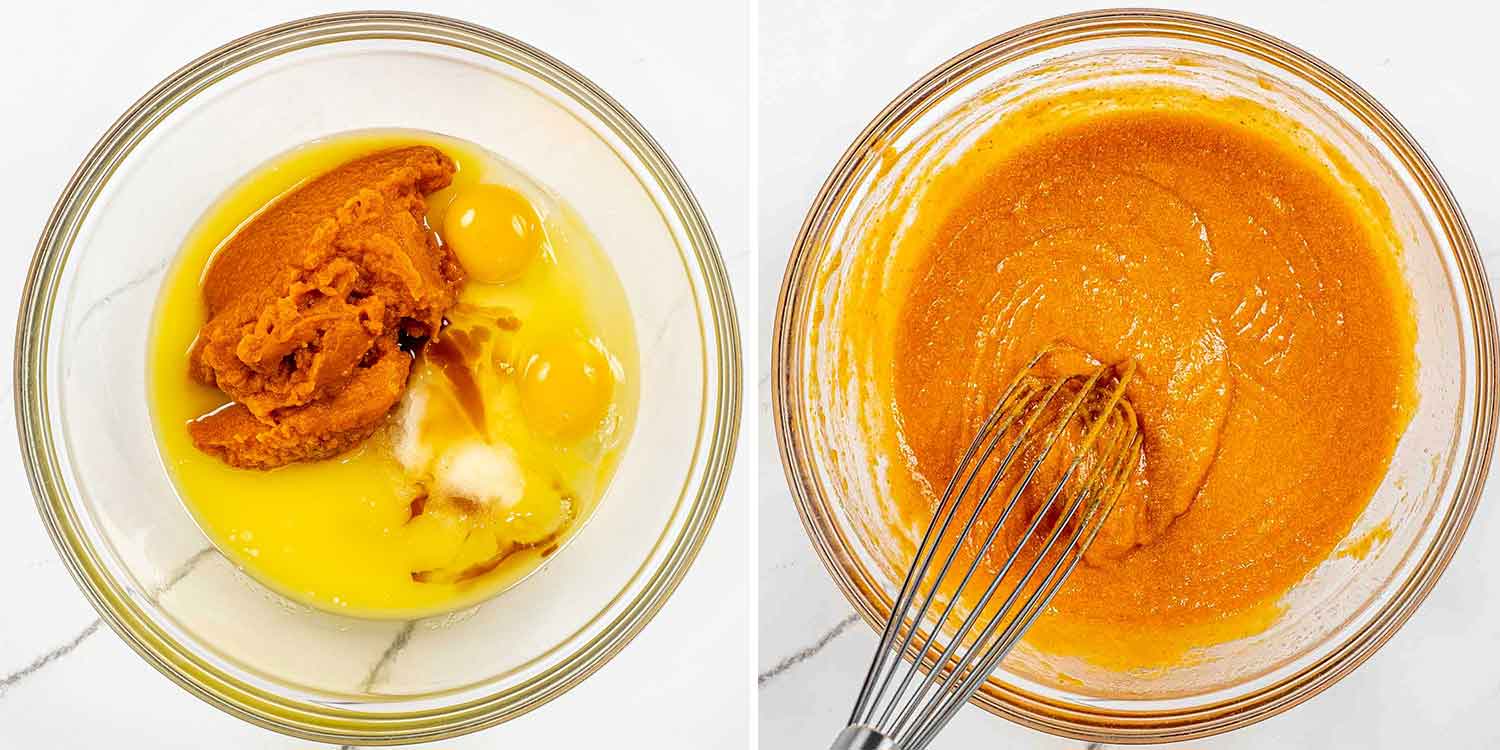
Wet ingredients in one bowl. Sugar, pumpkin, melted butter, eggs, and vanilla, whisked until smooth and evenly combined. No mixer needed for any of this.
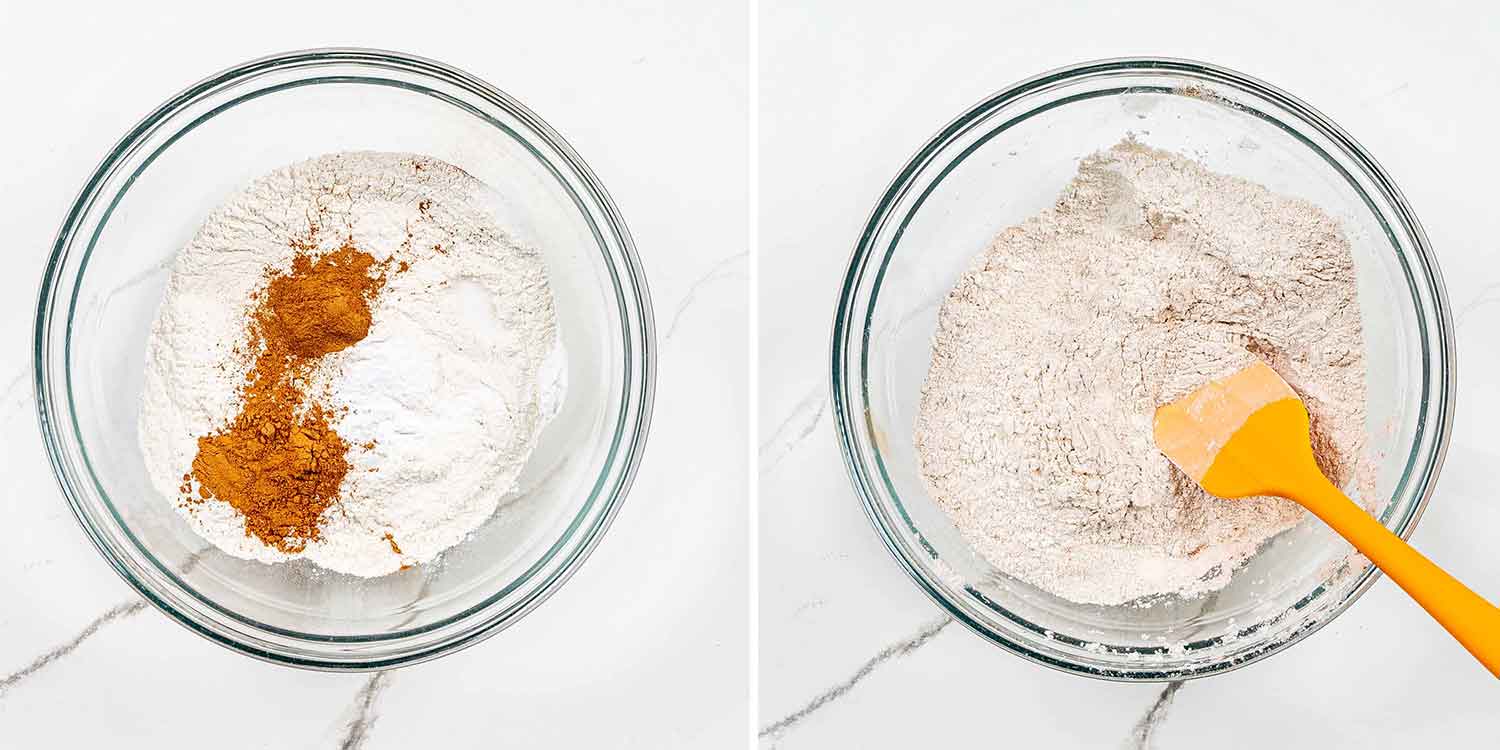
Dry in another. Flour, baking soda, baking powder, salt, pumpkin spice, and cinnamon, whisked together thoroughly so the leavening is evenly distributed. Uneven baking soda gives you a loaf that rises in patches.
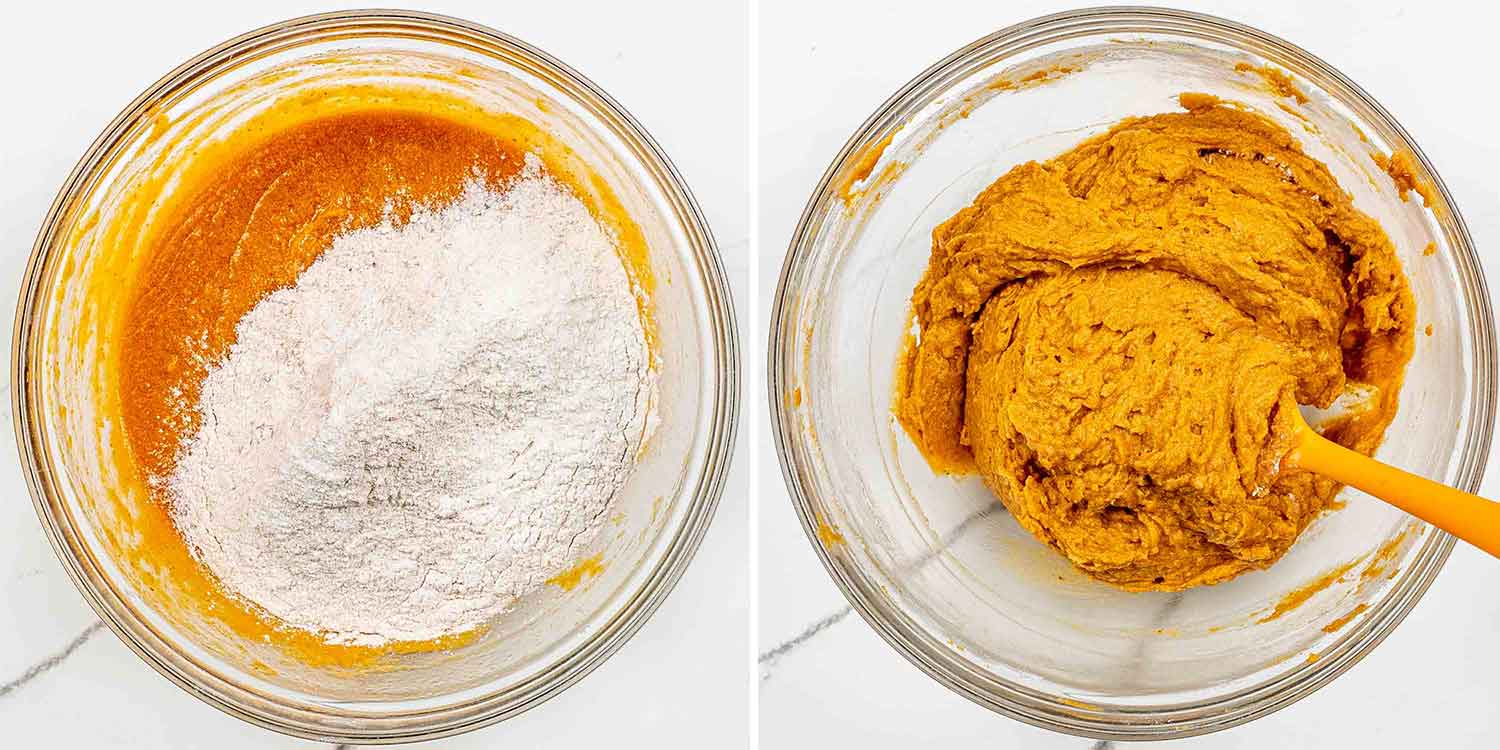
Combine, and stop early. Dry into wet, stirring just until you can’t see any more flour. There will be lumps and that’s exactly right. Overmixing develops gluten, and gluten in a quick bread means a tough, dense loaf. The moment the flour disappears, put the spoon down.
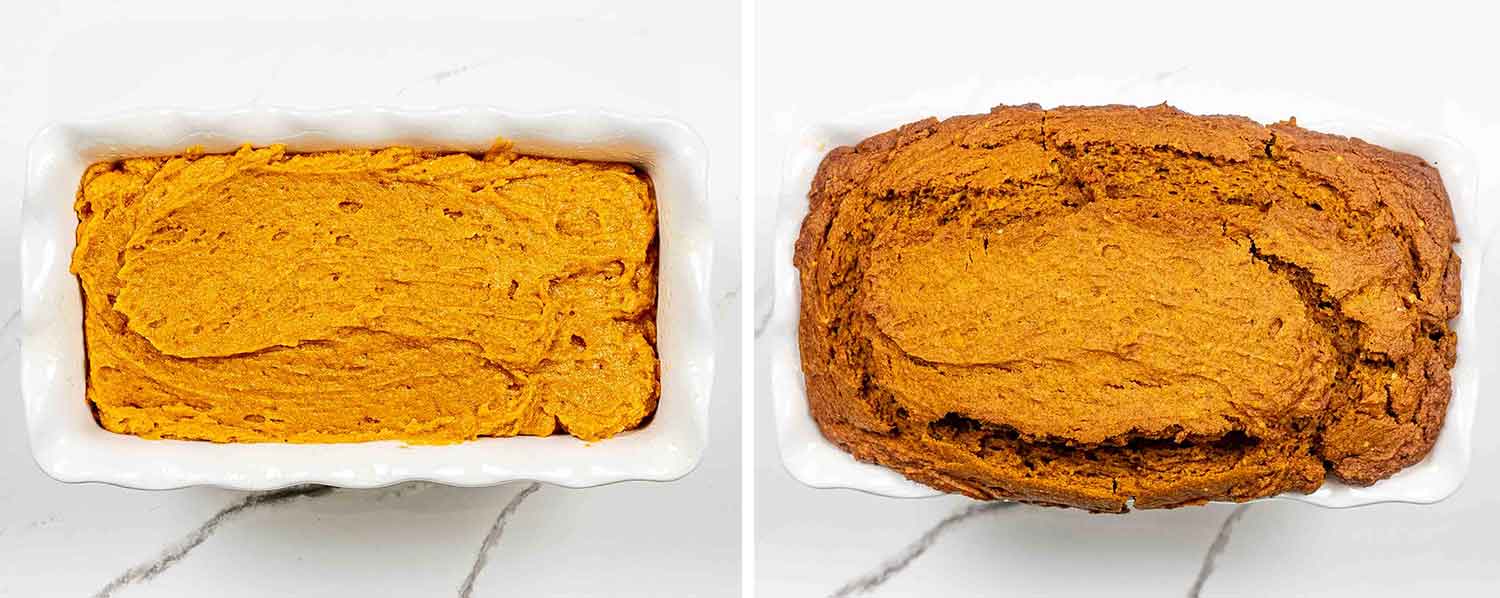
Into the pan and smooth the top. If you want to minimize the crack down the middle, level it carefully. If you like the crack, and I do, leave it alone.
Bake 70 to 80 minutes. Start checking at 65. It’s done at 200 to 205°F in the center on an instant read thermometer, or when the top is domed and cracked, the edges have pulled slightly from the pan, and the center springs back when pressed.
If the top is getting dark before the middle is set, tent it loosely with foil for the last 15 minutes.
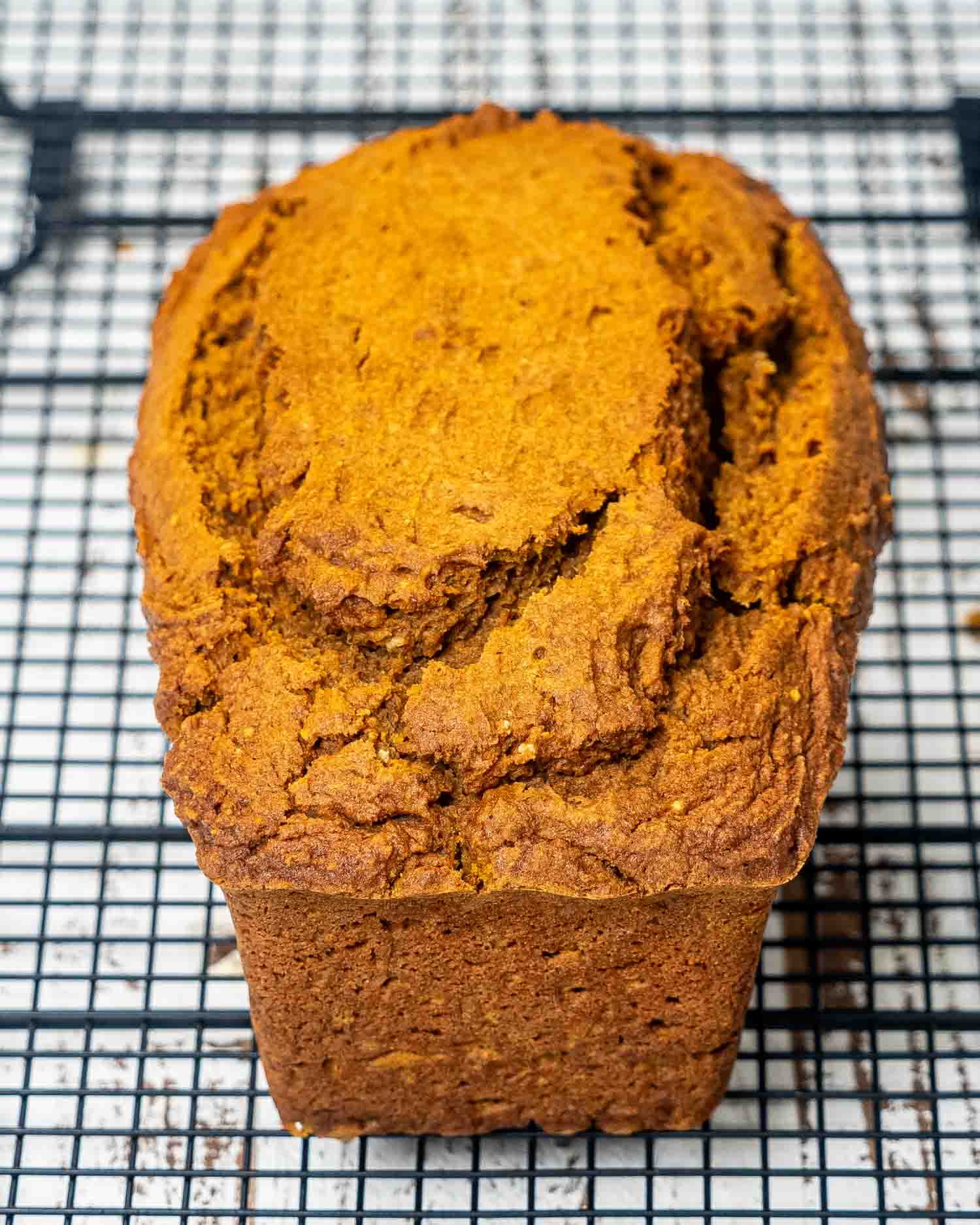
Cool 10 minutes in the pan, then turn it out onto a wire rack. Then leave it a full 2 hours before slicing. I know. The crumb is still setting and a warm loaf compresses under the knife, and you’ll get gummy slices for your impatience.
Things Worth Knowing
- Pure pumpkin, not pie filling. The cans look nearly identical and the difference ruins the loaf.
- Spoon and level your flour. Scooping packs it and gives you a dry bread.
- Stop mixing early. Lumps are fine. Smooth batter means you’ve gone too far.
- Use a thermometer. 200 to 205°F. The toothpick test is unreliable in a batter this wet.
- Cool it 2 hours before slicing. The crumb is still setting, and this is where gummy pumpkin bread comes from.
- Test old leavening. Baking soda and powder both fade. If the tin’s been open a while, check it fizzes.
- The crack on top is normal. It’s meant to be there and it means the loaf rose properly.
Mix Ins
This batter takes additions well, and you want about a cup total for one loaf.
- Chocolate chips. A cup of semi sweet, tossed in a tablespoon of the flour first so they don’t all sink to the bottom. The most popular version by a distance.
- Nuts. Chopped walnuts or pecans, toasted first if you have 5 minutes. Toasting makes a real difference and most people skip it.
- Both. Half a cup of each. No notes.
- Cream cheese swirl. Beat 4 ounces of softened cream cheese with 3 tablespoons of sugar and an egg yolk. Pour half the batter in, spoon the cream cheese over, add the rest, then drag a knife through it twice.
- Streusel top. Rub together ¼ cup flour, ¼ cup brown sugar, ½ teaspoon cinnamon, and 2 tablespoons cold butter until crumbly, then scatter over before baking.
- Add them at the end, folded in gently after the flour has just disappeared, so you’re not mixing twice.
What To Serve With It
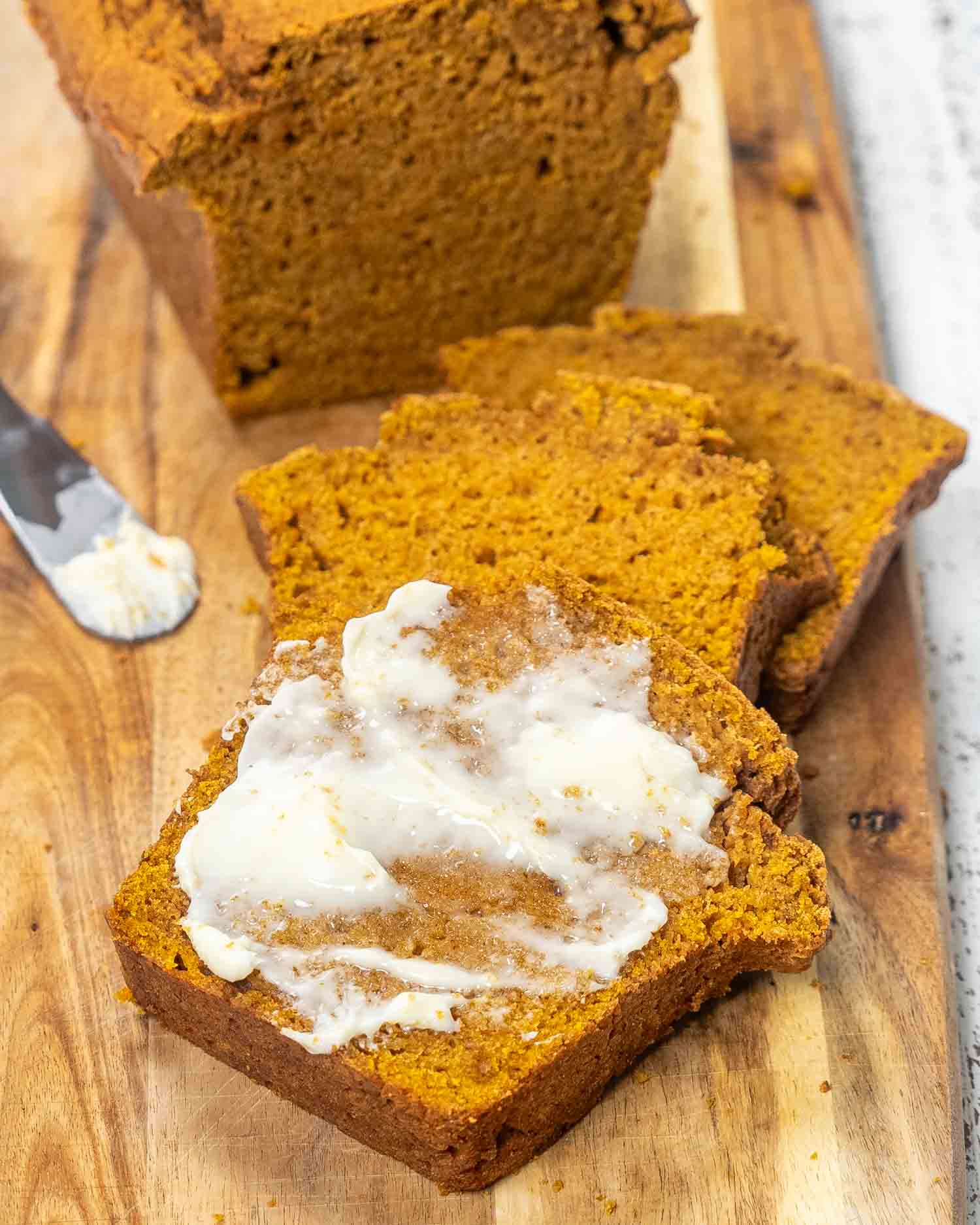
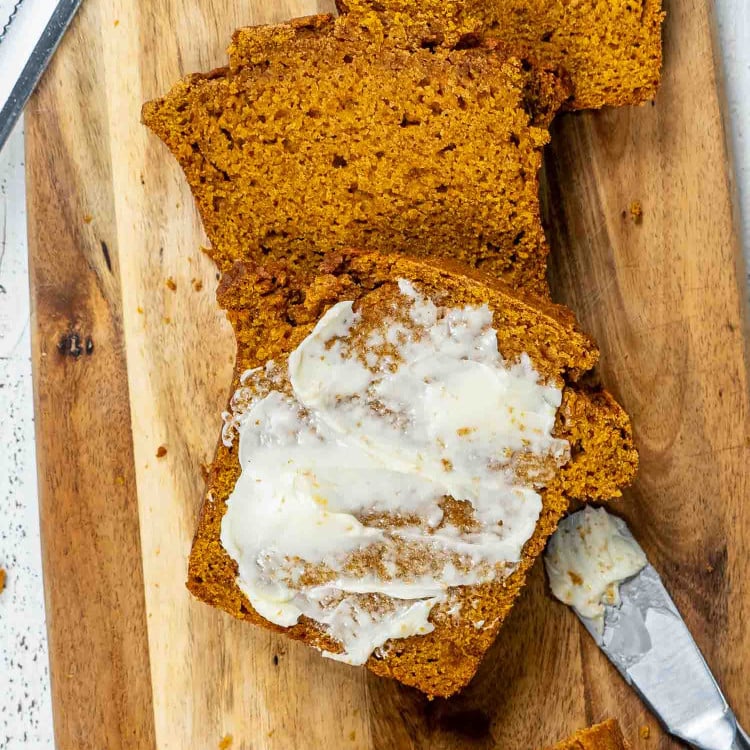
Warm, with butter melting into it. That’s the whole thing and it doesn’t need improving.
Coffee is the natural partner, and a pumpkin spice latte if you want to lean all the way in. Tea works too, and a cold glass of milk is the correct choice if there are children involved.
Cream cheese spread on a slice is very good and turns it into something closer to dessert. Honey butter is even better and takes 2 minutes to make.
Make Ahead And Storage
Room temperature: wrapped in foil or plastic, 3 days. It’s genuinely better on day 2, once the spices have had time to settle into the crumb.
Fridge: up to 6 days, well wrapped. It firms up when cold, so let a slice come to room temperature or warm it briefly.
Freezer: 3 months. Wrap the cooled loaf tightly in plastic, then foil, then into a freezer bag. Or slice it first and freeze the slices with parchment between them, which is far more useful since you can pull out one at a time.
Thawing: overnight on the counter, still wrapped. Wrapped matters, because condensation forms on the outside rather than on the bread.
Reheating: 20 seconds in the microwave, or a few minutes in a 300°F oven. A slice toasted in a dry pan with butter is unexpectedly excellent.
Discover More Sinfully Sweet Treats
- Lemon Blueberry Yogurt Loaf
- Pumpkin Cinnamon Bread
- Healthy Whole Wheat Banana Nut Bread
- Cream Cheese Filled Banana Cake
- Banana Chocolate Chip Coffee Cake
- Lemon Blueberry Yogurt Loaf
- Limoncello Lemon Cake
- Old Fashioned Lemon Bread
- Pumpkin Bread Pudding
Before You Begin! If you make this, please leave a review and rating letting us know how you liked this recipe! This helps our business thrive & continue providing free recipes.
Pumpkin Bread
Video
Ingredients
- 1½ cups sugar (granulated)
- 15 ounces pure pumpkin (1 can, not pumpkin pie filling)
- ½ cup butter (melted)
- 2 large eggs
- 1 teaspoon vanilla extract
- 1¾ cups all-purpose flour
- 1 teaspoon baking soda
- ½ teaspoon baking powder
- ½ teaspoon salt
- 2 teaspoons pumpkin spice
- 1 teaspoon cinnamon (ground)
Before You Begin! If you make this, please leave a review and rating letting us know how you liked this recipe! This helps our business thrive & continue providing free recipes.
Instructions
- Preheat the oven to 325°F. Grease an 8.5 by 4.5 inch loaf pan with butter or cooking spray.
- In a medium bowl, whisk the 1½ cups sugar, 15 ounces pure pumpkin, ½ cup melted butter, 2 large eggs, and 1 teaspoon vanilla extract together until smooth.
- In another bowl, whisk together the 1¾ cups all purpose flour, 1 teaspoon baking soda, ½ teaspoon baking powder, ½ teaspoon salt, 2 teaspoons pumpkin spice, and 1 teaspoon ground cinnamon.
- Add the dry ingredients to the wet ingredients and stir just until the flour disappears. The batter will look lumpy and that's correct. Do not overmix.
- Pour the batter into the prepared loaf pan and smooth the top.
- Transfer the loaf pan to the oven and bake for 70 to 80 minutes, starting to check at 65 minutes. It's done when an instant read thermometer inserted into the center reads 200 to 205°F, the top is domed and cracked, and the edges have pulled slightly away from the pan. If the top browns before the center sets, tent it loosely with foil.
- Cool in the pan for 10 minutes, then turn out onto a wire rack. Let it cool completely, at least 2 hours, before slicing.
Equipment
Notes
- Pure pumpkin, not pie filling. The cans look nearly identical. Check that the ingredient list says pumpkin and nothing else.
- Spoon and level the flour. Scooping packs it down and can give you 20% more than the recipe wants, which is the main cause of a dry loaf.
- Stop mixing when the flour disappears. Lumps are fine. Overmixing makes it tough and dense.
- Use a thermometer: 200 to 205°F in the center. The toothpick test is unreliable in a batter this wet.
- Cool 2 hours before slicing. The crumb is still setting, and cutting warm gives you gummy slices.
- Test old leavening. Baking soda and powder both fade. If the tins have been open 6 months, check they still fizz.
- Mix ins: about 1 cup total. Toss chocolate chips in a tablespoon of the flour so they don’t sink, and fold everything in at the end.
- Muffins: fill cups two thirds full and bake at 350°F for 20 to 25 minutes.
Nutrition Information
Notice: Nutrition is auto-calculated for your convenience. Where relevant, we recommend using your own nutrition calculations.
Why is my pumpkin bread gummy in the middle?
Almost always underbaked, or sliced too soon. The toothpick test is unreliable in a batter this wet, so use a thermometer and take it to 200 to 205°F. Then let it cool a full 2 hours before cutting, because the crumb is still setting and a warm loaf compresses under the knife.
Can I use pumpkin pie filling instead of pumpkin puree?
No, and this is the mistake I’d most want to save you from. Pie filling is already sweetened, already spiced, and much wetter. You want pure pumpkin, where the ingredient list says pumpkin and nothing else. The cans sit next to each other and look almost the same.
Why did my loaf sink in the middle?
Usually underbaking, or opening the oven door too early. It can also happen if your leavening is old and gave you a rise it couldn’t sustain. Test your baking soda and powder if the tins have been open more than 6 months.
Why is my bread dry?
Too much flour, most likely. Spoon it into the measuring cup and level it off rather than scooping, since scooping packs it down and you can end up with a fifth more than the recipe calls for. Overbaking does it too.
Can I add chocolate chips or nuts?
Yes, about a cup total for one loaf. Toss chocolate chips in a tablespoon of the flour first so they don’t sink, and fold everything in at the very end after the flour has just disappeared.
Can I make muffins with this batter?
You can. Fill the cups about two thirds full and bake at 350°F for 20 to 25 minutes. Check them early, since muffins go from done to dry much faster than a loaf.
Can I freeze it?
Yes, up to 3 months. Slice it first and freeze the slices with parchment between them, which is far handier than defrosting a whole loaf every time you want one piece.