Melting Potatoes
This post may contain affiliate links. Please read my disclosure policy.
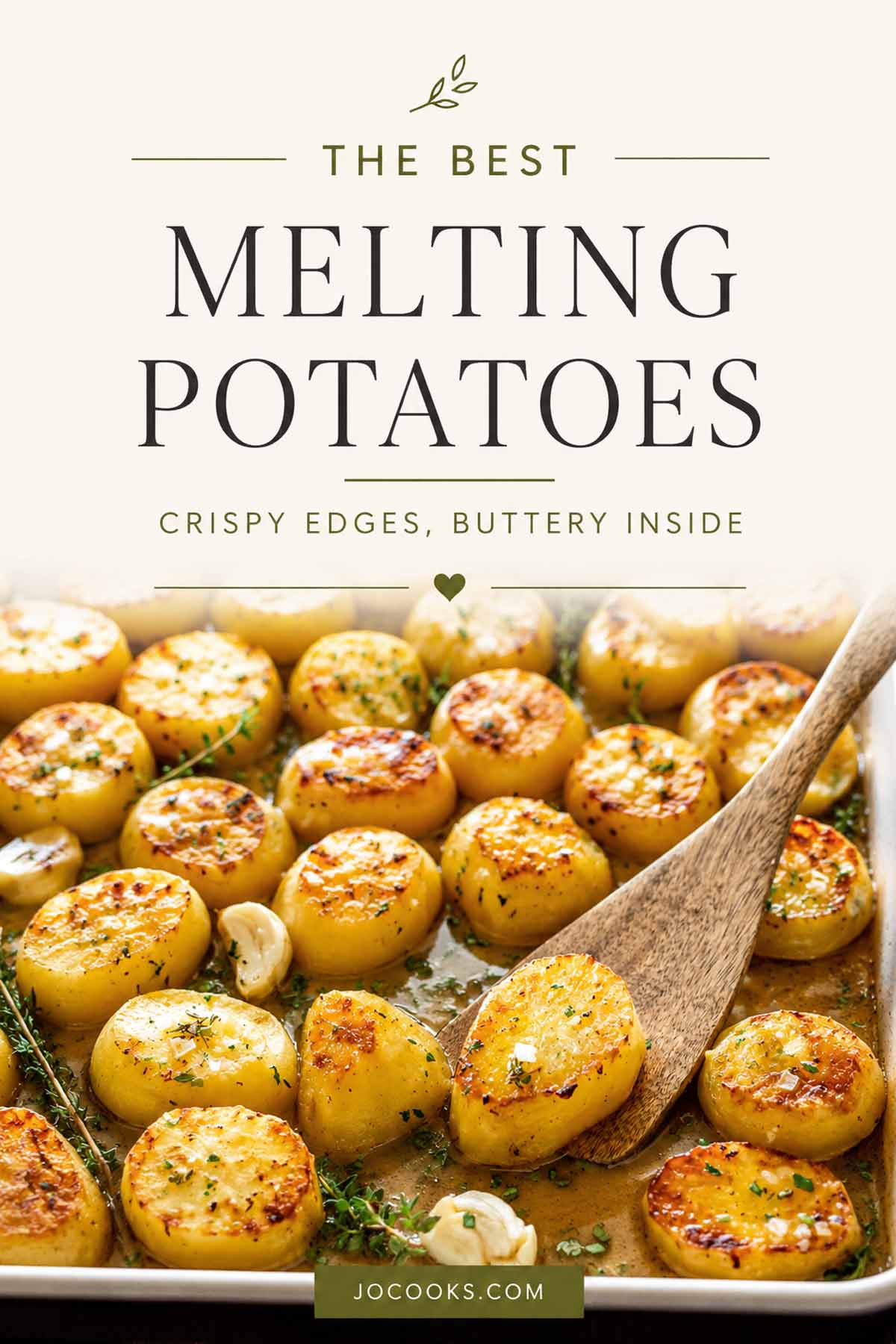
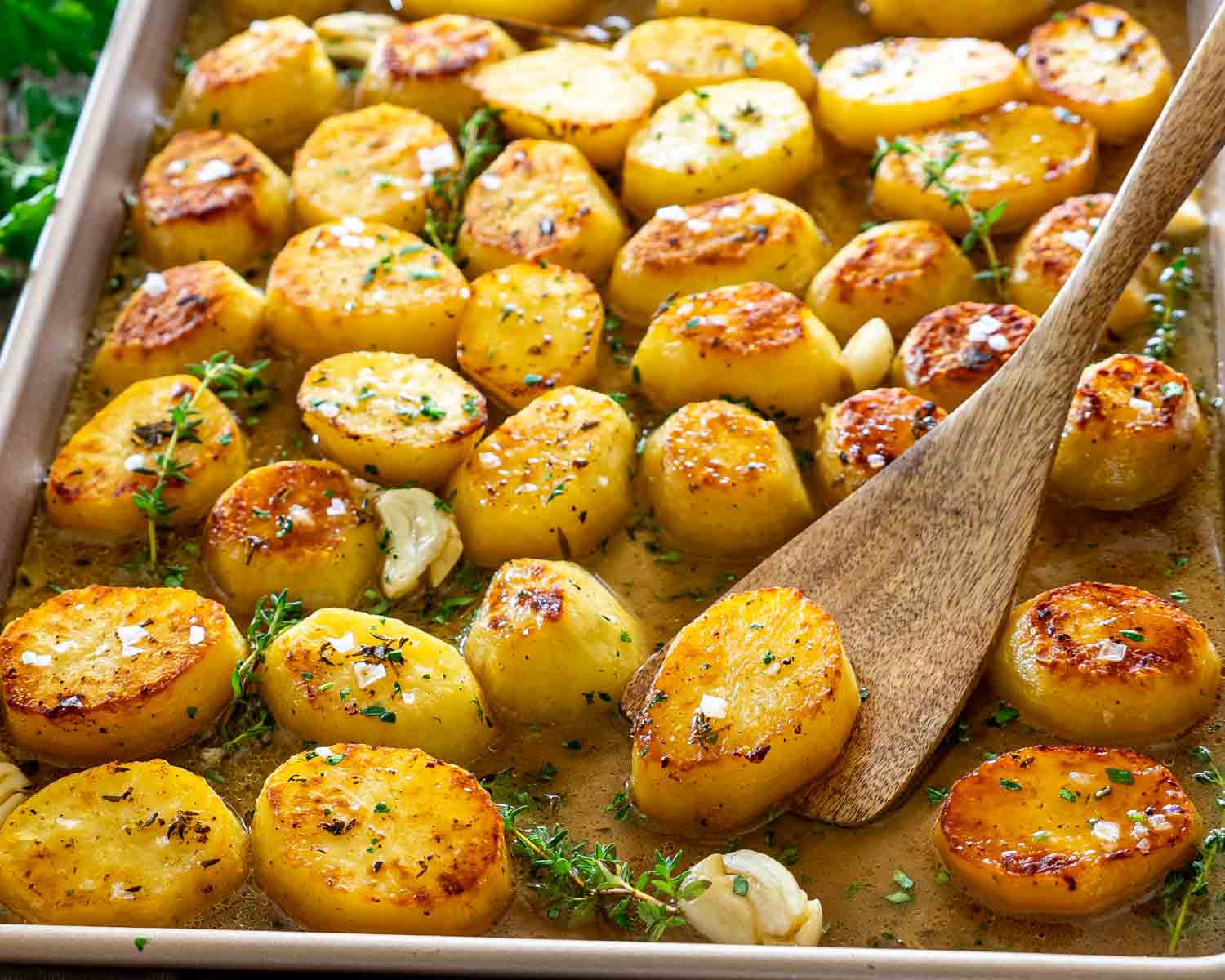
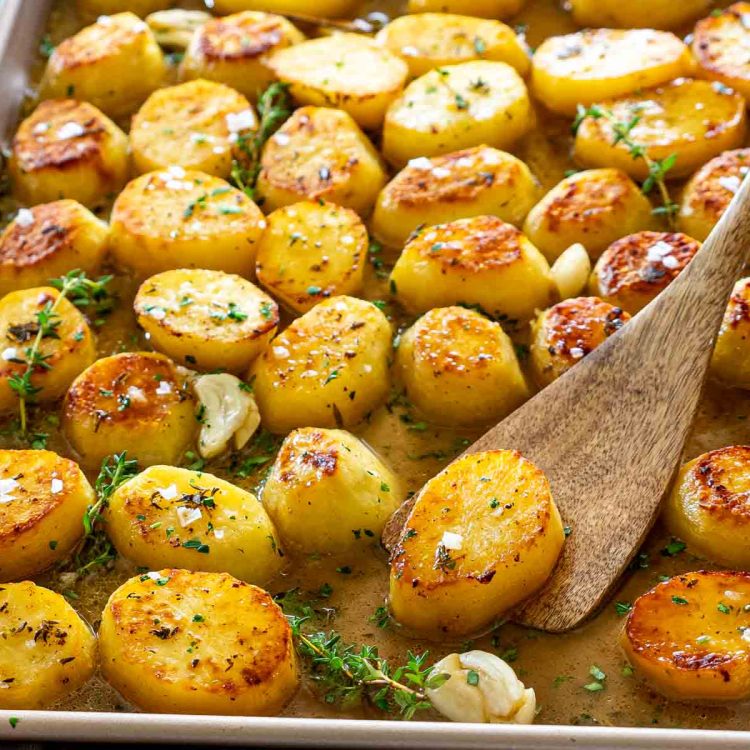
These Melting Potatoes are roasted in butter until deeply golden on both sides, then finished in chicken broth and garlic until they are so tender they practically dissolve when you eat them. The broth reduces into a glossy pan sauce that you will absolutely be spooning over everything on the plate.
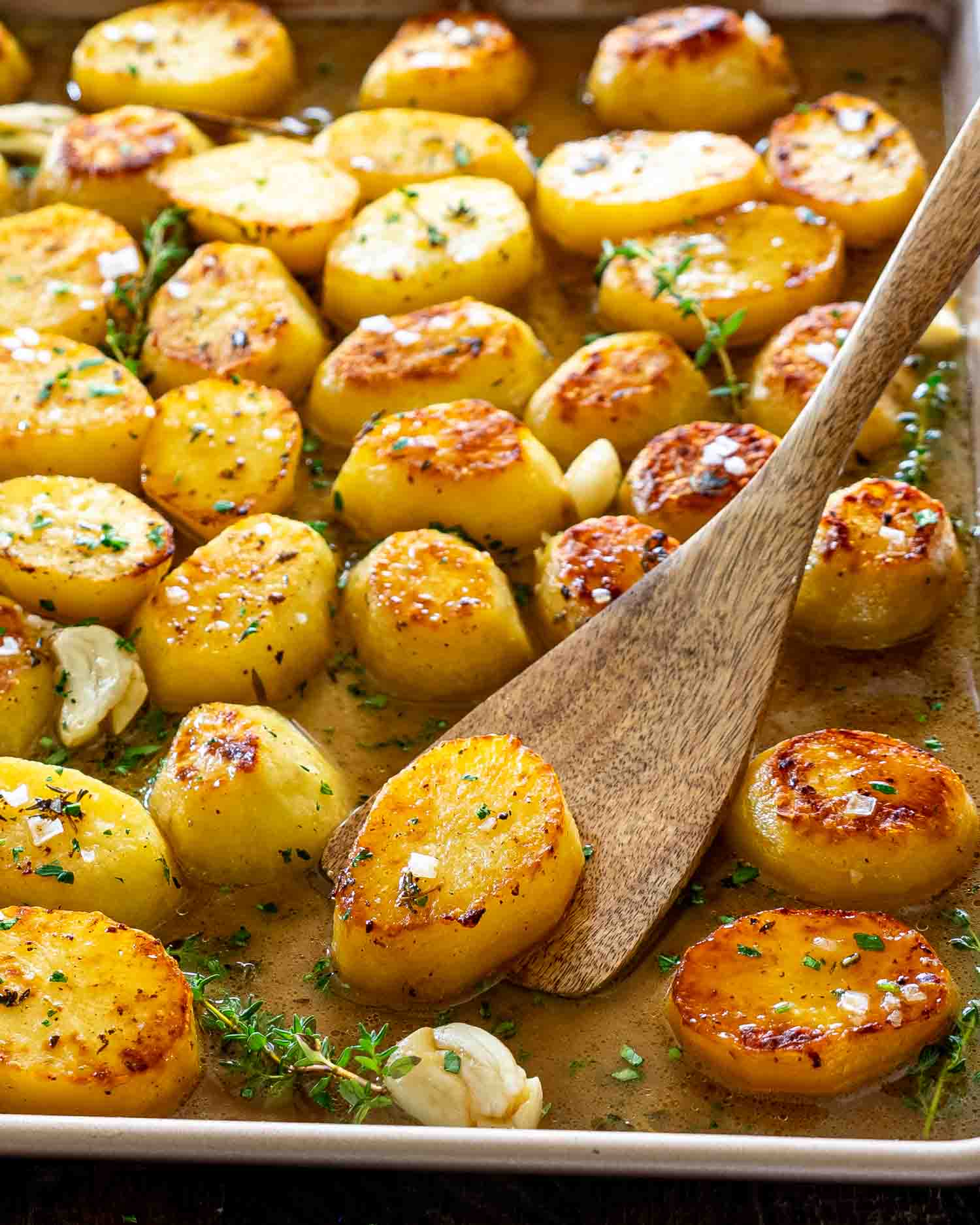
If you have never heard of melting potatoes, you are about to have a very good day. These are not your average roasted potatoes. They are thick rounds of Yukon Gold, roasted in butter at high heat until deeply golden on both sides, then finished in chicken broth and garlic until they are so tender they practically dissolve when you eat them. The broth reduces into a glossy pan sauce that you will absolutely be spooning over everything on the plate.
The name is not just cute, it describes exactly what happens. The high heat roasting builds serious color and crust on both sides, then the broth goes in and the potatoes finish cooking in that liquid. They absorb it, become impossibly tender and almost creamy inside, while staying golden on the outside. It sounds fancy. It is not. It is just a very clever use of 2 cooking methods in the right order.
Why You’ll Love These Melting Potatoes
- The texture is unlike any roasted potato you have had before. Golden and slightly crisp on the outside, soft and almost creamy inside. No potato does this on its own without the broth step.
- The pan sauce is a bonus you did not expect. The butter and broth and garlic reduce into something glossy and savory that you will spoon over the potatoes and then consider drinking straight from the pan. No judgment.
- It pairs with everything. A proper side dish that works next to roasted chicken, pork, beef, or anything else you are putting on the table.
- And it looks impressive without being complicated. This is the kind of side dish that makes people think you know things.
Ingredients You’ll Need
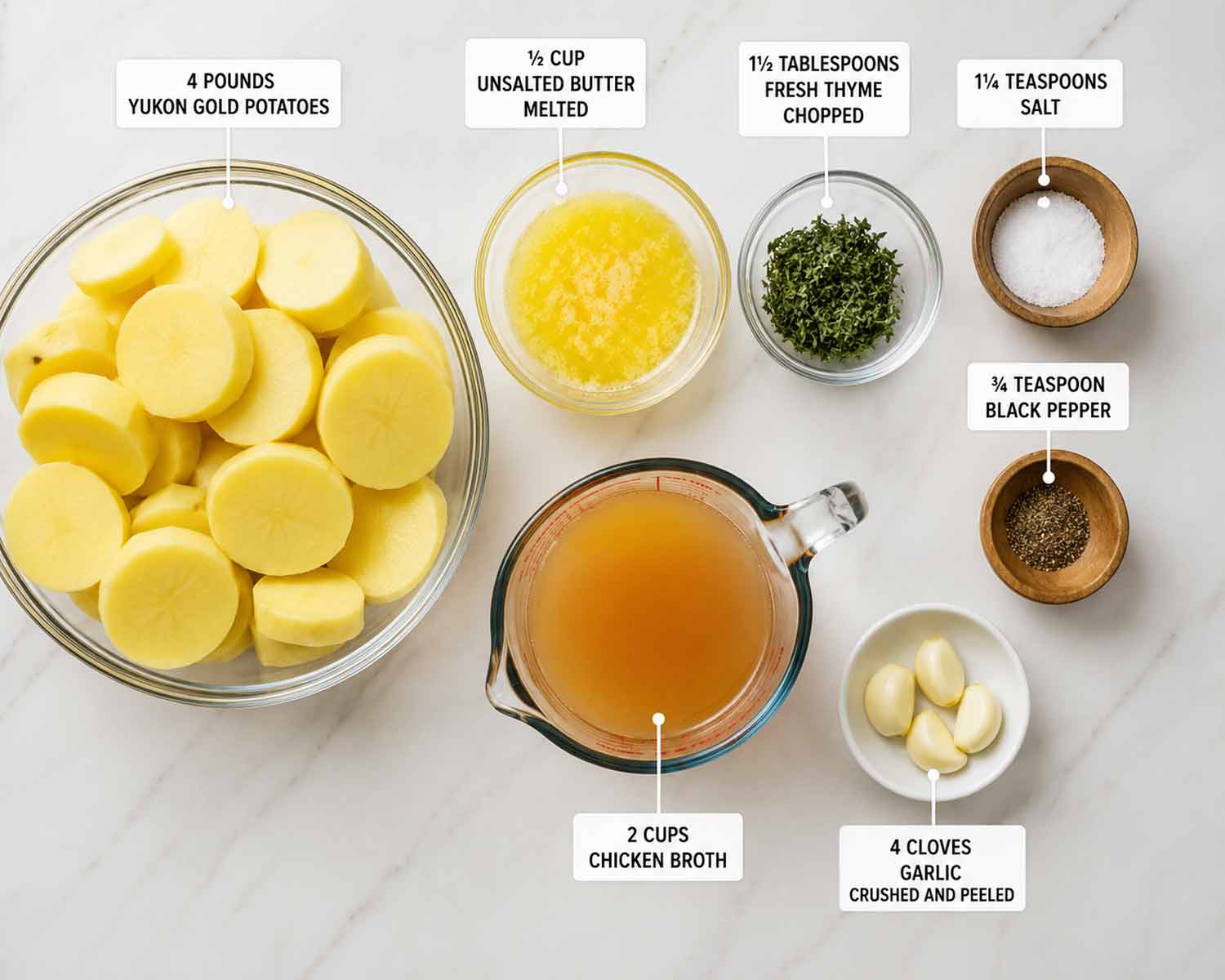
- Yukon Gold potatoes (4 pounds): The right potato for this job. Their naturally buttery flavor and waxy texture holds up to the high heat roasting and broth finishing without falling apart. Don’t swap for russets, they will get too soft and lose their shape.
- Unsalted butter (½ cup, melted): This is what gives the potatoes their golden crust and rich flavor. Half a cup sounds like a lot until you taste the result.
- Fresh thyme (1½ tablespoons, chopped): Fresh here, not dried. It goes on before roasting and the flavor infuses into the butter as everything cooks.
- Salt and black pepper: Season well. Potatoes need salt to taste like something. Chicken broth (2 cups): This is what turns good roasted potatoes into melting potatoes. It reduces around the potatoes in the final roast and becomes the pan sauce. Vegetable broth works too if you want to keep this vegetarian.
- Garlic (4 cloves, crushed and peeled): Goes in with the broth and roasts alongside the potatoes for the final 15 to 20 minutes. Mellow, sweet, and very good.
How To Make Melting Potatoes
Preheat the oven to 450°F and position a rack in the upper third of the oven. High heat is essential here, don’t lower it.
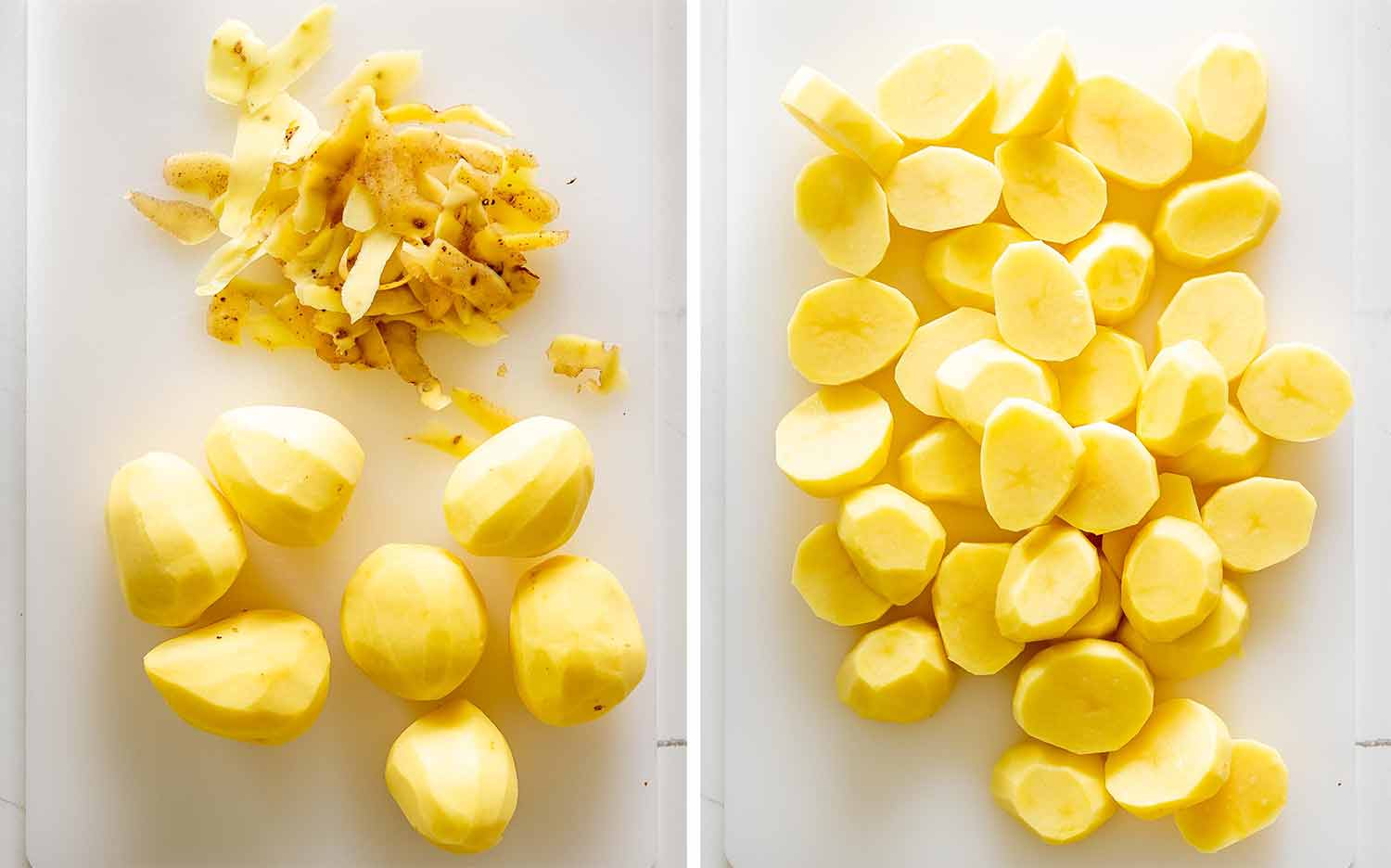
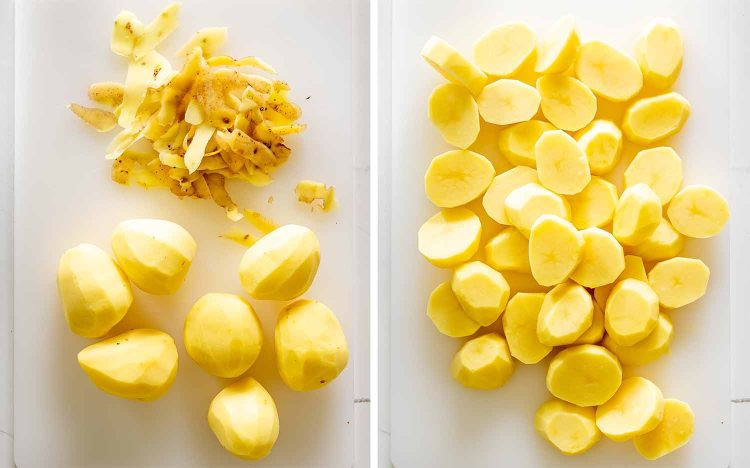
Peel the potatoes, trim the ends flat, and cut them crosswise into 1 inch rounds. Even thickness is important so everything finishes at the same time. Uneven cuts mean some will be perfect and some will be mush.
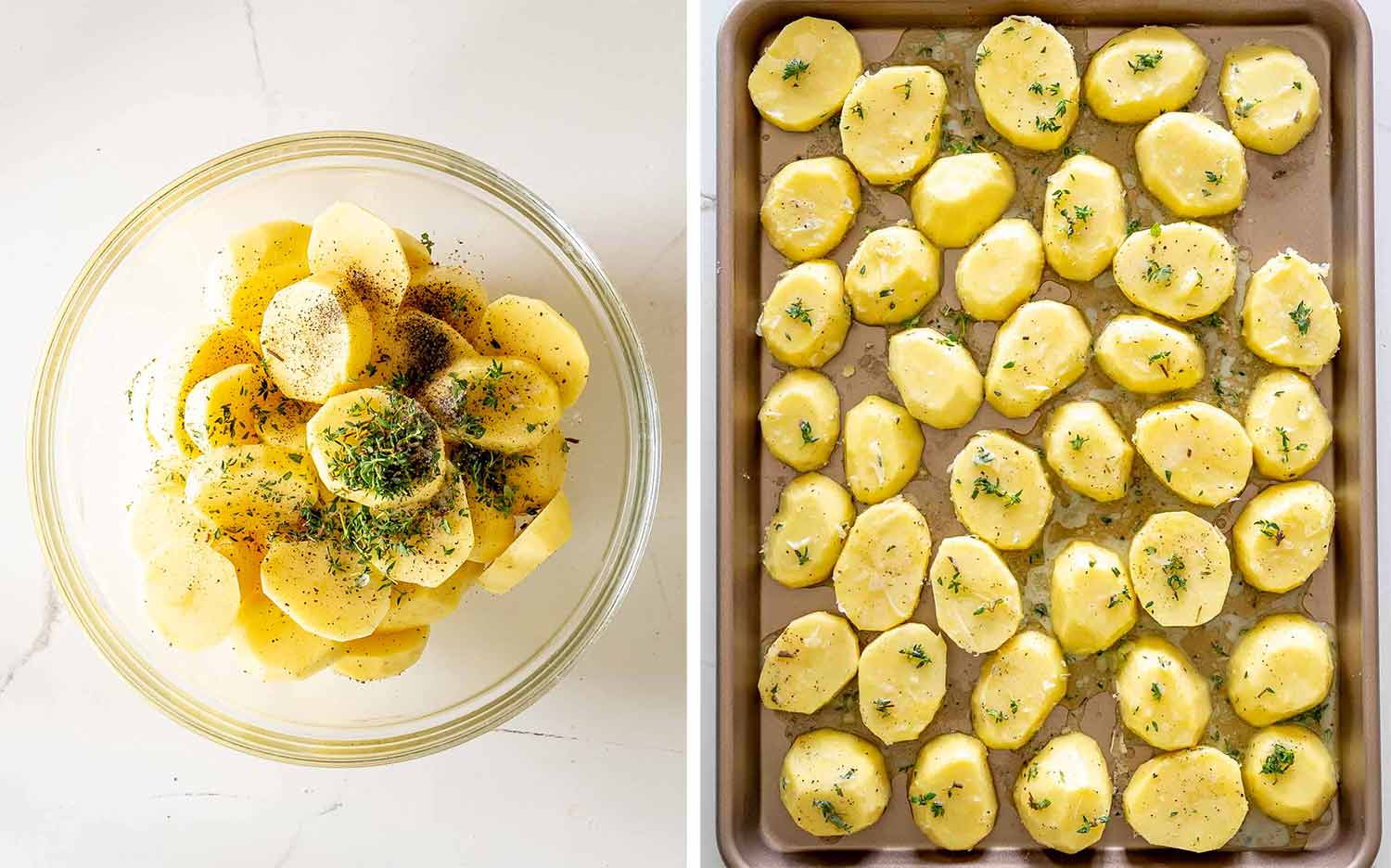
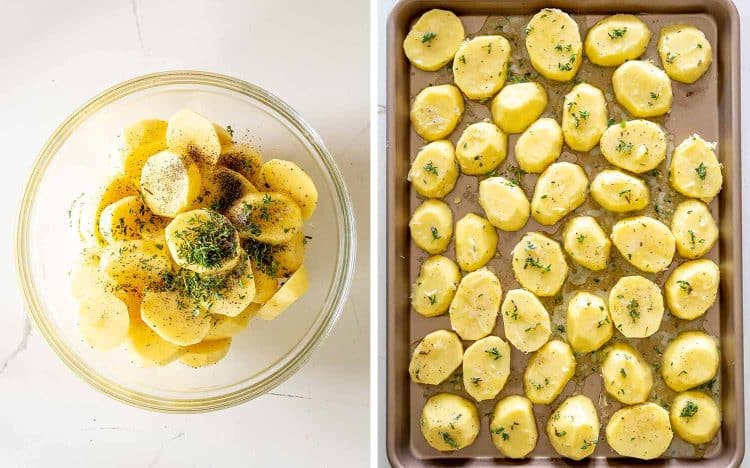
Toss the potato rounds with the melted butter, thyme, salt, and pepper until every piece is well coated. Then arrange them in a single layer in your baking pan. Give them room. Crowding equals steaming equals no golden crust, and the golden crust is the whole point.
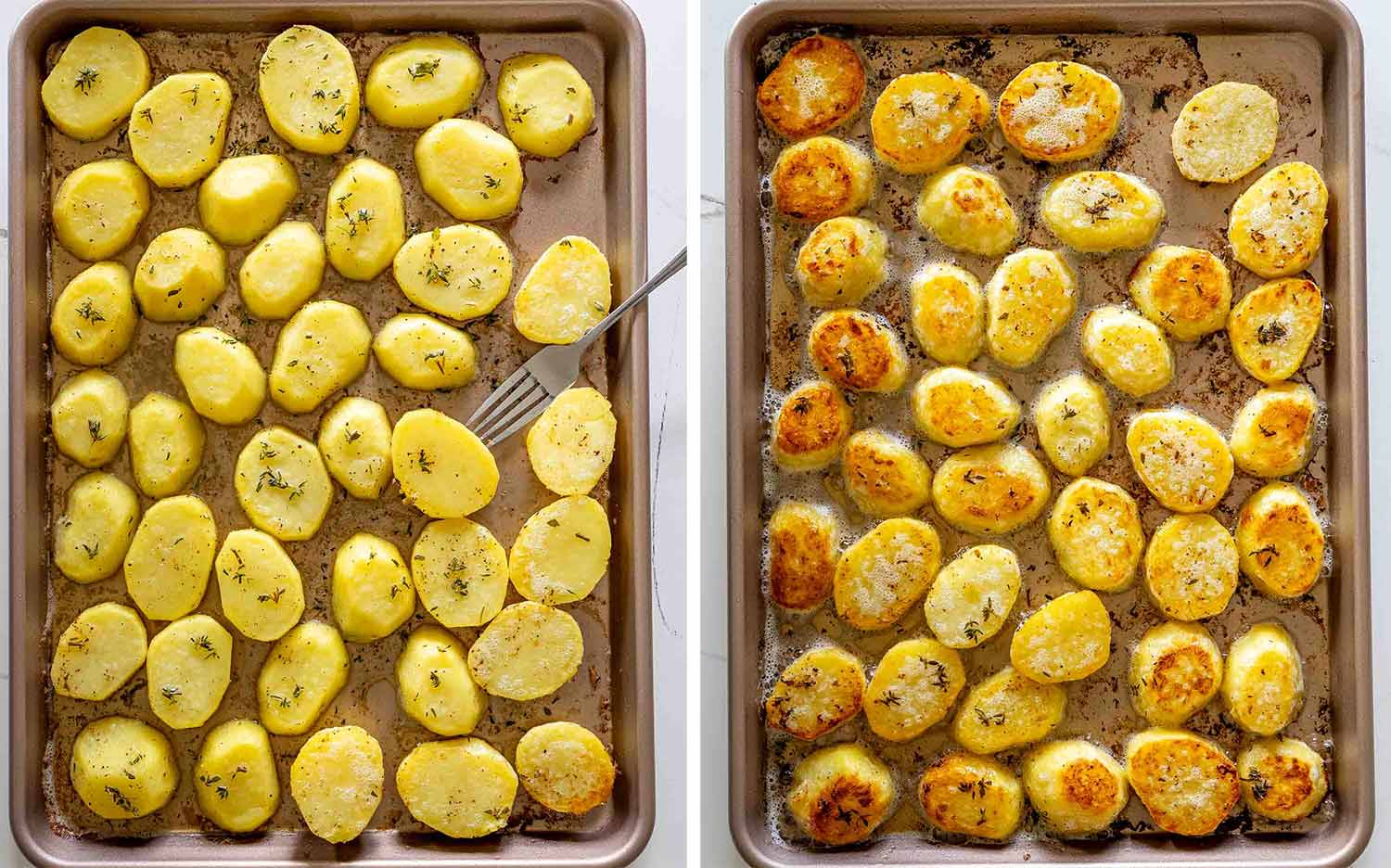
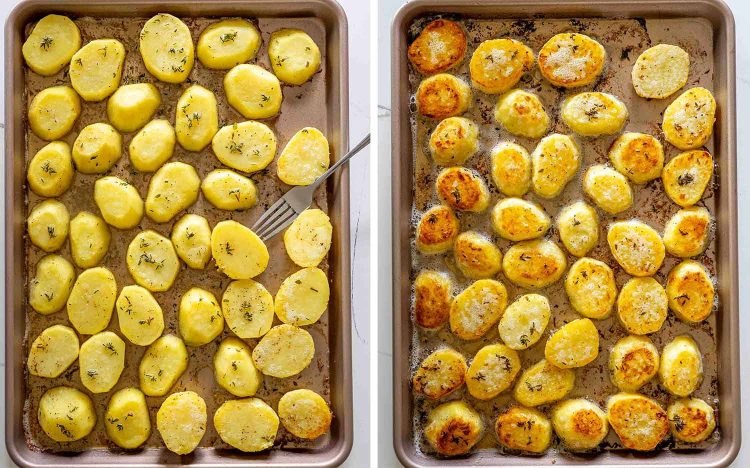
Roast for 15 minutes until the bottoms are starting to brown around the edges. Flip every potato with a metal spatula, then roast for another 15 minutes until browned on the second side.
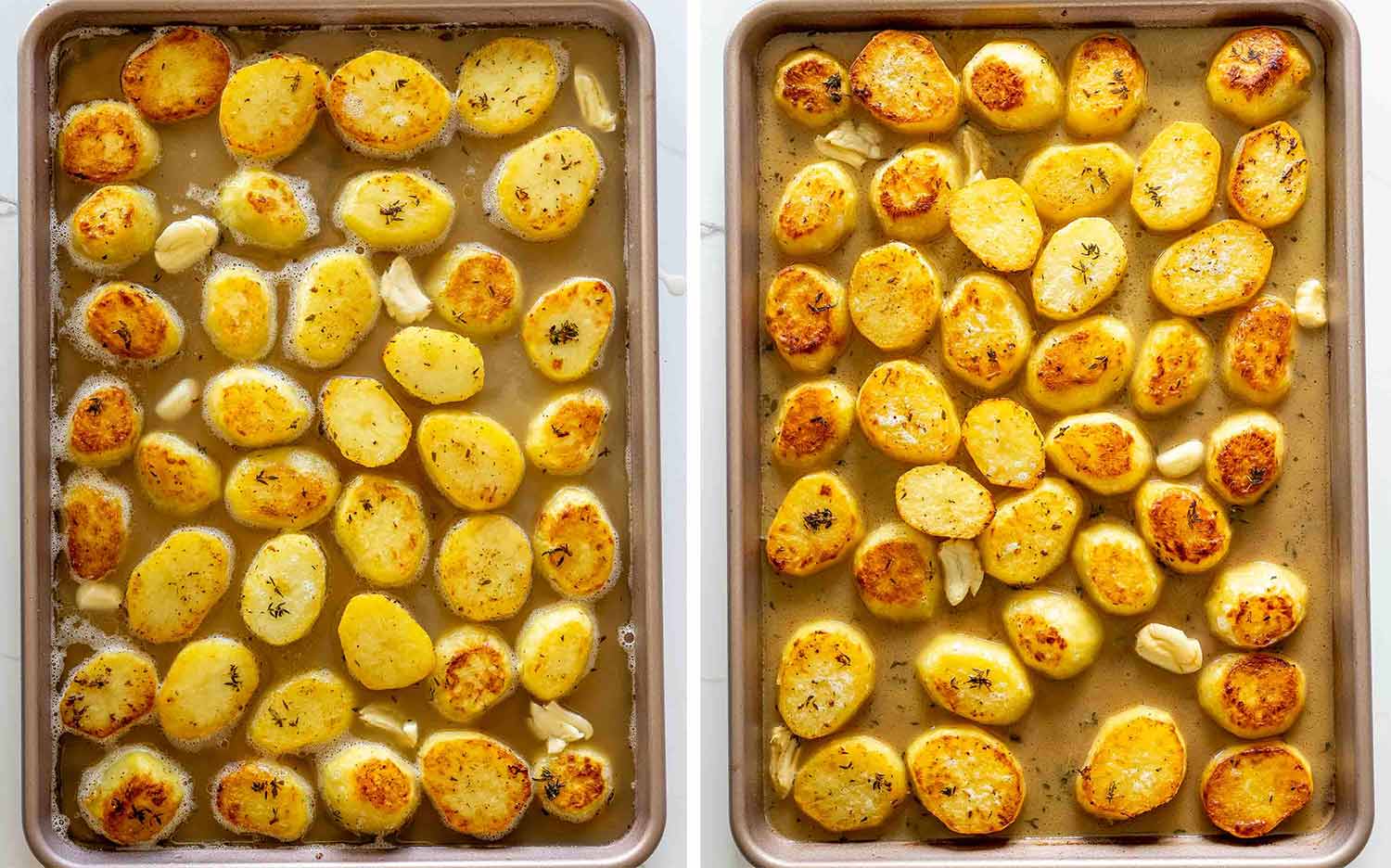
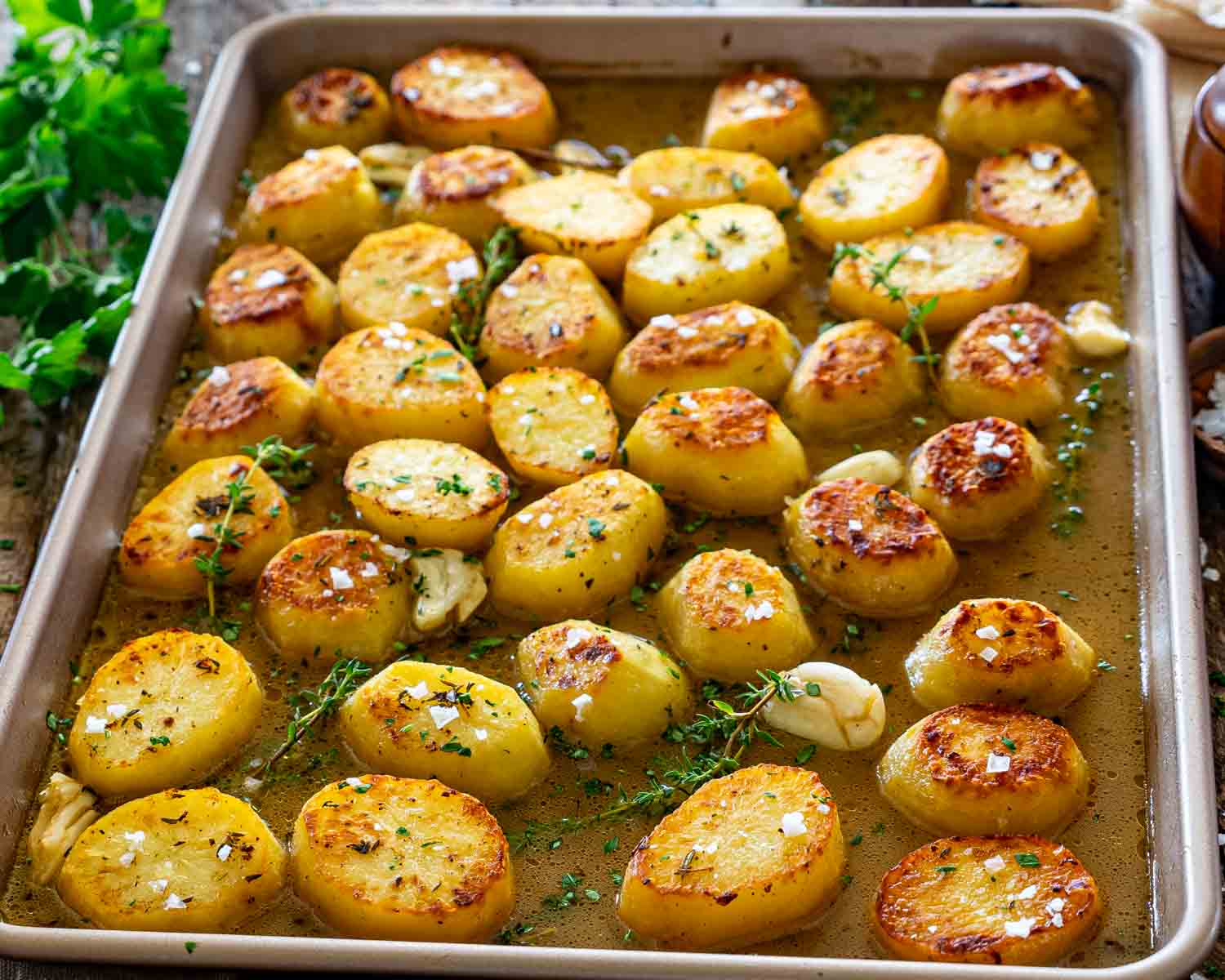
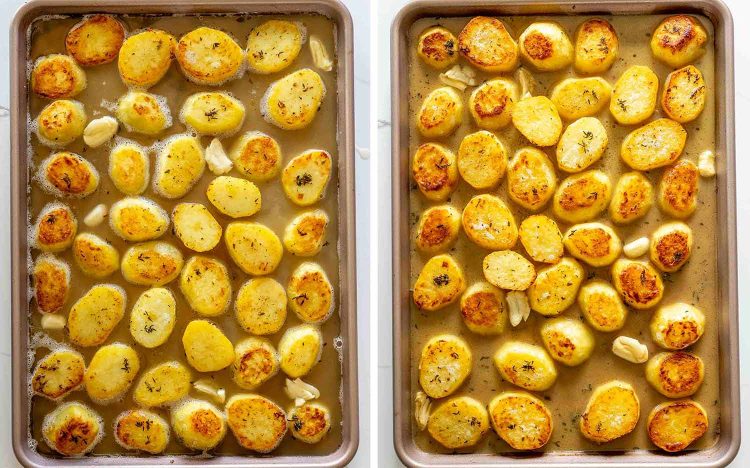
Flip one more time, pour the chicken broth around the potatoes, scatter in the garlic, and roast for a final 15 to 20 minutes until the potatoes are fork tender and the broth has reduced into a glossy sauce.
Spoon that pan sauce over everything and serve hot. Do not skip the pan sauce. It is the best part.
Important: Use a Metal Pan
This deserves its own section because it is a safety issue, not just a preference.
When you pour cold chicken broth into a hot pan, the temperature difference is significant. Glass and ceramic baking dishes can shatter when that happens. Not crack. Shatter. Use a metal baking pan, full stop. A sturdy sheet pan or a metal roasting pan both work perfectly.
Tips and Tricks
- Cut the potatoes evenly. 1 inch rounds, consistently thick. Uneven cuts are the enemy of even cooking.
- Don’t crowd the pan. Single layer with space between each round. Use 2 pans if needed, it is worth the extra washing up.
- Metal pan only. See above. This is not optional.
- Flip properly. Use a metal spatula and be deliberate about it. You want that crust to stay intact when you flip, not get scraped off.
- The pan sauce is not optional. Once the broth reduces, spoon it generously over the potatoes before serving. This is where all the flavor lives.
- Turn the pan sauce into gravy. If you want to take it further, pour the pan drippings into a small saucepan, whisk in a teaspoon of cornstarch mixed with a little cold water, and simmer until thickened. Serve alongside instead of just spooning it over. Your guests will lose their minds.
How to Serve Melting Potatoes
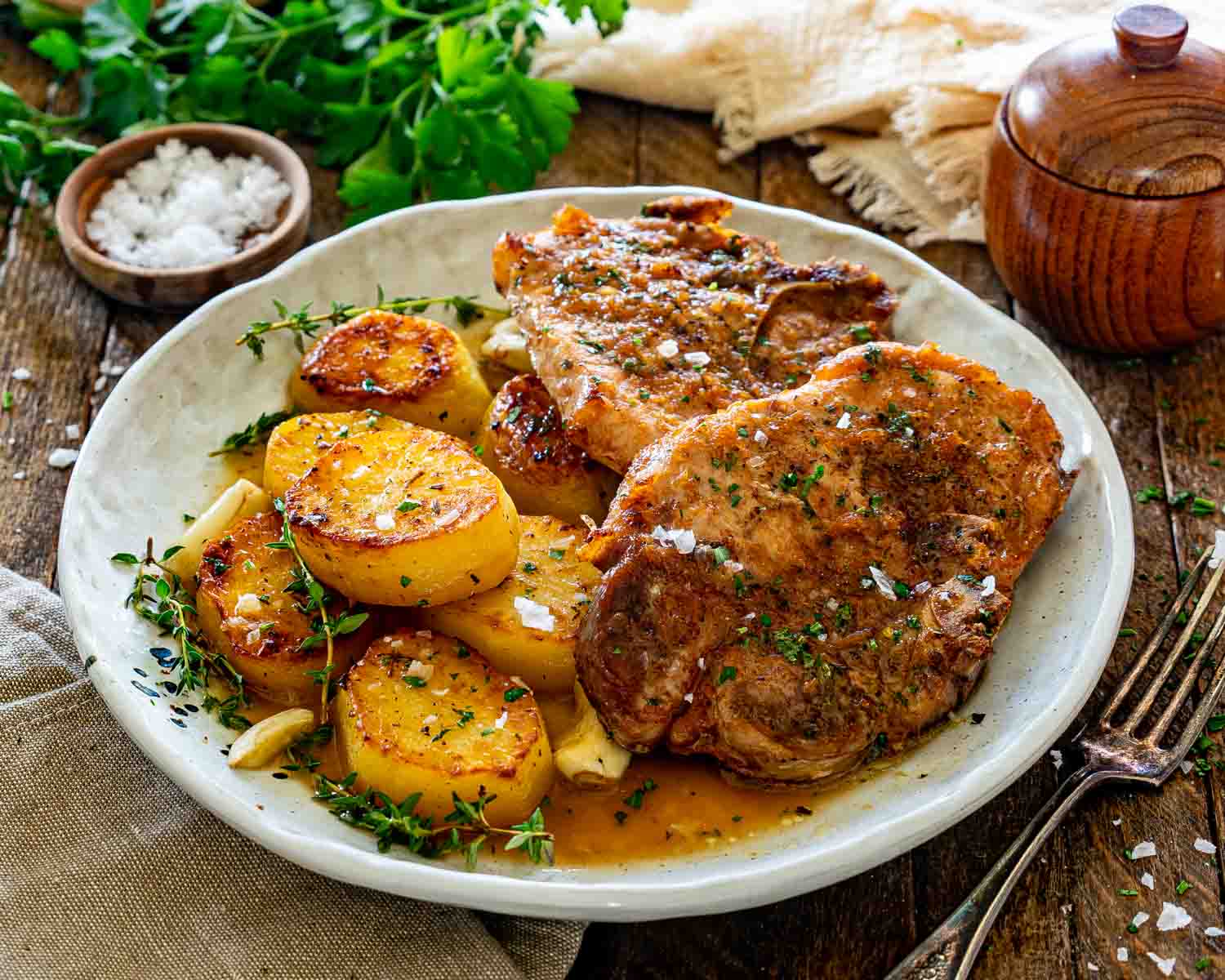
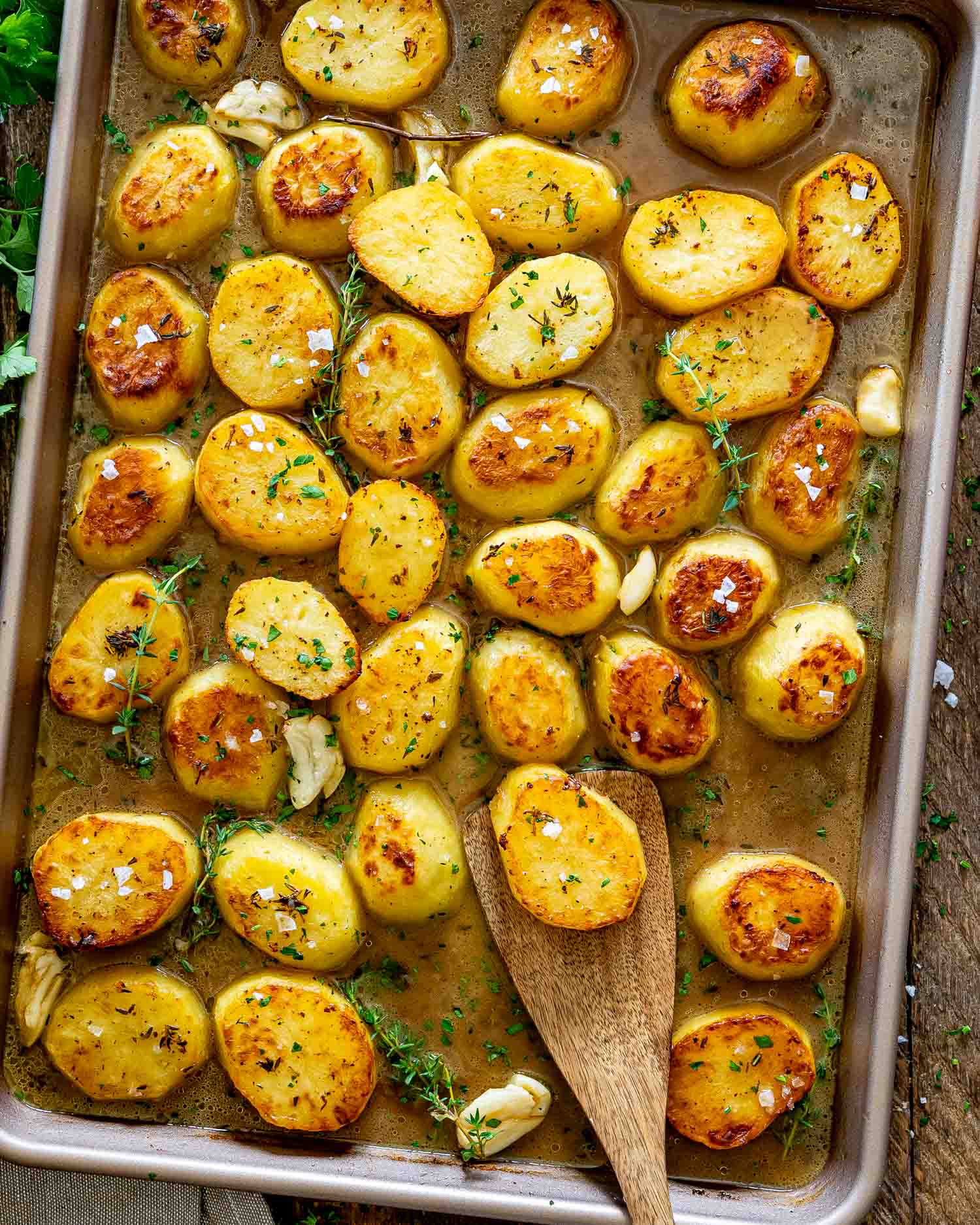
These are a side dish that goes with just about anything. They’re rich enough to hold their own next to a simple protein but not so heavy that they overwhelm the plate. I first served them at one of our Thursday night gatherings alongside the Honey Garlic Pork Chops and they disappeared faster than anything else on the table. The pan sauce alone had people asking questions. Here’s how I like to pair them:
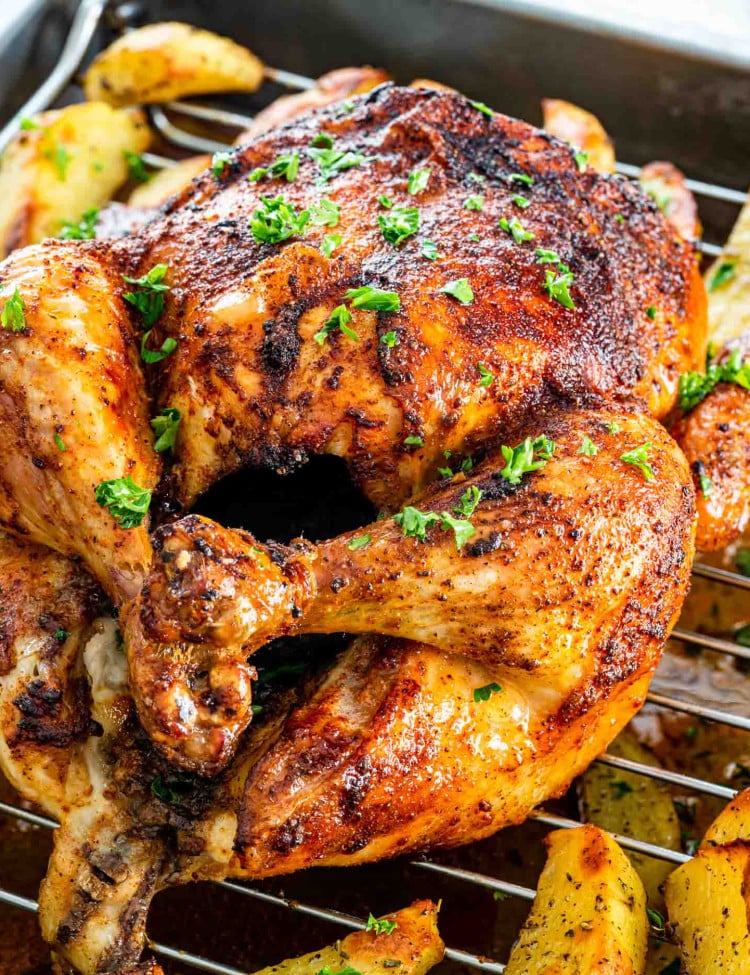
Roast Chicken
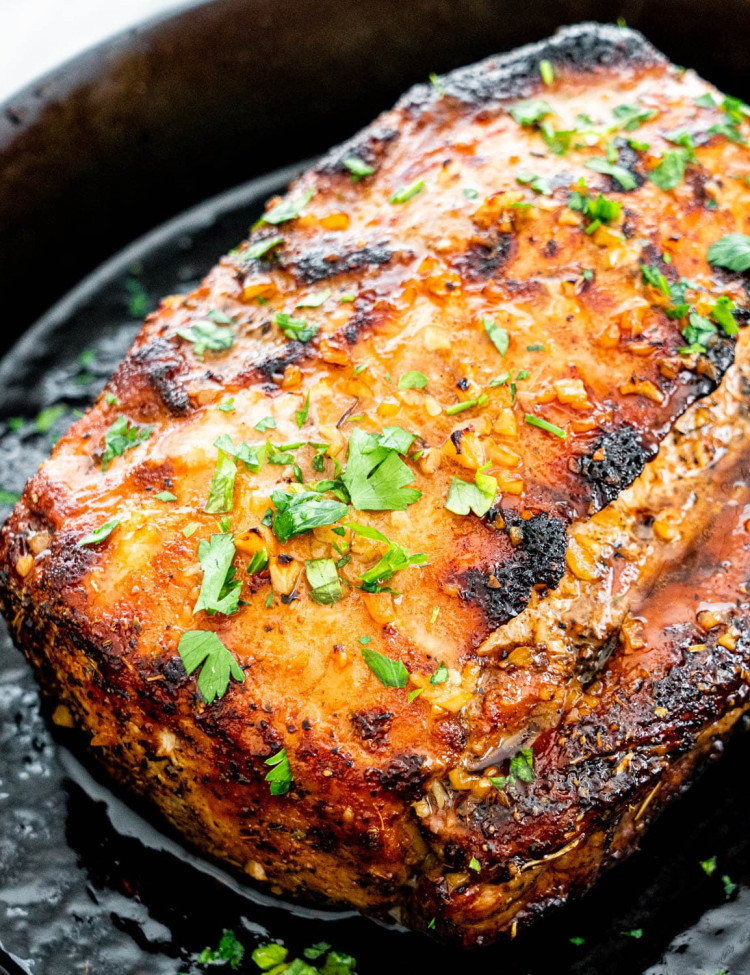
Honey Garlic Pork Loin
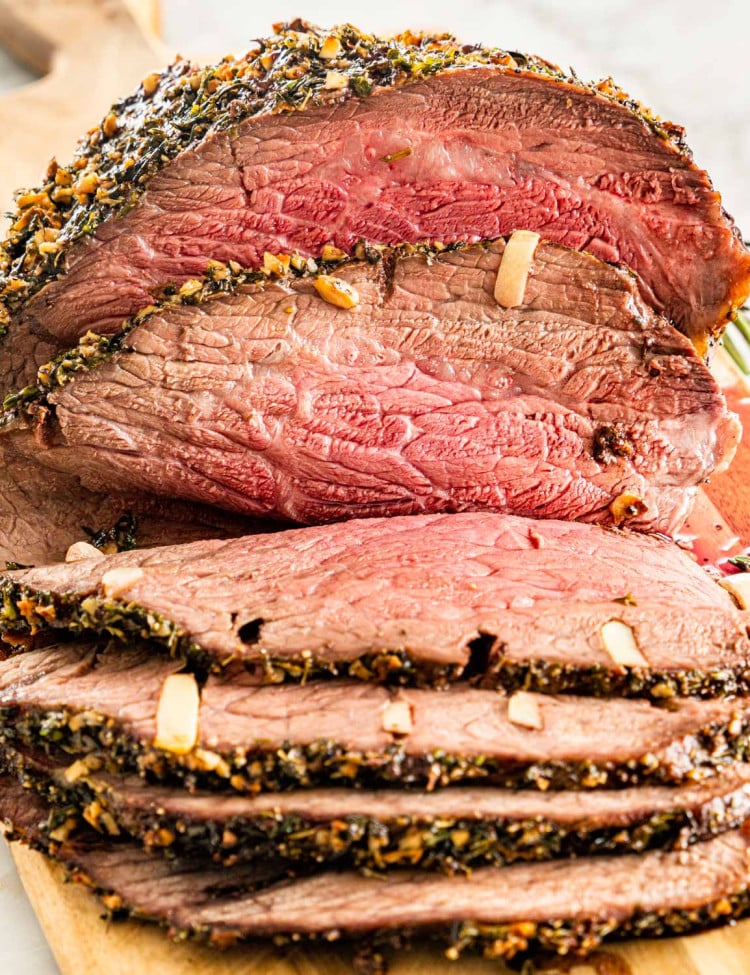
Roast Beef
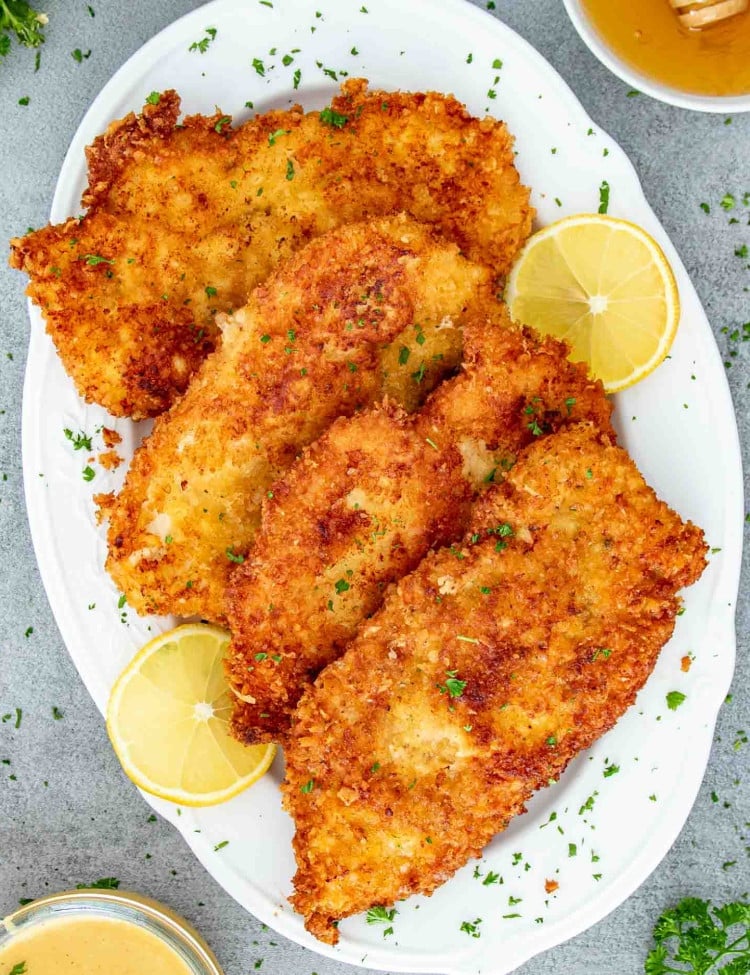
Crispy Chicken Cutlets
Try These Recipes Next
- Greek Potatoes
- Roasted Fingerling Potatoes
- Loaded Scalloped Potatoes
- Lyonnaise Potatoes
- Crispy Parmesan Potatoes
Before You Begin! If you make this, please leave a review and rating letting us know how you liked this recipe! This helps our business thrive & continue providing free recipes.
Melting Potatoes
Ingredients
- 4 pounds Yukon Gold potatoes
- ½ cup unsalted butter (melted)
- 1½ tablespoons fresh thyme (chopped)
- 1¼ teaspoons salt
- ¾ teaspoon black pepper
- 2 cups chicken broth
- 4 cloves garlic (crushed and peeled)
Before You Begin! If you make this, please leave a review and rating letting us know how you liked this recipe! This helps our business thrive & continue providing free recipes.
Instructions
- Preheat your oven to 450°F (230°C) and position a rack in the upper third. Use a metal baking pan, not glass, because glass can shatter when the cold broth hits it later.
- Peel the 4 pounds potatoes, trim the ends flat, and cut them crosswise into 1 inch thick rounds. Even thickness matters here so they cook at the same rate.

- In a large bowl, toss the potato rounds with the ½ cup melted butter, 1½ tablespoons thyme, 1¼ teaspoons salt, and ¾ teaspoon black pepper until every piece is coated. Arrange the potatoes in a single layer in one or two metal baking pans. Crowding them means they steam instead of brown, so give them room.
- Roast for 15 minutes, until the bottoms are starting to brown around the edges. Pull the pans out and flip each potato with a metal spatula. Roast for another 15 minutes, until browned on the second side.
- Flip the potatoes once more, then pour the 2 cups chicken broth around them and scatter in the 4 cloves crushed garlic. Roast for a final 15 to 20 minutes, until the potatoes are fork tender and the broth has reduced into a glossy sauce.
- Spoon the pan sauce over the potatoes and serve hot.
Notes
- Yukon Gold potatoes: Don’t swap these for russets. Yukon Golds have a naturally buttery flavor and waxy texture that holds up to the high heat and broth without falling apart. Russets will get mushy.
- Metal pan only: Glass or ceramic baking dishes can shatter when cold broth hits a hot pan. Use a sturdy metal baking pan or sheet pan every single time. This is not a preference, it’s a safety issue.
- Cut evenly: 1 inch rounds, consistently thick. Uneven cuts mean some will be perfect and some will be overcooked by the time the rest catch up.
- Don’t crowd the pan: Single layer with space between each round. Use 2 pans if needed. Crowding equals steaming equals no golden crust, and the crust is the whole point.
- Fresh thyme: Fresh gives a better result here than dried. If you only have dried, use about half the amount.
- Chicken broth: Vegetable broth works too if you want to keep this vegetarian. The flavor will be slightly lighter but still very good.
- The pan sauce: Don’t skip spooning it over the potatoes before serving. This is where most of the flavor lives.
- Turn it into gravy: Pour the pan drippings into a small saucepan, whisk in a teaspoon of cornstarch mixed with a little cold water, and simmer until thickened. Serve alongside as a proper gravy. Your guests will be very happy about this.
- Make ahead: Best served fresh. You can do the first 2 roasting steps ahead and finish with the broth just before serving but fully made ahead they lose some of their texture.
Nutrition Information
Notice: Nutrition is auto-calculated for your convenience. Where relevant, we recommend using your own nutrition calculations.
Frequently Asked Questions
Can I use a different type of potato?
I strongly recommend Yukon Gold potatoes. Their waxy texture holds up to the high heat and broth without falling apart. Russets are too starchy and will get mushy. Red potatoes could work in a pinch but the result won’t be quite the same.
Can I use vegetable broth instead of chicken broth?
Yes, vegetable broth works well here and keeps the dish vegetarian. The flavor will be slightly lighter but still very good.
Can I make these ahead of time?
They are best fresh out of the oven when the crust is at its best. You can do the first 2 roasting steps ahead of time and then finish with the broth just before serving, but fully made ahead they lose some of their texture.
Can I use dried thyme instead of fresh?
Yes, use about half the amount since dried herbs are more concentrated. Fresh gives a better result here though.
What if my broth hasn’t reduced enough by the end?
Put the pan back in the oven for another 5 minutes, or transfer the liquid to a small saucepan and reduce it on the stove. You want it glossy and slightly thickened, not watery.