Chicken Parmesan Casserole
This post may contain affiliate links. Please read my disclosure policy.
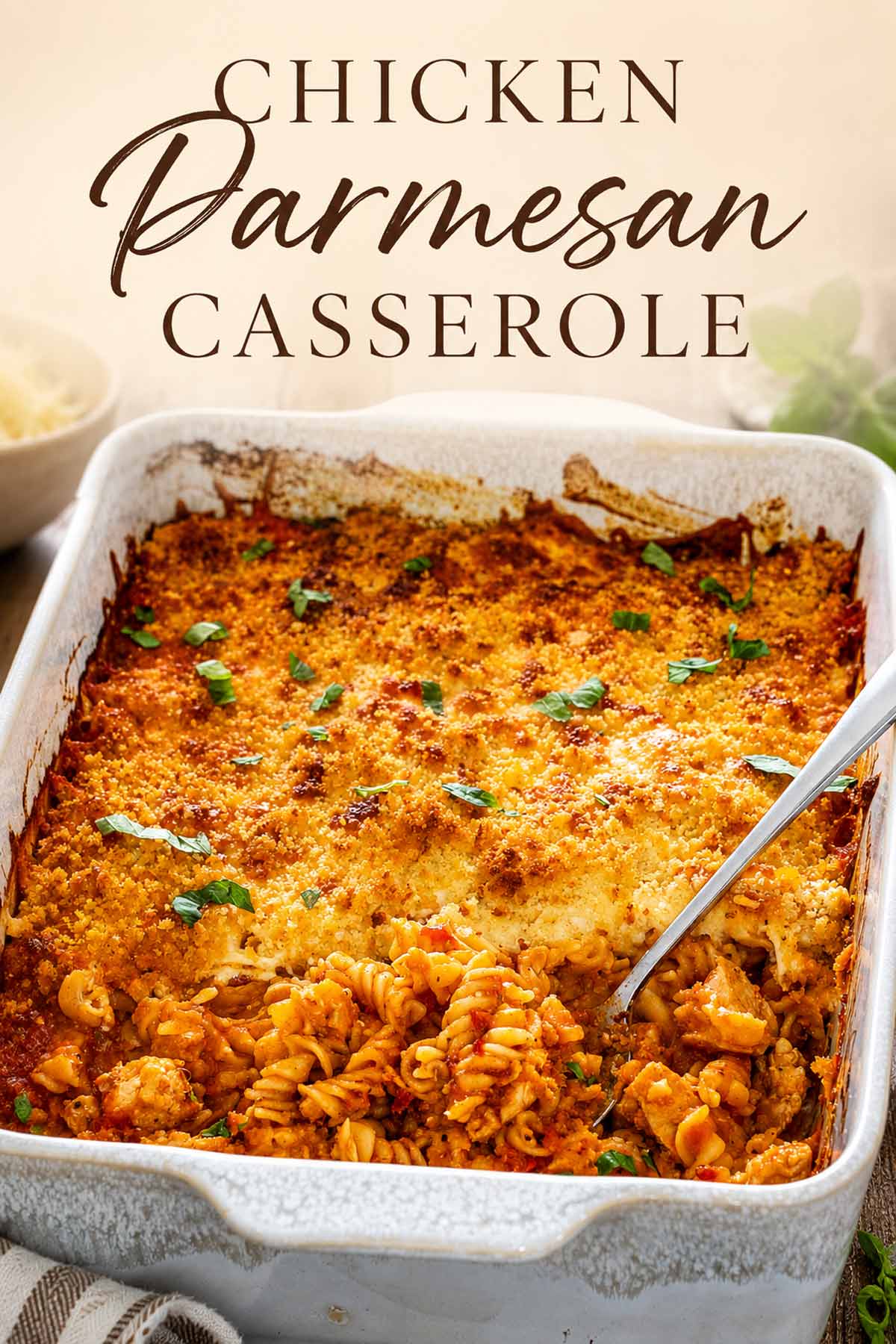
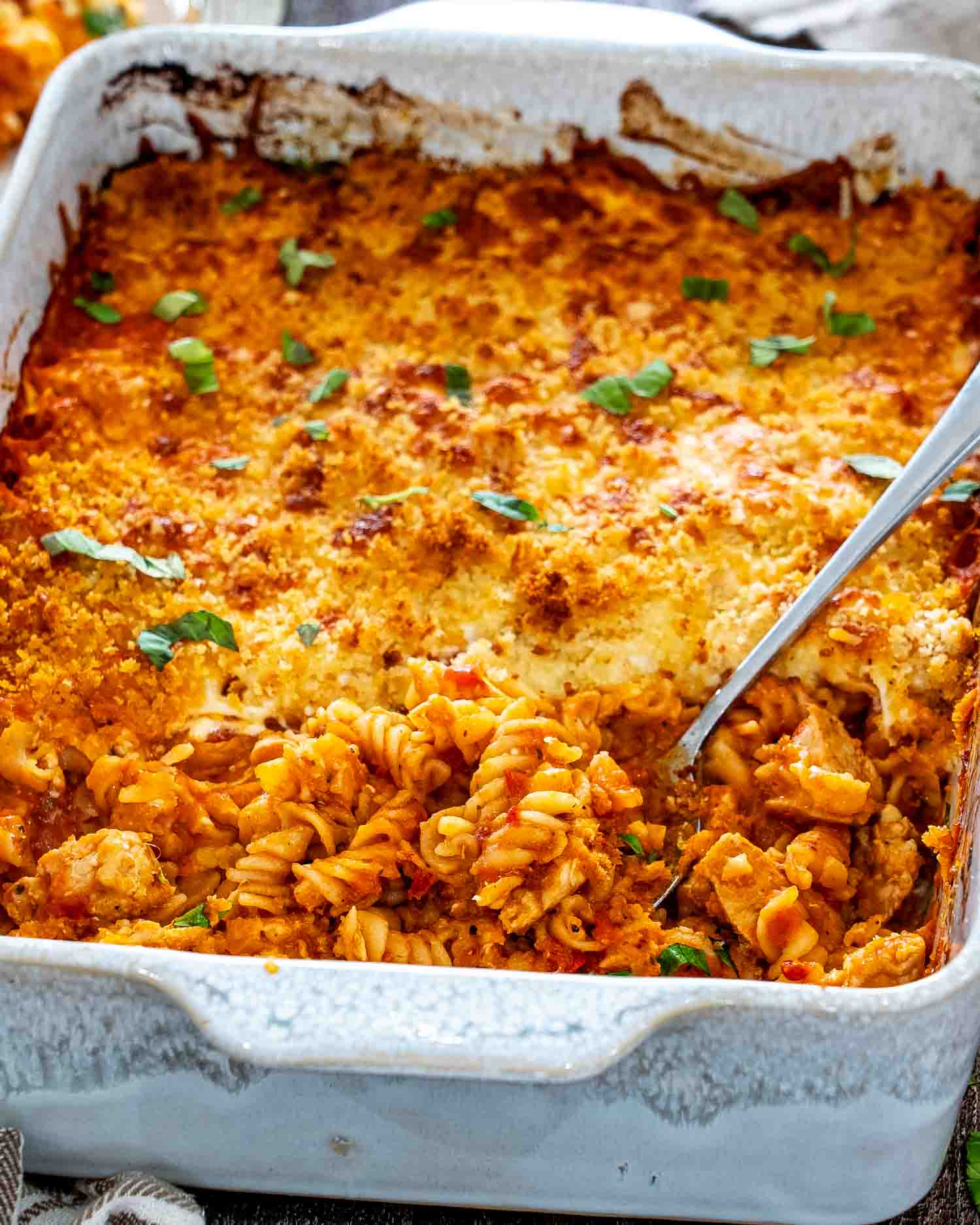
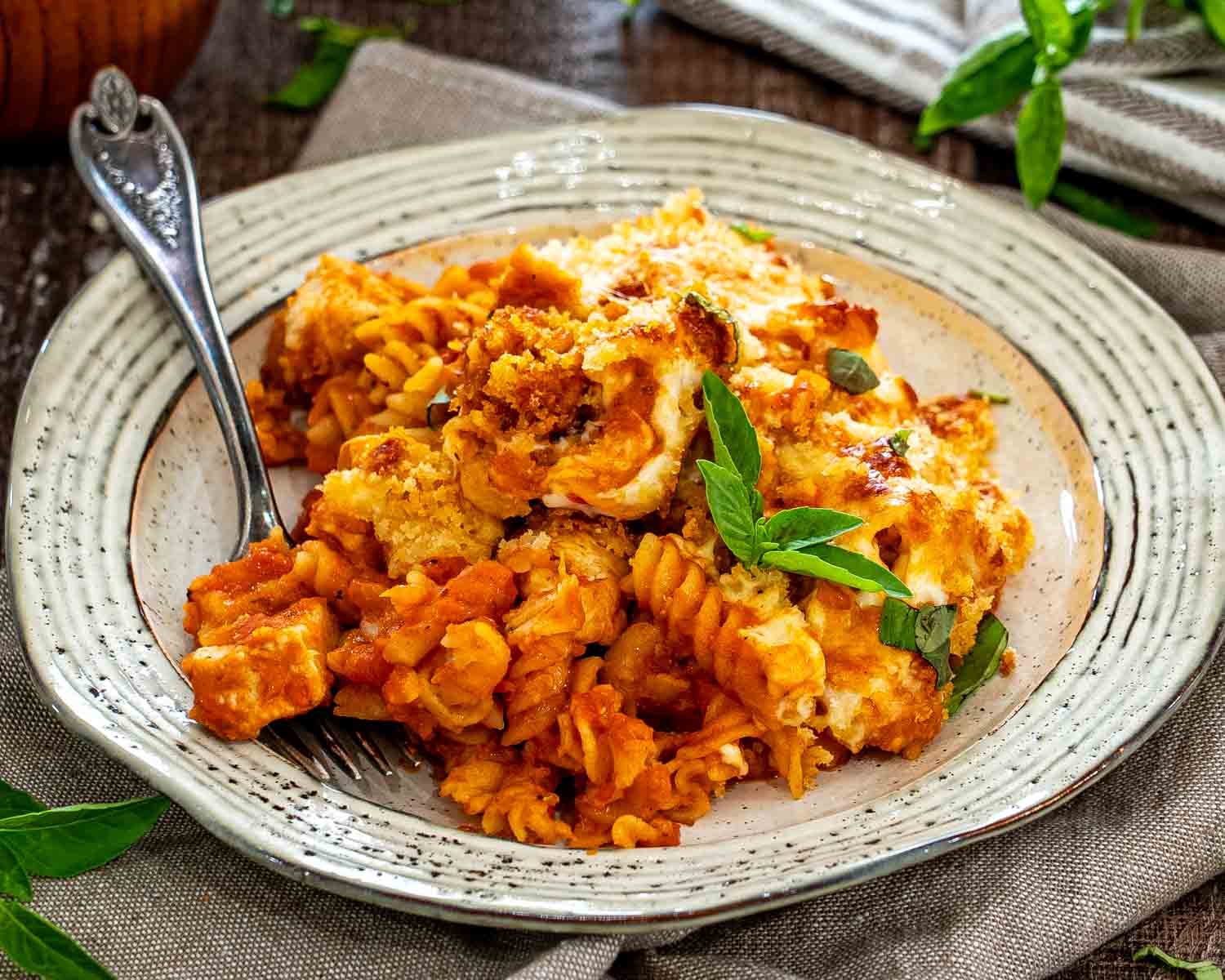
This Chicken Parmesan Casserole has seared chicken, uncooked rotini that cooks right in the marinara sauce, and a golden panko and mozzarella topping that comes out of the oven bubbling and crispy. All the flavors of chicken Parmesan without the breading, the frying, or the pile of dishes. One baking dish, feeds 8, done in just over an hour.
Chicken parmesan is a great dinner and a genuinely annoying one to make. Pound the cutlets, set up three dredging stations, fry in batches, then bake it anyway. By the time you’re plating, the breading you worked for has spent 20 minutes under wet sauce and gone soft.
So this is the version that skips all of it. The chicken gets seared in cubes, the pasta goes in dry and cooks in the sauce, and the crunch lives on top where it stays crunchy. The panko topping is the part that makes it work. Toss it with melted butter before it goes on, and it turns deep golden instead of pale and dusty. That’s the whole trick, and it’s the difference between this tasting like chicken parm and tasting like pasta bake.
It’s a good one for the stretch when school starts and nobody has time. Feeds 8, reheats well, and the leftovers are arguably better.
Is This Really Chicken Parmesan?
Not in the strict sense, and I’d rather say so.
Real chicken parmesan is a breaded, fried cutlet under sauce and cheese. This doesn’t have breading around the chicken, and nothing gets fried.
What it does have is everything that makes chicken parm taste like chicken parm: seared chicken, marinara, mozzarella, Parmesan, and a golden crunchy layer. It just reorganizes them so the crunch survives.
If you want the real thing, make the real thing. It’s worth it on a Sunday. This is for the other five nights.
Ingredients in Chicken Parmesan Casserole
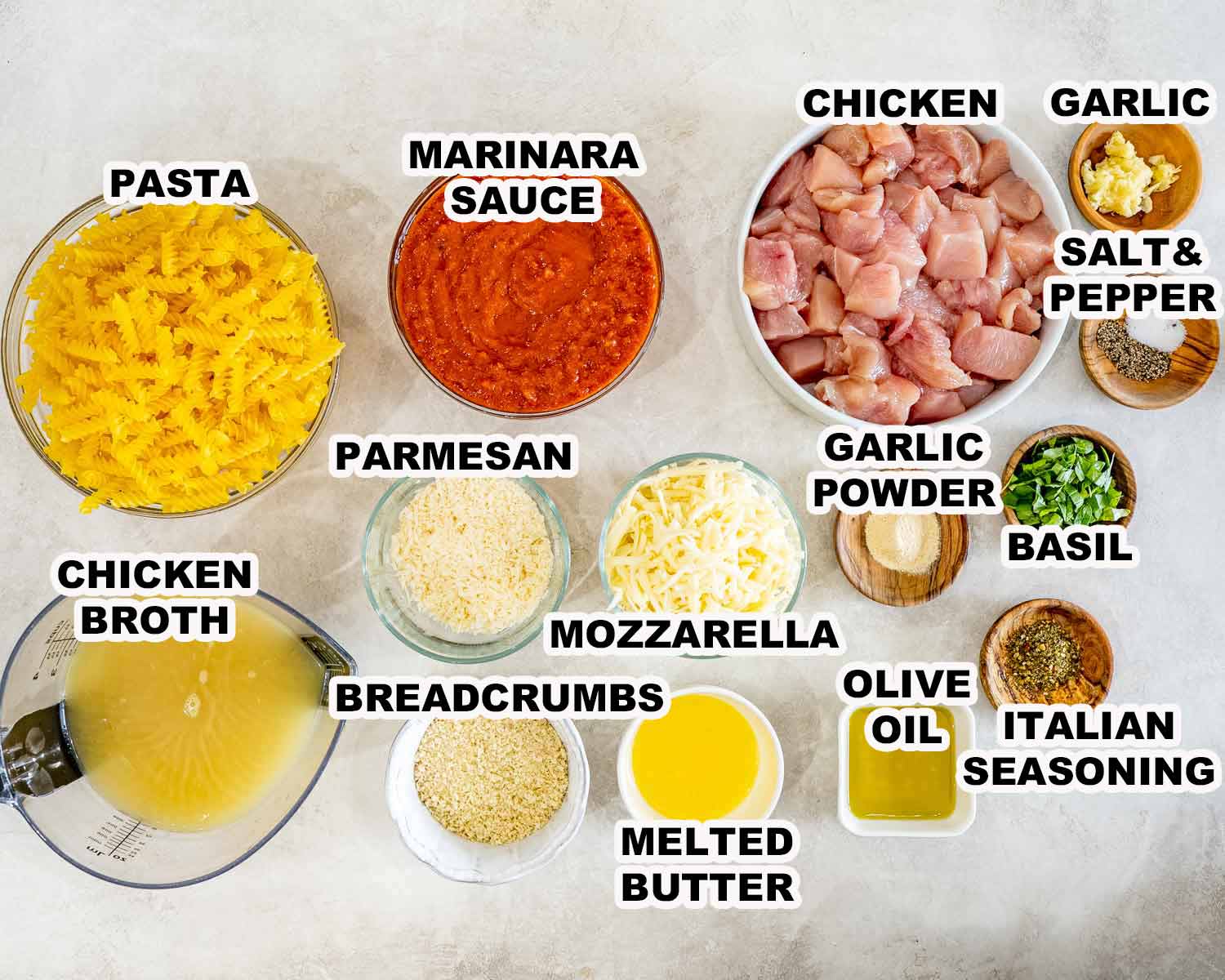
- Olive oil (2 tablespoons): For searing. Any neutral oil works if that’s what’s open.
- Chicken breasts (1½ pounds, boneless and skinless, cut into bite size cubes): Cube them roughly the same size so they cook evenly. Thighs work too and stay juicier, though they’ll release a bit more fat into the dish.
- Italian seasoning (1 teaspoon): Goes on the chicken before searing so the flavor sits on the meat, not just in the sauce.
- Garlic powder (1 teaspoon): Different job than the fresh garlic later. This one seasons the chicken directly.
- Salt (½ teaspoon) and black pepper (½ teaspoon): Modest amounts on purpose. There’s salt coming from the marinara, the broth, and the Parmesan.
- Rotini (12 ounces, uncooked): Goes in dry. The spirals hold sauce better than most shapes and they’re forgiving about doneness. Penne and ziti both work.
- Marinara sauce (24 ounces, 1 jar): Use one you’d happily eat straight from the jar, because it’s most of the flavor here. Homemade is better if you have some.
- Chicken broth (2½ cups, low sodium): This is what cooks the pasta. I strongly recommend low sodium broth, because regular broth plus jarred marinara plus Parmesan is a lot of salt in one dish.
- Garlic (3 cloves, minced): Fresh, into the sauce. Mellows out over the bake into something rounder than the powder.
- Mozzarella (2 cups, shredded): Shred it yourself if you can be bothered. Pre-shredded is coated with anti-caking starch and it never quite melts the same way.
- Parmesan (½ cup, grated): The salty, savory edge. Freshly grated is noticeably better than the shaker.
- Panko breadcrumbs (½ cup): Panko specifically. Regular breadcrumbs go dense and sandy. Panko stays light and shatters.
- Unsalted butter (2 tablespoons, melted): This is the whole reason the topping browns. Skip it and you get pale, dusty breadcrumbs.
- Fresh basil (2 tablespoons, chopped): Goes on after baking, not before. Basil in a hot oven turns black and bitter.
How To Make Chicken Parmesan Casserole
Preheat the oven to 400°F and grease a 9 by 13 inch baking dish.
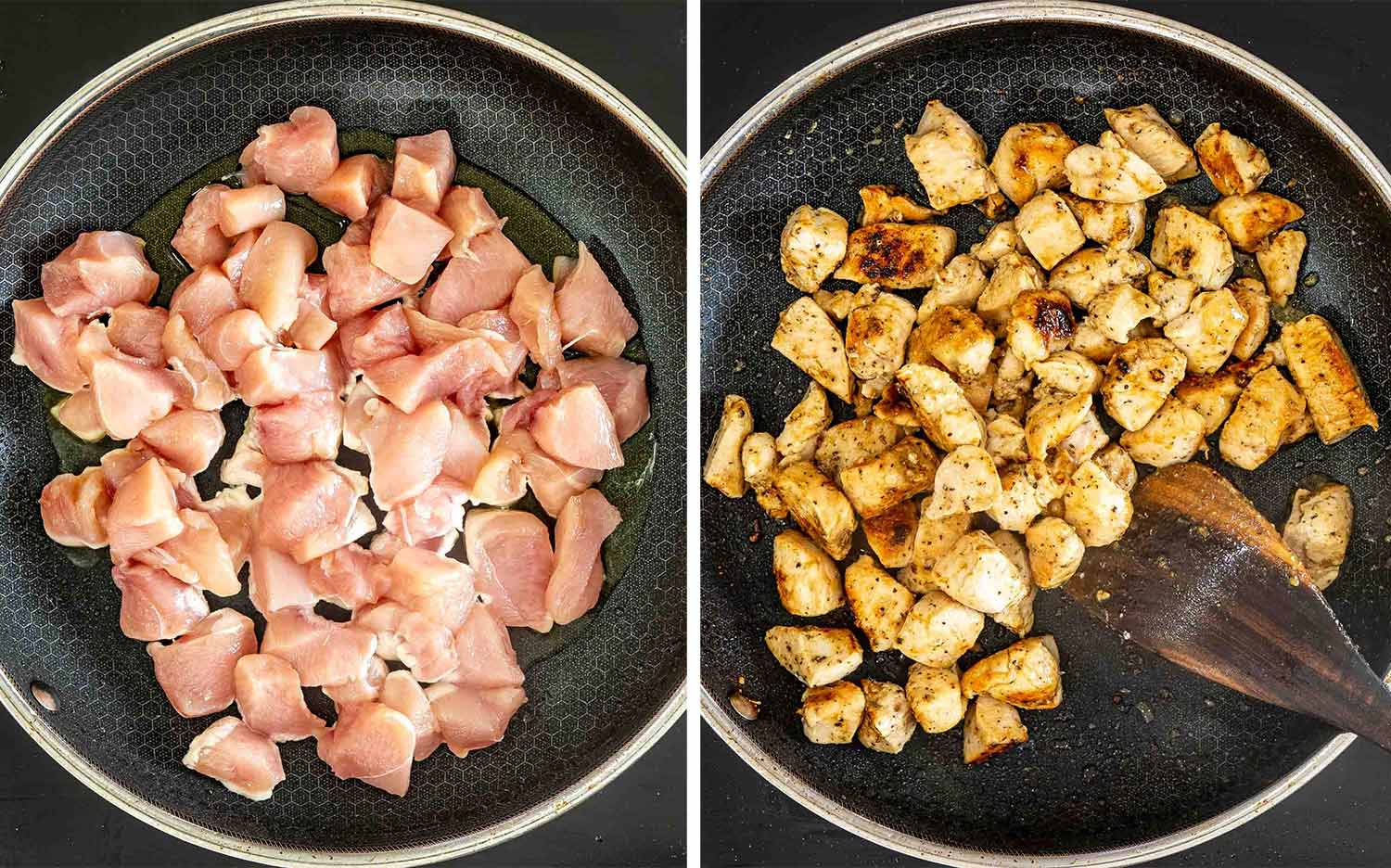
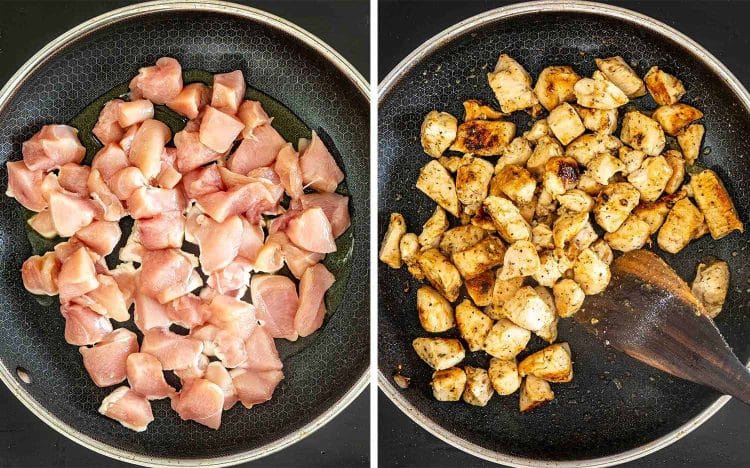
Heat the olive oil in a large skillet over medium high heat. Season the chicken cubes with the Italian seasoning, garlic powder, salt, and pepper. Sear for 3 to 4 minutes until browned on the outside. The chicken doesn’t need to be cooked through at this point, it finishes in the oven. The sear is about building flavor, not cooking.
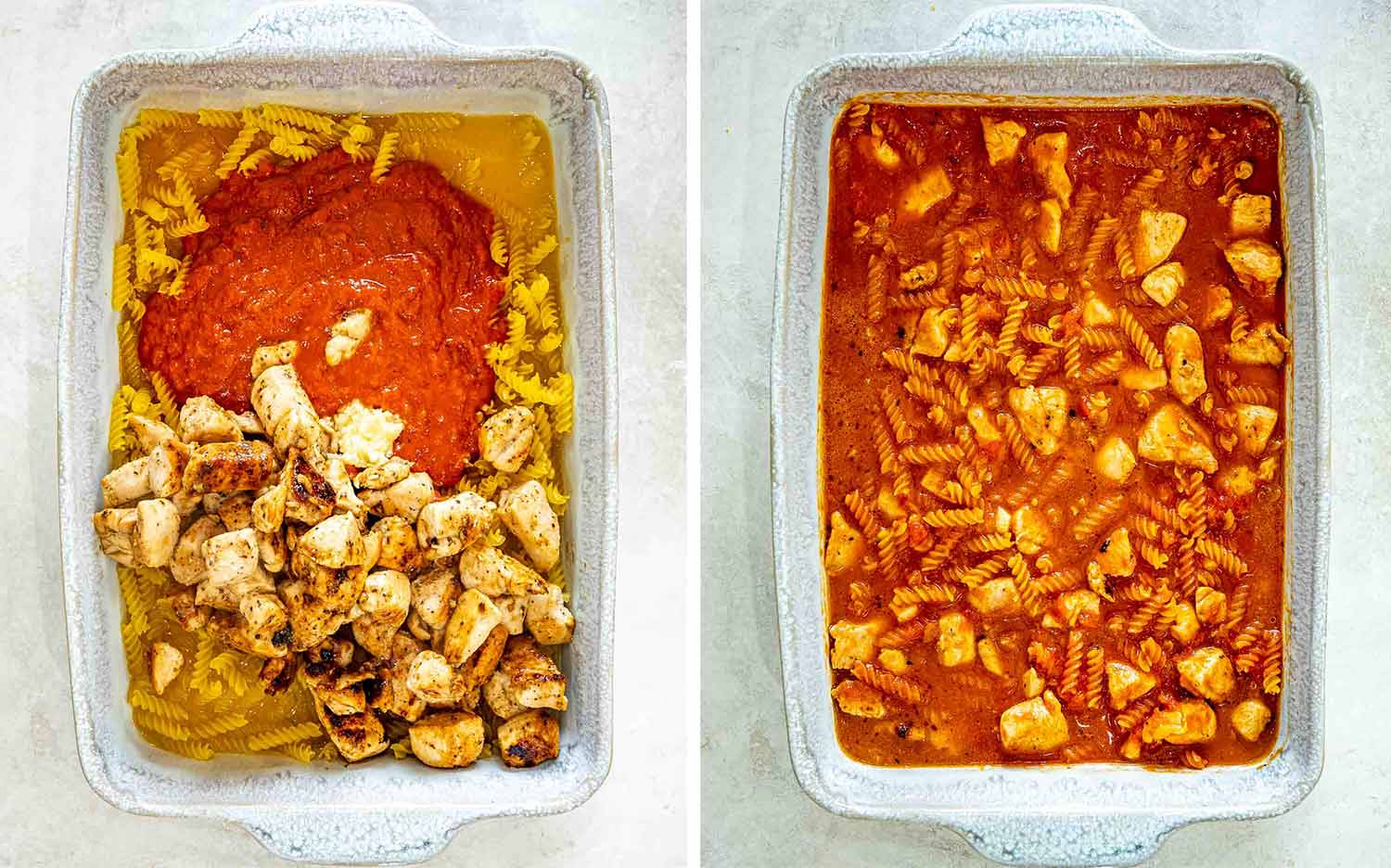
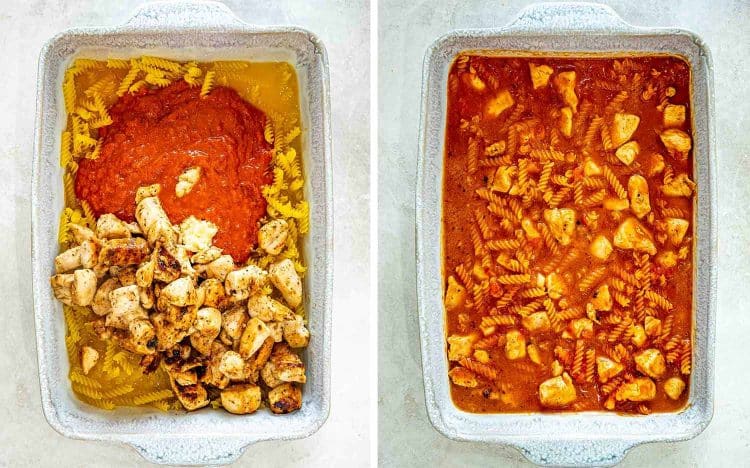
In the greased baking dish combine the uncooked rotini, marinara sauce, chicken broth, minced garlic, and the seared chicken along with any juices from the pan. Stir well until the pasta is evenly coated and submerged in the liquid. Press down any pasta sitting above the liquid line.
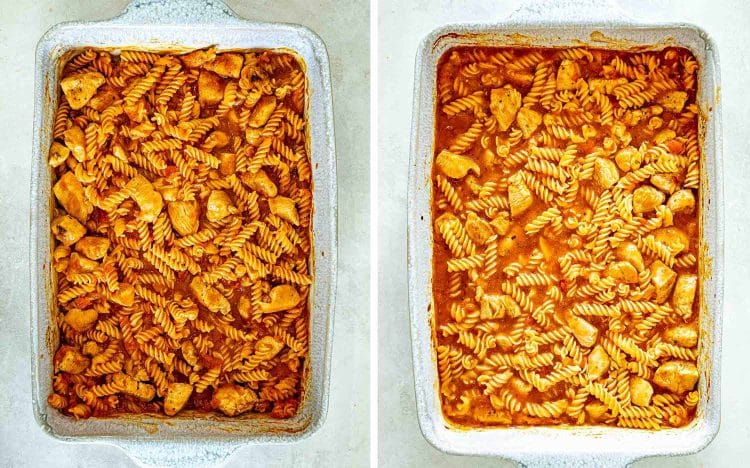
Cover the dish tightly with foil. Properly tightly. Press it down around all the edges. Bake for 30 minutes.
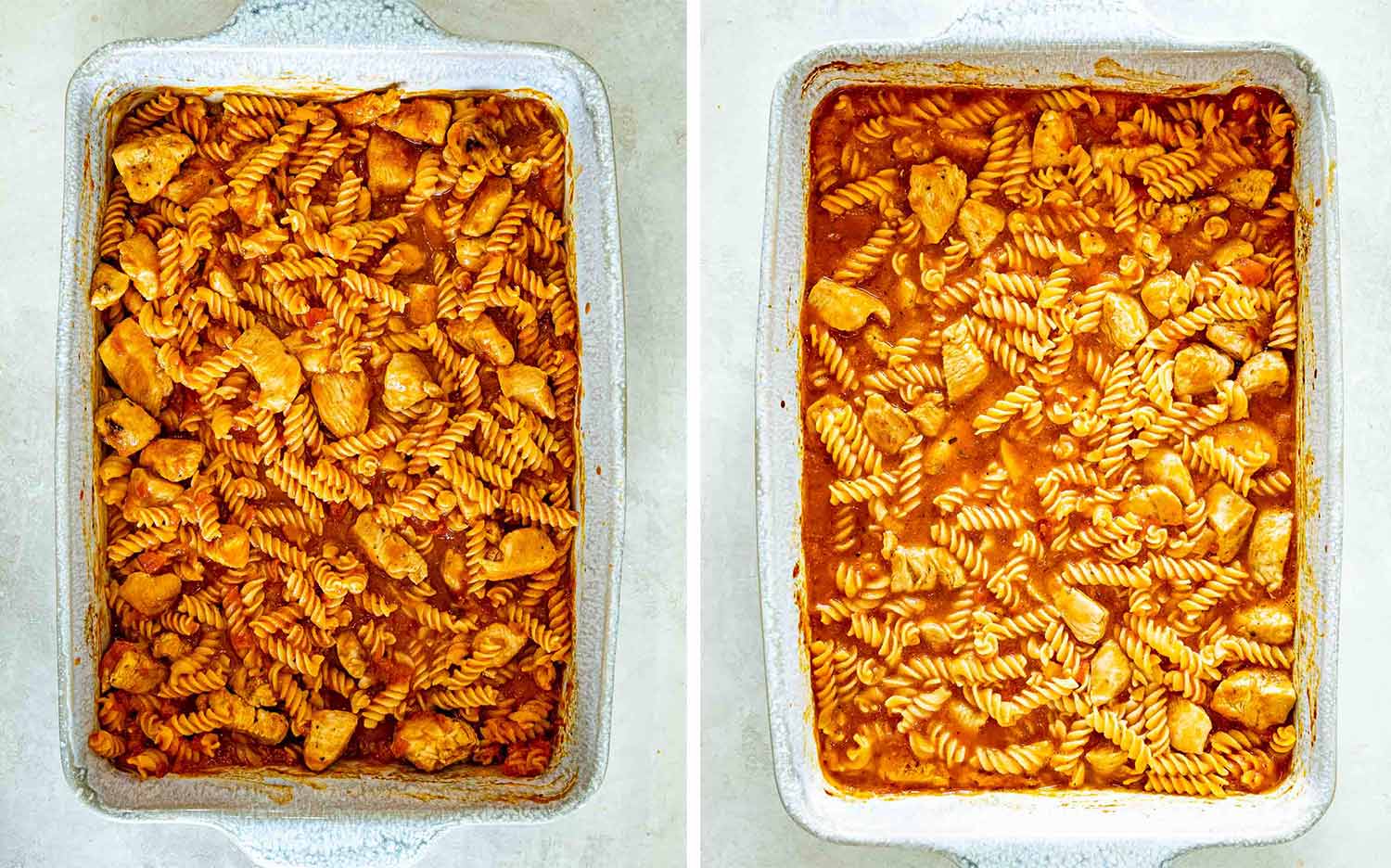
Remove the foil and stir everything. Check that the pasta is tender. If it needs more time stir in a splash of broth, re-cover, and give it another 5 minutes.
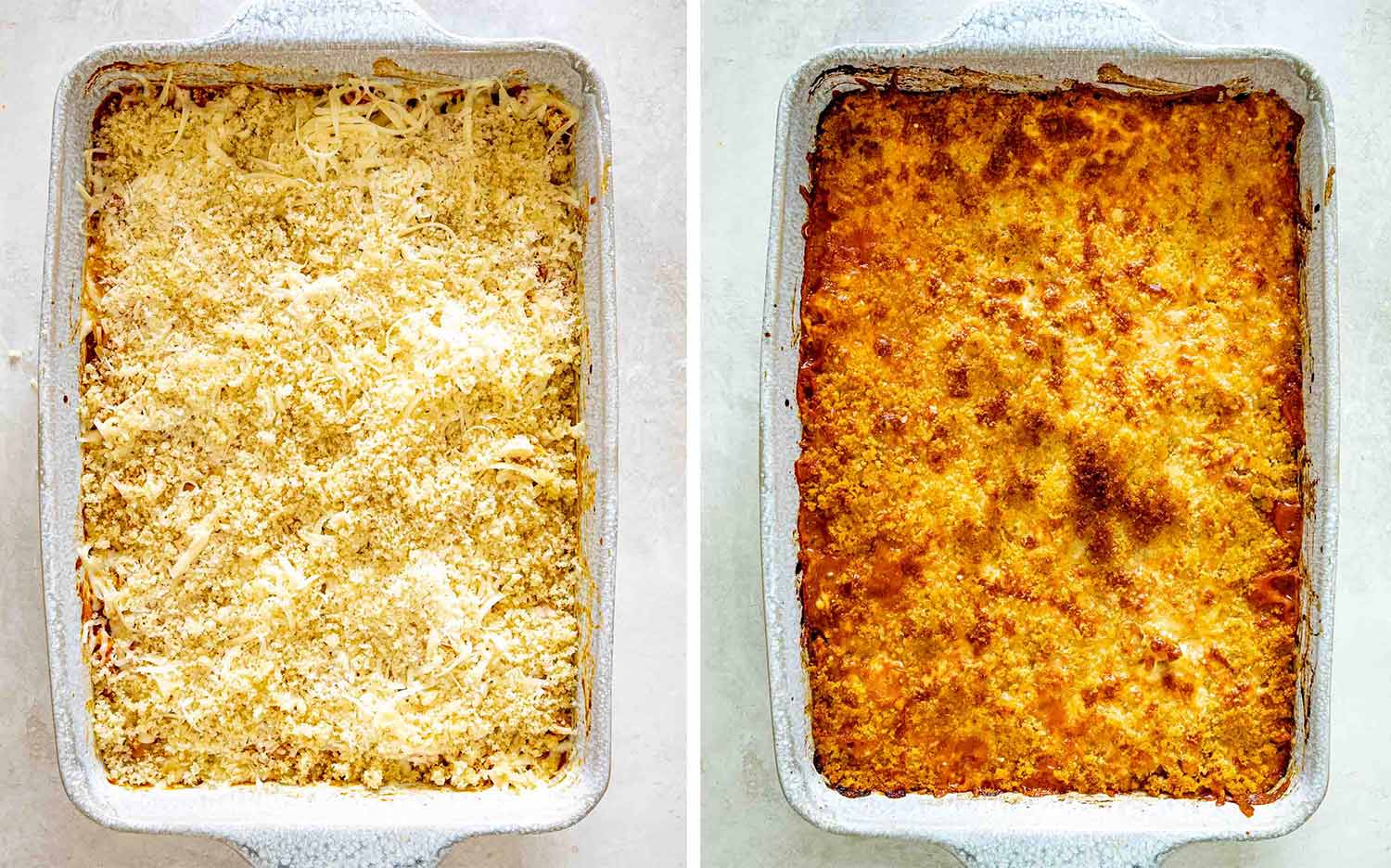
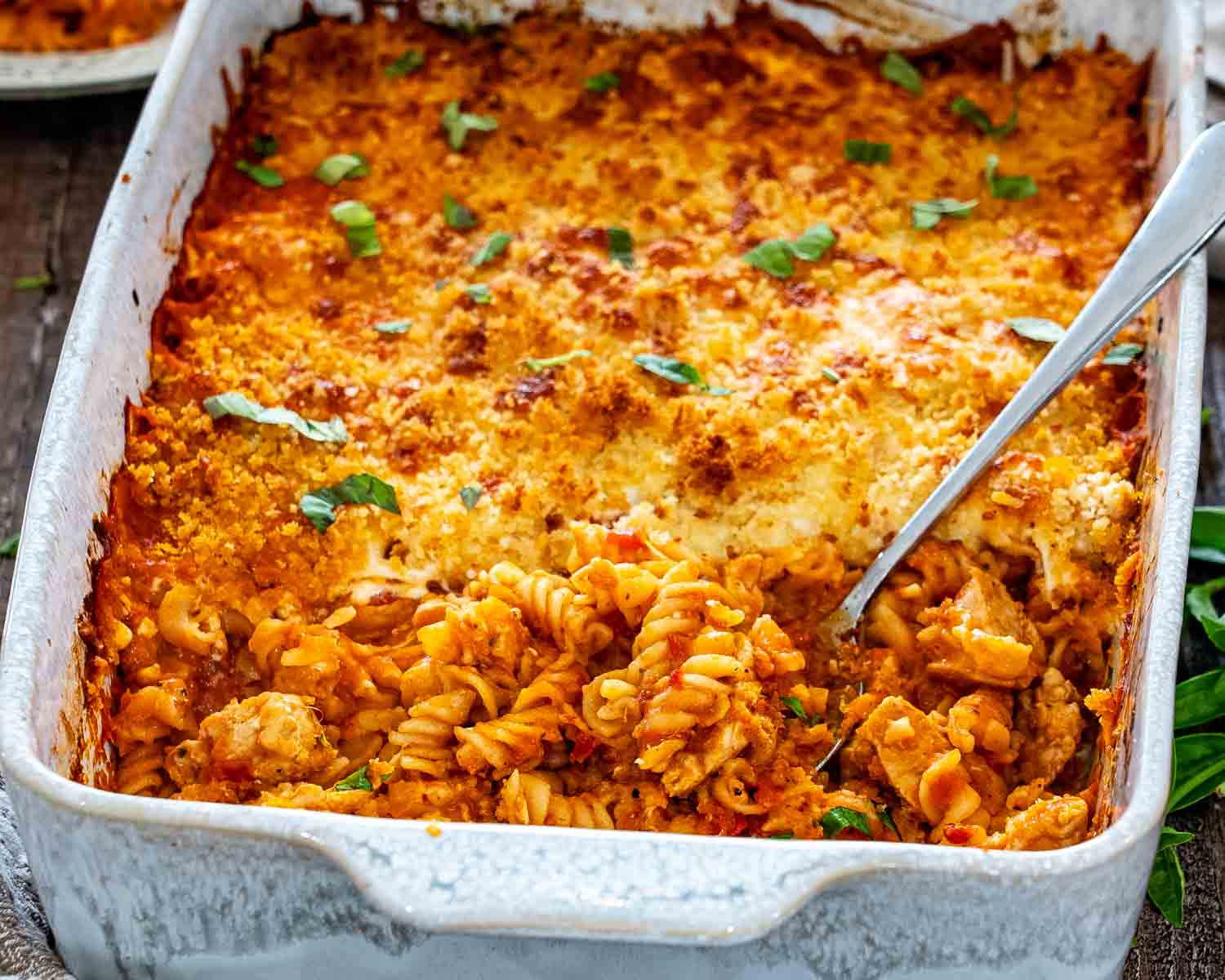
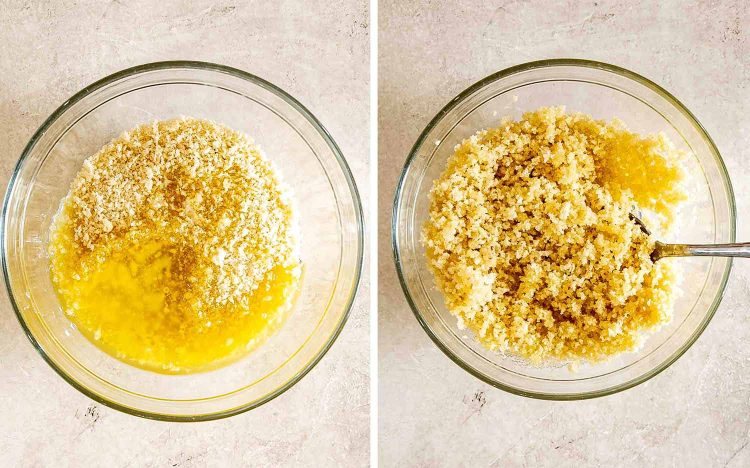
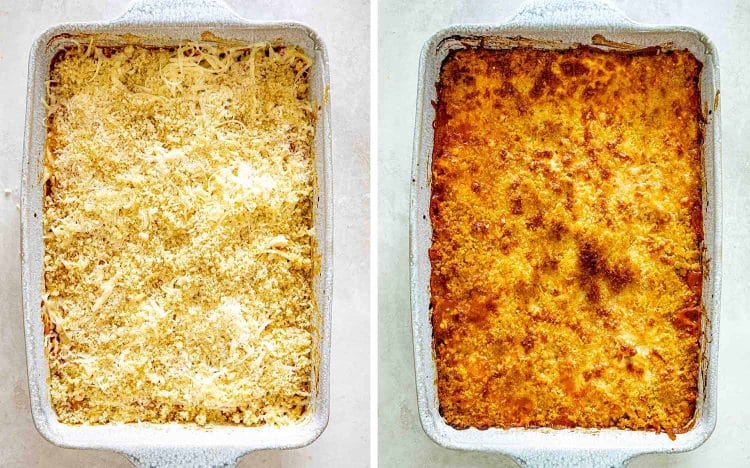
Scatter the mozzarella and Parmesan evenly over the top. Toss the panko with the melted butter and sprinkle it over the cheese. Return the dish to the oven uncovered for 12 to 15 minutes until the cheese is melted and bubbling and the breadcrumbs are deep golden. For extra color run it under the broiler for the last 1 to 2 minutes. Watch it closely. Broilers move fast.
Rest for 5 minutes before serving. Sprinkle with fresh basil and serve hot.
Why Sear the Chicken First
It’s an extra pan and an extra 5 minutes and it’s worth both.
Searing the chicken before it goes into the casserole builds a crust and locks in flavor that you simply don’t get from putting raw unseared chicken directly into a sauce to bake. The browned exterior adds depth to the entire dish as the juices release into the marinara while everything bakes. The chicken also holds together better in the finished casserole rather than falling apart into shreds.
You don’t need to cook it through. Just brown it. The oven handles the rest.
What If the Pasta Isn’t Cooked After 30 Minutes
This happens occasionally and it’s not a disaster.
Stir the casserole, check the pasta, and if it still has too much bite stir in a splash of warm broth or water, re-cover tightly, and put it back in the oven for another 5 minutes. Check again. Repeat if needed.
The two most common reasons the pasta isn’t done at the 30 minute mark are a loose foil seal that let steam escape or pasta that wasn’t fully submerged before baking. Both are easy to fix going forward and fixable in the moment with extra liquid and more oven time.
Make Ahead and Storage
Make ahead: Assemble the casserole without the cheese and panko topping, cover, and refrigerate up to a day ahead. Add about 10 minutes to the covered bake time since it’s going in cold. Add the topping after the foil comes off and finish as directed.
Leftovers: Store covered in the fridge for up to 3 days. The pasta continues to absorb the sauce as it sits and the texture changes slightly but the flavor gets better. Reheat covered in the oven at 325°F or in the microwave with a splash of water or broth.
Freeze: Freeze before adding the cheese and panko topping. Cool completely, cover tightly, and freeze for up to 3 months. Thaw overnight in the fridge, add the topping, and bake uncovered at 375°F until heated through and the topping is golden.
Variations
Spicy: ½ teaspoon of red pepper flakes stirred into the sauce, or use an arrabbiata jar instead of plain marinara.
With vegetables: a couple of handfuls of baby spinach stirred in when you take the foil off, or diced zucchini added at the start. Both work and neither changes the liquid much.
Rotisserie shortcut: skip the searing entirely and stir in 3 cups of shredded rotisserie chicken when you remove the foil. Adding it at the start means dry chicken. Cuts about 10 minutes off the whole thing.
Extra creamy: ½ cup of heavy cream stirred into the sauce before baking. It’s a different dish, closer to a rosé sauce, and very good.
Gluten free: gluten free pasta and gluten free panko both work. Check the pasta at 25 minutes instead of 30, since most gluten free shapes cook faster and go from firm to falling apart quickly.
Try These Recipes Next
- Baked Ravioli
- Neiman Marcus Chicken Casserole
- Chicken And Rice Casserole
- Chicken Gloria
- Creamy Cajun Pastalaya
Before You Begin! If you make this, please leave a review and rating letting us know how you liked this recipe! This helps our business thrive & continue providing free recipes.
Chicken Parmesan Casserole
Ingredients
For the chicken and pasta
- 2 tablespoons olive oil
- 1½ pounds boneless skinless chicken breasts (cut into bite size cubes)
- 1 teaspoon Italian seasoning
- 1 teaspoon garlic powder
- ½ teaspoon salt
- ½ teaspoon black pepper
- 12 ounces rotini pasta (uncooked)
- 24 ounces marinara sauce (1 jar)
- 2½ cups chicken broth (low sodium)
- 3 cloves garlic (minced)
For the topping
- 2 cups mozzarella cheese (shredded )
- ½ cup Parmesan cheese (grated )
- ½ cup panko breadcrumbs
- 2 tablespoons unsalted butter (melted)
- 2 tablespoons fresh basil (chopped)
Before You Begin! If you make this, please leave a review and rating letting us know how you liked this recipe! This helps our business thrive & continue providing free recipes.
Instructions
- Preheat your oven to 400°F (200°C) and grease a 9 by 13 inch baking dish.
- Heat the 2 tablespoons olive oil in a large skillet over medium high heat. Season the 1½ pounds cubed chicken with the 1 teaspoon Italian seasoning, 1 teaspoon garlic powder, ½ teaspoon salt, and ½ teaspoon black pepper. Sear for 3 to 4 minutes, just until browned on the outside. It does not need to be cooked through, since it finishes in the oven.

- In the greased baking dish, combine the 12 ounces uncooked rotini, the jar of marinara, 2½ cups chicken broth, the 3 cloves minced garlic, and the seared chicken with any juices. Stir until the pasta is evenly coated and submerged in the liquid.
- Cover the dish tightly with aluminum foil. A tight seal is essential, it traps the steam that cooks the pasta, and a loose cover is the main reason these bakes come out with crunchy noodles. Bake for 30 minutes. Remove the foil and give everything a good stir, checking that the pasta is tender. If it needs a little longer, stir in a splash more broth, re-cover, and give it another 5 minutes.
- Scatter the 2 cups mozzarella and ½ cup Parmesan evenly over the top. In a small bowl, toss the ½ cup panko with the 2 tablespoons melted butter, then sprinkle it over the cheese. The butter is what lets the breadcrumbs turn deep golden and crisp instead of staying pale and dusty.
- Return the dish to the oven uncovered for 12 to 15 minutes, until the cheese is melted and bubbly and the breadcrumbs are golden brown. For extra color, run it under the broiler for the last 1 to 2 minutes, watching closely.
- Let it rest for 5 minutes, then sprinkle with the 2 tablespoons fresh basil before serving.
Equipment
Notes
- Seal the foil tightly: Press it down around all the edges. A loose seal lets steam escape and steam is what cooks the pasta. Crunchy pasta after 30 minutes is almost always a foil seal problem.
- Submerge the pasta: Stir well before covering and press down any pasta sitting above the liquid line. Every piece needs to be in contact with the liquid.
- Sear the chicken first: It’s an extra 5 minutes and adds a depth of flavor to the whole casserole that raw chicken going straight into the dish simply doesn’t give you. The chicken doesn’t need to be cooked through at this point.
- Use the pan juices: When you transfer the seared chicken to the baking dish scrape in any browned bits and juices from the skillet. That’s flavor you don’t want to leave behind.
- Butter the panko: Every crumb needs to be coated in melted butter before it goes on top. This is what makes the topping golden and crispy rather than pale and dusty.
- Shred your own mozzarella: Pre-shredded mozzarella has anti-caking agents that prevent it from melting as smoothly. A block and a box grater makes a noticeably better topping.
- Broil at the end: 1 to 2 minutes under the broiler for extra color on the breadcrumbs. Watch closely.
- Rest before serving: 5 minutes lets the casserole firm up and makes it easier to serve cleanly.
- Make ahead: Assemble without the cheese and panko topping, refrigerate up to a day ahead, and add 10 minutes to the covered bake time.
- Freeze: Freeze before adding the topping for up to 3 months. Thaw overnight and bake with the topping at 375°F until heated through and golden.
Nutrition Information
Notice: Nutrition is auto-calculated for your convenience. Where relevant, we recommend using your own nutrition calculations.
Frequently Asked Questions
Can I use a different pasta shape?
I’d use something sturdy with ridges or spirals that holds the sauce well. Penne, cavatappi, or ziti all work. I’d avoid thin pasta like spaghetti or angel hair which would overcook long before the chicken is done.
Can I use chicken thighs instead of breasts?
Yes and they’d actually be more forgiving. Boneless skinless thighs cut into cubes stay juicier in the oven. Same method, same timing.
Can I use homemade marinara?
Absolutely and it’ll taste even better. Any marinara you’d happily eat on its own works here.
Why is my breadcrumb topping pale?
Almost certainly the panko wasn’t tossed with enough melted butter. Every crumb needs to be coated. You can also run the dish under the broiler for 1 to 2 minutes at the end to get the color you want.
Can I add vegetables?
Yes. Diced zucchini, sliced mushrooms, or baby spinach all work well stirred in with the pasta before baking. Add heartier vegetables at the start and more delicate ones like spinach after the foil comes off.