Panang Chicken Curry
This post may contain affiliate links. Please read my disclosure policy.

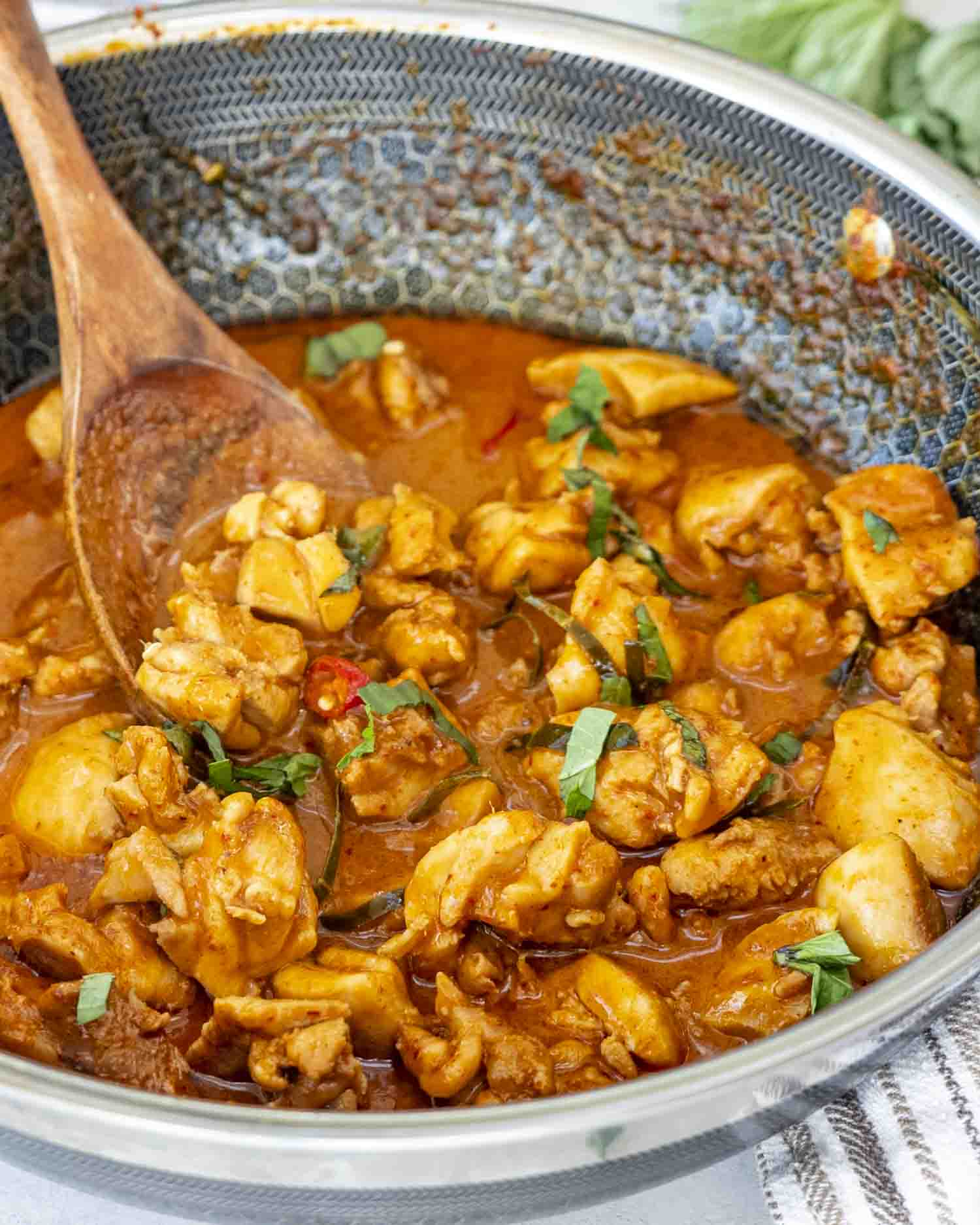
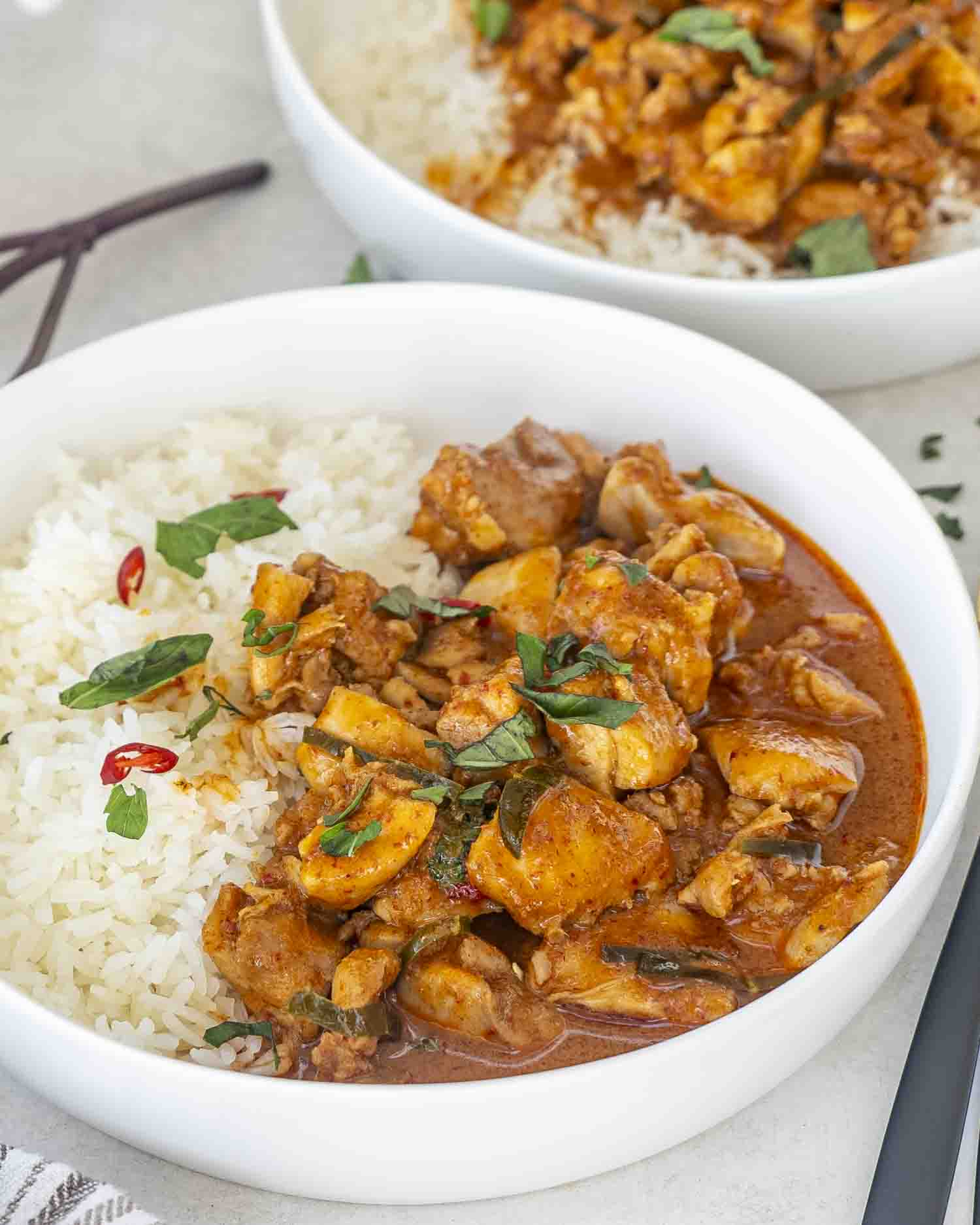
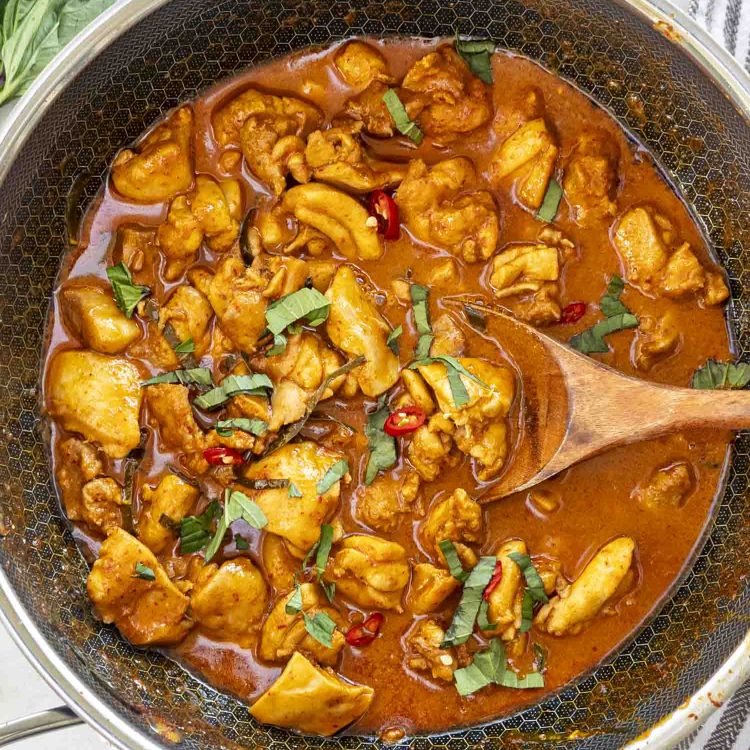
Panang Chicken Curry – rich, creamy, and bursting with bold Thai flavor. Remo calls it the best curry I’ve ever made, and he’s not wrong.

If I had a dollar for every time Remo or one of his buddies asked, “Can you make that curry again?”, well, let’s just say I’d have a dedicated coconut milk budget. This Panang Chicken Curry has become a full on obsession around here. It’s rich, it’s fragrant, and that creamy sauce? Total flavor bomb. I love that it comes together with simple ingredients and doesn’t require a pantry full of hard-to-find stuff. Just pure comfort with a Thai twist.
Why We Love This Panang Chicken Curry
- Big flavor, minimal fuss. One pan, one paste, one powerhouse of a dish.
- Restaurant-worthy at home. Bold Thai flavor without leaving your kitchen (or changing out of your pajamas).
- Weeknight win. Done in under an hour, and yes, it reheats like a dream, that is if you have any leftovers.
- Crowd pleaser certified. Remo loves it. His friends love it. I love not having leftovers.
- Customizable heat. Go mild, go wild, this curry plays nice with your spice tolerance.
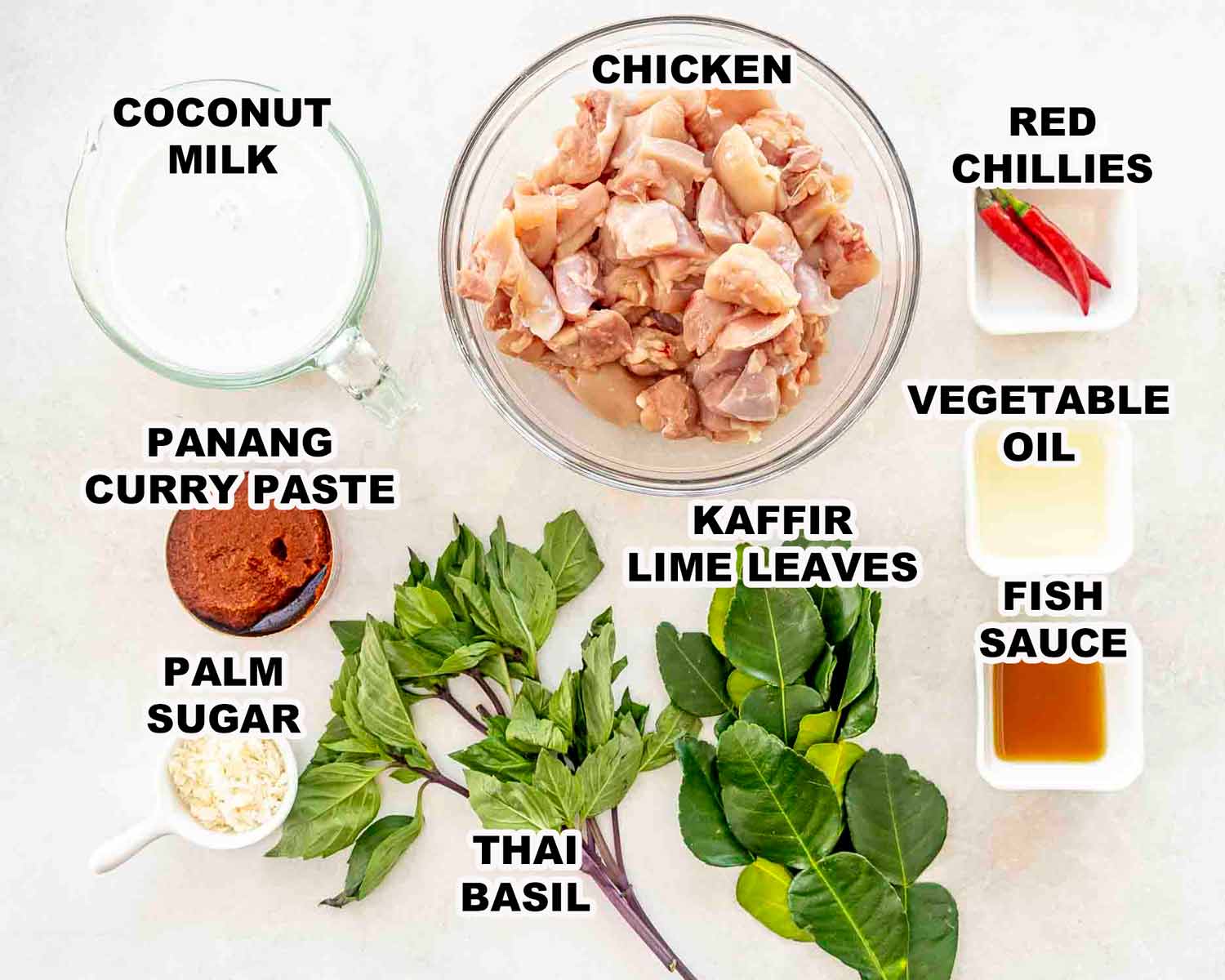
- Chicken Thighs: I use boneless, skinless thighs because they stay juicy and soak up all that curry goodness. Chicken breast works too, just don’t overcook it. Slice them bite sized so they cook evenly and soak up all that sauce.
- Panang curry paste: This is the flavor bomb. Use a good quality brand (Mae Ploy or Maesri are solid options). Don’t skip frying it in oil, it wakes up all those aromatics. Can’t find it? Red curry paste will work in a pinch, just know it’s a little less rich. I usually use Maesri which I buy on amazon.
- Coconut milk: Full fat, always. The light stuff just doesn’t cut it here. Shake the can before opening to mix the cream in. If the oil doesn’t separate when cooking, no stress, just keep going.
- Kaffir lime leaves: These are the secret weapon. Tear them to release the oils. Dried ones work too. If you can’t find them, a bit of lime zest will do the job, but the flavor won’t be exactly the same.
- Palm sugar: This adds just the right touch of sweetness to balance the spice. Brown sugar works fine if that’s what you’ve got. Start small and adjust to taste once it simmers.
- Fish sauce: Adds depth and umami. Don’t skip it. If you’re sensitive to it, use less or sub with a splash of soy, but you’ll miss that extra layer.
- Red chilies: Totally optional but great for color and heat. I like to save a few for garnish to make the dish pop.
- Thai basil: If you can get it, use it. If not, regular basil is fine, it’s more about that fresh finish than authenticity.
- Quick Tip: If your curry ever tastes flat, add a splash more fish sauce for salt, sugar for balance, or lime for brightness. It’s all about adjusting until it sings.
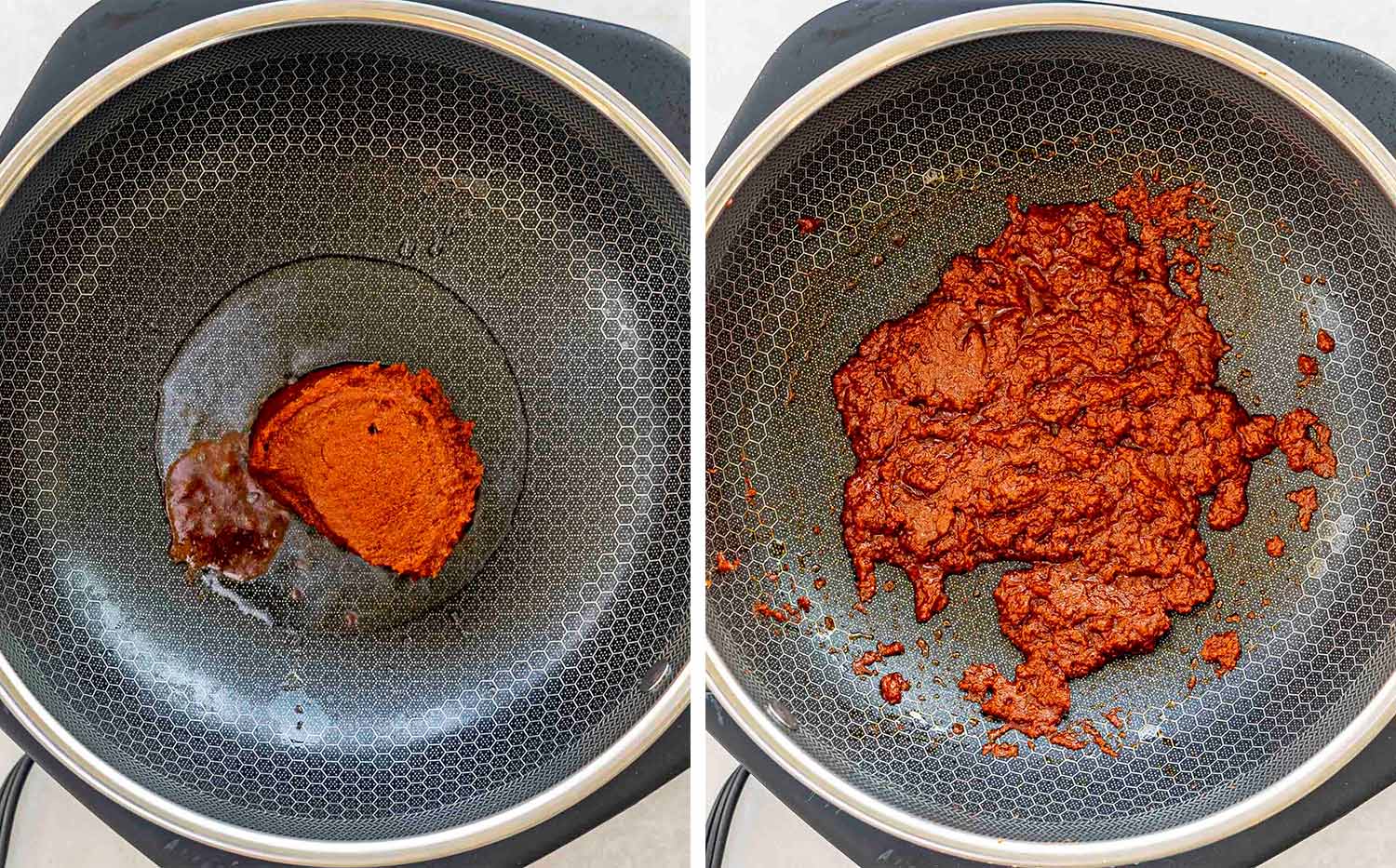
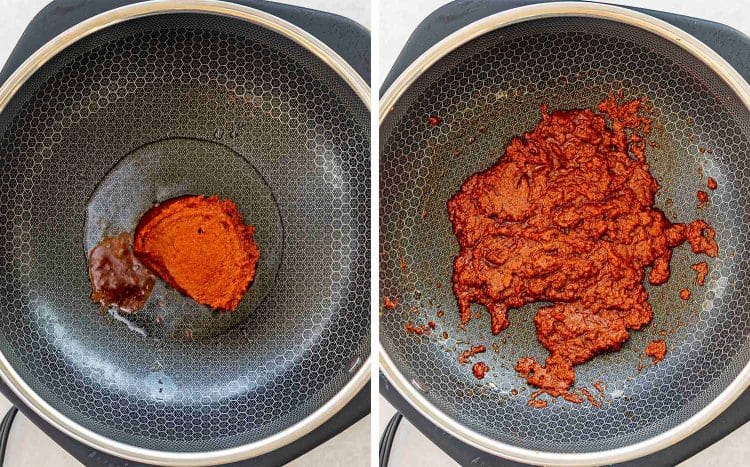
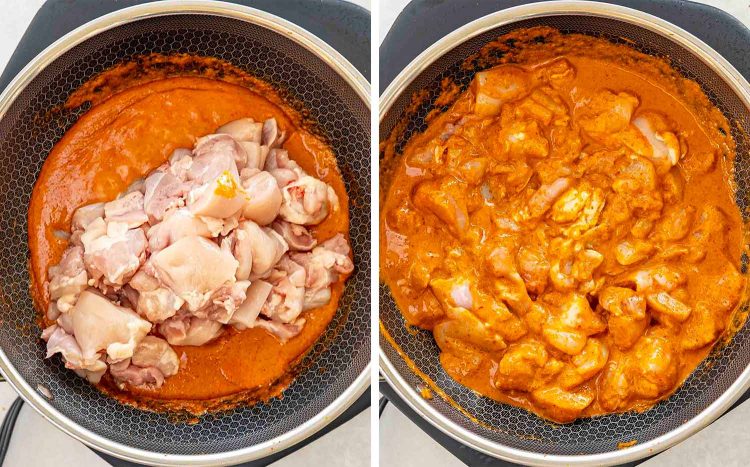
First things first, heat up your oil in a large pan or wok over medium heat. Once it’s hot, toss in the Panang curry paste. Don’t rush this step. You want to stir-fry it for a good 2-3 minutes, and you’ll know it’s ready when your kitchen smells like a Thai restaurant and the paste darkens slightly. The goal here is to release all those fragrant oils from the paste
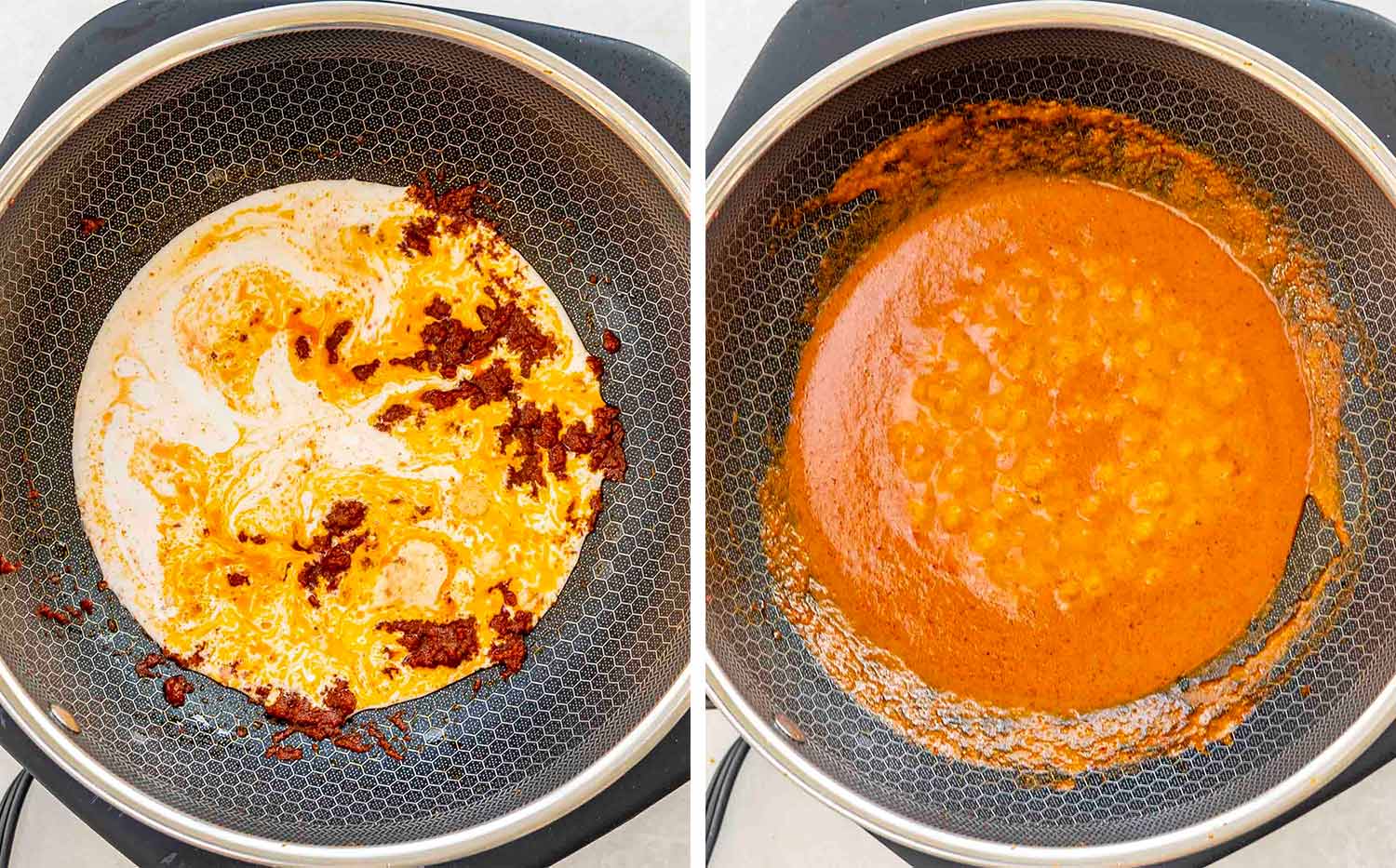
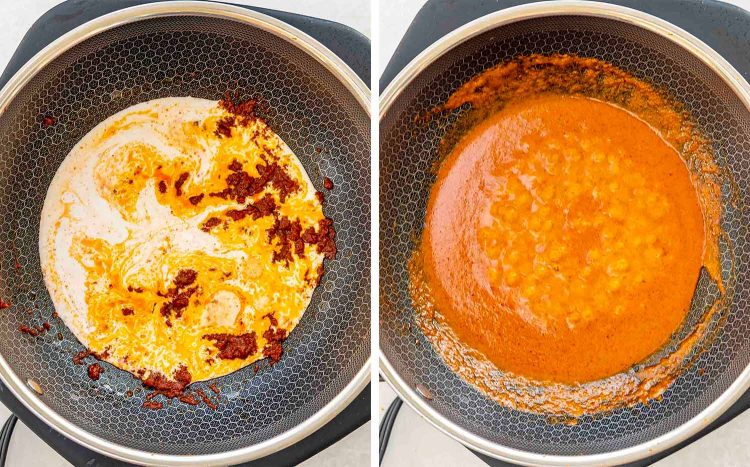
Now, grab your coconut milk and pour in about half of it. Stir it into the curry paste until it’s smooth. Let it cook for a few minutes until you see the oil start to separate from the coconut milk. That’s when you know you’re building some serious flavor! If the oil doesn’t separate, don’t stress, it’s probably due to the fact that your coconut milk is not full fat.
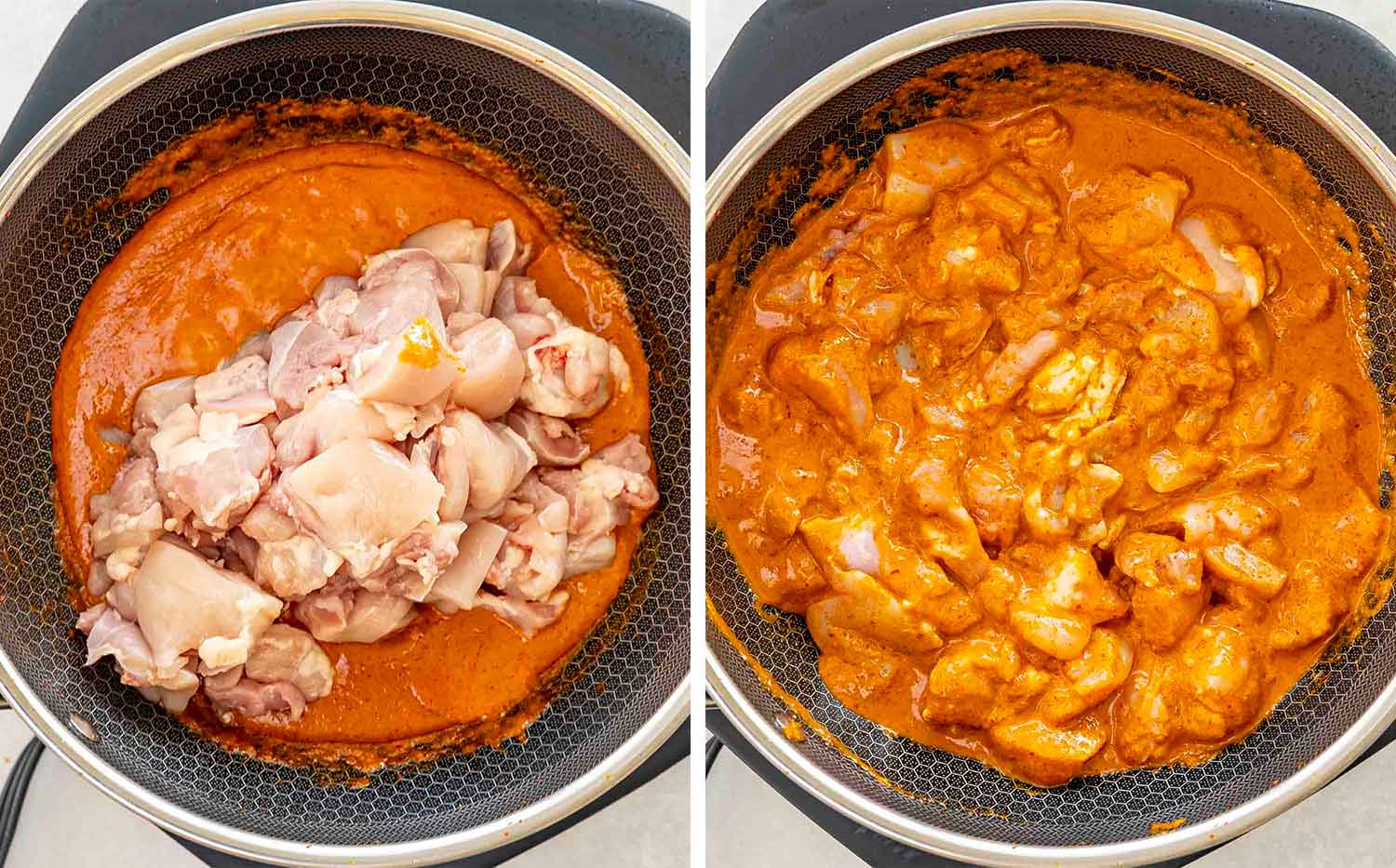
Once your base is looking and smelling incredible, it’s time to toss in the chicken. I like to stir it around so every piece gets coated in that rich curry sauce. Let it cook for about 5 minutes so the chicken can soak up all the flavor. Keep an eye on it and give it a stir now and then.
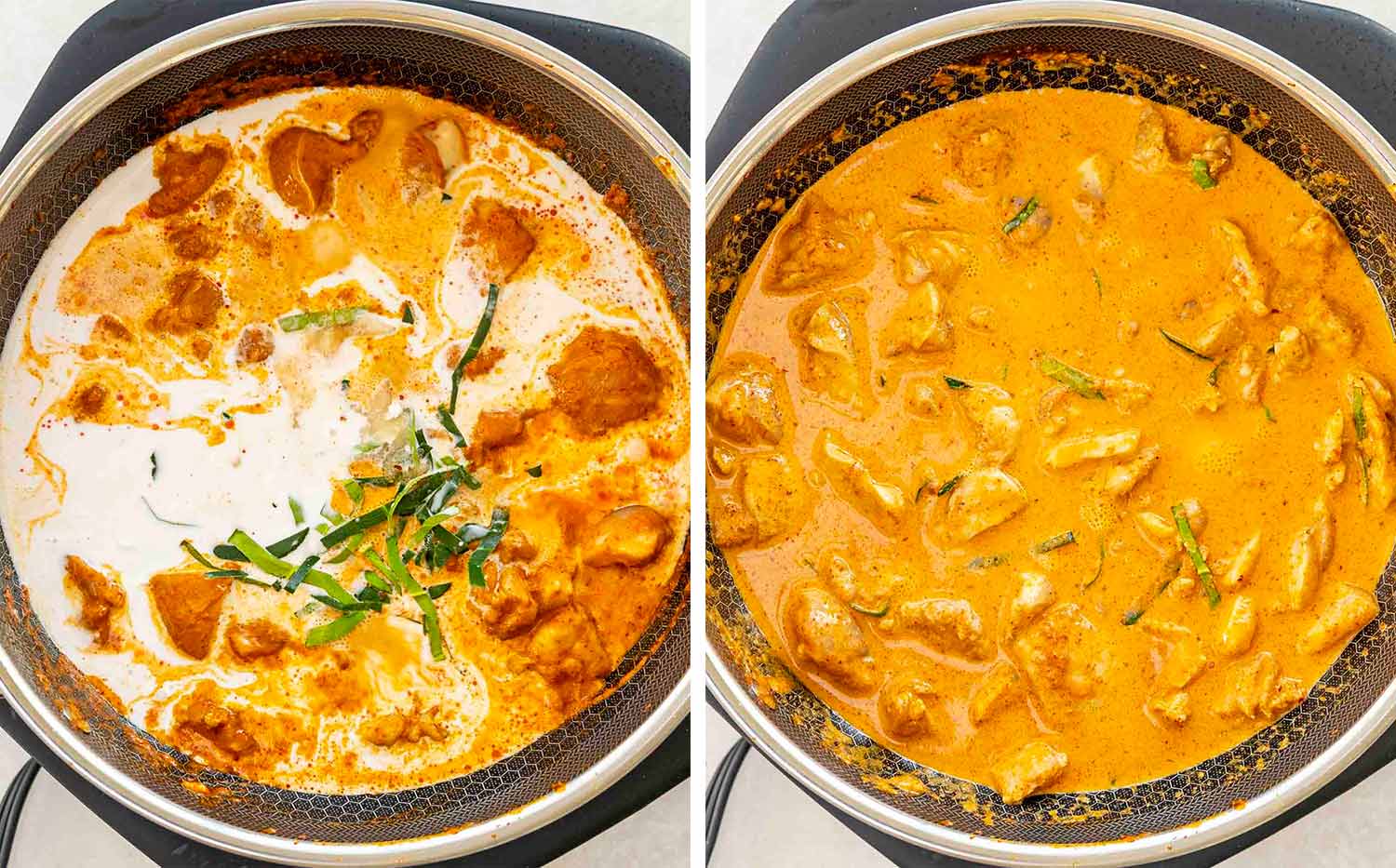
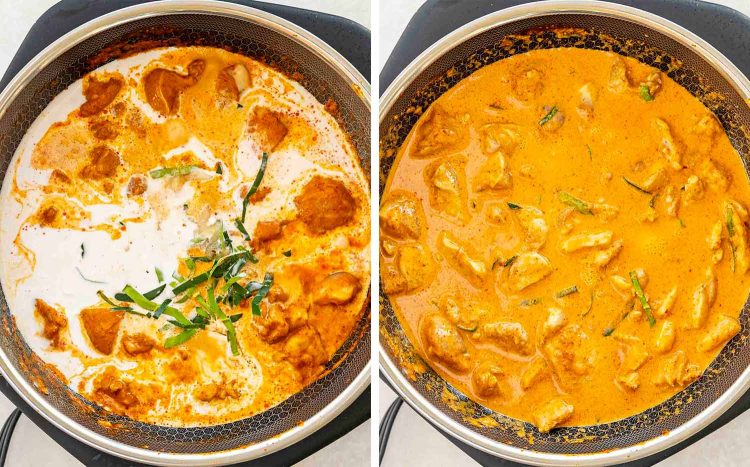
Now pour in the rest of your coconut milk and stir everything together. Toss in the kaffir lime leaves (tear them up first to release their oils), half the red chilies, the fish sauce, and the palm sugar. This is where it all comes together, the creamy coconut milk, the tangy fish sauce, and the hint of sweetness from the sugar. Taste it at this point and adjust as needed. Want it sweeter? Add more sugar. Need more saltiness? A splash of fish sauce will do it. And if you’re feeling bold, throw in an extra chili or two for some heat.
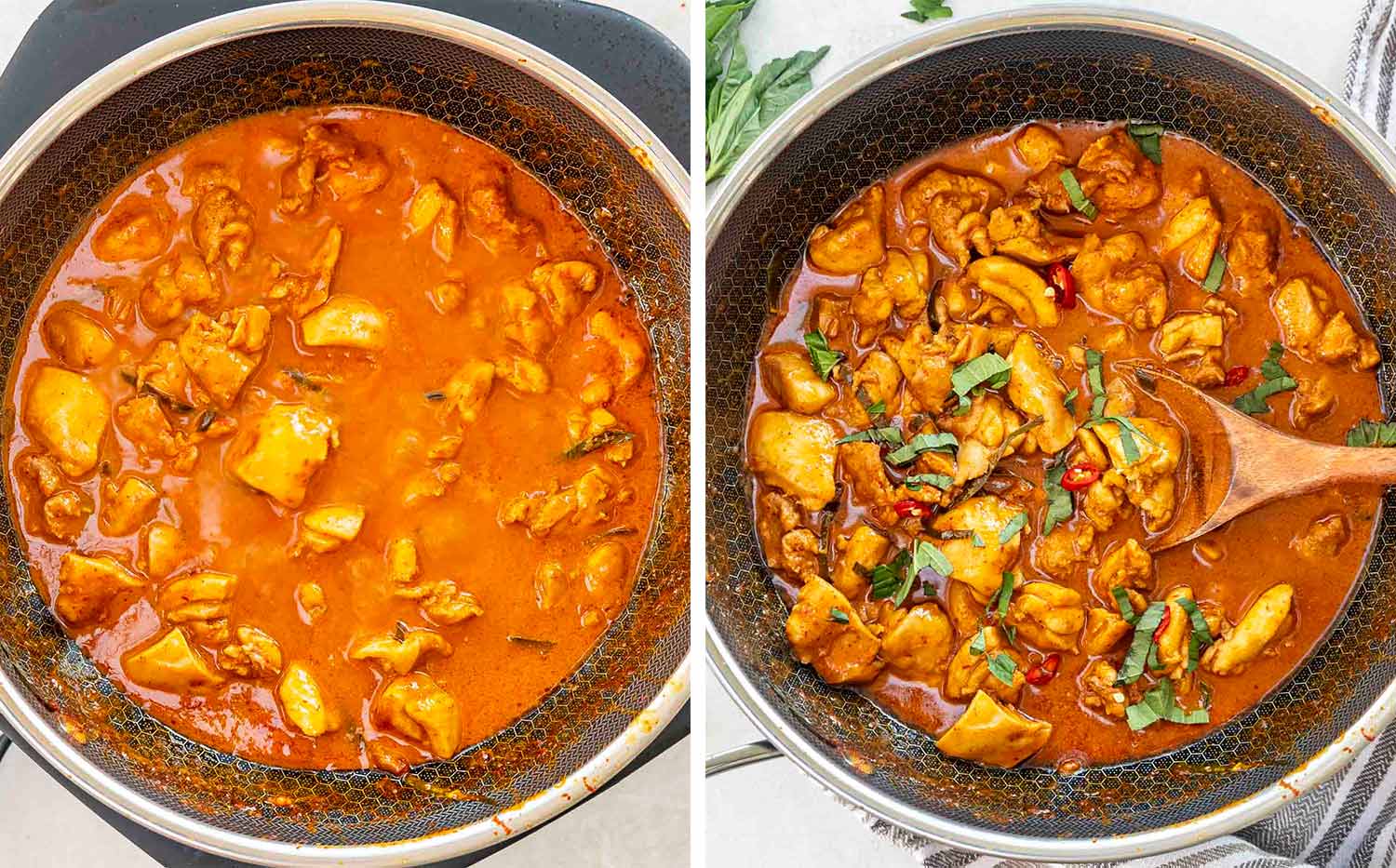
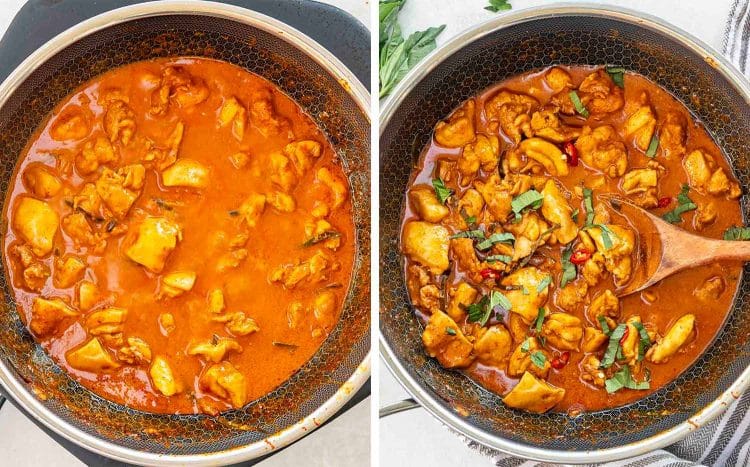
Bring everything to a gentle simmer and let it cook for 10-15 minutes. Keep the heat low, you want a nice, slow bubble, not a raging boil. This is where the sauce thickens up, the chicken cooks through, and all the flavors meld into that beautiful harmony we love about Thai curries. Stir occasionally, but otherwise, let it do its thing. When it’s done, turn off the heat and finish it with the rest of your red chilies and some fresh Thai basil.
How To Serve
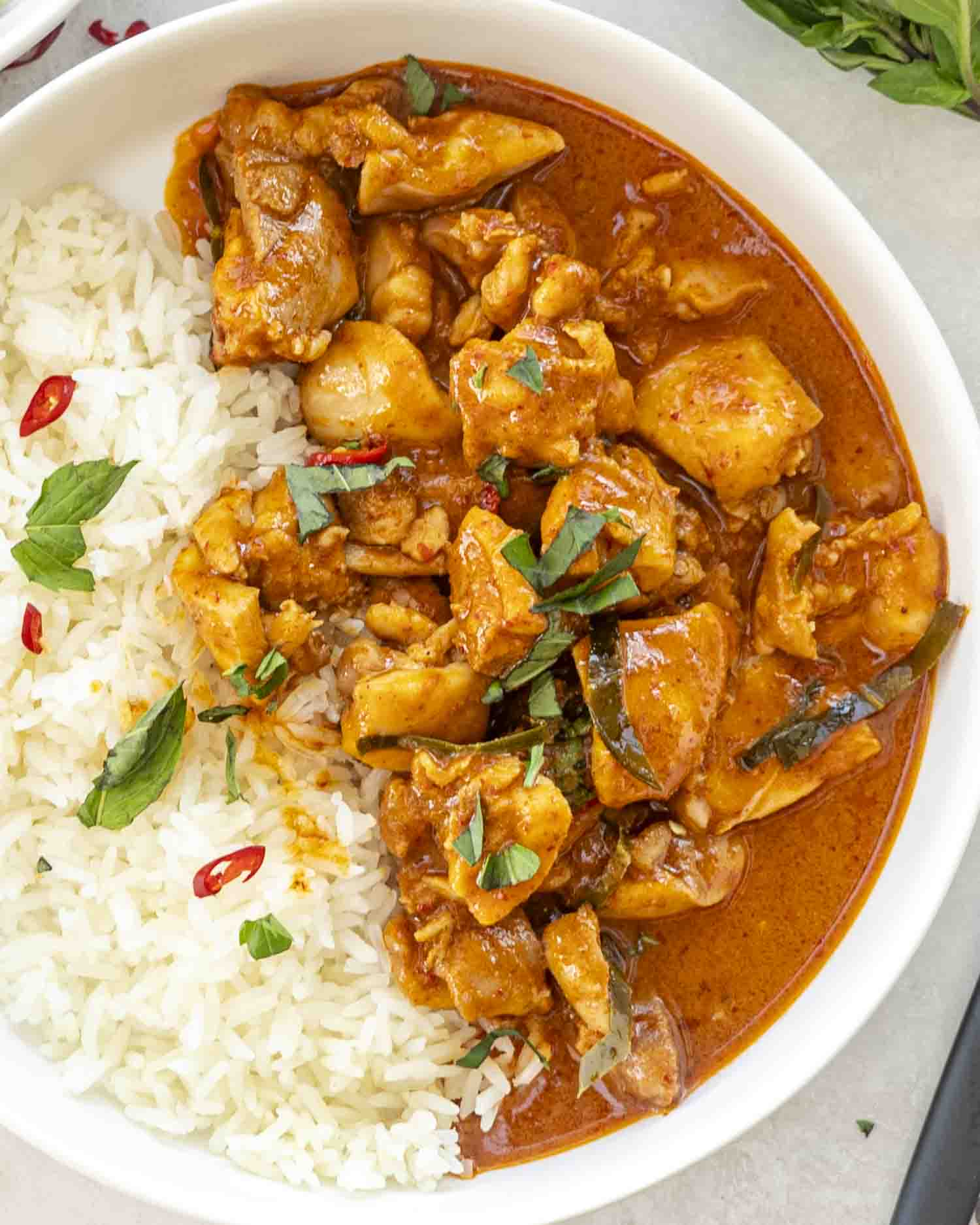
I always pair this curry with a steaming bowl of jasmine rice to soak up all that creamy, flavorful sauce. Here are some of my favorite ideas:
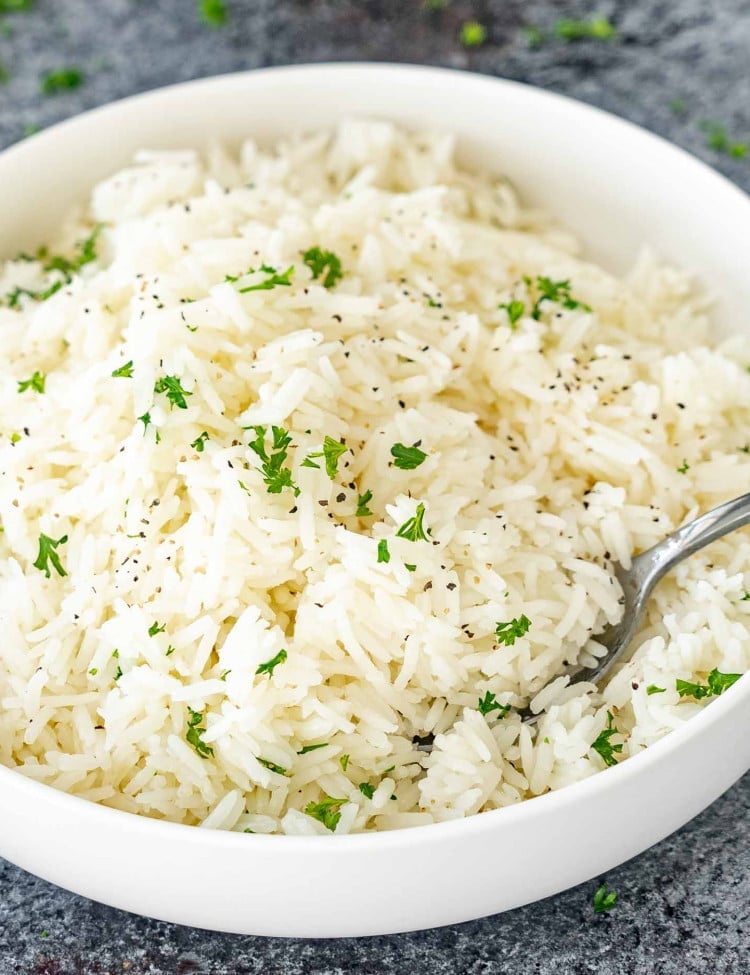
Jasmine Rice
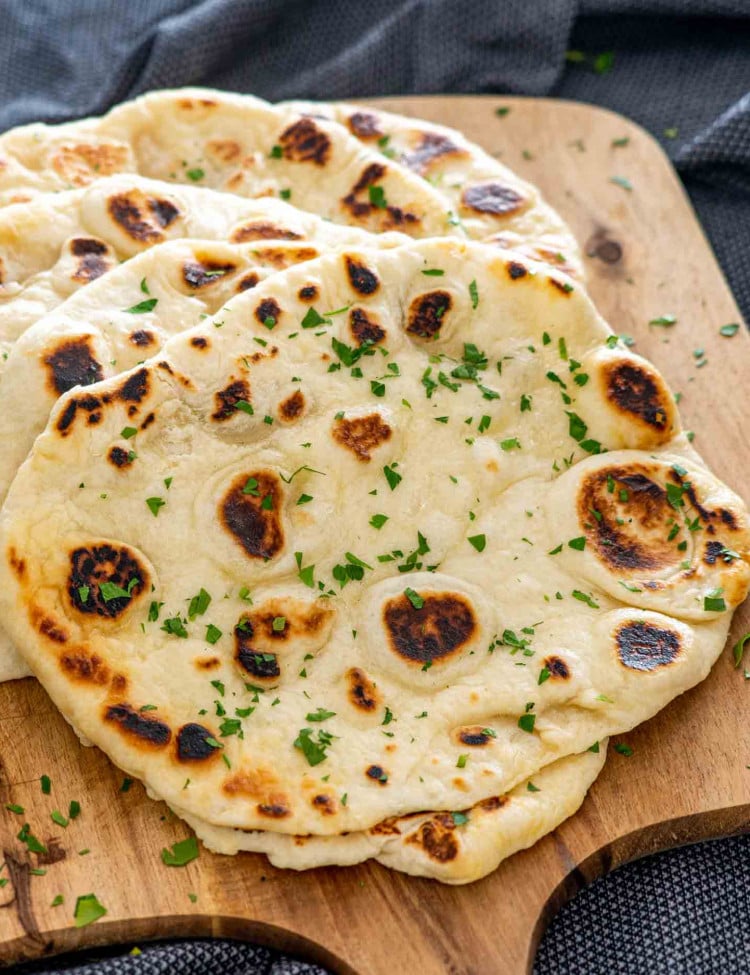
Easy Homemade Naan
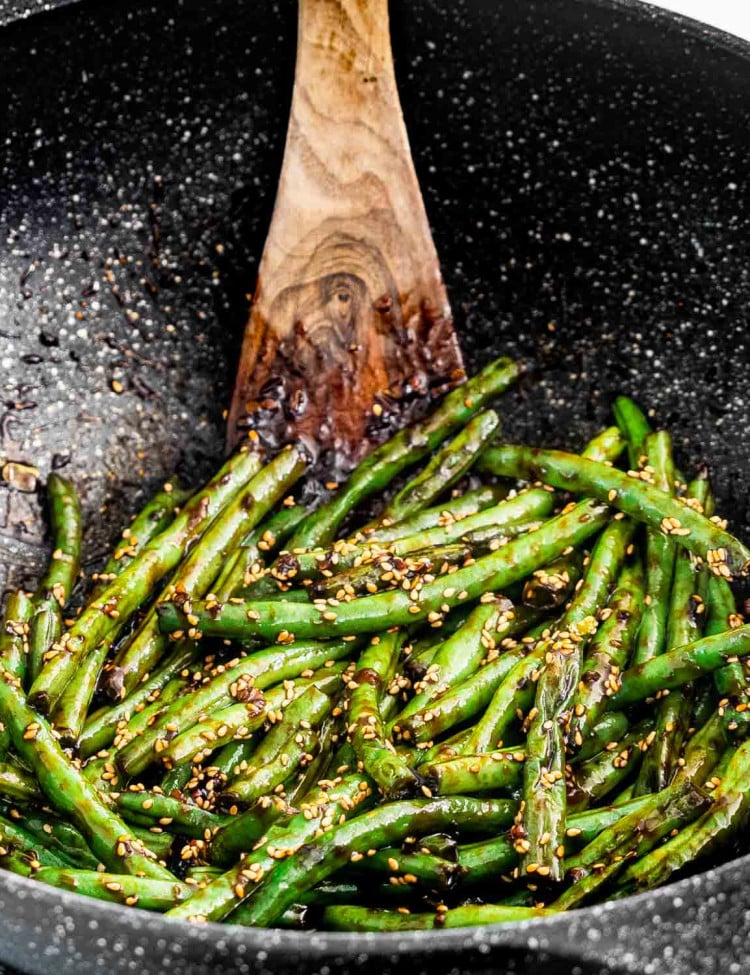
Asian Green Beans
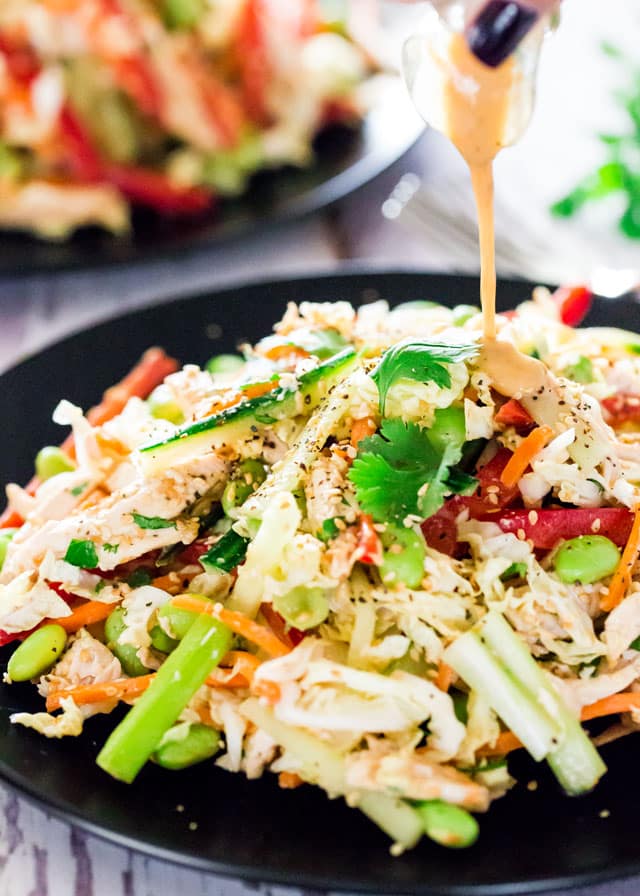
Asian Chopped Chicken Salad
Frequently Asked Questions
Can I use chicken breast instead of thighs?
Absolutely. Just slice it thin and watch the cook time, breast cooks faster and can dry out if you’re not paying attention. Still delicious, just a little fussier.
What if I can’t find Panang curry paste?
Red curry paste will work in a pinch. The flavor’s slightly different, less rich, more herbal, but still really tasty. If you want to mimic that classic Panang depth, stir in a little peanut butter.
Do I have to use fish sauce?
You don’t, but if you skip it, you’ll miss that savory, slightly funky depth that makes Thai curries sing. Soy sauce is a backup option, but fish sauce is what gives it soul.
How spicy is this?
It’s totally up to you. The curry paste has a little heat, but the chilies are where the fire is. Add more for kick, skip them for mellow. You’re the boss.
How should I store leftovers?
Let the curry cool completely before transferring it to an airtight container. Store it in the refrigerator for up to 3 days. The flavors actually deepen as it sits, making it even tastier the next day!
Can I freeze Panang Chicken Curry?
Yes, this curry freezes well. Place it in a freezer-safe container and store it for up to 3 months. Thaw it overnight in the refrigerator and reheat gently on the stove or in the microwave, stirring occasionally.
How do I reheat this curry?
Reheat it in a saucepan over low heat, adding a splash of water or coconut milk if the sauce has thickened too much. Stir occasionally to ensure it heats evenly without sticking.
More Delicious Curry Recipes
Before You Begin! If you make this, please leave a review and rating letting us know how you liked this recipe! This helps our business thrive & continue providing free recipes.
Panang Chicken Curry
Video
Ingredients
- 1½ pounds boneless skinless chicken thighs (sliced into bite-sized pieces)
- 4 ounces Panang curry paste
- 14 ounces coconut milk (preferably full-fat for a richer taste)
- 4-5 kaffir lime leaves (torn or thinly sliced)
- 1 tablespoon palm sugar (or brown sugar)
- 1 tablespoon fish sauce
- 2-3 red chilies (sliced diagonally)
- 1 tablespoon vegetable oil (for sautéing)
- fresh basil leaves (Thai basil preferred, for garnish)
Before You Begin! If you make this, please leave a review and rating letting us know how you liked this recipe! This helps our business thrive & continue providing free recipes.
Instructions
- Heat 1 tablespoon of vegetable oil in a large saucepan or wok over medium heat. Add the Panang curry paste to the pan. Stir-fry for 2-3 minutes until the paste becomes fragrant and slightly darker in color.

- Pour half of the coconut milk (about 7 oz or 200ml) into the pan. Stir well to combine with the curry paste. Cook for 3-5 minutes, stirring occasionally, until you see the oil start to separate from the coconut milk (this enhances the flavor).
- Add the sliced chicken thighs to the pan. Stir to coat the chicken pieces evenly with the curry sauce. Cook for 5 minutes, allowing the chicken to absorb the flavors.
- Pour in the remaining coconut milk. Add the kaffir lime leaves and half of the sliced red chilies. Stir in the palm sugar and fish sauce. Mix everything thoroughly.
- Bring the curry to a gentle simmer. Cook uncovered for 10-15 minutes, stirring occasionally, until the chicken is fully cooked and the sauce has thickened slightly. For more sweetness, add a bit more palm sugar. For saltiness, add additional fish sauce. For heat, add more sliced chilies.
- Remove the curry from heat. Garnish with the remaining red chilies and fresh basil leaves. Serve hot over steamed jasmine rice.
Notes
- Curry paste tip: Don’t skip frying it in oil, it’s what brings the flavor to life.
- Coconut milk: Full-fat is non-negotiable here. It’s what gives the sauce that luscious, velvety texture.
- Palm sugar swap: Brown sugar works perfectly, start with 2 teaspoons and taste from there.
- Make it your own: Add veggies like bell peppers or green beans if you want to bulk it up.
- Use full-fat coconut milk for the best flavor and creaminess.
- Adjust the spice level by adding or reducing the chilies.
- Simmer the curry long enough for the sauce to thicken and deepen in flavor.
- Serve over jasmine rice or with naan.
Nutrition Information
Notice: Nutrition is auto-calculated for your convenience. Where relevant, we recommend using your own nutrition calculations.