Balsamic Chicken
This post may contain affiliate links. Please read my disclosure policy.
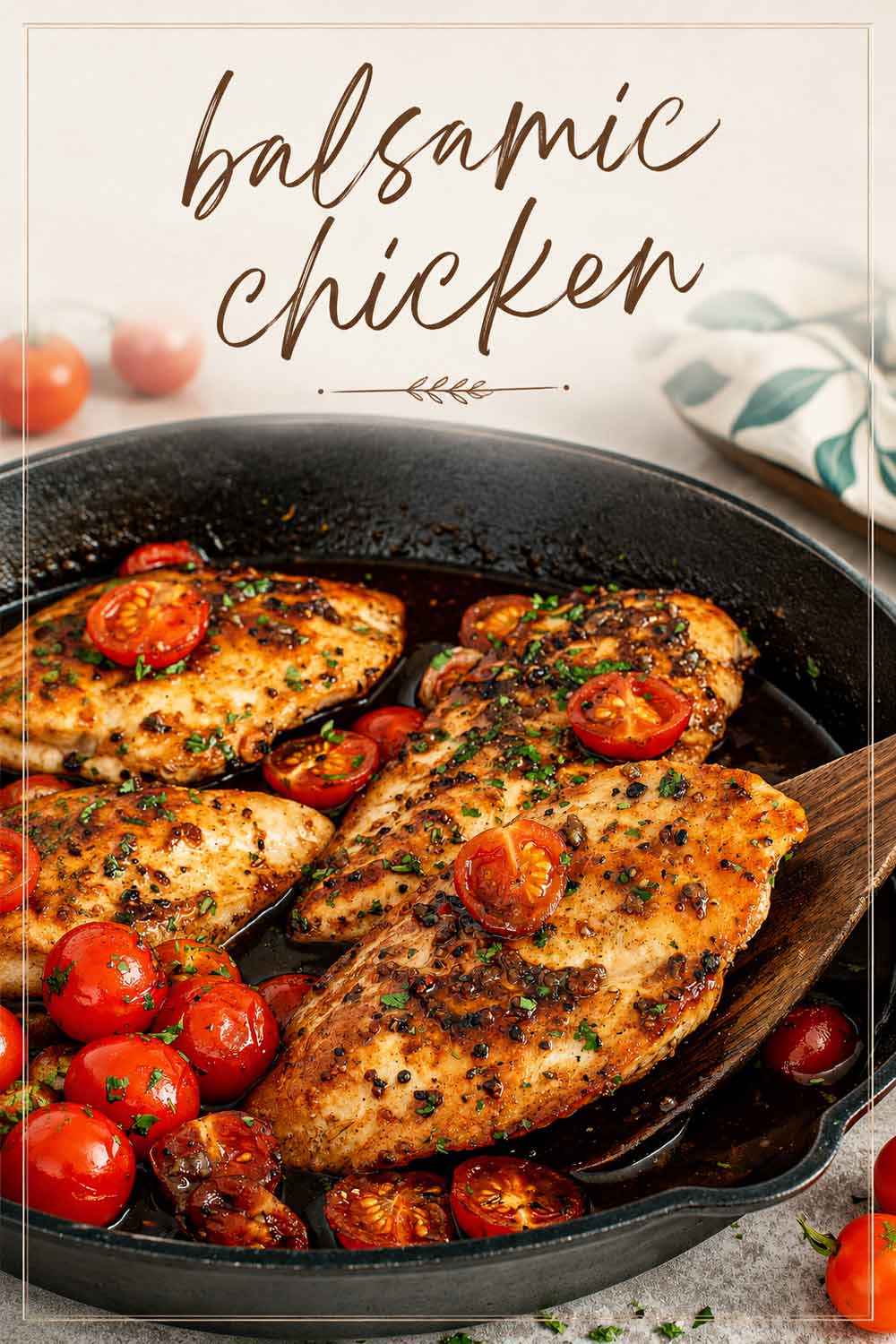
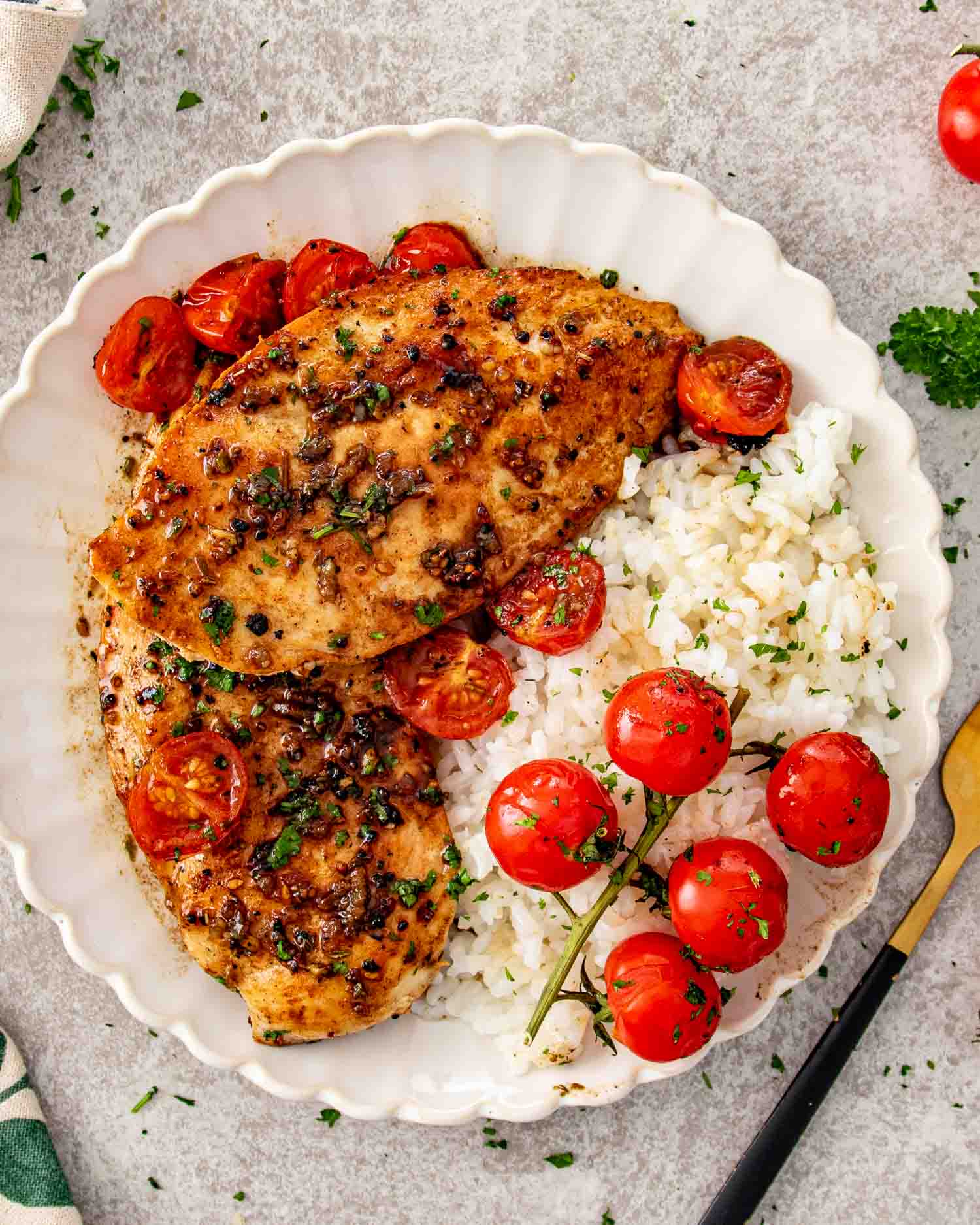
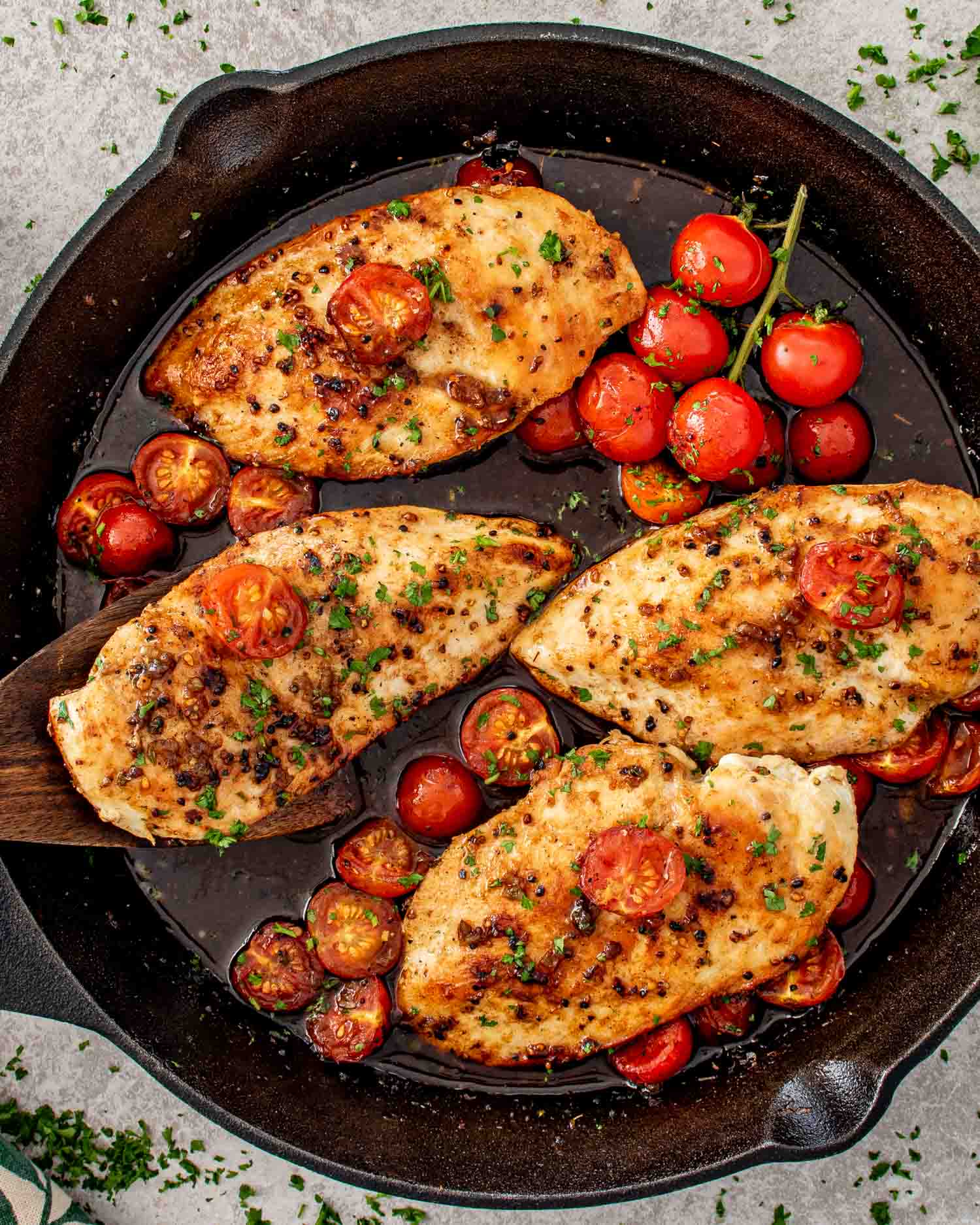
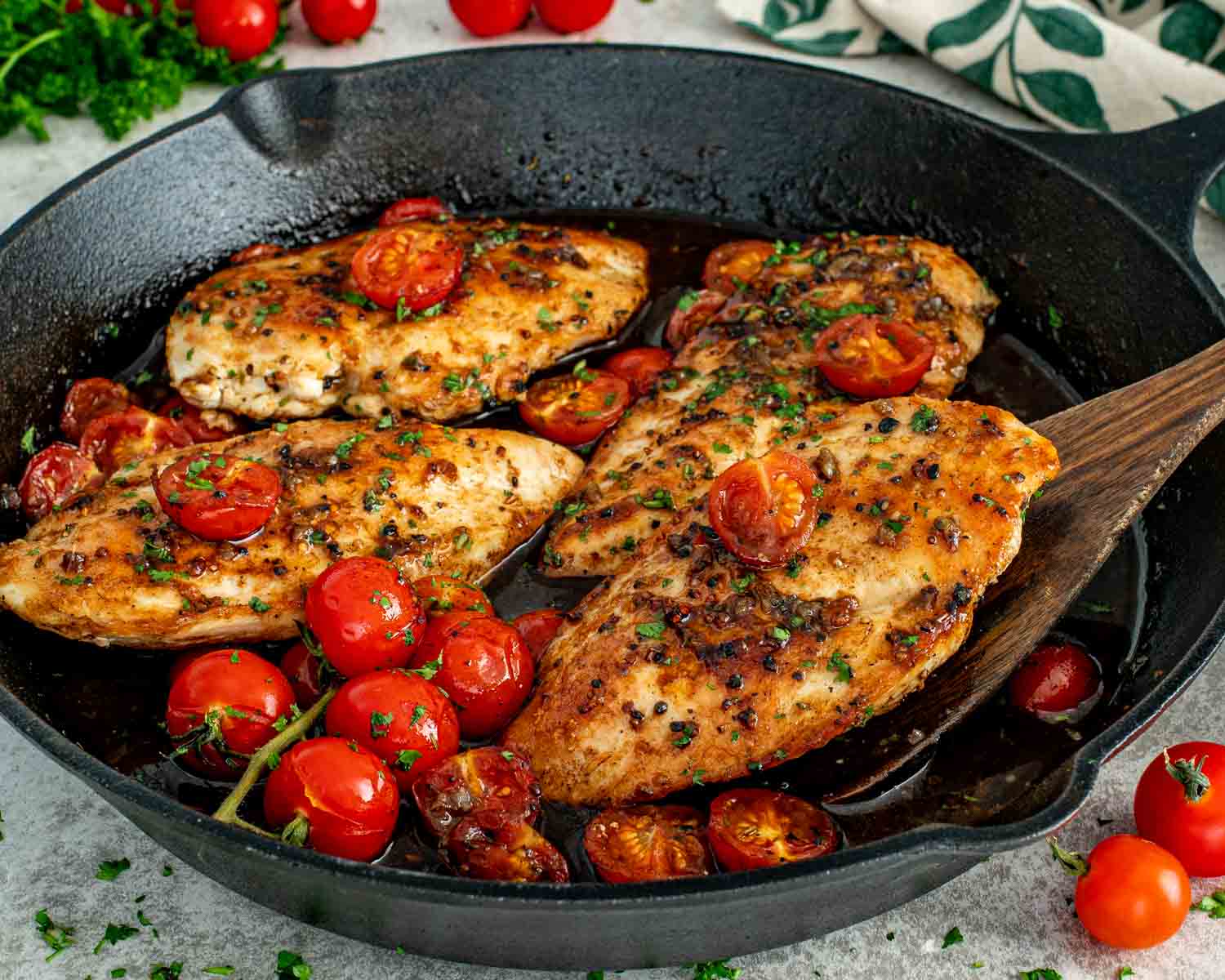
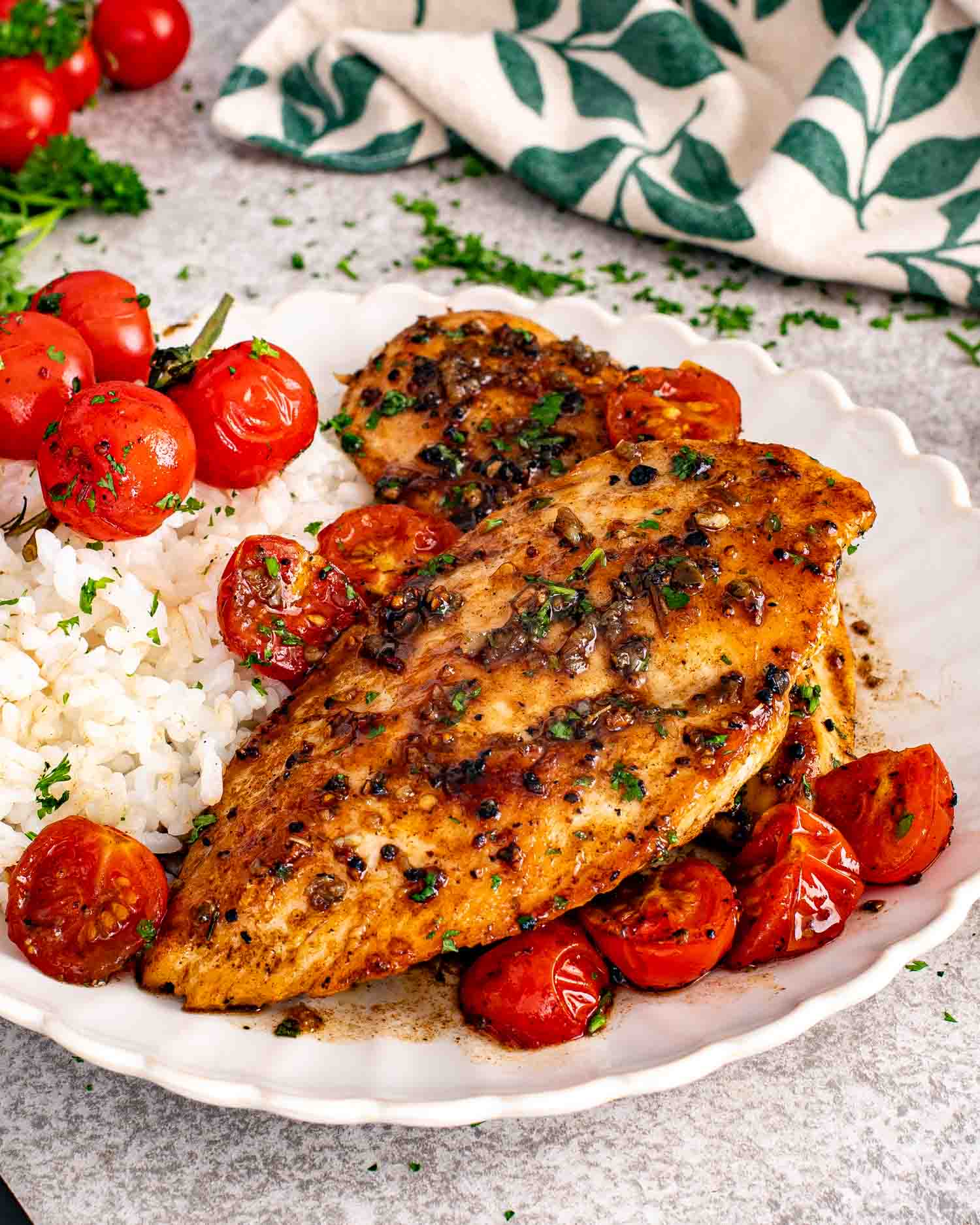
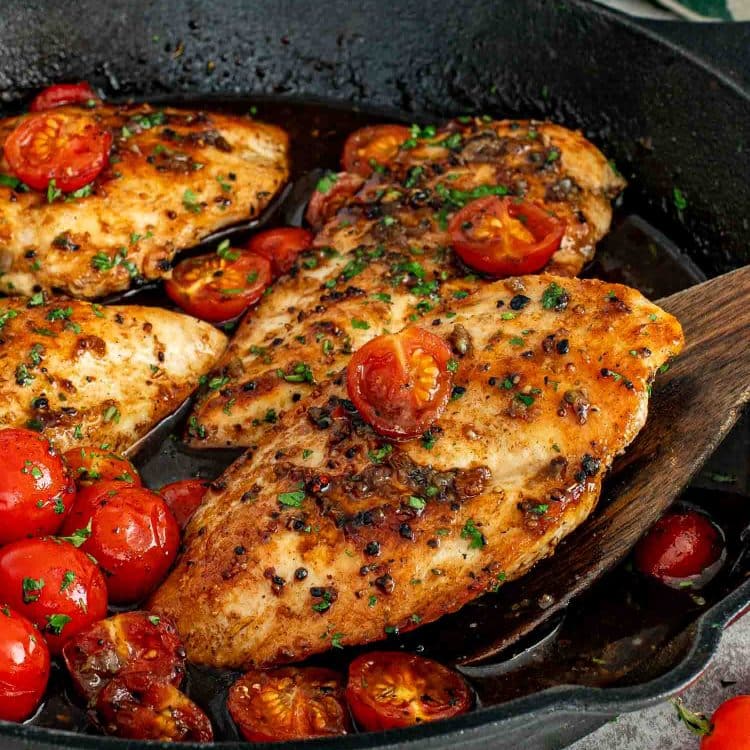
Balsamic Chicken is one of those recipes that does a lot of the work for you. We sear the chicken, build a sauce right in the same pan, throw in some cherry tomatoes, and let the oven finish the job. The result is juicy chicken in a glossy, tangy sauce that tastes like something you ordered at a restaurant. Nobody needs to know it took 45 minutes on a Tuesday night.
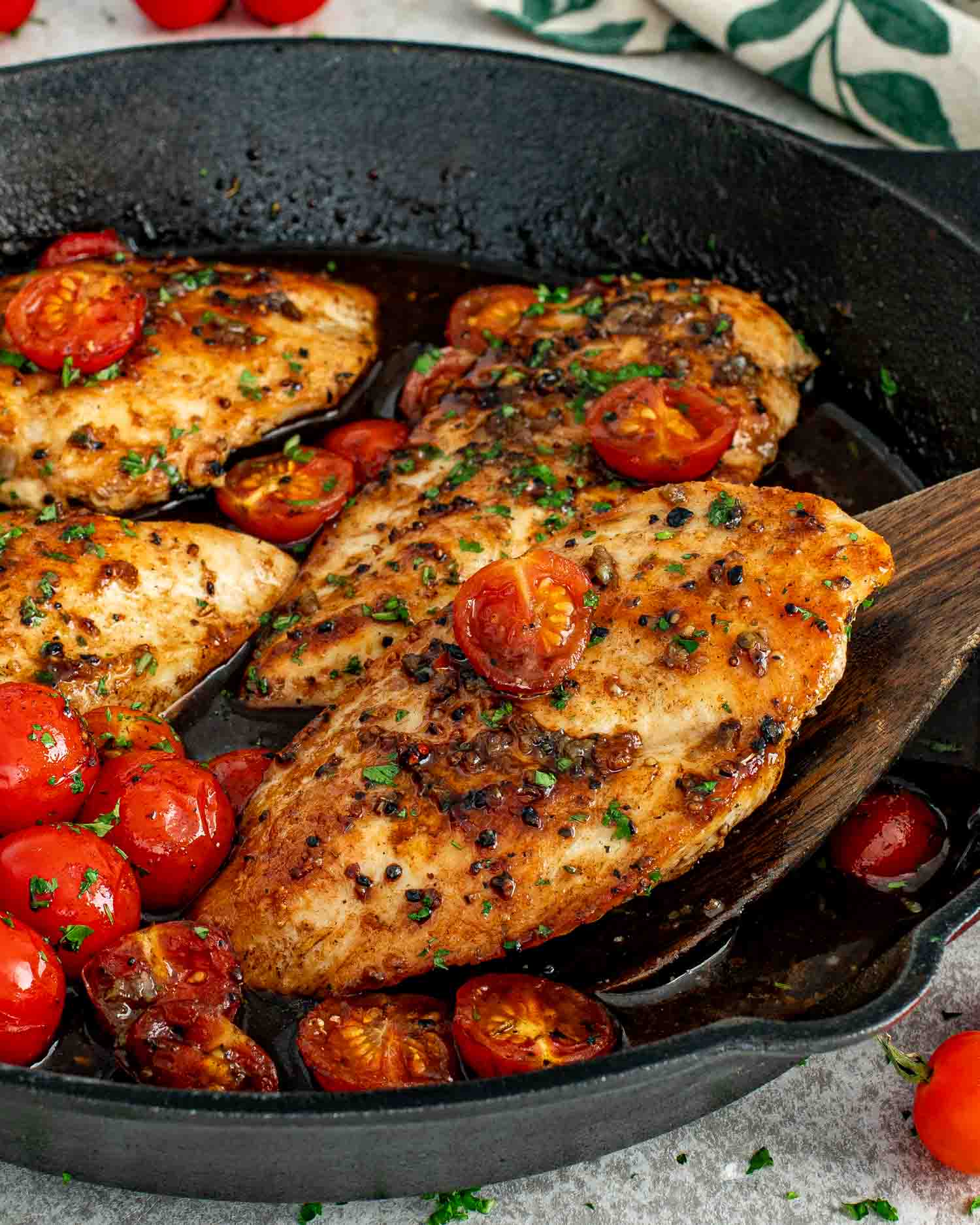
I have been making versions of this dish for years. The balsamic vinegar gives the sauce a deep, slightly sweet complexity that you cannot fake with shortcuts. The honey rounds it out, the Dijon mustard gives it backbone, and the cherry tomatoes collapse into the sauce as everything bakes, adding body and a fresh brightness that cuts right through the richness. Every element is doing a job.
Why this recipe works
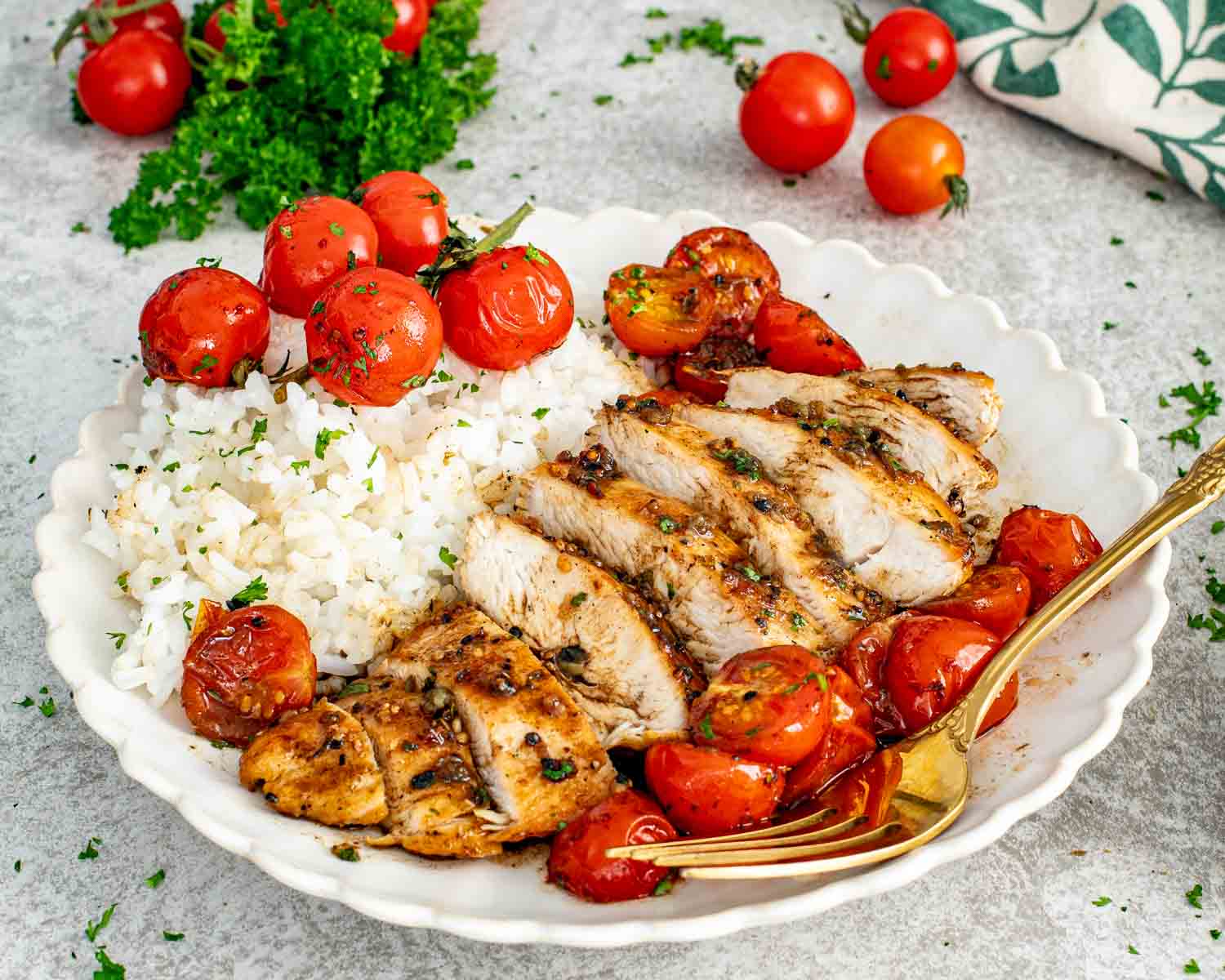
The secret is the sear, and we are going to talk about it because most people skip it or rush it. When we place the chicken in a hot skillet and leave it alone for 4 to 5 minutes per side, we get the Maillard reaction happening on the surface. That is the browning process that creates hundreds of new flavor compounds.
Those browned bits that stick to the bottom of the pan? That is called fond, and it is pure concentrated flavor. When we pour in the balsamic vinegar and chicken broth, it lifts all of that off the pan and right into our sauce. Skipping the sear means skipping all of that. Please do not skip the sear.
The oven finish is the other key move. Starting on the stovetop and finishing in the oven gives us control. We get the browning and flavor development from the sear, then the gentle, even heat of the oven cooks the chicken through without drying it out. It is a technique used in professional kitchens for good reason.
What Ingredients You’ll Need
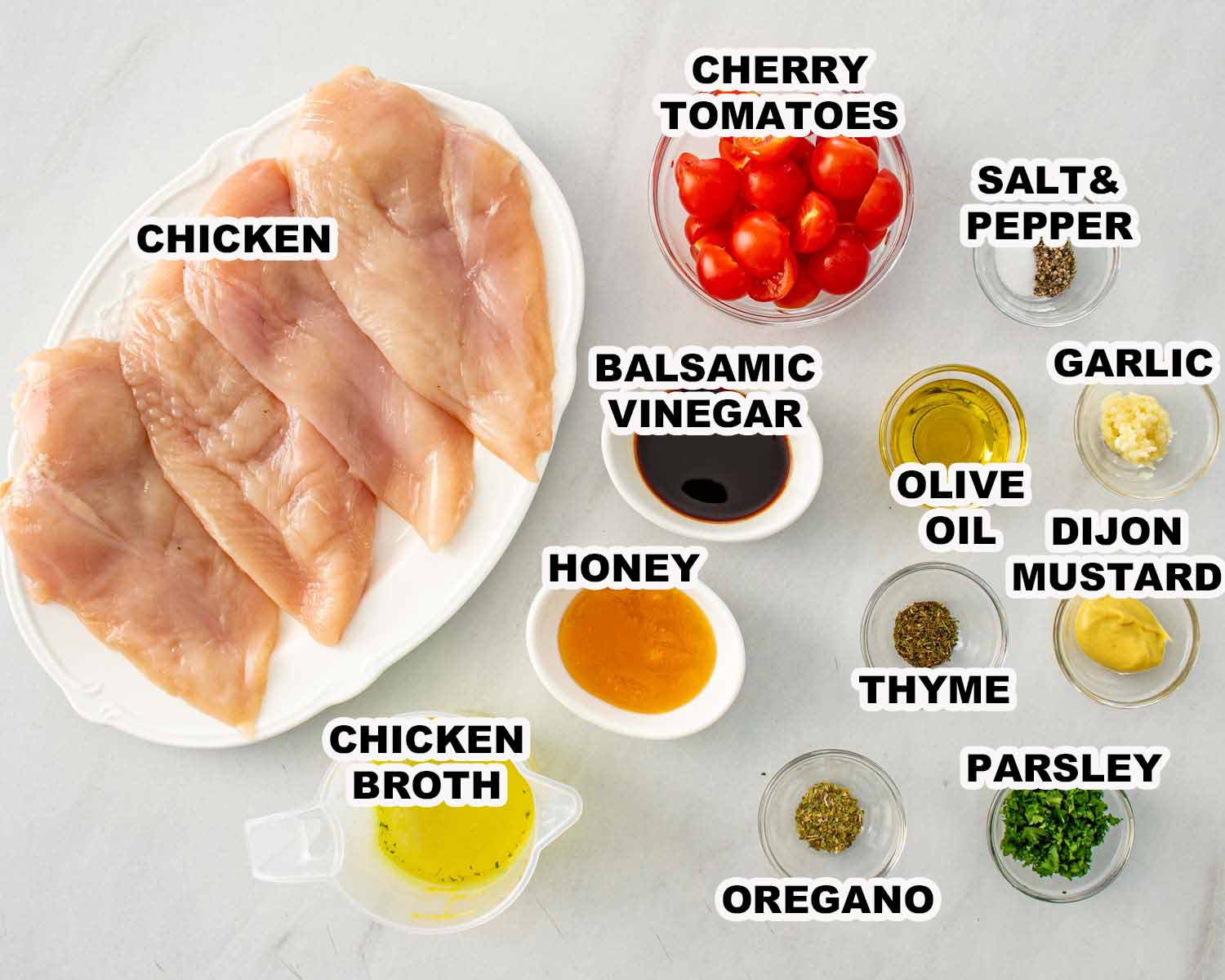
- Chicken breasts. Four boneless, skinless chicken breasts, seasoned well on both sides. We are not going in with timid seasoning. Salt and pepper go on with purpose.
- Balsamic vinegar. Buy a decent one. Not the cheapest bottle on the shelf, which tends to be thin and aggressively sour. We want something with a little depth and natural sweetness. You don’t need to spend a fortune, but this ingredient is the star of the sauce, so treat it accordingly.
- Honey and Dijon mustard. These two balance each other out perfectly. The honey mellows the acidity of the vinegar, and the Dijon adds a sharp, savory note that keeps the sauce from tipping into sweet territory. It also helps the sauce emulsify and cling to the chicken.
- Cherry tomatoes. Do not substitute. Halved cherry tomatoes roast beautifully and break down into the sauce, adding texture, color, and a pop of freshness. A large diced tomato will not behave the same way.
- Dried thyme and oregano. Classic Mediterranean herbs that work with the balsamic without competing with it. We are not reinventing the wheel here, we are leaning into what works.
Pro Tip
Use an oven safe skillet. Cast iron or stainless steel are both ideal. If all you have is a nonstick pan that cannot go in the oven, sear in the nonstick and transfer everything to a baking dish before it goes in. You will lose a little of the fond, but the dish will still be delicious.
Substitutions
Balsamic Vinegar: Red wine vinegar is the closest swap. Add an extra teaspoon of honey to compensate for the missing sweetness. Apple cider vinegar also works in a pinch. What we are not doing is using white wine vinegar or plain distilled vinegar, both are too sharp and will make the sauce taste flat.
Honey: Maple syrup works well here and adds a nice subtle warmth. Brown sugar dissolved in a splash of warm water is another option. Skip artificial sweeteners entirely, they don’t reduce or caramelize the same way and the sauce will suffer for it.
Dijon Mustard: Whole grain mustard is a great swap and adds a pleasant texture to the sauce. Yellow mustard is a last resort, the flavor is milder and the sauce will be a little one dimensional, but it will hold together. Don’t skip the mustard entirely; it’s acting as an emulsifier.
Chicken Breasts: Bone in, skin on chicken thighs are excellent here and arguably more forgiving. They need an extra 5 to 10 minutes in the oven. Boneless skinless thighs also work well with no timing changes needed.
How To Make Balsamic Chicken
Sear the Chicken
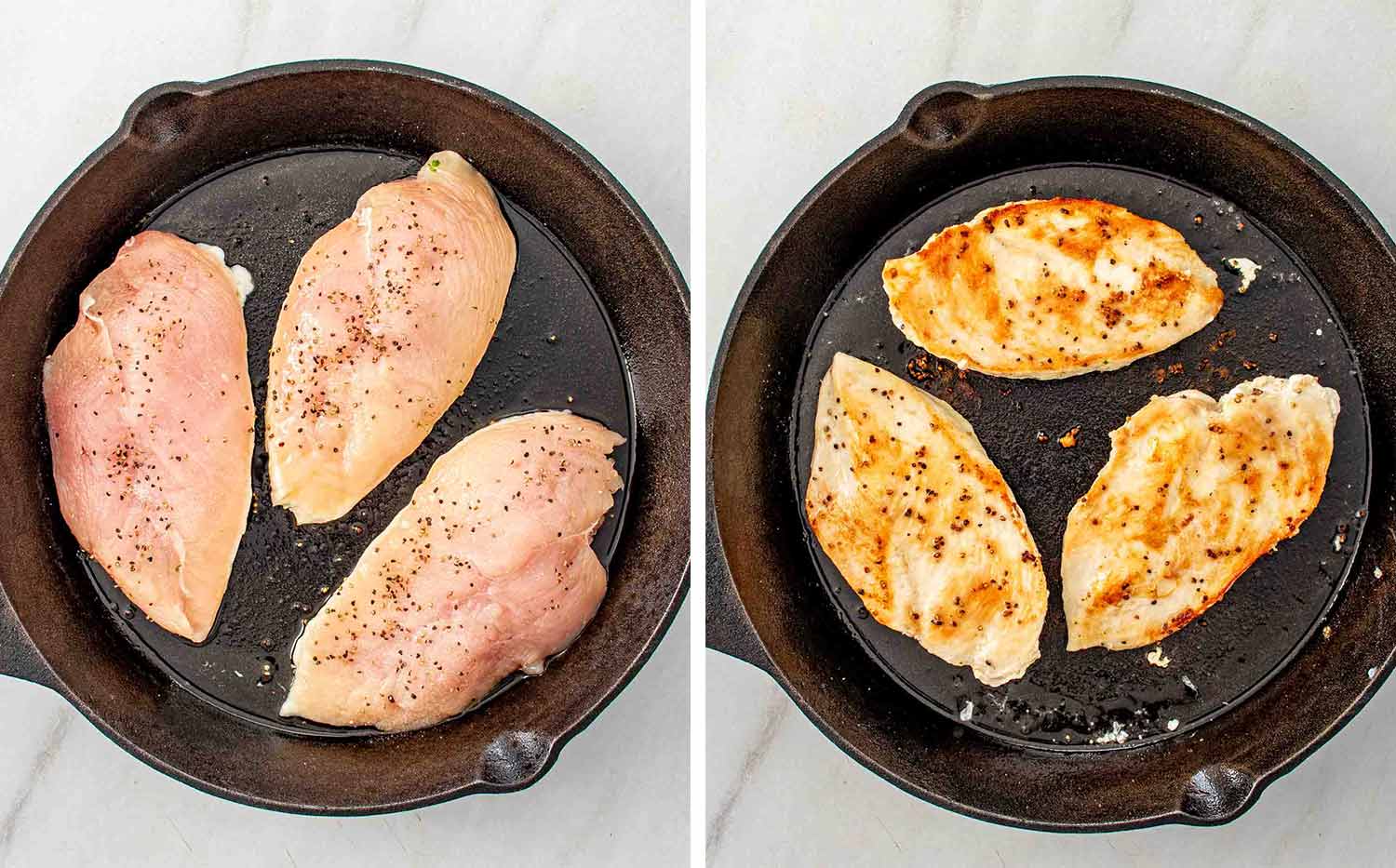
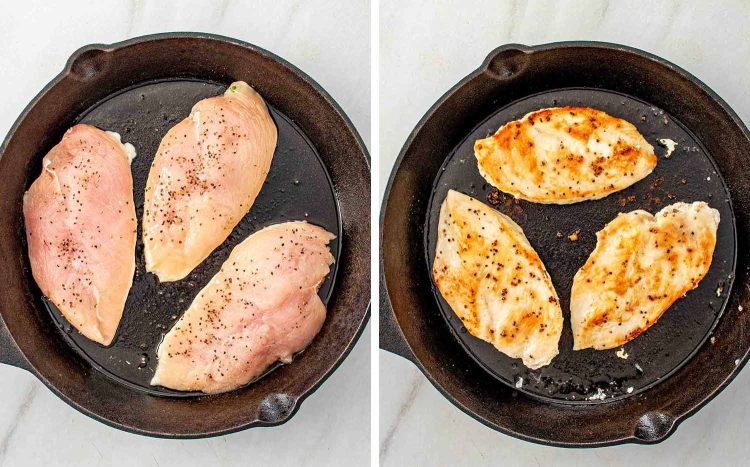
Preheat the oven to 400°F. Season the chicken breasts generously on both sides with salt and pepper. Heat the olive oil in a large oven safe skillet over medium high heat until shimmering, then add the chicken. Do not move it. Let it sear for 4 to 5 minutes per side until deeply golden. Remove it from the pan and set it aside.
Make the Sauce
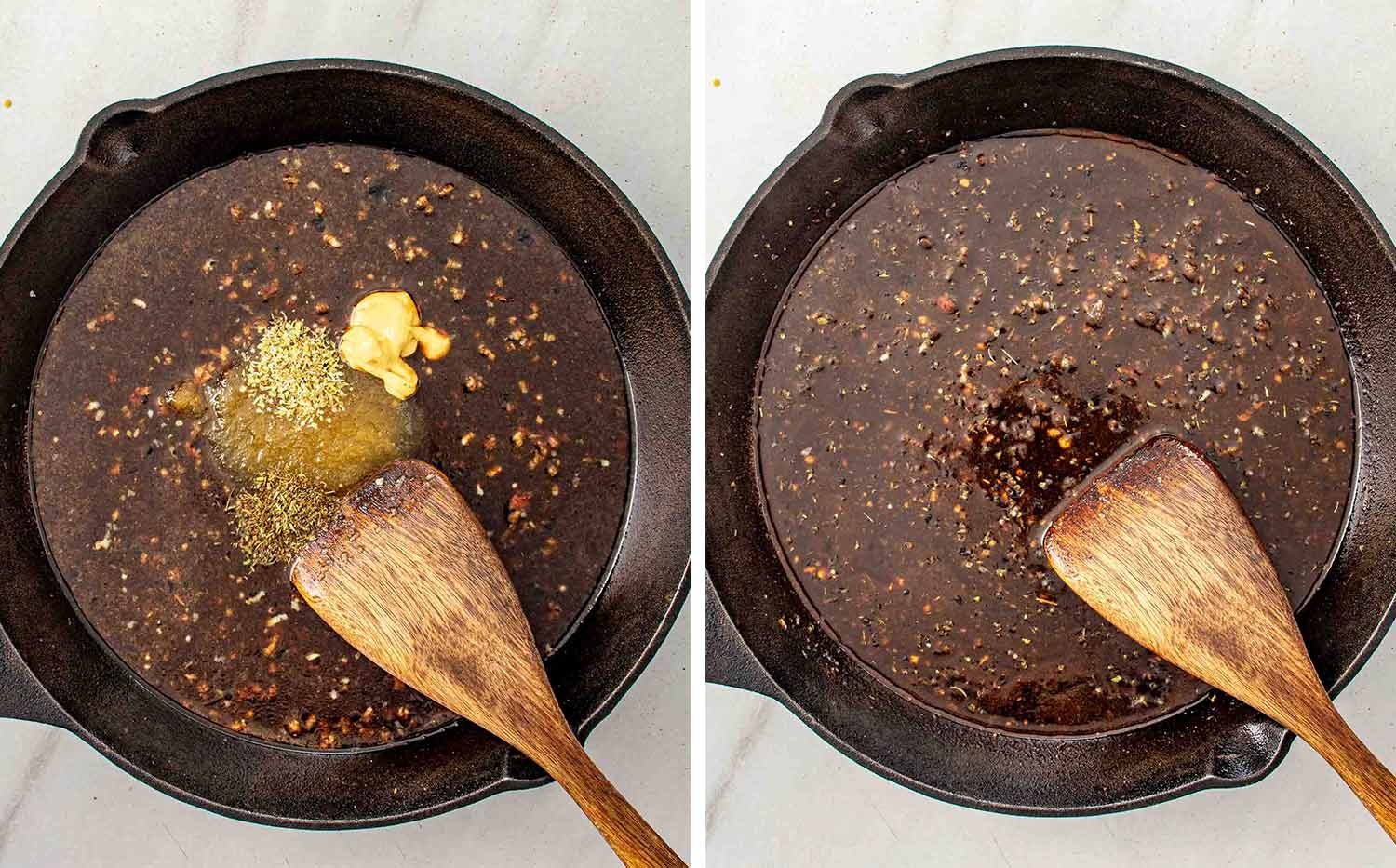
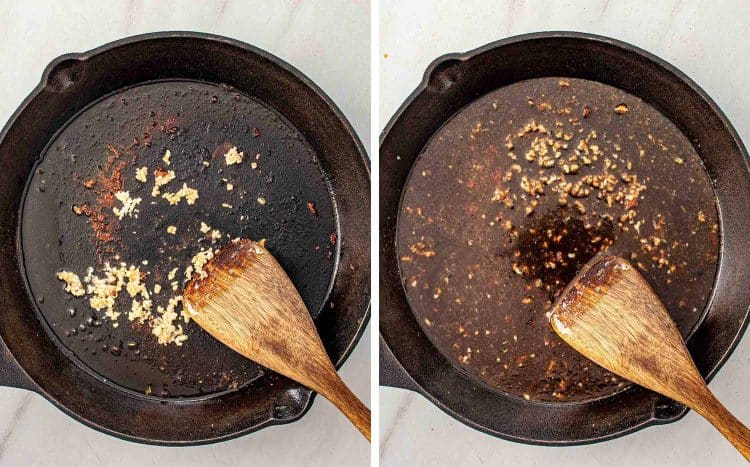
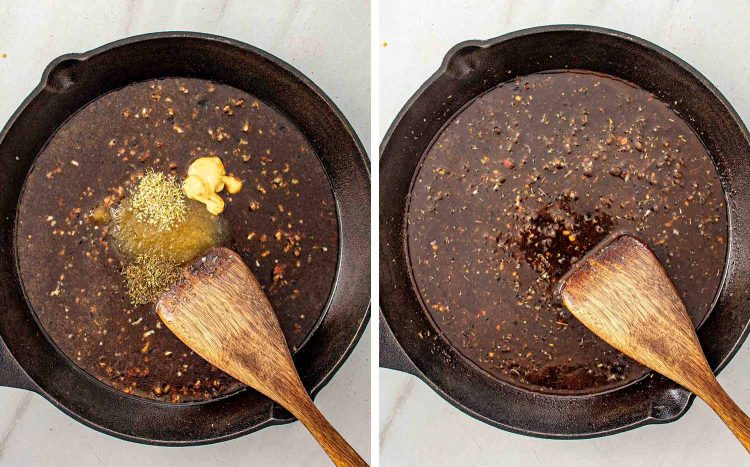
Add the minced garlic to the same pan and cook for 30 seconds, just until fragrant. Pour in the balsamic vinegar and chicken broth, scraping up every last bit from the bottom of the pan. Stir in the honey, Dijon, thyme, and oregano. Let that simmer for 2 to 3 minutes until slightly reduced. Add the cherry tomatoes and stir to combine.
Finish the Dish
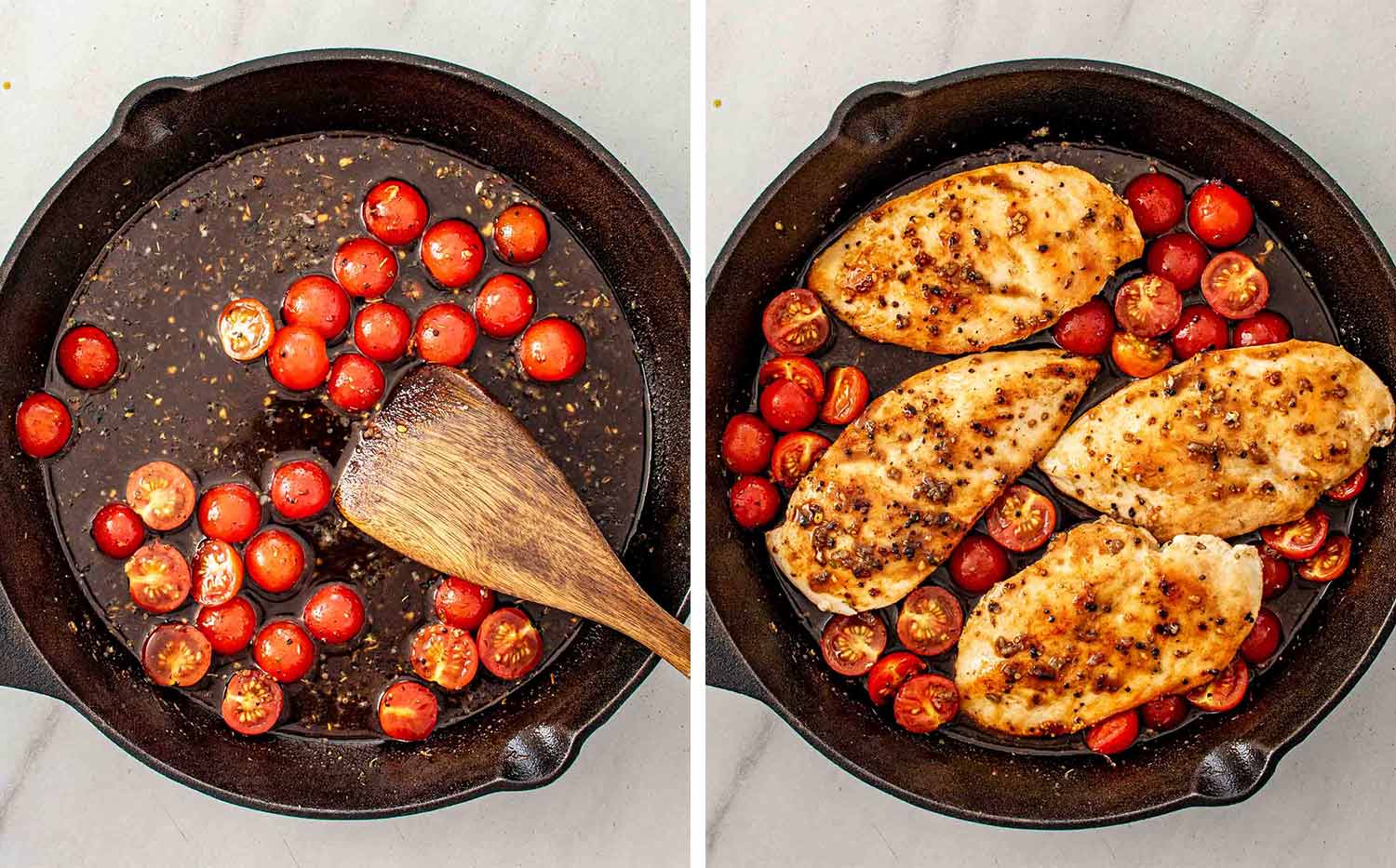
Nestle the chicken back into the pan and spoon some of that sauce over the top. Transfer the skillet to the oven and bake for 15 to 20 minutes until the chicken is cooked through to an internal temperature of 165°F. Spoon more sauce over the top, scatter fresh parsley over everything, and serve immediately.
What to Serve with Balsamic Chicken
The sauce is the reason we make this dish, so we need something on the plate that is going to soak it up. Creamy mashed potatoes are the obvious answer and they are obvious for a reason. Buttered egg noodles work just as well. Here are some other options:

Arugula Salad
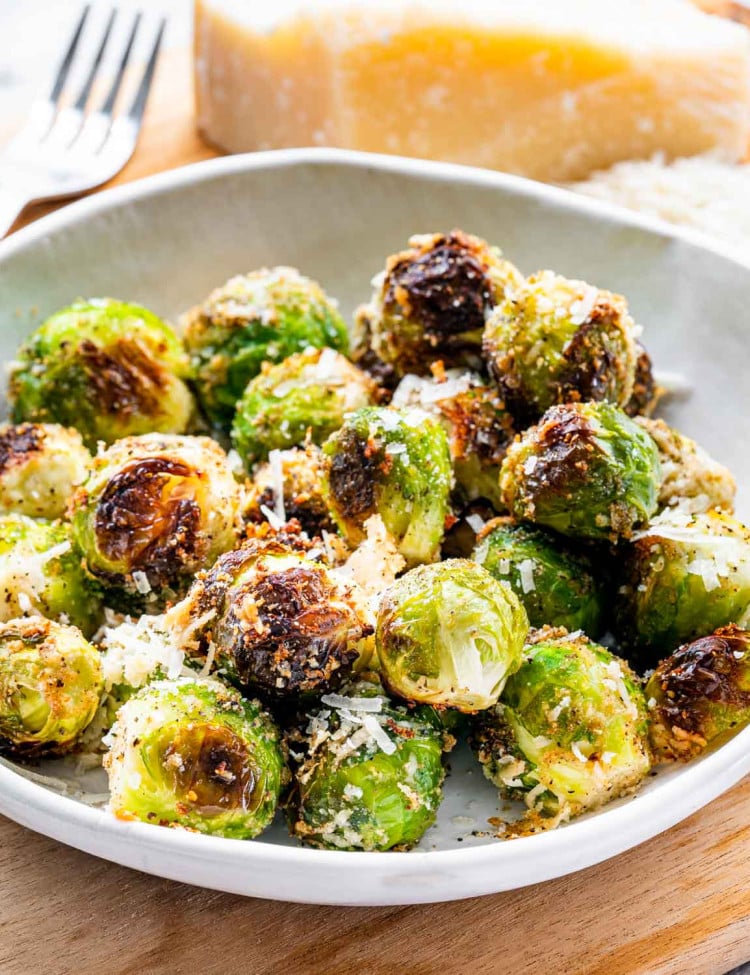
Garlic Parmesan Roasted Brussels Sprouts
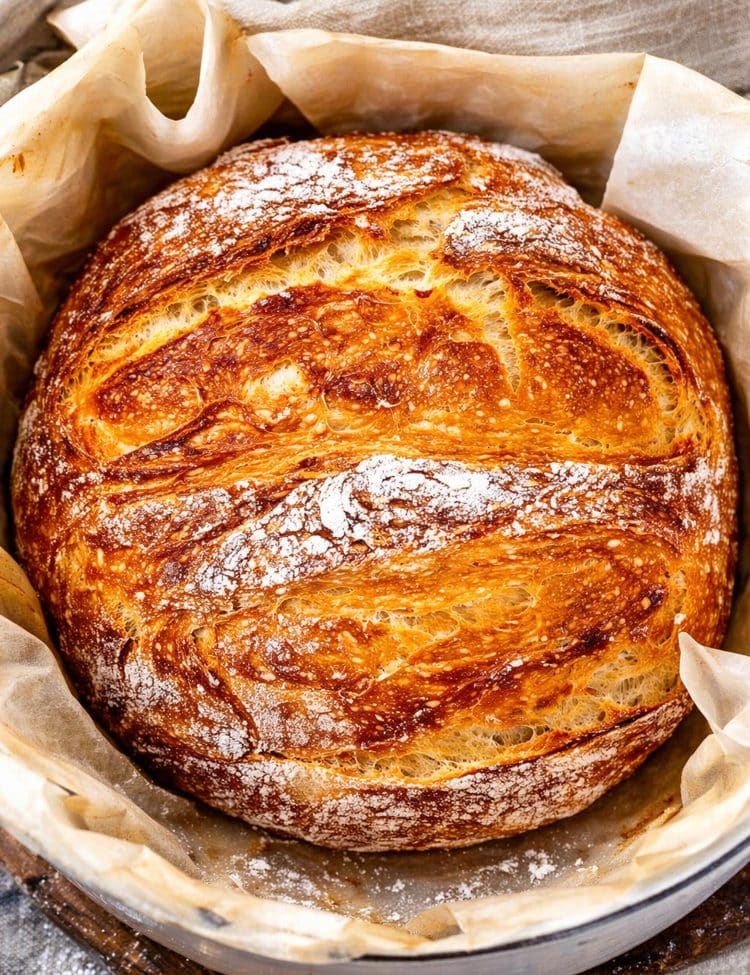
No Knead Bread
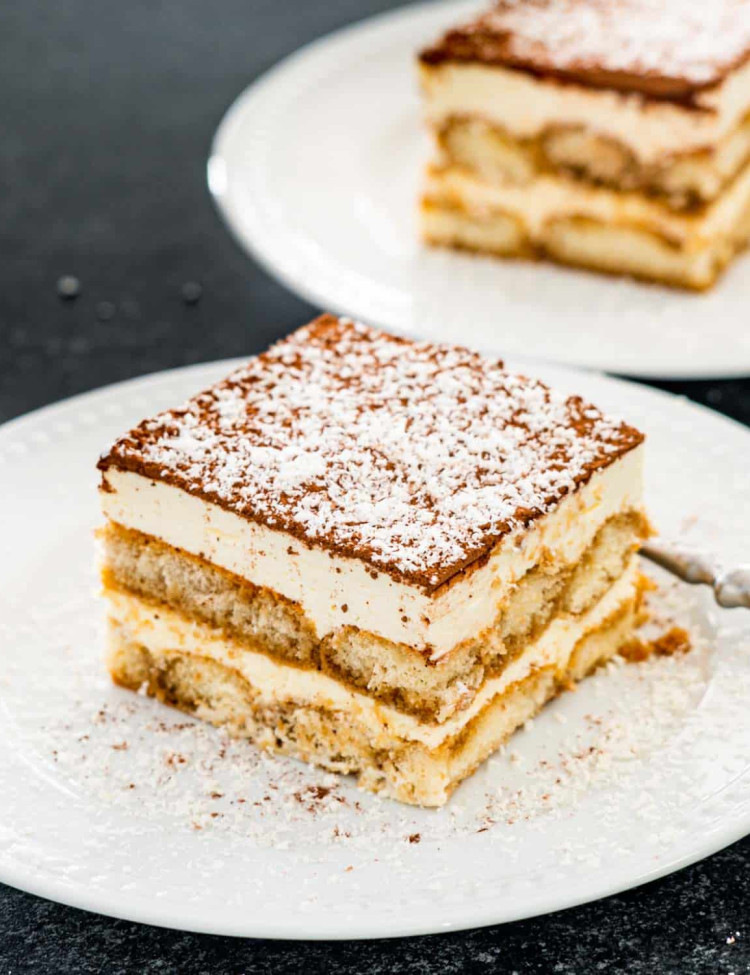
The Best Tiramisu
Troubleshooting
The sauce is too thin and watery: Two likely causes. First, the sauce didn’t get enough time to reduce before the chicken went back in. Make sure it simmers for a full 2 to 3 minutes on the stovetop and looks slightly thickened before you add the tomatoes. Second, the tomatoes release water as they cook. If the sauce still looks thin after baking, remove the chicken, put the skillet back on the stovetop over medium heat, and let it reduce for another 2 to 3 minutes. It will tighten up quickly.
The chicken is dry: Almost certainly overcooked. Chicken breasts go from perfect to dry very fast, which is why a meat thermometer is non negotiable here. Pull the chicken at exactly 165°F. If your breasts are on the larger side, start checking at the 15 minute mark.
The sauce tastes too acidic: This usually means the balsamic vinegar was low quality or the sauce did not reduce enough to mellow the acidity. Add another teaspoon of honey and let the sauce simmer a little longer. Taste as you go. A small pinch of salt can also help balance sharpness.
Storing and Reheating
Fridge: Leftovers keep in an airtight container in the refrigerator for up to 3 days. Reheat gently in a skillet over low heat with a small splash of chicken broth to loosen the sauce. The microwave works in a pinch but cover it and go low and slow or the chicken will toughen up on you.
Freezer: This dish also freezes well for up to 2 months. Thaw overnight in the fridge before reheating.
Make ahead: Sear the chicken and build the sauce a few hours ahead, then refrigerate. Bring everything back to room temperature before finishing in the oven. The flavors actually deepen as it sits.
Try These Recipes Next
- Chicken Parmesan
- Mushroom Stuffed Chicken Breast
- Cowboy Butter Chicken
- Roasted Red Pepper Skillet Chicken
Before You Begin! If you make this, please leave a review and rating letting us know how you liked this recipe! This helps our business thrive & continue providing free recipes.
Balsamic Chicken
Ingredients
- 4 boneless skinless chicken breasts
- 1 ½ teaspoons salt
- 1 teaspoon black pepper
- 2 tablespoons olive oil
- 4 cloves garlic (minced)
- ¼ cup balsamic vinegar
- 2 tablespoons honey
- 1 teaspoon dried thyme
- 1 teaspoon dried oregano
- 1 tablespoon Dijon mustard
- 1 cup cherry tomatoes (halved)
- ½ cup chicken broth (low sodium or no sodium added)
- 2 tablespoons fresh parsley (chopped)
Before You Begin! If you make this, please leave a review and rating letting us know how you liked this recipe! This helps our business thrive & continue providing free recipes.
Instructions
- Preheat your oven to 400°F (200°C).
- Season the 4 boneless, skinless chicken breasts with 1 ½ teaspoons salt and 1 teaspoon black pepper on both sides.
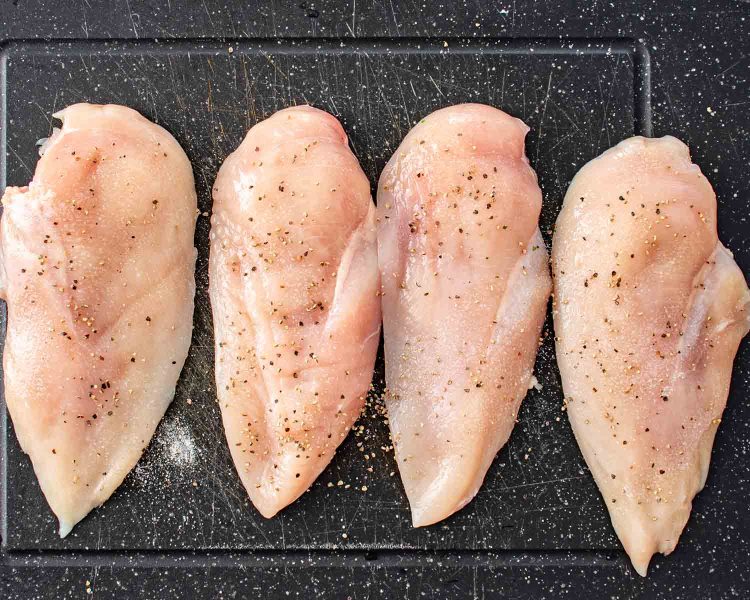
- Heat 2 tablespoons olive oil in a large oven safe skillet over medium high heat. Add the chicken breasts and sear for 4 to 5 minutes per side until nicely browned. Remove the chicken and set aside.
- In the same pan, add the 4 cloves minced garlic and cook for about 30 seconds until fragrant. Pour in ¼ cup balsamic vinegar and ½ cup chicken broth, scraping up any browned bits from the bottom of the pan.
- Stir in 2 tablespoons honey, 1 tablespoon Dijon mustard, 1 teaspoon dried thyme, and 1 teaspoon dried oregano. Let the sauce simmer for 2 to 3 minutes until slightly reduced.
- Add the 1 cup halved cherry tomatoes to the pan and stir to combine. Return the chicken breasts to the pan, spooning some of the sauce over them.
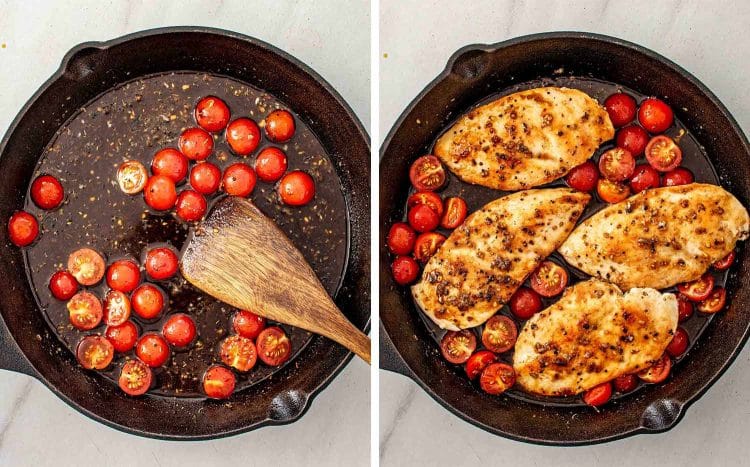
- Transfer the skillet to the oven and bake for 15 to 20 minutes, until the chicken is cooked through. Spoon the balsamic sauce over the chicken and sprinkle with 2 tablespoons chopped fresh parsley before serving.
Notes
- Pat the chicken dry before it hits the pan. This is the single most important thing you can do for a good sear. Surface moisture creates steam, and steam is the enemy of browning. Dry chicken, hot oil, and patience, that’s the whole formula.
- Use a meat thermometer. Chicken breasts are unforgiving. Pull them at exactly 165°F and not a degree more. If you are cutting into the chicken to check for doneness, you are letting the juices out and drying the meat in real time. A thermometer costs less than dinner for four. It’s worth it.
- If the sauce is too thin after baking, remove the chicken and put the skillet back on the stovetop over medium heat for 2 to 3 minutes. It will reduce and tighten up quickly. Do not panic, do not add cornstarch, just give it a little time.
Nutrition Information
Notice: Nutrition is auto-calculated for your convenience. Where relevant, we recommend using your own nutrition calculations.