Beef Stifado (Greek Beef Stew)
This post may contain affiliate links. Please read my disclosure policy.
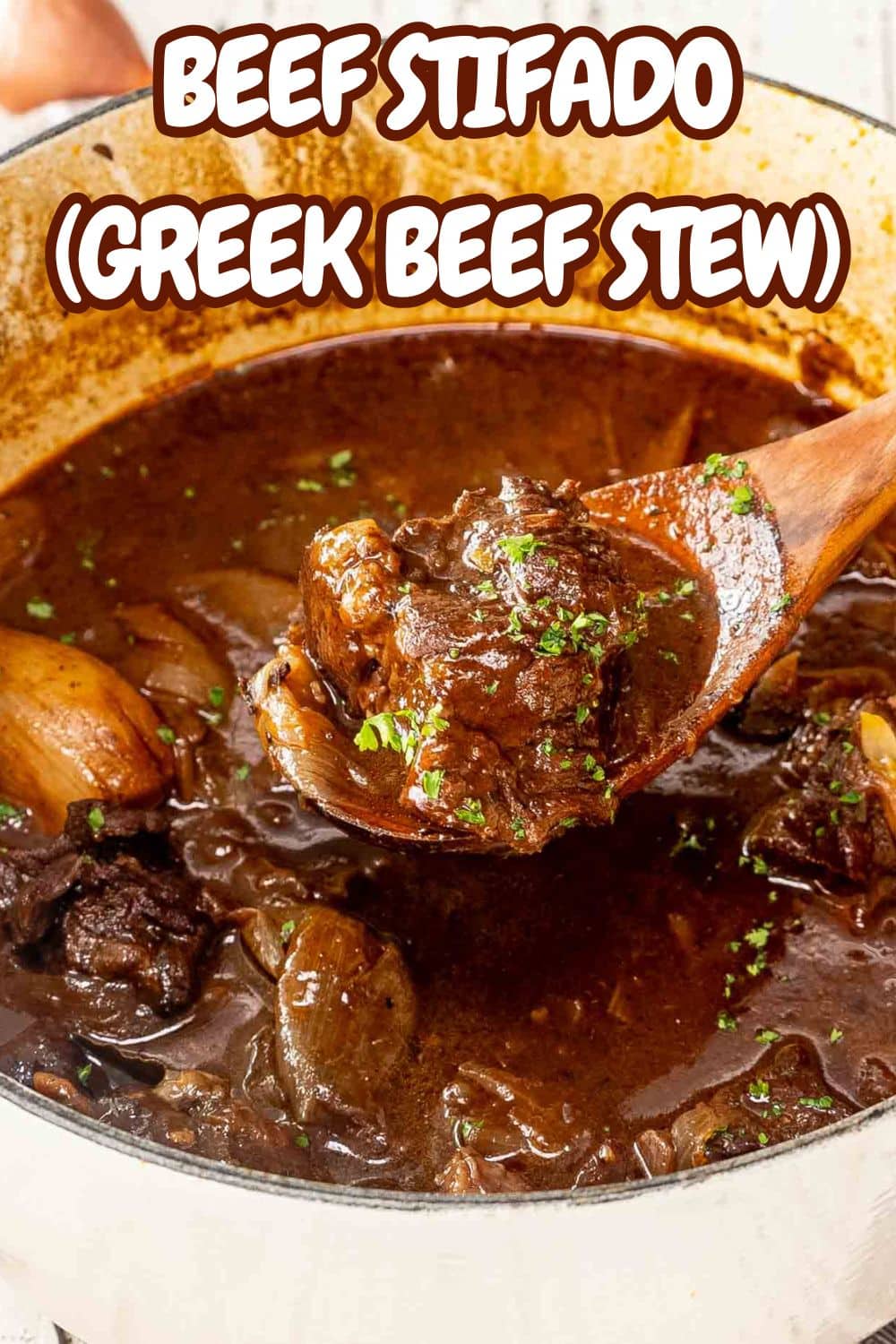
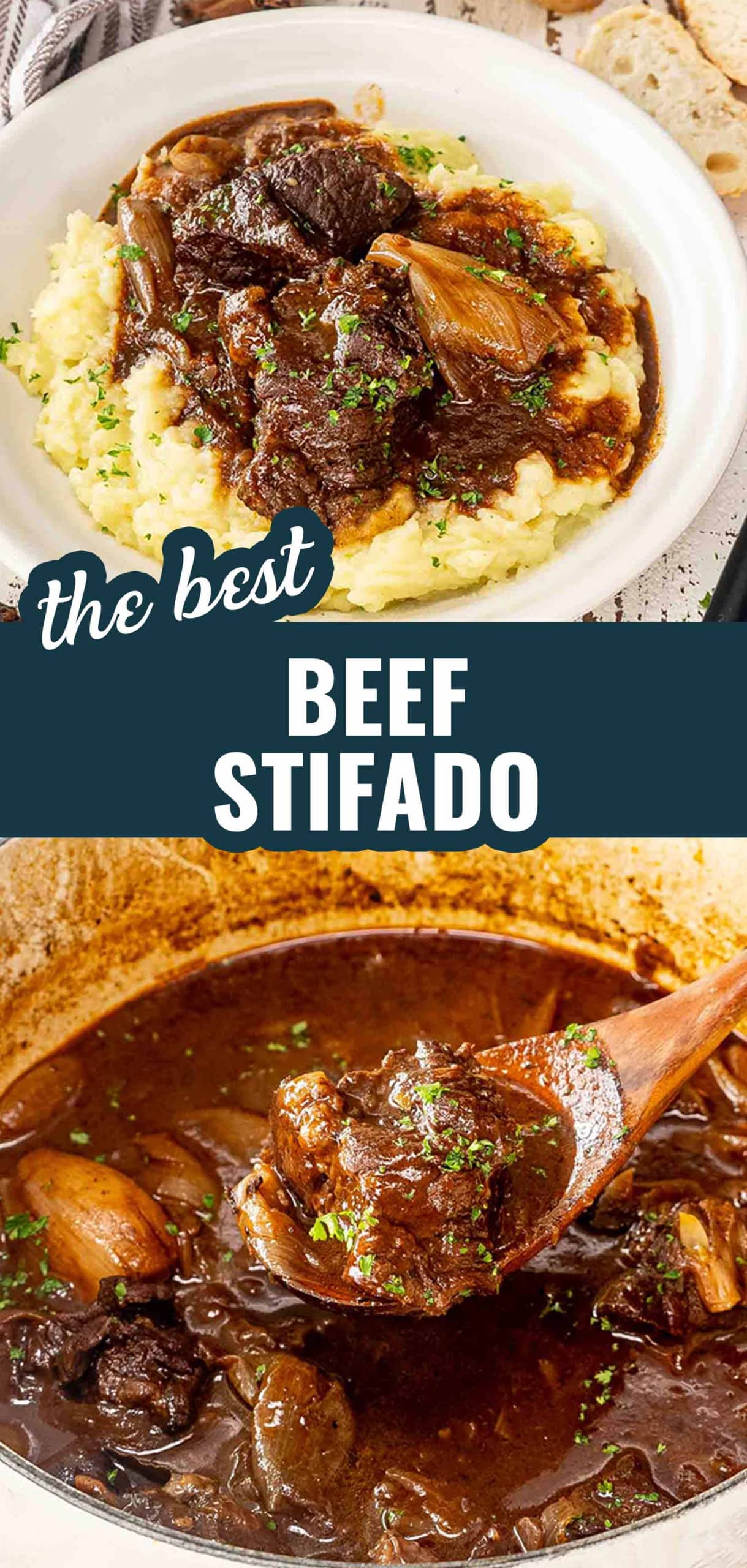
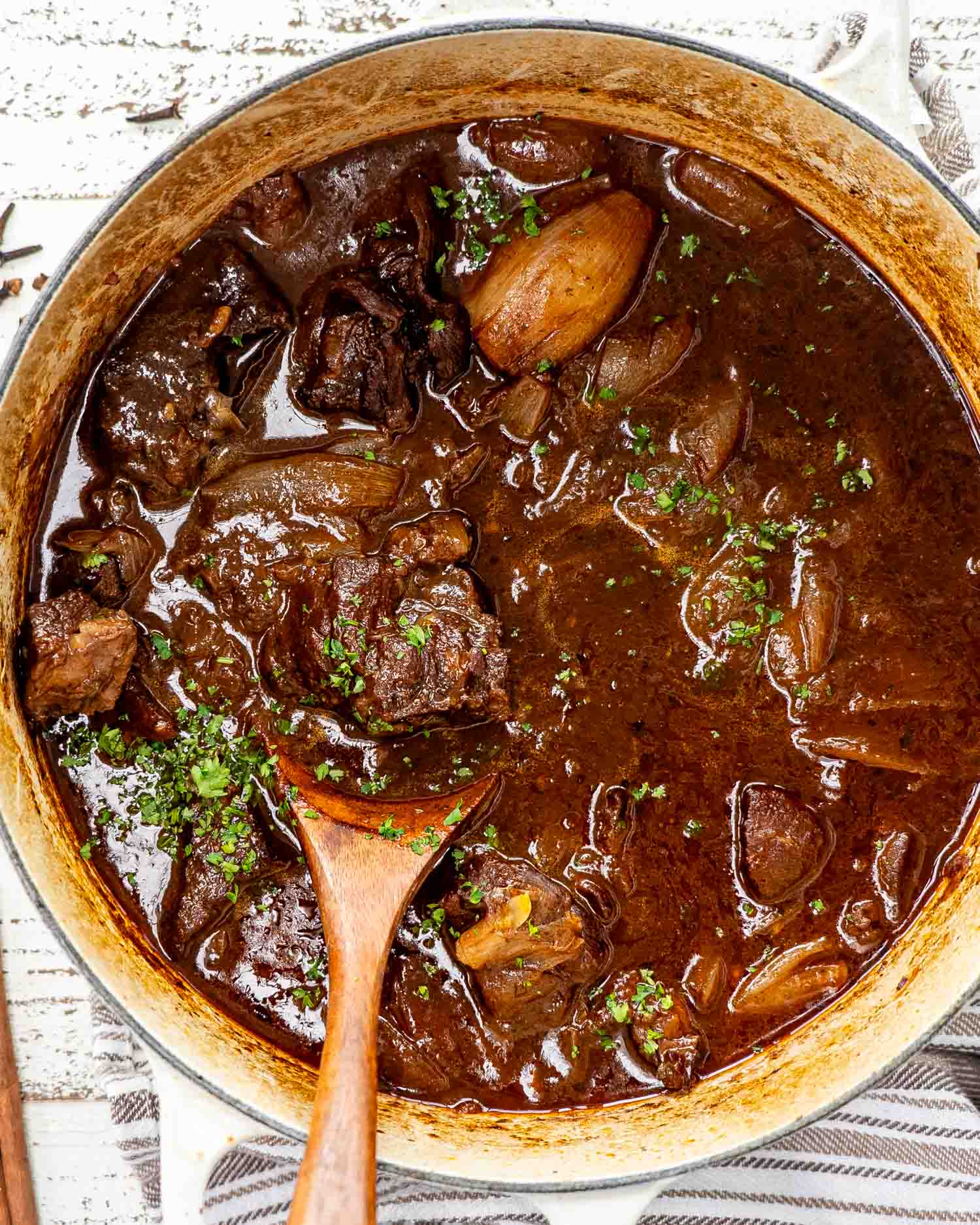
Beef Stifado is a traditional Greek beef stew known for its rich red wine sauce and warm spices like cinnamon and cloves. My version keeps those classic flavors intact but simplifies the process so it fits comfortably into your kitchen. No complicated steps. Just a slow simmer and a deeply flavorful result.
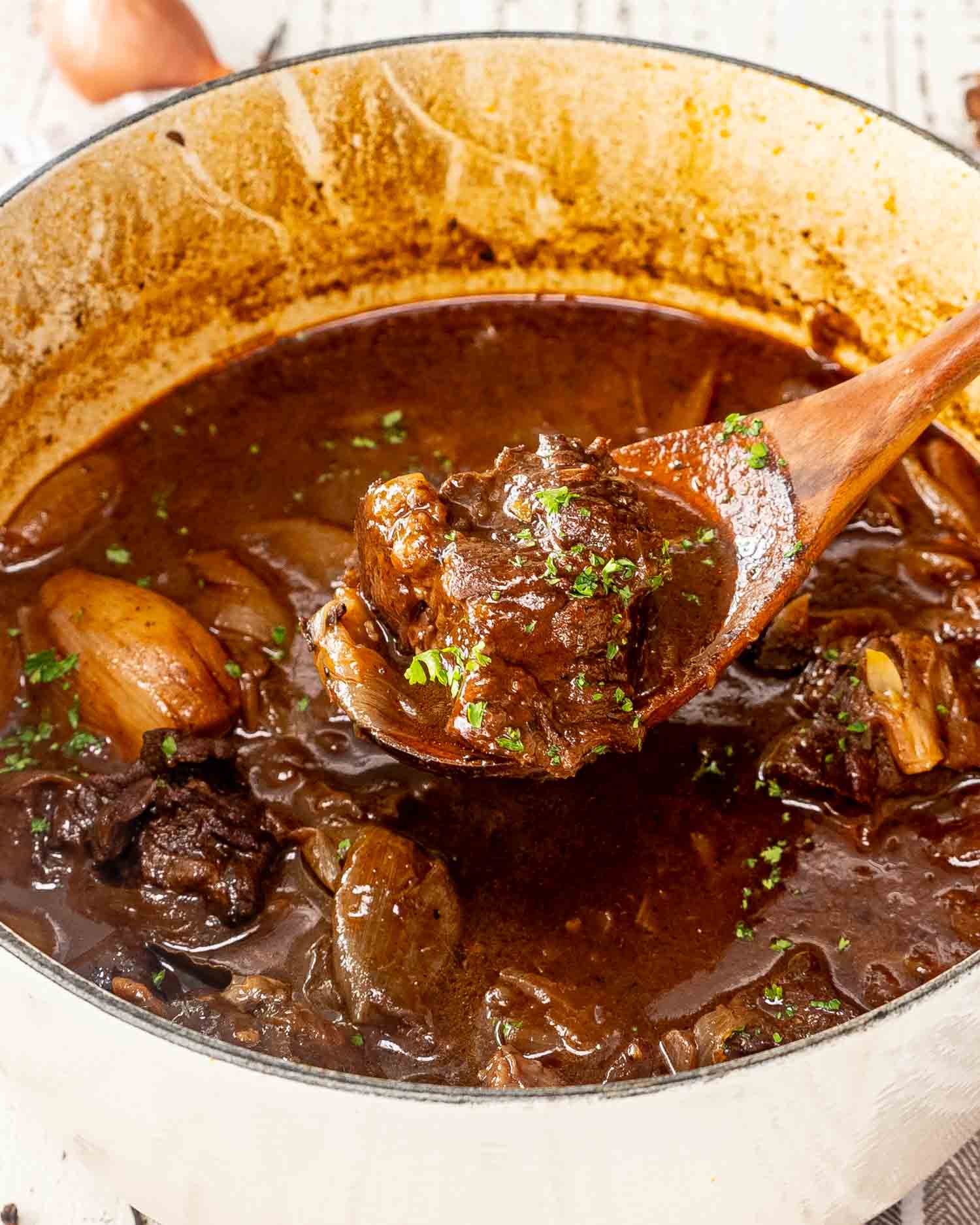

Traditional Style Greek Beef Stifado Made Simple
Beef Stifado is not your average beef stew. It is deeper, richer, and built on red wine and warm spices like cinnamon and cloves that give it that unmistakable Greek character.
The first time you smell it simmering, you understand why it stands out. It is familiar, but different. The wine reduces into the sauce, the shallots soften and sweeten, and those whole spices do their thing without overpowering the beef.
My version keeps the traditional flavor profile exactly where it should be, but simplifies the method so it fits into a normal kitchen. You brown the beef properly. You build the sauce. Then you let it simmer until the meat is tender and the flavors settle in.
No drama. No complicated steps. Just a classic Greek beef stew done right.
Key Ingredients & Tips
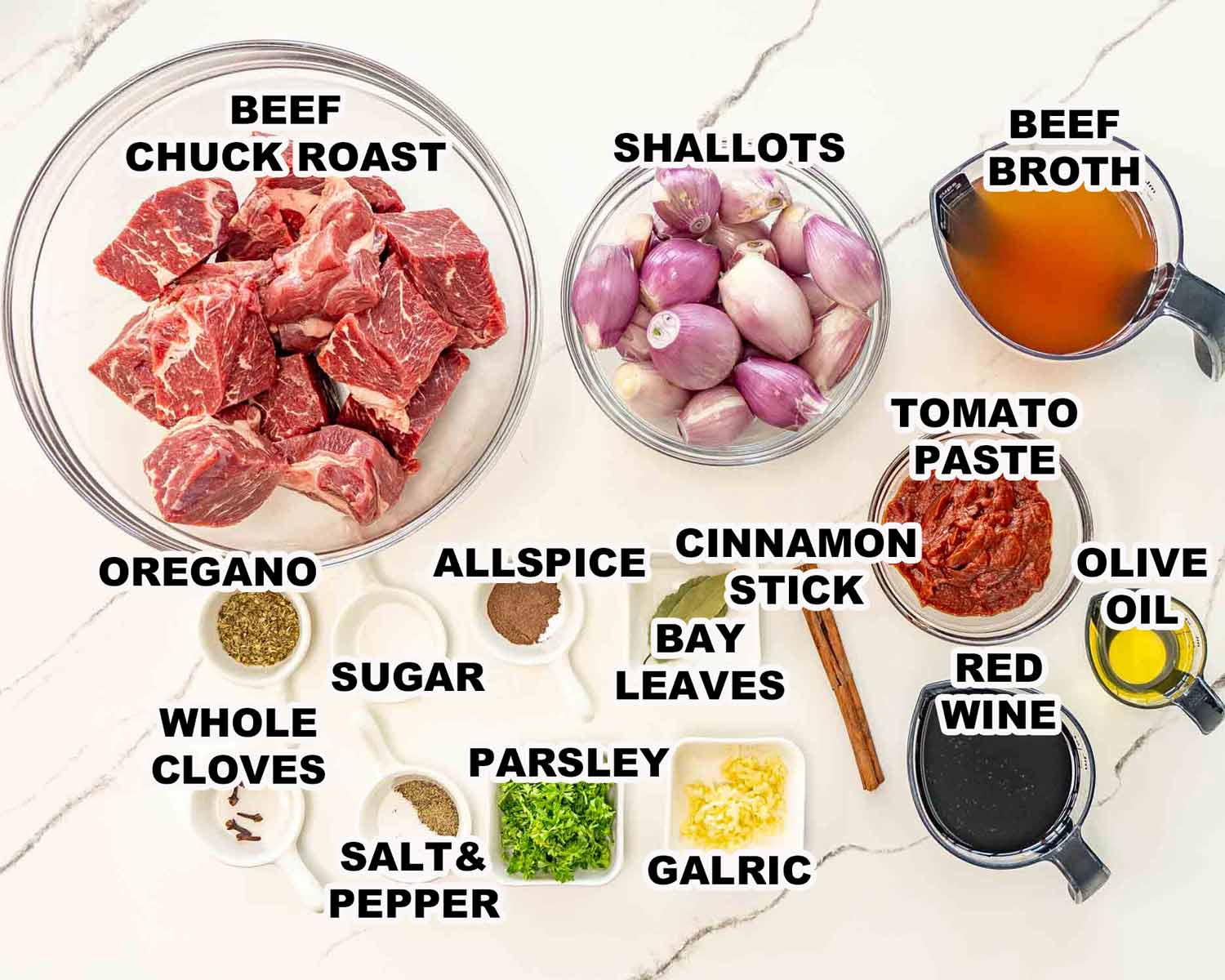
- Beef Chuck Roast: This is the right cut for Stifado. It has enough fat and connective tissue to become tender after a long simmer. Cut into even 2 inch pieces so they cook at the same rate.
- Shallots: Traditional Stifado uses lots of small onions. Shallots give you that same sweetness and depth without overpowering the sauce. Keep them whole or halved so they soften but hold their shape.
- Red Wine: Use a dry red wine you would actually drink. Merlot, Cabernet Sauvignon, or Pinot Noir all work well. The wine reduces into the sauce, so avoid anything too sweet.
- Tomato Paste: This builds richness and body. Let it cook briefly before adding liquid so it deepens in flavor.
- Cinnamon Stick and Whole Cloves: These define Stifado. Use whole spices, not ground. Whole spices infuse gently and are easier to remove at the end.
- Ground Allspice: This adds warmth and complexity. It should be subtle. If it tastes like dessert, you added too much.
- Bay Leaves and Oregano: These round out the flavor and bring the stew back to its savory base.
- Sugar: Just enough to balance the acidity from the wine and tomato. It should not taste sweet.
- Browning the Beef: Do not rush this step. Brown in batches over medium high heat and let the meat develop a proper crust. That foundation matters.
- Slow Simmer: Keep it at a gentle simmer, not a rolling boil. The beef should become fork tender and the sauce slightly thickened but still spoonable.
Common Mistakes To Avoid
- Skipping Proper Browning: If you crowd the pot or rush this step, the beef will steam instead of sear. Brown in batches over medium high heat and let it develop a deep crust. That flavor carries through the entire stew.
- Boiling Instead of Simmering: A rolling boil will tighten the beef and make it tough. Keep it at a gentle simmer. Small bubbles, not chaos.
- Using Ground Spices Instead of Whole: Ground cinnamon and cloves can quickly overpower the dish. Whole spices infuse slowly and give you warmth without turning the stew into dessert.
- Adding Too Much Sugar: The sugar is there to balance acidity, not sweeten the sauce. If it tastes sweet, it is too much.
- Choosing the Wrong Wine: Avoid sweet wines. The wine reduces into the sauce, so use a dry red that adds depth without sugary notes.
- Under Cooking the Beef: Stifado needs time. If the beef is not fork tender, it is not ready. Keep simmering until it yields easily.
- Not Tasting at the End: After a long simmer, seasoning may need adjusting. Taste before serving and adjust salt as needed.
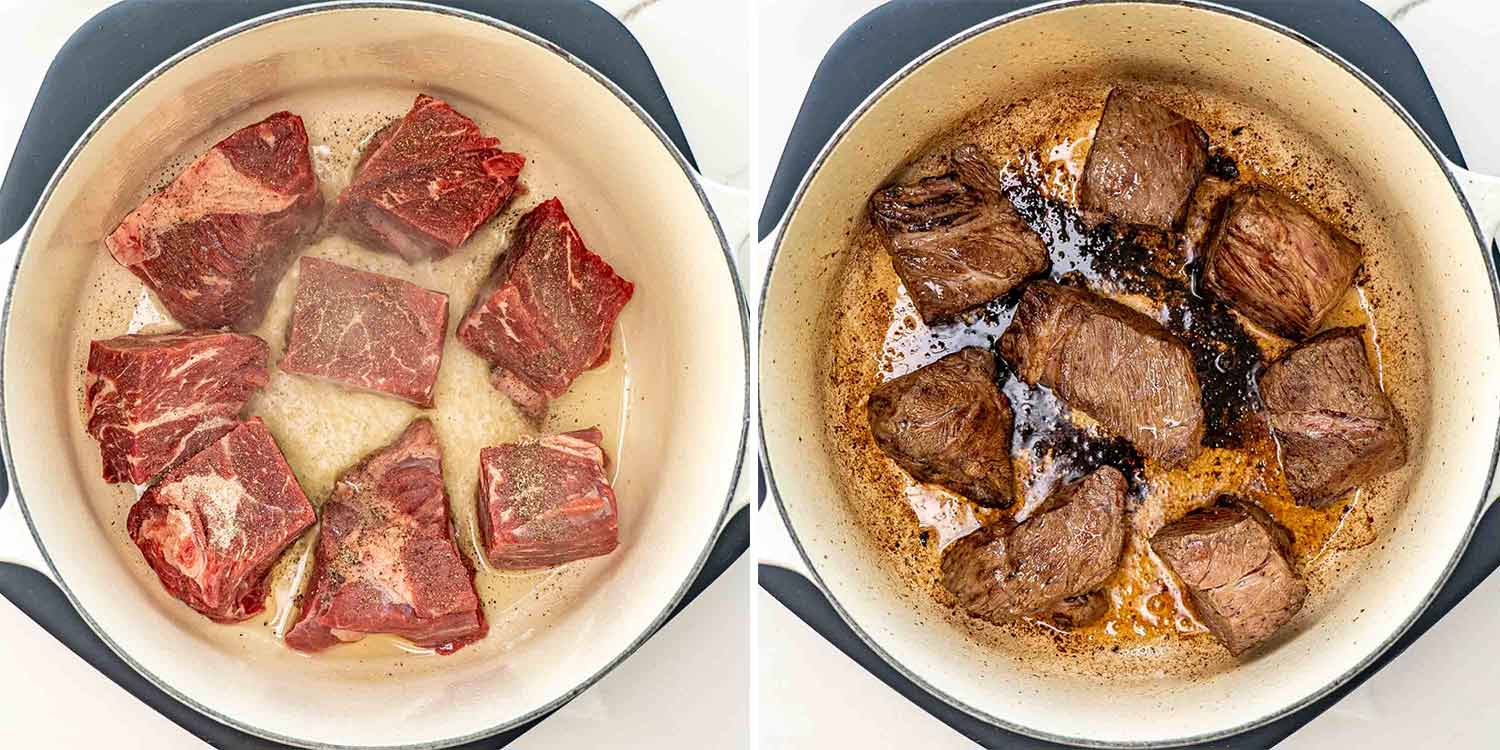
Heat 2 tablespoons of olive oil in a large Dutch oven over medium high heat. Season the beef generously with salt and pepper. Brown the meat in batches so you do not crowd the pot. Let it sit undisturbed for a few minutes on each side to develop a deep crust. This step builds the foundation of the sauce. Transfer the browned beef to a plate and set aside.
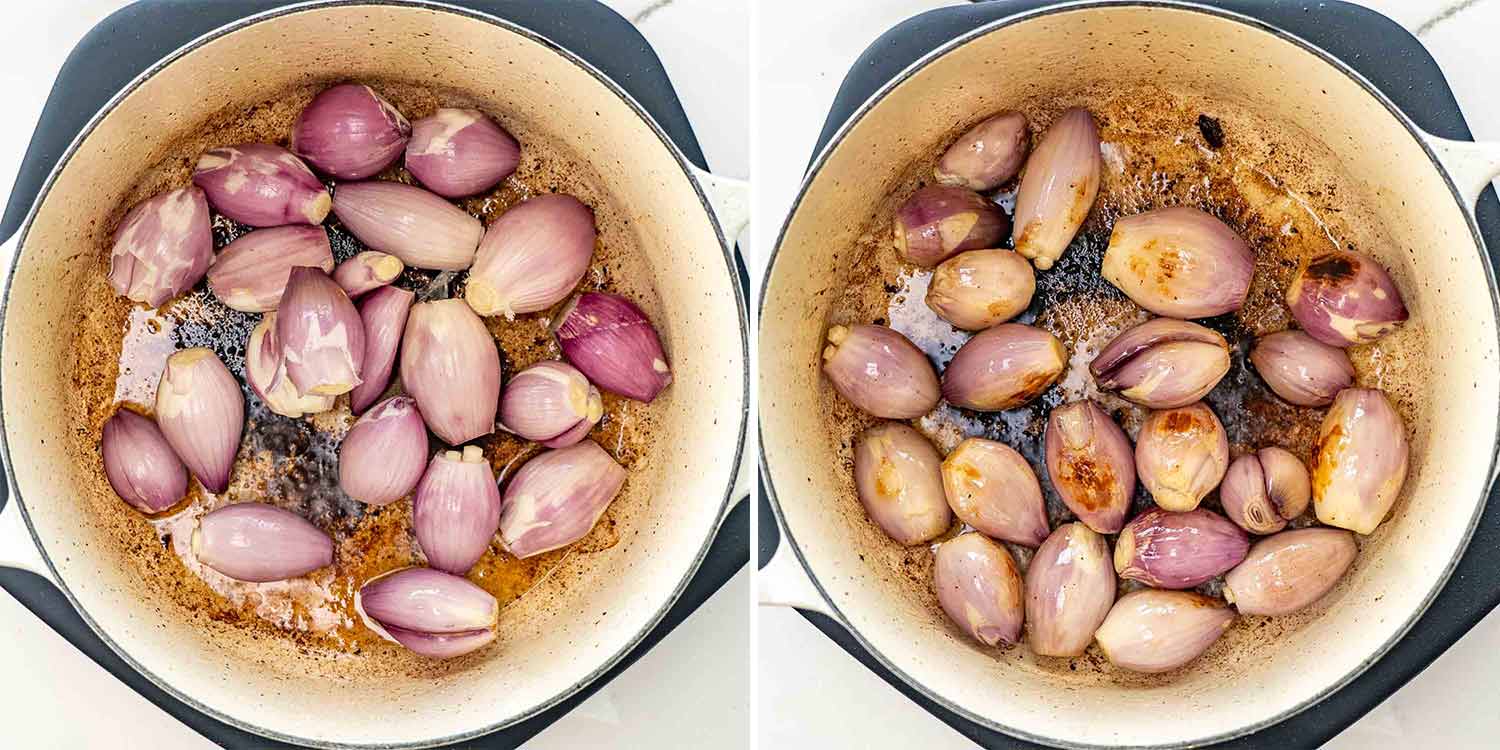
Add the remaining olive oil to the same pot. Add the shallots and cook over medium heat until they begin to soften and turn lightly golden. They should hold their shape but start to sweeten.
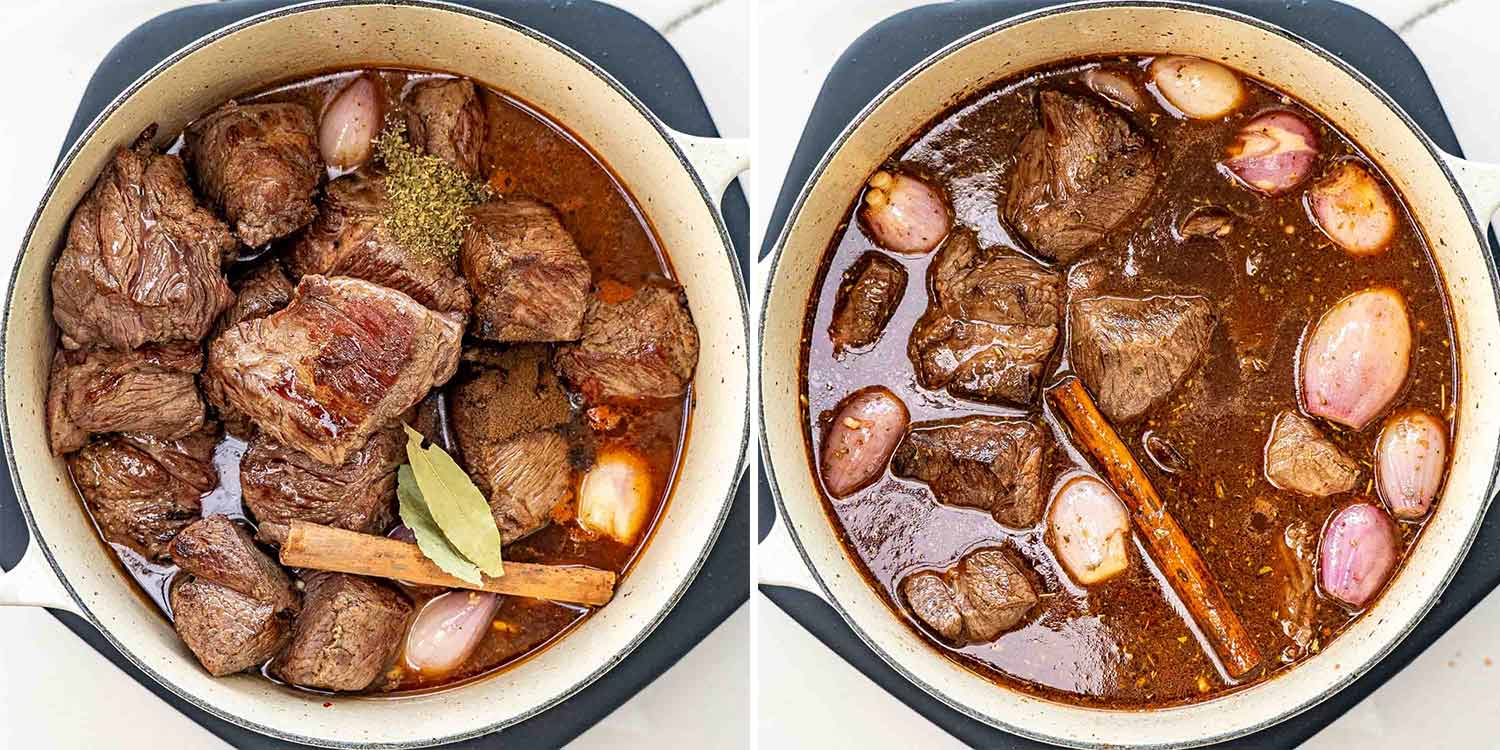
Stir in the tomato paste and cook it for about 1 minute to deepen its flavor. Return the beef to the pot. Pour in the red wine and use a wooden spoon to scrape up any browned bits from the bottom. Those bits add depth. Add the beef broth, garlic, cinnamon stick, whole cloves, bay leaves, oregano, allspice, and sugar.
Bring the stew to a boil, then immediately reduce the heat to low. Cover and let it simmer gently for about 2 hours. The beef should be fork tender and the sauce slightly thickened but still spoonable. If the sauce reduces too much, add a small splash of broth.
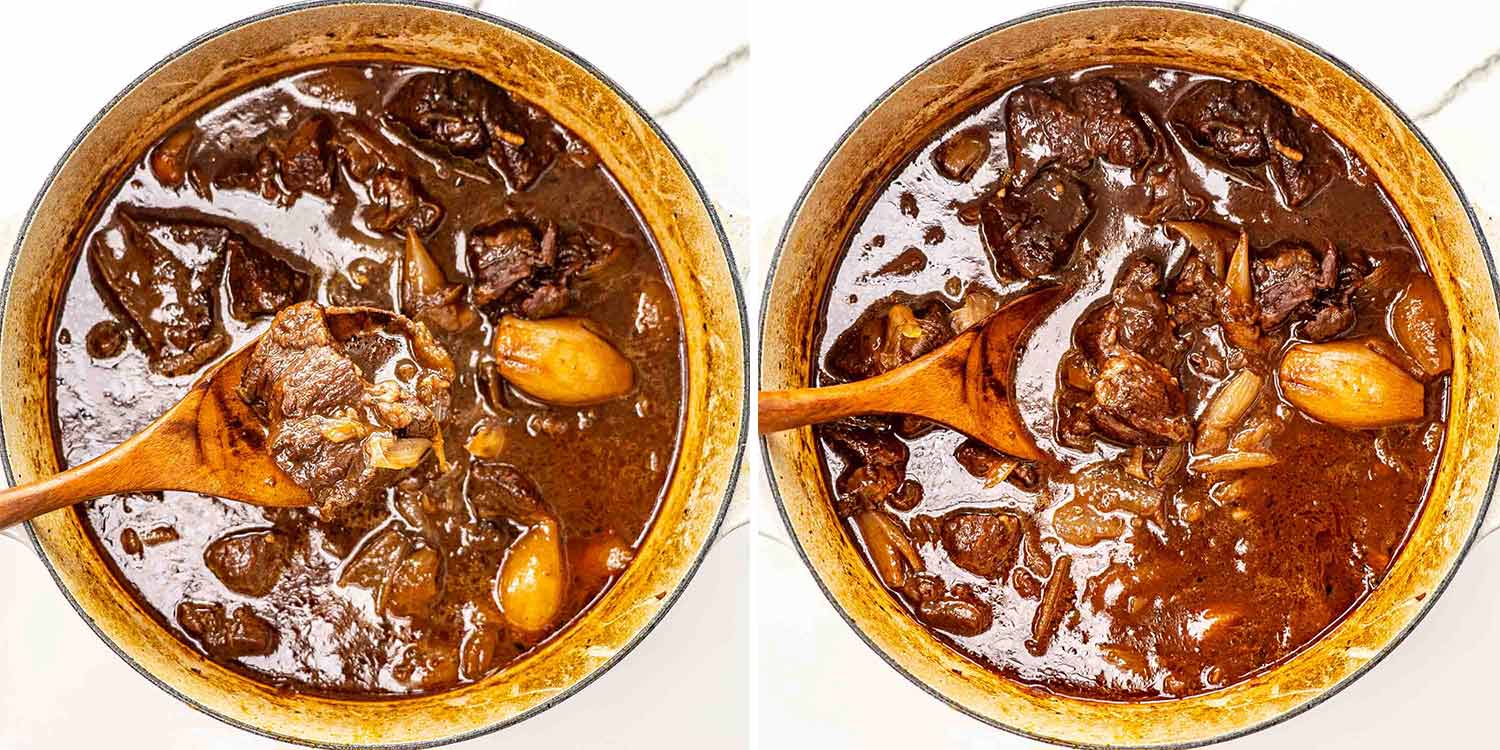
Remove the cinnamon stick, cloves, and bay leaves. Taste and adjust the seasoning with salt and pepper as needed. The flavor should be rich, balanced, and gently spiced. Garnish with chopped parsley and serve hot.
Variations and Substitutions
- Beef Cut: Beef chuck is ideal because it becomes tender and rich after a long simmer. You can use beef brisket or stewing beef, but avoid lean cuts. They will dry out before the sauce develops.
- Shallots: Traditional Stifado uses small onions. If you cannot find shallots, use pearl onions. If using regular onions, cut them into large chunks so they do not disappear into the sauce.
- Red Wine: A dry red wine is important for balance. Merlot, Cabernet Sauvignon, or Pinot Noir work well. If you prefer not to cook with wine, substitute with additional beef broth and add 1 tablespoon red wine vinegar for acidity.
- Beef Broth: Use low sodium broth so you control seasoning. Homemade stock will give you deeper flavor if you have it.
- Spice Profile: Cinnamon stick and whole cloves define the dish. Do not substitute ground cinnamon unless absolutely necessary, and use only a small pinch. Too much will overpower the stew.
- Sugar: If your shallots are naturally sweet, you can reduce the sugar slightly. Always taste before adjusting.
- Slow Cooker Option: Brown the beef and sauté the shallots first, then transfer everything to a slow cooker. Cook on low for about 8 hours or until the beef is tender.
- Instant Pot Option: Use the sauté function to brown the beef and shallots, then pressure cook on high for about 35 minutes with a natural release.
Make Ahead and Storage
- Make Ahead: Beef Stifado is even better the next day. Let it cool completely, refrigerate overnight, and reheat gently. The spices settle in and the sauce deepens in flavor.
- Refrigeration: Store in an airtight container for up to 4 days. Reheat over low heat on the stove so the beef stays tender.
- Freezing: Let the stew cool fully, then freeze in a sealed container for up to 3 months. Thaw overnight in the refrigerator before reheating.
- Reheating Tip: Warm slowly over low heat. If the sauce has thickened too much, add a small splash of beef broth to loosen it.
- Removing Whole Spices: If you plan to freeze leftovers, remove the cinnamon stick, cloves, and bay leaves first so their flavor does not intensify over time.
How To Serve
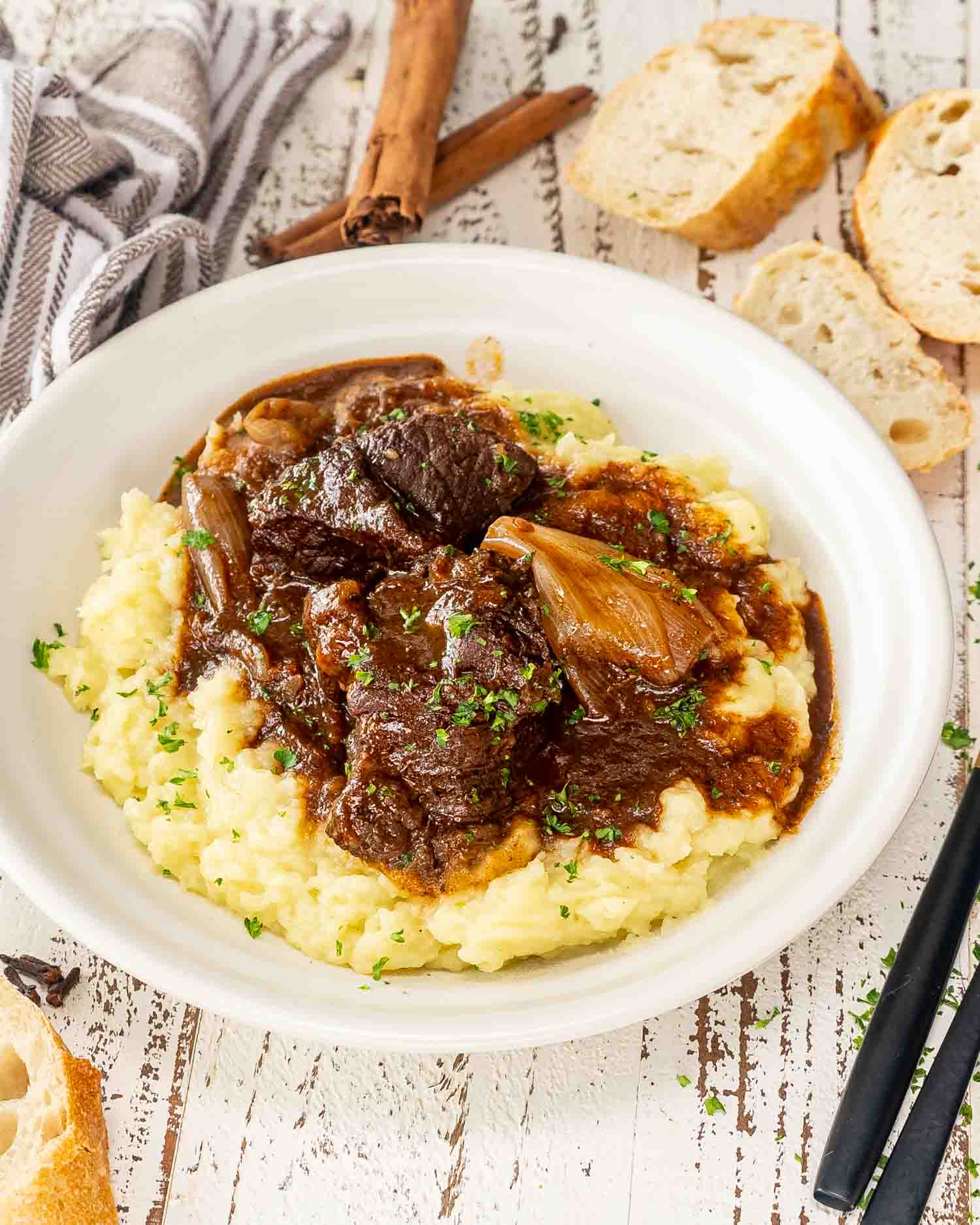
Serving up Beef Stifado is all about complementing its rich flavors and hearty texture. Here are some of my go-to sides that make this stew a complete meal:

Mashed Potatoes

No Knead Bread

Creamy Polenta
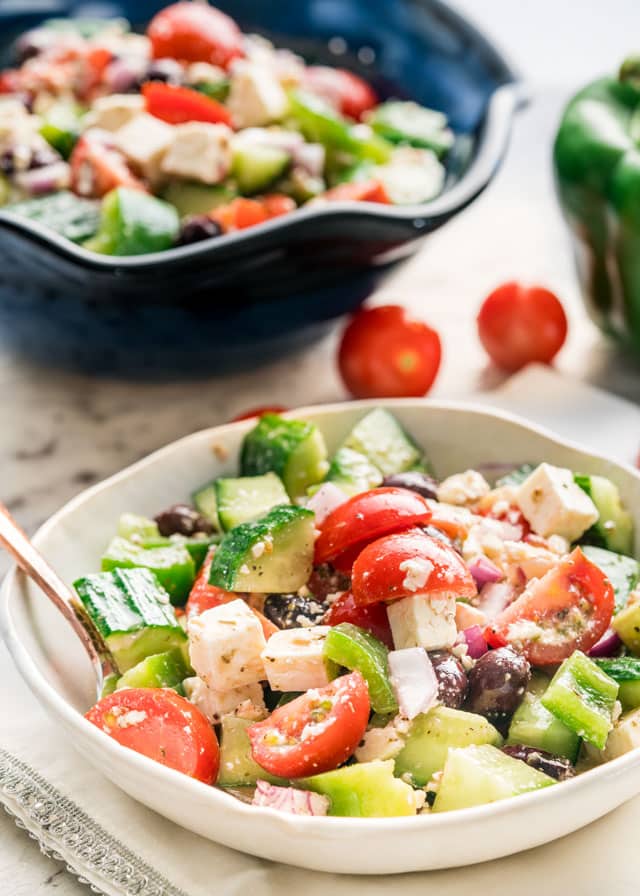
Greek Salad
Frequently Asked Questions
What makes Beef Stifado different from regular beef stew?
Stifado is defined by its red wine sauce and warm spices like cinnamon, cloves, and allspice. Those spices give it a subtle warmth that sets it apart from classic French or American beef stews.
Why is there cinnamon in a savory stew?
In Greek cooking, warm spices are often used in savory dishes. The cinnamon is not meant to taste sweet. It adds depth and warmth that balances the richness of the beef and wine.
Can I use pearl onions instead of shallots?
Yes. Pearl onions are traditional in many versions of Stifado. They hold their shape well and become sweet as they cook.
What wine is best for Beef Stifado?
Use a dry red wine such as Merlot, Cabernet Sauvignon, or Pinot Noir. Avoid sweet wines, since the wine reduces into the sauce and affects the final flavor.
Why is my sauce too thin?
Remove the lid and simmer gently to reduce the sauce. The goal is a rich, spoonable consistency.
How do I know when the beef is done?
The beef should be fork tender and easy to pull apart. If it still feels firm, it needs more time.
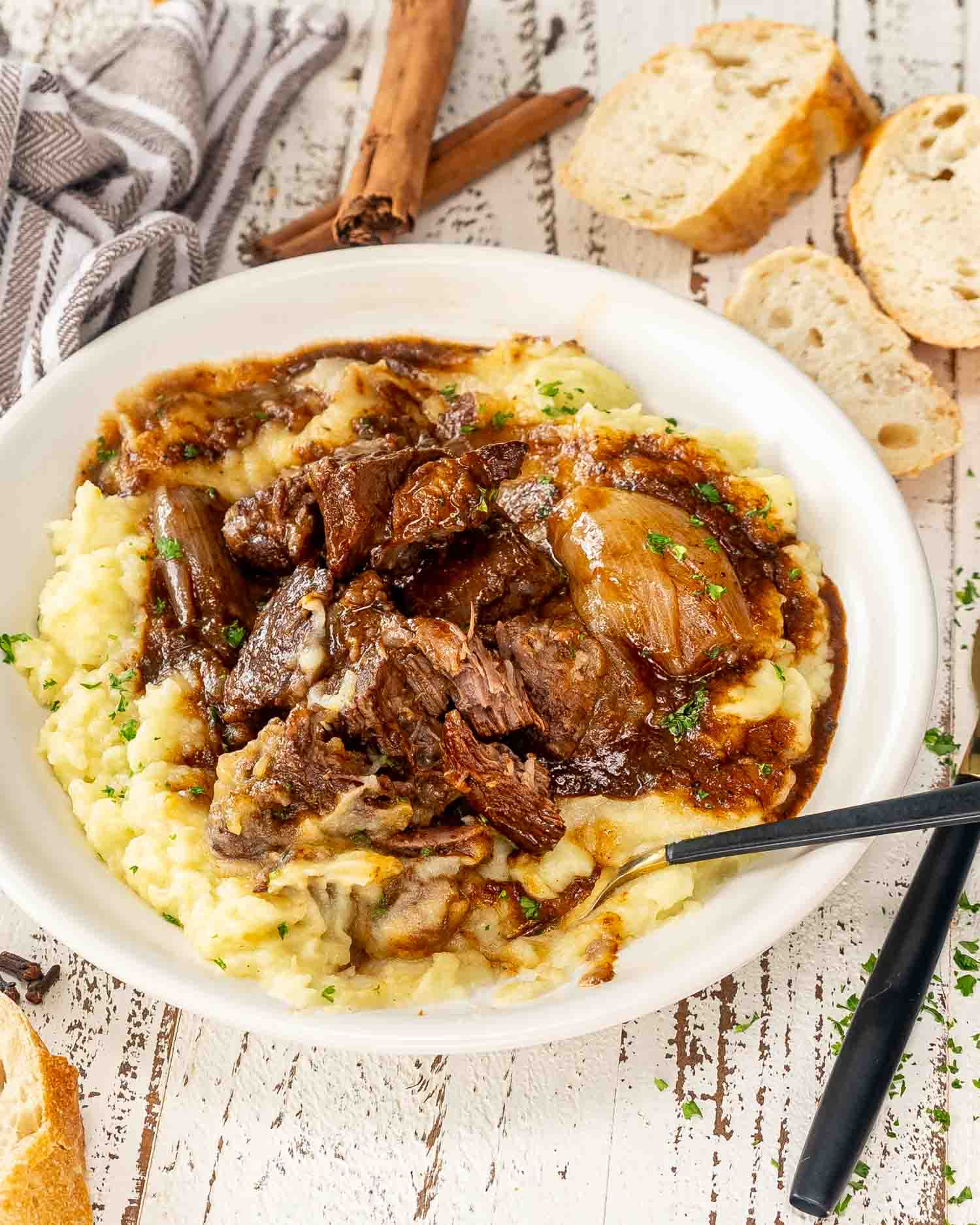
Discover More Stews
Before You Begin! If you make this, please leave a review and rating letting us know how you liked this recipe! This helps our business thrive & continue providing free recipes.

Beef Stifado (Greek Beef Stew)
Video
Ingredients
- 3 pounds beef chuck roast (cut into 2 inch chunks)
- ¼ cup olive oil
- 15-20 shallots (peeled)
- 6 ounces tomato paste (1 small can)
- 1 cup red wine (a good quality dry wine)
- 2 cups beef broth (low sodium)
- 5 cloves garlic (minced)
- 1 cinnamon stick
- 5 whole cloves
- 2 bay leaves
- 1 teaspoon dried oregano
- ½ teaspoon ground allspice
- salt and pepper (to taste)
- 1 teaspoon sugar
- fresh parsley (for garnish)
Before You Begin! If you make this, please leave a review and rating letting us know how you liked this recipe! This helps our business thrive & continue providing free recipes.
Instructions
- In a large pot or Dutch oven, heat 2 tablespoons of olive oil over medium-high heat. Season the beef chunks with salt and pepper, then brown them in batches. Set the browned beef aside.

- In the same pot, add the remaining olive oil and the shallots. Sauté them until they start to soften and take on a golden hue.

- Return the beef to the pot. Add the tomato paste, red wine, beef broth, minced garlic, cinnamon stick, cloves, bay leaves, dried oregano, ground allspice and sugar.

- Bring the mixture to a boil, then lower the heat to a simmer. Cover and let it cook for about 2 hours, or until the beef is tender.

- Check the seasoning at the end of the cooking time and adjust with salt and pepper as necessary.
- Dish up the stifado hot, garnished with chopped parsley. It’s wonderful with crusty bread, mashed potatoes, or a simple rice pilaf.
Equipment
Notes
- Brown the beef in batches over medium high heat so it develops a deep crust. This builds the base flavor of the stew.
- Keep the simmer gentle. Small bubbles are ideal. A rapid boil can make the beef tough.
- Use whole cinnamon and cloves, not ground. Whole spices infuse gradually and are easier to remove before serving.
- Taste before adding extra sugar. The shallots often provide enough natural sweetness.
- If the sauce reduces too much during cooking, add a small splash of beef broth to adjust the consistency.
- Remove the cinnamon stick, cloves, and bay leaves before storing leftovers so the flavor does not intensify.
Nutrition Information
Notice: Nutrition is auto-calculated for your convenience. Where relevant, we recommend using your own nutrition calculations.