Beef Stew Recipe
This post may contain affiliate links. Please read my disclosure policy.
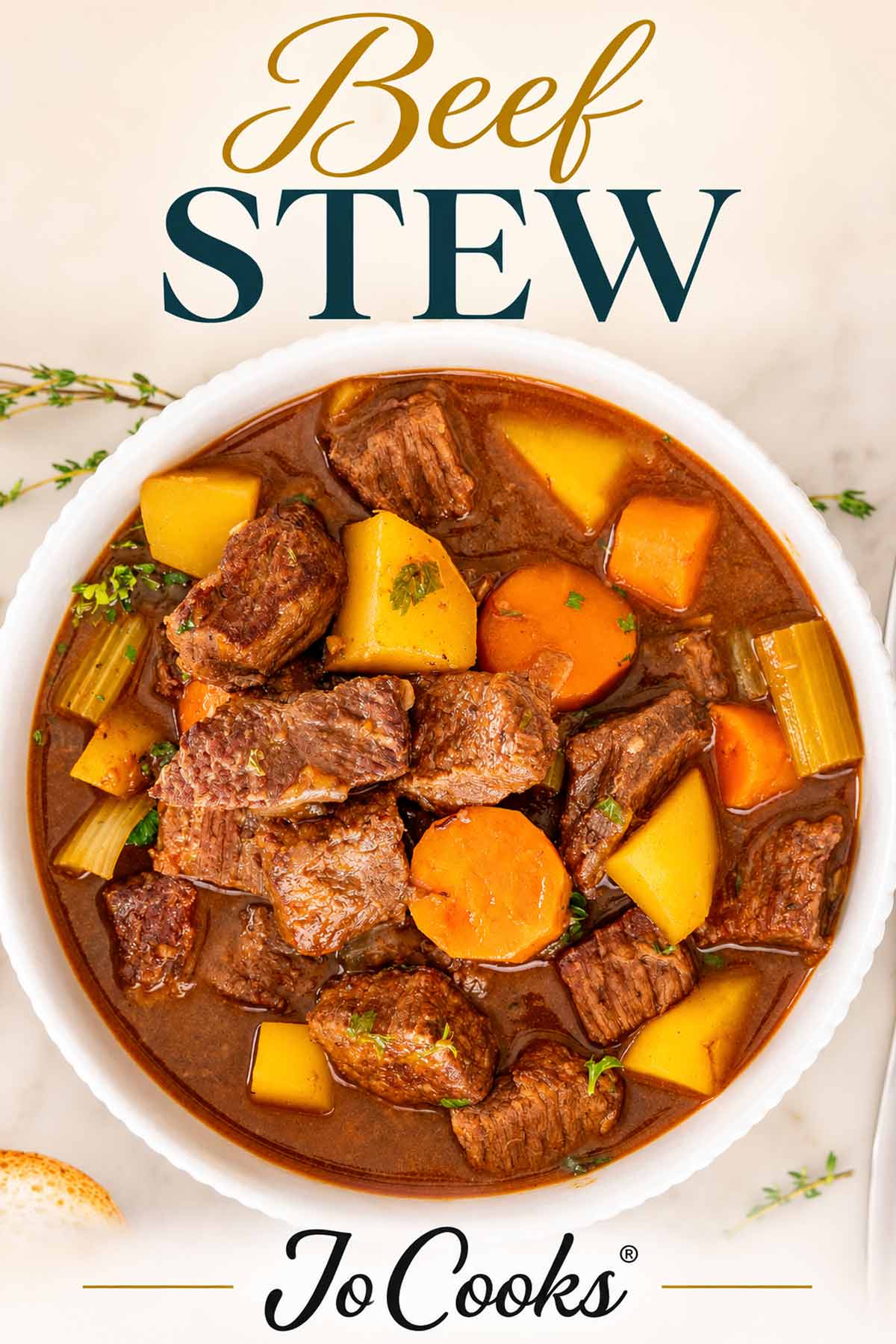
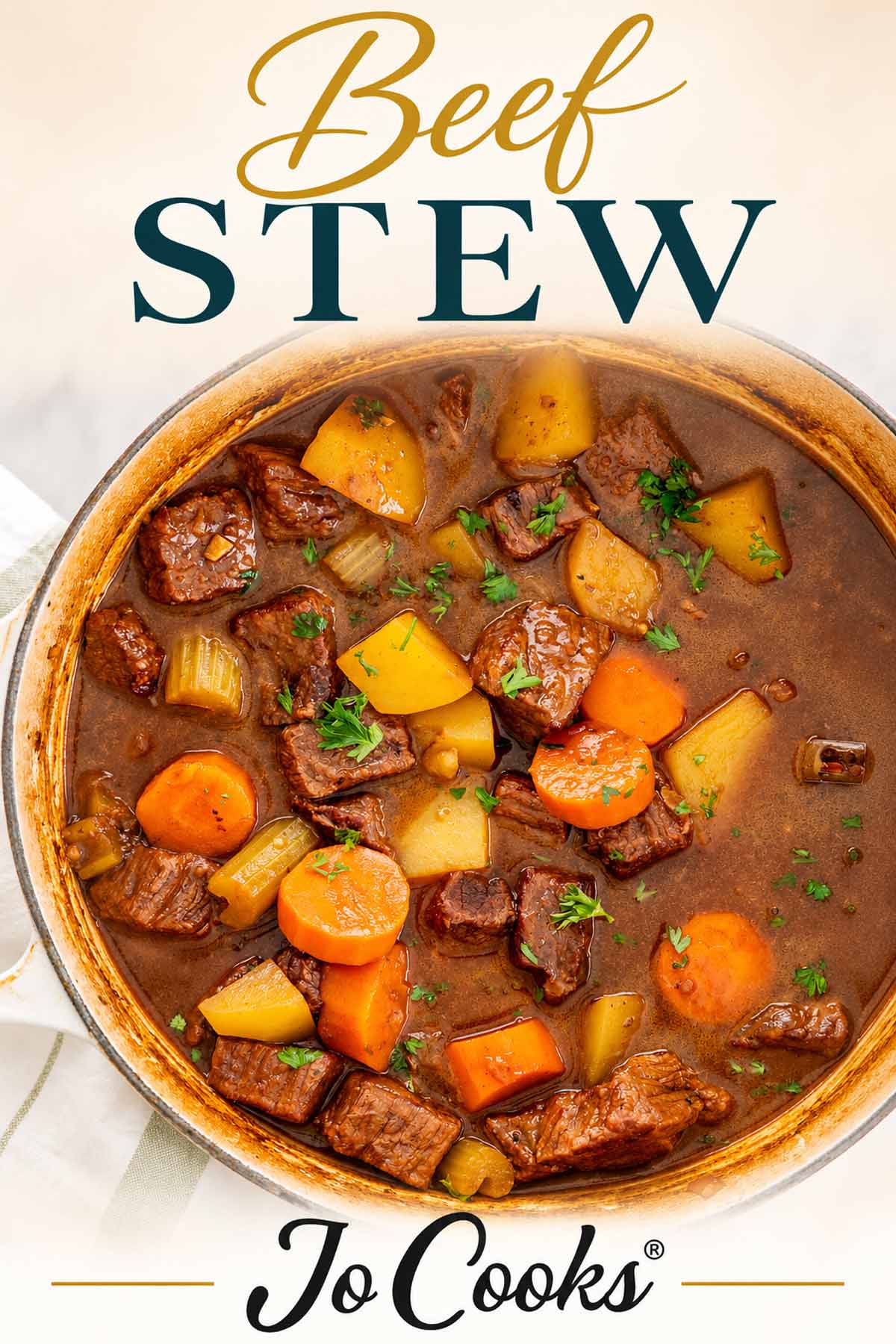
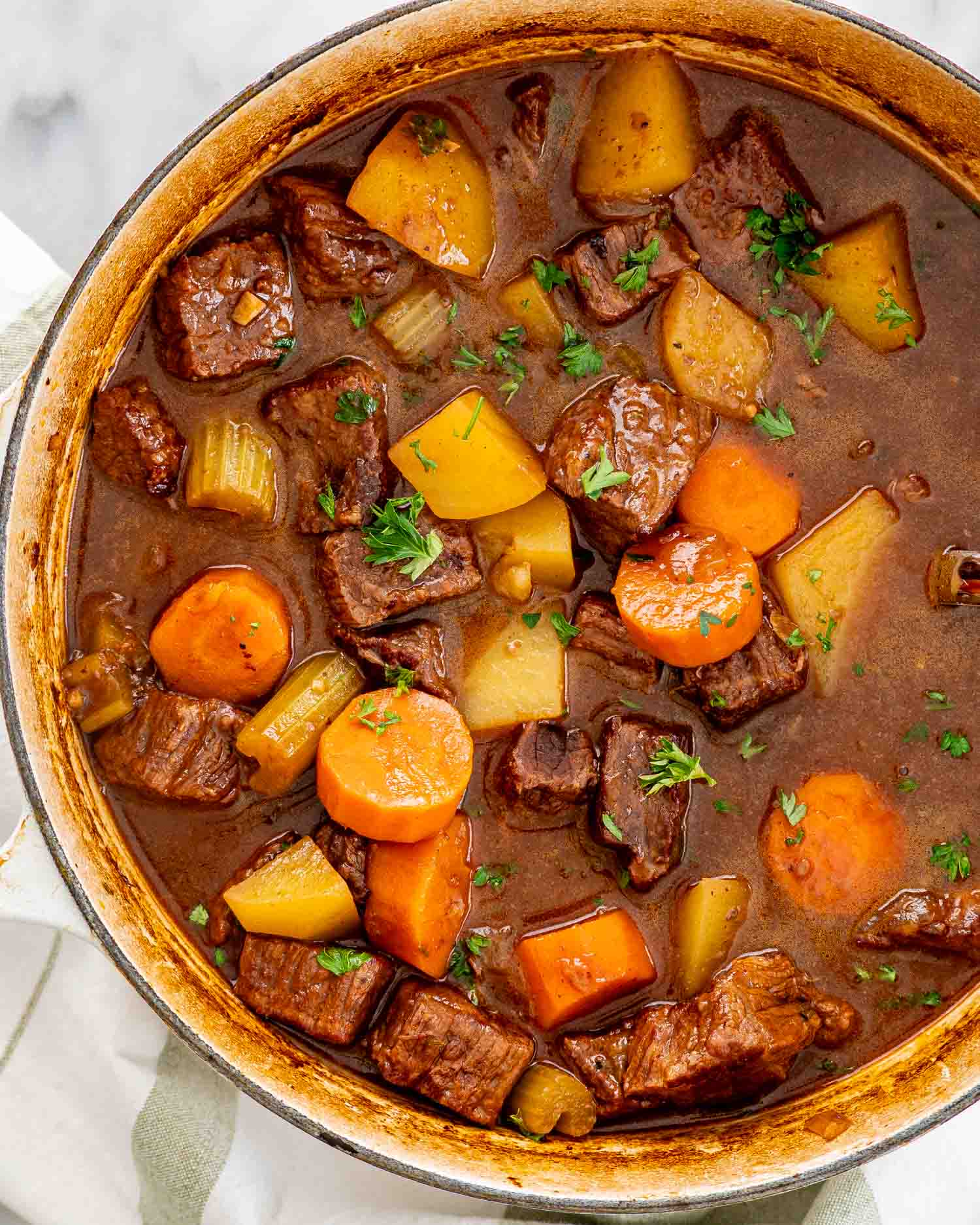
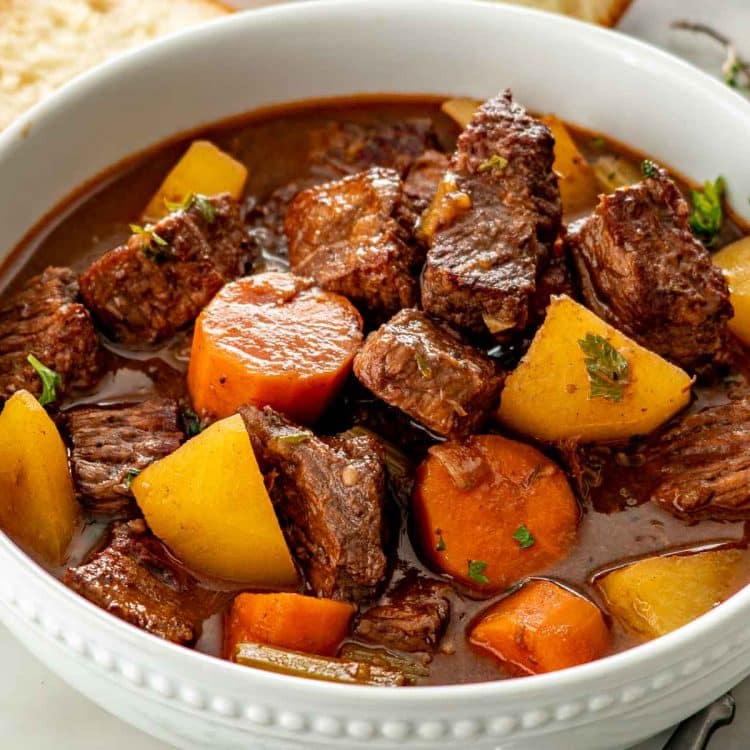
Beef Stew is about as humble as dinner gets, and then you taste it. Chuck that falls apart under a spoon, potatoes and carrots full of gravy, and a sauce that turns dark and glossy over a couple of slow hours on the stove. Cheap ingredients, one pot, hardly any work. Ladle it over mashed potatoes and serve it with some nice crusty bread.
The Flour Trick That Thickens Beef Stew
Most beef stew recipes have you fix the thickness at the end with a spoonful of cornstarch. I’d rather not. I toss the beef in flour before it goes anywhere near the pot, so the flour browns onto the meat and then melts into the liquid as it simmers. By the time the beef is tender the gravy has already thickened itself, with no lumps and no last minute panic.
The rest is a pot bubbling quietly on the stove, which gives you 90 minutes with nothing to do. You can go lift the lid and look at it a few times if you want. It won’t make the beef any more tender, but it smells incredible and I’d never tell you not to.
The one thing I’d ask is that you hold the potatoes back until the last 20 minutes. Put them in at the start and they break down into the gravy, and you’ll end up with something closer to mashed potato soup.
Ingredient in Beef Stew
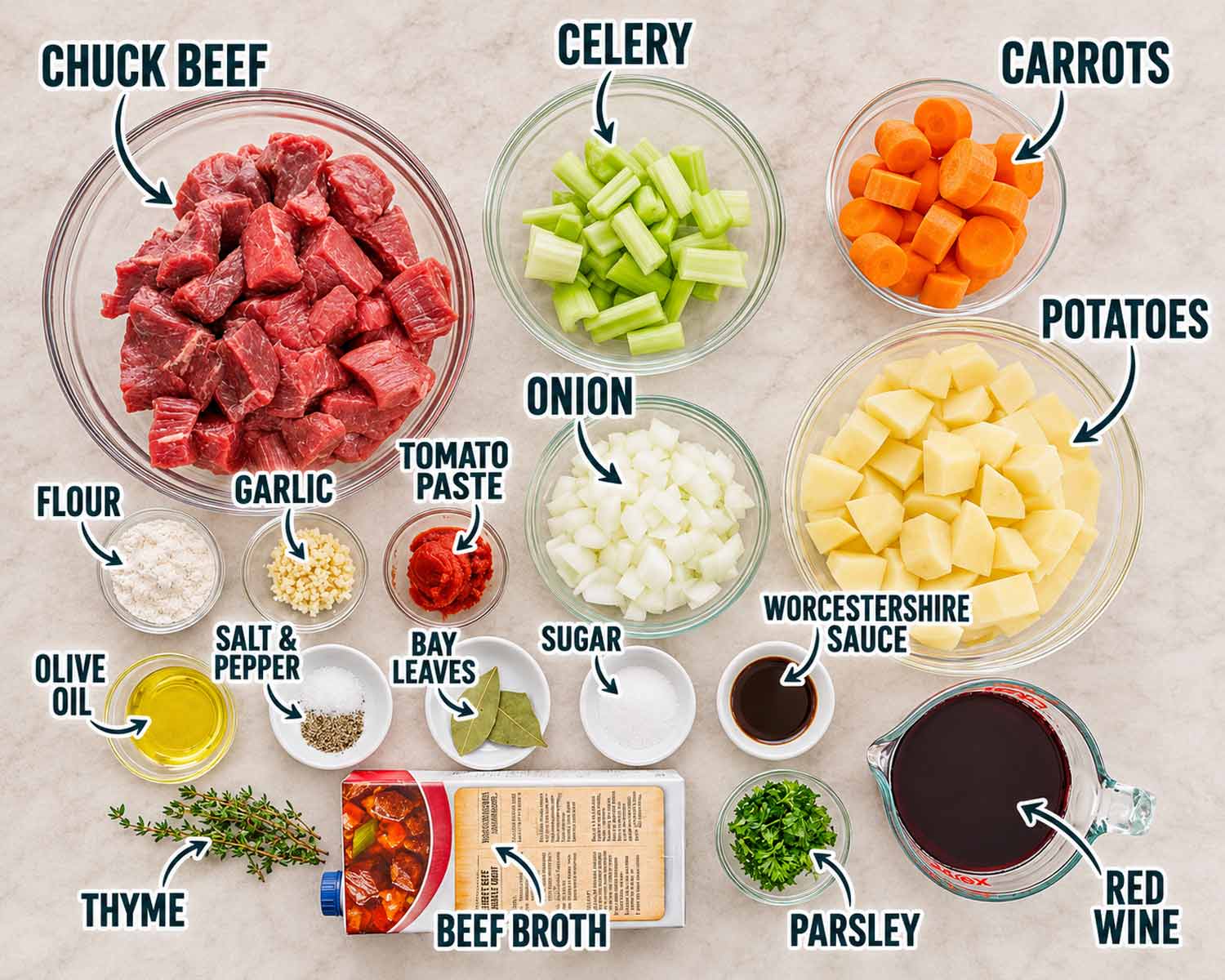
- Beef chuck (3 pounds, cut into 1 inch pieces): Chuck, not the package labeled stew meat. There’s a whole section on this below because I have feelings about it.
- All purpose flour (3 tablespoons): Your thickener. It goes on the beef, not in the pot.
- Salt (½ teaspoon) and pepper (½ teaspoon): Mixed into the flour so every piece gets seasoned.
- Olive oil (3 tablespoons): For browning. Maybe a splash more between batches.
- Onion (1 large, roughly chopped), celery (2 stalks), carrots (2 large): Cut the carrots and celery into 1 inch pieces. Anything smaller and they’ll vanish into the gravy over 2 hours. I slice the carrots on the diagonal because it looks nicer and I’m shallow.
- Garlic (3 cloves, minced): Goes in at the end of the vegetable step. It only needs 30 seconds.
- Tomato paste (3 tablespoons): Cook it for half a minute until it darkens. That takes the tinny canned taste right out.
- Sugar (1 teaspoon): Just the one teaspoon, to balance the acid in the wine. You won’t taste it, I promise.
- Beef broth (4 cups): Low sodium, since this simmers for 2 hours and gets saltier as it goes.
- Worcestershire sauce (1 tablespoon): Salty, tangy, a little funky. It makes beef taste more like beef.
- Red wine (2 cups): A dry red like Merlot or Cabernet Sauvignon. Nothing fancy, but nothing you wouldn’t drink either.
- Bay leaves (2) and fresh thyme (3 sprigs): In whole, out at the end.
- Potatoes (1 pound, cut into 1 inch cubes): Last 20 minutes. I will keep saying it.
- Fresh parsley (¼ cup, chopped): Scattered on top so the bowl isn’t 100% brown.
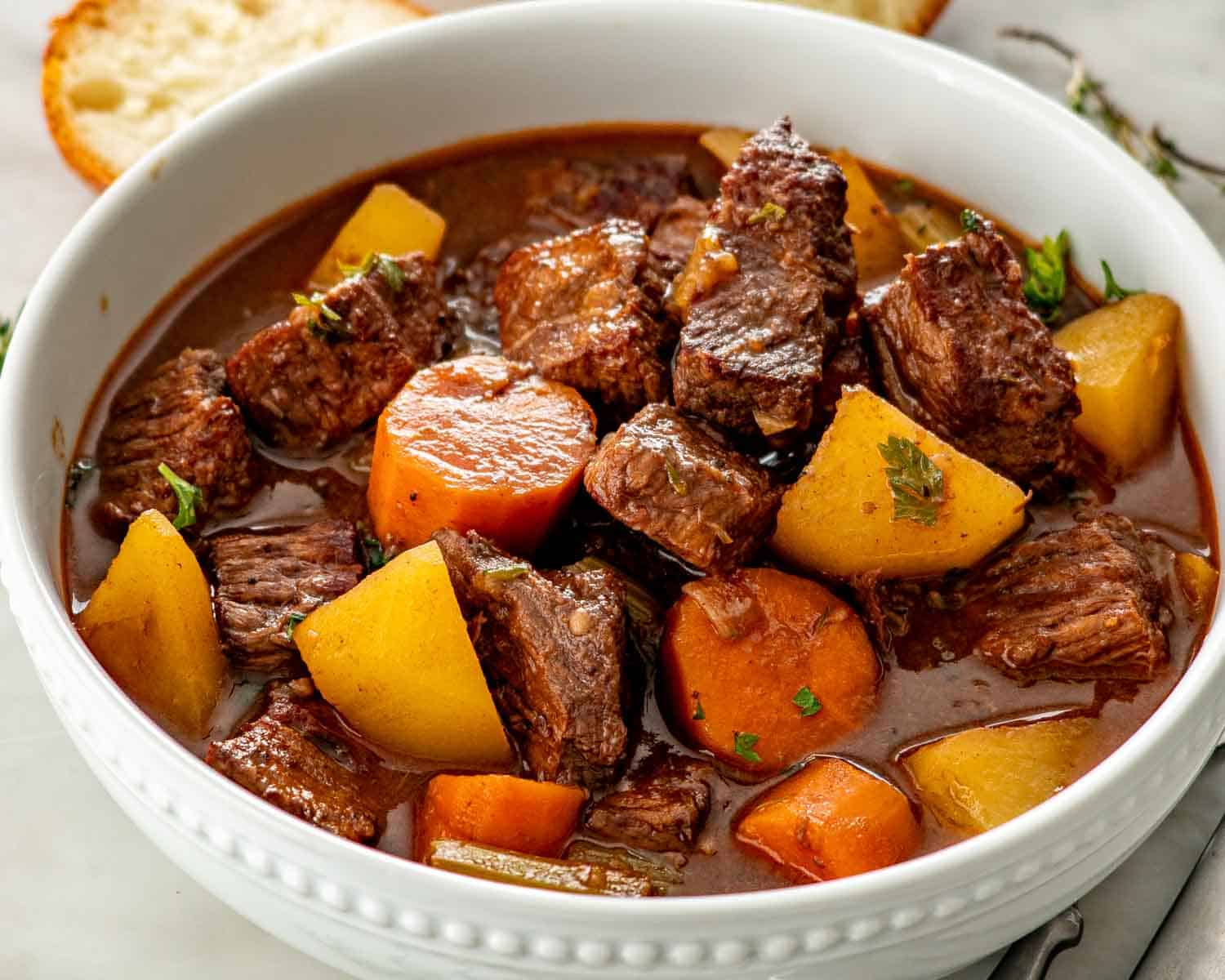
What Cut Of Beef Is Best For Stew?
Chuck. Always chuck. It comes from the shoulder and it’s full of connective tissue, which sounds unappetizing but turns into gelatin after a couple of hours. That’s what gives you beef that falls apart and gravy with real body.
A few others work. Brisket is lovely but slower. Short rib is wonderful and pricey. Round is too lean, so skip it. No amount of time will fix lean beef. It just goes dry and stringy and makes everyone sad.
Now, the package labeled stew meat. I know it’s right there. I know it’s already cut up. I understand.
Here’s the problem: nobody tells you what’s in it. It’s trimmings, and one package can hold pieces from 3 or 4 different cuts. Some of them are chuck and will be perfect. Some are round and will still be chewy an hour after the rest has gone tender. You can’t tell by looking and neither can I.
So buy a chuck roast and cut it yourself. It takes 5 minutes, it’s usually cheaper per pound, and everything in the pot cooks at the same speed.
Cut it bigger than feels right. 1 inch pieces. Beef shrinks a lot over 2 hours and small pieces turn into threads.
How To Make Beef Stew In A Dutch Oven
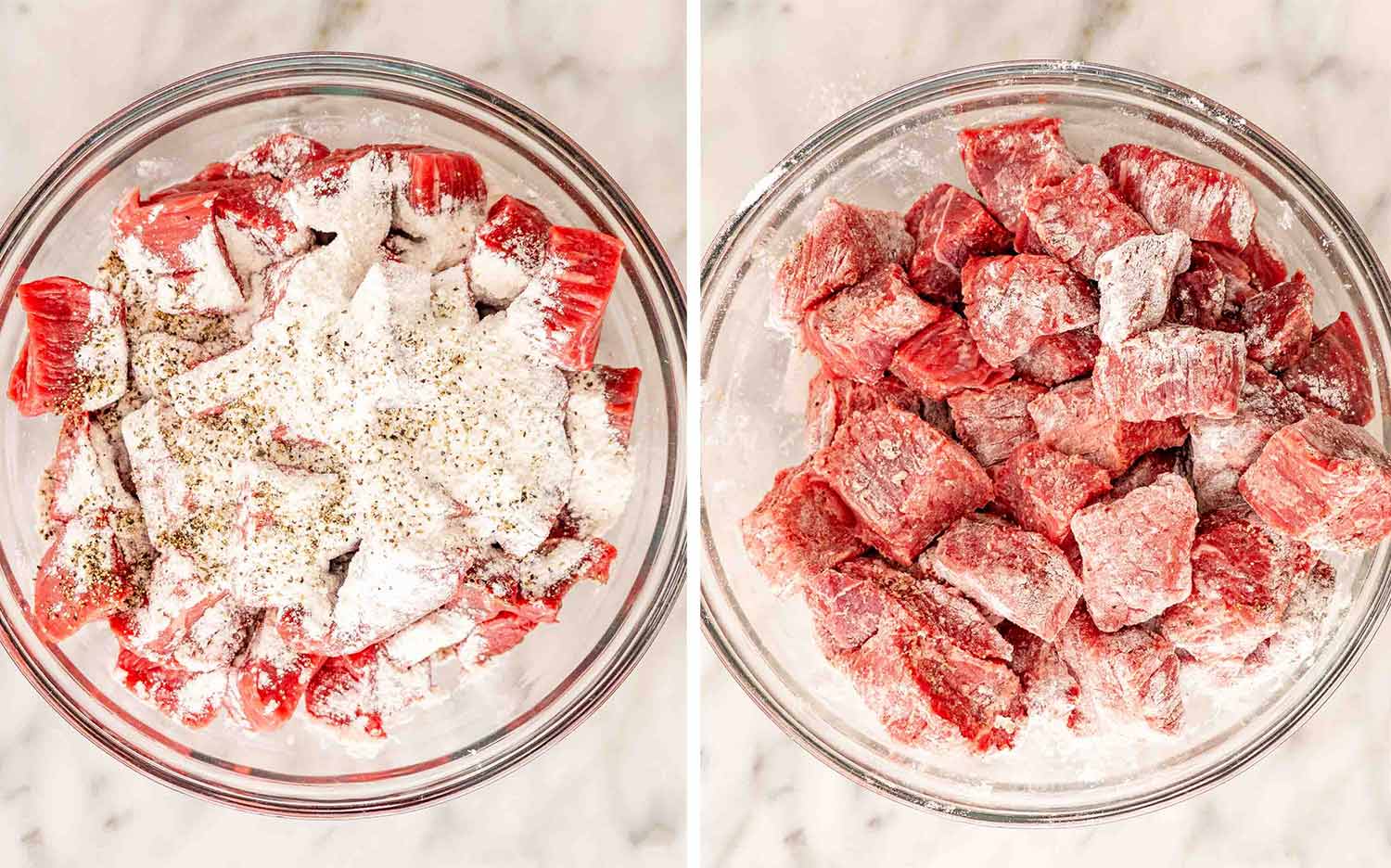
Flour the beef: Pat the chuck dry with paper towels. Properly dry, not a quick dab. Wet beef steams instead of browning, and browning is where a lot of the flavor comes from.
Then toss it with the flour, salt and pepper until every piece is coated.
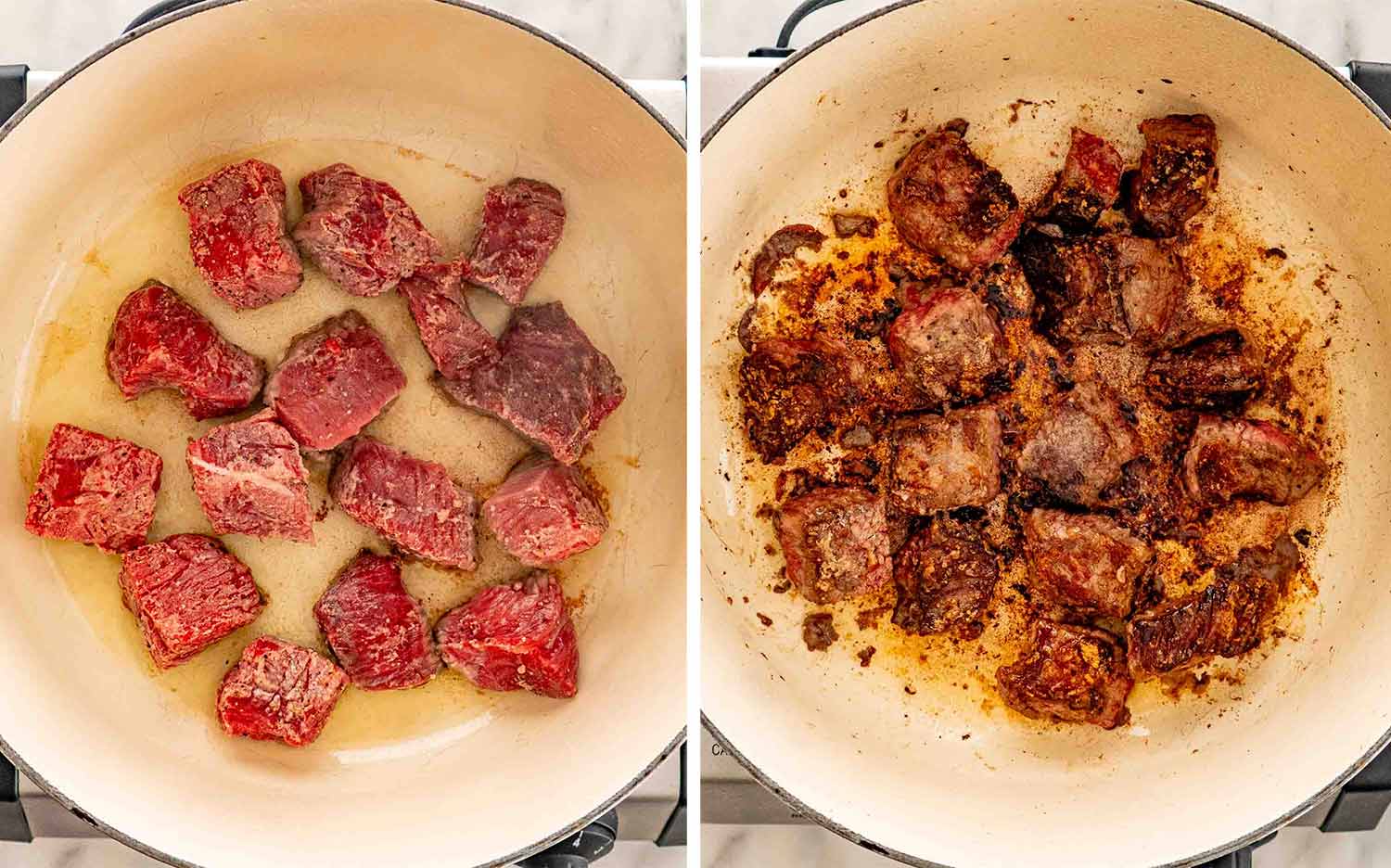
Brown it in batches: Heat the oil in your Dutch oven over medium heat and lay the beef in with a little space between the pieces.
Batches. I know. If you crowd the pot the temperature drops, the beef lets out all its juice, and you end up boiling it in gray water. Give each batch a few minutes a side until it’s really browned, then move it to a plate.
Those brown bits stuck to the bottom of the pot are the best thing in your kitchen right now. Do not wash that pot.
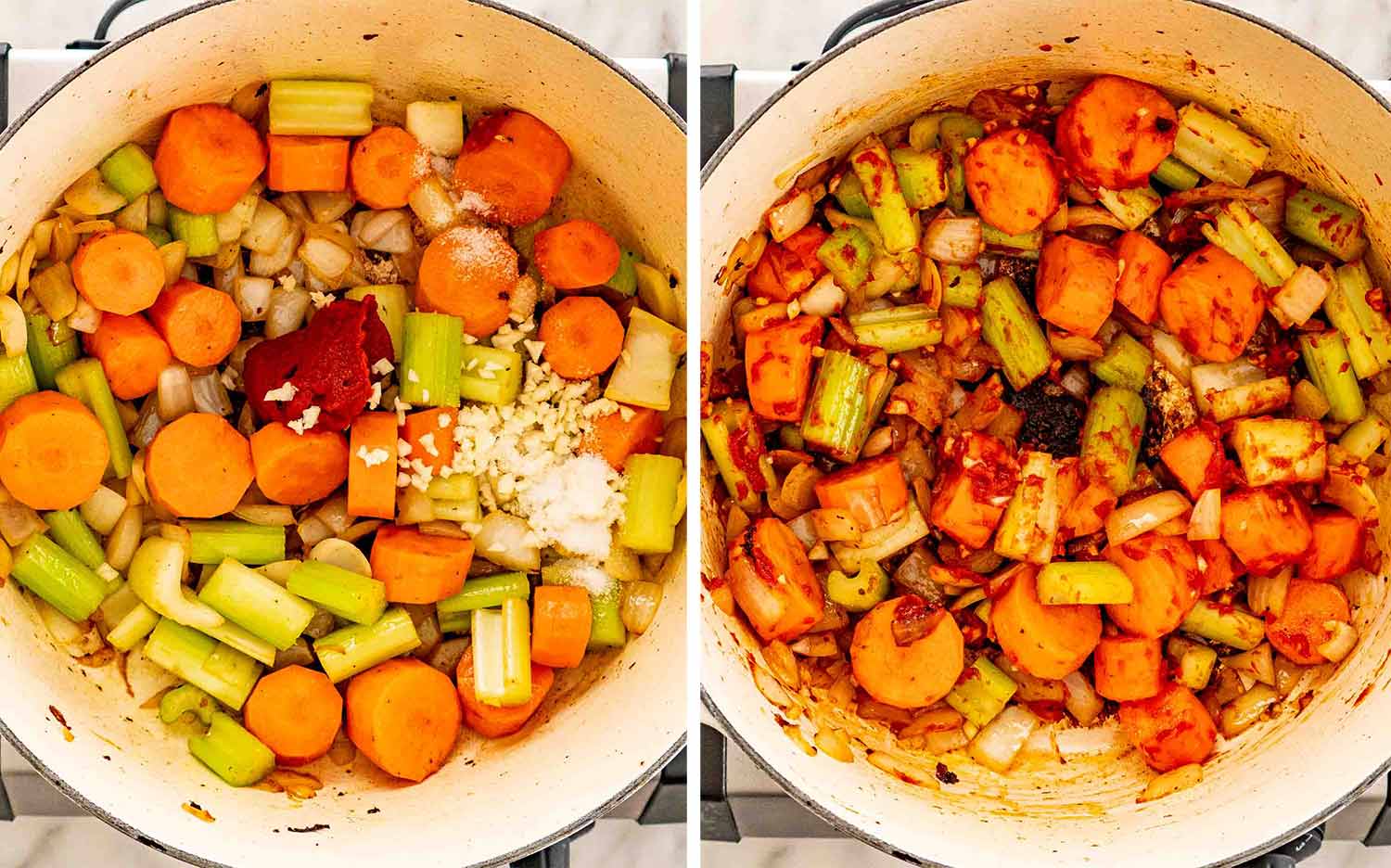
Soften the vegetables: A splash more oil if things look dry, then the onion, celery and carrots. About 5 minutes, until the onion goes soft and see through.
Then the garlic, tomato paste and sugar, all at once, for 30 seconds. You’re watching the tomato paste go from bright red to brick red.
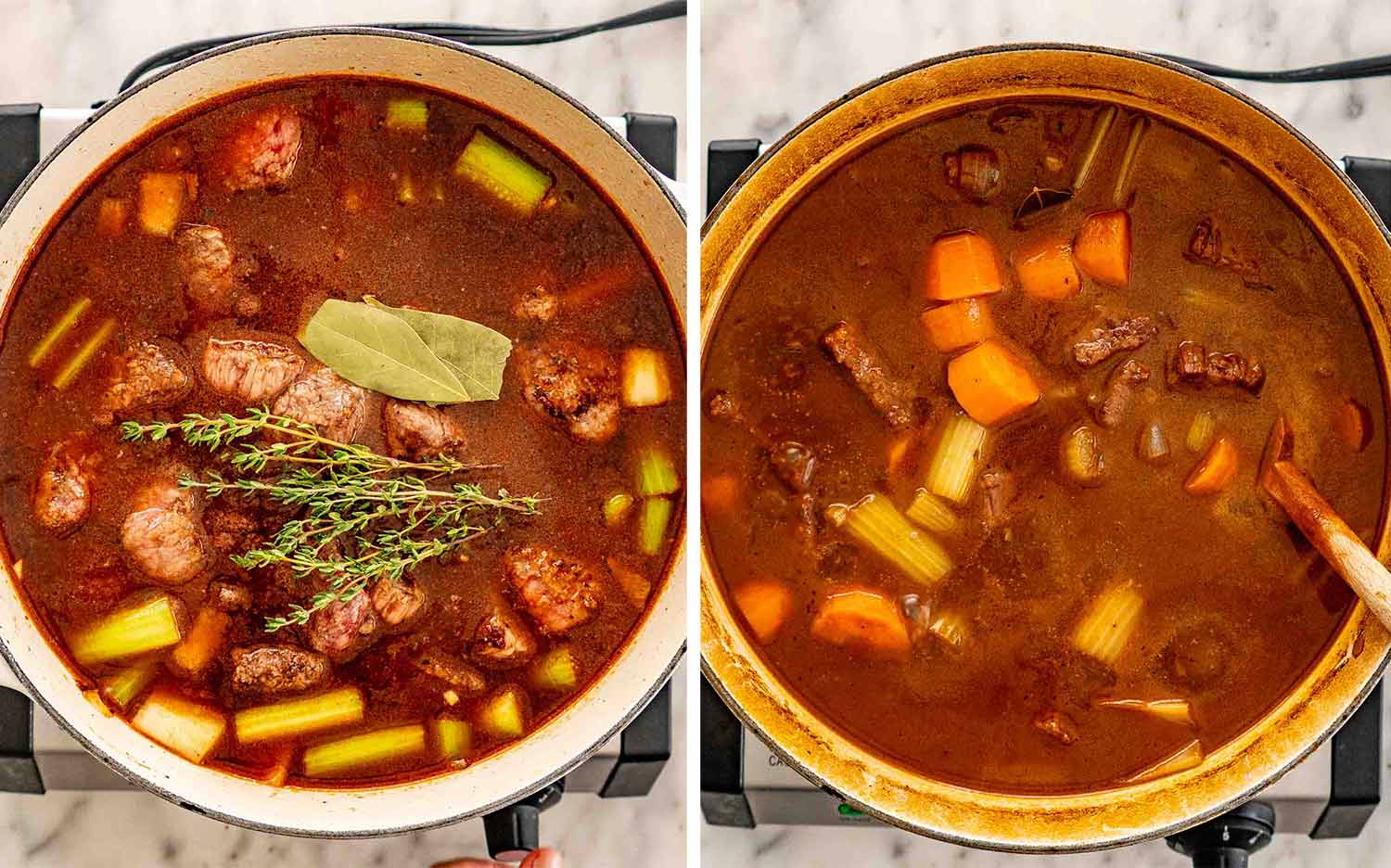
Add the liquid: Broth, Worcestershire and wine, all in. Stir and scrape the bottom of the pot while you do it so all those brown bits come loose. This is the fun part.
Beef back in, with the bay leaves and thyme.
Simmer for 90 minutes: Bring it to a boil, then turn it down until it’s just barely bubbling. Lid on.
Barely bubbling is the whole thing. A hard boil tightens the beef up and makes it tough, which is exactly what we’re trying to avoid. You want the laziest simmer your stove can manage. A pot that just woke up.
After 90 minutes, poke a piece with a fork. It should slide in with no effort. If it fights you, give it another 20 minutes. Chuck is very forgiving and won’t hold it against you.
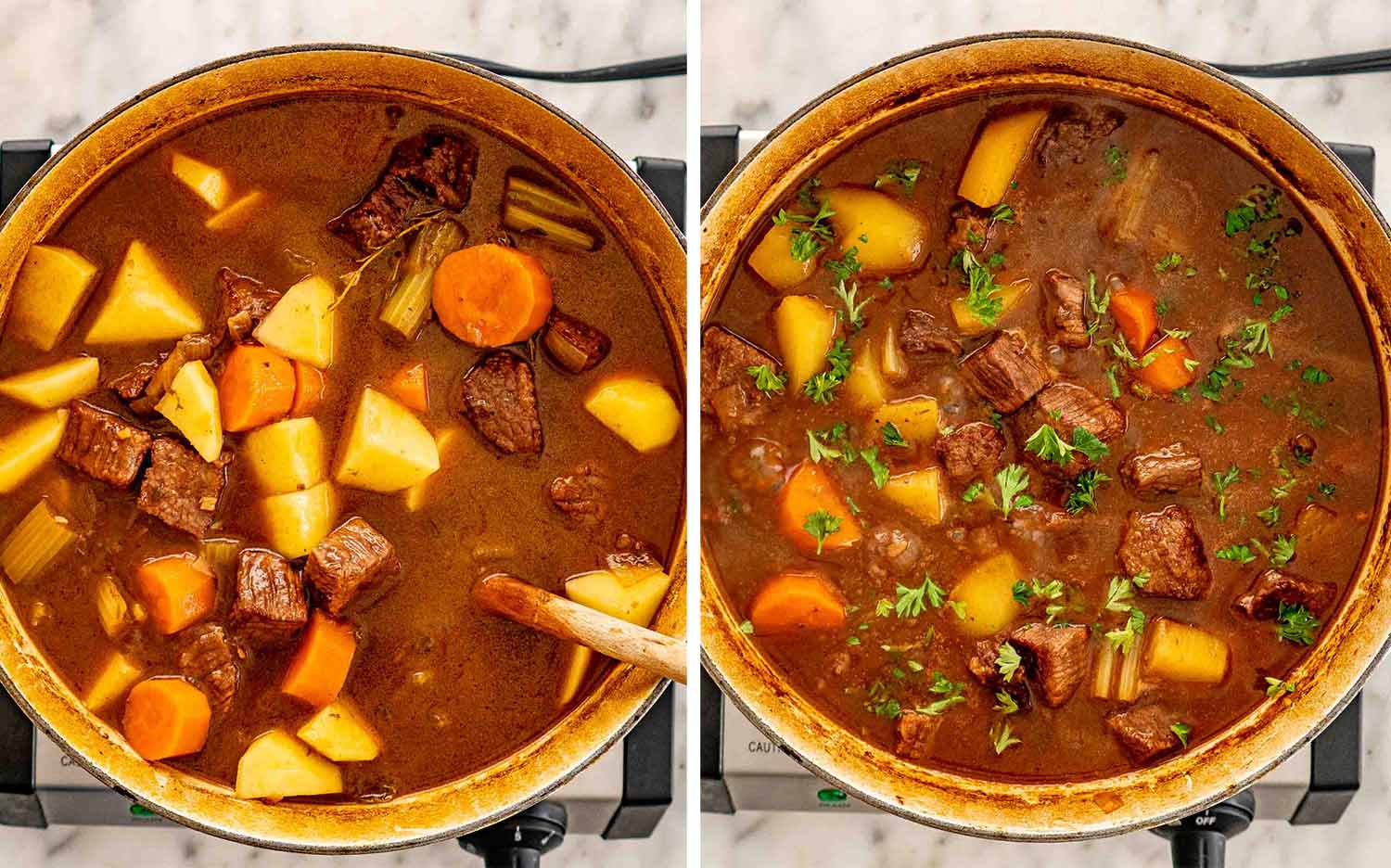
Potatoes last: Stir them in, lid back on, 20 more minutes until they’re fork tender.
Finish: Fish out the bay leaves and the thyme sprigs, unless you enjoy watching someone find one. Scatter the parsley on top and serve.
How To Thicken Beef Stew
If you floured the beef, it thickens on its own. But if yours looks thin when the potatoes are done, here’s what to do.
Take the lid off and simmer harder. 10 or 15 minutes uncovered and it thickens on its own. Free, and the flavor gets better too. This is what I do.
Cornstarch slurry. Mix 1 tablespoon cornstarch with 2 tablespoons cold water until smooth, then stir it in and simmer a minute. Cold water first, always. Cornstarch hitting hot liquid goes straight to lumps and there’s no coming back from that.
Mash a few potatoes. Press some of the cooked potato against the side of the pot and stir it through. The starch thickens everything and nobody will ever know.
Butter and flour. Mash 1 tablespoon of soft butter with 1 tablespoon of flour and stir little bits of it in. This is a restaurant trick and it works beautifully.
And if it goes too thick, which happens on day 2, just stir in a splash of broth.
Do I Have To Use Red Wine?
Nope. Swap the 2 cups of wine for 2 more cups of beef broth and you’ll still have a very good stew.
What the wine adds is depth and a bit of tang that cuts through all that richness. After 2 hours there’s no alcohol left and it doesn’t taste like wine at all. It just tastes like you’ve been cooking longer than you have.
If you’re skipping it, add an extra splash of Worcestershire and 1 teaspoon of red wine vinegar at the end. That gets you some of the tang back.
If you’re using it, a dry red like Merlot or Cabernet Sauvignon. Stay away from anything sold as cooking wine, which is salty and strange. A cheap drinkable bottle beats an expensive one here, because all the lovely delicate notes cook off anyway.
What To Serve With Beef Stew
Mostly I just want bread, because the gravy is far too good to leave sitting in the bowl.
- No Knead Bread if you thought ahead, and Quick Yeast Dinner Rolls if you absolutely did not.
- Instant Pot Mashed Potatoes if you’d rather spoon the stew over something. Yes, there are already potatoes in it. Nobody’s checking.
- Garlic Knots for the same reason as the bread, with more garlic.
- And a green salad with something sharp in the dressing, because after a bowl of this you’ll want something fresh.
Storage, Freezing and Make Ahead
Day 2 is better. Really. The flavors settle overnight and the gravy thickens up, so if you can make this a day ahead, do.
In the fridge it keeps 3 to 4 days in a sealed container. Cool it to room temperature first, but don’t leave it sitting out longer than 2 hours.
In the freezer it’s good for up to 3 months, with one thing worth knowing: potatoes go a bit grainy after freezing. If you already know you’re freezing it, leave them out and add fresh ones when you reheat.
Reheat it gently on the stove over low heat, with a splash of broth if it’s gone very thick. The microwave is fine for 1 bowl.
More Related Recipes
Before You Begin! If you make this, please leave a review and rating letting us know how you liked this recipe! This helps our business thrive & continue providing free recipes.
Beef Stew Recipe
Video
Ingredients
- 3 pounds beef chuck (boneless, cut into 1-inch pieces)
- 3 tablespoon all-purpose flour
- ½ teaspoon salt (or to taste)
- ½ teaspoon pepper (or to taste)
- 3 tablespoon olive oil
- 1 large onion (roughly chopped)
- 2 stalks celery (cut into 1-inch pieces)
- 2 large carrots (peeled and cut into 1-inch pieces on the diagonal)
- 3 cloves garlic (minced)
- 3 tablespoon tomato paste
- 1 teaspoon sugar
- 4 cups beef broth (low sodium)
- 1 tablespoon Worcestershire sauce
- 2 cups red wine (such as Merlot or Cabernet Sauvignon)
- 2 bay leaves
- 3 sprigs fresh thyme
- 1 pound potatoes (peeled and cut into 1-inch cubes)
- ¼ cup fresh parsley (chopped, for garnish)
Before You Begin! If you make this, please leave a review and rating letting us know how you liked this recipe! This helps our business thrive & continue providing free recipes.
Instructions
- Pat 3 pounds beef chuck dry with paper towels, then toss with 3 tablespoons flour, ½ teaspoon salt and ½ teaspoon pepper.
- Heat 3 tablespoons olive oil in a large Dutch oven or heavy pot over medium heat. Brown the beef on all sides, in batches if needed. Transfer the beef to a plate.
- Add more oil if needed, then add 1 chopped onion, 2 stalks celery and 2 chopped carrots. Cook about 5 minutes until the onion softens and turns translucent. Add 3 cloves minced garlic, 3 tablespoons tomato paste and 1 teaspoon sugar, then cook another 30 seconds until the garlic is aromatic and the tomato paste darkens.
- Add 4 cups beef broth, 1 tablespoon Worcestershire sauce and 2 cups red wine, and stir. Return the beef to the pot with 2 bay leaves and 3 sprigs thyme. Bring to a boil, then reduce to a simmer. Cook covered for 1 hour 30 minutes, or until the beef is fork tender.
- Stir in 1 pound cubed potatoes and cook covered for another 20 minutes, or until fork tender.
- Remove the bay leaves and thyme sprigs, garnish with ¼ cup chopped parsley, and serve.
Equipment
Notes
- Buy a chuck roast and cut it yourself instead of a package labeled stew meat. Stew meat is trimmings from several different cuts, so the pieces cook at different rates.
- Pat the beef dry before flouring it. Wet beef steams instead of browning.
- Brown in batches. A crowded pot drops in temperature and the beef boils in its own juices.
- Keep it at a bare simmer, not a boil. A hard boil makes the beef tough no matter how long you cook it.
- Red wine can be replaced with 2 more cups of beef broth. Add 1 teaspoon of red wine vinegar at the end to make up for the tang.
- If it’s thin at the end, simmer uncovered for 10 to 15 minutes to reduce.
- Leftovers keep 3 to 4 days in the fridge and freeze up to 3 months. Leave the potatoes out if you’re freezing it, since they go grainy.
Nutrition Information
Notice: Nutrition is auto-calculated for your convenience. Where relevant, we recommend using your own nutrition calculations.
Why is my beef still tough?
It probably needs more time, or it boiled instead of simmered. With chuck, tough almost always means undercooked, so another 20 or 30 minutes usually sorts it out. If it was bubbling hard the whole time then that’s the other problem, and the fix is turning it way down next time.
Can I make this gluten free?
Yes. Use a gluten free flour blend or cornstarch to coat the beef. Cornstarch browns a little differently but thickens just as well. Have a look at your Worcestershire too, since some brands have malt vinegar in them.
Can I make it in a slow cooker?
Yes, and I’d still brown the beef in a pan first, because a slow cooker can’t brown anything and that’s where the flavor comes from. So brown the beef, soften the vegetables, then everything into the slow cooker on low for 7 to 8 hours. Potatoes in for the last hour and a half. For complete instructions here’s my recipe.
Can I make it in an Instant Pot?
Yes. Brown the beef using saute, then pressure cook on high for 35 minutes with a natural release. Add the potatoes and pressure cook for 4 more minutes.
My stew looks greasy. Help?
Let it cool and the fat rises and sets on top, so you can lift it right off in one sheet. If you’re serving now, skim it with a spoon or lay a paper towel flat on the surface for a second to blot it up.
Can I add other vegetables?
Mushrooms are excellent and go in with the onions. Peas or green beans go in for the last 10 minutes so they stay green. Parsnips and turnips both work and go in with the potatoes.
Do I really have to brown the beef in batches?
Yes. It’s the most annoying 15 minutes of the recipe and it’s also the difference between stew and brown soup.