Buttermilk Biscuits
This post may contain affiliate links. Please read my disclosure policy.



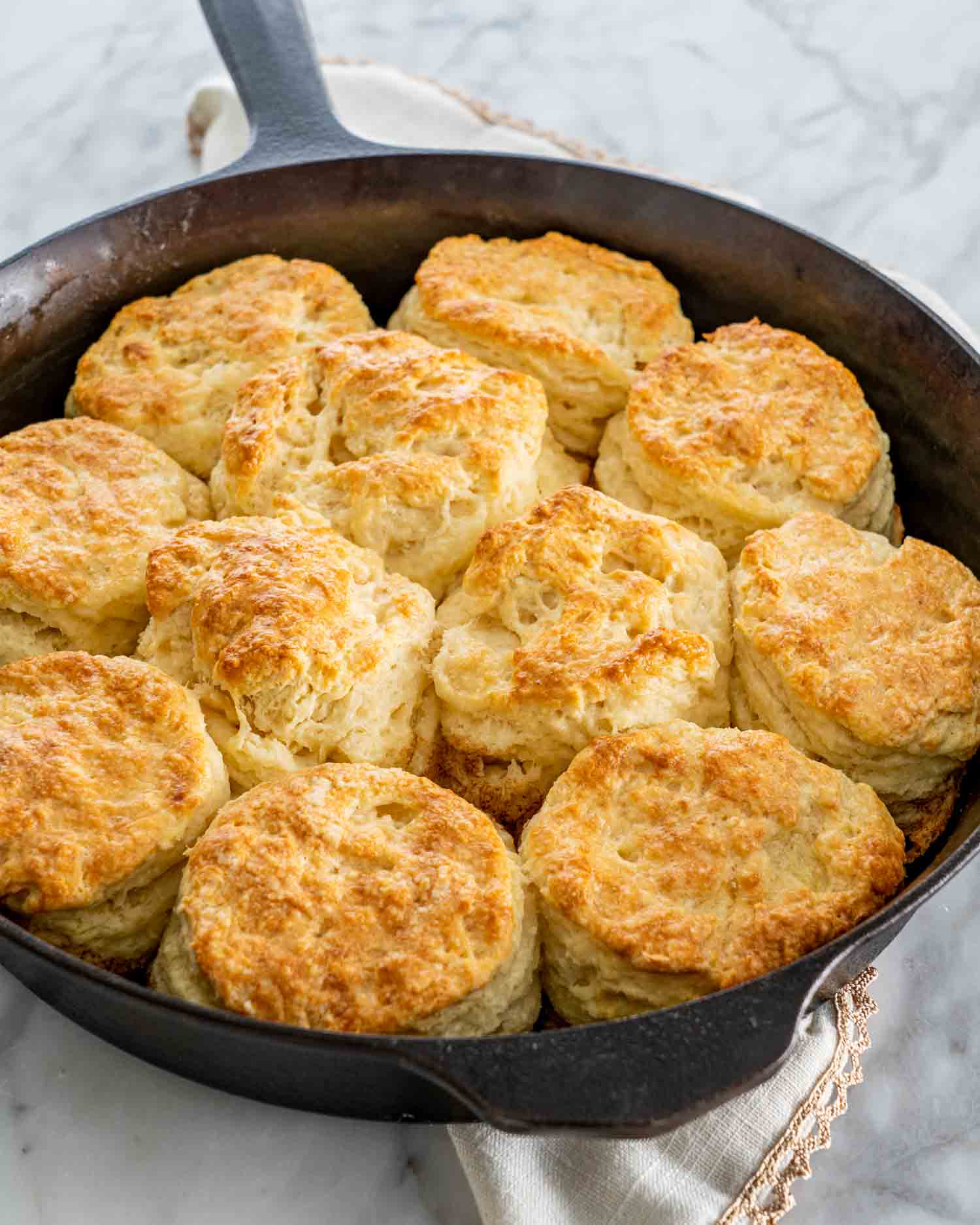
Flat biscuits are one of the most common baking frustrations, and most of the time it is not the ingredients, it is the method. These Buttermilk Biscuits are all about cold butter, gentle dough, and a hot oven so the biscuits bake up tall, flaky, and buttery every time.
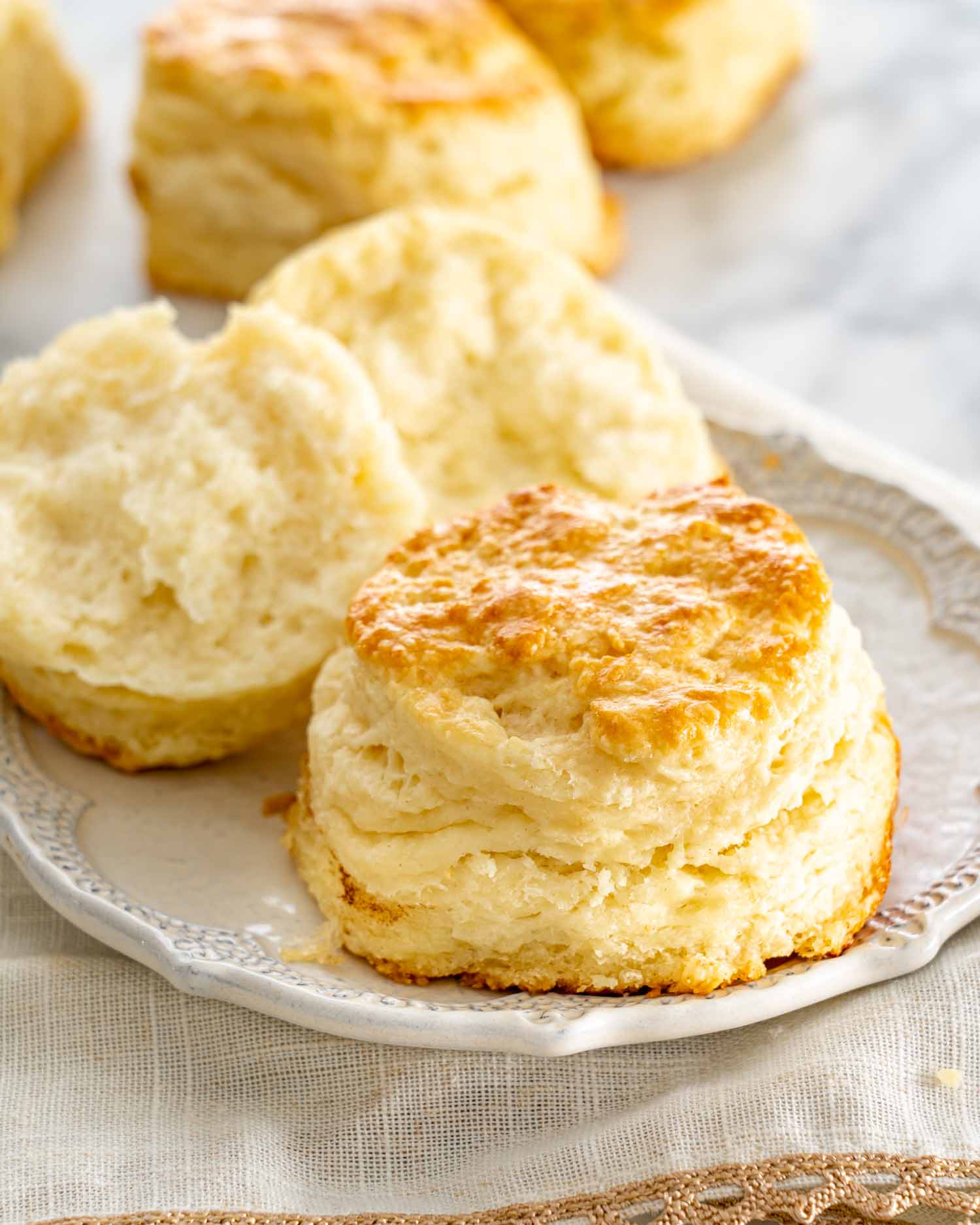

The Simple Tricks That Make These Buttermilk Biscuits So Good
I have been making these Buttermilk Biscuits for years, and I can tell you that biscuits are one of those things that look simple on paper but can go very wrong if you do not know a few small tricks. The ingredients are basic, flour, butter, buttermilk, but the way you handle the dough is what makes the difference between flat, tough biscuits and tall, flaky, buttery ones.
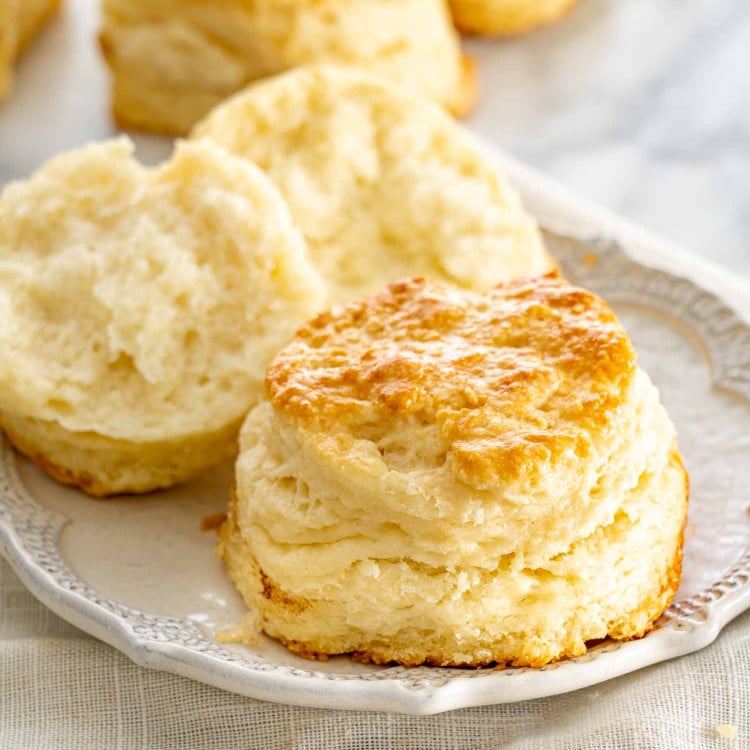
The biggest secrets are keeping everything cold, handling the dough gently, and folding the dough a few times to create layers. Those layers are what give biscuits that beautiful flaky texture everyone loves. Once you understand that biscuits are more about technique than ingredients, they become incredibly easy to make and you will wonder why you ever bought them from a can.
This is the method I have used for years and it never fails me. The biscuits come out tall, soft in the middle, golden on the outside, and full of buttery layers. Serve them with jam, honey, sausage gravy, or just warm with butter and you will be very happy you made them from scratch.

Why This Recipe Works
- Cold butter: The butter must be very cold when it goes into the flour. As the biscuits bake, the butter melts and creates steam, and that steam is what creates those flaky layers inside the biscuits.
- Buttermilk: The acidity in buttermilk reacts with the baking soda and baking powder, which helps the biscuits rise and also gives them that classic tangy biscuit flavor.
- Folding the dough: Folding the dough a few times creates layers, similar to how you make croissants or puff pastry, but much simpler. Those layers are what make the biscuits flaky instead of crumbly.
- Thick dough: Rolling the dough thick is very important. If the dough is too thin, the biscuits will spread instead of rising tall.
- Hot oven: A hot oven gives the biscuits a quick lift right at the beginning of baking, which helps them rise tall before the butter melts completely.
- Bake them close together: Placing the biscuits close together on the pan helps them rise upward instead of spreading outward, which gives you taller, softer biscuits.

Key Ingredients and Tips
- Flour: I use all purpose flour for these biscuits and it works perfectly. Make sure you measure your flour correctly by spooning it into the measuring cup and leveling it off. Too much flour is one of the reasons biscuits turn out dry and dense.
- Buttermilk: The buttermilk should be cold and it is what gives biscuits their classic flavor and helps them rise because it reacts with the baking soda. If you do not have buttermilk, you can add a bit of lemon juice or vinegar to milk and let it sit for a few minutes.
- Butter: The butter must be very cold. Cold butter is what creates flaky layers because as the biscuits bake, the butter melts and creates steam inside the dough. I like to cube the butter or grate it so it mixes into the flour easily.
- Do not overwork the dough: Mix the dough just until it comes together. Overworking the dough develops gluten and that is what makes biscuits tough instead of soft and flaky.
- Fold the dough: Folding the dough a few times before cutting the biscuits creates layers and helps the biscuits rise taller and flakier.
- Roll the dough thick: This is very important. The dough should be about ½ to ¾ inch thick. If the dough is too thin, the biscuits will spread instead of rising tall.
- Do not twist the biscuit cutter: When cutting the biscuits, press straight down and lift straight up. Twisting the cutter seals the edges and prevents the biscuits from rising properly.
- Bake biscuits close together: Placing the biscuits close together on the pan helps them rise upward instead of spreading outward. This gives you taller biscuits with softer sides.
- Hot oven: Biscuits need a hot oven so they get a quick lift right at the beginning of baking.
Start by preheating your oven to 450°F (232°C). A hot oven is important because it helps the biscuits rise quickly and develop those flaky layers.
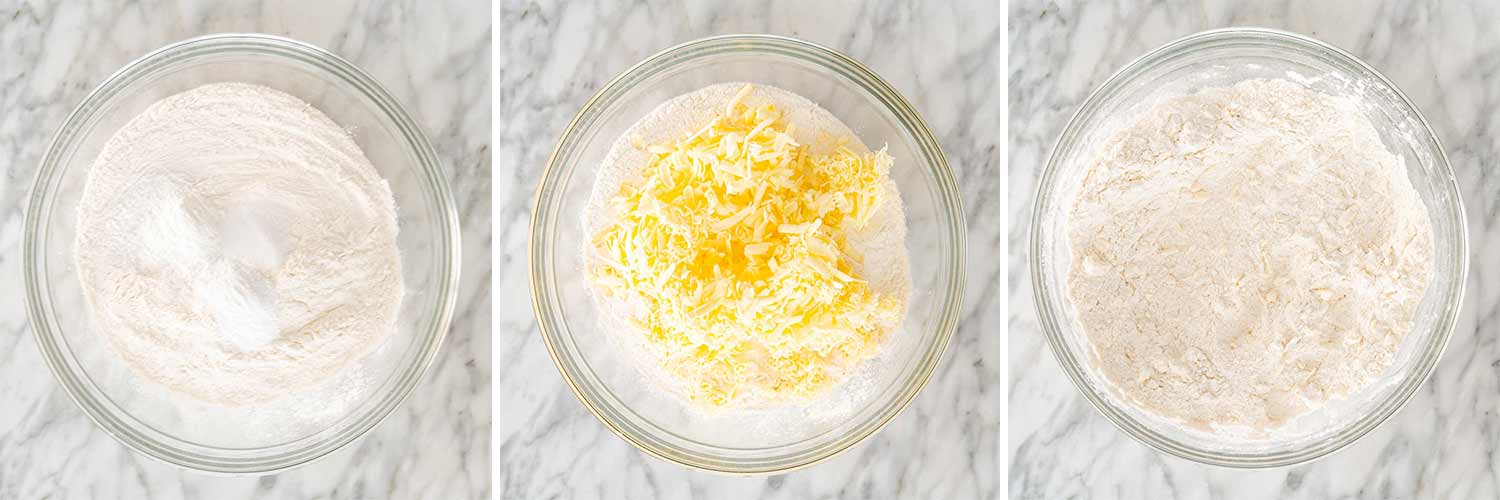
In a large bowl, combine the flour, salt, baking powder, and baking soda. Stir everything together so the leavening is evenly distributed.
Add the cold butter and cut it into the flour using a pastry cutter or two knives until the mixture looks like coarse crumbs. If you grated the butter, just mix it into the flour. The butter should still be visible in small pieces, this is what creates flaky biscuits.
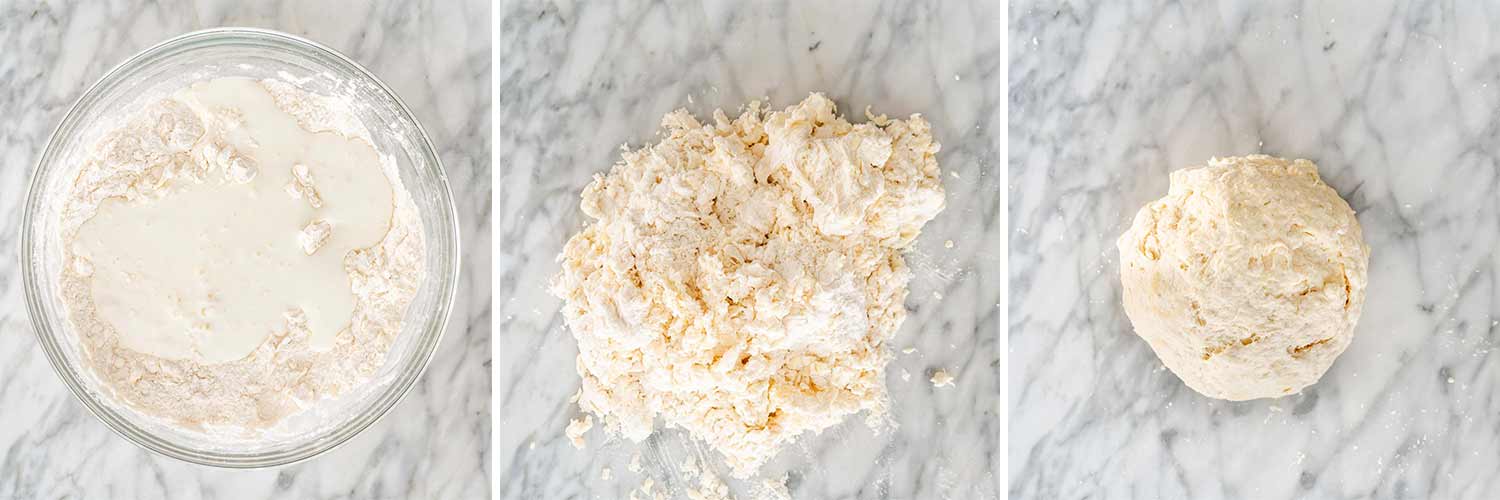
Pour in the cold buttermilk and stir just until the dough comes together. Do not overmix the dough. It will look a bit shaggy and that is exactly what you want.
Turn the dough onto a lightly floured surface and gently bring it together with your hands. Pat the dough into a rectangle, then fold it over onto itself like a letter. Turn the dough, gently flatten it again, and repeat this folding process 2 to 3 times. This is what creates layers and helps the biscuits bake up tall and flaky.
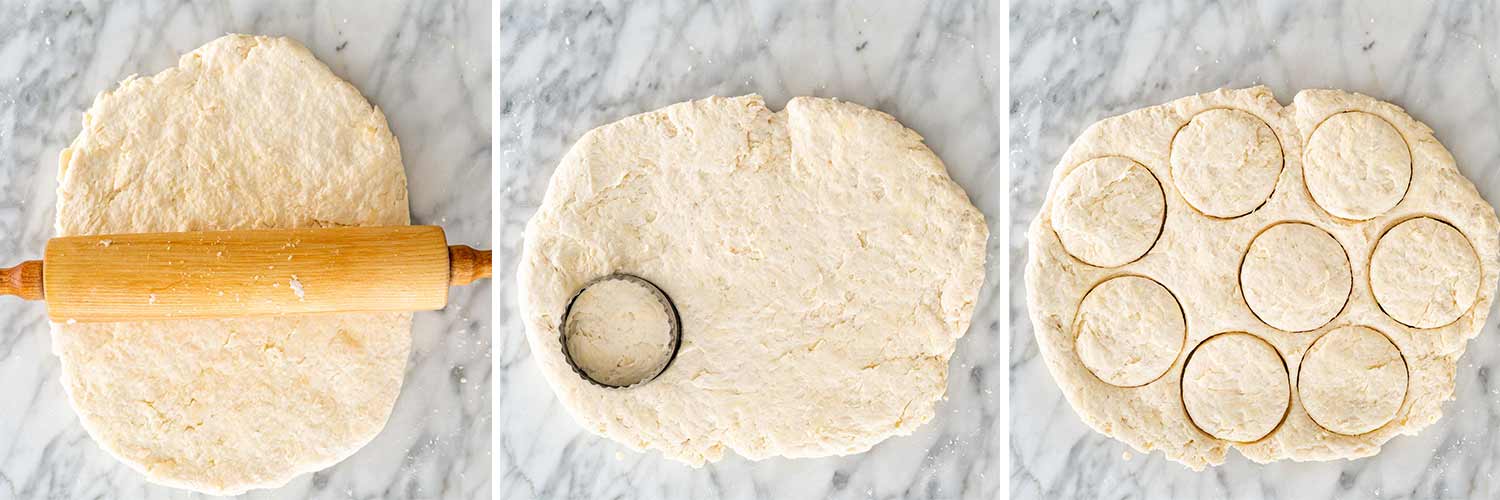
After folding, gently roll or pat the dough to about ½ to ¾ inch thick. Use a biscuit cutter and press straight down without twisting. Gather the scraps and cut more biscuits until all the dough is used.
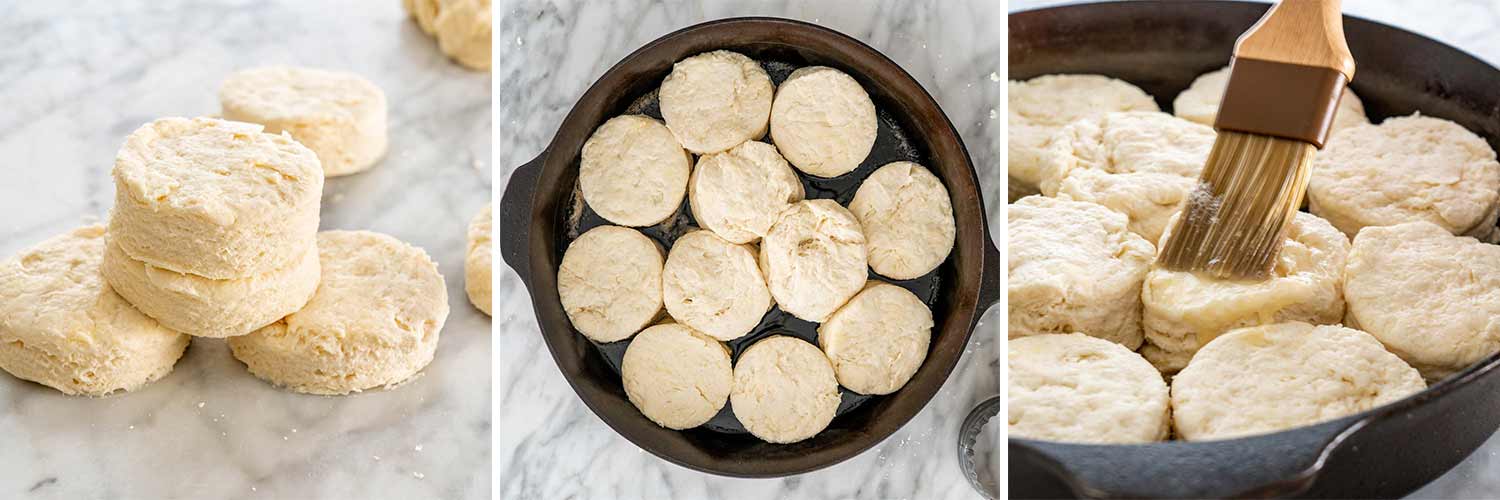
Place the biscuits on a baking sheet or in a buttered cast iron skillet, close together so they rise upward instead of spreading. Brush the tops with egg wash and bake for about 10 to 15 minutes or until golden brown.
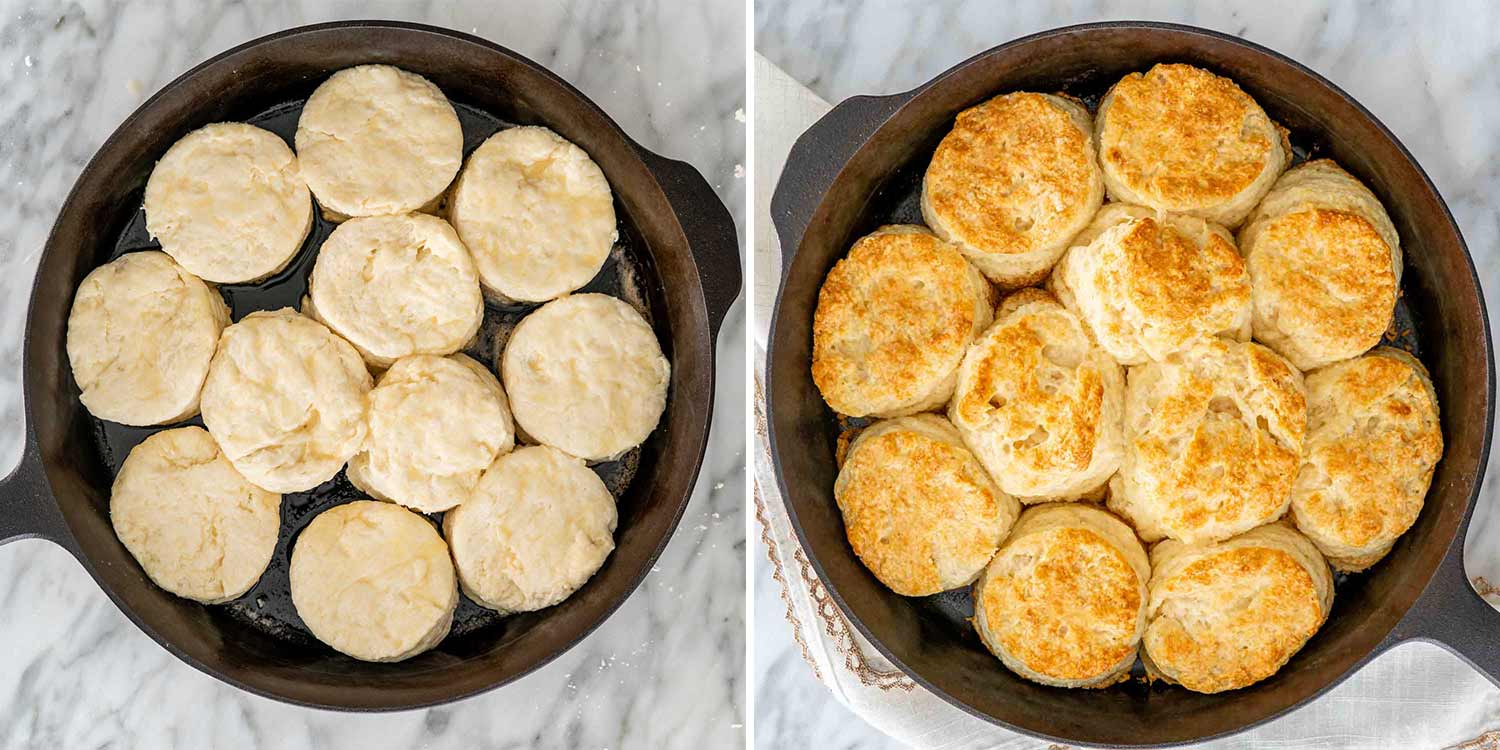
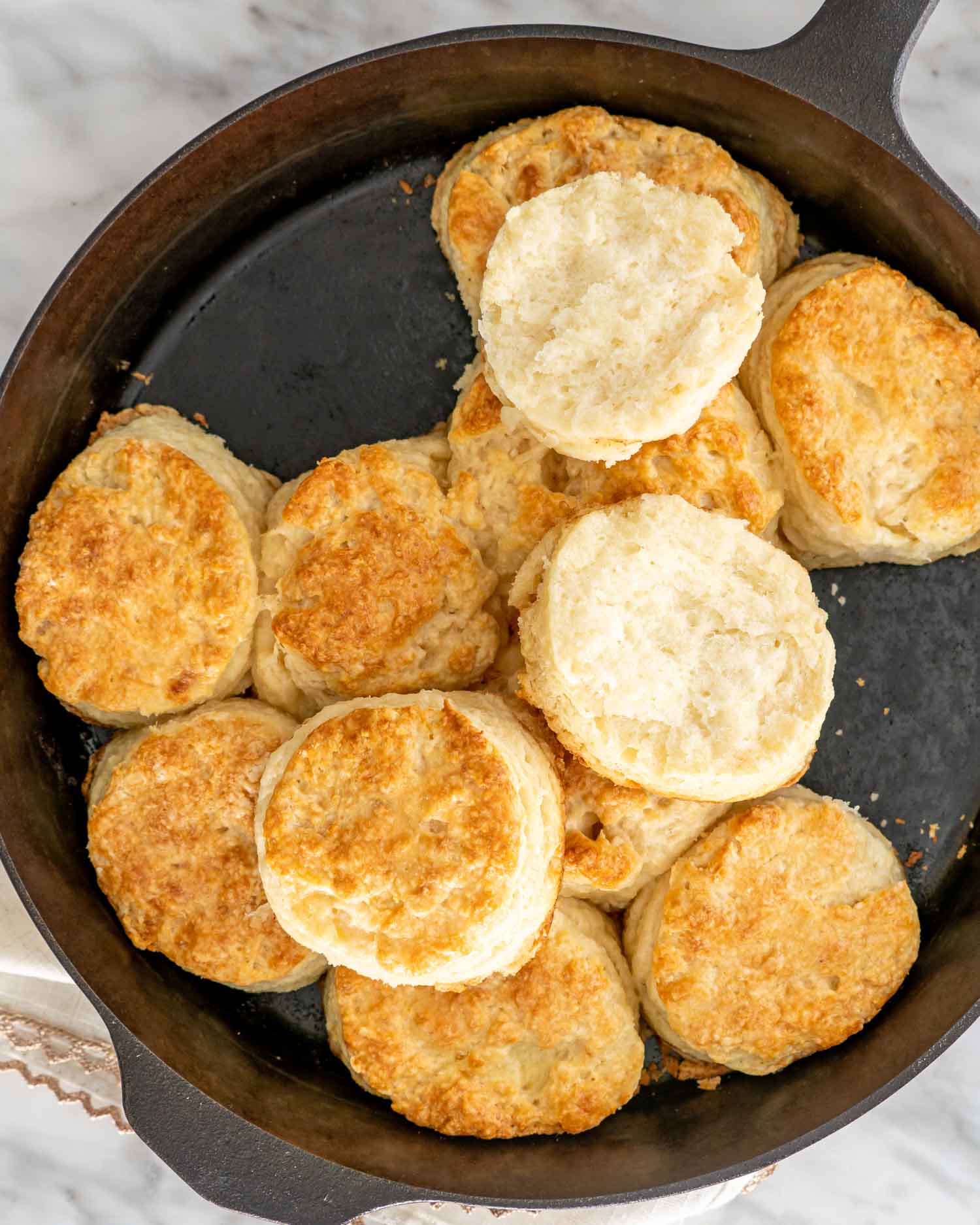
Let the biscuits cool for a few minutes before serving. They are best warm with butter, jam, or honey.
Common Mistakes To Avoid
- Overworking the dough: This is probably the most common mistake. The more you mix and knead the dough, the more gluten develops and the biscuits will turn out tough instead of soft and flaky. Mix just until the dough comes together and handle it gently.
- Butter not cold enough: If the butter is soft or melted before the biscuits go into the oven, you will not get flaky layers. Cold butter creates steam as it melts in the oven, and that steam is what creates flaky biscuits.
- Rolling the dough too thin: If the dough is too thin, the biscuits will spread instead of rising tall. Make sure the dough is about ½ to ¾ inch thick before cutting the biscuits.
- Twisting the biscuit cutter: When you twist the cutter, you seal the edges of the biscuit and they will not rise properly. Always press straight down and lift straight up.
- Too much flour when rolling: Adding too much flour while rolling out the dough can make the biscuits dry and dense. Use just enough flour so the dough does not stick.
- Biscuits too far apart on the pan: If you place the biscuits far apart, they will spread outward instead of rising upward. Place them close together so they help each other rise and stay soft on the sides.
- Old baking powder or baking soda: If your baking powder or baking soda is old, the biscuits will not rise properly. This is an easy thing to overlook but makes a big difference.
- Oven not hot enough: Biscuits need a hot oven so they get a quick lift right at the beginning of baking. If the oven is not hot enough, the butter melts before the biscuits rise and they can turn out flat.
Frequently Asked Questions
Why are my biscuits flat?
Flat biscuits are usually caused by butter that was not cold enough, overworking the dough, rolling the dough too thin, or baking the biscuits too far apart on the pan. Make sure the butter and buttermilk are cold, handle the dough gently, roll the dough thick, and bake the biscuits close together so they rise upward.
Why are my biscuits dense instead of flaky?
Dense biscuits usually happen when the dough is overmixed or too much flour was added when rolling out the dough. The dough should be mixed just until it comes together and handled as little as possible.
Can I use milk instead of buttermilk?
Yes, but the flavor and texture will be a bit different. If you do not have buttermilk, add 1 tablespoon lemon juice or vinegar to a measuring cup, then add milk to make 1 cup. Let it sit for about 5 minutes before using.
Can I freeze biscuit dough?
Yes, biscuits freeze very well. Cut the biscuits and place them on a baking sheet, freeze until solid, then transfer to a freezer bag. You can bake them straight from frozen, just add a few extra minutes to the baking time.
Can I make the dough ahead of time?
You can make the dough, cut the biscuits, and store them in the fridge for a few hours before baking. You can also freeze the cut biscuits and bake them later.

Storage
Buttermilk biscuits will keep at room temperature in an airtight container for about 2 to 3 days. You can also store them in the refrigerator for up to a week, but they are best reheated before serving.
To freeze baked biscuits, let them cool completely, then store them in a freezer bag or airtight container for up to 3 months. Reheat them in the oven at 350°F (175°C) until warmed through.
You can also freeze unbaked biscuits. Cut the biscuits and freeze them on a baking sheet first, then transfer them to a freezer bag. Bake them straight from frozen, just add a few extra minutes to the baking time.
Serving Ideas
Honestly, biscuits are one of those things that work for breakfast, lunch, or dinner, and there is never really a wrong way to serve them.



Try These Recipes Next
- Copycat Red Lobster Cheddar Bay Biscuits
- Feta Cheese And Chives Biscuit
- Fluffy Mozzarella Biscuits
- Cheddar Cheese Biscuits
- Irish Scones
- Biscuits And Gravy
- Jalapeno Cheddar Biscuits
- Butter Swim Biscuits
Before You Begin! If you make this, please leave a review and rating letting us know how you liked this recipe! This helps our business thrive & continue providing free recipes.
Buttermilk Biscuits
Video
Ingredients
- 4 cups all-purpose flour
- 1 teaspoon salt
- 1 tablespoon baking powder
- 2 teaspoon baking soda
- ¾ cup butter (unsalted, chilled and cut into pieces)
- 1¾ cup buttermilk
- 1 egg (beaten for egg wash)
Before You Begin! If you make this, please leave a review and rating letting us know how you liked this recipe! This helps our business thrive & continue providing free recipes.
Instructions
- Preheat oven to 450°F.
- In a large bowl add the flour, salt, baking powder and baking soda and mix it all. To it add the cubed or grated butter. Using a pastry cutter or 2 knives, cut in the butter until the mixture resembles coarse meal. If using grated butter, you just have to mix the butter in with the flour.

- Next, add the buttermilk to the bowl. Stir in the buttermilk until just moist and knead the dough a few times. Turn the dough onto a lightly floured surface and gently bring it together with your hands. Pat the dough into a rectangle, then fold it over onto itself like a letter. Turn the dough, gently flatten it again, and repeat this folding process 2 to 3 times. This is what creates layers and helps the biscuits bake up tall and flaky.
- Roll out the dough to ½ to ¾ inch thickness, and cut with a 2 inch biscuit cutter. You should get about 12 biscuits.
- Place the biscuits on an ungreased baking sheet and brush with egg wash. You can also place the biscuits into a buttered skillet.
- Transfer the baking sheet or skillet to the oven and bake for about 10 to 15 minutes or until nice and golden.


Notes
- Use cold ingredients: Make sure the butter and buttermilk are very cold. Cold butter is what creates flaky layers in the biscuits.
- Do not overwork the dough: Mix the dough just until it comes together and handle it gently. Overworking the dough will make the biscuits tough.
- Fold the dough: Folding the dough a few times before cutting the biscuits helps create layers and makes the biscuits rise taller and flakier.
- Roll the dough thick: Roll the dough to about ½ to ¾ inch thick. Thicker dough will give you taller biscuits.
- Do not twist the cutter: Press the biscuit cutter straight down and lift straight up. Twisting the cutter can seal the edges and prevent the biscuits from rising properly.
- Bake biscuits close together: Placing the biscuits close together on the pan helps them rise upward and keeps the sides soft.
- Use fresh baking powder and baking soda: Old leavening agents can cause biscuits not to rise properly.
Nutrition Information
Notice: Nutrition is auto-calculated for your convenience. Where relevant, we recommend using your own nutrition calculations.
Originally Published March, 2013