Banana Nut Bread With Applesauce
This post may contain affiliate links. Please read my disclosure policy.
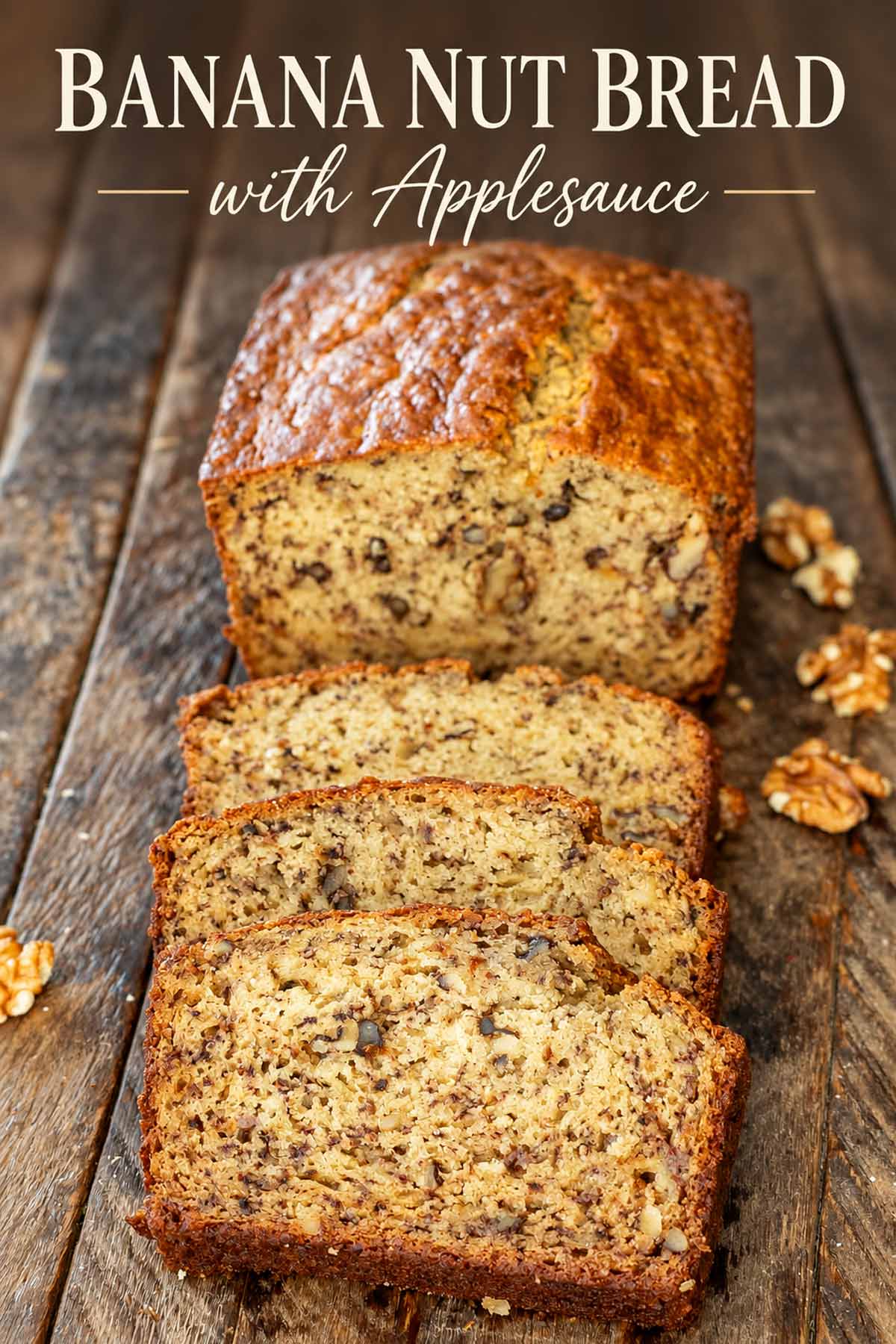
This Banana Nut Bread has applesauce and sour cream in it, which is why it stays moist for days instead of turning into a doorstop by Wednesday. One bowl, a wooden spoon, no mixer. It’s one of the oldest recipes on this site and probably the most made recipe in my house.
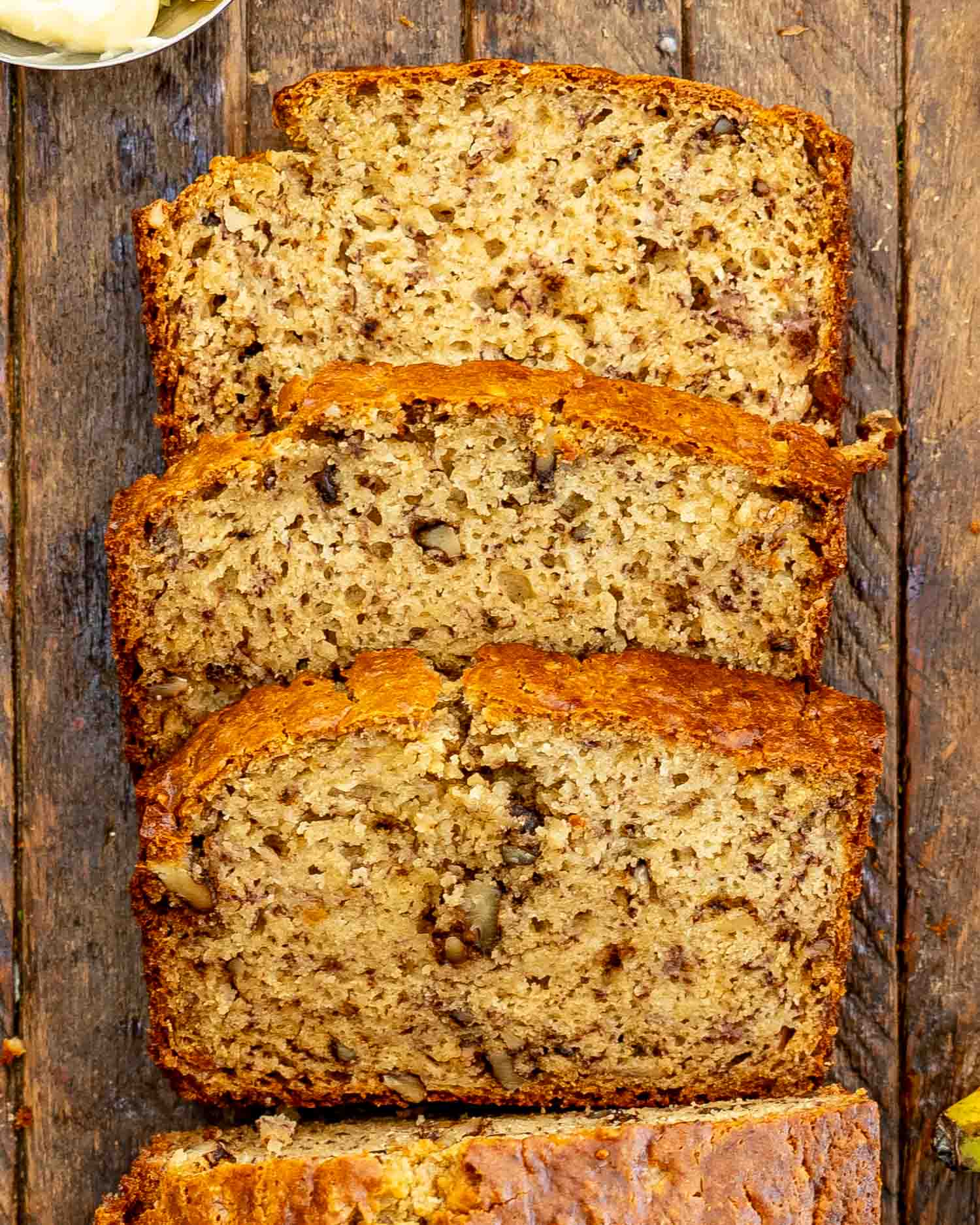
Easy Banana Nut Bread With Applesauce
The best banana bread comes from the worst bananas.
Not slightly speckled. Not “these are getting on.” I mean the ones sitting in the fruit bowl looking genuinely offensive, skins gone black, the ones everyone in the house walks past with a small grimace. Those are the good ones. All that starch has turned to sugar, and they mash into something sweet and fragrant that a firm yellow banana can’t touch.
There’s applesauce and sour cream in this one, and between them they’re the reason the crumb stays soft for days. There’s a whole section on that below because it’s the interesting part.
It’s a one bowl recipe. Mash the bananas, whisk in the wet things, stir in the sugars, add the dry, fold in the walnuts. No mixer, nothing to cream, about 15 minutes to get it in the oven.
One thing I’ll flag now: the toothpick test doesn’t work well on this bread. The batter’s wet enough to fool it, and that’s where gummy banana bread comes from. The reliable check is below.
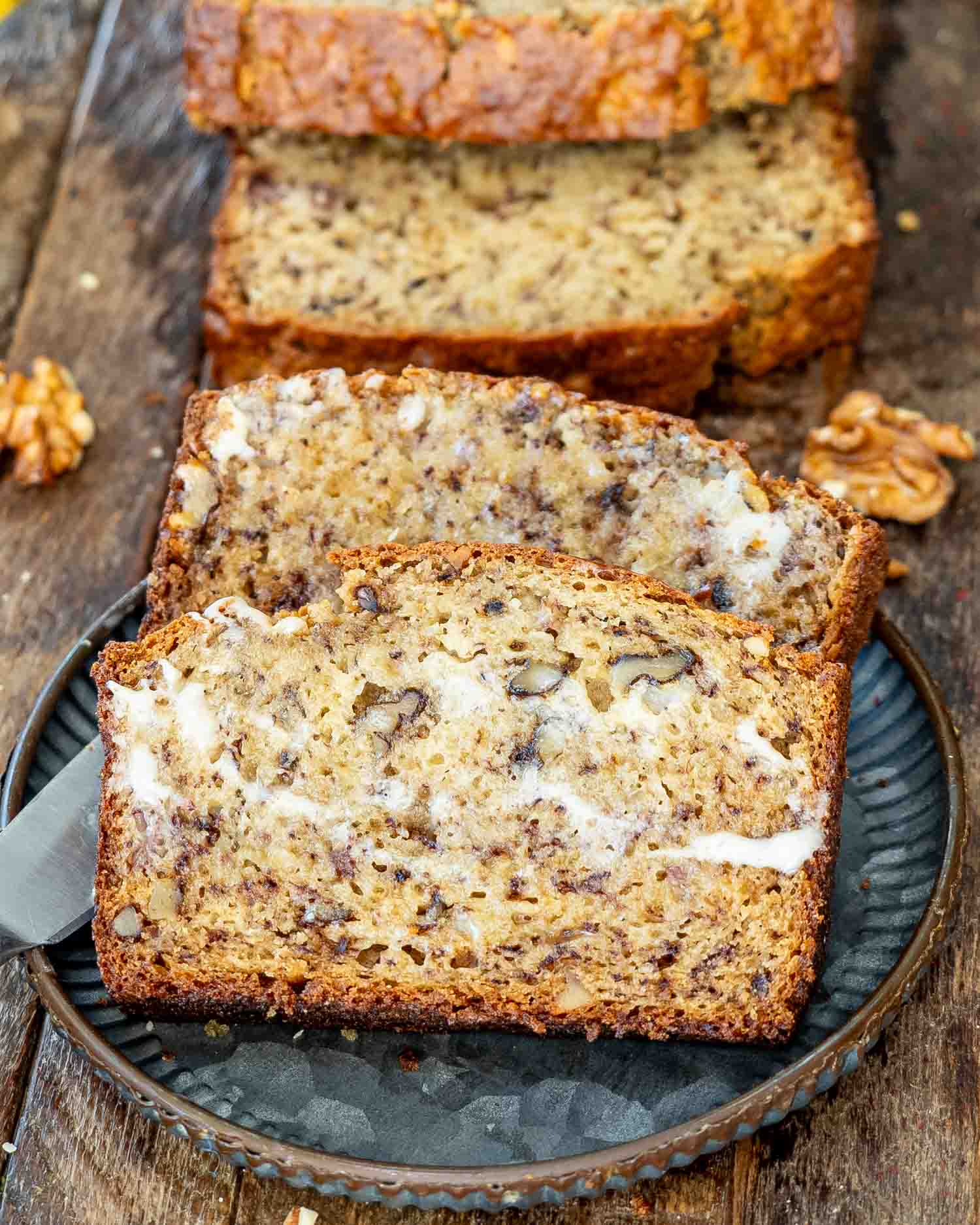
What The Applesauce Is Actually Doing
Most recipes that use applesauce use it to replace oil, and then say something about it being lighter. That’s not why it’s in here.
- It’s about moisture that lasts. Applesauce is mostly water held in pectin, which is a soluble fiber that grabs onto moisture and doesn’t let go easily. Oil coats flour particles and makes a tender crumb, which is great on day one. Applesauce holds water in the crumb, which is what keeps a loaf soft on day 3.
- And it adds a bit of body. That pectin gives the batter a slightly thicker structure, which helps hold up a loaf carrying 4 bananas and a cup of walnuts.
- The sour cream is doing the other half. Fat for richness, and acidity that reacts with the baking soda for lift. Together with the applesauce you get a crumb that’s tender and dense at the same time, which is exactly what banana bread should be.
- No applesauce? Use an extra half cup of mashed banana, which is the closest match. Greek yogurt works too and makes it slightly tangier. Half a cup of oil works and you’ll have a lovely loaf on day one that dries out faster.
- Unsweetened applesauce is what I’d use, since there’s already plenty of sugar in the recipe. Sweetened works and you may want to pull the granulated sugar back a bit.
The Bananas
Worth being specific about, because it’s the ingredient with the biggest effect on the result.
- Blacker is better. As bananas ripen, their starch converts to sugar and the flesh softens. A banana with a fully black skin is sweeter, more fragrant, and mashes into a smooth puree. A yellow one is starchy and mild and will give you a bland loaf.
- Four medium bananas is right for this recipe, roughly 1½ cups mashed. If yours are enormous, use 3.
- Need them ripe today? Bake unpeeled bananas at 300°F for 15 to 20 minutes until the skins go black and glossy. Let them cool, peel, and use. It’s not identical to real ripening, since it softens them without developing the same flavor, but it’s very close and it works.
- Freeze the ones you can’t use. Peel them, into a freezer bag, and they keep for months. Thawed banana releases a lot of liquid, so pour that in too. It’s concentrated banana flavor and you want it.
Ingredients In Banana Nut Bread
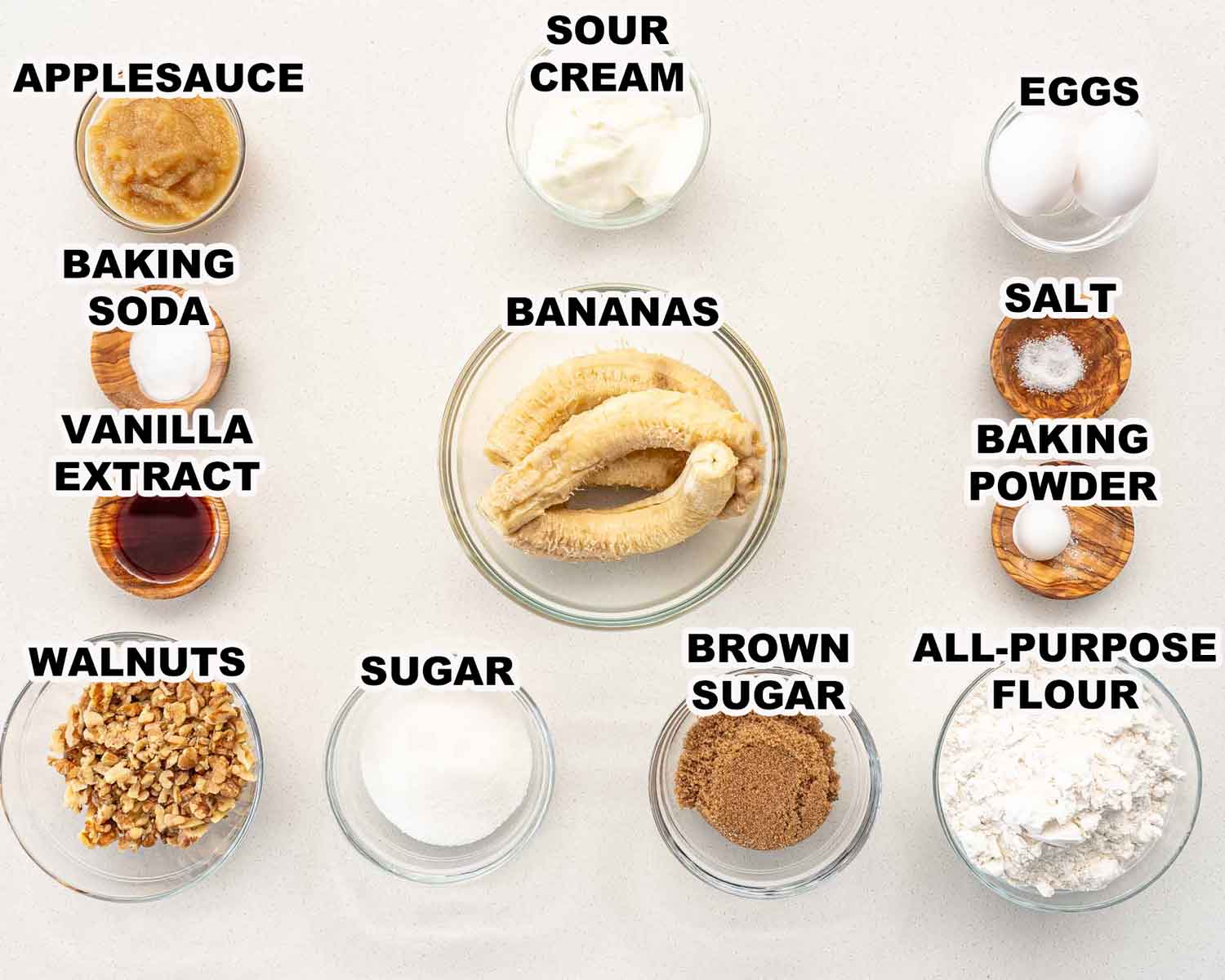
- Bananas (4 medium, very ripe): Black skinned, soft, the ones nobody wants. See above. This is the ingredient that decides whether your loaf is good or forgettable.
- Applesauce (½ cup): Unsweetened. It’s what keeps this loaf moist on day 3 rather than just day 1. My homemade applesauce works beautifully if you have some. Extra mashed banana or Greek yogurt are the substitutes.
- Sour cream (½ cup): Fat for richness and acidity for lift. Full fat gives the best result. Greek yogurt or buttermilk both work.
- Eggs (2, at room temperature): Structure and richness. Room temperature blends more evenly into a batter this thick, and cold eggs can leave streaks.
- Vanilla extract (1 tablespoon): A tablespoon is generous and it stands up well against the bananas. Pure extract if you’ve got it.
- Granulated sugar (½ cup) and brown sugar (½ cup): The pair together is better than either alone. Brown sugar brings molasses and a bit of caramel, granulated keeps it from getting heavy. Use all granulated if that’s what you have.
- All purpose flour (1¾ cups): Spoon it into the cup and level it off rather than scooping. Scooping packs the flour down and can leave you with considerably more than the recipe wants, which is the main cause of a dry loaf.
- Baking soda (1 teaspoon) and baking powder (1 teaspoon): Both, doing different jobs. The soda reacts with the acidity in the sour cream and the bananas, the powder gives independent lift. If either has been open more than 6 months, test it before you commit.
- Salt (¼ teaspoon): Small amount, real job. Without it the whole loaf tastes flat in a way that’s hard to name.
- Walnuts (1 cup, chopped): Toast them first if you have 5 minutes. Five minutes in a dry pan or a 350°F oven and the flavor goes from mild to properly nutty. Pecans work just as well. Leave them out entirely and you’ve made banana bread, which is also fine.
How To Make Banana Nut Bread
Oven to 325°F, and spray a 9 by 5 inch loaf pan. A strip of parchment across the width with the ends hanging over makes it much easier to lift out later.
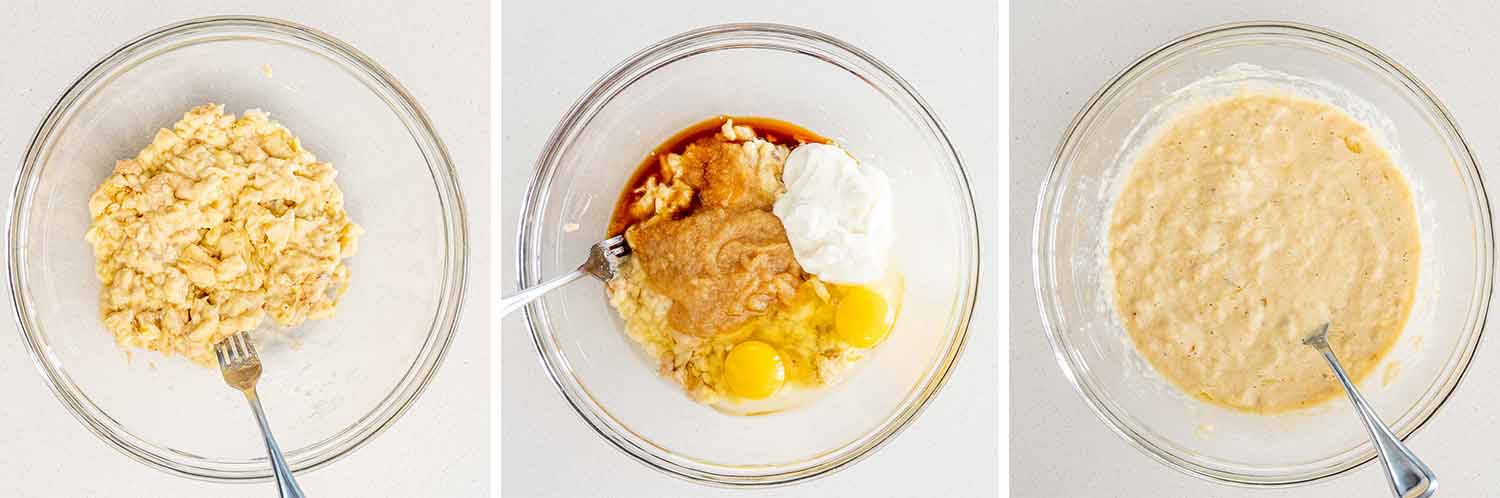
Mash the bananas in a large bowl with a fork. Leave a few small lumps if you like finding bits of banana, or go smooth if you don’t.
Whisk in the wet ingredients. Applesauce, sour cream, eggs, and vanilla, whisked until it’s evenly combined and looks like a slightly lumpy custard.
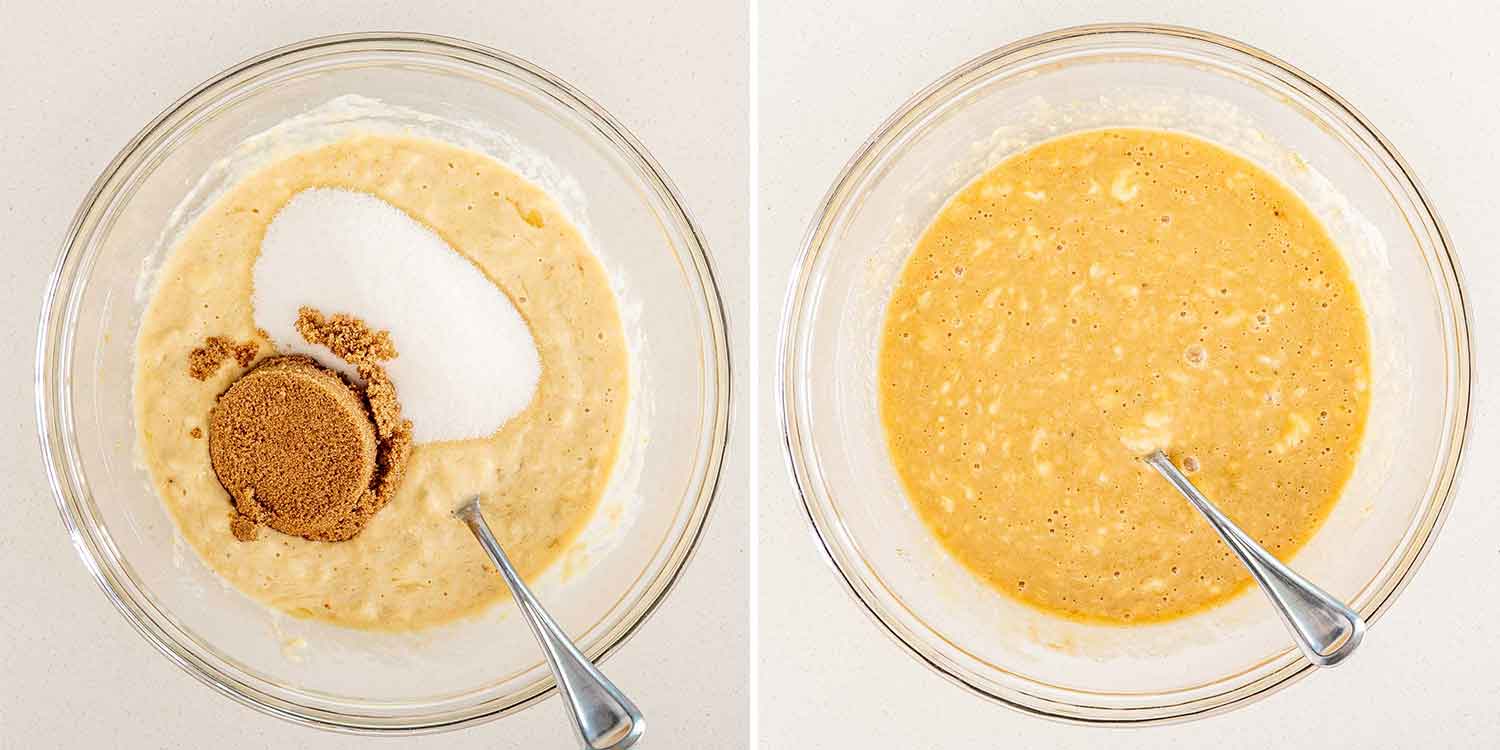
Then the sugars. Both of them, whisked in until you can’t see any granules.
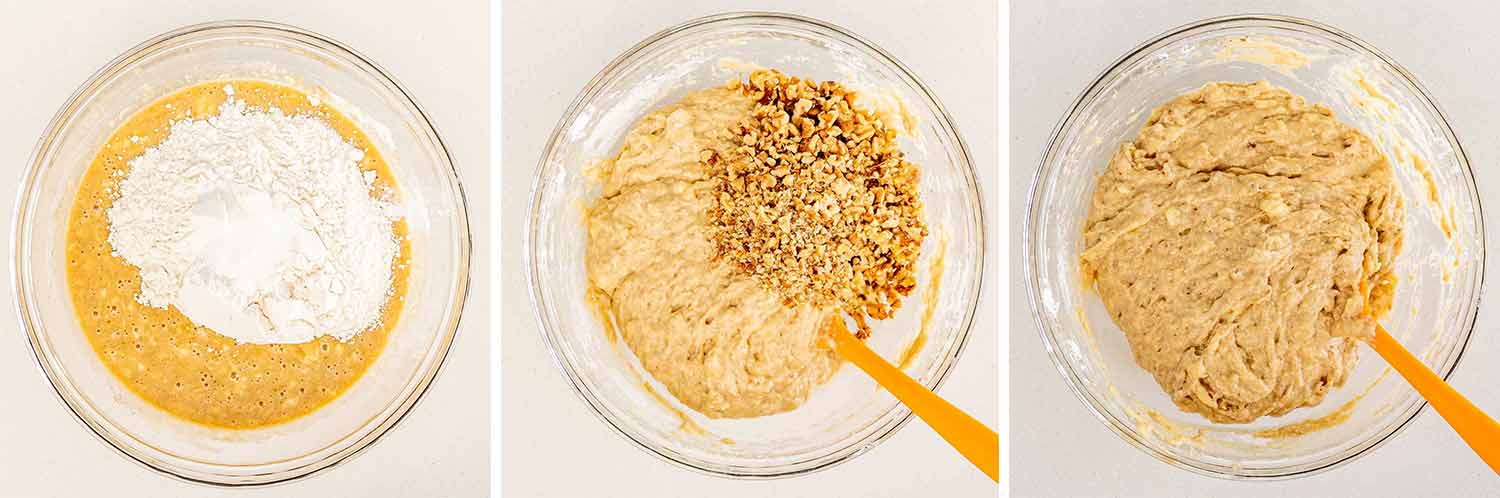
Dry ingredients, and stop early. Flour, baking soda, baking powder, and salt straight into the same bowl. Stir with a wooden spoon just until the flour disappears. There will be lumps and they’re supposed to be there. Overmixing develops gluten and gluten makes banana bread tough and rubbery.
Fold in the walnuts with a few gentle turns. You’re distributing them, not mixing again.
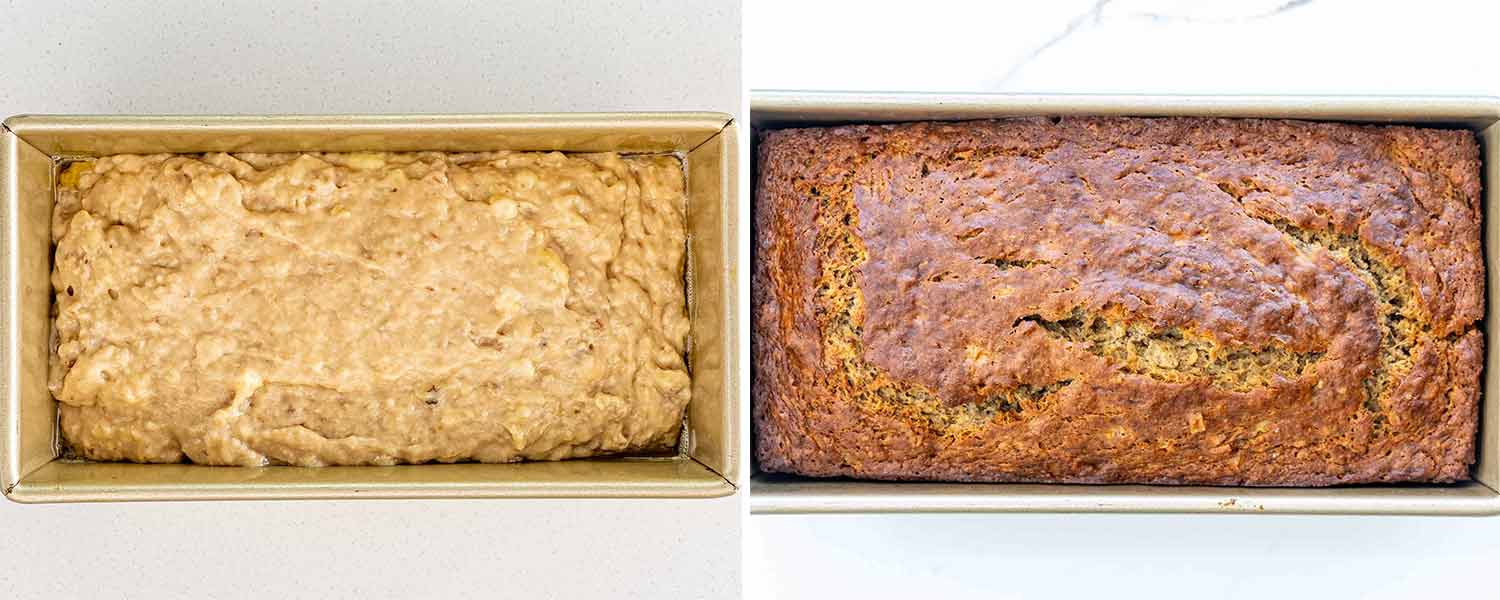
Into the pan. This is a generous amount of batter for a 9 by 5 and it’ll dome quite dramatically as it bakes, which is correct. If the top starts getting dark before the middle is set, tent it loosely with foil.
Bake 50 minutes to an hour, and start checking at 50. See the next section for how to actually tell, because the toothpick will lie to you.
Cool 15 minutes in the pan, then out onto a wire rack. Then leave it alone. A full 2 hours before you slice it, and I know that’s the hardest instruction in the recipe. The crumb is still setting and a warm loaf compresses under the knife into something gummy.
How To Tell When It’s Done
The toothpick test is unreliable in this loaf and it’s worth understanding why.
You’ve got 4 bananas, half a cup of applesauce, and half a cup of sour cream in there. That’s a very wet batter. A toothpick pushed into a pocket of moist crumb comes out clean even when the surrounding batter hasn’t finished setting. You pull the loaf, it cools, and there’s a dense damp band through the middle.
Use a thermometer. Quick breads are done at 200 to 205°F in the center. That’s the reliable check and it takes 5 seconds.
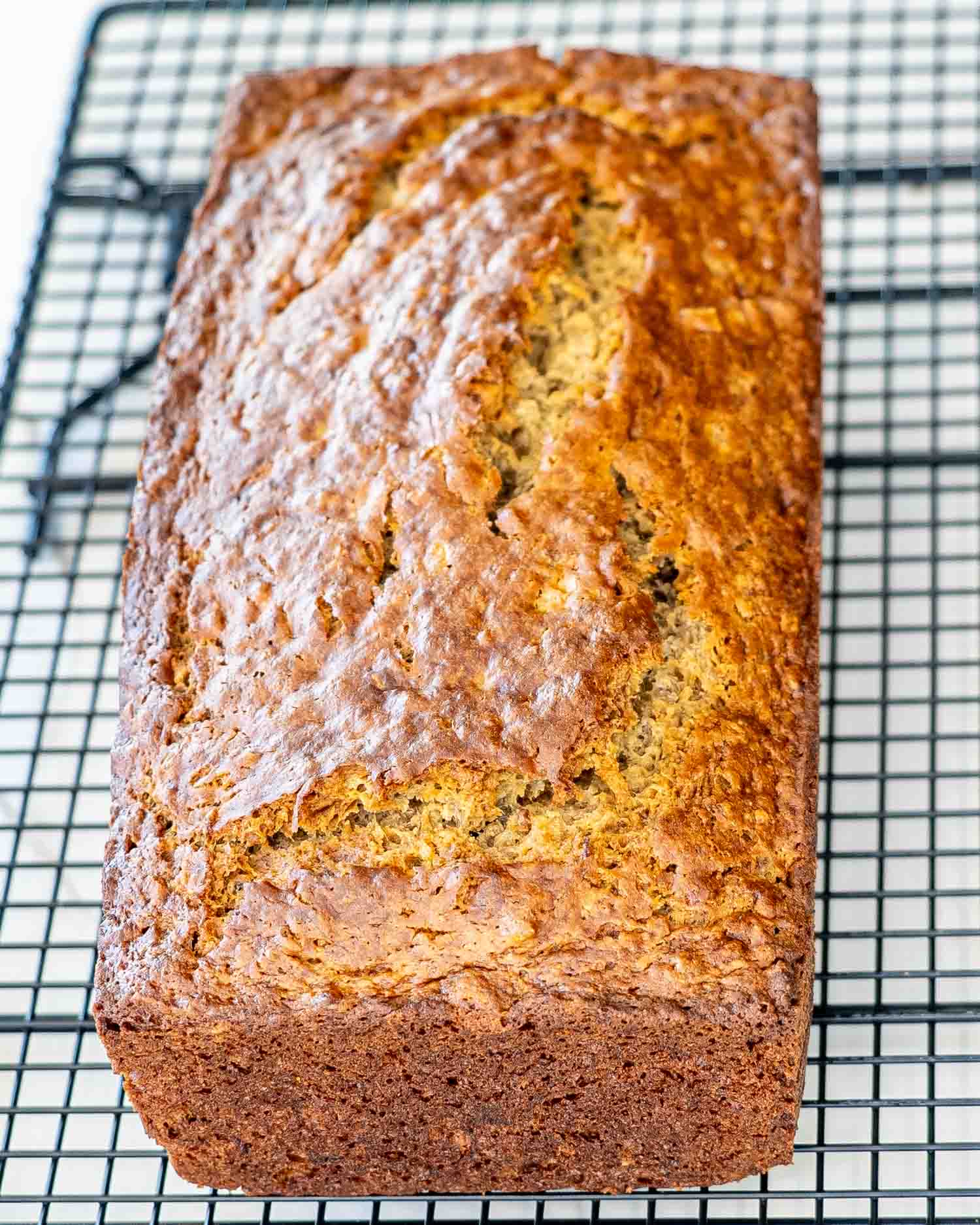
No thermometer? Use several signals together instead of one. The top should be domed and cracked down the middle, which is normal and means it rose properly. The edges should have pulled slightly away from the sides of the pan. And pressing the center gently should feel springy rather than leaving a dent.
If you do use a toothpick, aim for a spot between the walnuts, and accept that a few moist crumbs clinging to it is fine. It’s a clean toothpick from a wet batter that fools people.
Where It Goes Wrong
- Gummy in the middle. Underbaked, or sliced too soon. Take it to 200°F and give it 2 full hours to cool before the knife goes near it.
- Dry. Too much flour, almost always. Spoon it into the cup and level it rather than scooping, since scooping can add a fifth more than the recipe wants. Overbaking does it too.
- Tough and rubbery. Overmixed. Stir until the flour disappears and then stop, lumps and all.
- Sank in the middle. Usually underbaked, or opening the oven door too early. Old baking soda or powder can do it too, giving you a rise that collapses.
- Bland. The bananas weren’t ripe enough. Yellow bananas are starchy rather than sweet and there’s no fixing it after the fact.
- All the walnuts sank. Toss them in a tablespoon of the flour before folding them in and they’ll stay suspended.

Variations
- Chocolate chips. A cup, folded in with or instead of the walnuts. Toss them in flour first so they don’t sink.
- Muffins. Fill the cups two thirds full and bake at 350°F for 20 to 25 minutes. Check early, since muffins go from done to dry much faster than a loaf.
- Cinnamon. A teaspoon with the dry ingredients. Warm and obvious and very good.
- Streusel top. Rub together ¼ cup flour, ¼ cup brown sugar, ½ teaspoon cinnamon, and 2 tablespoons cold butter, then scatter over before baking.
- Whole wheat. Swap half the flour. It’ll be denser and nuttier. Swapping all of it makes a noticeably heavier loaf.
- Gluten free. A cup for cup gluten free blend works well here.
Make Ahead And Storage
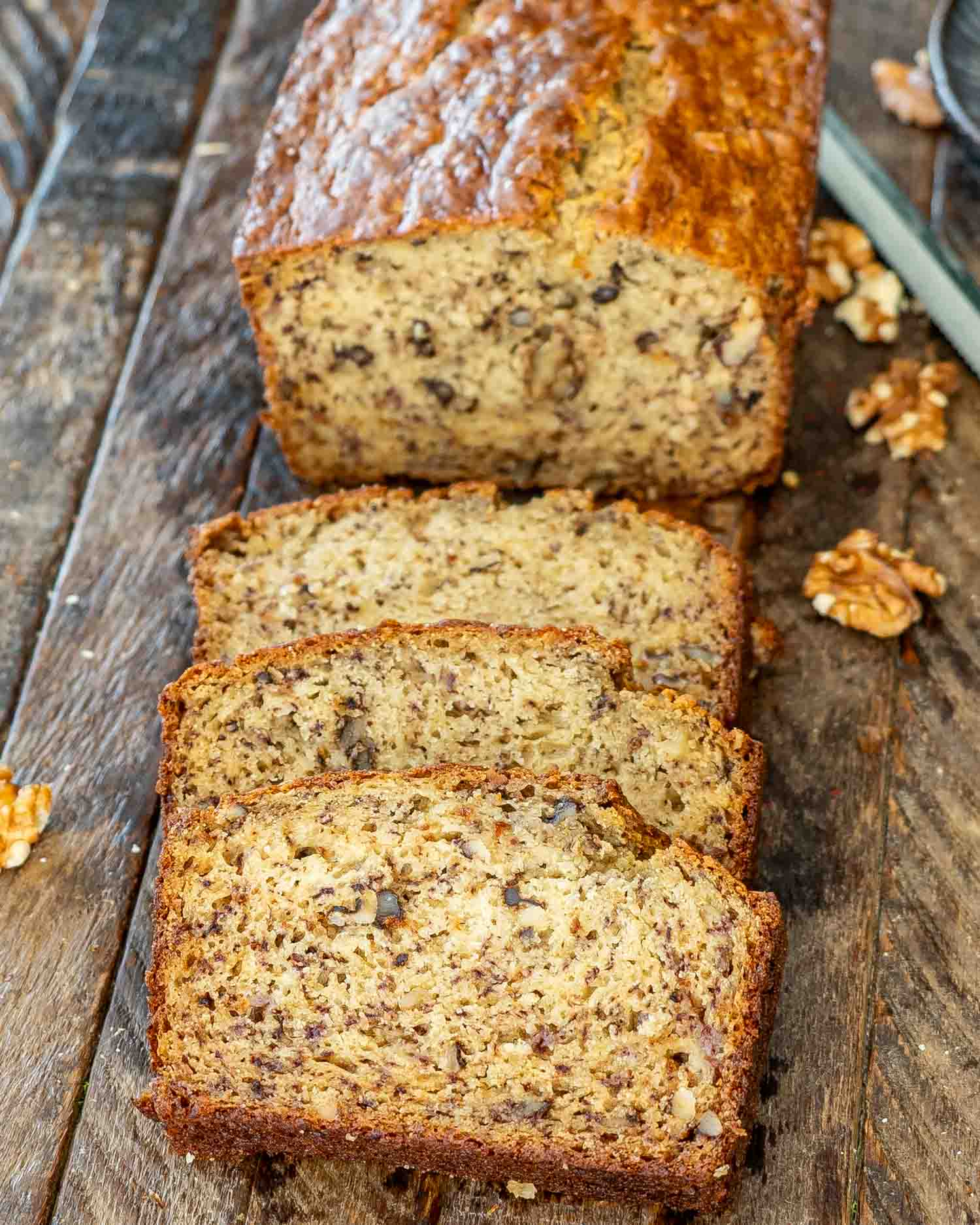
Room temperature: wrapped in foil or plastic, 3 to 4 days. It’s genuinely better on day 2, once the flavor has settled and the crumb has firmed up.
Don’t refrigerate it. The fridge dries quick breads out faster than the counter does, which surprises people. Counter or freezer, nothing in between.
Freezer: 3 months. Wrap the cooled loaf tightly in plastic then foil, or slice it first and freeze the slices with parchment between them. Sliced is far more useful since you can take one at a time.
Thawing: overnight on the counter, still wrapped, so the condensation forms on the wrapping rather than the bread.
Reheating: 20 seconds in the microwave, or a slice toasted in a dry pan with butter, which is better than it has any right to be.
Need More Banana Recipes? Try These:
- Banana Blueberry Bread
- Banana Bread
- The Perfect Banana Muffins
- Banana Nut Muffins
- Banana Upside Down Cake
- Marbled Chocolate Banana Bread
- Banana Chocolate Chip Coffee Cake
- Banana Fritters
- Chocolate Banana Bread
Before You Begin! If you make this, please leave a review and rating letting us know how you liked this recipe! This helps our business thrive & continue providing free recipes.
Banana Nut Bread With Applesauce
Video
Ingredients
- 4 medium bananas (very ripe)
- ½ cup applesauce (unsweetened)
- ½ cup sour cream
- 2 eggs (at room temperature)
- 1 tablespoon vanilla extract
- ½ cup granulated sugar
- ½ cup brown sugar (packed)
- 1¾ cup all-purpose flour
- 1 teaspoon baking soda
- 1 teaspoon baking powder
- ¼ teaspoon salt
- 1 cup walnuts (chopped, or pecans)
Before You Begin! If you make this, please leave a review and rating letting us know how you liked this recipe! This helps our business thrive & continue providing free recipes.
Instructions
- Preheat the oven to 325°F. Spray a 9 by 5 inch loaf pan with cooking spray.
- Peel the 4 bananas into a large bowl and mash with a fork. Add the ½ cup applesauce, ½ cup sour cream, 2 eggs, and 1 tablespoon vanilla extract and whisk until combined.
- Whisk in the ½ cup granulated sugar and ½ cup brown sugar until fully incorporated.
- Add the 1¾ cups all purpose flour, 1 teaspoon baking soda, 1 teaspoon baking powder, and ¼ teaspoon salt. Stir with a wooden spoon just until the flour disappears. The batter will look lumpy and that's correct. Do not overmix.
- Fold in the 1 cup chopped walnuts with a few gentle turns.
- Pour the batter into the prepared pan. Bake for 50 minutes to 1 hour, until an instant read thermometer inserted into the center reads 200 to 205°F, the top is domed and cracked, and the edges have pulled slightly from the pan. If the top browns before the center sets, tent loosely with foil.
- Cool in the pan for 15 minutes, then turn out onto a wire rack. Let it cool completely, at least 2 hours, before slicing.
Notes
- Very ripe bananas. Black skinned, soft, the ones you’d otherwise throw out. Yellow bananas are starchy and give you a bland loaf.
- Ripen them fast: bake unpeeled bananas at 300°F for 15 to 20 minutes, then cool and peel.
- Spoon and level the flour. Scooping packs it and can give you a fifth more than the recipe wants, which is the main cause of a dry loaf.
- Stop mixing when the flour disappears. Lumps are fine. Overmixing makes it tough and rubbery.
- Use a thermometer: 200 to 205°F. The toothpick test is unreliable in a batter this wet.
- Cool 2 hours before slicing. The crumb keeps setting and cutting warm gives you gummy slices.
- Toss the walnuts in a tablespoon of the flour before folding them in and they won’t all sink.
- Storage: counter for 3 to 4 days wrapped, or freezer for 3 months. Don’t refrigerate it.
Nutrition Information
Notice: Nutrition is auto-calculated for your convenience. Where relevant, we recommend using your own nutrition calculations.
Why did my banana bread come out gummy?
Underbaked, or sliced before it cooled. The toothpick test doesn’t work well here because the batter is so wet it can come out clean while the middle is still setting. Use a thermometer and take it to 200 to 205°F, then let it cool a full 2 hours.
What does the applesauce do?
It keeps the loaf moist for days rather than just on the first day. Applesauce is water held in pectin, which grabs onto moisture and holds it in the crumb. Oil gives you a tender loaf that dries out faster.
My bananas aren’t ripe enough. What can I do?
Bake them unpeeled at 300°F for 15 to 20 minutes until the skins go black. Let them cool, peel, and use. It’s not quite the same as real ripening, but it’s close and it works.
Can I substitute the applesauce?
An extra half cup of mashed banana is the closest match. Greek yogurt works and makes it tangier. Half a cup of oil works too, and you’ll get a lovely loaf that doesn’t keep as long.
Do I have to use sour cream?
Greek yogurt or buttermilk both work in the same quantity. The point is fat plus acidity, so anything that brings both is fine.
Can I make muffins with this batter?
Yes. Fill the cups two thirds full and bake at 350°F for 20 to 25 minutes. Start checking early, since muffins dry out much faster than a loaf.
Can I freeze it?
Up to 3 months. Slice it first and freeze the slices with parchment between them, which is far handier than defrosting a whole loaf for one piece.