Peach Scones
This post may contain affiliate links. Please read my disclosure policy.

These Peach Scones have a tender buttery crumb, fresh diced peaches folded into every bite, and a vanilla glaze drizzled over the top while they are still warm. Ready in just over 30 minutes and the kind of thing that makes a weekend morning feel like it was planned.

A good scone is one of those things that looks more complicated than it is. The technique is simple, the ingredients are pantry basics plus one very good piece of fruit, and the whole thing is done in just over 30 minutes. What you get out of it is something that tastes genuinely bakery quality, tender and buttery with pockets of fresh peach and a vanilla glaze that drips down the sides.
It is peak peach season right now and I have been finding the most incredible peaches at Costco lately. If you have a Costco nearby and you have not checked their produce section recently, go. The peaches right now are exactly what you want for this recipe, fragrant, sweet, and perfectly ripe without being mushy. Good peaches make good scones. Great peaches make scones that people ask you about.

Why This Recipe Works
- Cold butter is the whole game. Butter needs to stay cold and in distinct pieces throughout the mixing process. Those pieces of cold butter create pockets of steam as the scones bake which gives you that tender flaky texture. Warm or melted butter gives you a dense crumbly scone that nobody is excited about.
- Do not overmix. This is the other thing. Scone dough should be mixed until it just comes together and then you stop. Overmixing develops the gluten and makes the scones tough. Mix, fold, shape, done.
- Fresh peaches at peak season. Canned or frozen peaches in syrup add too much moisture and make the dough wet and difficult to work with. Fresh diced peaches fold in cleanly and bake into jammy pockets of fruit throughout the scone.
Ingredients in Peach Scones
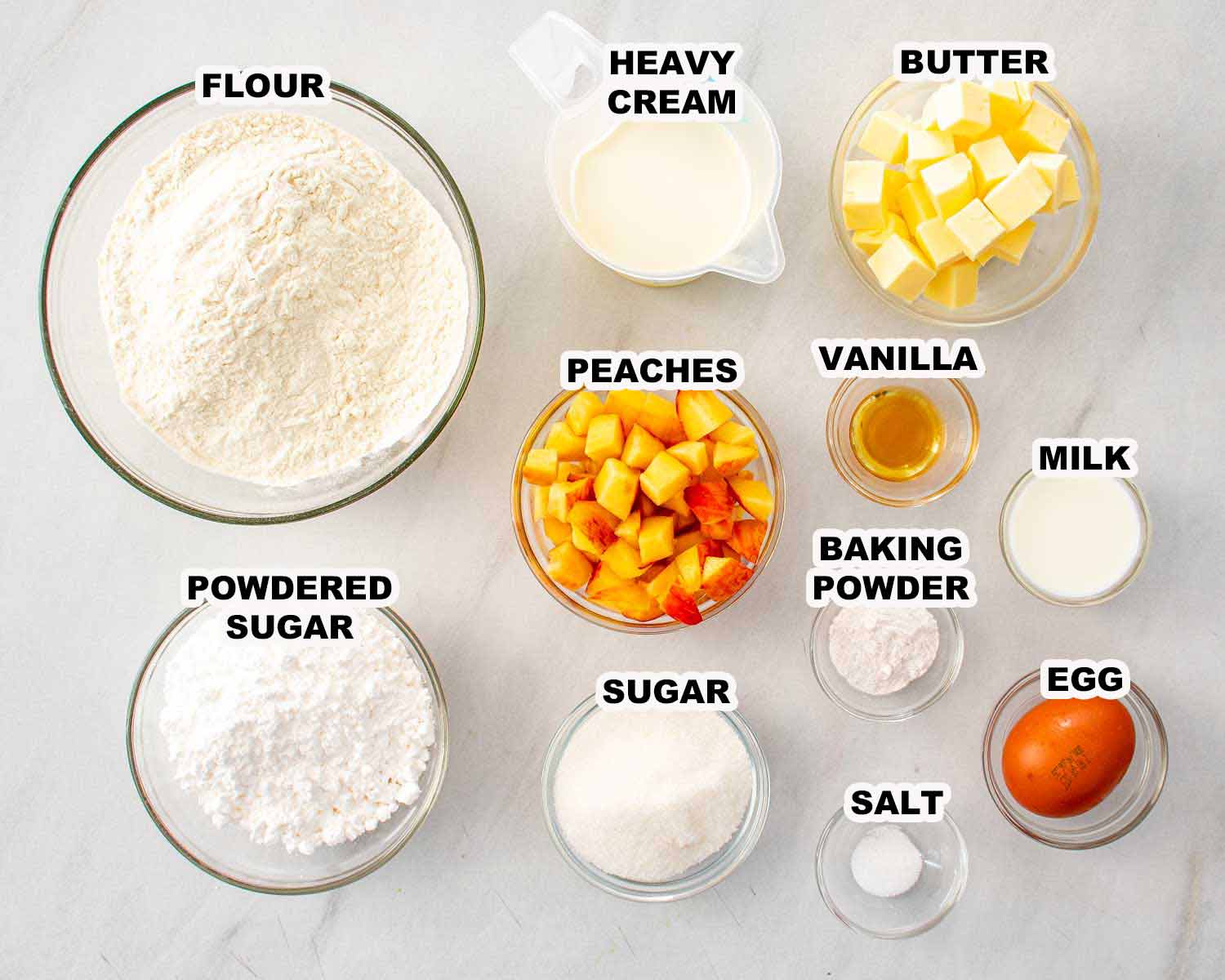
- All purpose flour: Measure by spooning into the cup and leveling off, not scooping, which packs the flour and throws off the ratio.
- Granulated sugar: Just enough sweetness in the scone itself. The glaze handles the rest.
- Baking powder: The leavening that gives the scones their lift. Make sure yours is fresh, old baking powder gives you flat dense scones.
- Salt: Balances the sweetness and seasons the dough. Do not skip it.
- Unsalted butter (cold and cubed): Cold is the operative word here. If the butter warms up during mixing pop the whole bowl in the freezer for 10 minutes and start again. Cold butter is non negotiable for good scone texture.
- Heavy cream: Adds richness and helps bind the dough. Do not substitute with milk or half and half, the fat content matters here.
- Egg: Adds structure and richness.
- Vanilla extract: Goes into both the dough and the glaze.
- Fresh peaches (1 cup, diced): About 2 medium peaches. Ripe but not overly soft so they hold their shape when folded in and baked. Peeled or unpeeled, up to you.
- Powdered sugar: For the glaze. Sift it if you want a smooth drizzle without lumps.
- Milk: Thins the glaze to a drizzling consistency. Add it slowly, a teaspoon at a time, until you get the consistency you want.
How to Make Peach Scones
Preheat the oven to 400°F and line a baking sheet with parchment paper.
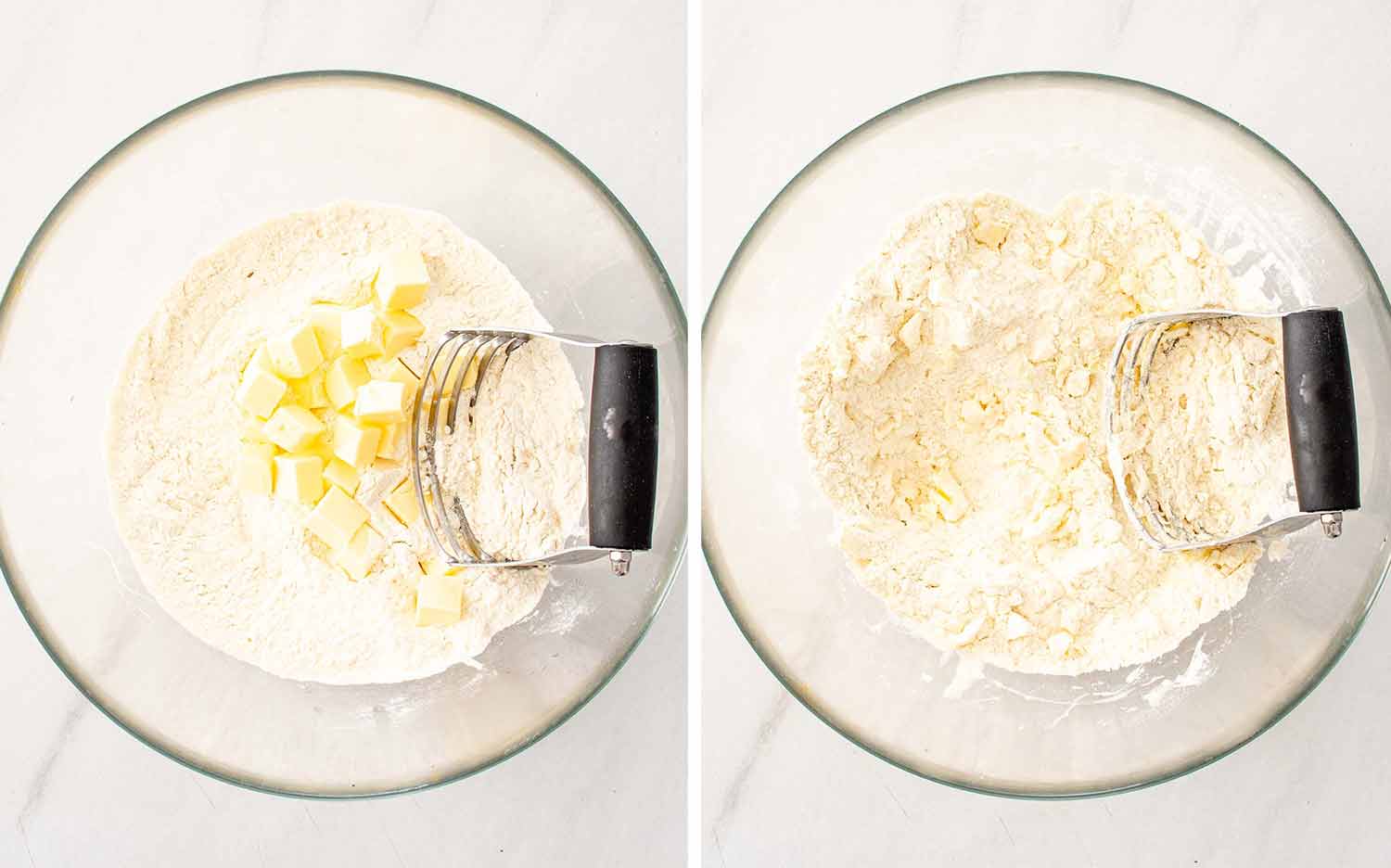
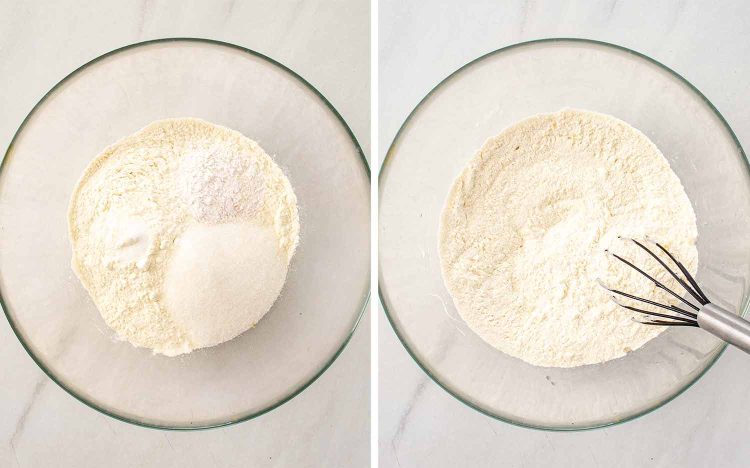
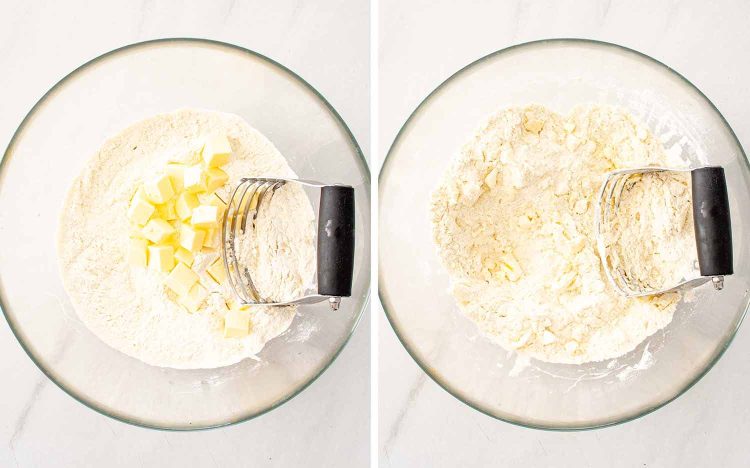
Whisk the flour, sugar, baking powder, and salt together in a large bowl. Add the cold cubed butter and work it into the flour using your fingers or a pastry cutter until the mixture looks like coarse crumbs with some pea sized pieces of butter still visible. Those visible pieces are exactly what you want. Do not keep going until it looks like fine sand.
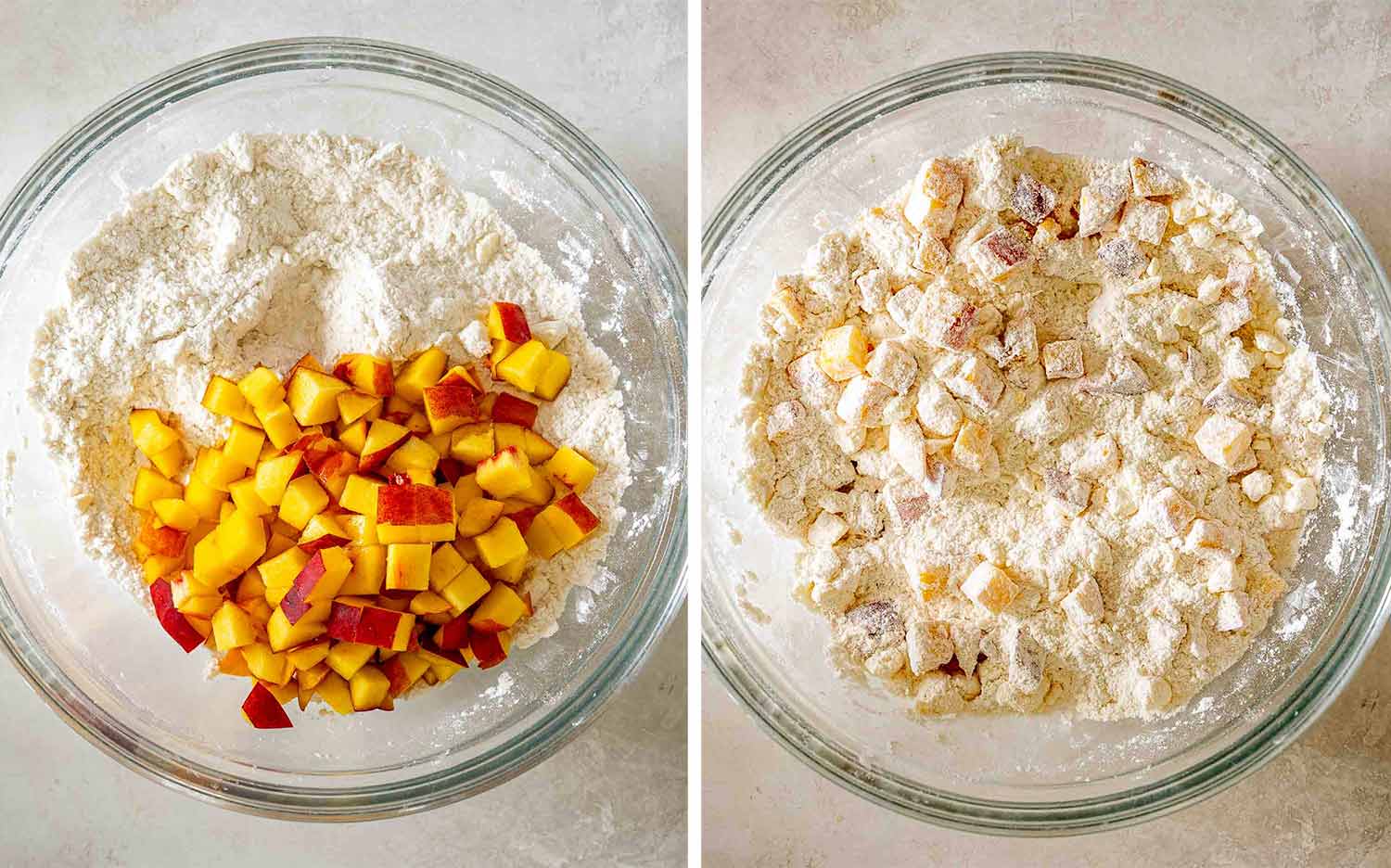
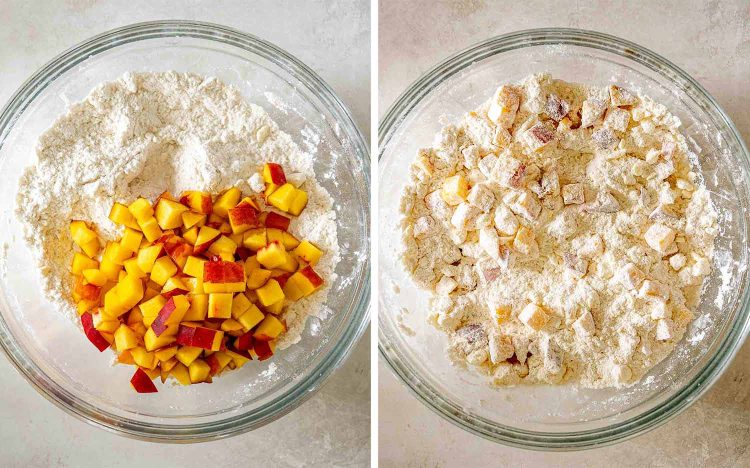
Fold in the diced peaches and toss them gently through the flour mixture until evenly coated and distributed.
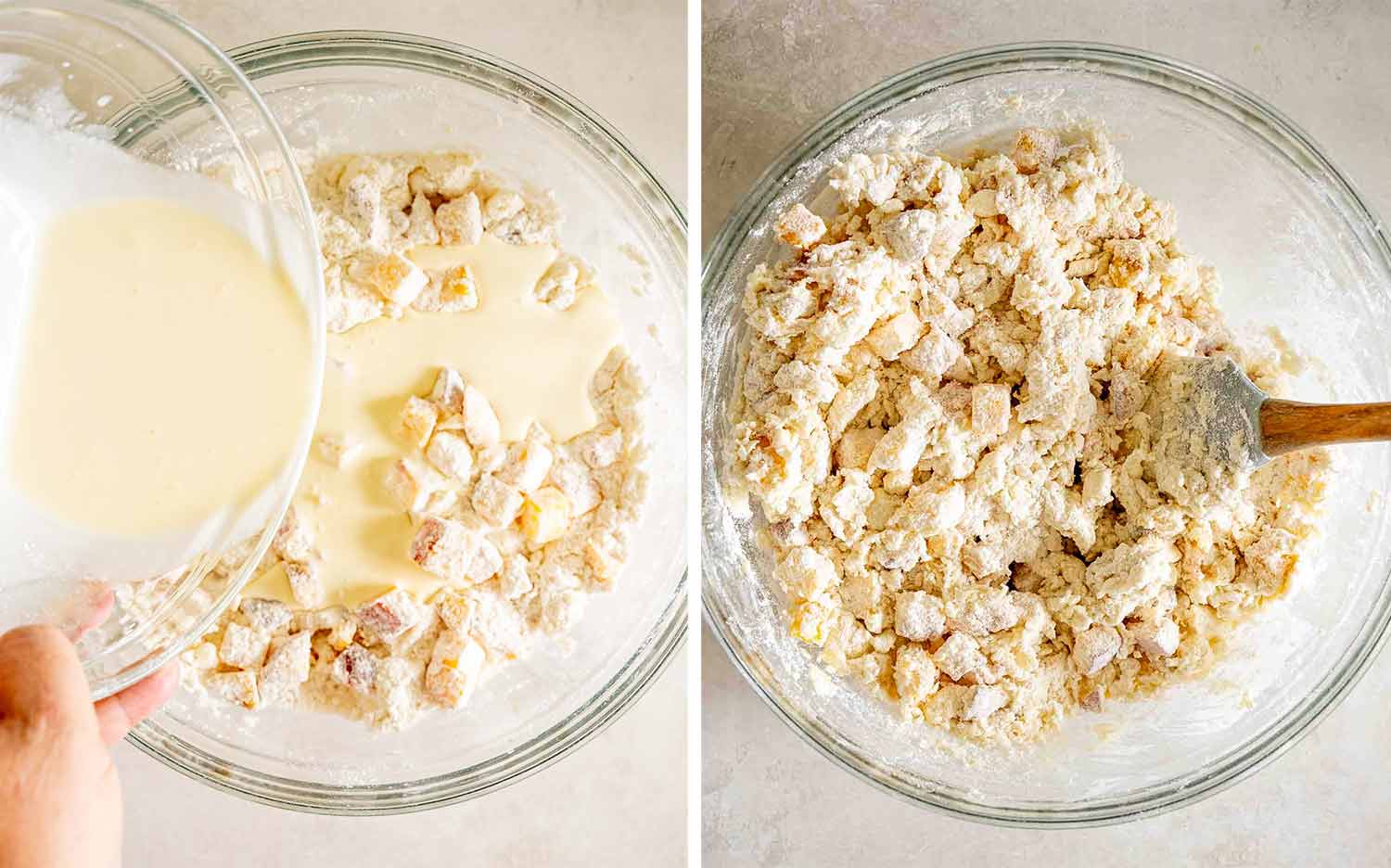
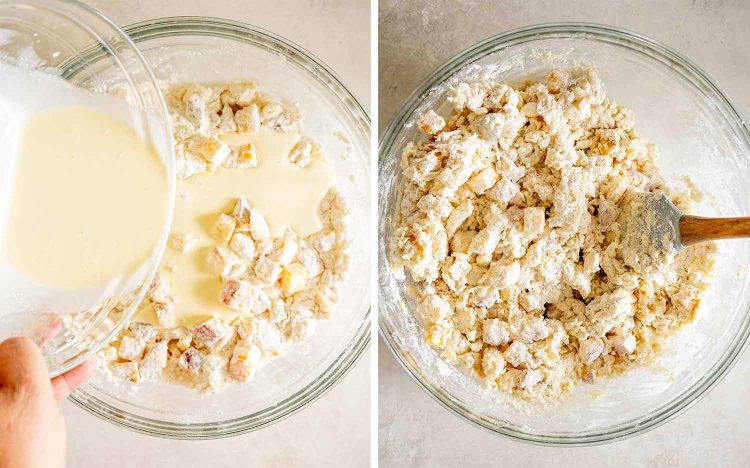
Whisk the heavy cream, egg, and vanilla together in a small bowl. Pour this into the flour and peach mixture and stir gently until just combined. The dough will look shaggy and that is correct. Stop mixing the moment you do not see dry flour. Peaches release a little juice as the dough comes together so it may feel slightly wetter than expected. If it feels too wet and sticky to handle, sprinkle in a tablespoon of flour at a time until it comes together. If it feels too dry and crumbly, add a splash more cream, about a teaspoon at a time, until it holds. You are looking for a dough that is soft, slightly tacky, and holds its shape without sticking to everything.
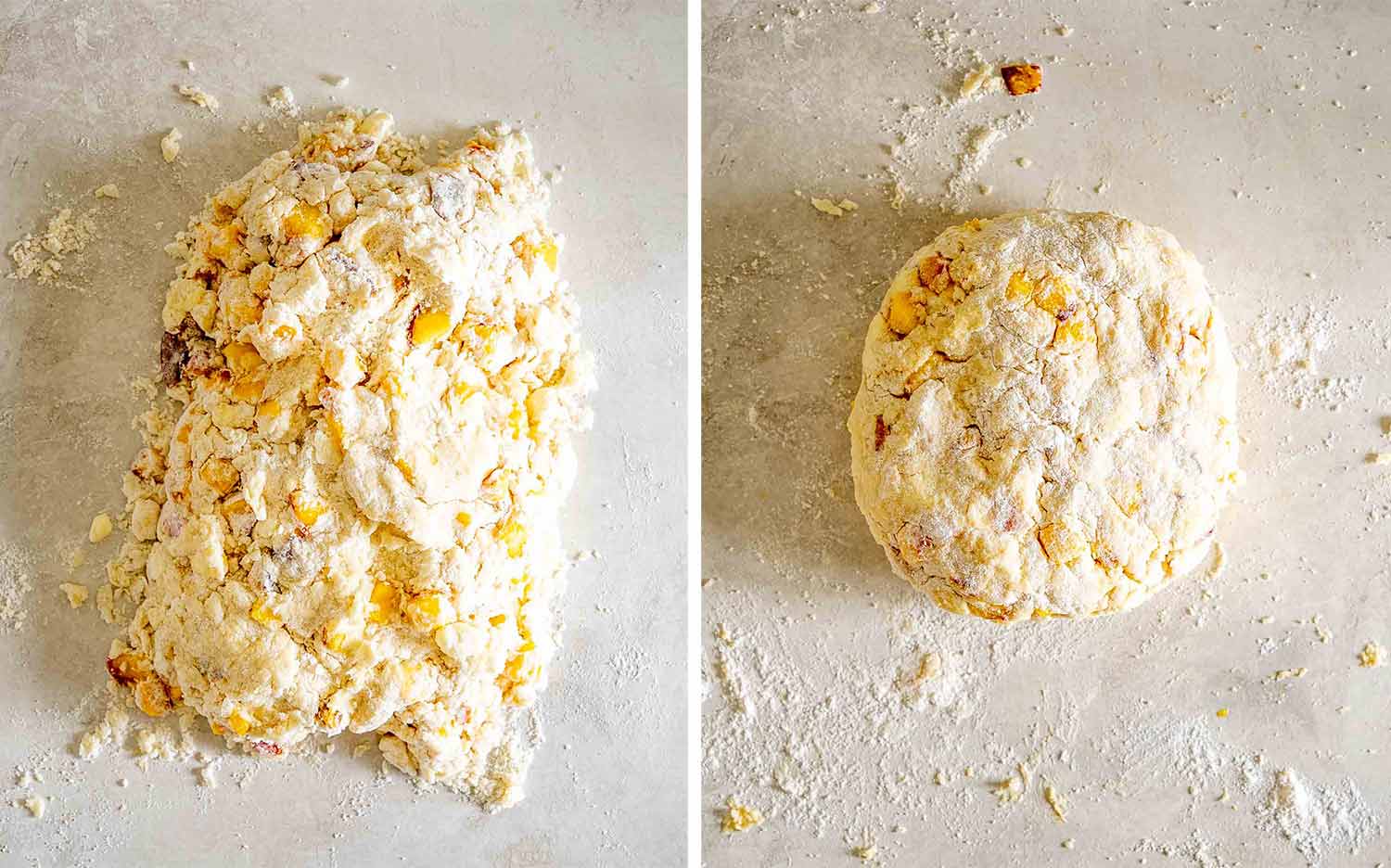
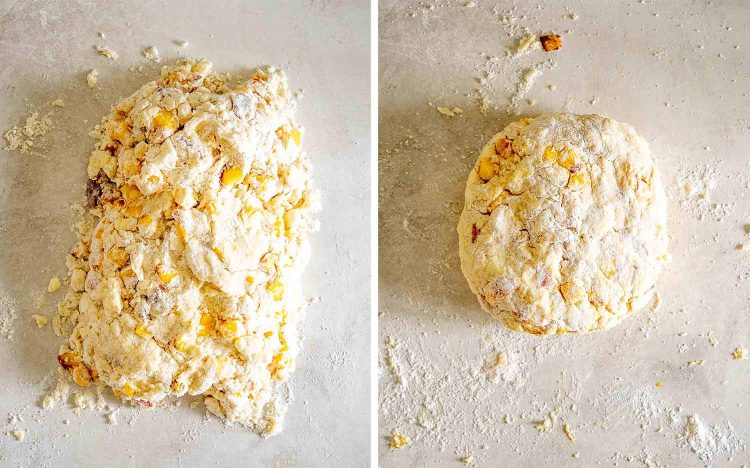
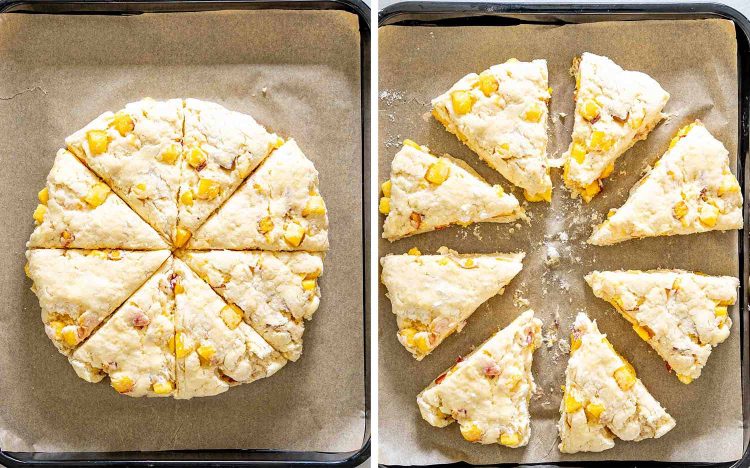
Turn the dough out onto a lightly floured surface and shape it gently into a round about 1 inch thick. Do not knead it, just press it together. Cut into 8 wedges and place on the prepared baking sheet with a little space between each one.
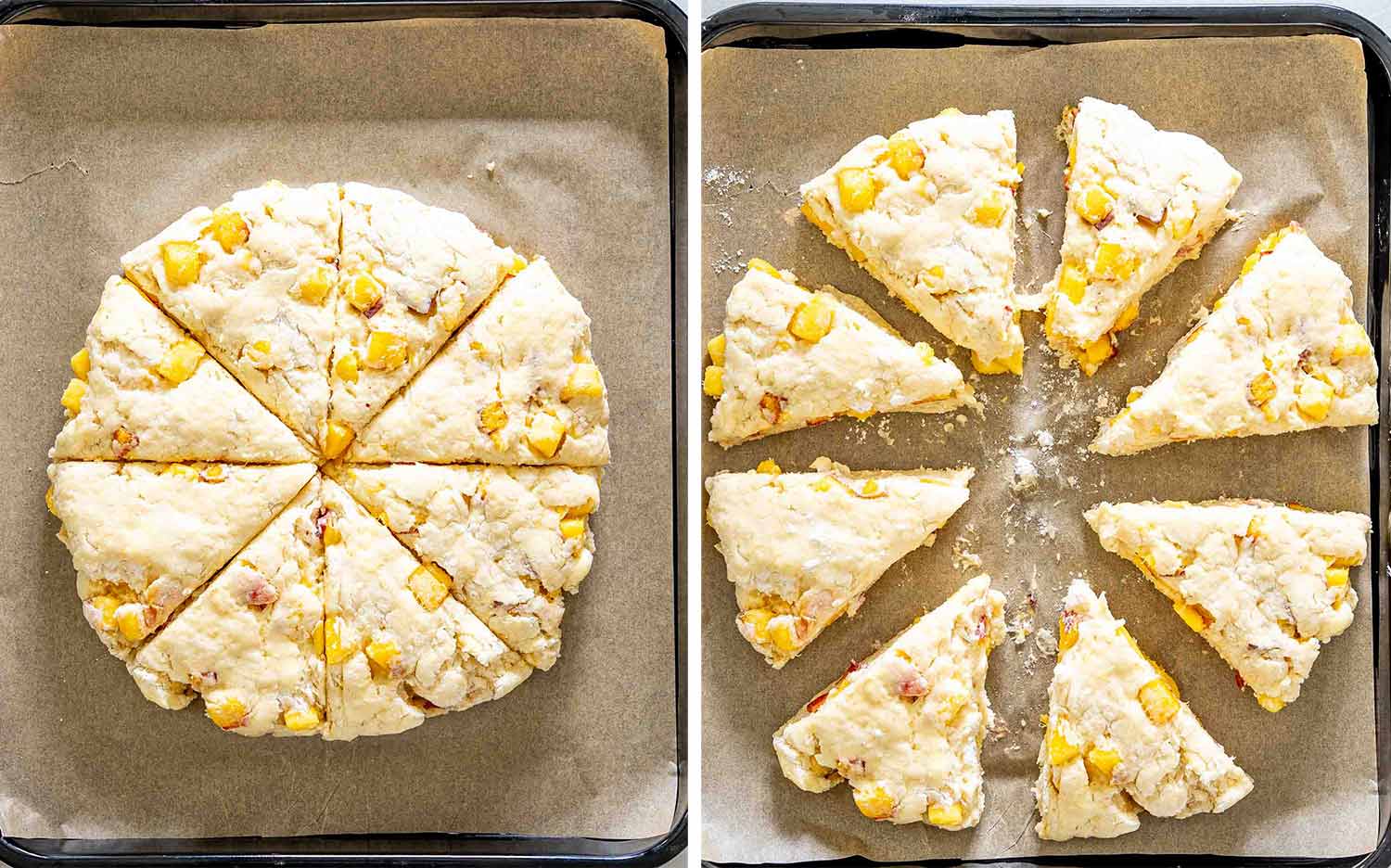
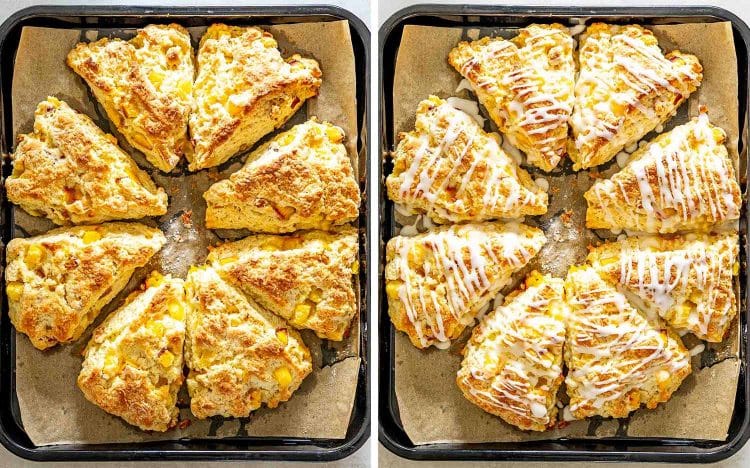
Bake for 16 to 18 minutes until the tops are lightly golden. They should look set and dry on top, not shiny or wet.
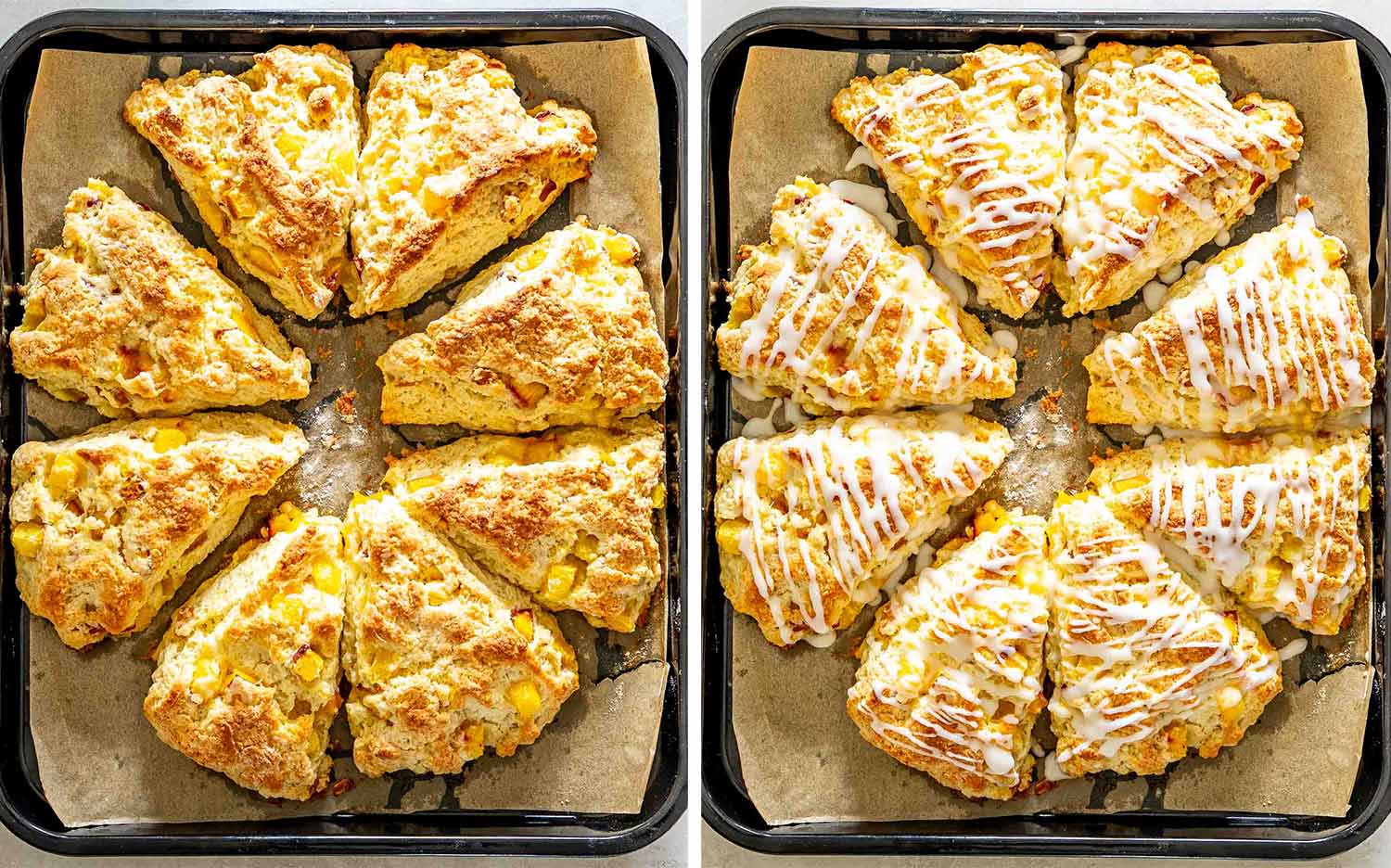
Let them cool slightly before glazing. Not completely, slightly. A warm scone takes the glaze beautifully and lets it set into a thin shell rather than just pooling at the bottom.
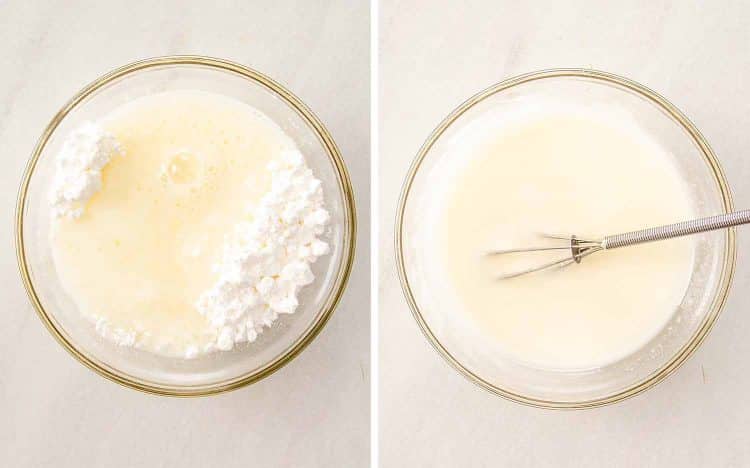
Whisk the powdered sugar, milk, and vanilla together until smooth and pourable. Drizzle over the warm scones and let it set for a few minutes before serving.

Tips and Tricks
- Keep the butter cold. If your kitchen is warm, cube the butter and put it back in the freezer for 10 to 15 minutes before you start. Cold butter equals tender flaky scones. Warm butter equals dense disappointing scones.
- Do not overmix. Mix until the dough just comes together and stop. Some shaggy bits are fine. Overmixing develops gluten and makes the scones tough.
- Pea sized butter pieces are correct. When you finish working the butter into the flour you should still see some small pea sized pieces. Those are the ones that create the flaky texture in the oven.
- Use ripe but firm peaches. Overripe peaches release too much juice and make the dough wet and sticky. You want peaches that are fragrant and sweet but still hold their shape when cut.
- Shape gently. Scone dough does not like to be handled. Press it into shape rather than kneading or rolling it.
- Glaze while still warm. Not hot, warm. The glaze sets into a thin shell on a warm scone rather than running right off or sitting in a thick puddle.

Make Ahead and Storage
Make ahead: The dough can be shaped and cut into wedges, then frozen solid on the baking sheet before transferring to a freezer bag. Bake from frozen at 400°F adding 5 to 7 minutes to the bake time. Fresh scones from frozen dough whenever you want them.
Storage: Scones are best the day they are made. Store leftovers in an airtight container at room temperature for up to 2 days. They lose their crispness as they sit but a 10 minute warm up in a 325°F oven brings them back nicely.
Freeze baked scones: Cool completely, wrap individually, freeze for up to 2 months. Thaw at room temperature and warm in the oven before serving.

Try These Scone Recipes Next
- Cranberry Orange Scones
- 2 Ingredient Scones
- Lemon Blueberry Scones
- Strawberry Scones
- Apple Cinnamon Scones
- Chocolate Chip Scones
Before You Begin! If you make this, please leave a review and rating letting us know how you liked this recipe! This helps our business thrive & continue providing free recipes.

Peach Scones
Video
Ingredients
- 2 cups all purpose flour
- ⅓ cup granulated sugar
- 1 tablespoon baking powder
- ½ teaspoon salt
- ½ cup unsalted butter (cold and cubed)
- ½ cup heavy cream
- 1 large egg
- 1 teaspoon vanilla extract
- 1 cup fresh peaches (diced (about 2 medium peaches))
For Vanilla Glaze
- 1 cup powdered sugar
- 2 tablespoons milk
- ½ teaspoon vanilla extract
Before You Begin! If you make this, please leave a review and rating letting us know how you liked this recipe! This helps our business thrive & continue providing free recipes.
Instructions
- Preheat your oven to 400°F (200°C). Line a baking sheet with parchment paper.
- In a large bowl, whisk together 2 cups all purpose flour, ⅓ cup granulated sugar, 1 tablespoon baking powder, and ½ teaspoon salt.

- Add ½ cup cold, cubed unsalted butter to the flour mixture. Using your fingers or a pastry cutter, work the butter into the flour until the mixture looks like coarse crumbs with some small pea sized pieces.
- Fold in 1 cup of diced peaches and toss them gently through the flour mixture until evenly coated and distributed.
- In a small bowl, whisk together ½ cup heavy cream, 1 large egg, and 1 teaspoon vanilla extract. Pour the wet mixture into the dry ingredients and gently stir until just combined. If the dough feels too wet add flour a tablespoon at a time. If it feels too dry add cream a teaspoon at a time. Do not overmix.
- Turn the dough out onto a lightly floured surface and gently shape it into a round about 1 inch thick.
- Cut the dough into 8 wedges and place them on the prepared baking sheet, spacing them slightly apart.
- Bake for 16 to 18 minutes, until the tops are lightly golden.
Make the glaze
- In a small bowl, add 1 cup powdered sugar, 2 tablespoons milk, and ½ teaspoon vanilla extract. Whisk until smooth and pourable. If the glaze is too thick, add a little more milk, about 1 teaspoon at a time, until you reach a drizzling consistency.
- Once the scones have cooled slightly, drizzle the glaze over the tops. Let the glaze set for a few minutes before serving.
Notes
- Cold butter is everything: If your kitchen is warm, cube the butter and put it back in the freezer for 10 to 15 minutes before starting. Cold butter is non negotiable for tender flaky scones. Warm butter gives you dense disappointing ones.
- Pea sized butter pieces: When you finish working the butter into the flour you should still see some small pea sized pieces. Those are what create the flaky texture in the oven. Don’t keep going until it looks like fine sand.
- Peaches go in with the dry ingredients first: Toss the diced peaches through the flour mixture before adding the wet ingredients. This coats them and helps them distribute evenly throughout the dough.
- Dough too wet: Peaches release juice as the dough comes together. If it feels too sticky to handle add flour a tablespoon at a time until it comes together.
- Dough too dry: Add more heavy cream a teaspoon at a time until the dough holds together when pressed.
- Do not overmix: Stir until the dough just comes together and stop. Shaggy is correct. Overmixing develops gluten and makes the scones tough.
- Fresh peaches only: I don’t recommend canned or frozen here. Fresh ripe but firm peaches give you the best flavor and texture. Right now Costco has incredible peaches if you have one nearby.
- Shape gently: Press the dough into shape rather than kneading or rolling it. Scone dough does not like to be handled.
- Glaze while warm not hot: A warm scone takes the glaze beautifully into a thin shell. A hot scone makes it run right off.
- Make ahead: Shape and cut the wedges, freeze solid on the baking sheet, then transfer to a freezer bag. Bake from frozen at 400°F adding 5 to 7 minutes to the bake time.
- Storage: Best the day they are made. Store in an airtight container at room temperature for up to 2 days. Warm in a 325°F oven for 10 minutes to refresh them.
- Baking powder: Make sure it is fresh. Old baking powder gives you flat dense scones and you won’t know until they come out of the oven.
Nutrition Information
Notice: Nutrition is auto-calculated for your convenience. Where relevant, we recommend using your own nutrition calculations.
Can I use frozen peaches?
I strongly recommend fresh peaches here. Frozen peaches release a lot of moisture as they thaw which makes the dough wet and the scones dense. If you really have no other option, thaw completely, drain very well, and pat dry with paper towels before folding in. But honestly, fresh is the way to go especially right now when peaches are at their best.
Can I use canned peaches?
I would skip canned peaches for this one. They are too wet and too sweet and will throw off both the texture and the flavor of the scones. Fresh peaches only in my kitchen for this recipe.
My scones came out dense. What happened?
In my experience this almost always comes down to one of 3 things. The butter was too warm, the dough was overmixed, or the baking powder is old. Check all 3 before your next batch and I promise you will get a completely different result.
Can I make these without the glaze?
Absolutely. I sometimes sprinkle coarse sugar over the tops before baking instead and it gives you a lovely crunchy sweet finish without the glaze. Both versions are delicious.
Can I add other fruit?
Yes and I encourage it. Blueberries, raspberries, or diced strawberries all work beautifully with this dough. Just add them straight from the fridge or use them frozen without thawing since berries release more juice than peaches.
Can I substitute the heavy cream?
I would not recommend it. The fat content of heavy cream is what gives these scones their richness and tender texture. Half and half or milk will give you a noticeably different and less satisfying result.