Best Ever Pumpkin Roll Recipe
This post may contain affiliate links. Please read my disclosure policy.
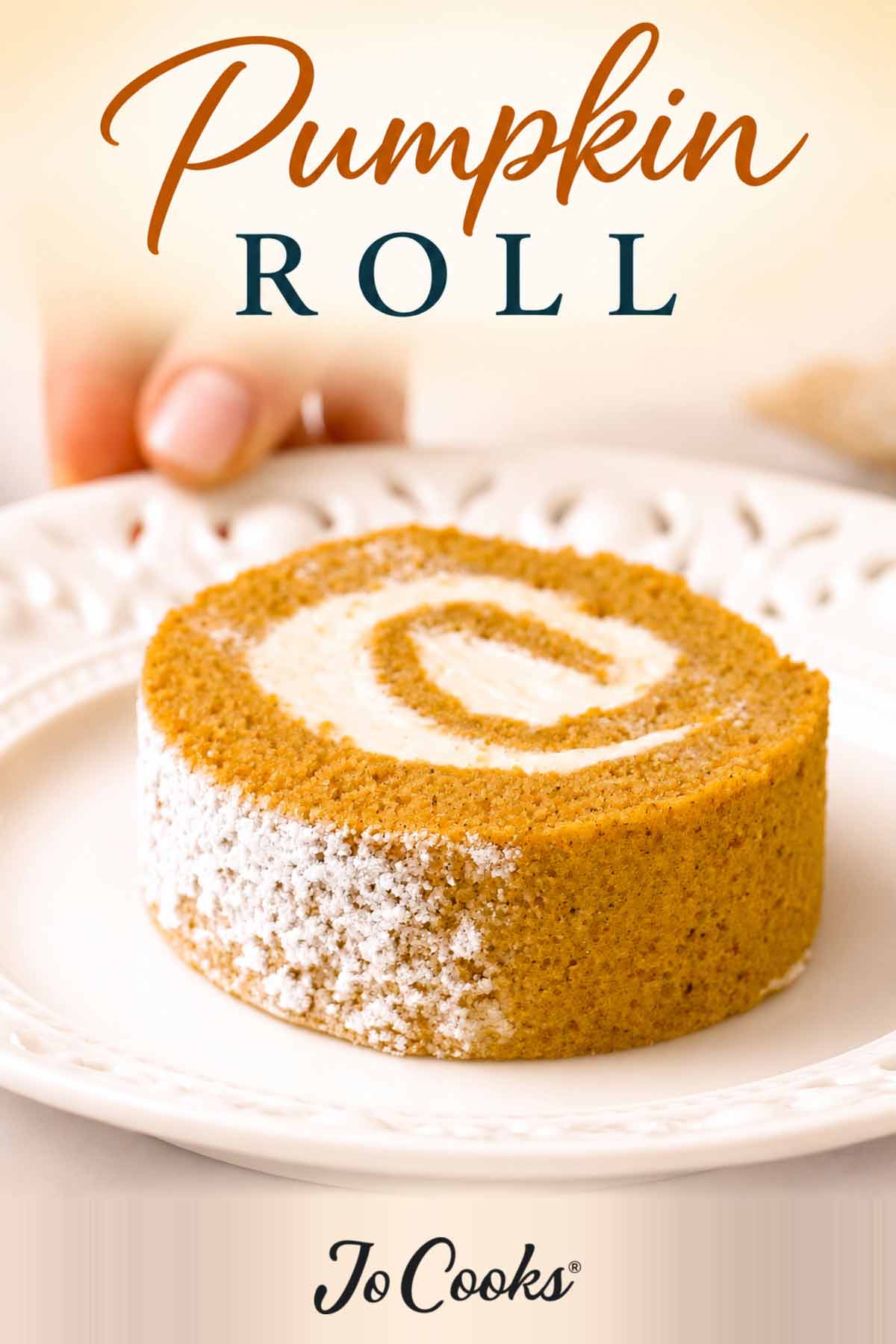
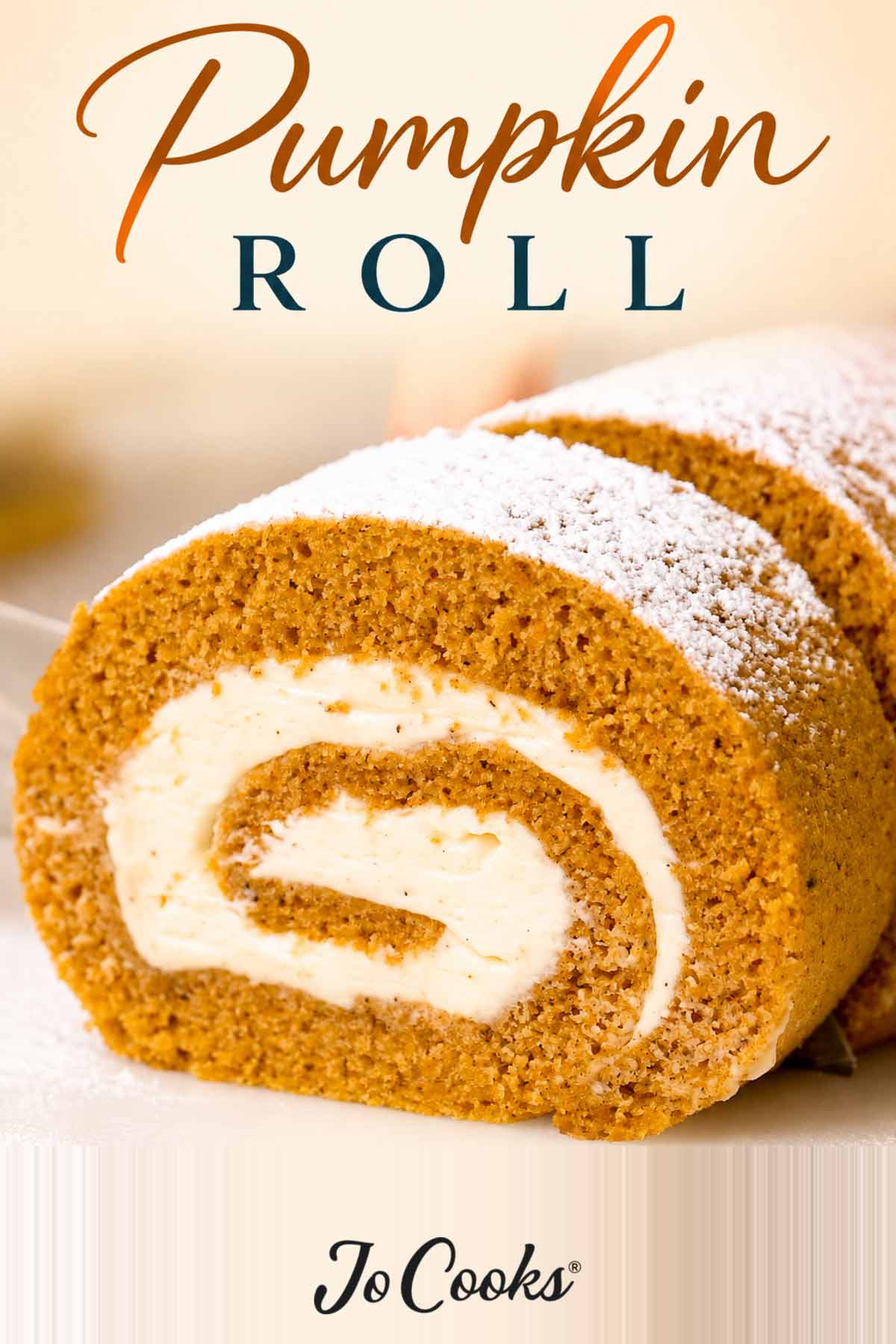
14 minutes in the oven and this Pumpkin Roll slices into perfect spirals of spiced cake and cream cheese filling. The secret to one that doesn’t crack is rolling it while it’s still hot out of the pan. Everything after that is waiting.
A Pumpkin Roll Recipe That Looks Harder Than It Is
I’ll be honest about why I love this cake. It makes me look good.
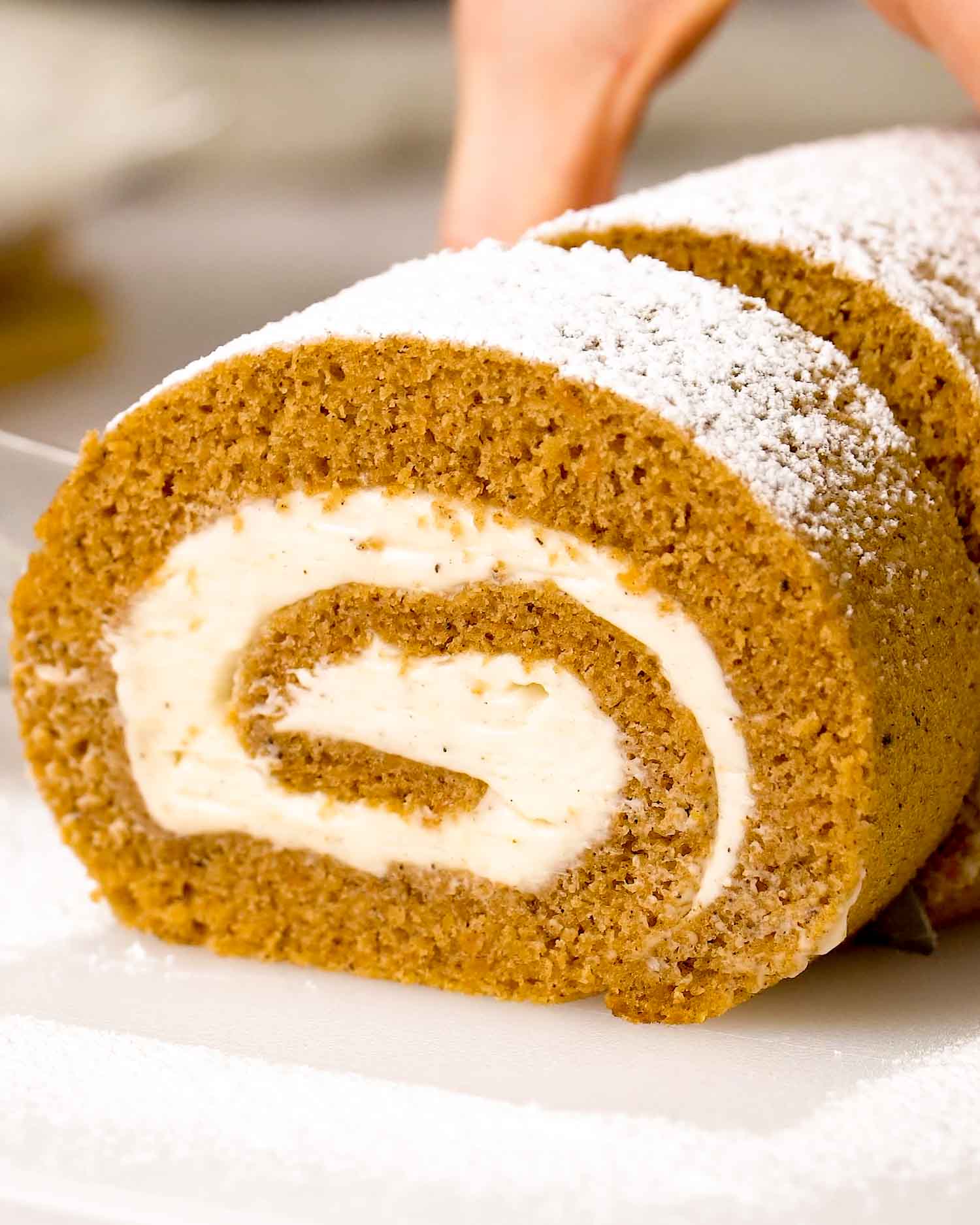
You carry it to the table and there it is, a perfect spiral of pale cream wound through spiced orange cake, dusted with sugar like something out of a bakery window. It looks like you gave up your whole afternoon for it.
The cake bakes for 14 minutes.
It also tastes better than it looks, which is saying something. Cold tangy cream cheese against warm spice, and because it’s rolled you get both in every bite instead of frosting sitting on top.
What Is A Pumpkin Roll?
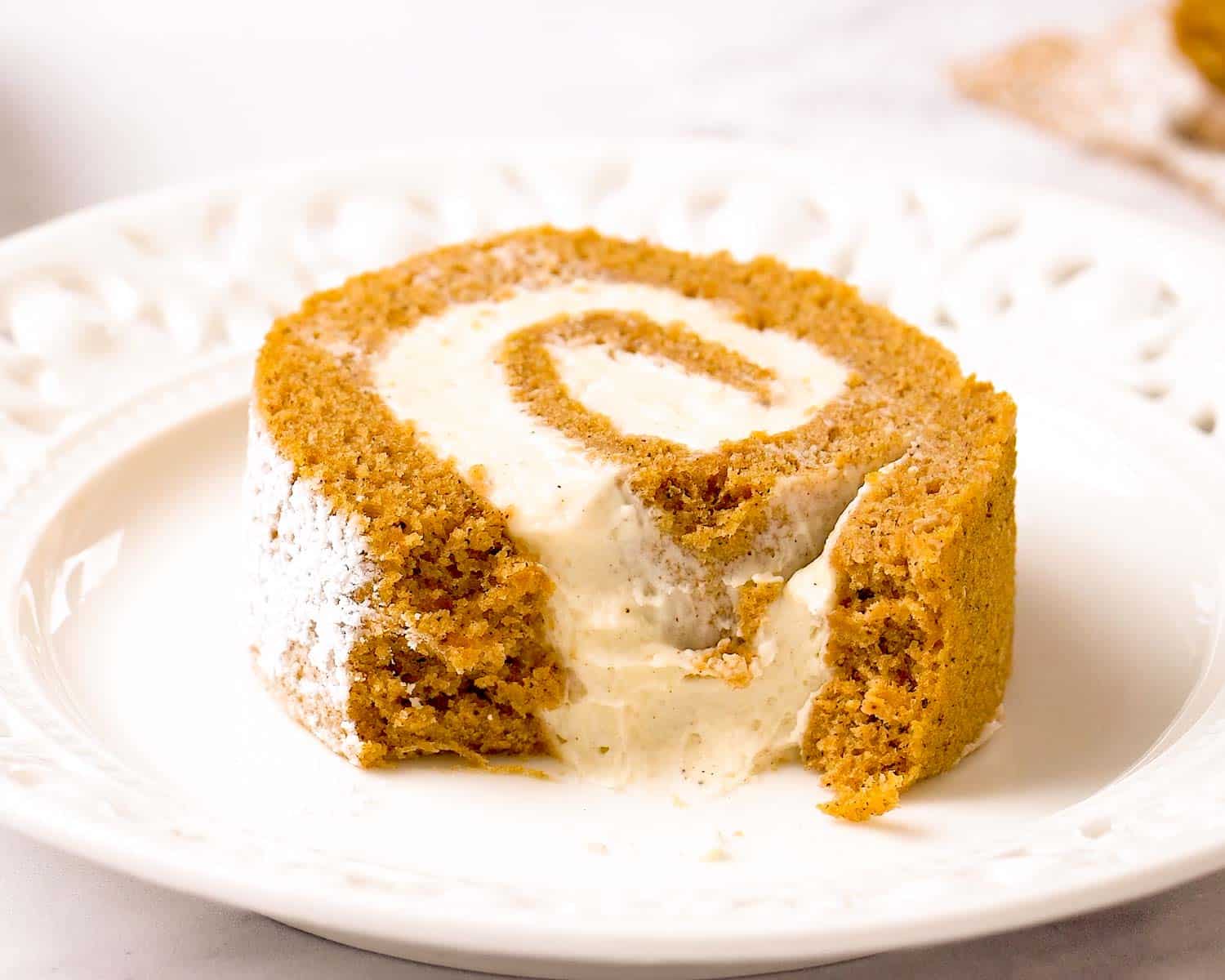
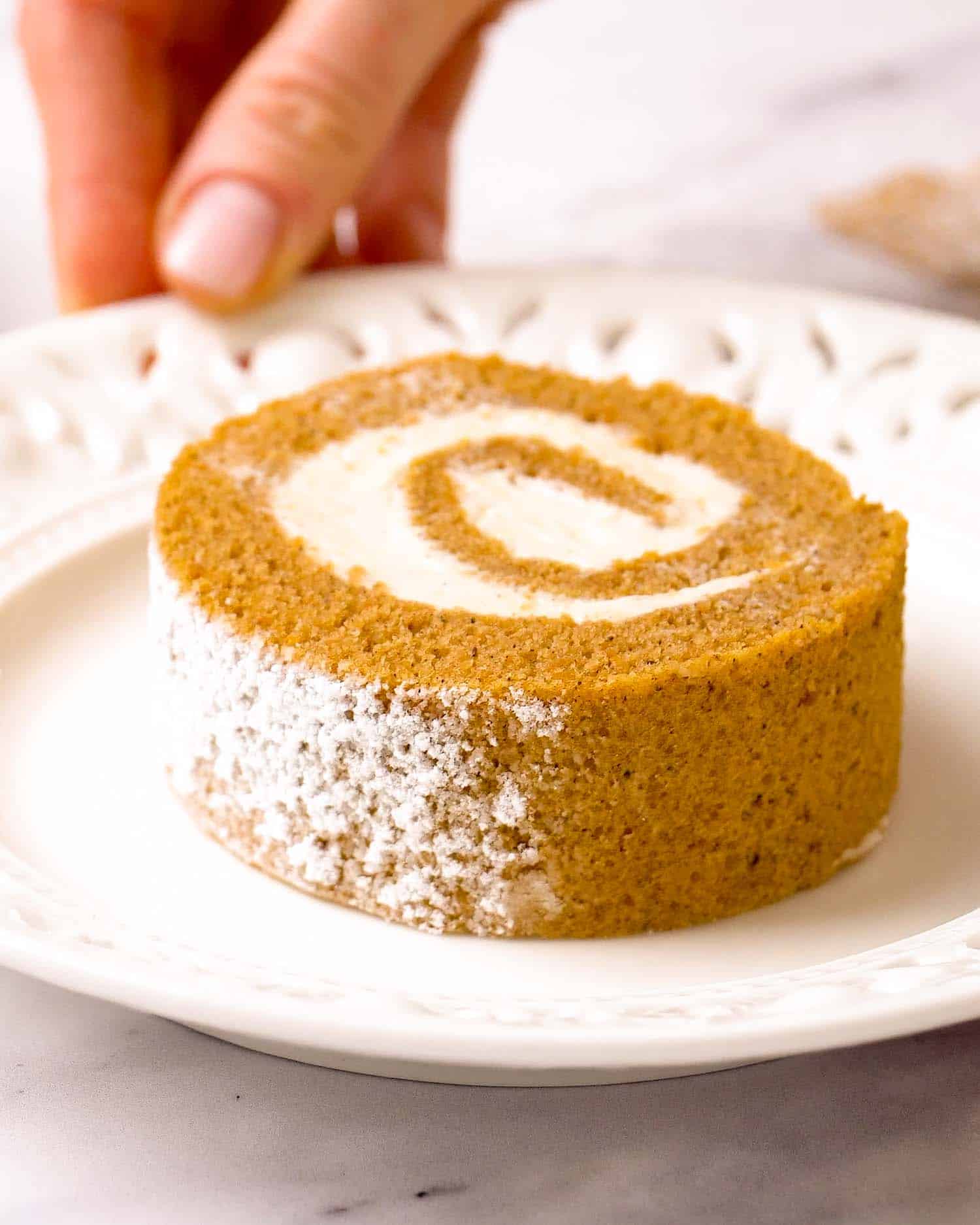
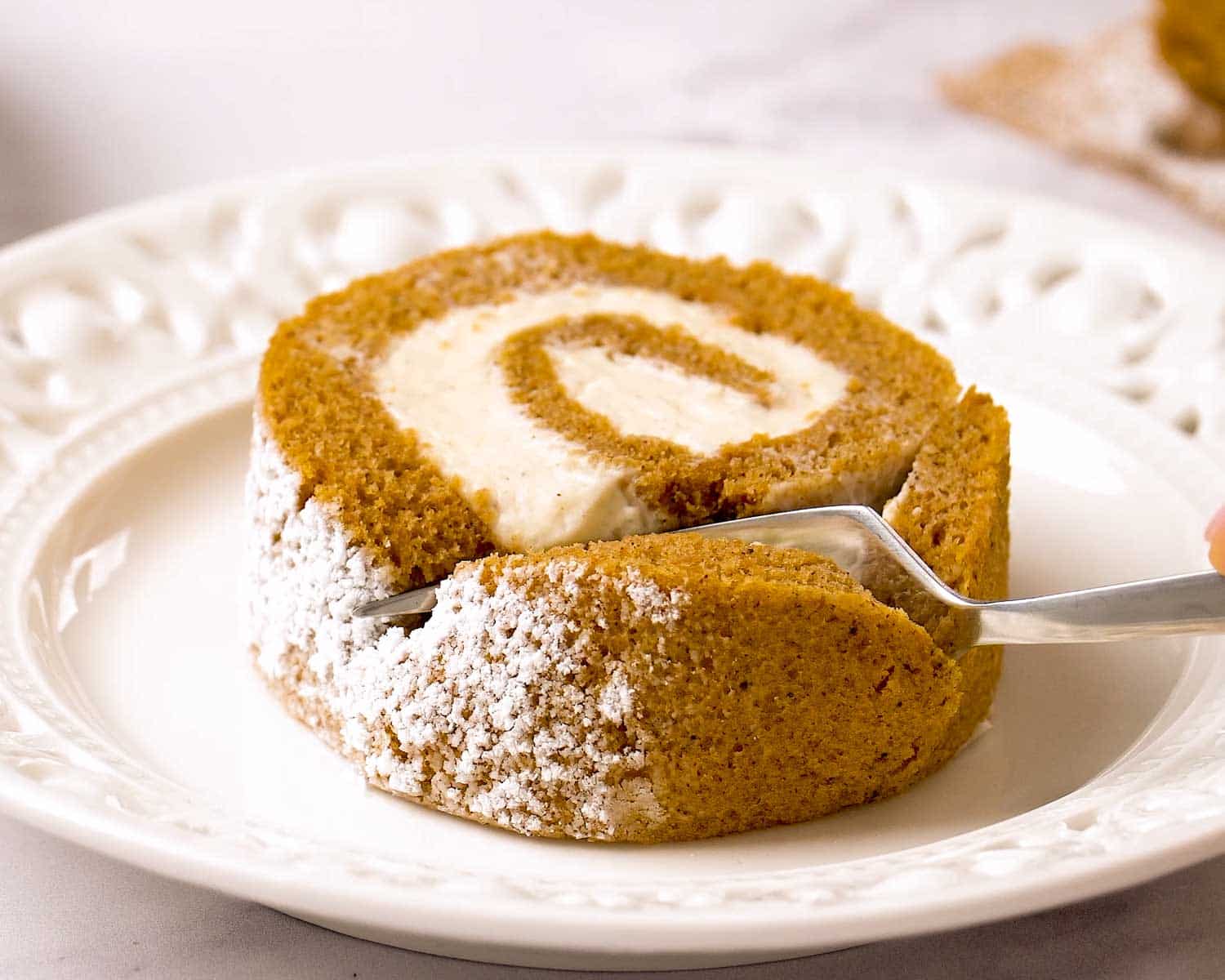
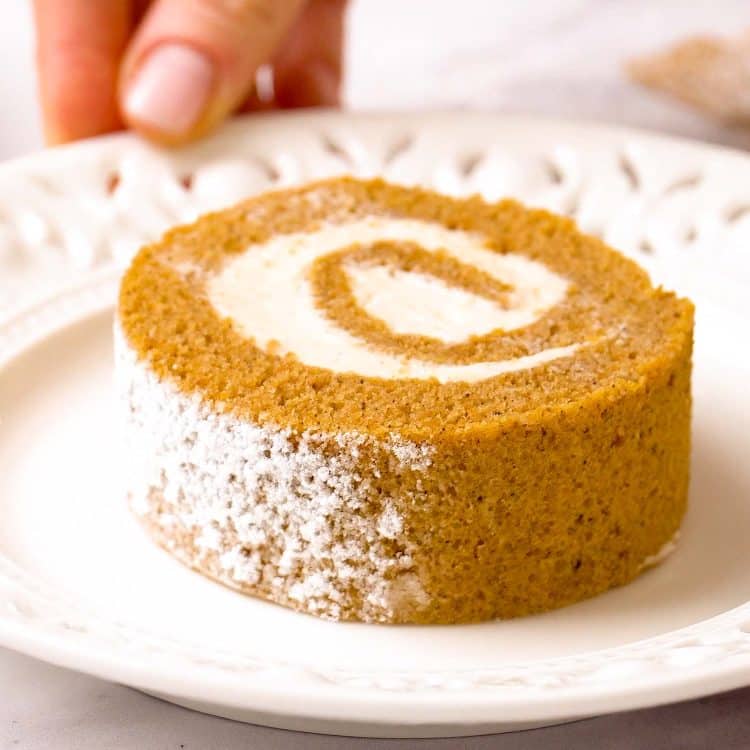
A thin sheet of spiced pumpkin cake, spread with cream cheese filling and rolled into a log, then sliced across so every piece comes out as a spiral.
You’ll see the same idea called a roll cake, a jelly roll or a Swiss roll depending on who’s talking. They’re all the same trick: bake a cake thin enough to bend, put something soft inside it, roll it up.
In my opinion, the pumpkin one is the best of them. The cake is spiced and a little earthy, the filling is cold and tangy and sweet, and the spiral means you get both at once rather than one sitting on top of the other.
It also slices like a dream, which makes me very happy.
Ingredients in Pumpkin Roll
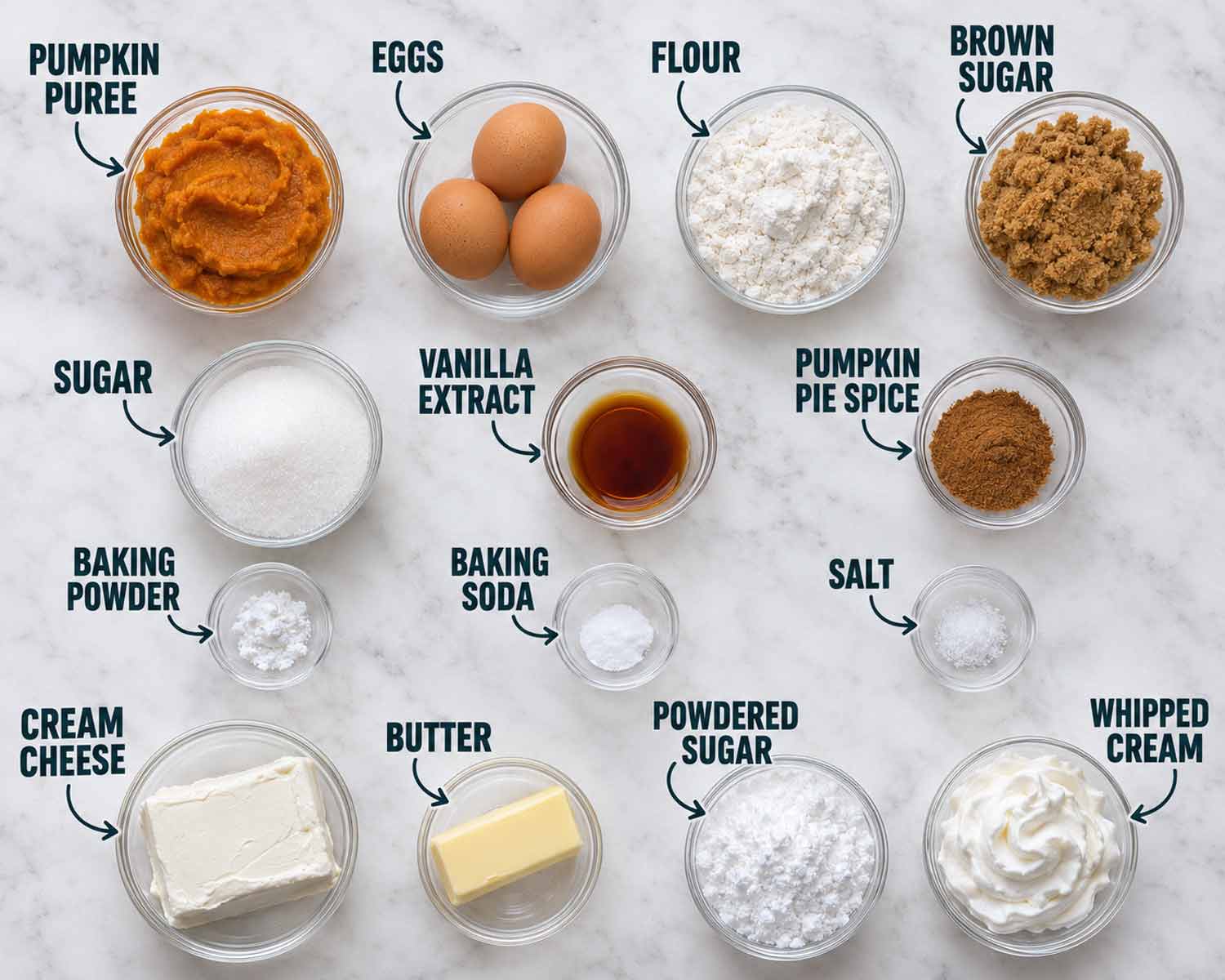
- All purpose flour (¾ cup): Not much flour for a whole cake, and that’s deliberate. A thin, light crumb is what lets this bend instead of snap.
- Baking powder (½ teaspoon) and baking soda (½ teaspoon): Both, because the batter has pumpkin in it and needs the lift.
- Pumpkin pie spice (1½ teaspoons for the cake, 1 teaspoon for the filling): Goes in both halves so the spice runs all the way through rather than sitting in the cake alone. There’s a Pumpkin Pie Spice blend here if you’d rather mix your own.
- Salt (¼ teaspoon in the cake, ¼ teaspoon in the filling): The filling salt matters more than you’d think. A cup of icing sugar with no salt in it tastes flat and one dimensional.
- Eggs (3 large, room temperature): Room temperature is important. Cold eggs don’t whisk up to the same volume, and volume is what makes this cake flexible.
- Granulated sugar (¼ cup) and brown sugar (½ cup, packed): Two sugars, the brown sugar for a bit of molasses depth. Most versions of this cake use all white sugar.
- Vanilla extract (2 teaspoons in the cake, 1 teaspoon in the filling): Generous amounts in both.
- Canned pumpkin (⅔ cup): Pure pumpkin puree, not pumpkin pie filling, which is already sweetened and spiced. Two thirds of a cup is most of a small can.
- Cream cheese (8 ounces, room temperature): Full fat, from a block, not the spreadable kind in a tub and not the whipped kind. Tub cream cheese has extra water in it and your filling will be loose and sad. Room temperature or you’ll be whisking lumps forever.
- Butter (4 tablespoons, softened): Softened properly, so it creams smoothly into the cream cheese.
- Icing sugar (1 cup): Also called powdered or confectioners sugar, depending where you shop.
- Whipped cream (½ cup): Folded in at the end, and this is what makes the filling lighter than a straight cream cheese frosting. Closer to a mousse. There’s a how to make whipped cream over on Craving Home Cooked if you want it from scratch.
How To Make a Pumpkin Roll
Prep the pan properly: Oven to 350°F. Spray a 10×15 inch baking sheet with cooking spray, then line it with parchment paper. The spray is there to make the parchment stick down flat instead of sliding around while you spread batter on it.
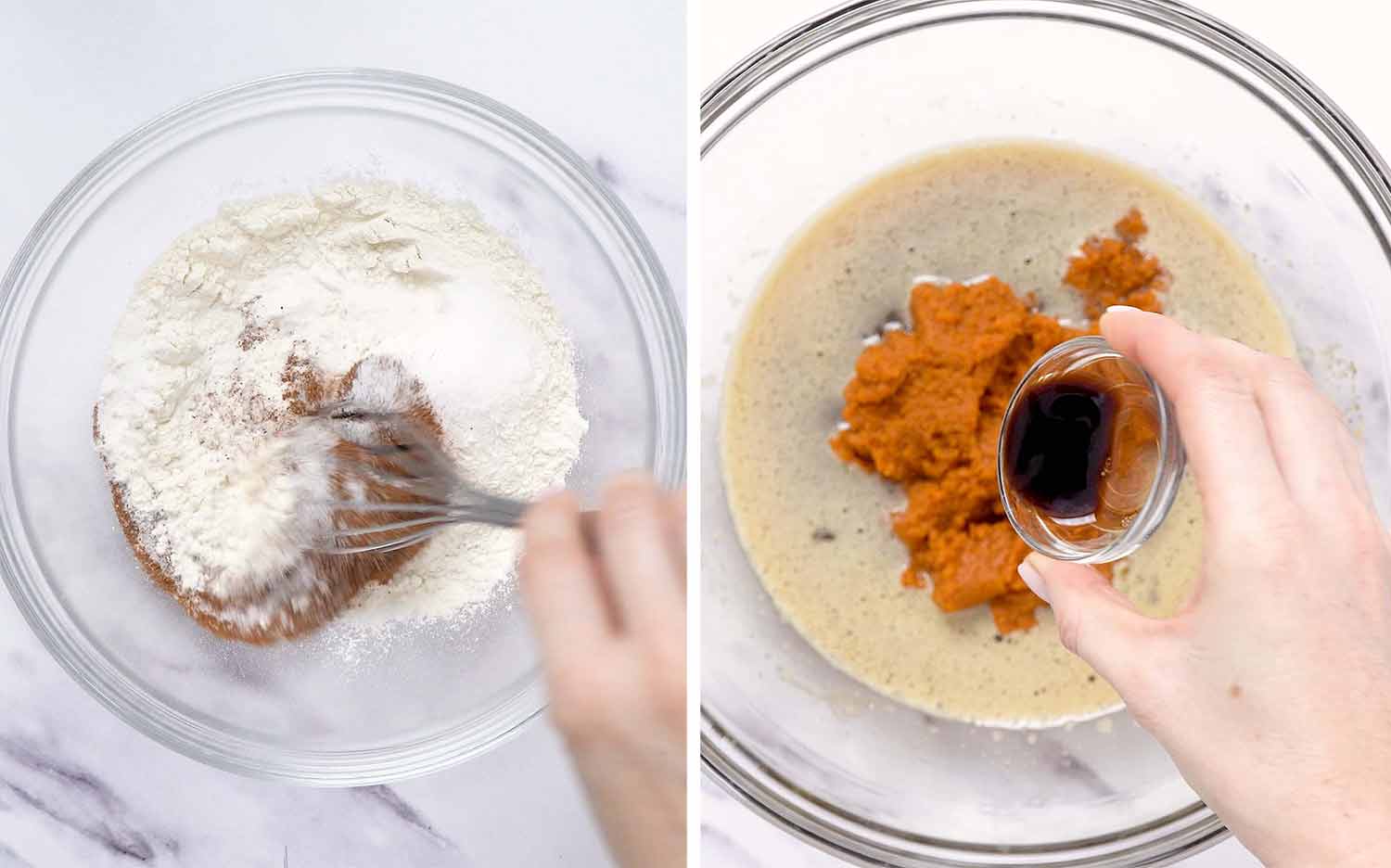
Dry ingredients first: Whisk the flour, baking powder, baking soda, pumpkin pie spice and salt together in a medium bowl.
Then the wet: In another bowl, whisk the eggs with both sugars until there are no lumps at all. Then in go the vanilla and the canned pumpkin, and whisk until it’s combined and smooth.
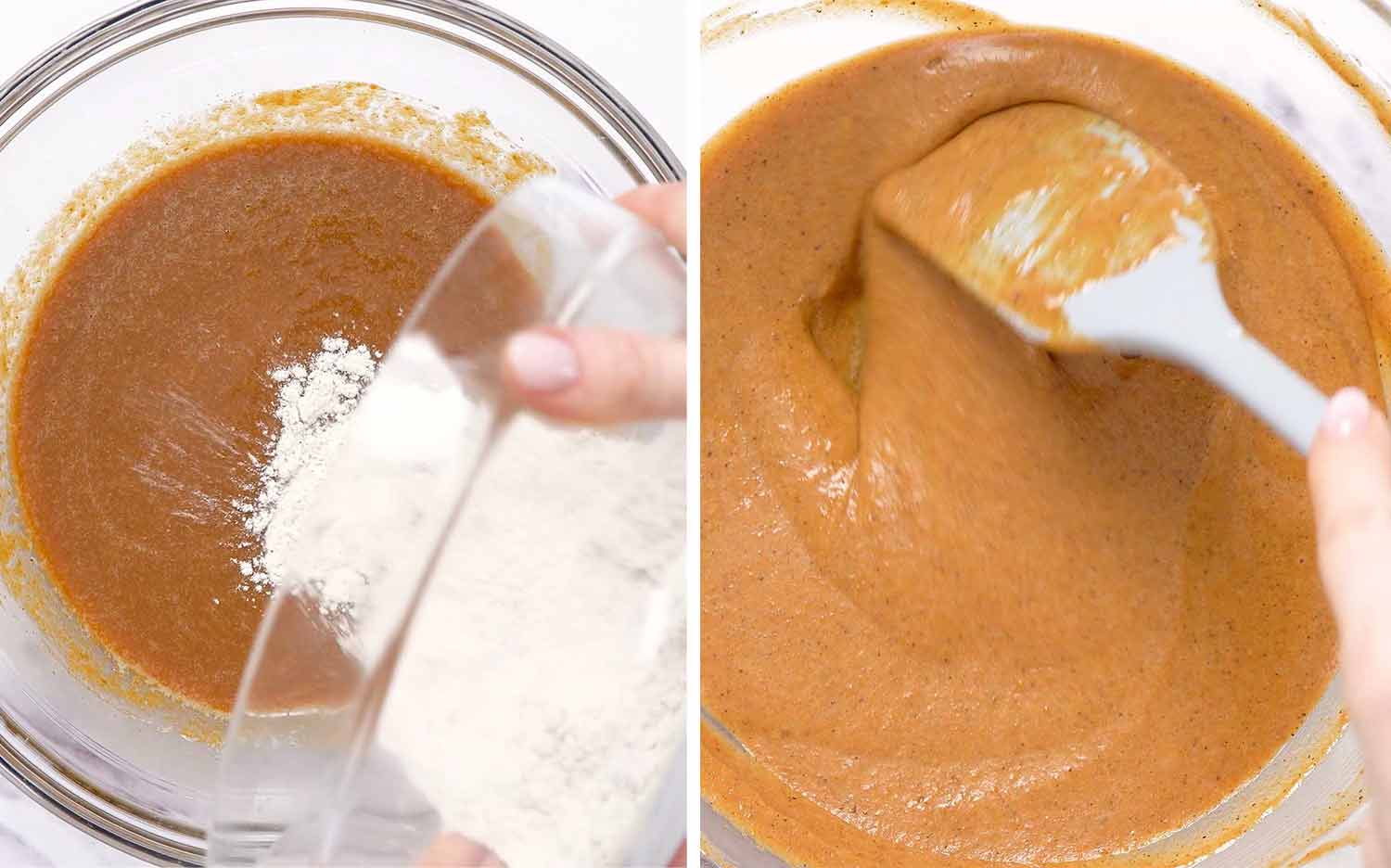
Combine them: Pour the wet into the dry and stir with a spatula. If it looks lumpy, switch to a whisk and keep going until it’s smooth.
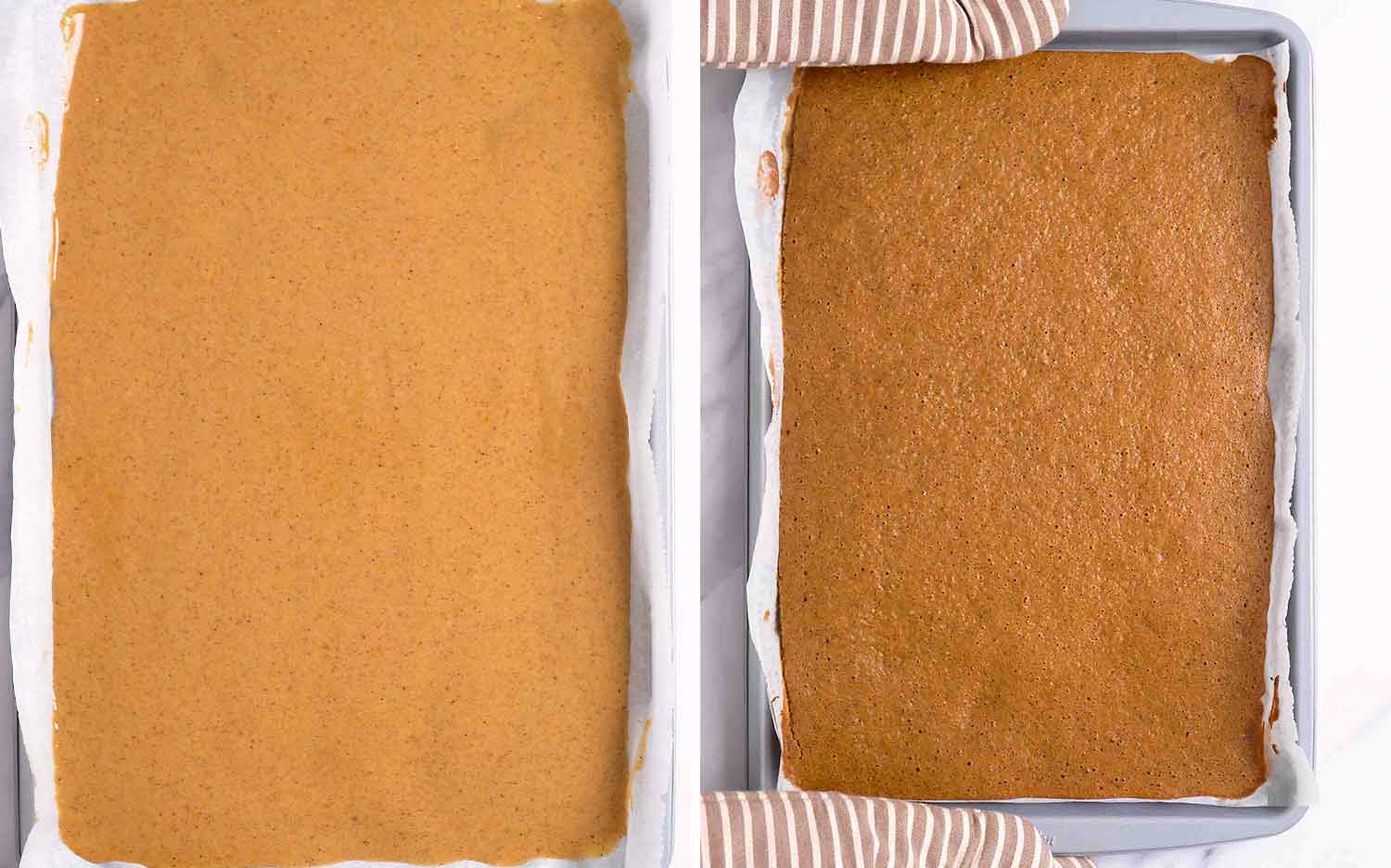
Into the pan: Spread the batter evenly across the prepared sheet with a spatula. Then pick the pan up and tap it on the counter a few times, which knocks out any air bubbles hiding in there.
Bake 12 to 14 minutes. You’re looking for a top that springs back when you press it gently. This is a thin cake and it goes from done to dry fast, so start checking at 12.
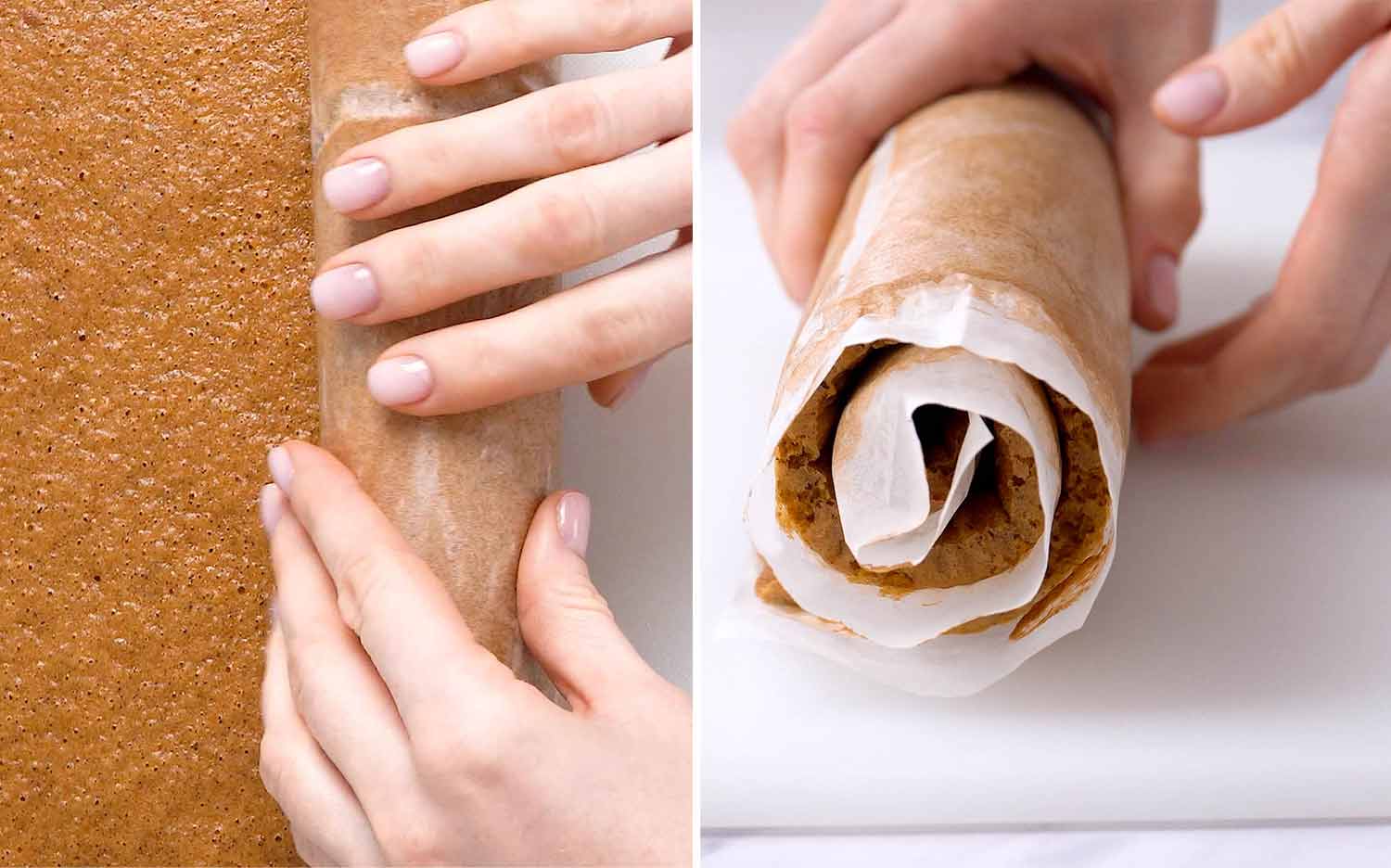
Roll it hot. This is the moment everything depends on, and you have to do it right away. Lift the cake out of the pan by the parchment paper, then roll it up slowly with your hands, starting at one short end and going to the other. Parchment and all. Then leave it rolled up to cool completely.
It feels alarming and slightly too warm to handle and it works.
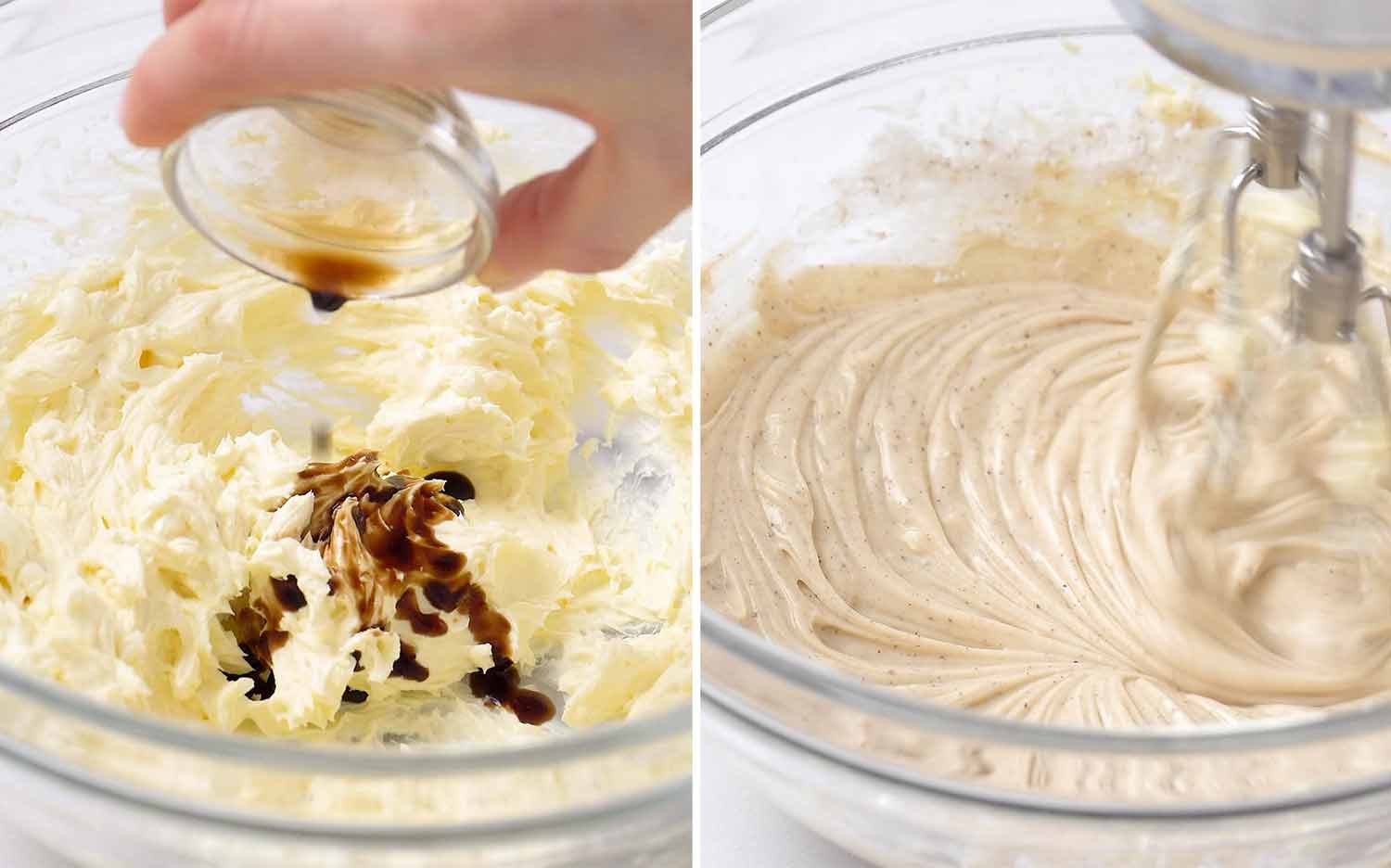
Make the filling while it cools: Whisk the cream cheese and butter together first, on their own, until smooth. Then add the vanilla, pumpkin pie spice, salt and icing sugar and beat until there are no lumps. Fold the whipped cream in last with a spatula, gently, so you keep the air in it.
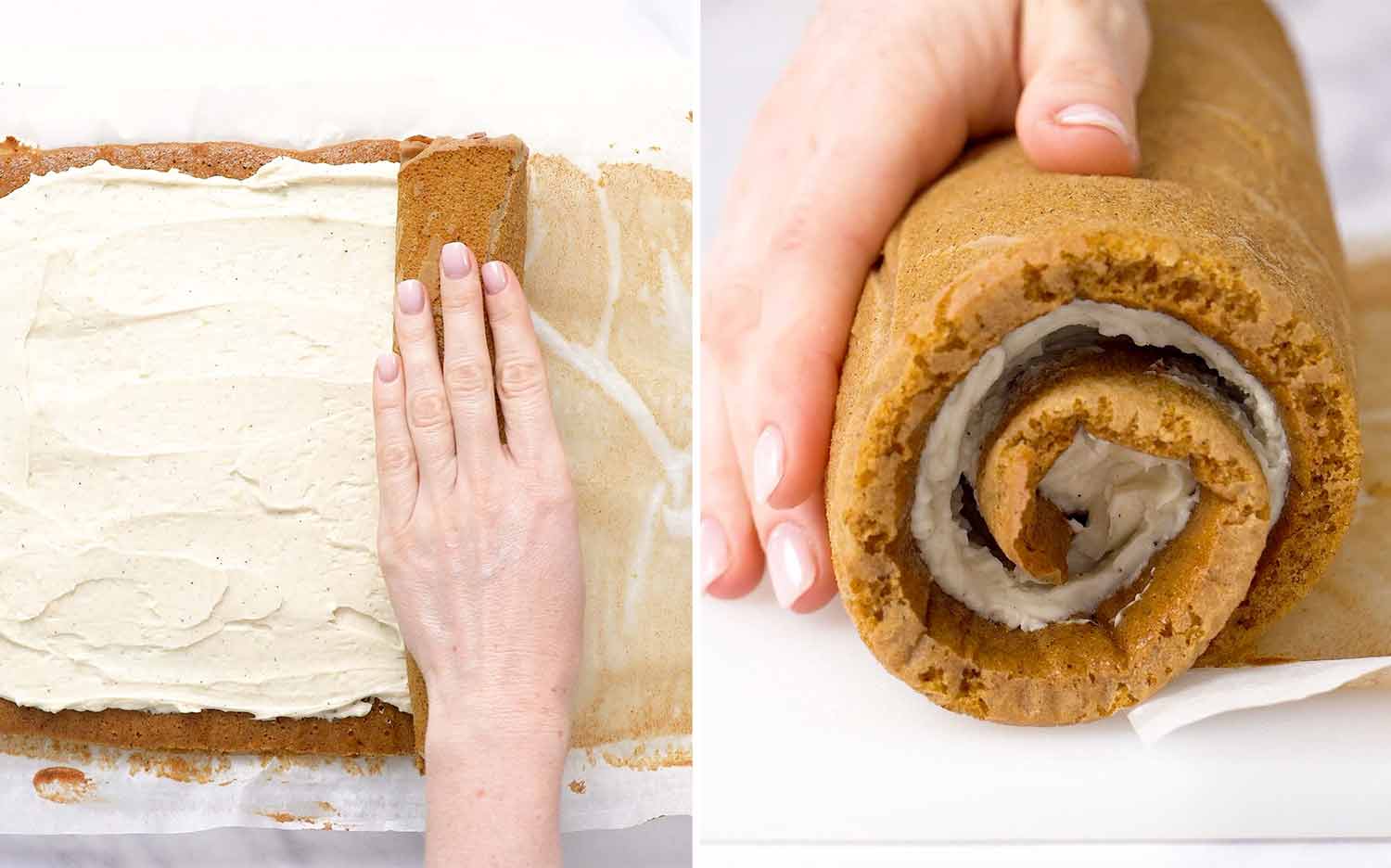
Fill it: Gently unroll the cooled cake. Spread the filling evenly over the surface, leaving about ½ inch bare all the way round the edges. That border stops the filling squeezing out the sides when you roll it back up.
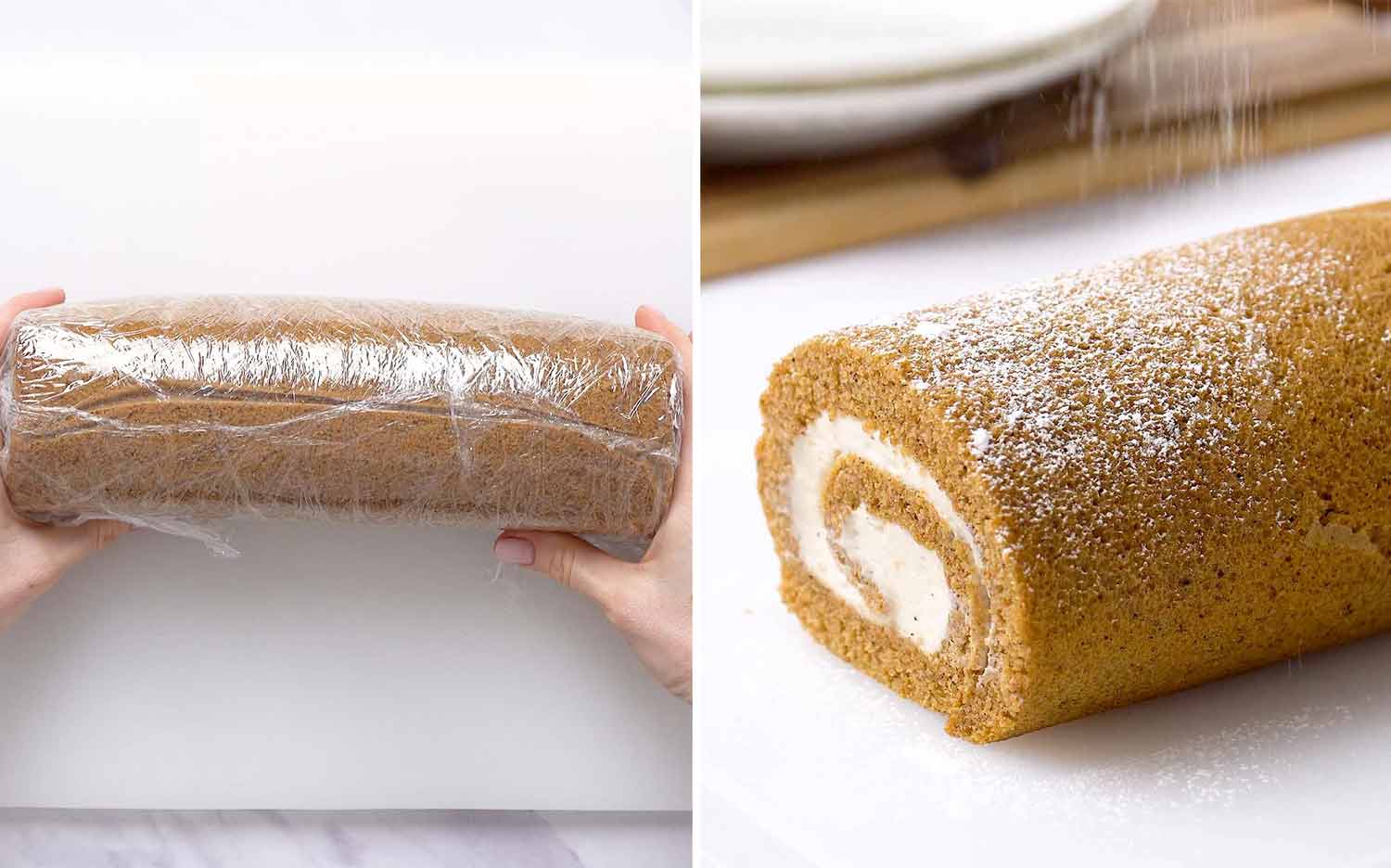
Roll it again, tightly this time, peeling the parchment away as you go. Wrap the whole log snugly in plastic wrap and refrigerate it for an hour.
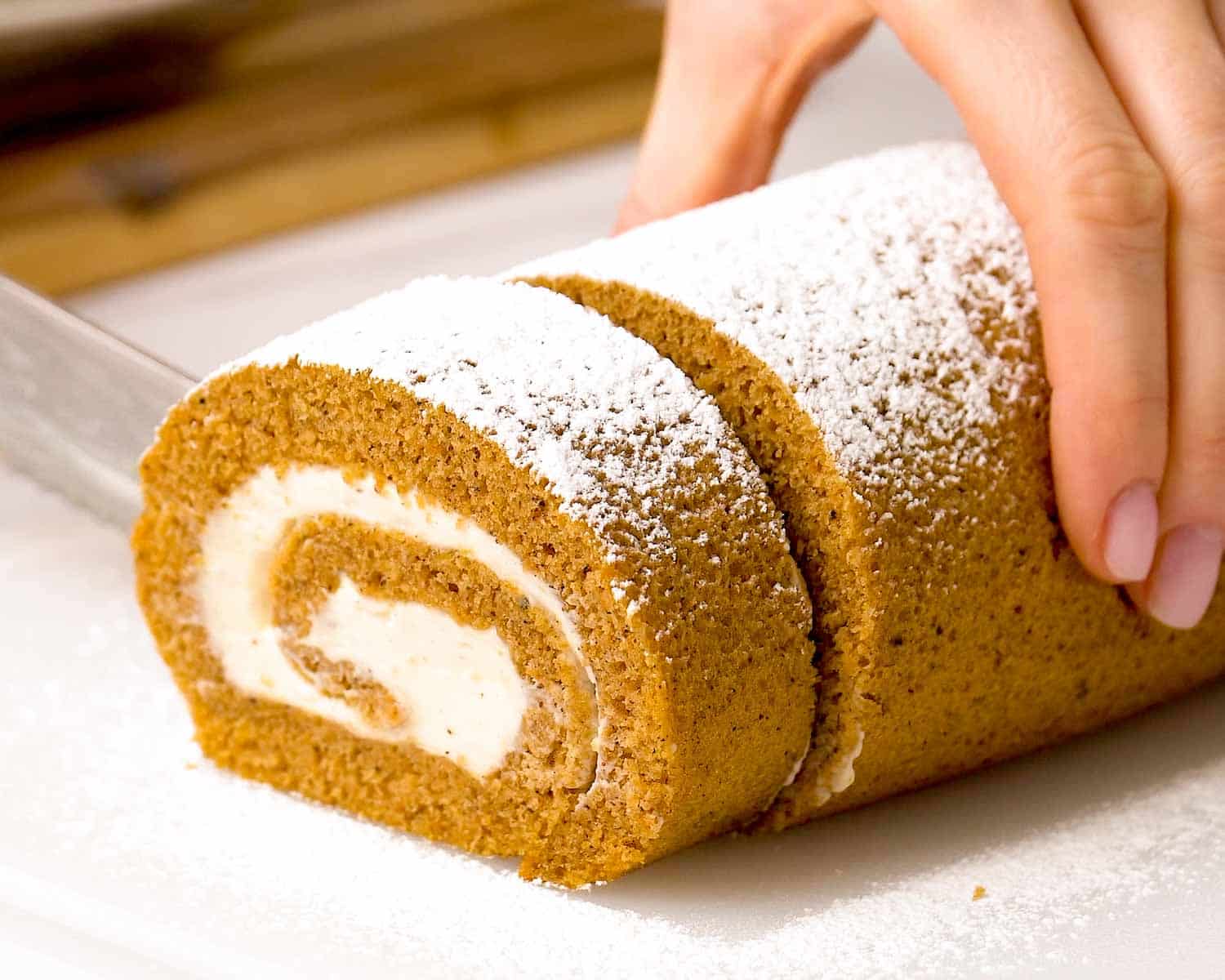
To serve: Unwrap it, move it to a platter, and dust it with powdered sugar if you like. Slice with a serrated knife, using a gentle sawing motion rather than pressing down.
Why You Roll The Cake Twice
Because the first roll happens while the cake is hot, and that’s what teaches it to curve.
A warm cake is flexible. The crumb is soft and the moisture is still in it, so it bends around itself without breaking. Roll it hot, leave it rolled while it cools, and the shape sets that way.
Let the cake cool flat and the crumb sets flat. Then when you try to roll it an hour later you’re bending something that has already made up its mind, and it splits right across the middle.
So the first roll is only about shape. There’s no filling in it and you unroll it again 20 minutes later. The second roll is the real one, with the filling in, and by then the cake already knows which way to go.
One thing about the parchment: most versions of this cake have you roll it in a kitchen towel dusted with powdered sugar. I use the parchment it baked on. Nothing sticks to it, there’s no sugar mess, and you don’t spend the evening picking towel fuzz off a cake.
How To Keep A Pumpkin Roll From Cracking
- Rolling it cold. This is the big one and it’s responsible for nearly every cracked pumpkin roll in history. Roll it the moment it leaves the oven, while you can still barely handle it.
- Overbaking. A dry cake cracks. Twelve to 14 minutes and no more, and start checking at 12. When the top springs back under your finger, it’s done.
- Rolling too tight on the first go. The first roll just needs to set the curve. You’re not compressing anything, there’s nothing in it yet.
- Going too fast. Roll slowly and let the cake come with you rather than dragging it.
- And if it cracks anyway, which happens to everybody eventually, roll it up regardless. Small cracks seal shut once the filling goes in and the whole thing chills. A good dusting of powdered sugar covers a great deal of sin. Nobody has ever turned down a slice on structural grounds.
How This Differs From The Libby’s Pumpkin Roll
This recipe is adapted from the classic version on Very Best Baking. Here’s what I changed and why.
- Brown sugar in the cake. The original uses all granulated. I use ¼ cup granulated and ½ cup brown, which brings a little molasses depth and keeps the cake from tasting flatly sweet.
- Pumpkin pie spice instead of separate spices, in both the cake and the filling. It’s simpler and the blend is better balanced than cinnamon and cloves alone.
- Vanilla in the cake, which the classic version doesn’t have.
- Spice and salt in the filling. A plain cream cheese filling is fine. A spiced, salted one tastes like it belongs with the cake instead of sitting next to it.
- Whipped cream folded into the filling. This is the change I’d defend hardest. It lightens the whole thing into something closer to a mousse, so a slice doesn’t sit heavy.
- Parchment instead of a towel for the rolling, which I’ve gone on about above.
Storing, Freezing And Making It Ahead
This is a make ahead dessert, which is half of why I love it in December.
In the fridge, wrapped tightly in plastic or in an airtight container, it keeps about 5 days. It genuinely needs at least an hour in there before you slice it, so the earliest you can serve it is an hour after you make it.
In the freezer, up to 3 months. Wrap the whole log in plastic wrap and then foil, and freeze it unsliced. Thaw it overnight in the fridge and slice it straight from cold.
Slicing it cold is the trick, by the way. A chilled roll cuts into clean rounds. A room temperature one squashes.
Trim the ends before it goes on the platter if you want it to look tidy. Slice about ½ inch off each end, where the cake is always a little ragged. Cook’s treat.
Try These Recipes Next
Before You Begin! If you make this, please leave a review and rating letting us know how you liked this recipe! This helps our business thrive & continue providing free recipes.
Best Ever Pumpkin Roll
Video
Ingredients
Cake
- ¾ cup all-purpose flour
- ½ teaspoon baking powder
- ½ teaspoon baking soda
- 1 ½ teaspoon pumpkin pie spice
- ¼ teaspoon salt
- 3 large eggs (at room temperature)
- ¼ cup sugar
- ½ cup brown sugar (packed)
- 2 teaspoon vanilla extract (or paste)
- ⅔ cup canned pumpkin
Filling
- 8 ounce cream cheese (at room temperature)
- 4 tablespoon butter (softened)
- 1 teaspoon vanilla extract (or paste)
- 1 teaspoon pumpkin pie spice
- ¼ teaspoon salt
- 1 cup icing sugar (also known as powdered sugar or confectioners sugar)
- ½ cup whipped cream
Before You Begin! If you make this, please leave a review and rating letting us know how you liked this recipe! This helps our business thrive & continue providing free recipes.
Instructions
Cake
- Preheat your oven to 350 F degrees. Spray a 10×15 inch baking sheet with cooking spray and then line it with parchment paper. This will ensure the parchment paper will stick to the pan. Set aside.
- In a medium size bowl, whisk together ¾ cup flour, ½ teaspoon baking powder, ½ teaspoon baking soda, 1½ teaspoons pumpkin pie spice and ¼ teaspoon salt.
- In another medium size bowl, whisk 3 eggs with ¼ cup sugar and ½ cup packed brown sugar until there are no lumps. Add 2 teaspoons vanilla and ⅔ cup canned pumpkin and whisk until combined.
- Pour the wet ingredients into the bowl with the flour mixture and stir using a spatula. If lumpy, switch to a whisk and whisk until smooth.
- Spread the cake batter evenly into the prepared pan using a spatula. Gently tap the pan a few times on the counter, which will remove any air bubbles.
- Bake for 12 to 14 minutes, or until the top of the cake springs back when touched.
- While the cake is still hot, carefully life the cake with the parchment paper out of the baking sheet and slowly roll the cake using your hands, rolling from the short end to the other short end. Let the cake cool completely.
Filling
- In a medium size bowl, whisk 8 ounces cream cheese with 4 tablespoons butter first. Add 1 teaspoon vanilla, 1 teaspoon pumpkin pie spice, ¼ teaspoon salt and 1 cup icing sugar, and whisk or beat using a mixer until smooth. Fold in ½ cup whipped cream with a spatula.
Assemble the Pumpkin Roll
- Gently unroll the cake. Spread the filling evenly over the cake, leaving about a ½ inch border on all sides. This will prevent the filling from squishing out.
- Tightly reroll the cake, gently peeling away the parchment paper as you roll. Tightly wrap the cake in plastic wrap and refrigerate for an hour.
- Remove the plastic wrap from the cake and transfer it to your serving platter. Dust with powdered sugar if preferred. Slice the cake using a serrated knife and serve.
Equipment
Notes
- For tidy ends, slice about ½ inch off both ends of the cake before transferring it to your serving platter.
- Roll the cake while it’s hot. This is what sets the shape and keeps it from cracking later. A cooled cake has set flat and will split when you try to bend it.
- Use block cream cheese at room temperature, not the spreadable tub kind, which has extra water in it and gives you a runny filling.
- Slice it cold straight from the fridge with a serrated knife, using a sawing motion rather than pressing down.
- Storage. Store leftover cake in an airtight container in the fridge, or wrap it tightly in plastic wrap. It keeps about 5 days in the fridge or up to 3 months in the freezer. Freeze it unsliced and thaw overnight in the fridge.
- Nutrition. Nutritional information is a rough estimate and can vary based on the products used.
Nutrition Information
Notice: Nutrition is auto-calculated for your convenience. Where relevant, we recommend using your own nutrition calculations.
What cream cheese works best?
Full fat, from a block, at room temperature. Not the spreadable tub kind, which has water whipped into it and gives you a runny filling. Not the low fat kind either, for the same reason. Philadelphia style block cream cheese is what this is built on.
Can I leave the whipped cream out of the filling?
Yes, and you’ll get a denser, more traditional cream cheese frosting style filling. Still good, just heavier. Add a tablespoon or 2 of extra icing sugar if you want it to hold its shape without the cream.
Can I use fresh pumpkin instead of canned?
You can, but drain it well first. Fresh pumpkin puree holds far more water than canned, and extra moisture in this thin a cake will give you a soggy sheet that tears when you roll it.
Why is my filling runny?
Cream cheese that was too warm, or the spreadable kind from a tub. Chill the filling for 20 minutes and try again, and use block cream cheese next time.
How do I get clean slices?
Serrated knife, gentle sawing motion, and slice it cold straight from the fridge. Wipe the blade between cuts if you’re being fussy about it, which I always am.
Can I make it without the powdered sugar dusting?
Of course. It’s decoration. A dusting does hide small cracks though, which is why it became traditional in the first place.