Smashed Burgers
This post may contain affiliate links. Please read my disclosure policy.
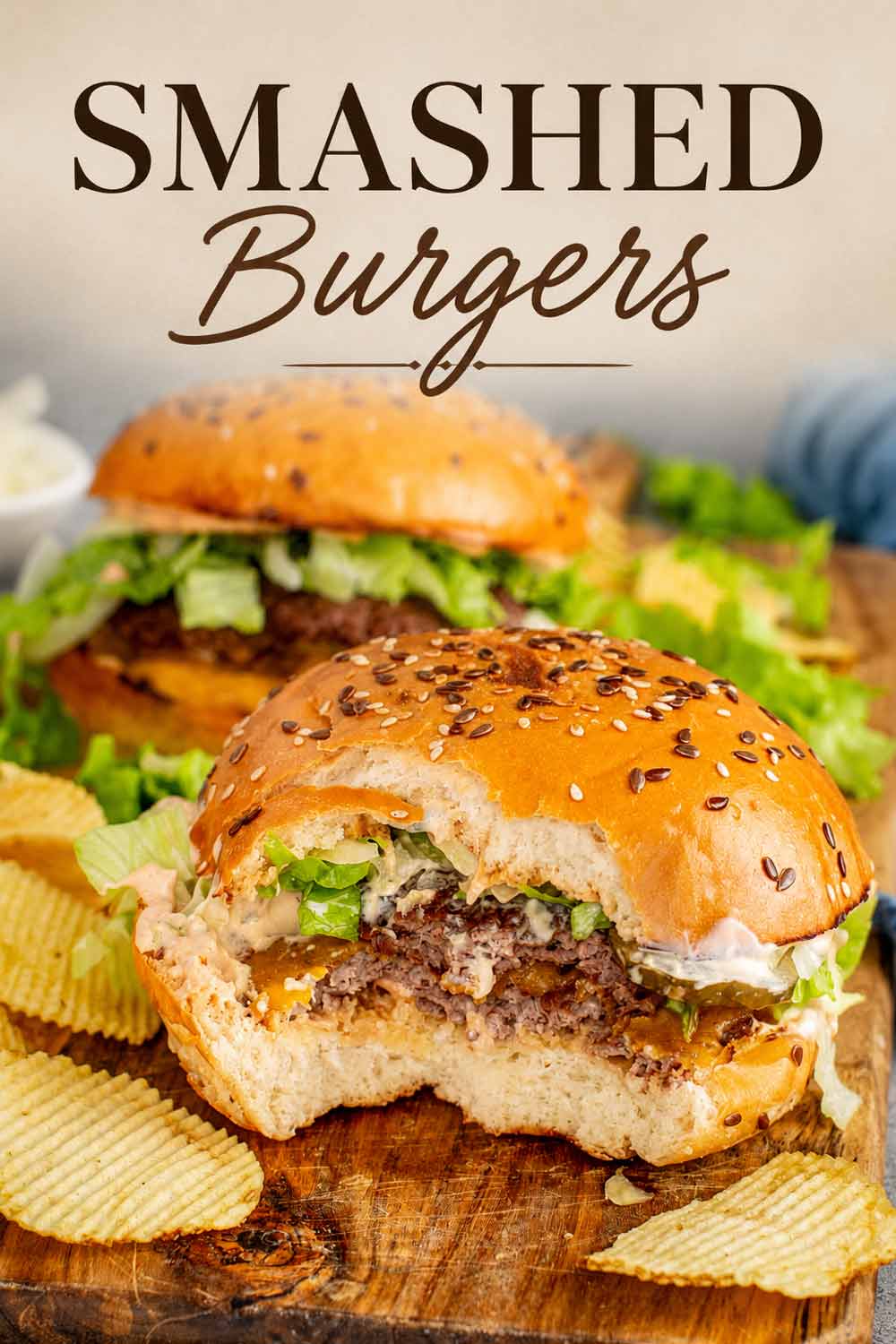
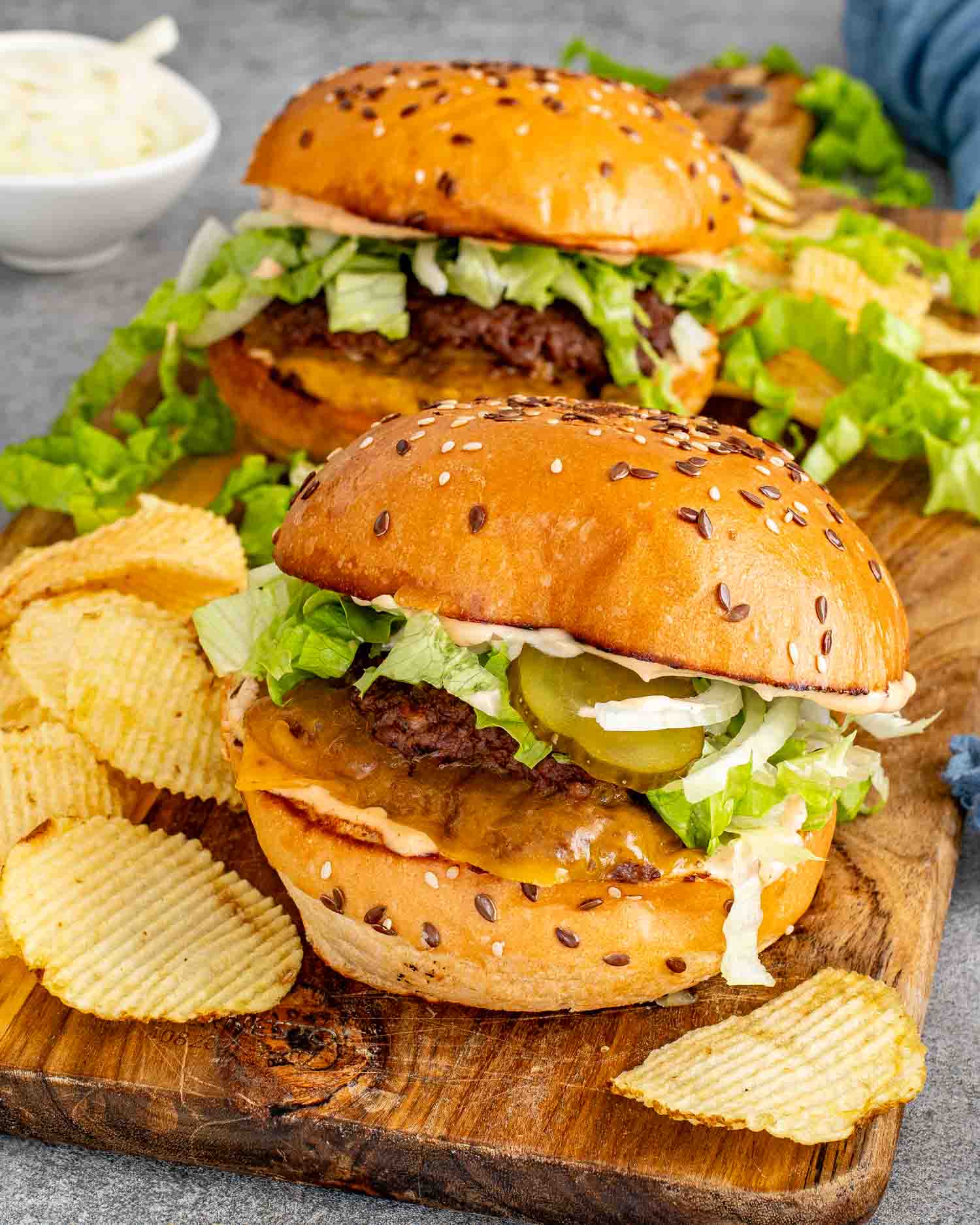
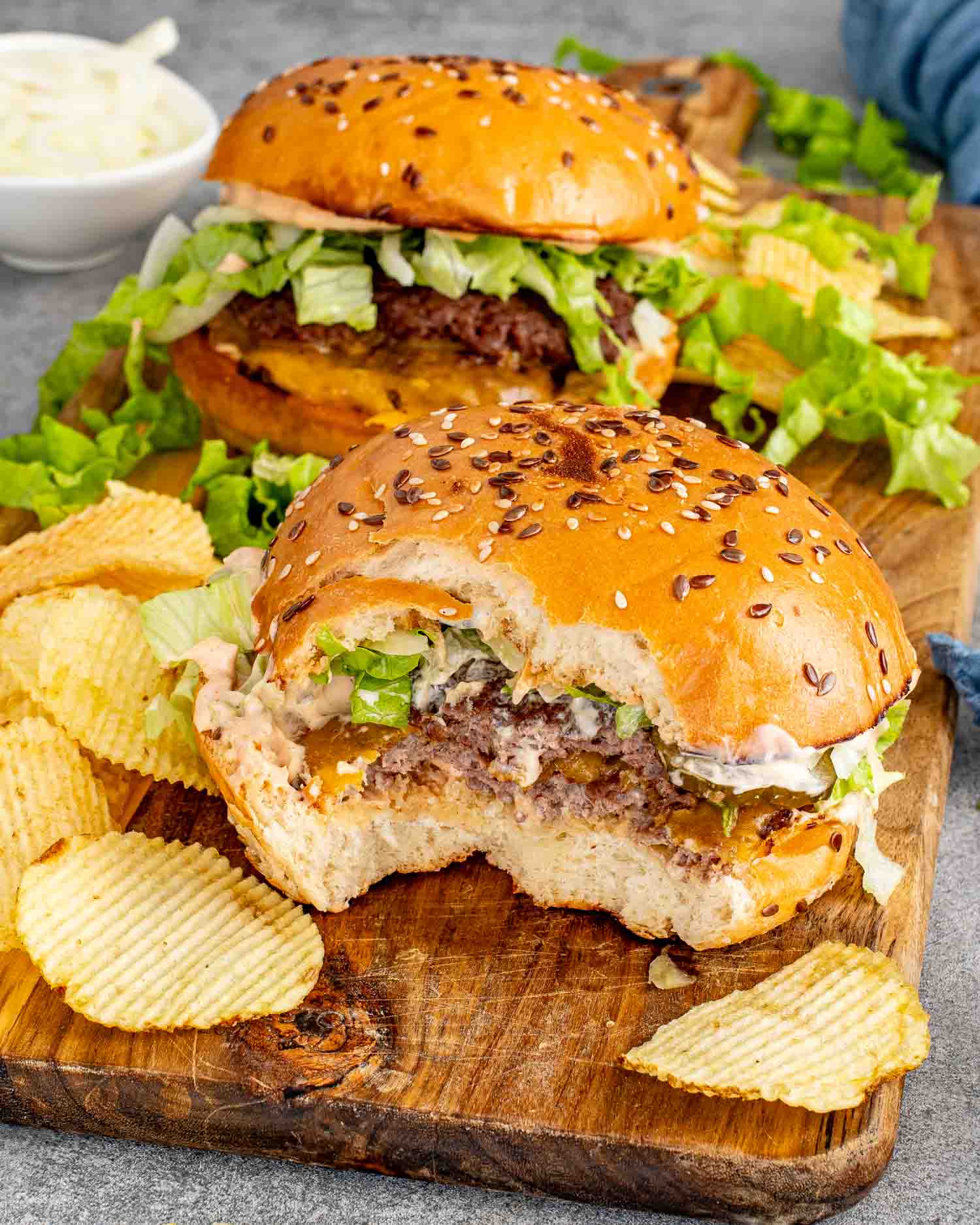
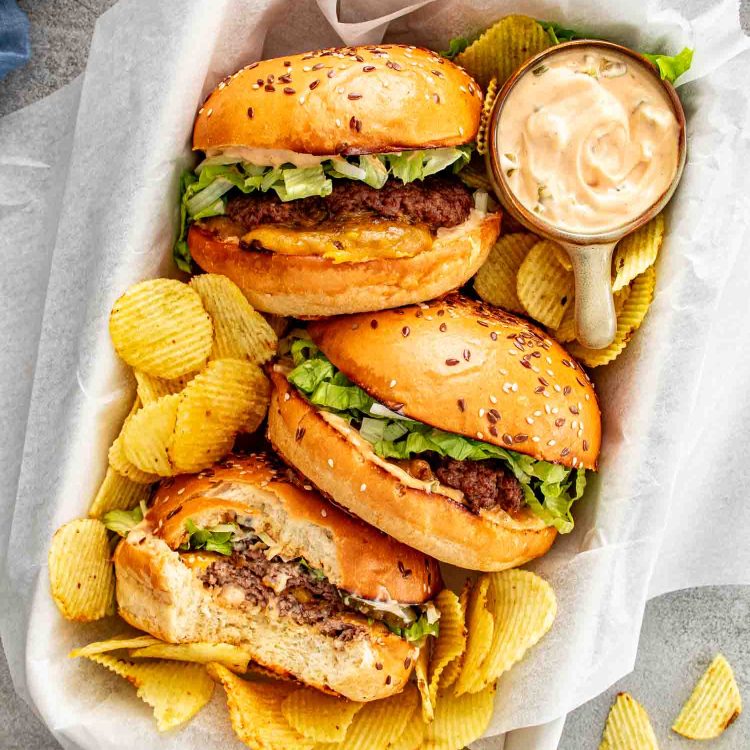
Smashed Burgers – Crispy edges, juicy centers, double stacked, and finished with a special sauce that is going to make every other burger you have ever made feel like a personal apology.
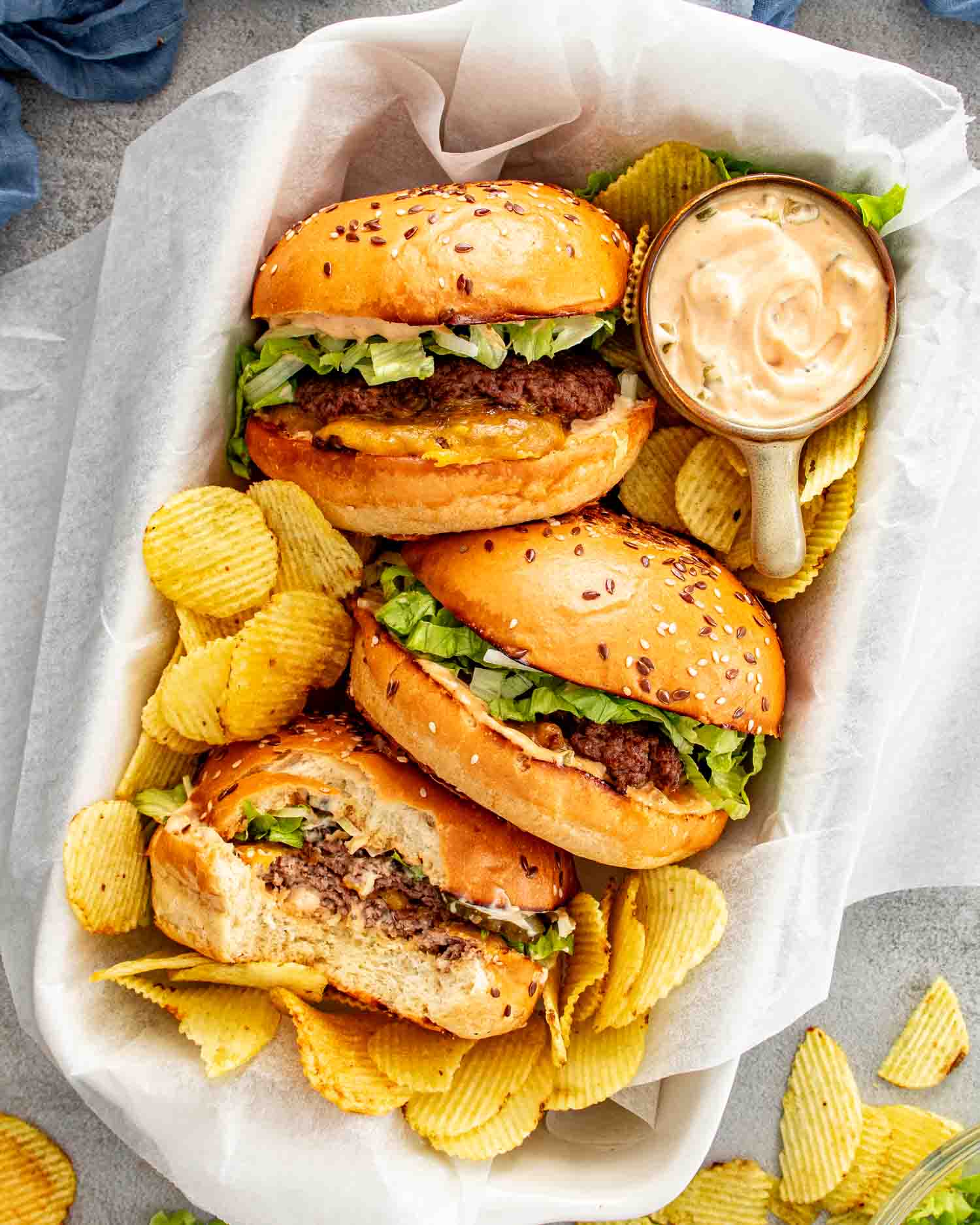
I’ve made lots of burgers in my life. Thick ones, stuffed ones, grilled ones, and even baked. But ever since I started making these Smashed Burgers, I haven’t looked back. Two thin patties per burger, smashed onto a screaming hot cast iron skillet until the edges are lacy and crispy and golden. Then you stack them with melted cheddar and load them with my homemade special sauce that takes about 3 minutes to make.
The whole thing is ready in about 25 minutes and the technique itself is so satisfying in a way that most cooking is not. There is something so enjoyable about flattening a ball of beef with a spatula as hard as you can. Dinner and therapy and it didn’t cost you a penny.
The Smash Technique
This is the part that separates a good smashed burger from a great one and it comes down to 3 things: heat, timing, and commitment.
- Heat. The pan needs to be genuinely very hot before the beef goes in. Not warm. Not medium high. Very hot. A cast iron skillet or heavy griddle preheated over high heat for at least 3 minutes is what we need. If the pan is not hot enough the beef will stick, tear when we smash it, and we will end up with something closer to a sad flat meatball than a smashed burger.
- Timing. We smash the moment the beef ball hits the pan. Not after 30 seconds. Not after it starts to cook. The moment it lands. Once the beef begins cooking the proteins start to set and the patty will resist the smash and tear.
- Commitment. Smash it flat and hold it down for about 10 seconds. We are not gently pressing a burger. We are applying serious, sustained pressure with a heavy spatula or burger press until the patty is as thin as we can get it, about a quarter inch or less. Timid smashing produces mediocre results. Confident smashing produces the crispy edged burger of your dreams. Commit to the smash.
Key Ingredients You’ll Need
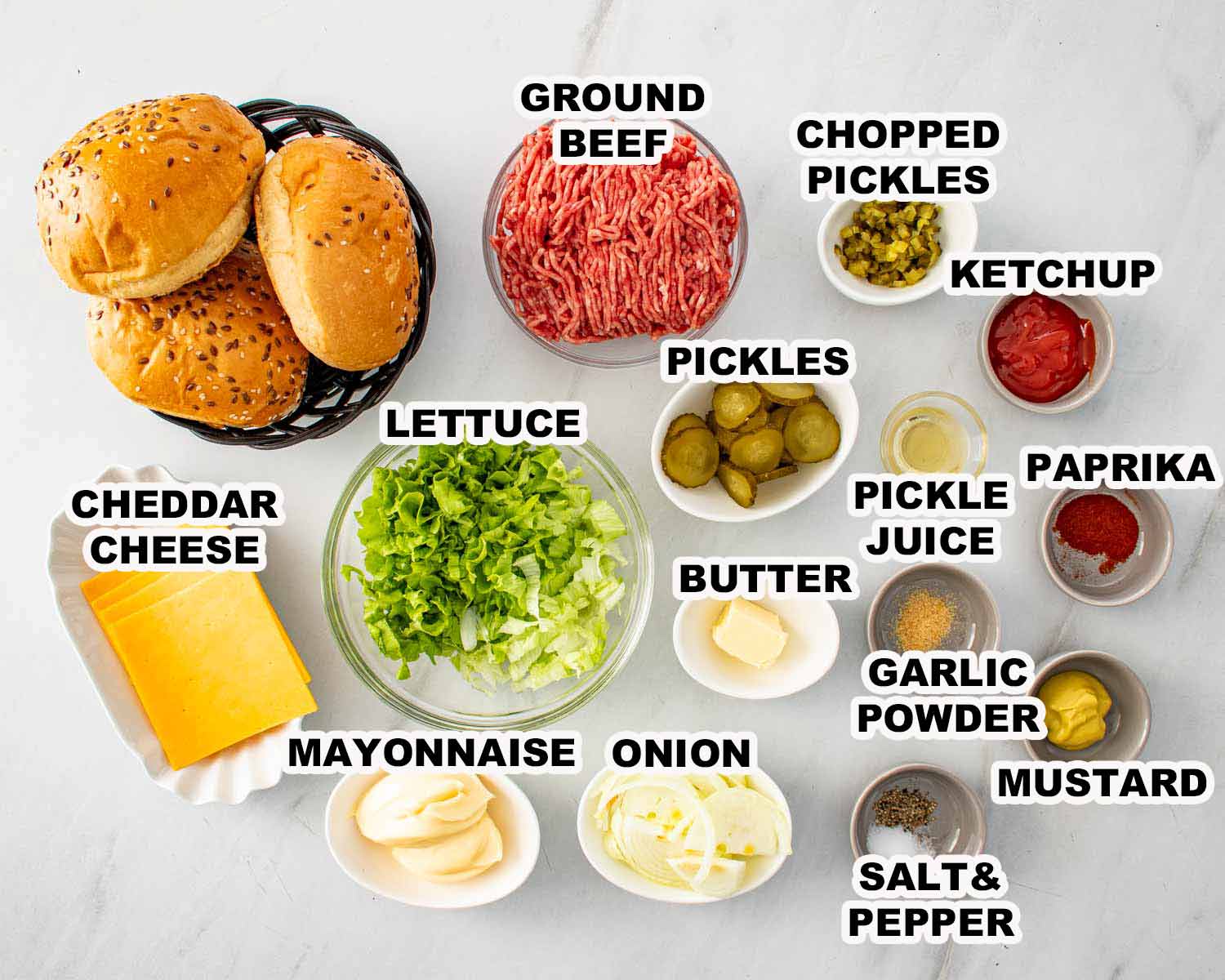
- 80 percent lean ground beef. This is not negotiable. The 20 percent fat is what gives smashed burgers their flavor and their crispy edges. Leaner beef does not have enough fat to render properly and the edges will not crisp the way we need them to.
- Cast iron skillet or heavy griddle. The pan matters as much as the beef here. Cast iron retains heat exceptionally well and recovers quickly when the cold beef ball hits it, which keeps the cooking temperature consistent and the crust developing. A thin nonstick pan will lose heat the moment the beef lands and the smash will produce a steamed patty instead of a seared one. Use the cast iron.
- The special sauce. Mayonnaise, ketchup, yellow mustard, finely chopped dill pickles, pickle juice, garlic powder, and paprika. This sauce is the reason people ask what is on the burger before they ask what the beef is. It is tangy, slightly sweet, a little mustardy, and absolutely the right thing on a smashed burger. Make it first so it has time to sit in the fridge and let the flavors come together while we cook the burgers.
- Eight patties for four burgers. We make eight thin patties and stack them two per burger with cheese melted between the layers. This is the double smash and it is not optional.
Jo’s Tip
Season the patty immediately after you smash it flat onto the pan, while still raw on top. If you season the beef before forming the balls the salt draws out the moisture and it starts breaking down proteins. This will make your patty tear under pressure.
How to Make Smashed Burgers
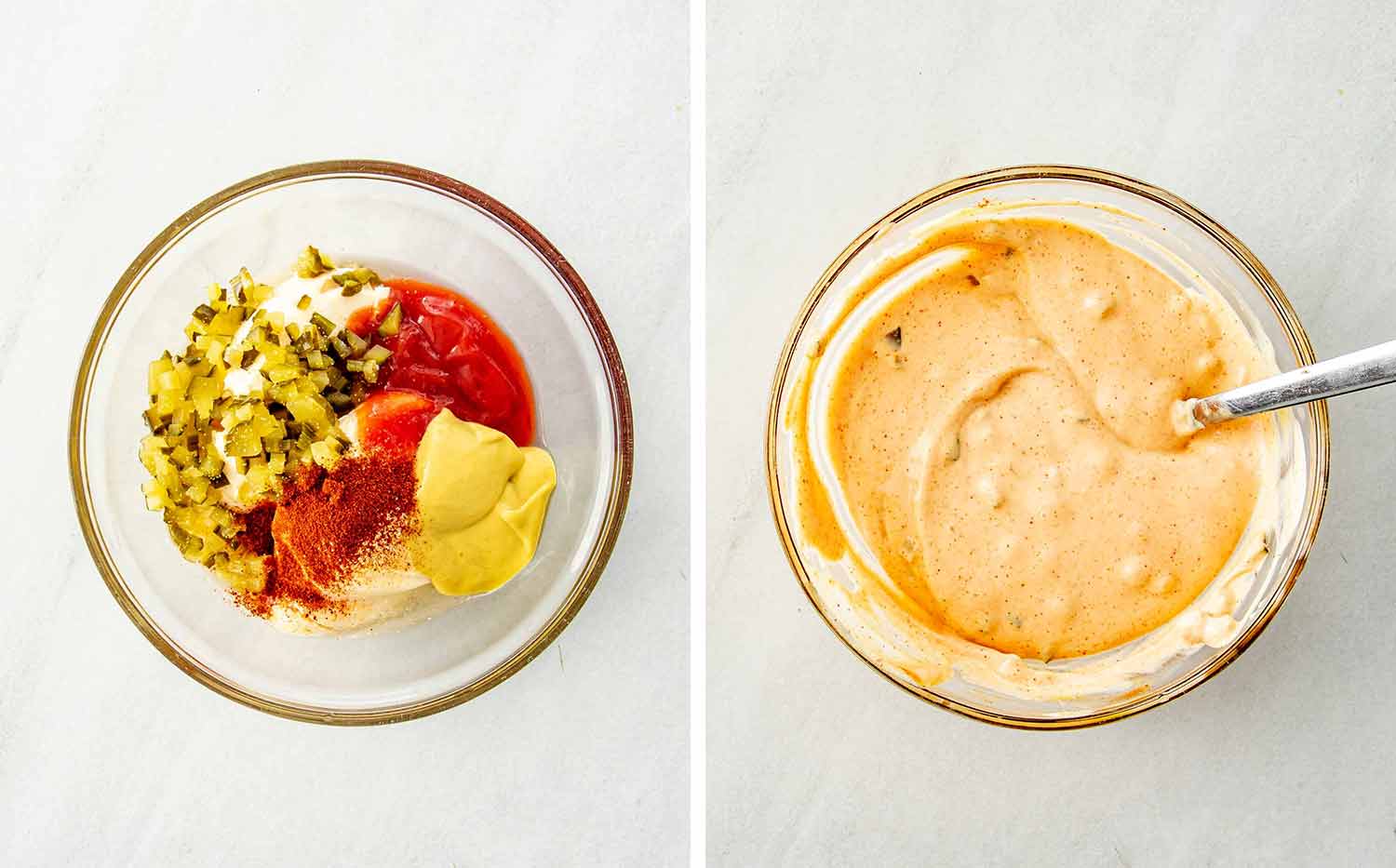
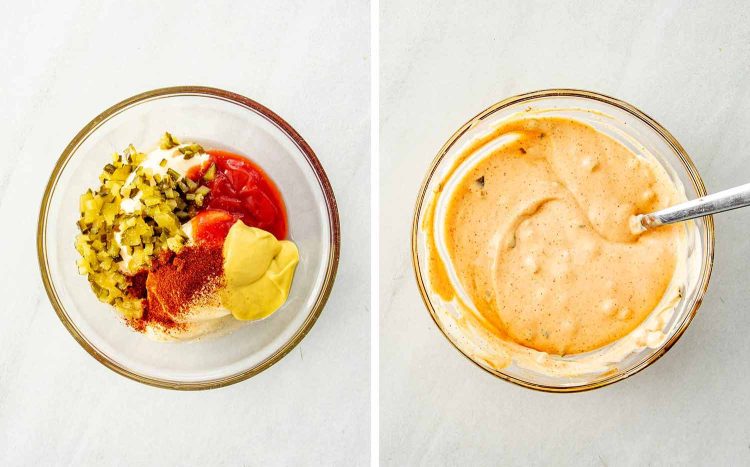
Combine the mayonnaise, ketchup, yellow mustard, finely chopped dill pickles, pickle juice, garlic powder, and paprika in a small bowl. Stir until smooth and refrigerate while we make the burgers. It gets better as it sits.
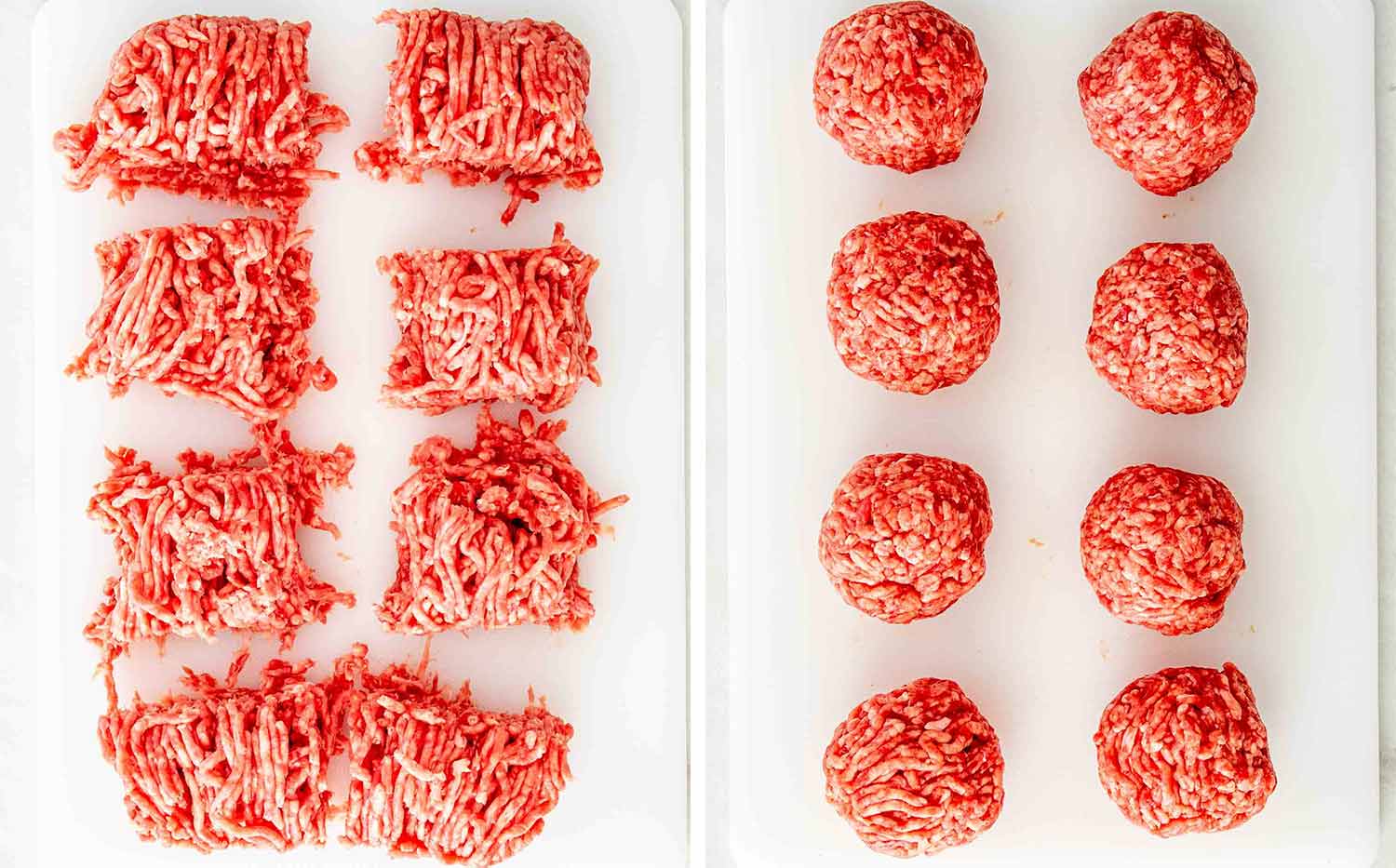
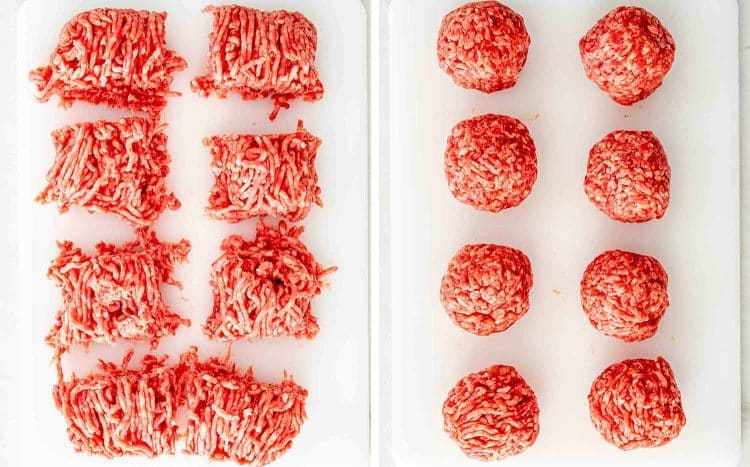
Divide the ground beef into 8 equal portions and loosely roll each one into a ball. Do not compact them, do not overwork the meat, and do not season them yet. Loose balls, barely held together.
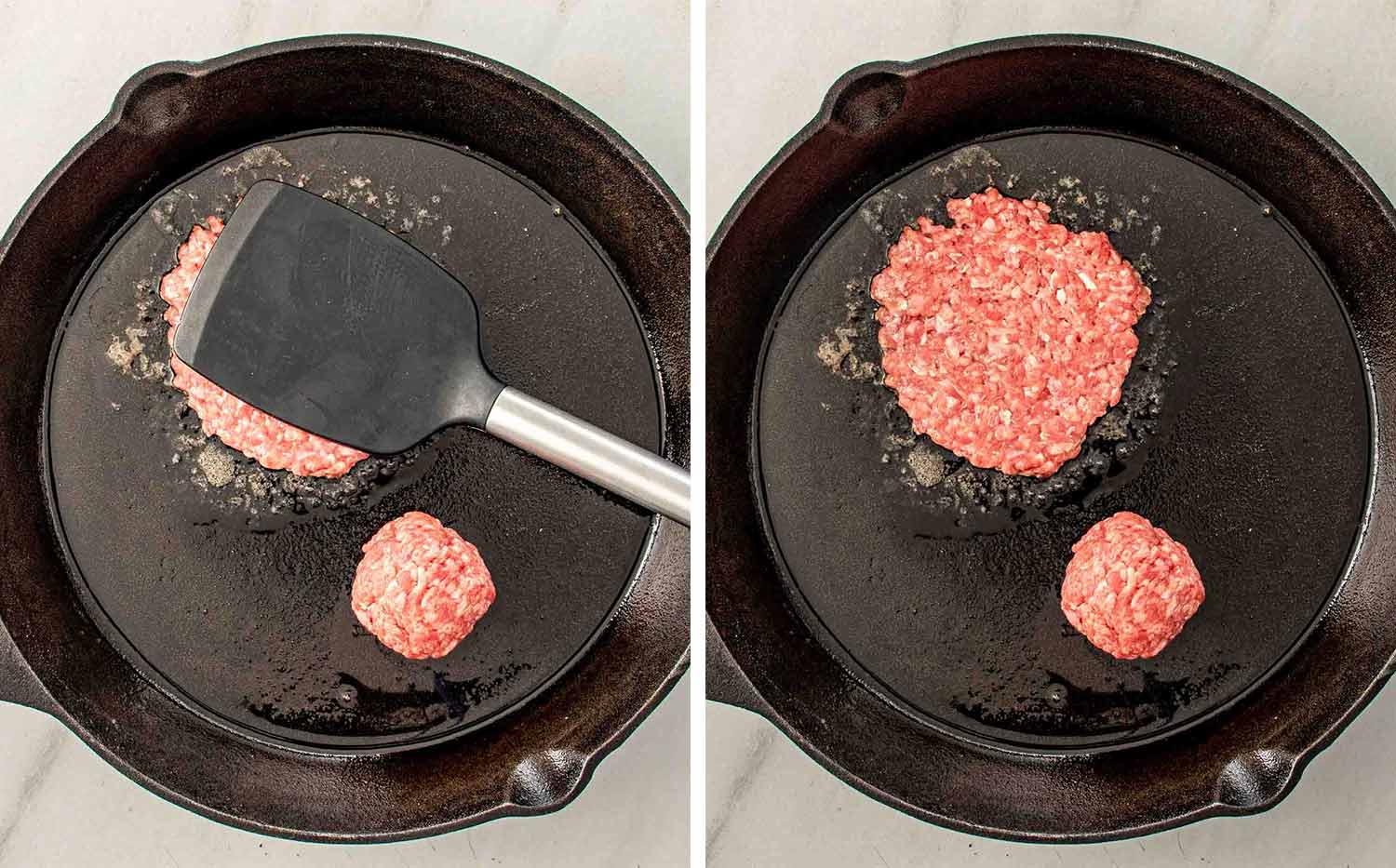
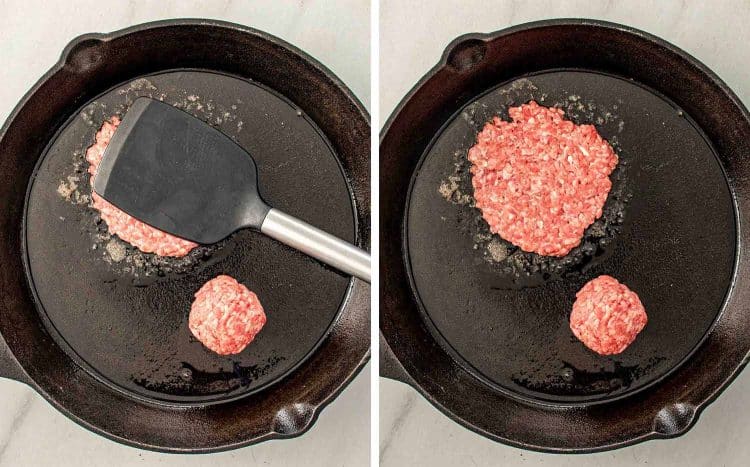
Heat a large cast iron skillet or griddle over high heat until very hot, at least 3 minutes. Place 2 to 3 beef balls onto the surface and immediately smash each one flat with a heavy spatula or burger press. Apply firm, sustained pressure for about 10 seconds. Season with salt and pepper right after smashing. Cook for 2 minutes until the edges are crispy and deeply browned.
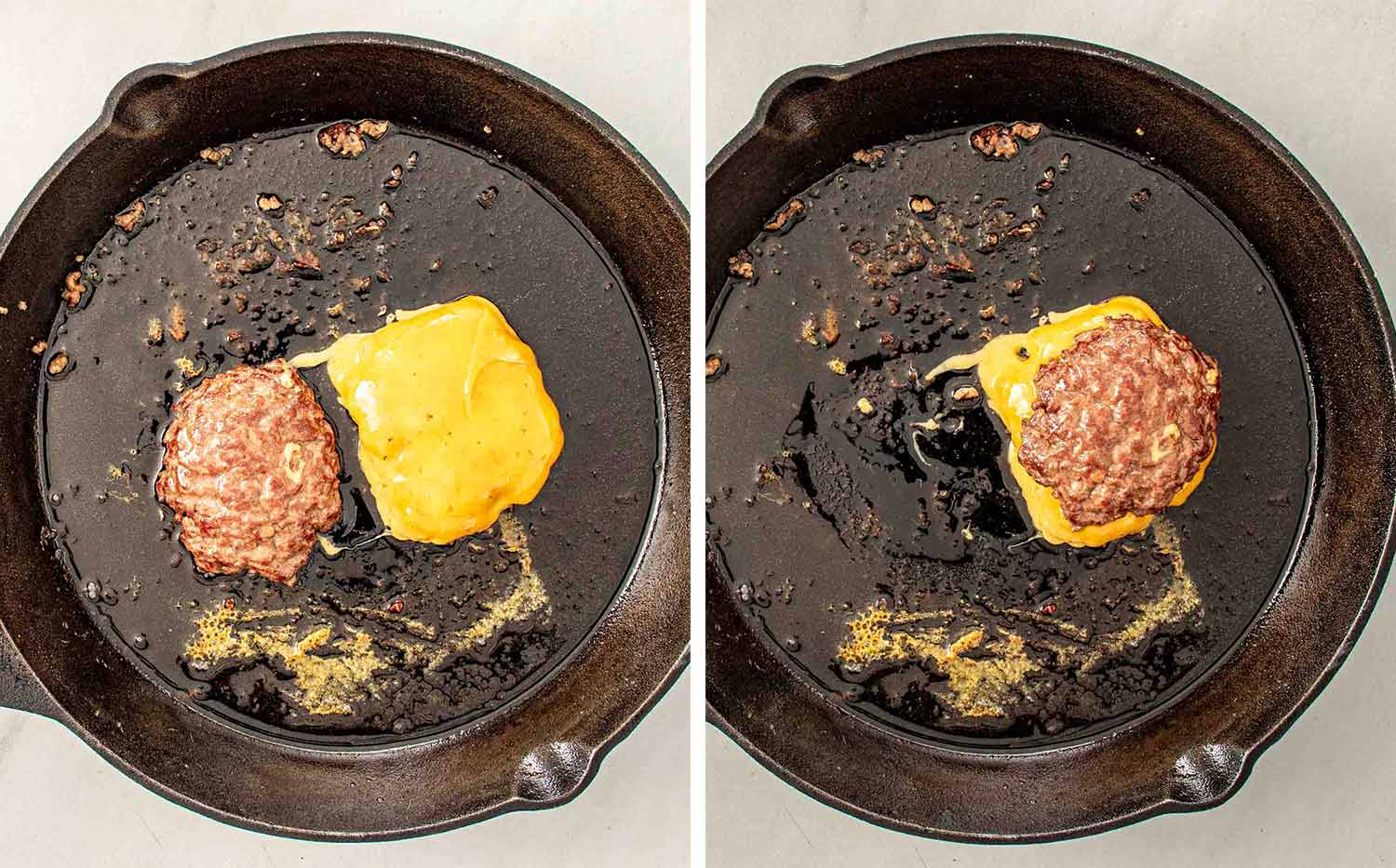
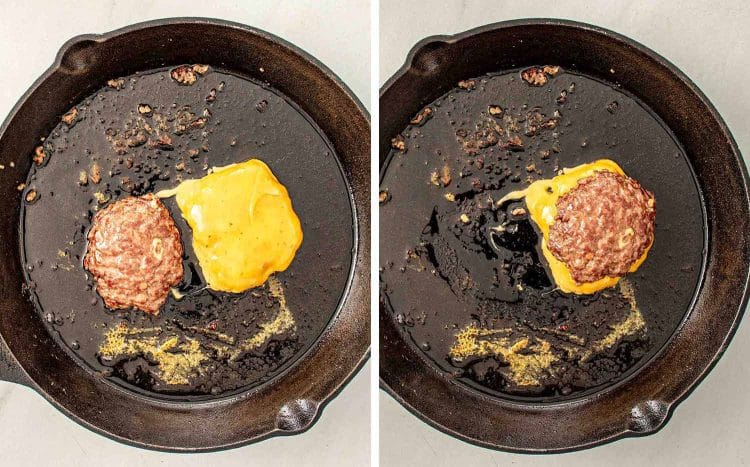
Flip the patties. Place one slice of cheddar over one patty in each pair. Cook for 1 more minute. Immediately stack the plain patty on top of the cheese patty to form a double burger. The residual heat will finish melting the cheese between the layers. Repeat with the remaining beef balls.
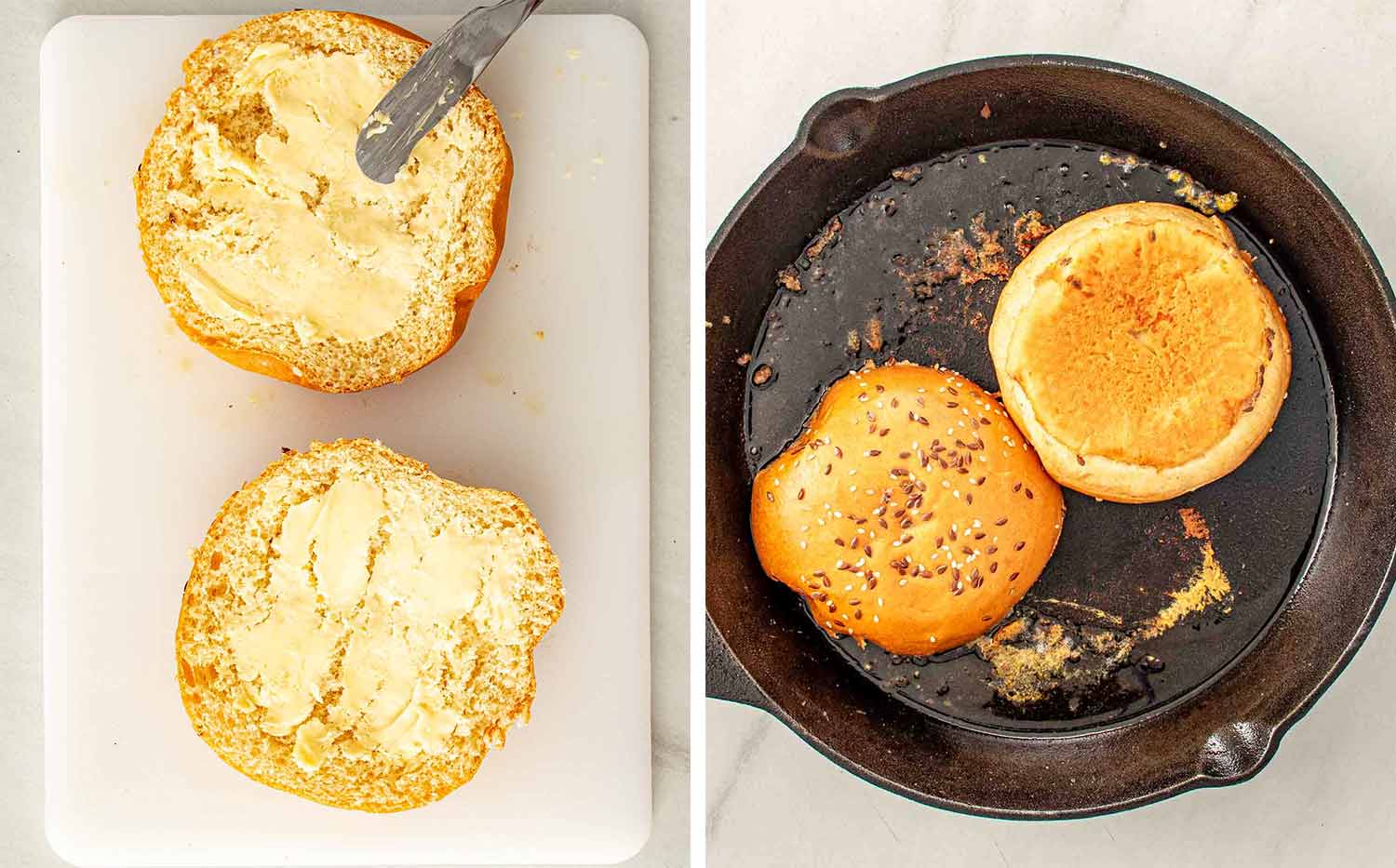
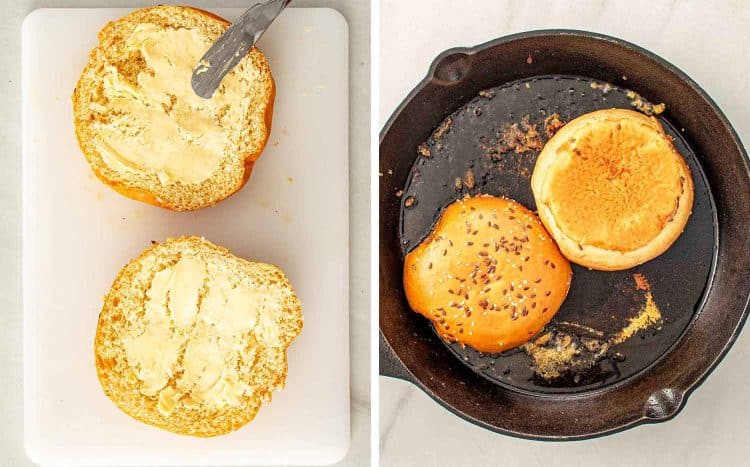
Butter the buns and toast them in the same pan until golden. Spread the special sauce generously on both the top and bottom bun.
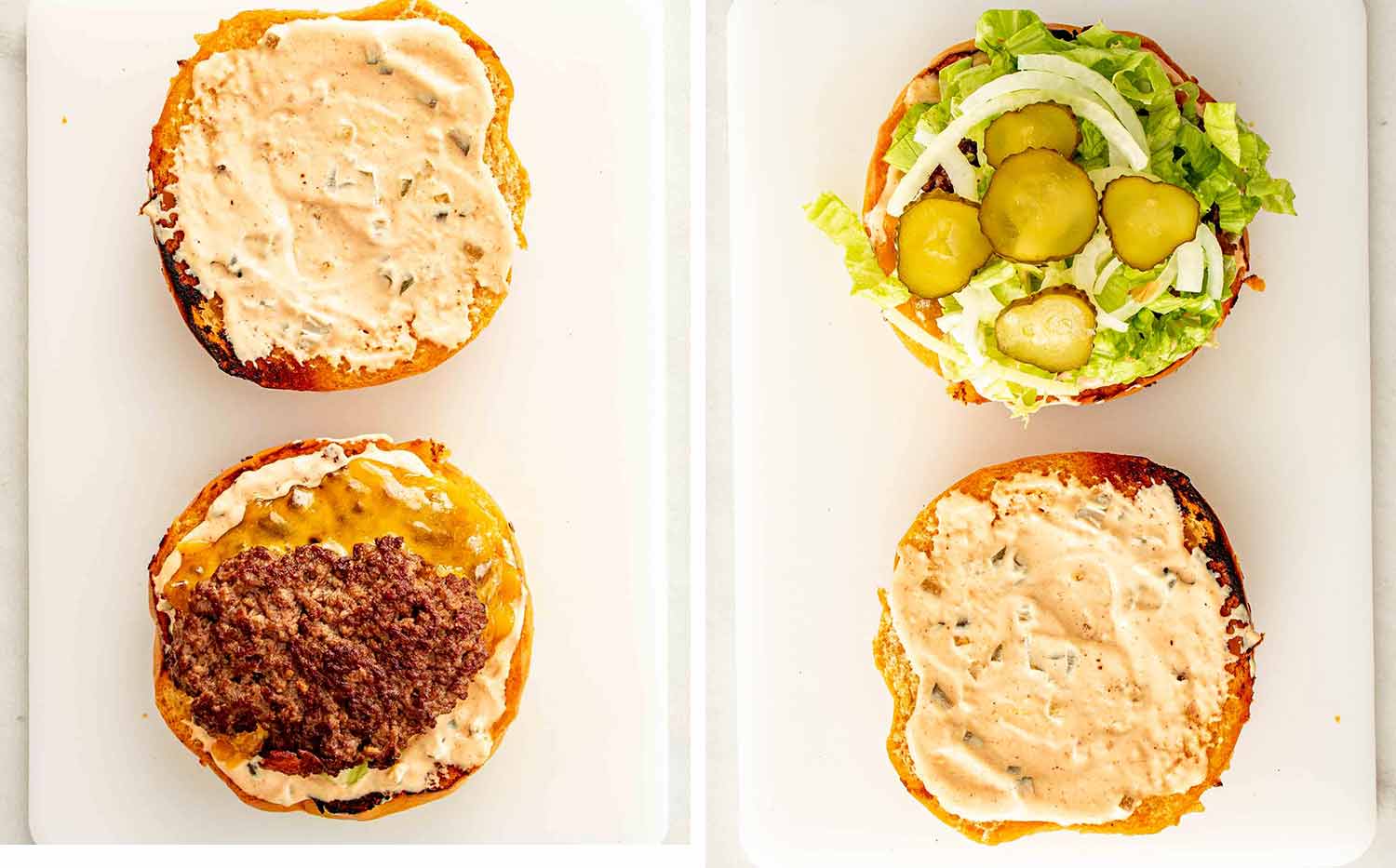
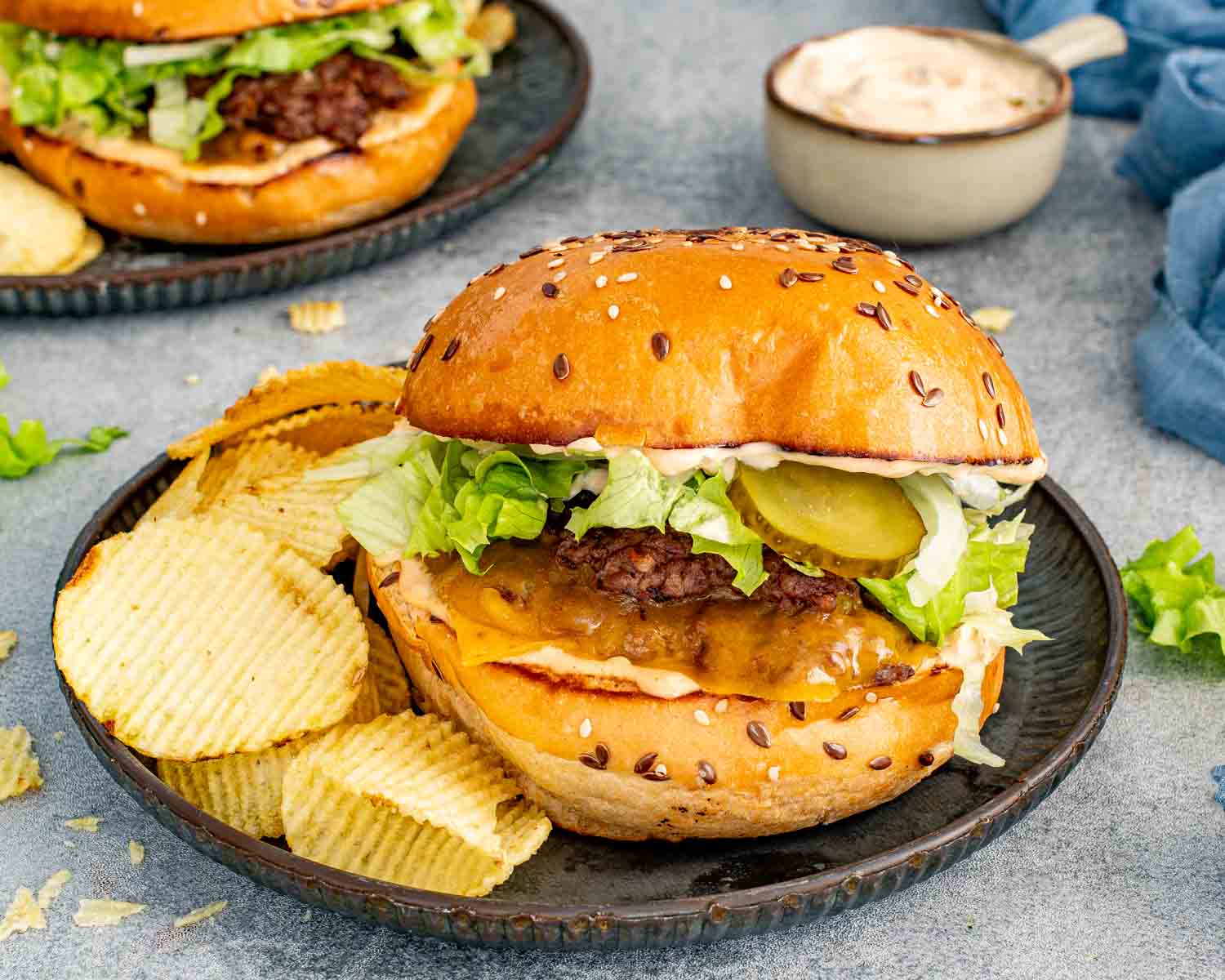
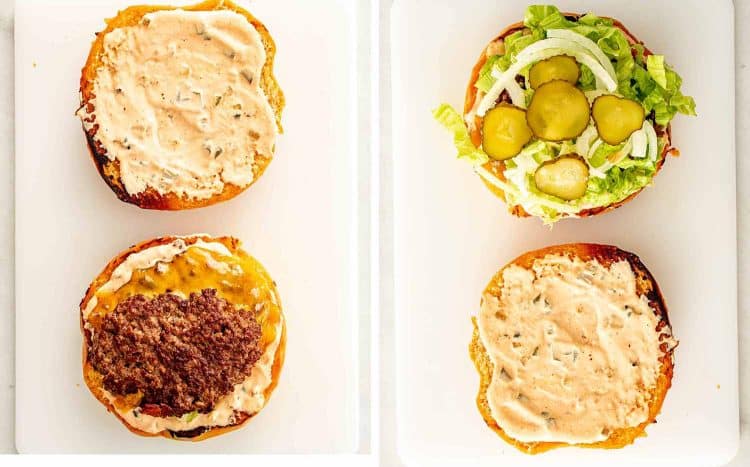
Add the double patty stack, then the shredded lettuce, sliced onion, and pickle slices. Close the burger and serve immediately. Smashed burgers do not wait for anyone.
Key Substitutions
- Ground beef fat percentage: 80 percent lean is the sweet spot and the one we recommend. 85 percent lean will still work but the edges will be slightly less crispy and the flavor will be a little thinner. Anything leaner than 85 percent and the smashed burger concept starts to break down because there is simply not enough fat to render and create the crust. Going the other direction, 75 percent lean will be very rich and slightly greasy. 80 percent is the answer and the answer it shall remain.
- Cheddar cheese: American cheese is the classic smashed burger choice and melts more aggressively and evenly than cheddar. If you want that perfect diner style melt, American is the correct call. Pepper jack adds heat that works beautifully with the special sauce. Swiss is a milder, slightly nutty option. Whatever you use, use sliced cheese rather than shredded. Sliced melts more uniformly and covers the patty properly.
Storing Leftovers
Fridge: Smashed burgers are genuinely best eaten the moment they come off the pan. That said, cooked patties keep in an airtight container in the refrigerator for up to 3 days. Store the sauce separately and the buns separately. Assemble fresh every time. The special sauce keeps in the fridge for up to 1 week and gets better with every passing day, which is more than we can say for most things in life.
Reheating: Reheat the patties in a hot skillet for 1 to 2 minutes per side rather than the microwave, which makes the edges soft and robs the burger of everything that makes it worth eating.
Try These Recipes Next
- Smashed Burger Tacos
- Greek Lamb Burgers
- Guacamole Burger
- Blue Cheese Burgers with Crispy Fried Onion
- Chicken Ranch Burgers
Before You Begin! If you make this, please leave a review and rating letting us know how you liked this recipe! This helps our business thrive & continue providing free recipes.
Smashed Burgers
Ingredients
For the burgers:
- 1 pound ground beef (80 percent lean)
- 1 teaspoon salt
- 1 teaspoon black pepper
- 4 burger buns
- 4 slices cheddar cheese
- 1 tablespoon butter
For the sauce:
- ½ cup mayonnaise
- 2 tablespoons ketchup
- 1 tablespoon yellow mustard
- 2 tablespoons dill pickles (finely chopped)
- 1 teaspoon pickle juice
- ½ teaspoon garlic powder
- ½ teaspoon paprika
For assembling:
- ½ cup shredded lettuce
- ½ small onion (thinly sliced)
- 8 pickle slices
Before You Begin! If you make this, please leave a review and rating letting us know how you liked this recipe! This helps our business thrive & continue providing free recipes.
Instructions
- In a small bowl, combine ½ cup mayonnaise, 2 tablespoons ketchup, 1 tablespoon yellow mustard, 2 tablespoons finely chopped dill pickles, 1 teaspoon pickle juice, ½ teaspoon garlic powder, and ½ teaspoon paprika. Stir well and refrigerate until ready to use.
- Divide the 1 pound ground beef into 8 equal portions and loosely roll into balls. Do not overwork the meat.
- Heat a large cast iron skillet or griddle over high heat until very hot. Place 2 to 3 beef balls onto the hot surface. Using a spatula, firmly smash each ball down into a thin patty. Season the patties with some of the 1 teaspoon salt and 1 teaspoon black pepper. Cook for about 2 minutes, until the edges are crispy and browned.
- Flip the patties and immediately place 1 slice cheddar cheese over one patty in each pair. Cook for another 1 minute. Stack a plain patty over a cheese topped patty to create 4 double burgers.
- Lightly butter the 4 burger buns with 1 tablespoon butter and toast them in the pan until golden.
- Spread a generous amount of the special sauce on both the top and bottom buns. Add the burger patties, then top with ½ cup shredded lettuce, sliced onion, and pickle slices. Close the burgers and serve immediately.
Notes
- Get the pan genuinely very hot before the beef goes in. Not warm. Not medium high. Very hot. Preheat a cast iron skillet over high heat for at least 3 minutes before anything touches it. A pan that is not hot enough will steam the beef instead of sear it and the crispy lacy edges that make smashed burgers worth making will simply not happen.
- Smash the moment the beef hits the pan and do not be timid about it. The smash has to happen immediately, before the proteins start to set, or the patty will resist and tear. Use a heavy spatula or burger press, apply firm sustained pressure for about 10 seconds, and get the patty as thin as you can. Do not season the beef before forming the balls. Form them unseasoned, smash onto the hot pan, then season the top surface right away before the flip.
- Use 80 percent lean ground beef. The 20 percent fat is what renders into the pan and creates those crispy edges. Leaner beef simply does not have enough fat to do what we need it to do here. Extra lean is for meatloaf. This is a smashed burger and it deserves the right beef.
Nutrition Information
Notice: Nutrition is auto-calculated for your convenience. Where relevant, we recommend using your own nutrition calculations.
Frequently Asked Questions
Can we make smashed burgers without a cast iron skillet?
A heavy stainless steel skillet or a flat griddle both work. What you need is a pan that retains heat well and does not have a nonstick coating that prevents proper browning. Nonstick pans are designed to prevent sticking, which is the opposite of what we want here. We want the beef to develop a crust that releases naturally when it is ready. Cast iron is ideal but any heavy, unoiled pan over high heat will get you there.
Can we cook smashed burgers on a grill?
Yes, with a flat griddle plate or cast iron insert on the grill. Cooking directly on grill grates does not work for smashed burgers because the thin patties will fall through and the surface area contact we need for the crust cannot happen on a grate. A flat surface is non negotiable for this technique.
Can we make the special sauce ahead of time?
Yes and I recommend it. The sauce improves with time as the flavors come together. Make it up to 3 days ahead and store covered in the refrigerator. Day two sauce on a freshly made smashed burger is a very good combination.
The patty tore when we smashed it, what happened?
Two likely causes. The beef was overworked when forming the balls, which makes the patty dense and more prone to tearing under pressure. Or the smash happened too late after the beef hit the pan and the proteins had already started to set. Form loose balls with minimal handling and smash the moment they land. Immediate and decisive is the only way.
The edges are not crispy, why?
The pan was not hot enough. This is the most common smashed burger problem and there is only one fix: more heat before the beef goes in. Preheat the cast iron over high heat for a full 3 minutes minimum. It should be visibly radiating heat. Also check the fat percentage, leaner beef produces less crunch. 80 percent lean, very hot pan, firm smash. Those three things together produce crispy edges every time.
Why is my burger dry?
It was overcooked. Smashed burgers are thin and they cook very fast. Two minutes on the first side and one minute after the flip is all they need. Cooking them longer dries them out quickly because there is so little mass to retain moisture. Watch the clock and pull them on time. The special sauce also adds moisture and richness that a dry patty needs, so be generous with it.
The buns are soggy, why?
The sauce went on too early or the burger sat too long before serving. Spread the sauce right before assembling and serve immediately. Smashed burgers are not a make ahead situation. They are a right now situation. Make them, stack them, eat them. That is the correct timeline.