Ham and Cheese Pockets
This post may contain affiliate links. Please read my disclosure policy.


These Ham And Cheese Pockets are soft enriched dough folded over sharp cheddar and ham, cut into 8, and baked until golden. No fiddly sealing, no crimping, no individual assembly. You roll it once, fold it once, and cut. They freeze beautifully, which is most of why I make them.

Homemade Ham And Cheese Pockets
The thing I like about these is how little assembly there is.
Most filled dough recipes have you cutting circles, spooning filling into each one, folding, crimping, and then doing it 12 more times. This one doesn’t. You roll the dough into one big rectangle, scatter cheese over half, lay the ham on top, fold the other half over, and cut it into 8 pieces. That’s the whole construction and it takes about 2 minutes.
The dough is worth the small effort it takes. It’s enriched with butter and eggs, which makes it soft and slightly rich rather than lean and chewy, and it’s the same kind of dough that goes into dinner rolls. Most of the 2 hours on this recipe is rising time, so the actual work is maybe 30 minutes spread across an afternoon.
Then Parmesan and a bit of parsley on top before they bake, which gives you a salty golden crust that’s genuinely the best part.
One thing to know up front: these aren’t sealed pockets. There’s a section below explaining exactly what that means and what to do if you want them sealed.

If You’re After Homemade Hot Pockets
A hot pocket is sealed. Filling fully enclosed in dough, edges crimped shut, so nothing escapes. That’s what makes it a thing you can hold and eat walking around without wearing it.
These are folded and cut. One large rectangle, filling on half, folded over, then sliced into portions. Which means the cut edges are open, and a bit of cheese will bubble out of them in the oven. That’s normal and it’s not a mistake. Some of it caramelizes on the tray and those bits are excellent.
I make them this way because it takes 2 minutes instead of 20, and because I like the crispy cheese that escapes.
If you want them properly sealed, it’s an easy change. Cut the rolled dough into 8 rectangles first, put the filling on one half of each, fold it over, then press the edges firmly with a fork all the way around. Same baking time. You’ll get neater pockets, no leakage, and slightly less crispy cheese, which is the trade.
The Dough
This is an enriched dough, which just means it has fat and eggs in it.
Butter and eggs make it soft. A lean dough, the kind with just flour, water, yeast, and salt, gives you a chewy crust like a baguette. Half a cup of butter and 2 eggs gives you something closer to a dinner roll. Tender, slightly rich, and it stays soft for days rather than going hard overnight.
It also rises a bit slower than a lean dough, because fat coats the flour and slightly slows the gluten development. An hour in a warm spot is usually right, but go by size rather than the clock.
Proof the yeast first. Yeast, sugar, and lukewarm water in a small bowl for 10 minutes. It should foam up and smell like bread. If it just sits there looking like cloudy water, the yeast is dead and there’s no point continuing. Better to find out now than after 2 hours.
Water temperature is important. Around 110°F, which feels comfortably warm on your wrist. Much hotter and you kill the yeast outright. Cold and it won’t wake up properly.
The dough should be soft but not sticky. If it’s clinging to the bowl after 5 minutes of mixing, add flour a tablespoon at a time until it pulls away cleanly. Go easy though, because too much flour makes them dense.
Ingredients in Ham and Cheese Pockets
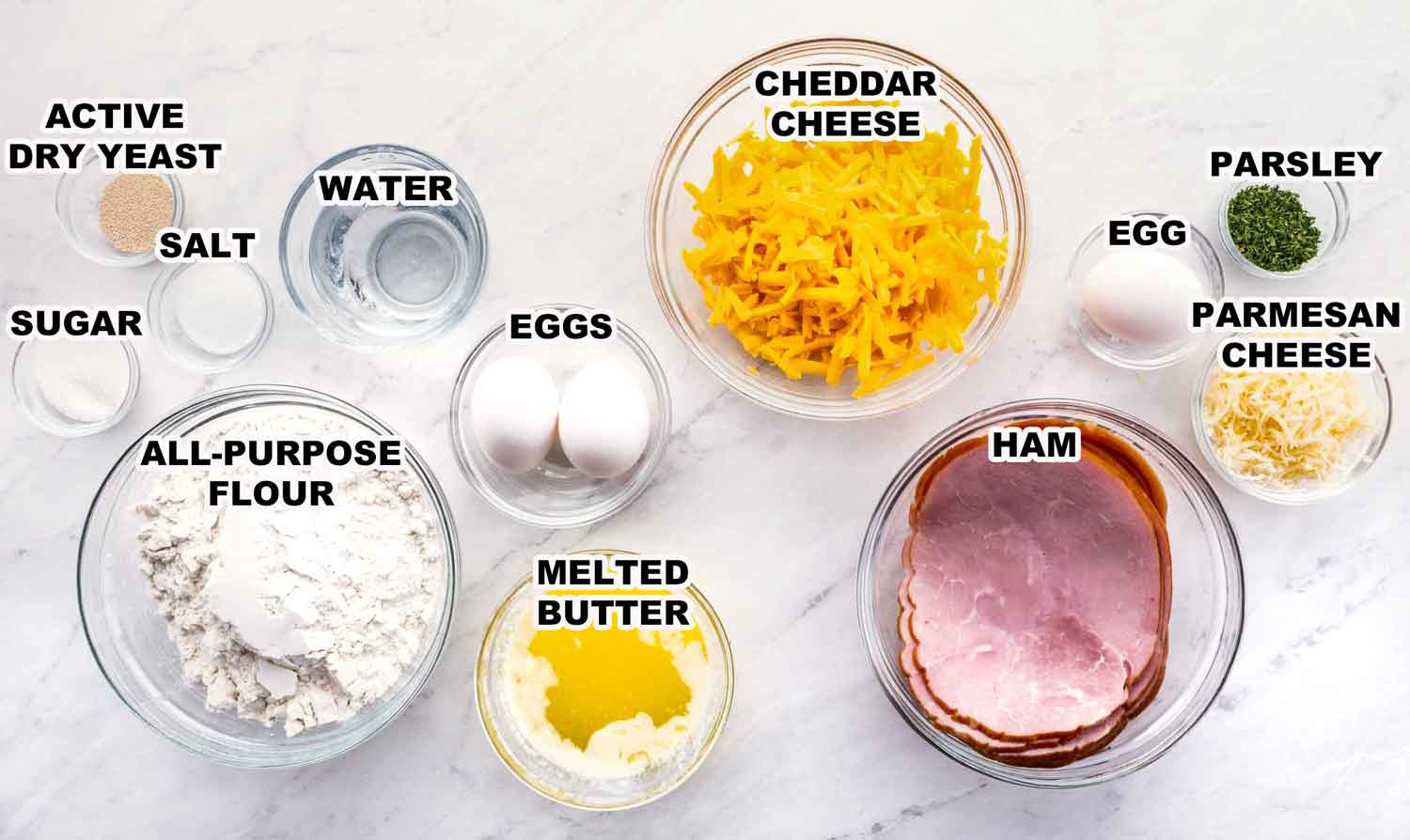
- Active dry yeast (1 teaspoon): Proof it first in the warm water and sugar. If it doesn’t foam in 10 minutes, it’s dead and you’ll want fresh. Instant yeast works and can go straight in with the flour, and it’ll rise a bit faster.
- Sugar (1 tablespoon): Feeds the yeast and adds a very slight sweetness to the dough, which works nicely against the salty ham. Honey works too.
- Water (⅔ cup, lukewarm): Around 110°F. Comfortably warm on your wrist, like bathwater. Too hot kills the yeast and cold won’t activate it.
- All purpose flour (3 cups, plus more as needed): Spoon it into the cup and level it rather than scooping. Scooping packs it down and can leave you with considerably more flour than the recipe wants, which gives you a dense dough.
- Salt (1 teaspoon): Add it with the flour rather than straight onto the yeast. Without it the dough tastes noticeably flat.
- Butter (½ cup, unsalted and melted): This is what makes it an enriched dough. It gives you a soft tender crumb and keeps them from going hard the next day.
- Eggs (2, plus 1 beaten for the wash): Two go into the dough for structure and richness. The third gets brushed over the top for that glossy golden finish. Milk works for the wash if you’d rather not use a whole egg.
- Cheddar cheese (2 cups, shredded): Sharp cheddar gives you far more flavor than mild, and you want it to stand up to the dough. Grate it yourself if you can, since pre shredded is coated with starch that stops it melting as smoothly. Gruyère, Swiss, and mozzarella all work.
- Ham (8 slices, medium thickness): Deli ham is what I use, and a decent one rather than the very thin watery stuff. Black Forest is excellent here. Turkey or cooked sausage both work.
- Parmesan cheese (¼ cup, grated): Over the top before baking, and this is really the best part. It goes salty and crisp and browns beautifully.
- Dried parsley (1 tablespoon, optional): Color and a bit of flavor on the top. Fresh parsley or chives work.
How to Make Ham and Cheese Pockets

Proof the yeast. Yeast, sugar, and lukewarm water in a small bowl, stirred, and left alone for 10 minutes. It should foam up and smell yeasty. No foam means dead yeast, so stop and start again rather than pressing on.
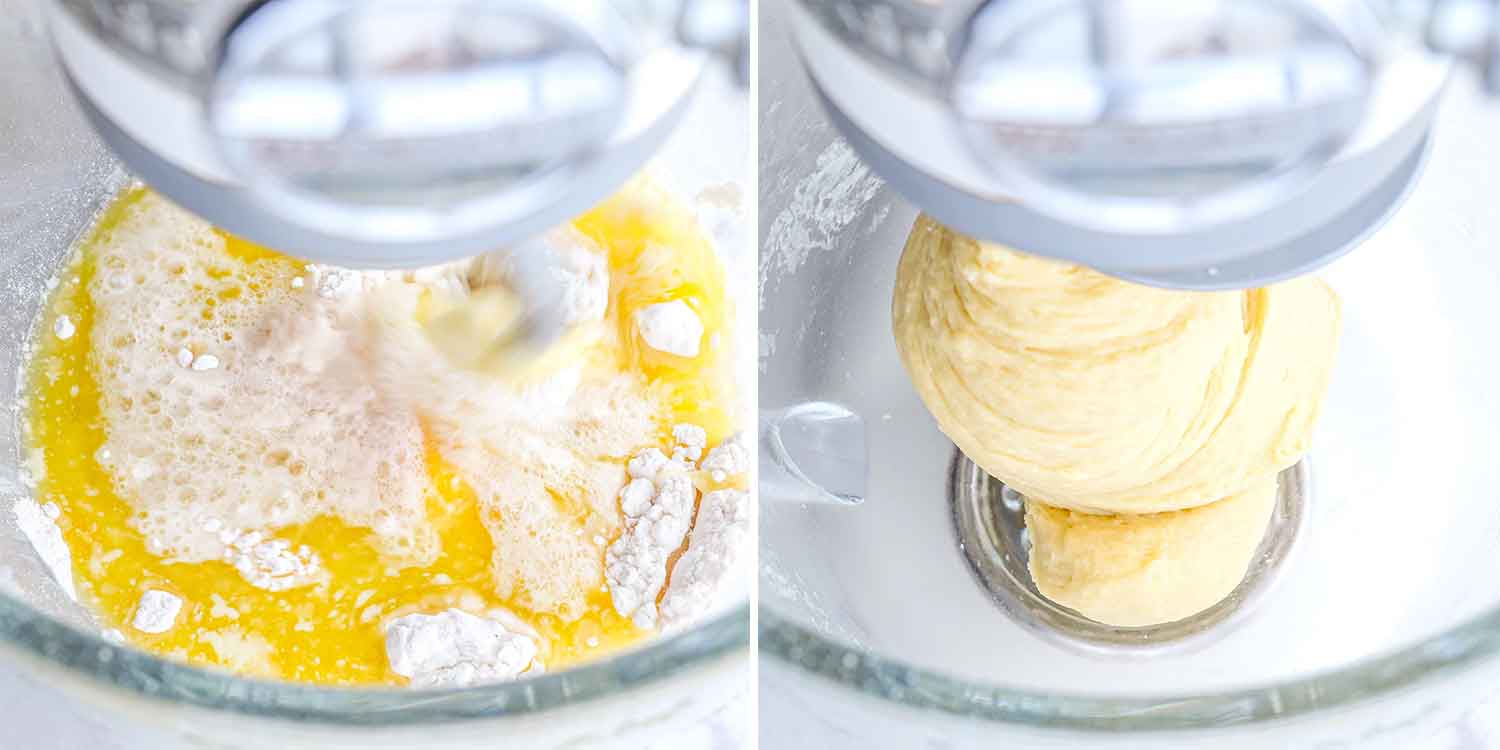
Make the dough. Flour, salt, melted butter, 2 eggs, and the yeast mixture into your mixer with the dough hook. Five minutes on medium. You want a soft dough that pulls away cleanly from the sides of the bowl. If it’s still sticking, add flour a tablespoon at a time and keep mixing.
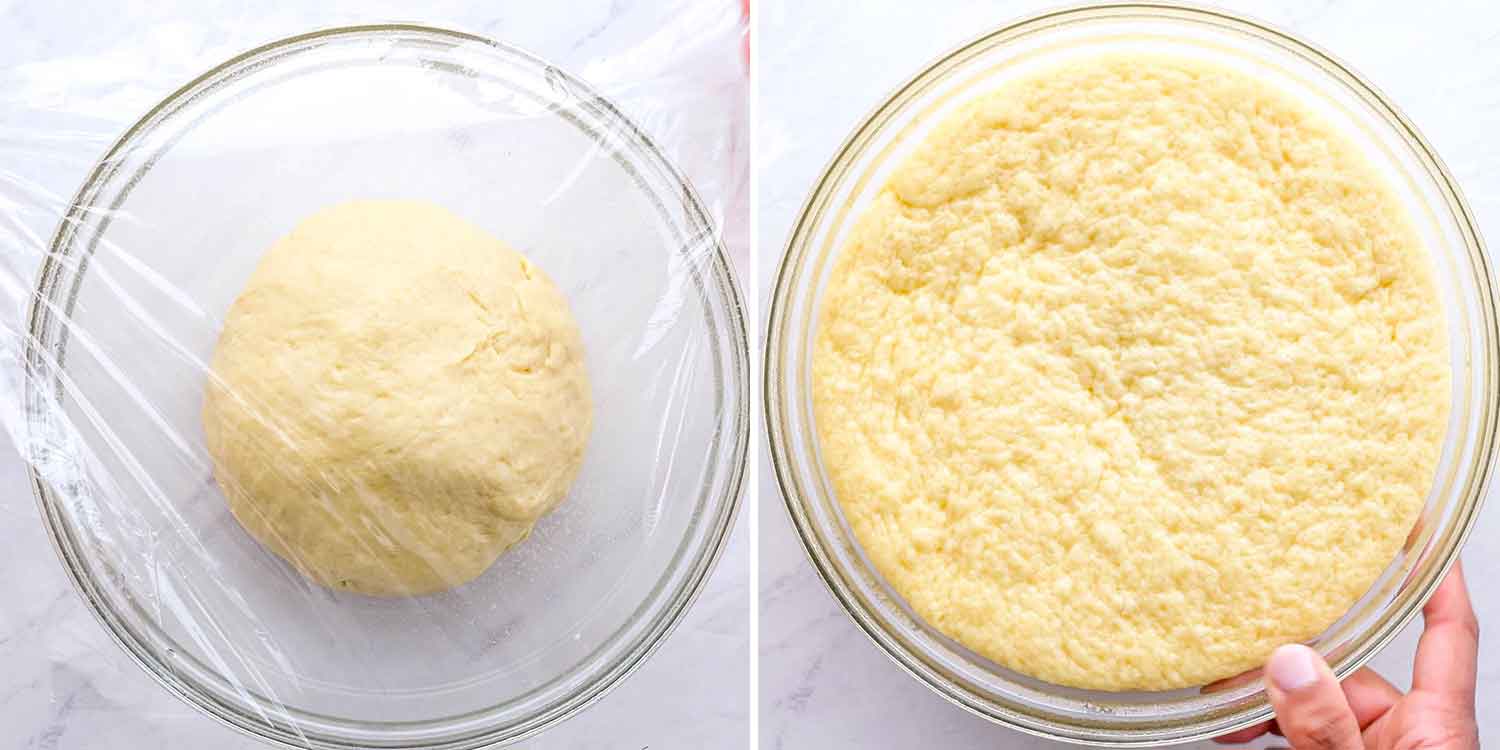
First rise. Into an oiled bowl, plastic wrap over the top, somewhere warm until doubled. About an hour, though a cold kitchen takes longer. Go by size, not the clock.
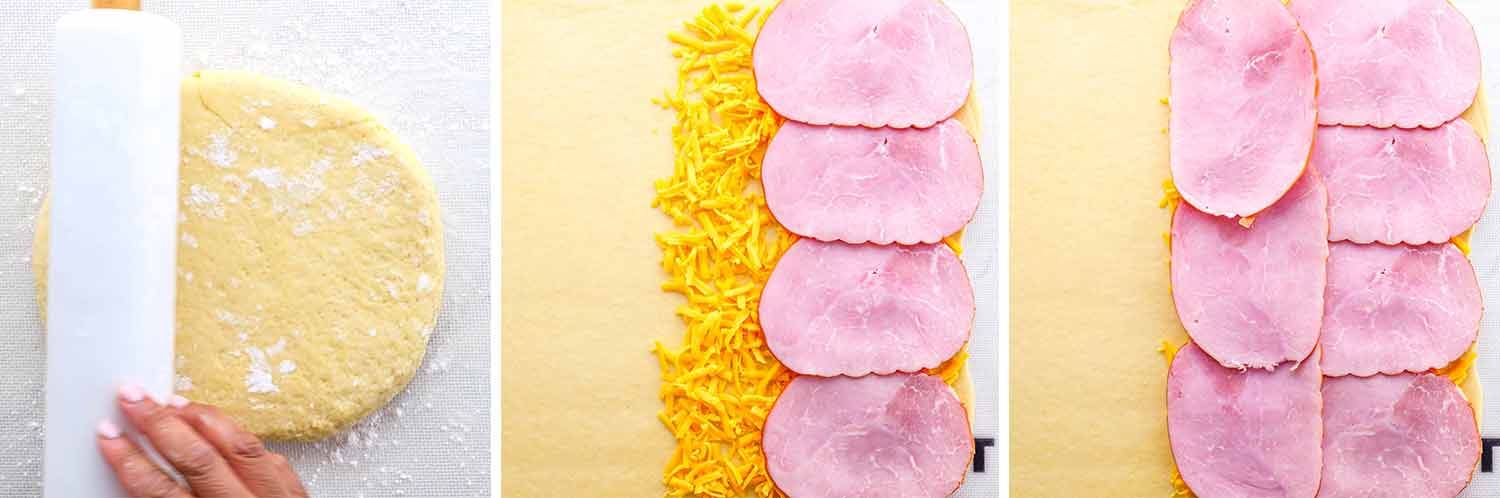
Oven to 350°F and line a baking sheet with parchment.
Roll it out. Lightly floured surface, into a rectangle roughly 14 by 18 inches and about ¼ inch thick. Try to keep the thickness even, because thin patches bake faster than thick ones.
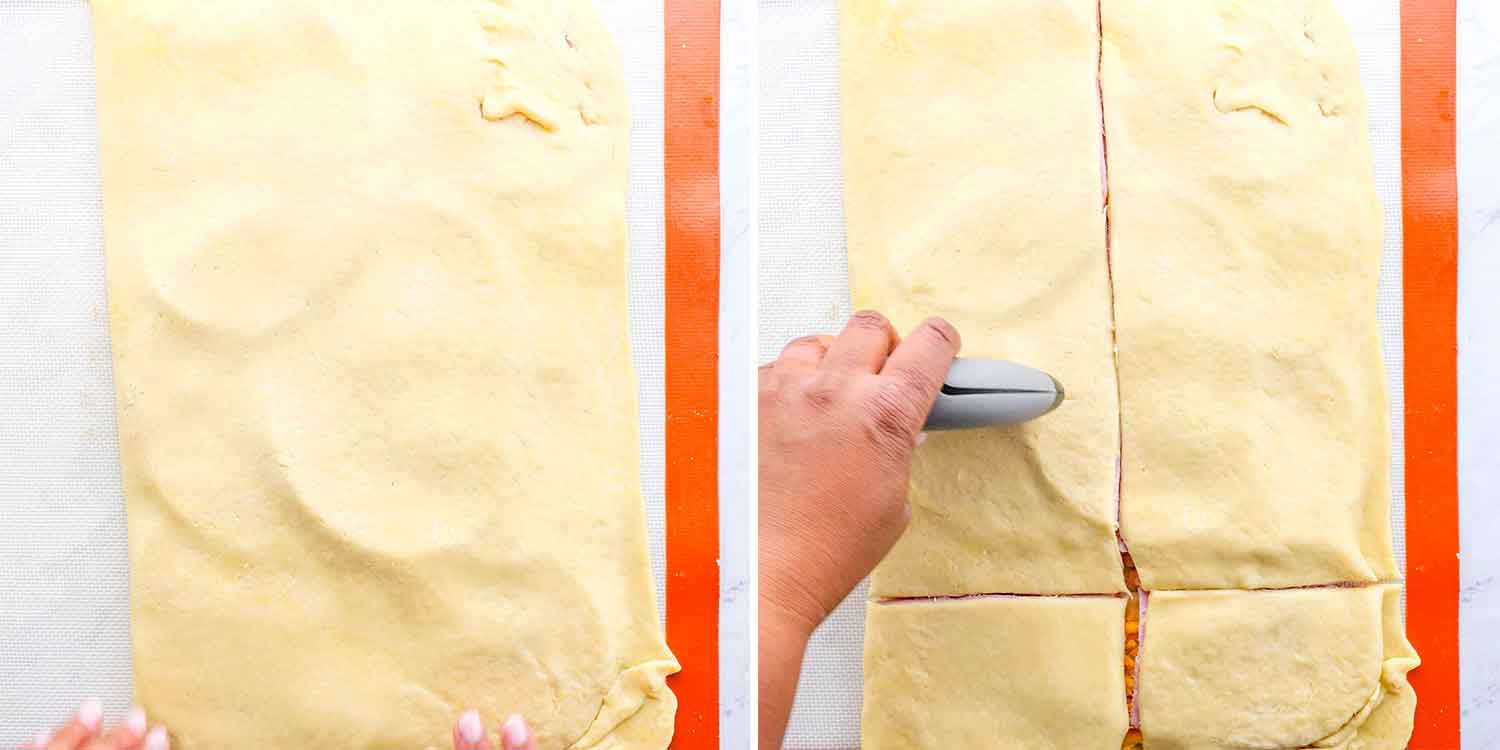
Fill and fold. Scatter all the cheddar over half the rectangle, leaving a small border. Lay the ham slices over the cheese. Then fold the empty half over the top like closing a book. Press it down gently so it sits flat.t into 8 even pieces. Place them on your prepped baking sheet.
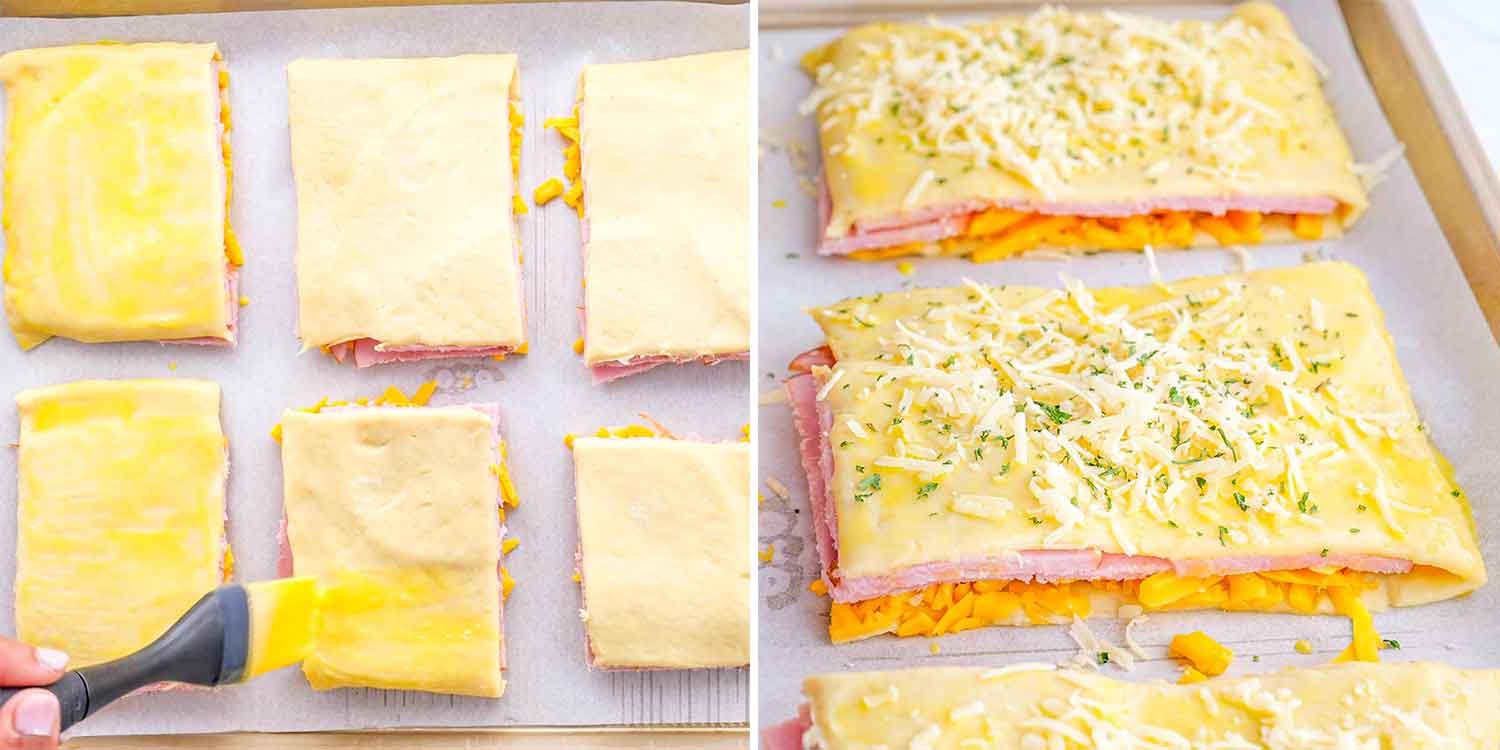
Cut into 8. Straight down with a sharp knife or a bench scraper. Move them onto the prepared baking sheet, spaced apart.
Egg wash, Parmesan, parsley. Brush the tops generously, then scatter the Parmesan and parsley over.
Second rise, 30 minutes. Uncovered, on the tray. They’ll puff up noticeably and the finished pockets are lighter for it. This is the step people skip when they’re hungry and it makes a real difference.

Bake 20 to 25 minutes until deeply golden on top and the cheese is bubbling out of the cut edges. That escaping cheese is normal, and the bits that crisp on the parchment are the cook’s reward.
Cool 5 minutes before eating. The cheese inside is molten and somebody always finds that out the hard way.
Things Worth Knowing
- Proof the yeast first. Ten minutes tells you whether you have dough or a wasted afternoon.
- Water at 110°F. Bathwater warm. Hot water kills yeast.
- Go by size, not time. Doubled is doubled, whether it takes 50 minutes or 2 hours in a cold kitchen.
- Roll it evenly. Uneven thickness means some pockets bake faster than others.
- Don’t skip the 30 minute second rise. They come out noticeably lighter for it.
- Expect some cheese to escape. These aren’t sealed. The bits that crisp on the tray are the best part.
- Sharp cheddar over mild. It has to stand up to a fairly rich dough.
- Let them cool 5 minutes. Molten cheese is hotter than it looks.
Variations
- Sealed pockets. Cut the dough into 8 rectangles first, filling on one half of each, fold and crimp the edges with a fork. Neater, no leakage, about 20 minutes more work.
- Different cheese. Gruyère is a genuine upgrade and melts beautifully. Swiss, mozzarella, or pepper jack for a bit of heat.
- Turkey or sausage. Both work straight in place of ham. Cooked crumbled sausage is very good and makes them more of a breakfast thing.
- With mustard. A thin smear of Dijon over the dough before the cheese. Sharp against all that richness.
- Breakfast version. Scrambled egg and bacon instead of ham, with cheddar.
- Everything bagel seasoning over the egg wash instead of Parmesan.
- Store bought dough. Pizza dough or crescent roll dough both work if you’re short on time. Different texture, considerably faster.

What To Serve Them With
They’re substantial enough to be lunch on their own, and that’s how they usually get eaten around here.
If you’re making a meal of it, a bowl of tomato soup is the obvious partner and the dipping situation is excellent. Any brothy soup works the same way.
A sharp green salad on the side balances them out, since there’s a lot of cheese and butter in play. Something with a good acidic dressing.
And they’re very good cold in a lunchbox the next day, which is genuinely part of the appeal.
Make Ahead And Storage
Fridge: an airtight container for up to 3 days, once fully cooled.
Freezing baked: wrap each one individually in foil, then into a freezer bag. Three months. Reheat from frozen in a 350°F oven for about 20 minutes, or thaw overnight in the fridge and warm for 10.
Freezing unbaked: assemble and cut them, freeze on the tray until firm, then bag them. Bake from frozen at 350°F, adding about 10 minutes. Skip the second rise and they’ll be slightly denser but still very good.
Reheating: the oven or an air fryer at 350°F keeps the outside crisp. The microwave heats them through in about a minute and softens the crust, which is fine for a lunchbox situation.
For lunchboxes: wrap them individually while still slightly warm and they hold up well. They’re good cold too, which is more than you can say for most baked things.

Discover More Treats
- Pizza Dough
- Fried Dough Filled With Feta Cheese
- Pasca – Romanian Easter Bread
- Homemade Croissants
- Classic Dinner Rolls
- Honey Rolls
- Soft Buttermilk Dinner Rolls
- Texas Roadhouse Rolls
- Hawaiian Sweet Rolls
- Grilled Cheese Sandwich
Before You Begin! If you make this, please leave a review and rating letting us know how you liked this recipe! This helps our business thrive & continue providing free recipes.

Ham and Cheese Pockets
Video
Ingredients
For Dough
- 1 teaspoon active dry yeast
- 1 tablespoon sugar
- ⅔ cup water (lukewarm)
- 3 cups all-purpose flour (plus more as needed)
- 1 teaspoon salt
- ½ cup butter (unsalted, melted)
- 2 large eggs
For Pockets
- 2 cups cheddar cheese (shredded)
- 8 slices ham (medium thickness)
- 1 egg (beaten, for egg wash)
- ¼ cup Parmesan cheese (grated)
- 1 tablespoon parsley (dried, optional)
Before You Begin! If you make this, please leave a review and rating letting us know how you liked this recipe! This helps our business thrive & continue providing free recipes.
Instructions
- In a small bowl, mix the 1 teaspoon active dry yeast, 1 tablespoon sugar, and ⅔ cup lukewarm water together. Let it rest for 10 minutes, until it dissolves and starts bubbling. If it doesn't foam, the yeast is dead and you'll need fresh.
- Add the 3 cups all purpose flour, 1 teaspoon salt, ½ cup melted butter, 2 eggs, and the yeast mixture to the bowl of your mixer. Mix for about 5 minutes, until the dough is soft but not sticky. If it clings to the bowl, add a little more flour and keep mixing until it pulls away cleanly.
- Place the dough in an oiled bowl, cover with plastic wrap, and let it rise in a warm place until doubled in size, about 1 hour.
- Preheat the oven to 350°F and line a baking sheet with parchment paper.
- Roll the dough out on a lightly floured surface into a rectangle about 14 by 18 inches and ¼ inch thick.
- Sprinkle all the 2 cups shredded cheddar over half the dough, leaving a small border. Lay the 8 slices of ham over the cheese. Fold the empty half of the dough over the filling and press down gently.
- Cut the folded dough into 8 equal pieces and transfer them to the prepared baking sheet, spaced apart.
- Brush the tops with the beaten egg, then sprinkle with the ¼ cup grated Parmesan and 1 tablespoon dried parsley.
- Let the pockets rest and rise on the tray for about 30 minutes.
- Bake for 20 to 25 minutes, until deeply golden. Some cheese will bubble out of the cut edges and that's normal. Let them cool for 5 minutes before serving.
Notes
- Proof the yeast first. Ten minutes and it should foam. No foam means it’s dead, so start over rather than continuing.
- Water at about 110°F. Comfortably warm on your wrist. Too hot kills the yeast.
- Dough consistency: soft but not sticky. Add flour a tablespoon at a time if it’s clinging to the bowl, but go easy or they’ll be dense.
- These aren’t sealed pockets. The cut edges are open and some cheese will escape. For fully sealed, cut the dough into 8 rectangles first, fill one half of each, fold, and crimp with a fork.
- Don’t skip the second rise. Thirty minutes on the tray gives you noticeably lighter pockets.
- Sharp cheddar stands up to the rich dough better than mild.
- Freezing: baked, wrap individually and reheat from frozen at 350°F for 20 minutes. Unbaked, freeze assembled and bake from frozen with 10 extra minutes.
- Smaller pockets: cut into 12 instead of 8 and start checking at 15 minutes.
Nutrition Information
Notice: Nutrition is auto-calculated for your convenience. Where relevant, we recommend using your own nutrition calculations.
Originally shared May 2015.
Frequently Asked Questions
Why is cheese leaking out of mine?
Because these aren’t sealed pockets. The dough gets folded over the filling and then cut, so every cut edge is open and some cheese will escape. That’s expected. The bits that crisp on the parchment are the best part, and if you want them fully sealed there’s a method above.
Can I make these ahead or freeze them?
Both, and they freeze really well either baked or unbaked. Baked, wrap them individually and reheat from frozen in a 350°F oven for about 20 minutes. Unbaked, freeze the assembled pieces on a tray and bake from frozen with 10 extra minutes.
My dough didn’t rise. What went wrong?
Almost always the yeast. Either it was old, or the water was too hot and killed it. That’s why you proof it first, so you find out in 10 minutes rather than 2 hours. A cold kitchen also slows things down considerably, so give it more time before giving up.
Can I use store bought dough?
Yes. Pizza dough or crescent roll dough both work and save you the rising time. The texture is different, since this recipe’s dough is enriched with butter and eggs, but it’s a perfectly good shortcut.
What cheese works best?
Sharp cheddar, because it has to stand up to a rich buttery dough and mild cheddar gets lost. Gruyère is excellent if you’re feeling generous. Swiss, mozzarella, and pepper jack all work.
Do I have to let them rise a second time?
You don’t have to, and they’re noticeably better for it. Thirty minutes on the tray before baking gives you a lighter, puffier result. Skip it and they’ll be denser.
Can I make them smaller?
Yes, cut into 12 instead of 8 and start checking at 15 minutes. Smaller ones are better for lunchboxes and for feeding children.