Greek Chicken Thighs
This post may contain affiliate links. Please read my disclosure policy.
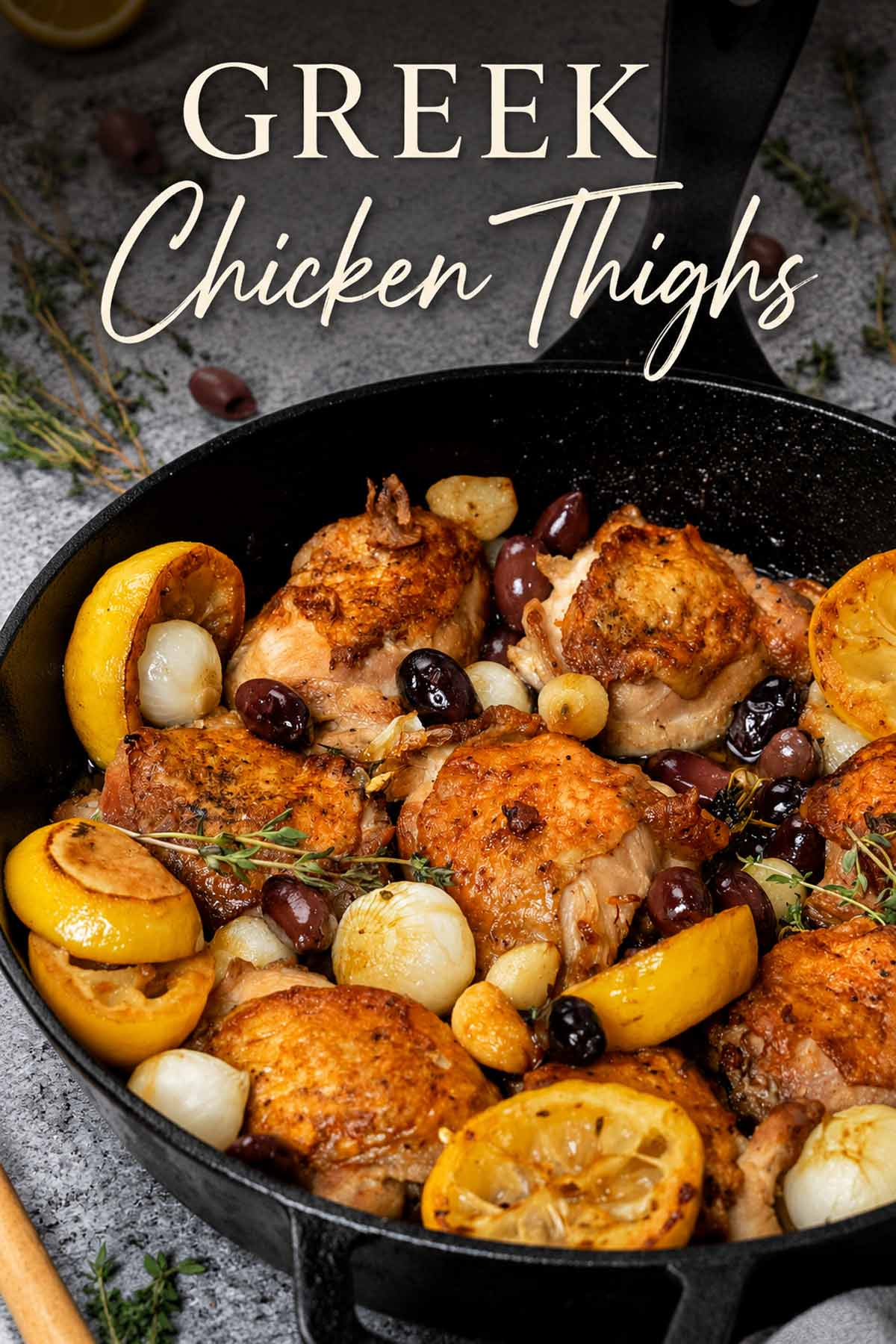
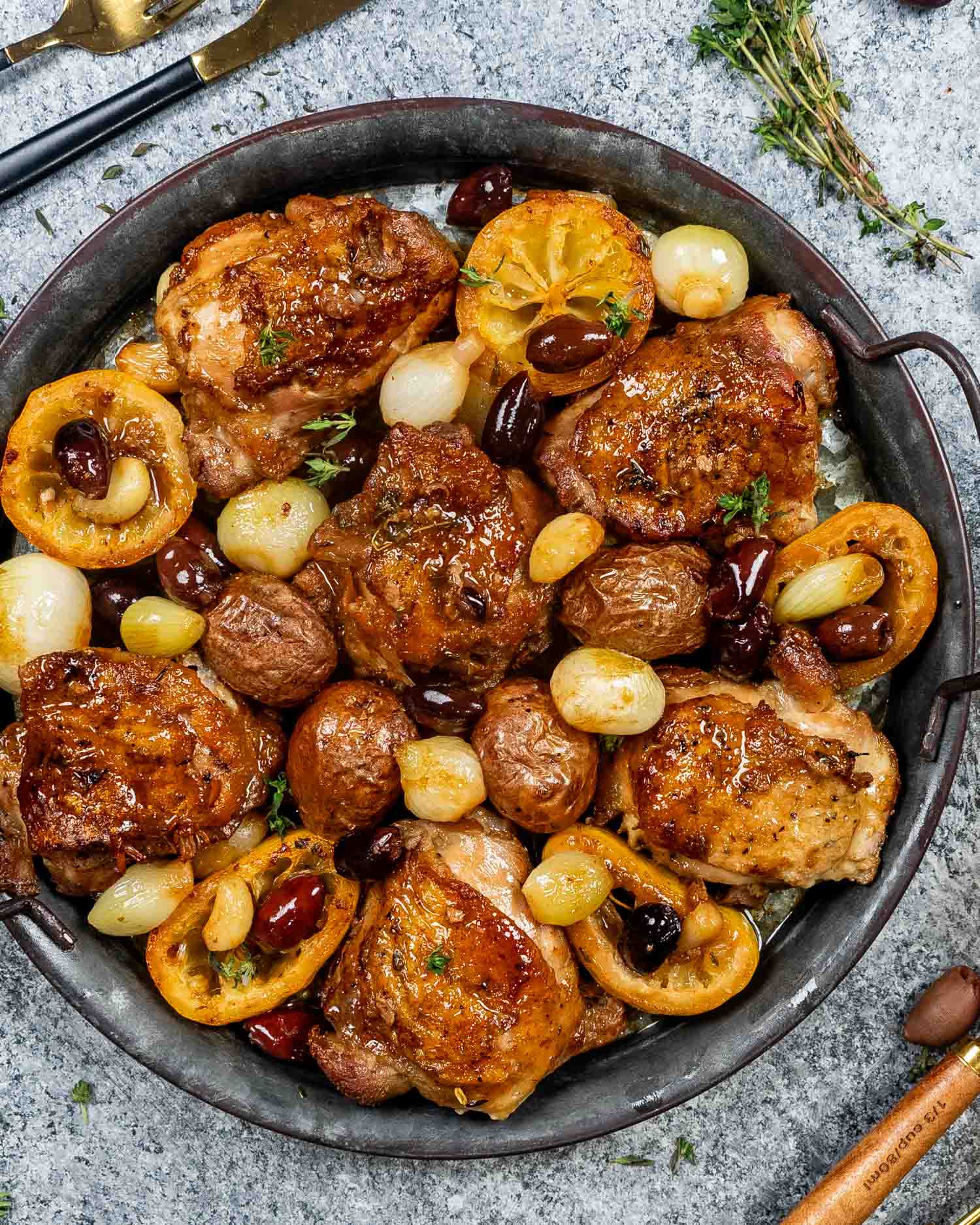
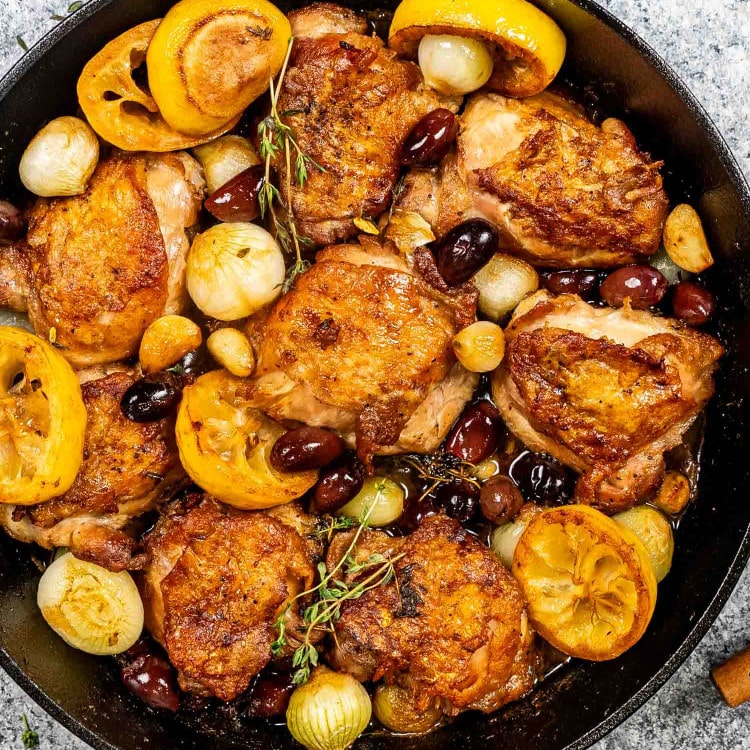
These Greek Chicken Thighs braise in white wine, lemon, and kalamata olives until the meat pulls away from the bone. Then they go under the broiler for 2 minutes so the skin crisps back up. That last step is what makes the difference, and it’s the one most braised chicken recipes skip.
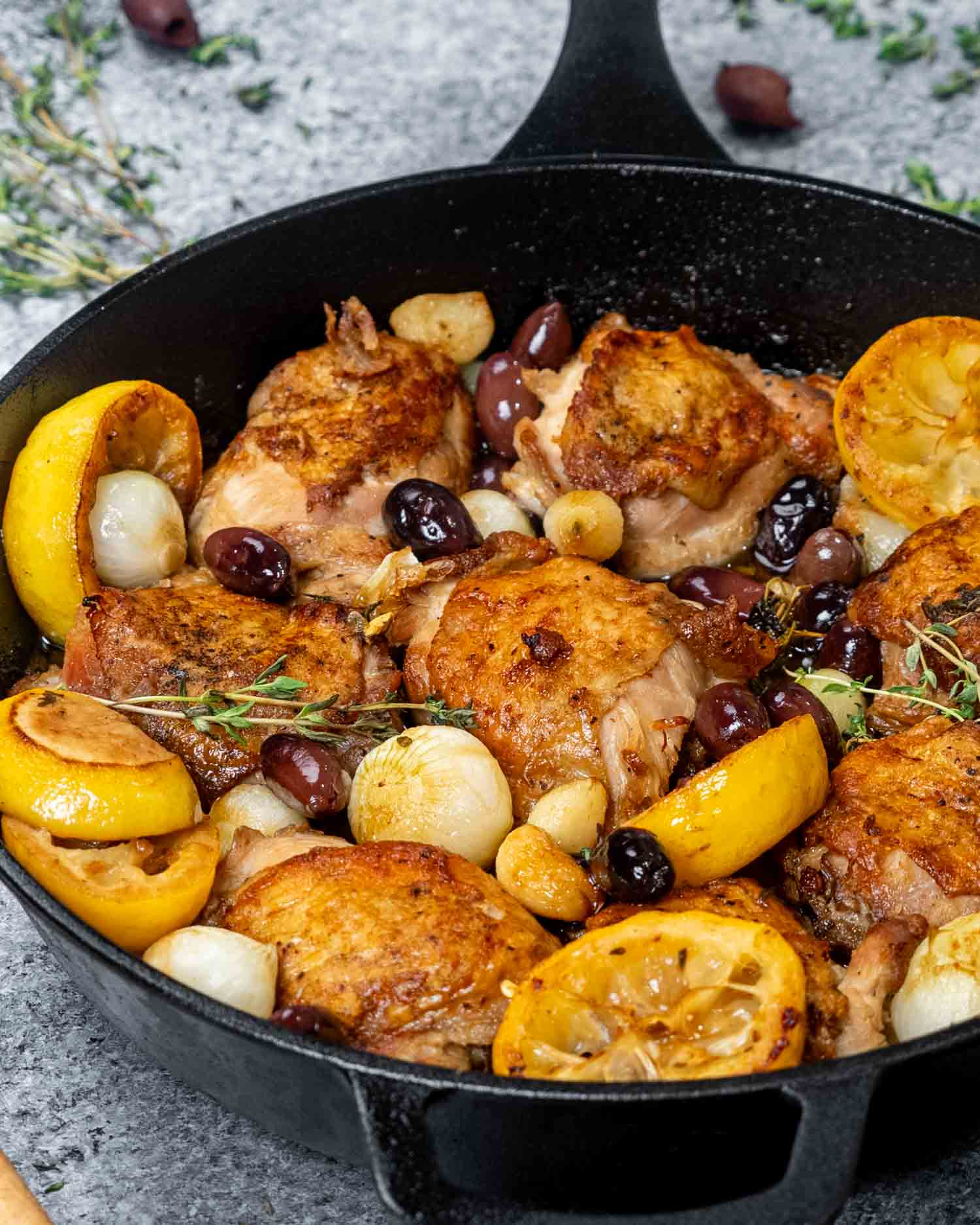
One Skillet Greek Chicken Thighs
There’s a moment with braised chicken where you look at your beautifully seared thighs, look at the pan of wine you’re about to drown them in, and make peace with the fact that the skin is going to go soft.
Turns out you don’t have to. Two minutes under the broiler at the end and it crisps right back up, while the sauce underneath doesn’t even notice.
The rest is easy. Thighs, whole garlic cloves, pearl onions, halved lemons, and a big cup of kalamata olives that season the entire sauce as they cook. One skillet, and the pan sauce is the best part.
Bread on the table. Non negotiable.
Why The Broiler Step Matters
This is the bit worth understanding, because it applies to any braised chicken you ever make.
Crisp skin needs dry heat. Braising is wet heat by definition, so the moment those seared thighs go into wine and lemon juice, the skin starts softening again. It doesn’t matter how good your sear was.
Most recipes just accept that. You get tender meat and soft skin and everyone gets on with their lives.
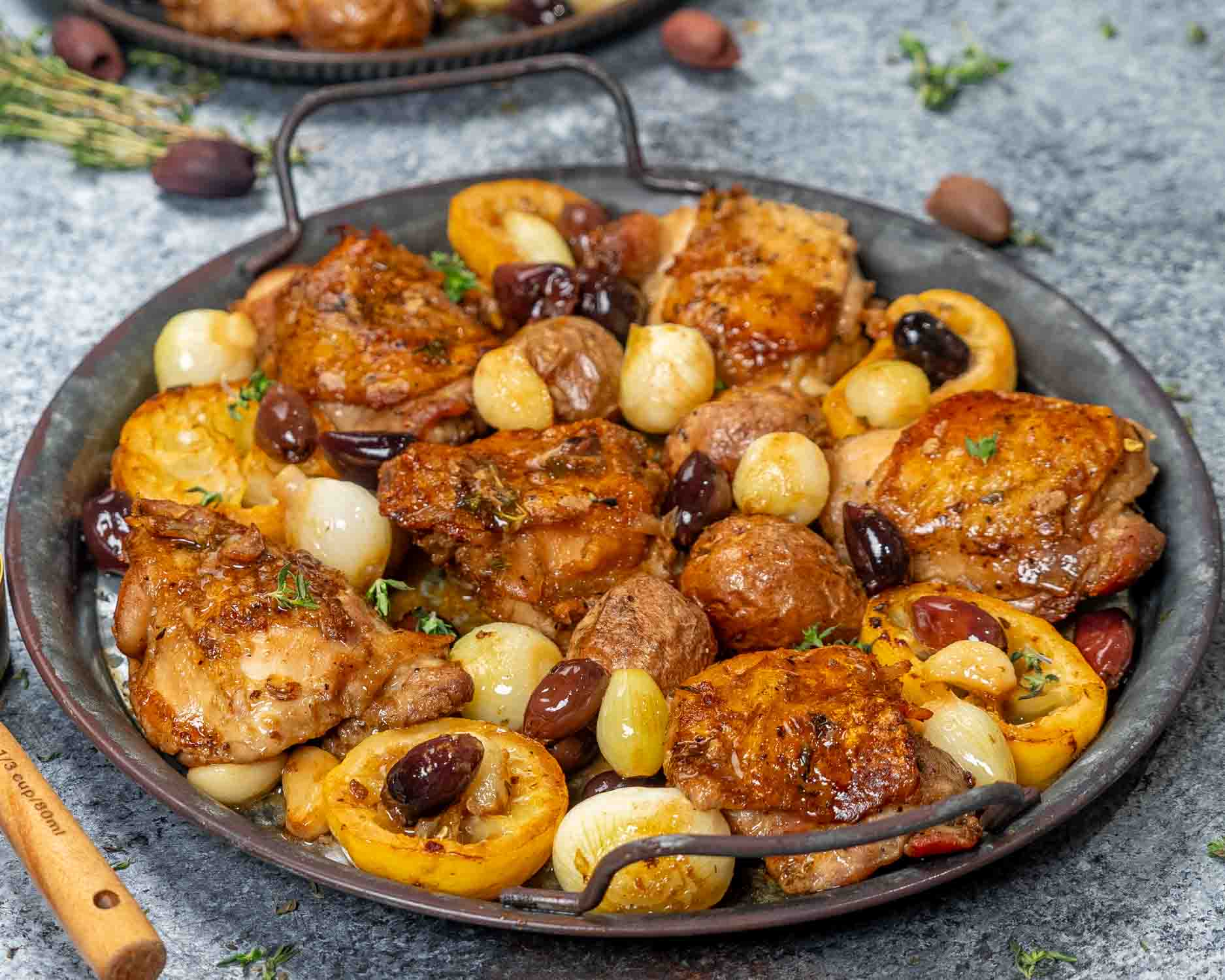
But the fix takes 2 minutes. Once the chicken is cooked through, pull the skillet out, turn on the broiler, and slide it back in on a high rack. The intense dry heat from above drives the moisture off the surface of the skin and it crisps up again, while the sauce underneath doesn’t have time to reduce or catch.
Stand there and watch it. Broilers go from golden to black quickly and 2 minutes of inattention will ruin what you just spent 50 minutes building.
If your skillet handle isn’t oven safe up close to the element, move the chicken to a sheet pan for this step and spoon the sauce over at the table instead.
Ingredients in Greek Chicken Thighs
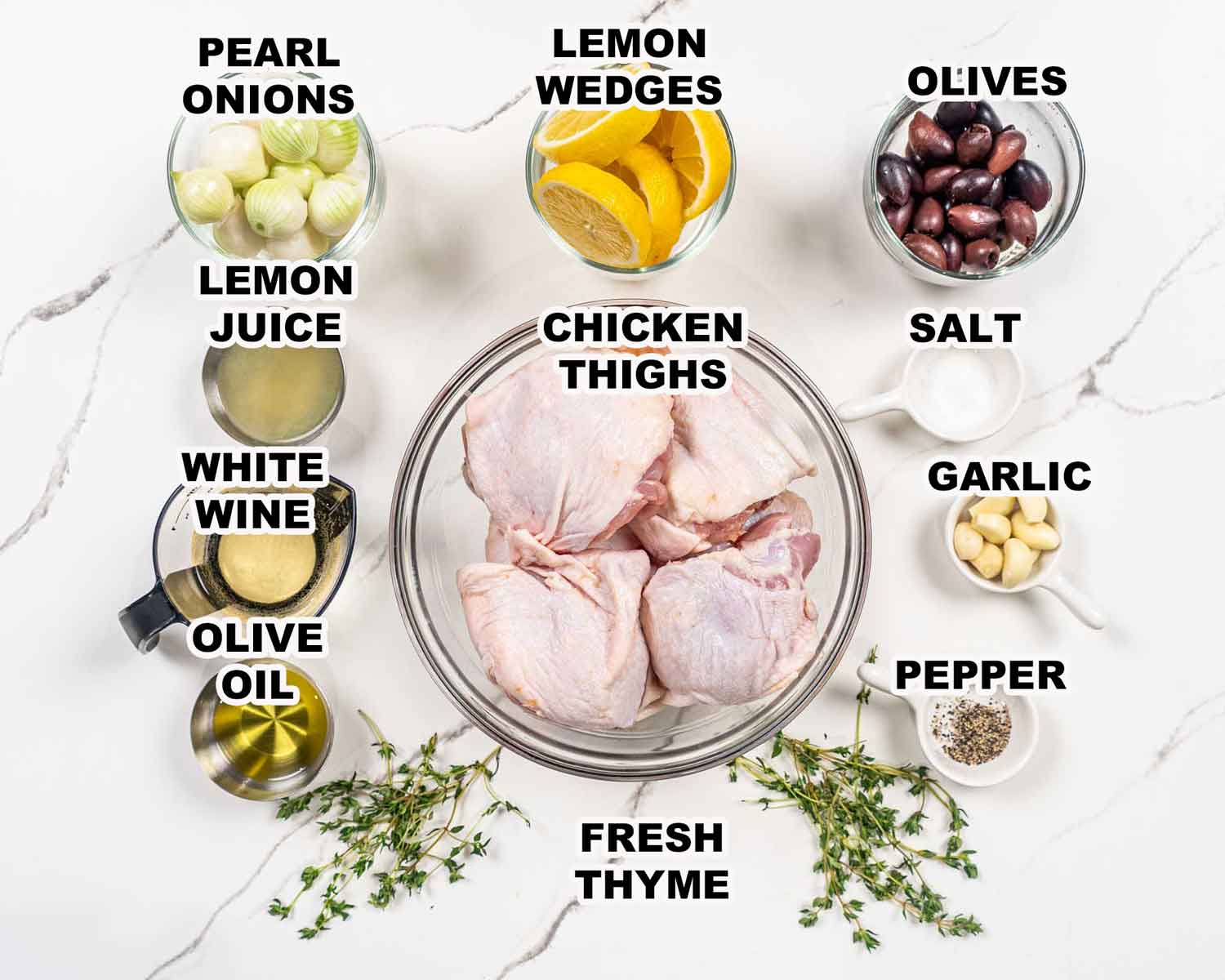
- Chicken thighs (8, bone in and skin on): Bone in and skin on, both non negotiable here. The bone keeps the meat juicy through a long braise and the skin is the whole point of the broiler step. Boneless works if that’s what you have, but you’ll lose most of what makes this dish good, and you’ll need to cut the oven time.
- Salt (½ teaspoon) and pepper (¼ teaspoon): Modest amounts, and deliberately so. There’s a cup of kalamata olives coming and they bring a lot of salt with them. Taste the sauce at the end before adding more.
- Olive oil (2 tablespoons): For the sear. Sunflower, canola, or avocado oil all work.
- Garlic (8 cloves, peeled and left whole): Whole, not minced. Over 25 minutes of cooking they go soft and sweet and mellow, almost like roasted garlic, and you can eat them straight out of the sauce. Minced garlic would burn during the sear.
- Pearl onions (8 ounces, peeled): They hold their shape and go sweet and jammy. Frozen ones save you the peeling and work perfectly well. If you can’t find them, quarter a couple of regular onions into big chunks so they don’t disintegrate.
- Fresh thyme (5 sprigs): Whole sprigs into the pan, leaves and all. Thyme holds up to long cooking better than most soft herbs. Dried works at about 1 teaspoon, though fresh is noticeably brighter here.
- Lemons (2, cut in thirds): Cut side down in the hot skillet so they caramelize, which sweetens them and takes the sharp edge off. One note: the pith gets bitter with long cooking, so I’d lift the lemon pieces out before serving rather than leaving them in the pan.
- Kalamata olives (1 cup, pitted): The backbone of the dish. Briny, purple, and sharp enough to cut through all that chicken fat, and they season the sauce as they cook. Green olives work and taste different. Milder olives get lost entirely.
- Dry white wine (½ cup): Chardonnay, Pinot Grigio, or Pinot Blanc. It deglazes the pan and becomes the base of the sauce. Chicken broth is a straight substitute if you’d rather not use wine.
- Fresh lemon juice (¼ cup): On top of the halved lemons, and yes you want both. The juice brightens the sauce while the lemon pieces add caramelized depth.
How To Make Greek Chicken Thighs
Oven to 350°F. Get that going first.
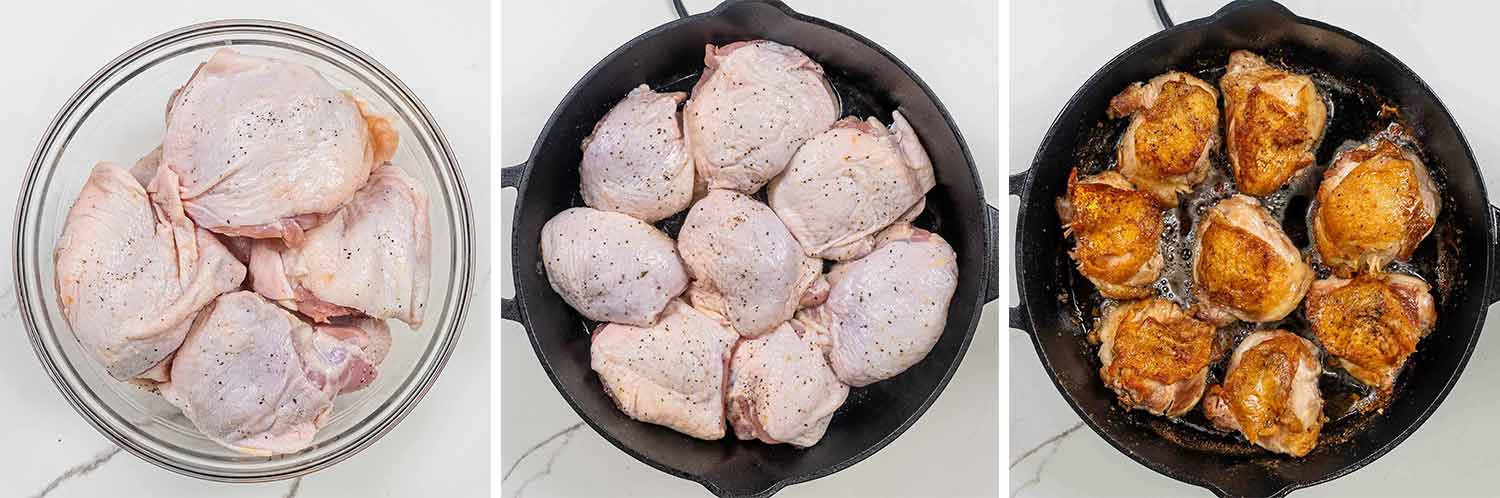
Season and sear. Salt and pepper both sides of the thighs. Heat the olive oil in a large 12 inch skillet over medium high, then lay the thighs in skin side down and leave them alone for about 5 minutes, until the skin is properly golden. Flip and give the other side 5 minutes. You’re building color, not cooking them through. Take them out and set them aside.
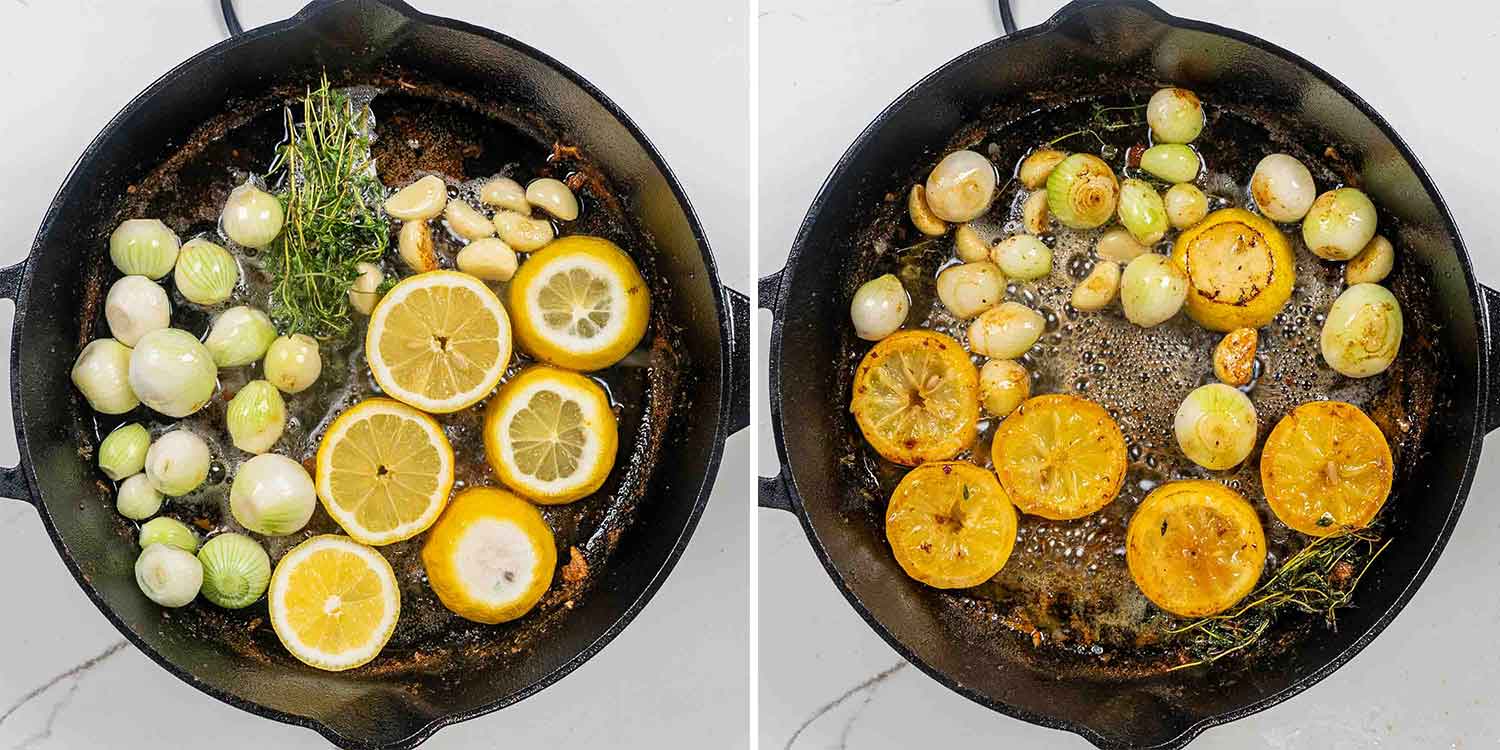
Aromatics into the pan. Whole garlic cloves, pearl onions, thyme sprigs, and the lemons, cut side down. About 5 minutes, until the onions and garlic start to soften and take on some color and the lemons caramelize where they’re touching the pan. Everything picks up the browned bits the chicken left behind, which is where a lot of the flavor lives.
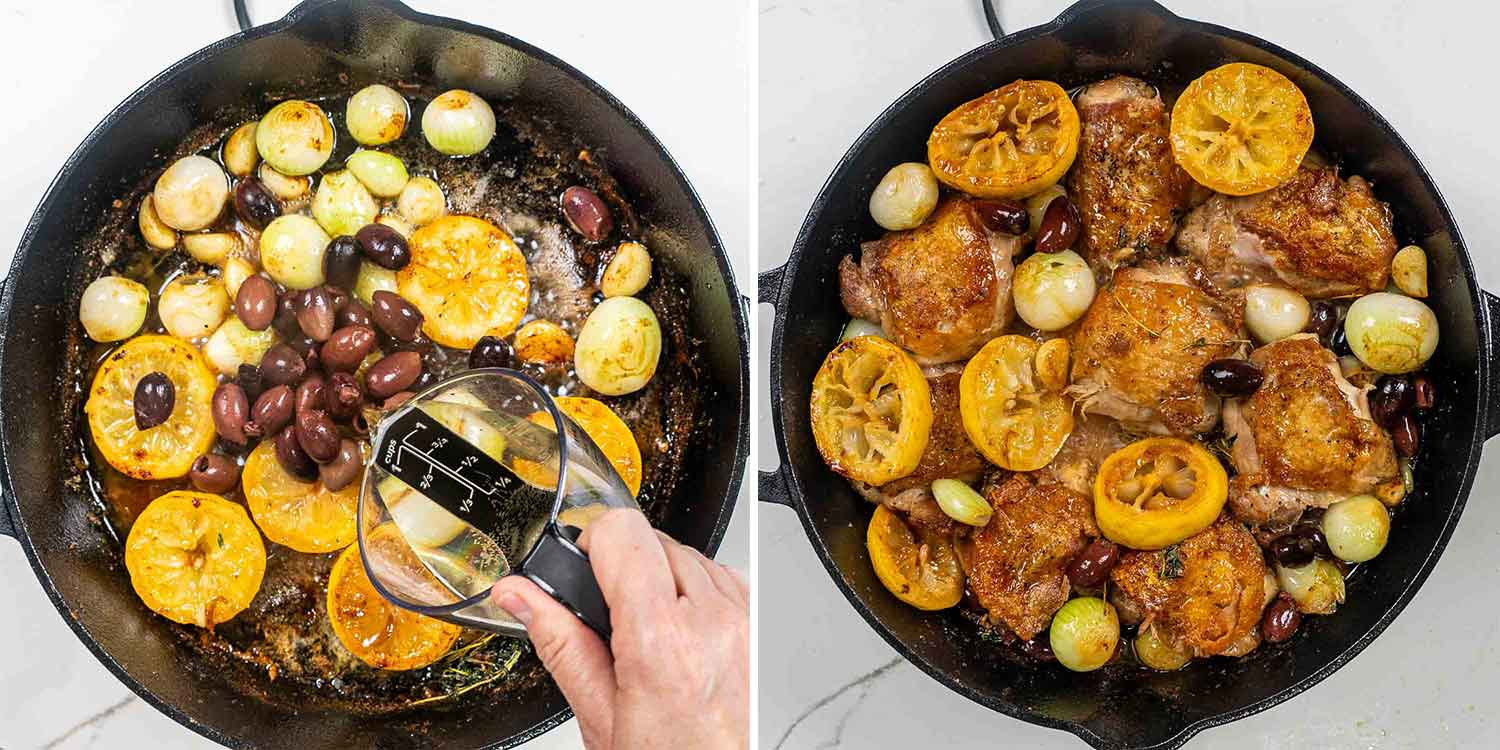
Olives, wine, and lemon juice. Add the olives, then pour in the wine and lemon juice, stirring to bring the whole thing together.
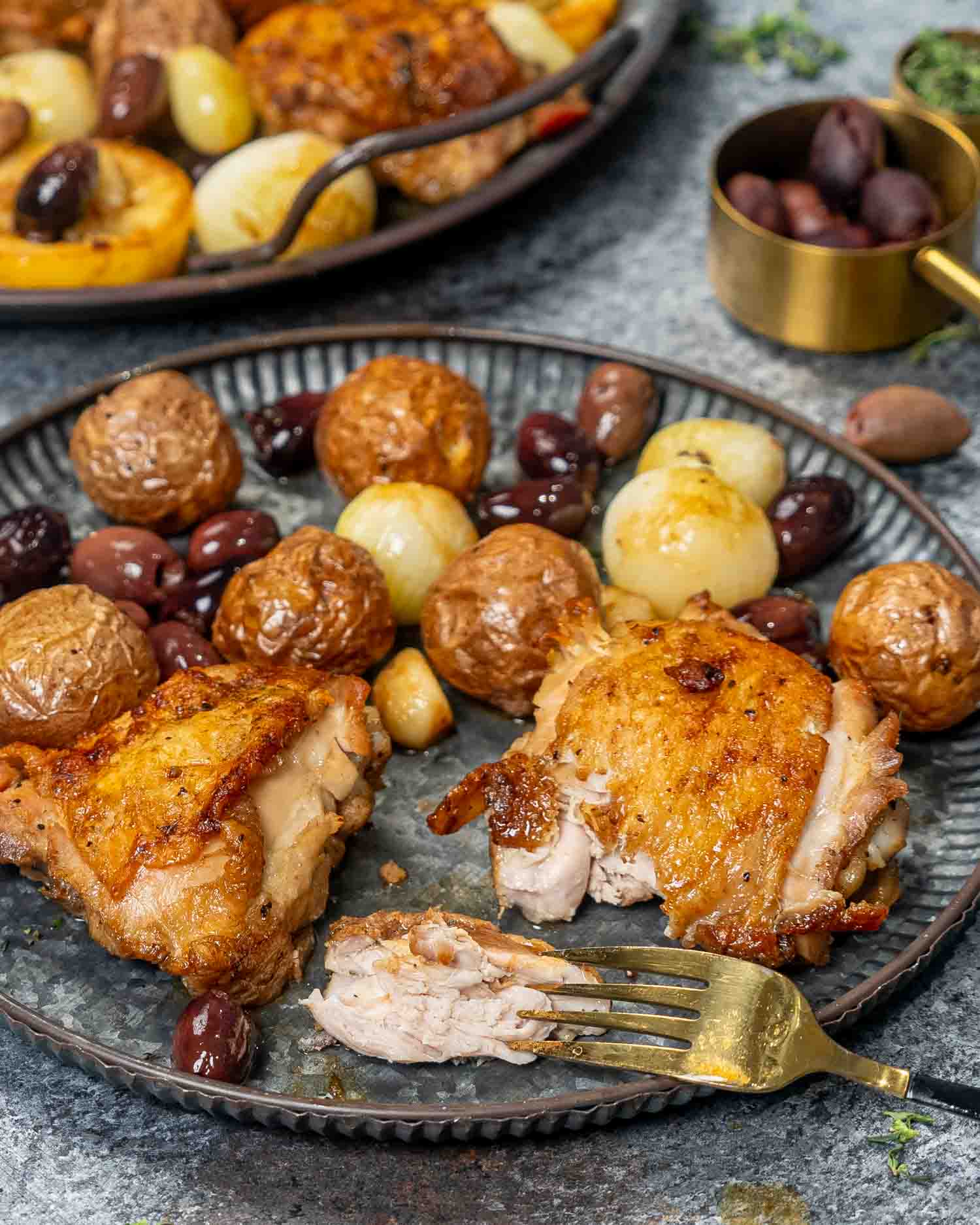
Chicken back in. Nestle the thighs into the pan so they sit directly on the bottom, skin side up. Skin side up matters, because anything submerged won’t crisp later no matter what you do.
Into the oven for about 20 minutes, until the chicken is cooked through. An instant read thermometer in the thickest part should say 175°F. That’s above the 165°F safety minimum on purpose, because dark meat needs those extra degrees for the connective tissue to break down and go tender.
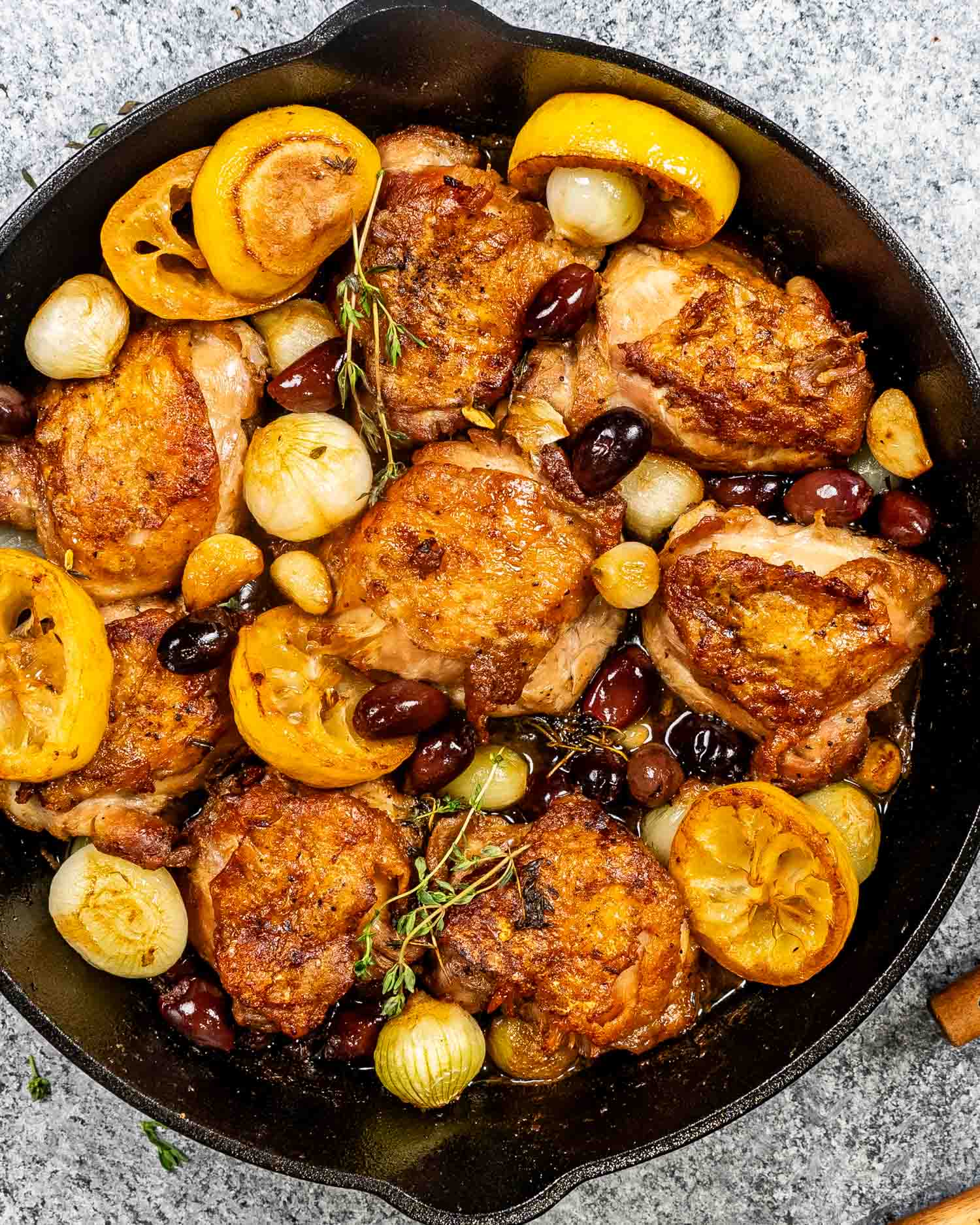
Now the broiler. Pull the skillet out, switch the oven to broil on high, and put the skillet back on a high rack for 2 to 3 minutes. The skin will crisp up and go deep golden. Do not walk away. Broilers are fast and unforgiving, and this is the step where 30 seconds of distraction costs you the whole thing.
Lift out the lemon pieces before serving, since the pith turns bitter with all that cooking. Then taste the sauce and season if it needs it, though between the olives and the reduction it probably won’t.
Serve straight from the skillet with plenty of the pan sauce spooned over.
Things Worth Knowing
- Skin side up in the oven. Any skin sitting in liquid won’t crisp under the broiler later.
- Watch the broiler. Two to 3 minutes, standing right there. This isn’t a step you can walk away from.
- Take the thighs to 175°F, not 165°F. Dark meat is better with those extra 10 degrees, and it’s the difference between chewy and tender.
- Leave the garlic whole. Minced garlic burns during the sear. Whole cloves go soft and sweet over the full cook.
- Lift the lemons out before serving. The pith gets bitter over 25 minutes of cooking.
- Go easy on the salt at the start. A cup of kalamata olives brings plenty on its own. Taste at the end.
- Use a 12 inch skillet. Eight thighs in a smaller pan means they steam instead of searing, and you’ll lose the browning that flavors the whole sauce.
Variations
With potatoes. Add halved baby potatoes with the pearl onions. They soak up the sauce and you’ve got the whole dinner in one pan.
Greek seasoning instead of thyme. My Greek Seasoning blend gives you oregano and more going on. Use about 2 teaspoons.
With feta. Crumble it over after the broil, off the heat, so it softens rather than melts.
Artichokes. A drained jar of quartered artichoke hearts added with the olives. Very Mediterranean and very good.
No wine. Chicken broth in equal measure. You’ll lose some acidity, so add an extra splash of lemon juice.
Boneless thighs. They work, and they cook faster. Cut the oven time to about 12 to 15 minutes and check the temperature early. You’ll get less crisp skin, or none at all if they’re skinless.
What To Serve With This
There’s a lot of very good pan sauce here, so you want something to catch it. Crusty bread is the simplest answer and it’s what I usually do.
Orzo is the more considered version, and it soaks the sauce up beautifully. Rice or roasted potatoes both work too.
Here are a few more recipes I like to pair this chicken with:
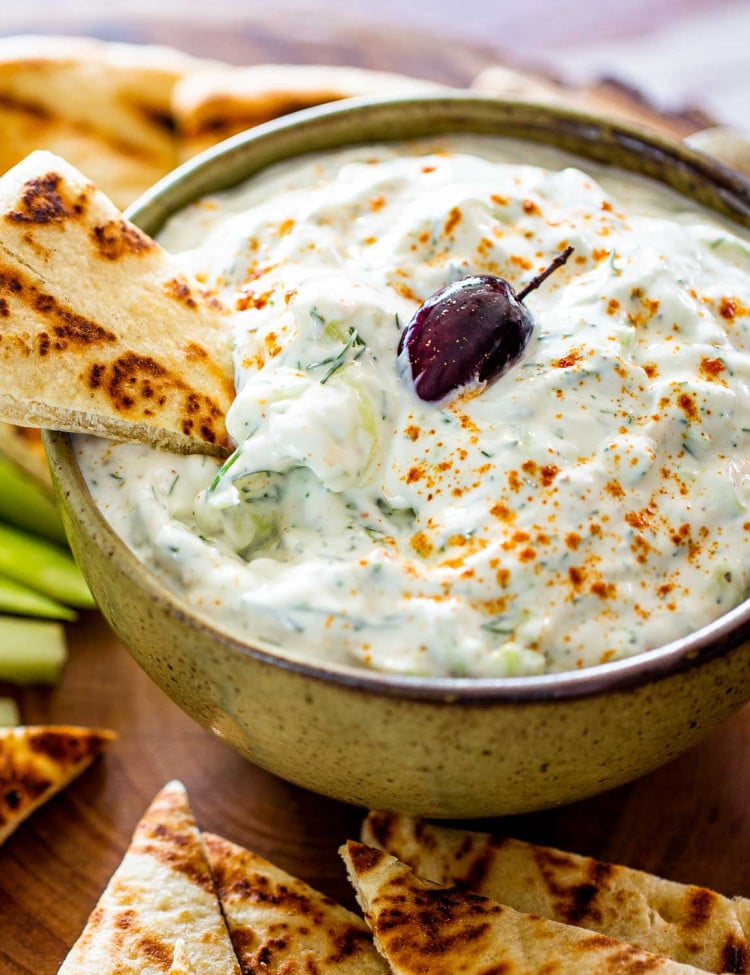
Homemade Tzatziki Sauce
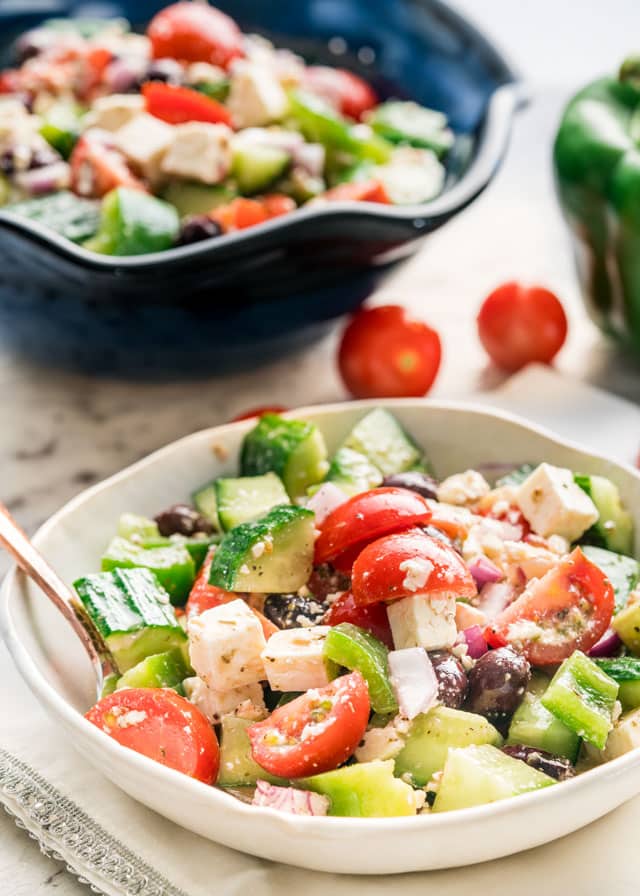
Greek Salad
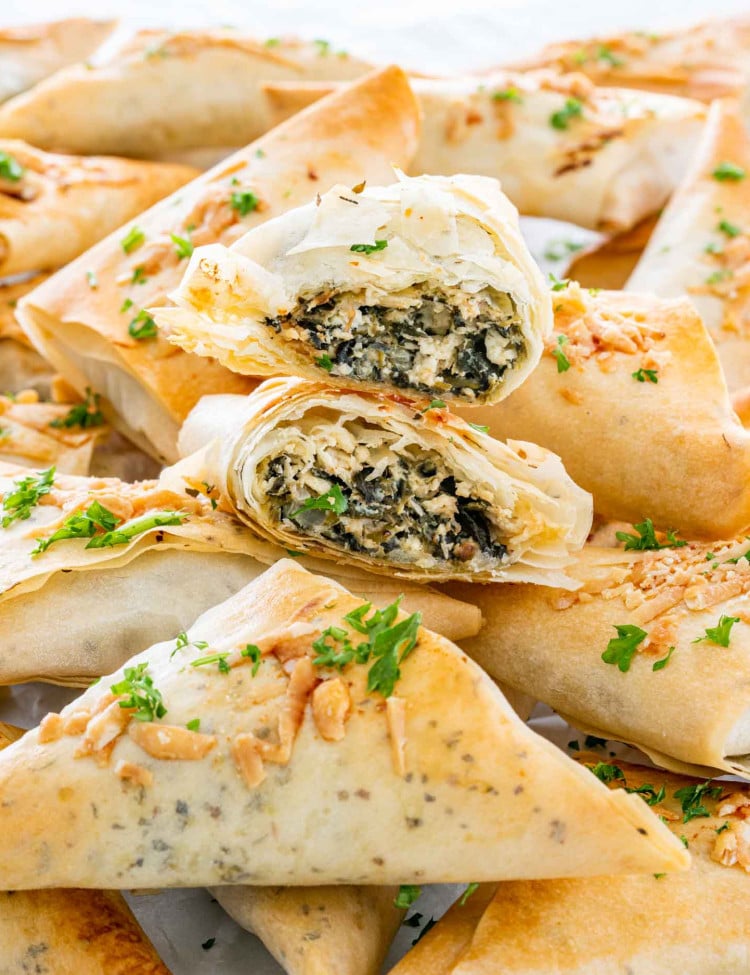
Easy Spanakopita Recipe (Greek Spinach Pie)
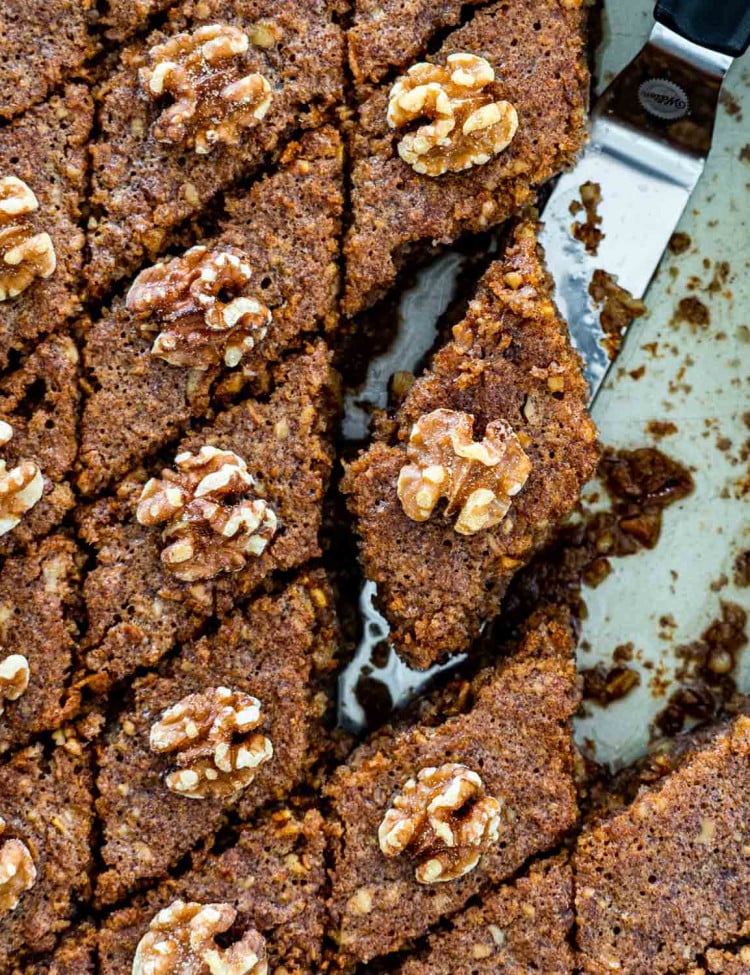
Karydopita (Greek Walnut Cake)
Make Ahead And Storage
Make ahead: you can sear the chicken and prep everything a few hours early, then assemble and bake when you want to eat. Fully cooking it ahead works too, though you’ll lose the crisp skin and have to broil it again to bring it back.
Fridge: 3 to 4 days in a shallow airtight container. The sauce sets a little when cold and loosens again with heat.
Freezer: up to 4 months. Cool completely, then transfer to airtight containers with the sauce. Thaw overnight in the fridge before reheating.
Reheating: 400°F oven with a splash of chicken broth, 5 to 10 minutes until heated through, then 1 to 2 minutes under the broiler to bring the skin back. The microwave works if you’re in a hurry, and the skin will be soft, but 2 minutes under the broiler afterward fixes that too.
Discover More Delicious Recipes
Before You Begin! If you make this, please leave a review and rating letting us know how you liked this recipe! This helps our business thrive & continue providing free recipes.
Greek Chicken Thighs
Video
Ingredients
- 8 chicken thighs (skin on and bone-in)
- ½ teaspoon salt (or to taste)
- ¼ teaspoon pepper (or to taste)
- 2 tablespoons olive oil
- 8 cloves garlic (peeled)
- 8 ounce pearl onions (peeled)
- 5 sprigs fresh thyme
- 2 lemons (cut in thirds)
- 1 cup kalamata olives (pitted)
- ½ cup dry white wine
- ¼ cup fresh lemon juice
Before You Begin! If you make this, please leave a review and rating letting us know how you liked this recipe! This helps our business thrive & continue providing free recipes.
Instructions
- Preheat your oven to 350°F.
- Season the 8 chicken thighs with the ½ teaspoon salt and ¼ teaspoon pepper on both sides.
- Heat the 2 tablespoons olive oil in a large 12 inch skillet over medium high heat. Arrange the chicken thighs skin side down and cook for about 5 minutes per side, until golden brown. The chicken will not be cooked through at this point. Remove the chicken from the skillet and set aside.
- Add the 8 whole garlic cloves, 8 ounces pearl onions, 5 sprigs fresh thyme, and the 2 lemons to the skillet, placing the lemons cut side down. Cook for about 5 minutes, until the onions and garlic begin to soften and take on some color.
- Add the 1 cup kalamata olives, then pour in the ½ cup dry white wine and ¼ cup fresh lemon juice. Stir to combine. Return the chicken to the skillet, arranging the thighs skin side up so they sit directly on the bottom of the pan.
- Place the skillet in the oven and bake for about 20 minutes, until an instant read thermometer inserted into the thickest thigh reads 175°F.
- Remove the skillet from the oven and switch the oven to broil on high. Return the skillet to a high rack and broil for 2 to 3 minutes, until the skin is crisp and deeply golden. Watch it closely, because it browns fast.
- Remove the lemon pieces before serving. Taste the sauce and season if needed, then serve the chicken with plenty of the pan sauce spooned over.
Notes
- Skin side up in the oven. Any skin sitting in the liquid won’t crisp under the broiler later.
- The broiler step is the whole point. Braising softens skin no matter how well you seared it. Two to 3 minutes under a high broiler brings it back. Don’t walk away.
- Cook to 175°F, not 165°F. Dark meat needs the extra degrees for the connective tissue to break down. It’s the difference between chewy and tender.
- Leave the garlic whole. Minced garlic burns during the sear. Whole cloves go soft and sweet over the full cook and are lovely eaten straight from the sauce.
- Lift the lemon pieces out before serving. The pith turns bitter with long cooking.
- Season lightly at the start. A cup of kalamata olives brings a lot of salt. Taste the sauce before adding more.
- Use a 12 inch skillet. Eight thighs crowded into a smaller pan will steam instead of searing.
- No wine? Chicken broth works in equal measure. Add an extra squeeze of lemon to make up the acidity.
Nutrition Information
Notice: Nutrition is auto-calculated for your convenience. Where relevant, we recommend using your own nutrition calculations.
Why isn’t my chicken skin crispy?
Because braising is wet heat and wet heat softens skin, no matter how well you seared it. That’s exactly why the broiler step is in this recipe. Two to 3 minutes under a high broiler at the end drives the moisture off and crisps it right back up.
Can I use boneless chicken thighs?
Yes, and they cook faster, so drop the oven time to about 12 to 15 minutes and check the temperature. Bone in gives you juicier meat and better skin, so I’d use it if you have the choice.
What temperature should the chicken be?
175°F in the thickest part. That’s above the 165°F safety minimum on purpose, because dark meat needs those extra degrees for the connective tissue to break down. At 165 it’s safe but still a bit chewy.
What can I use instead of white wine?
Chicken broth in the same quantity. You’ll lose a little acidity, so add an extra squeeze of lemon juice to make up for it.
Should I eat the cooked lemon pieces?
I’d lift them out before serving. The pith turns bitter after 25 minutes of cooking, and their job was to flavor the sauce, which they’ve already done.