Cheddar Cheese Biscuits
This post may contain affiliate links. Please read my disclosure policy.


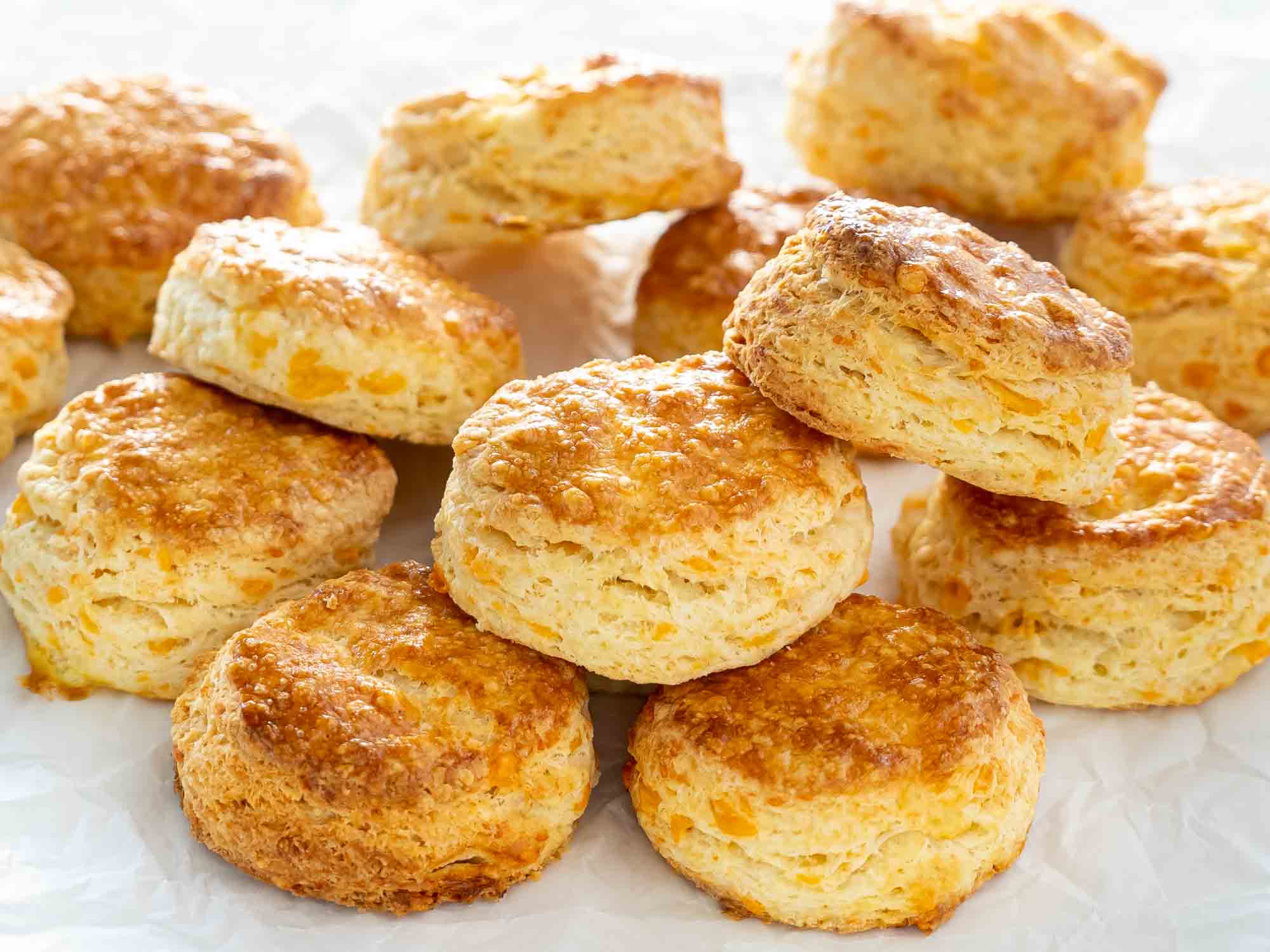
These Cheddar Cheese Biscuits come out tall, flaky, and properly cheesy, with layers you can peel apart. Seven ingredients and 45 minutes. The whole thing comes down to keeping the butter cold and not working the dough any more than you have to.

The Best Cheddar Cheese Biscuits Recipe
Biscuits look like they should be difficult and they really aren’t. What they are is fussy about two things, and once you know what those are they work every time.
The first is temperature. Cold butter, cold buttermilk, cold egg. Those little pieces of cold butter sitting in the dough melt in a hot oven and turn to steam, and that steam is what pushes the layers apart. Let the butter warm up and it just blends into the flour, and you’ve made something closer to a scone.
The second is restraint. Biscuit dough wants to be handled as little as possible. Every extra press develops more gluten, and gluten is what makes a biscuit chewy instead of tender. Three or four folds and stop, even though it’ll look shaggy and unfinished.
That’s genuinely it. Everything else is assembly.
I’ve been making these for years and they’re still my favorite biscuit. Sharp cheddar right through them, golden tops, and layers you can pull apart with your fingers. Best eaten about 10 minutes out of the oven with butter melting into them.
Getting Flaky Layers
The flakiness comes from one thing: pieces of cold butter suspended in the dough.
When those hit a 425°F oven they melt fast and release steam. That steam has to go somewhere, so it pushes the dough apart from the inside, and each pocket becomes a layer. It’s the same principle as puff pastry, just far less work.
Which means the whole game is protecting those butter pieces until they get to the oven.
- Keep the butter properly cold. Straight from the fridge, cut into slices, and don’t let it sit on the counter while you find your pastry cutter. If your kitchen is warm, cube it and put it back in the fridge for 10 minutes first.
- Stop cutting it in too early. You want coarse meal with pea sized pieces of butter still clearly visible. Keep going until it’s uniform and smooth and you’ve lost them.
- Work fast once the liquid goes in. Your hands are warm. The longer the dough is in them, the softer the butter gets.
- And a hot oven. 425°F, properly preheated. A slow oven melts the butter gradually and it leaks out rather than turning to steam.
Ingredients in Cheddar Cheese Biscuits
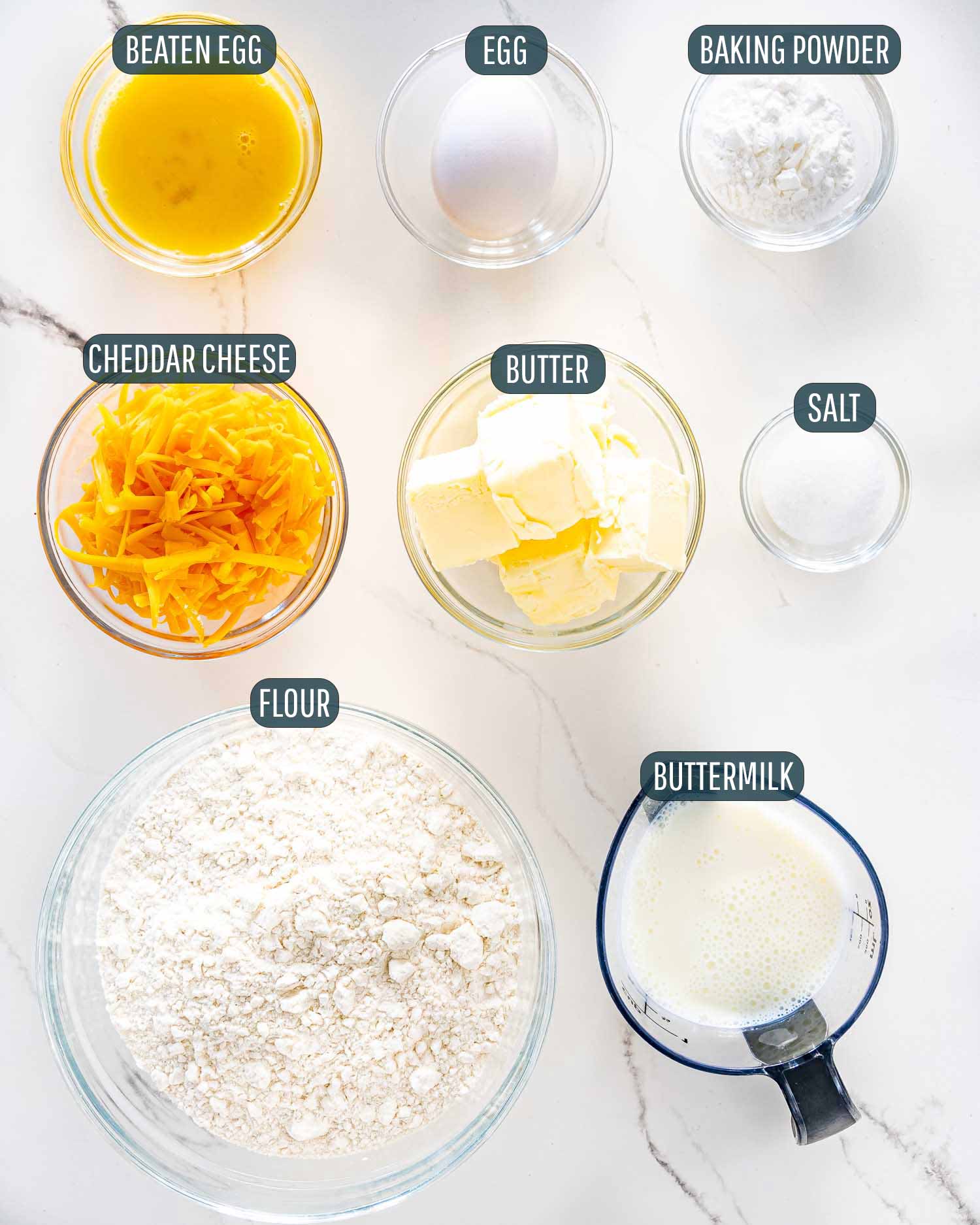
- Buttermilk (½ cup, cold and shaken): Cold, straight from the fridge, and shake the carton because it separates. The acidity reacts with the baking powder for extra lift and gives biscuits that faint tang plain milk can’t. No buttermilk? Stir a tablespoon of lemon juice or white vinegar into ½ cup of milk and let it sit 5 minutes.
- Egg (1 large, cold, plus 1 beaten for the wash): One goes into the dough for structure and richness. The other gets brushed over the tops for that deep golden shine. Milk works for the wash if you’d rather not use a second egg.
- All purpose flour (2 cups, plus more for the surface): Plain flour is right. Measure it by spooning it into the cup and levelling rather than scooping, because scooping packs it down and you can end up with considerably more flour than the recipe wants.
- Baking powder (1 tablespoon): A full tablespoon, and that’s deliberate. It’s what gives you the lift. If yours has been open a while, test it: a spoonful in ¼ cup of hot water should fizz hard. If it just sits there, buy new, because nothing else in the recipe can make up for it.
- Salt (1 teaspoon): Biscuits without enough salt taste like nothing at all. The cheese brings some too, so this is calibrated with that in mind.
- Butter (12 tablespoons, cold and unsalted, cut into slices): Cold is the whole thing. Twelve tablespoons is generous and it’s why these are as rich as they are.
- Cheddar cheese (1 cup, shredded): Grate it yourself if you have 2 minutes. Pre shredded is coated with cellulose and starch to stop it caking in the bag, and that coating stops it melting into the dough properly. Sharp or extra sharp gives you far more flavor than mild, and you want to taste the cheese here.
How To Make Cheddar Cheese Biscuits
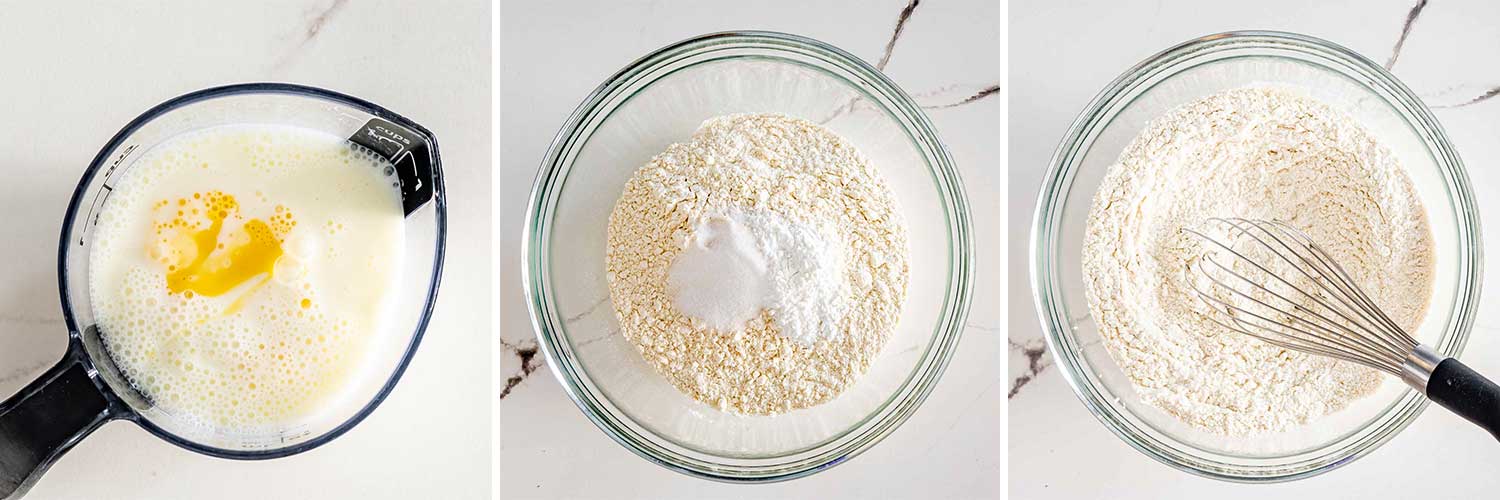
Oven to 425°F, and line a baking sheet with parchment or a silicone mat. Get it properly preheated, because a hot oven is what turns that cold butter into steam quickly instead of letting it slowly leak out.
Whisk the wet. Cold buttermilk and the cold egg together in a small bowl, then back in the fridge until you need it.
Mix the dry. Flour, baking powder, and salt in a large bowl, stirred well so the baking powder is evenly through it. Uneven baking powder gives you biscuits that rise in patches.
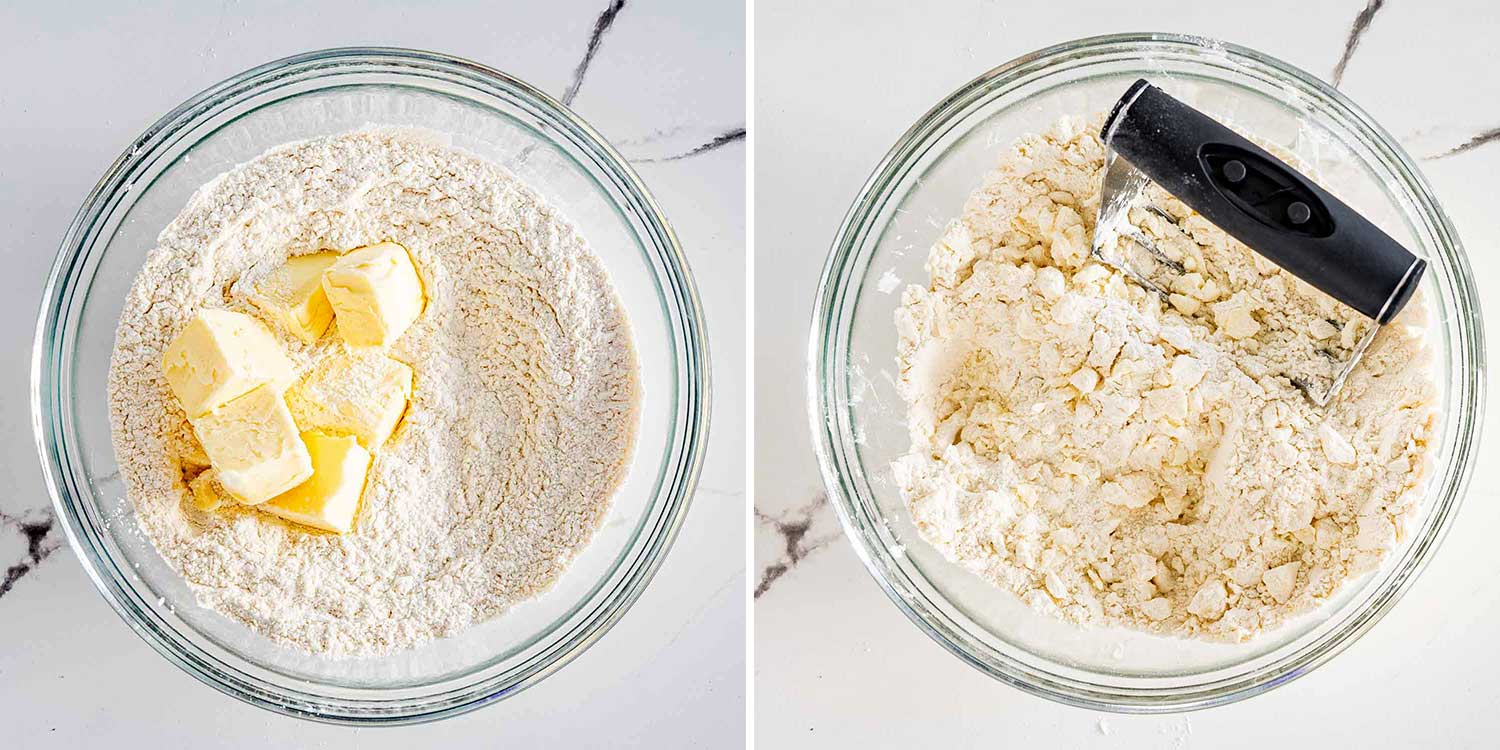
Cut in the butter. Cold butter slices into the flour, worked in with a pastry cutter or two forks until it looks like coarse meal with pea sized pieces still visible. Those visible pieces are the point, so stop before it goes smooth.
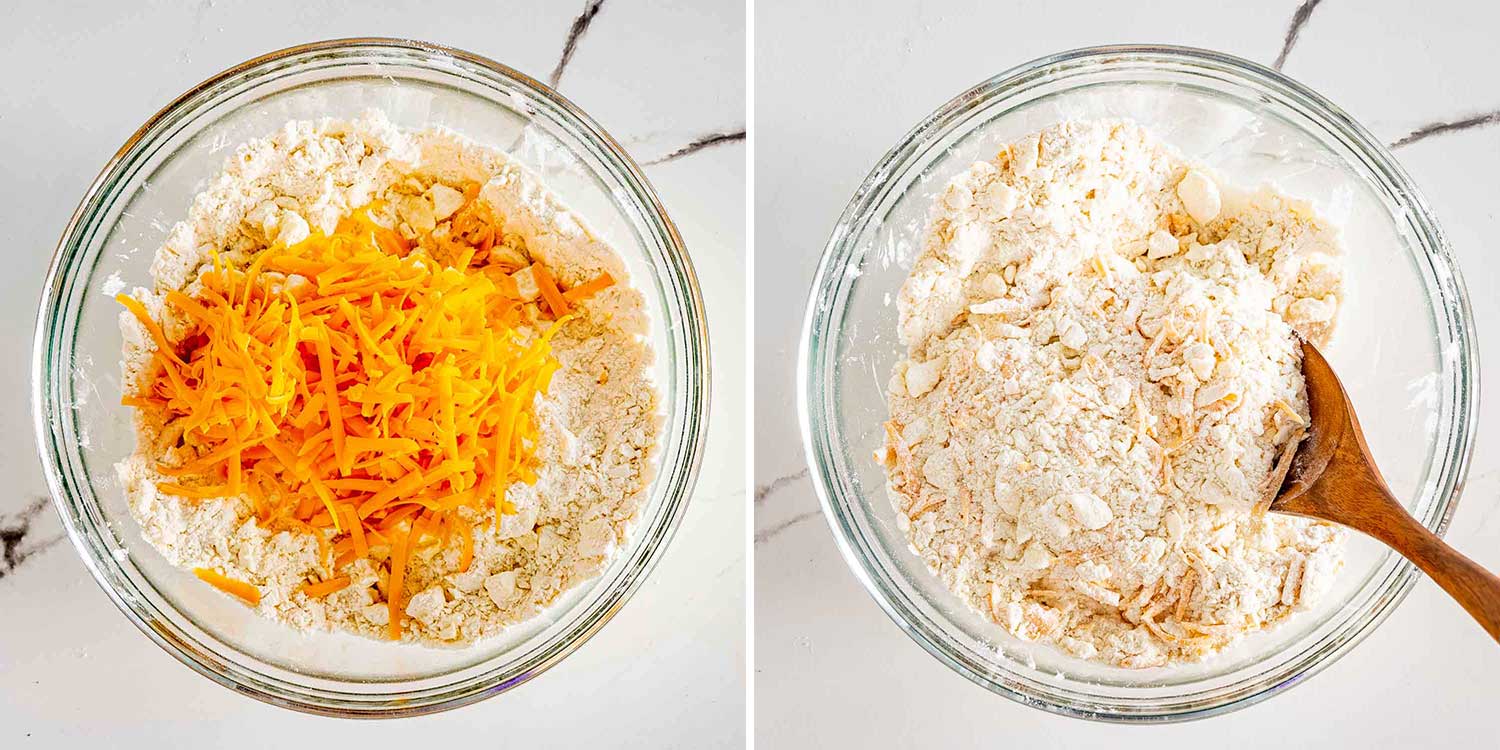
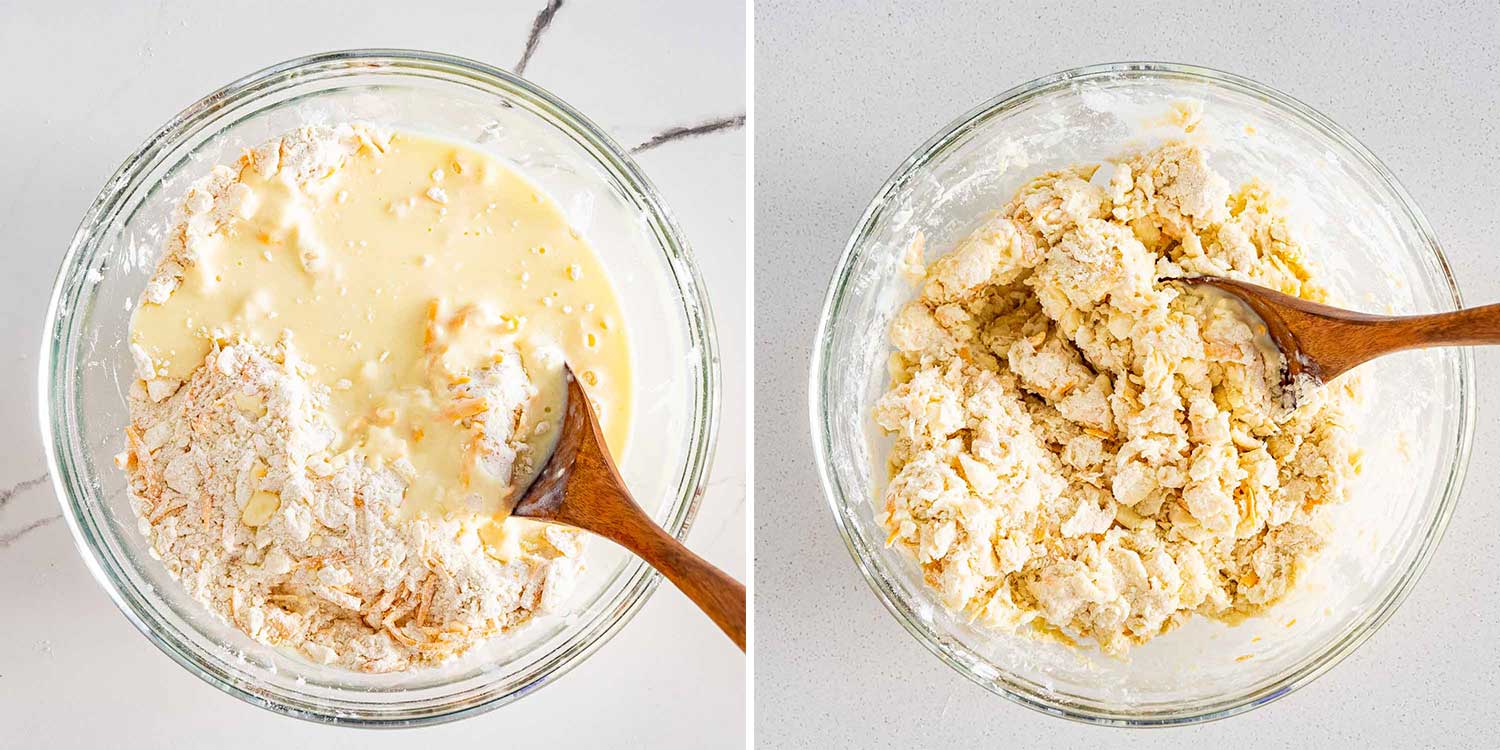
Stir in the cheese, then pour in the buttermilk mixture and bring it together with a wooden spoon. Then your hands, just a few quick presses until it barely holds together. It’ll look shaggy. That’s right.
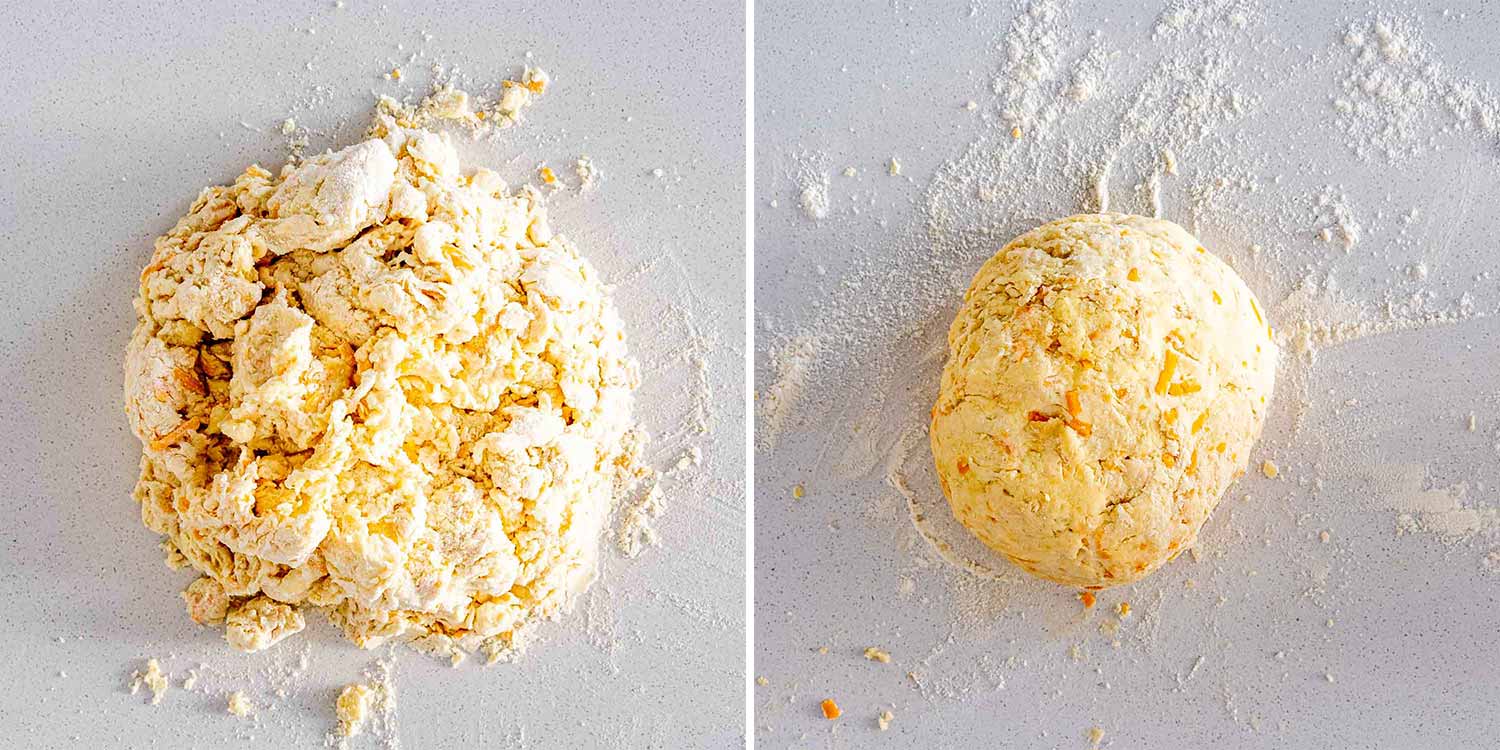
Turn it out and knead 3 or 4 times only. Lightly floured surface, gentle presses and folds, and then stop. This is the step where people keep going because it doesn’t feel finished, and it’s the main cause of tough biscuits.
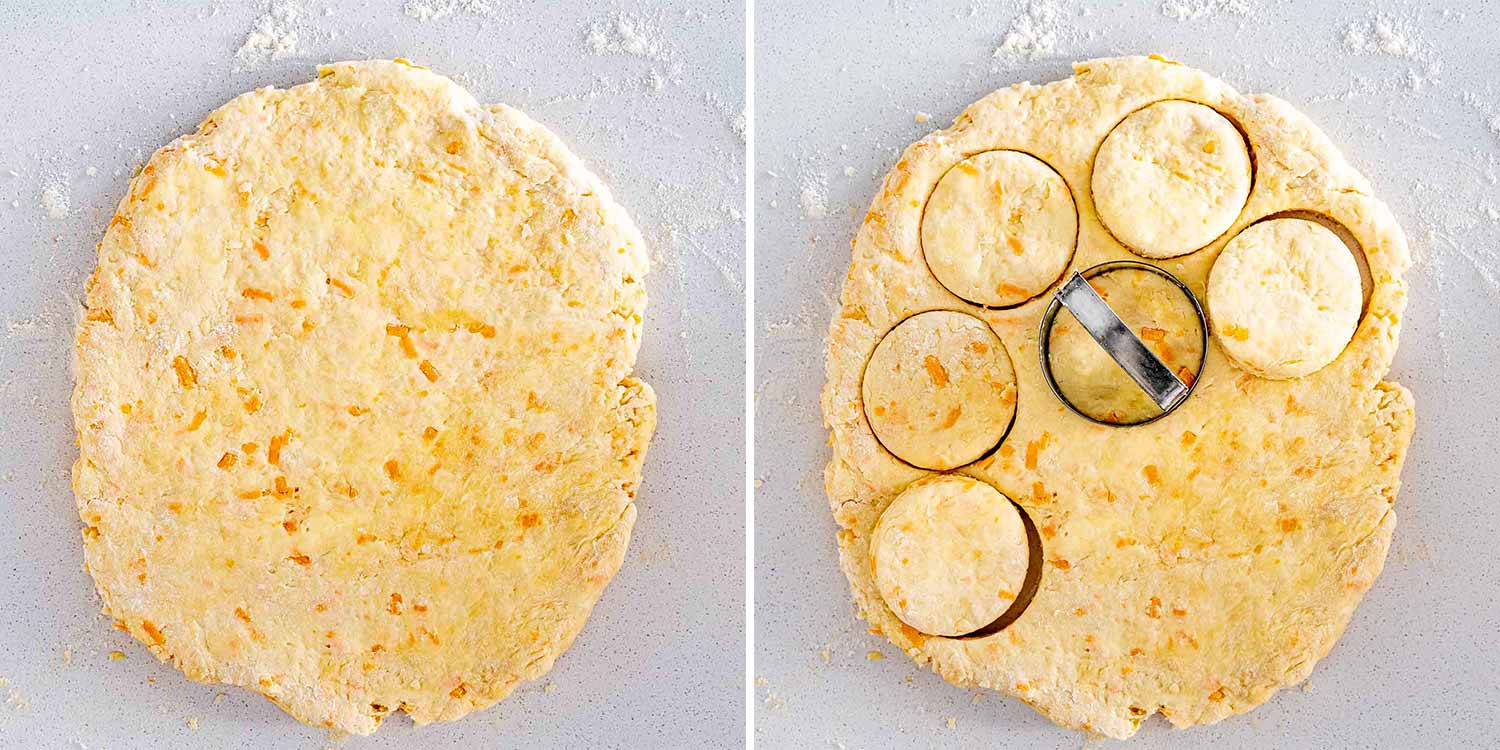
Roll to ½ to ¾ inch thick. Thicker gives you taller biscuits, so I lean toward ¾.
Cut them out with a floured 2 inch round cutter, then place them on the tray. Gather the scraps, press them gently back together, and cut again. The second round will be a little tougher, so I put those at the back.

Brush with the beaten egg and bake 20 to 25 minutes, until deeply golden and well risen. Transfer to a wire rack so the bottoms don’t steam and go soft.
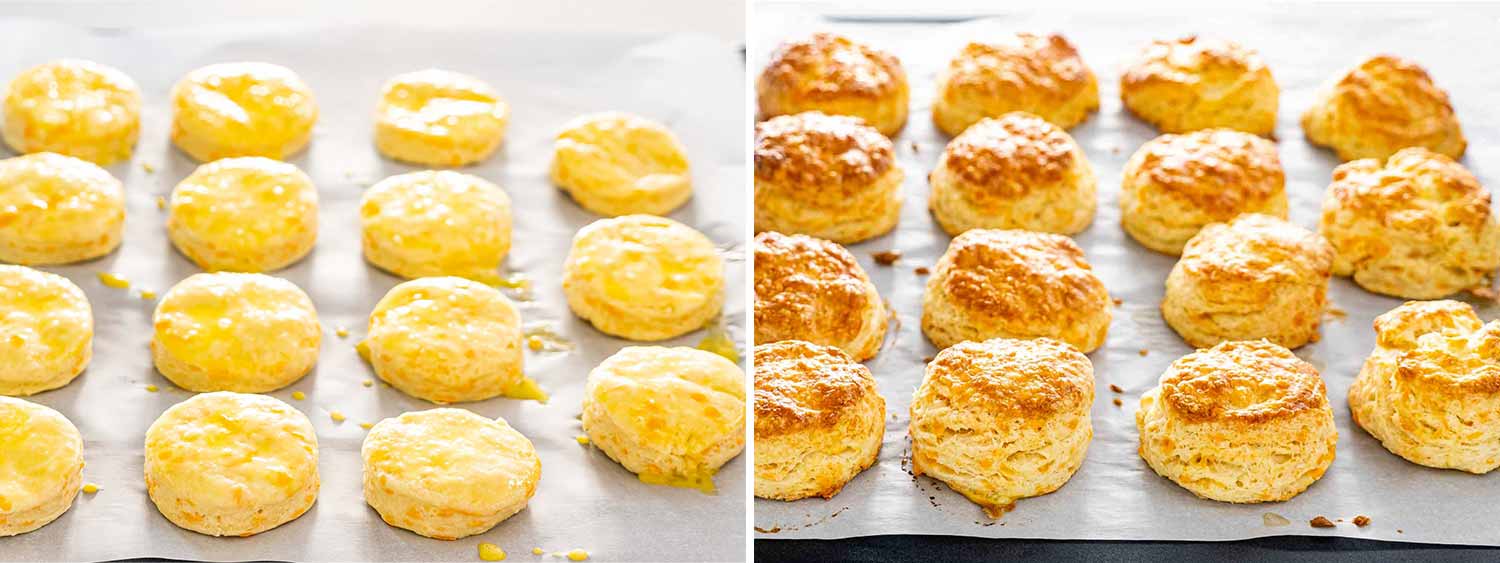
Best warm, about 10 minutes out of the oven, with butter.
Things Worth Knowing
- Everything cold. Butter, buttermilk, egg. Nothing comes out of the fridge until you need it.
- Leave visible butter pieces. Pea sized bits in the flour are what make the layers. Smooth means you’ve gone too far.
- Barely knead. Three or four presses and stop, even though it looks unfinished.
- Press the cutter straight down. Twisting it pinches the layers shut around the edge and the biscuit can’t rise properly. Straight down, straight up.
- Place them close together on the tray, about half an inch apart or touching. They support each other going up and rise taller than spaced out biscuits.
- Keep the egg wash off the sides. It runs down and glues the layers together.
- Test your baking powder if it’s been open more than 6 months. A spoonful in hot water should fizz hard.
- Grate your own cheese. Pre shredded is coated with starch that stops it melting into the dough.

Variations
Cheddar bay. Brush the hot biscuits with melted butter mixed with garlic powder and chopped parsley the second they come out of the oven. Thirty seconds and it’s a completely different biscuit.
Bacon cheddar. Half a cup of cooked crumbled bacon in with the cheese.
Jalapeño cheddar. One or two finely diced jalapeños, seeds out for warmth, in for heat.
Herbs. A tablespoon of chopped chives or fresh thyme with the cheese.
Different cheese. Gruyère is excellent and melts beautifully. Pepper jack adds heat. Parmesan is sharper and saltier, so pull the salt back a little.
Drop biscuits. Skip the rolling and cutting and drop heaped spoonfuls straight onto the tray. Craggier, more rustic, and much faster.

What To Serve Them With
Soup, anything creamy or brothy, where the biscuit gets torn up and dunked.
They’re also very good with chili, alongside a roast chicken, or split open with butter and jam for breakfast. Cheddar and jam sounds wrong and it’s excellent.
At Thanksgiving they hold their own next to dinner rolls and they’re a lot less work.
Make Ahead And Storage
Make ahead: cut the biscuits, arrange them on the tray, and refrigerate up to 2 hours before baking. Cold dough into a hot oven is an advantage here, so this is one of the rare make ahead steps that actually improves things.
Freezing unbaked: cut them, freeze on a tray until firm, then bag for up to 3 months. Bake straight from frozen with an extra 3 to 5 minutes. This is the best way to have fresh biscuits with no effort at all.
Room temperature: 3 days in an airtight container. They stale faster than most bread because of all that butter and no preservative.
Freezing baked: up to 3 months. Freeze them on a tray first so they don’t fuse together.
Reheating: 350°F oven for 5 to 7 minutes, or the air fryer for 3. The microwave makes them soft and slightly rubbery.

Other Delicious Biscuits To Try
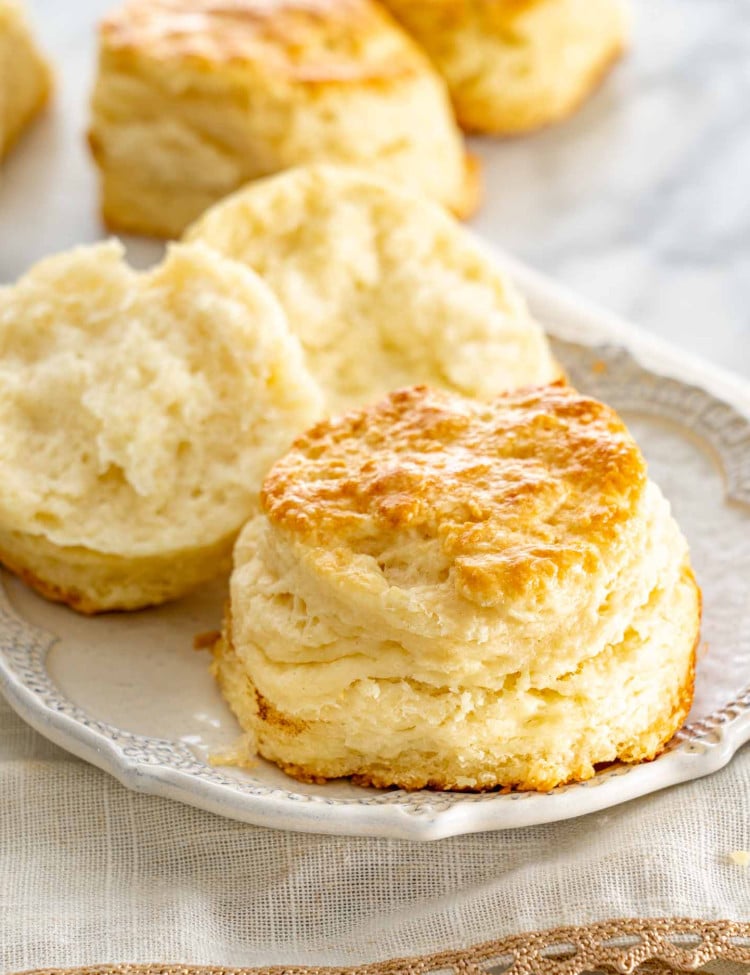
Buttermilk Biscuits

Mozzarella Biscuits

Copycat Red Lobster Cheddar Bay Biscuits

Bacon Cheddar Biscuits
Before You Begin! If you make this, please leave a review and rating letting us know how you liked this recipe! This helps our business thrive & continue providing free recipes.

Cheddar Cheese Biscuits
Video
Ingredients
- ½ cup buttermilk (cold, shaken)
- 1 large egg (cold)
- 2 cups all-purpose flour (plus more as needed)
- 1 tablespoon baking powder
- 1 teaspoon salt (or to taste)
- 12 tablespoons butter (cold, unsalted, cut into slices (1 ½ sticks))
- 1 cup cheddar cheese (shredded)
- 1 egg (beaten, for the egg wash)
Before You Begin! If you make this, please leave a review and rating letting us know how you liked this recipe! This helps our business thrive & continue providing free recipes.
Instructions
- Preheat your oven to 425°F and line a baking sheet with parchment paper.
- Whisk the ½ cup cold buttermilk and 1 large cold egg together in a small bowl. Return it to the fridge until needed.
- In a large bowl, mix the 2 cups all purpose flour, 1 tablespoon baking powder, and 1 teaspoon salt together thoroughly.
- Using a pastry cutter or two forks, cut the 12 tablespoons cold butter into the flour mixture until it resembles coarse meal with some pea sized pieces of butter still visible. Don't work it until smooth.
- Stir in the 1 cup shredded cheddar cheese. Add the buttermilk mixture and stir with a wooden spoon, then bring the dough together with your hands using a few quick presses. It will look shaggy.
- Turn the dough onto a lightly floured surface and knead 3 or 4 times only, adding a little flour if it's too sticky to handle.
- Roll the dough out to ½ to ¾ inch thick.
- Using a floured 2 inch round cutter, cut out the biscuits and place them on the prepared baking sheet, about ½ inch apart. Gather the remaining dough, press it gently together, and cut again until it's used up. You should get about 14.
- Brush the tops with the beaten egg and bake for 20 to 25 minutes, until risen and deeply golden. Transfer to a wire rack.
Notes
- Keep everything cold. Butter, buttermilk, and egg straight from the fridge. Cold butter is what creates the steam that separates the layers.
- Leave visible butter pieces. Pea sized bits in the flour make the flakes. Working it smooth gives you a scone.
- Barely knead. Three or four presses. More gluten means tougher biscuits, and this is the step people overdo.
- Press the cutter straight down without twisting. Twisting pinches the edges shut and limits how high they rise.
- Place them close together, about ½ inch apart or touching. They support each other as they rise.
- Keep the egg wash off the sides, since it runs down and glues the layers together.
- Grate your own cheese. Pre shredded is coated with starch that stops it melting into the dough.
- Freezing: cut them, freeze on a tray until firm, then bag for 3 months. Bake from frozen with 3 to 5 extra minutes.
Nutrition Information
Notice: Nutrition is auto-calculated for your convenience. Where relevant, we recommend using your own nutrition calculations.
Why are my biscuits tough?
Over kneading, almost always. Every time you work the dough you develop more gluten, and gluten makes biscuits chewy rather than tender. Three or four gentle presses is genuinely all it takes, even though the dough will look like it needs more.
Why are my biscuits flat?
Usually warm butter or tired baking powder. The butter needs to be cold enough that it’s still in visible pieces when the tray goes in the oven. And baking powder loses its power over time, so test it in hot water if the tin’s been open a while.
Can I use pre shredded cheese?
You can, but grate your own if you have a couple of minutes. Pre shredded is coated with cellulose and starch so it doesn’t clump in the bag, and that same coating stops it melting properly into the dough.
Do I have to use buttermilk?
It’s better. The acid reacts with the baking powder for extra lift, and it gives a tang you’ll miss otherwise. If you’re out, stir a tablespoon of lemon juice or vinegar into ½ cup of milk and let it sit 5 minutes.
How do I get flaky layers?
Keep the butter cold and leave pea sized pieces visible in the flour. They melt into steam in the oven and push the dough apart. Working the butter in until smooth is what costs you the flakes.
Can I make them ahead or freeze them?
Both. Cut them and refrigerate up to 2 hours before baking, or freeze them unbaked for 3 months and bake straight from frozen with 3 to 5 extra minutes.
Can I use shortening instead of butter?
Yes, and they’ll be flaky. You’ll lose the butter flavor, which is a real trade. Half butter and half shortening is a good middle ground if you want both.