Quiche Lorraine
This post may contain affiliate links. Please read my disclosure policy.

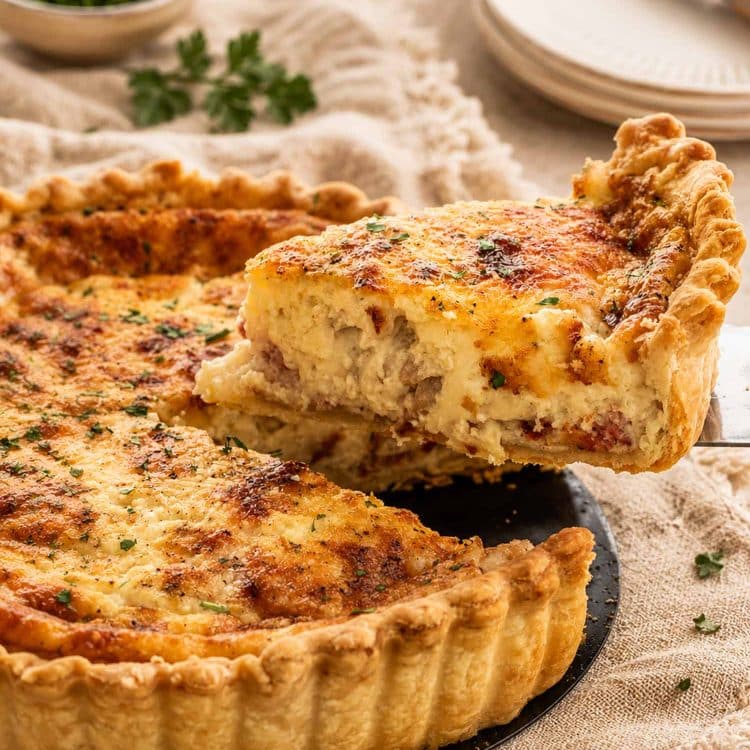
This Quiche Lorraine is the quiche I’ve been making for years. It’s my go-to for weekend brunch, and the reason every other version I’ve tried since has felt like a step down.
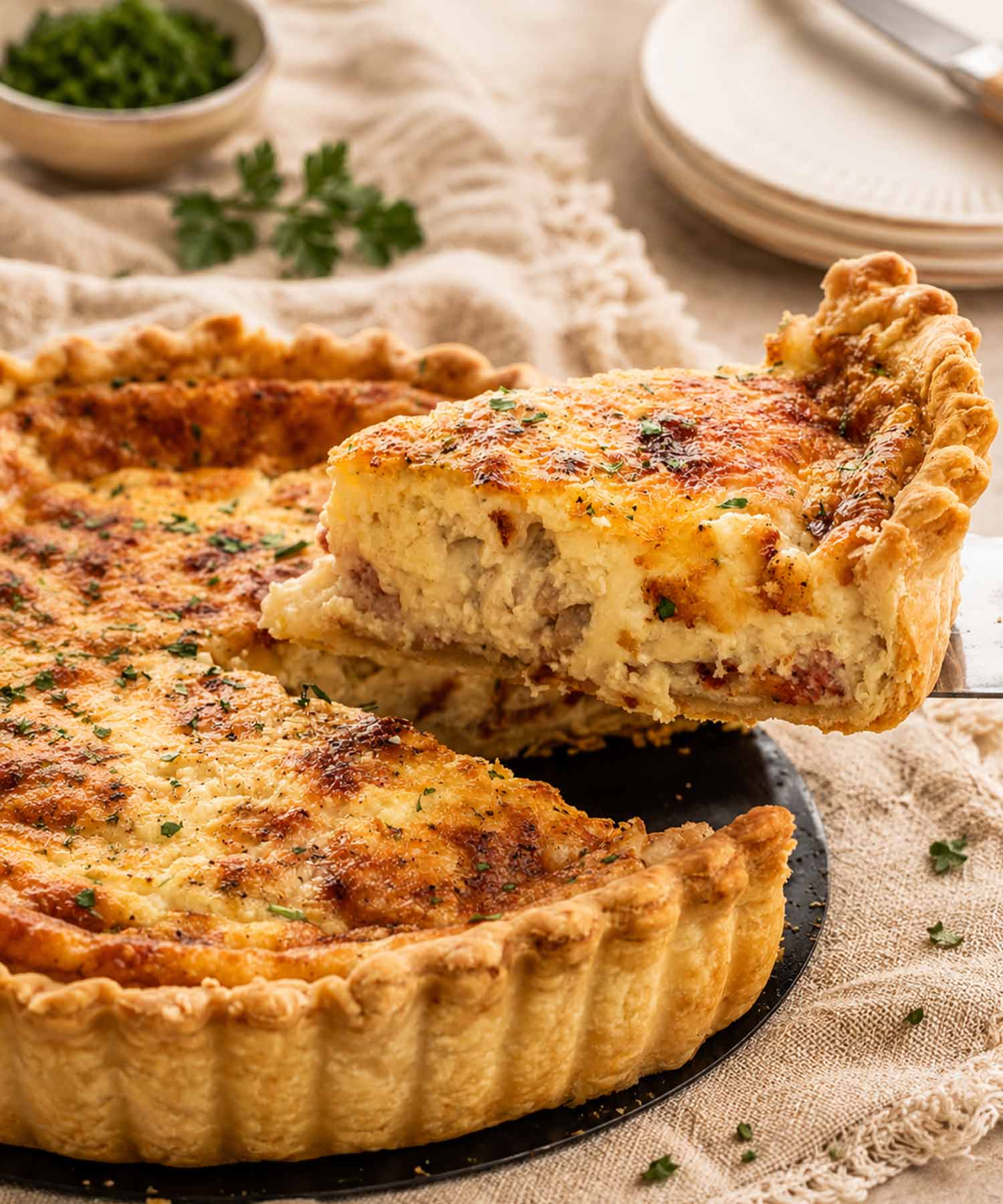

Quiche Lorraine
I’ve made this quiche more times than I can count, which means I’ve also made every version of it badly. Too much filling. Wrong cream ratio. One ill-advised addition of leftover roasted red peppers that I don’t like to talk about.
Quiche Lorraine is bacon, Gruyère, and custard in a crust that actually flakes. The Parmesan goes on top, not stirred in, not mixed through, just scattered over the surface before it goes in the oven. It forms a thin, salty, golden layer that makes you wonder why you’d ever make it any other way. The moment you start adding things beyond that, you’ve made something else. Which is fine. Just don’t call it Lorraine.
The custard ratio is four eggs to one and a half cups of heavy cream. That’s the ratio that gives you silky and set, not spongy and dense. Swap the cream for half-and-half and you’ll feel the difference the moment you slide the first slice onto a plate.

Key Ingredients You’ll Need
- Pie crust: Make your own if you have the time. The difference is real. Store-bought works, but homemade wins every time. Use my pie crust recipe, it’s straightforward and worth it.
- Gruyère: This is the traditional choice, and it’s traditional for a reason. Nutty, complex, melts beautifully. Can’t find it? Swiss works. Cheddar will taste like a different dish.
- Parmesan: Goes on top, not in the custard. It creates a golden, slightly salty crust on the surface that you’ll want every time.
- Bacon: Thick-cut. Cubed. Fried until crisp. Thin-cut bacon disappears into the custard; you want pieces with some presence.
- Eggs and heavy cream: The custard. Don’t swap the cream.
- Onion: Cooked slowly in the bacon drippings until soft and just starting to colour. Don’t skip this step. Raw onion in quiche is a mistake you only make once.
- Nutmeg: Just a quarter teaspoon. You won’t taste it and you’ll miss it if it’s gone.
Blind Baking: Don’t Skip This
Blind baking means pre-baking the crust before the filling goes in. It sounds fussy. It isn’t.
Without it, the bottom of your crust stays raw. Custard is wet, it bakes slowly, and the bottom of the pastry never gets the heat it needs if it’s sitting under liquid. Blind baking solves this.
Line your rolled crust with parchment. Fill it with pie weights, dried beans, or rice. Bake at 425°F for 12 to 15 minutes. Pull the weights and parchment, drop the temperature to 375°F, and bake for another 5 minutes. The bottom should look dry and just barely golden.
That’s it. That’s the whole technique.
Prepare the Crust
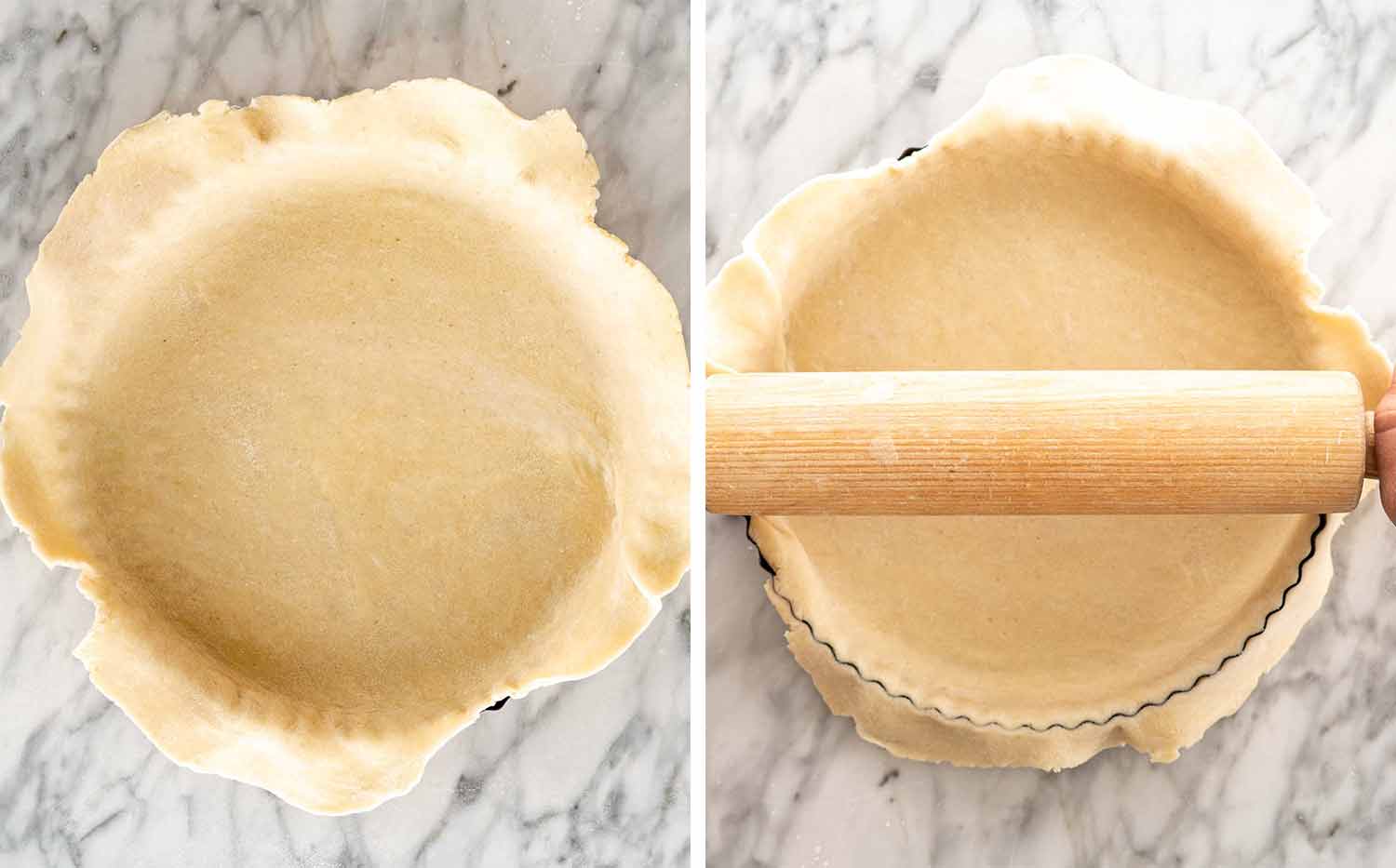
Roll it out on a lightly floured surface and press it into a 9.5-inch quiche pan with a removable bottom, or an 11-inch pan if you want a shallower result. Don’t stretch the dough to fit, it’ll shrink back in the oven. Lift and drape instead.
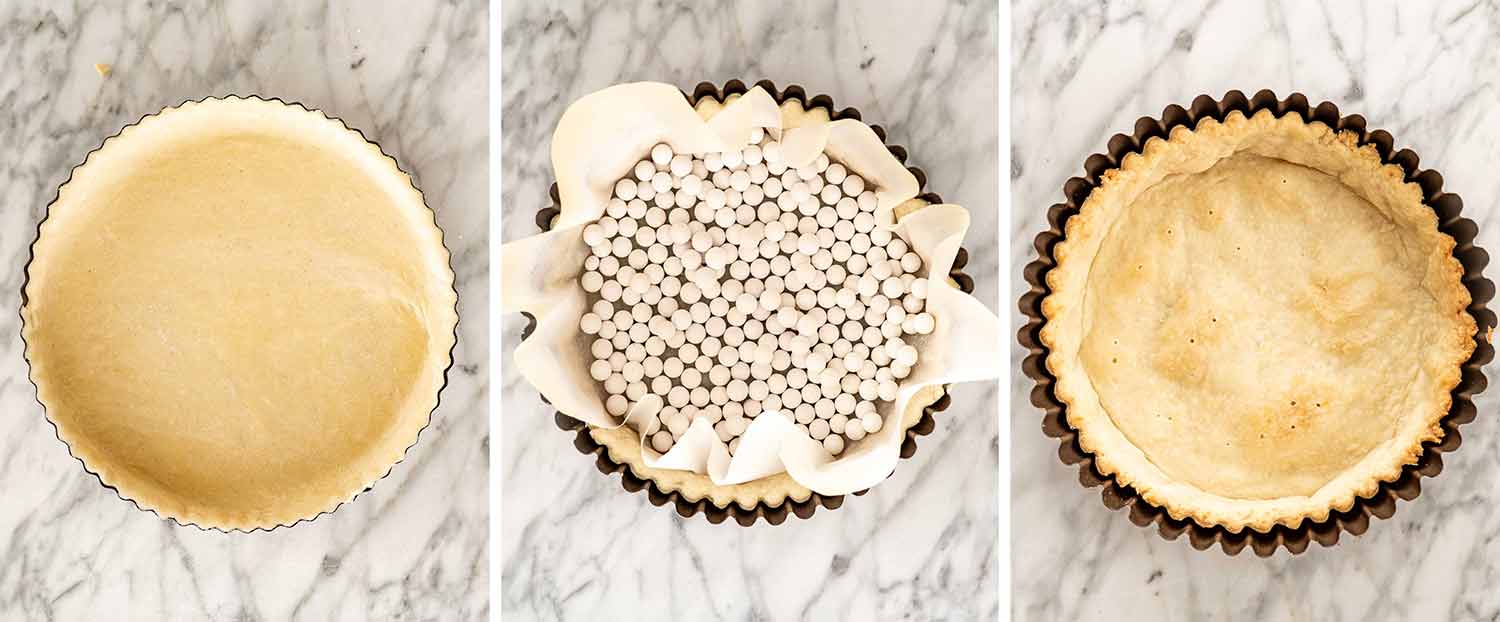
Run a rolling pin across the top edge to trim the excess cleanly. Line with parchment, fill it with pie weights or dried beans all the way to the edges, and blind bake as directed above. When you pull the weights, the crust should look dry and pale with just a hint of colour at the base. If it still looks raw and doughy, give it another two minutes.
Cook the Bacon and Onion
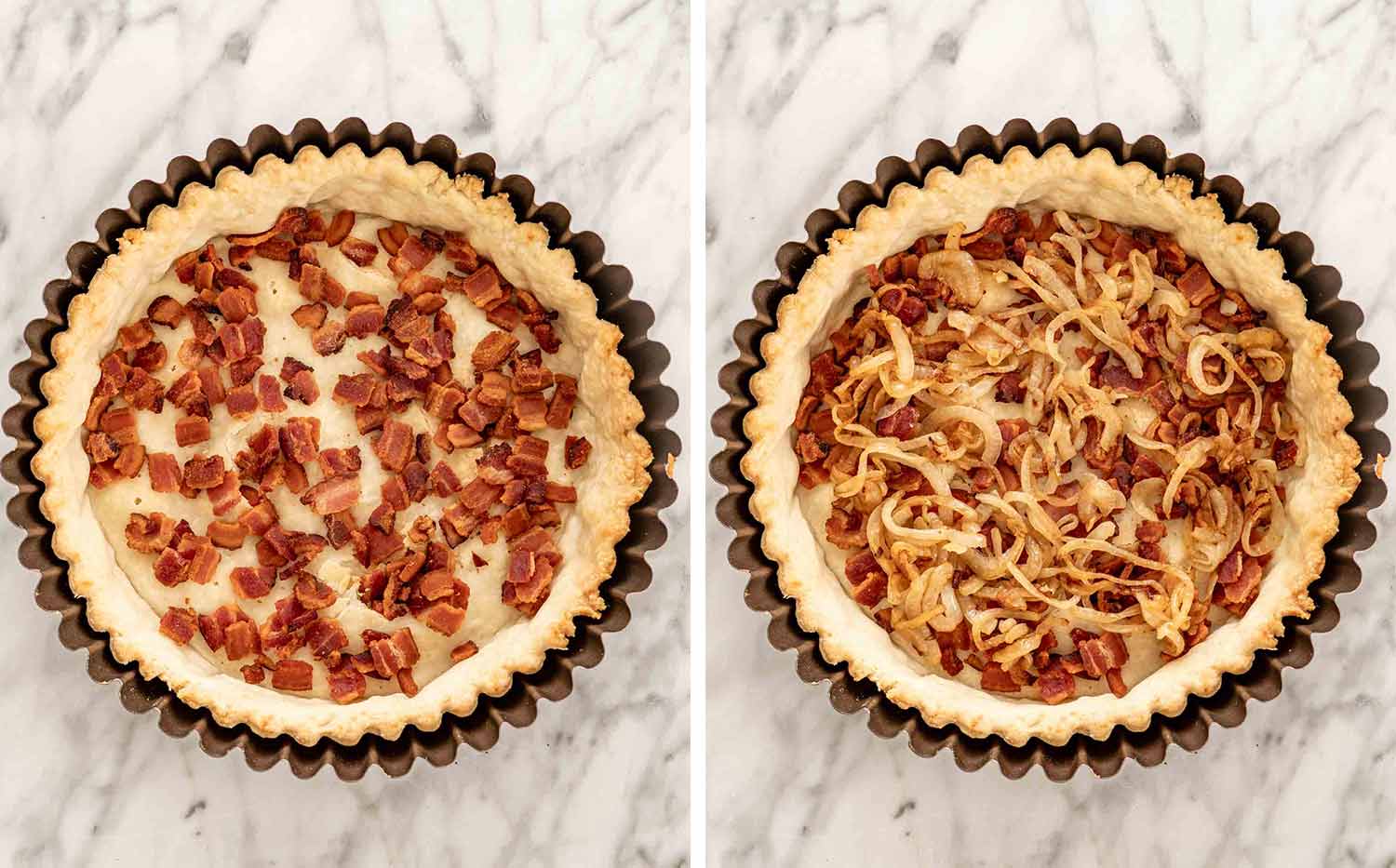
While the crust bakes, fry the bacon over medium high heat until properly crisp. Not just cooked through, you want it crisp. Soft bacon disappears into the custard and you lose all the texture. Drain on paper towels. Pour off most of the drippings, leaving about a tablespoon in the pan. That tablespoon is doing work for the onion.
Add the sliced onion to the bacon drippings over medium heat. You’re not caramelizing here, just softening. Stir occasionally and watch for translucency with light colour at the edges. It takes 8 to 10 minutes. If it’s browning too fast, lower the heat. The onion should be completely soft before it goes into the quiche.
Make the Custard
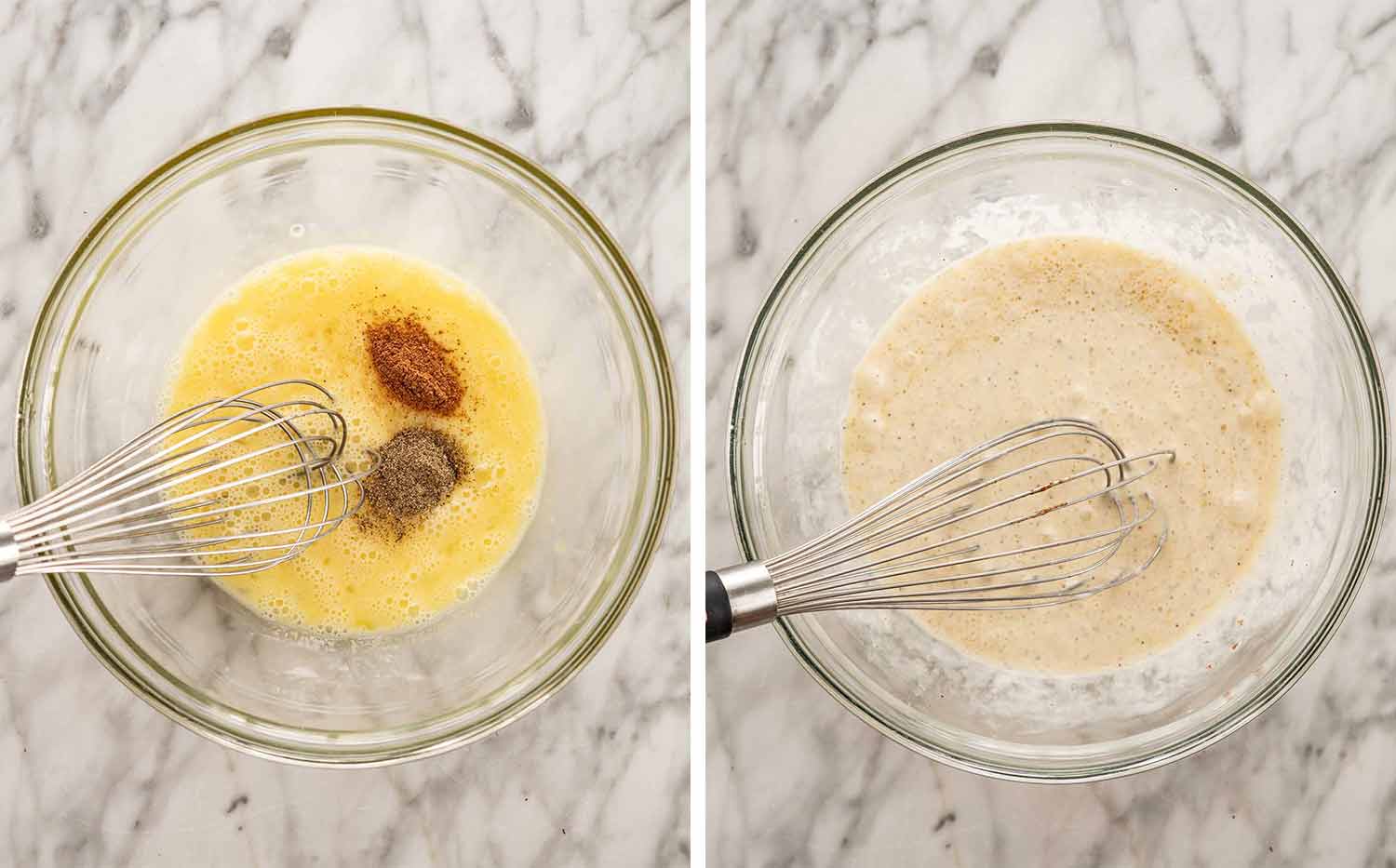
Whisk the eggs and heavy cream together first until fully combined, then add the Gruyère, nutmeg, salt, and pepper. The custard should look smooth and uniform, no streaks of egg white. Taste it before it goes in. This is your last chance to adjust the seasoning, and custard needs more salt than you think.
Assemble
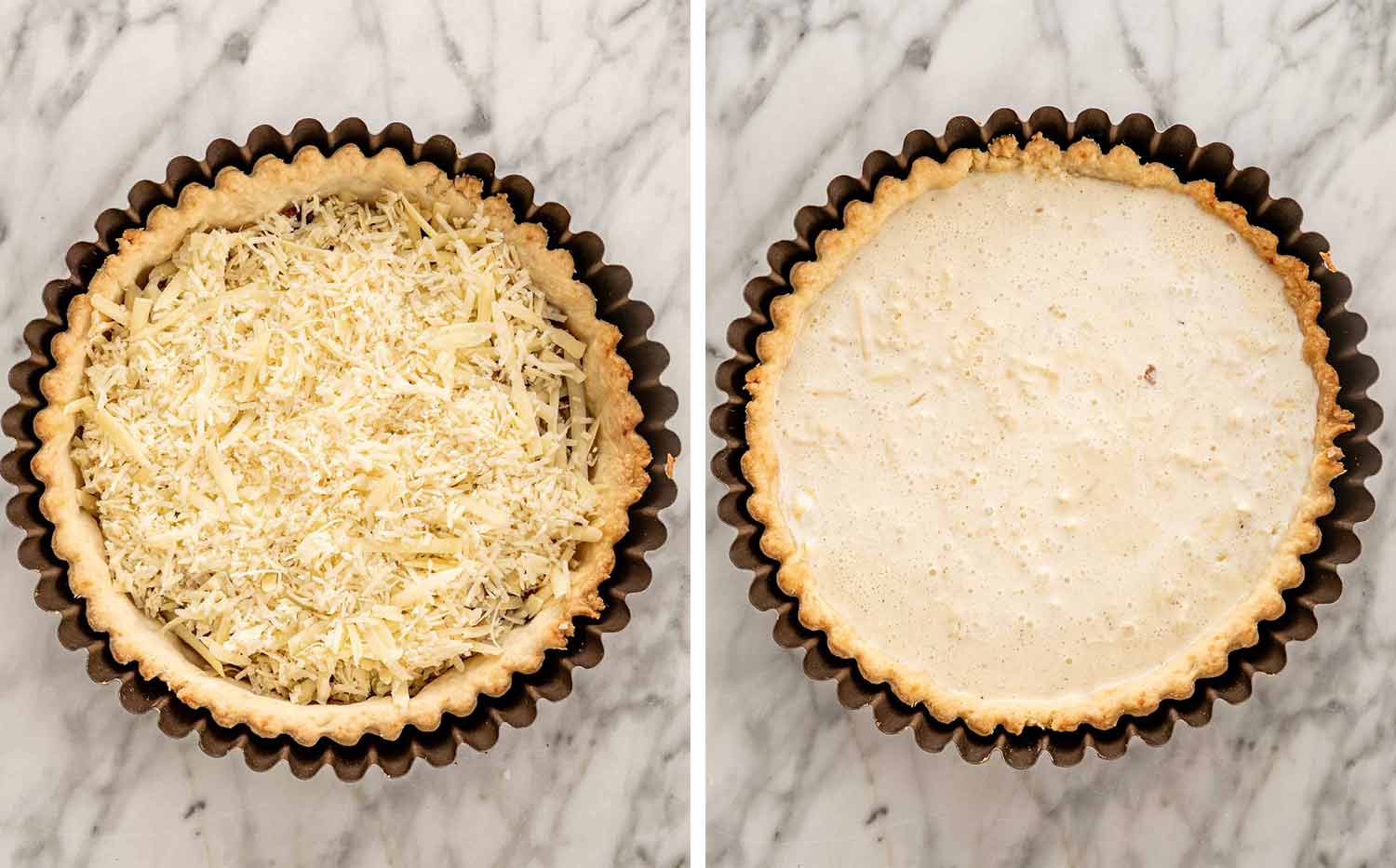
Scatter the bacon over the blind-baked crust in an even layer. Add the cooked onion on top. Pour the custard in slowly, giving it time to settle between the filling rather than pooling on top. Scatter the Parmesan evenly over the surface. Don’t press it in. It needs to sit on top to form that crust.
Bake
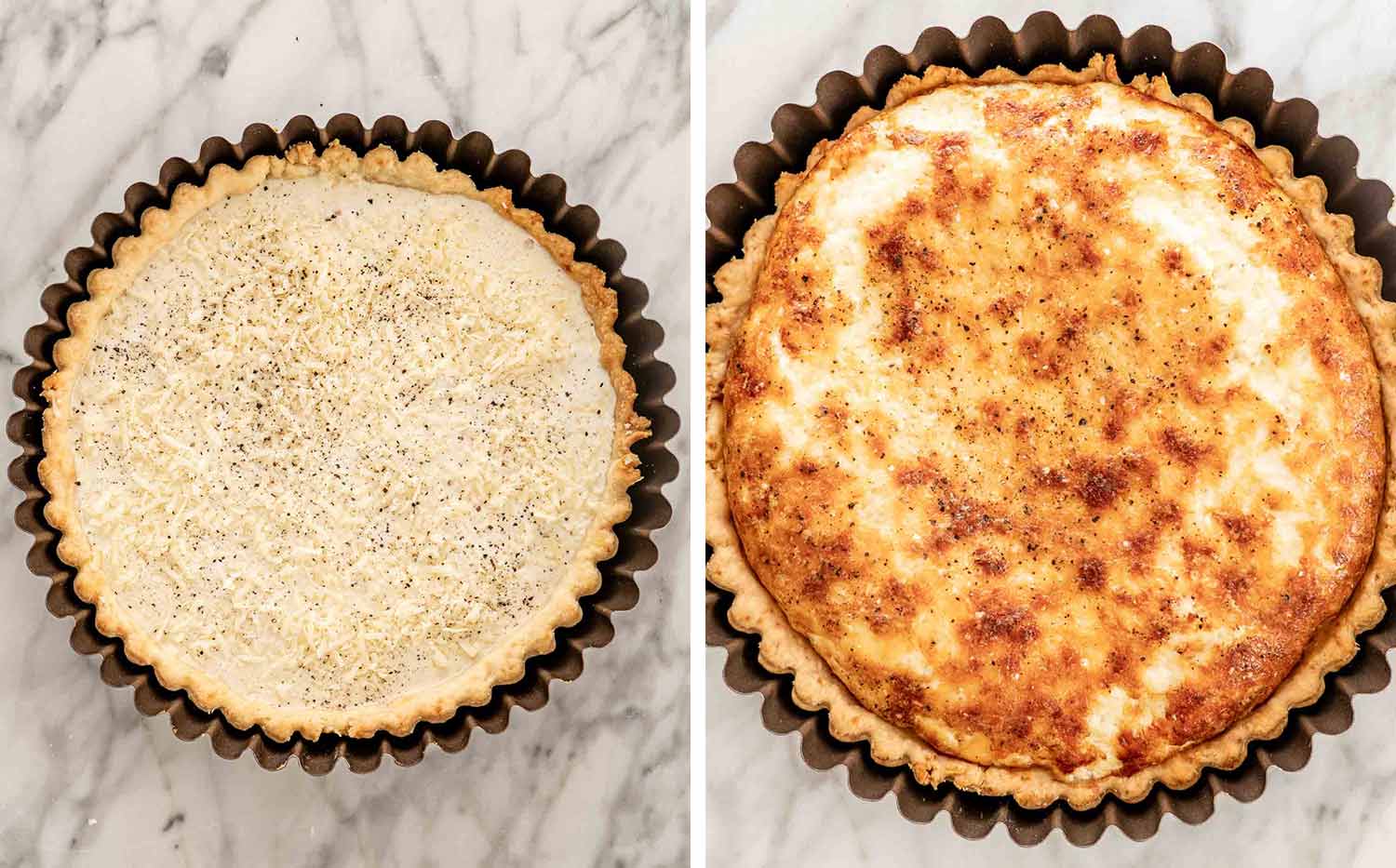
Set the quiche on a baking sheet before it goes in the oven. This makes it easier to move and catches any drips if the crust has a gap. Bake at 375°F for 35 to 40 minutes. The top should be golden and the edges fully set. The centre will still move when you shake the pan gently. That’s correct. Pull it at the wobble, not after. It carries over as it rests and will be perfectly set by the time you slice it. If you wait until it’s completely still in the oven, it’s already overdone.

What the Wobble Means
A quiche that’s completely still in the oven is an overcooked quiche. The proteins in the custard have seized, and the texture will be tight and dry when you cut it.
You want the outer two thirds set and the centre just barely moving when you shake the pan gently. It’ll carry over as it rests. Give it at least 15 minutes before slicing.
Make Ahead
This is one of the best brunch dishes to make the day before. Bake it completely, let it cool, cover it, and refrigerate overnight. Reheat at 325°F, covered loosely with foil, for about 15 minutes.
Cold quiche from the fridge is fine if you’re in a hurry. Warm quiche is better.
How To Serve Quiche Lorraine
A simple green salad is all you need alongside. The richness of the custard wants something clean and slightly acidic next to it. A Greek salad works well. So does an easy tossed salad.
This quiche works for breakfast, brunch, or lunch. It also works for dinner if you’re the kind of person who serves quiche for dinner, which is a reasonable kind of person to be.

Niçoise Salad
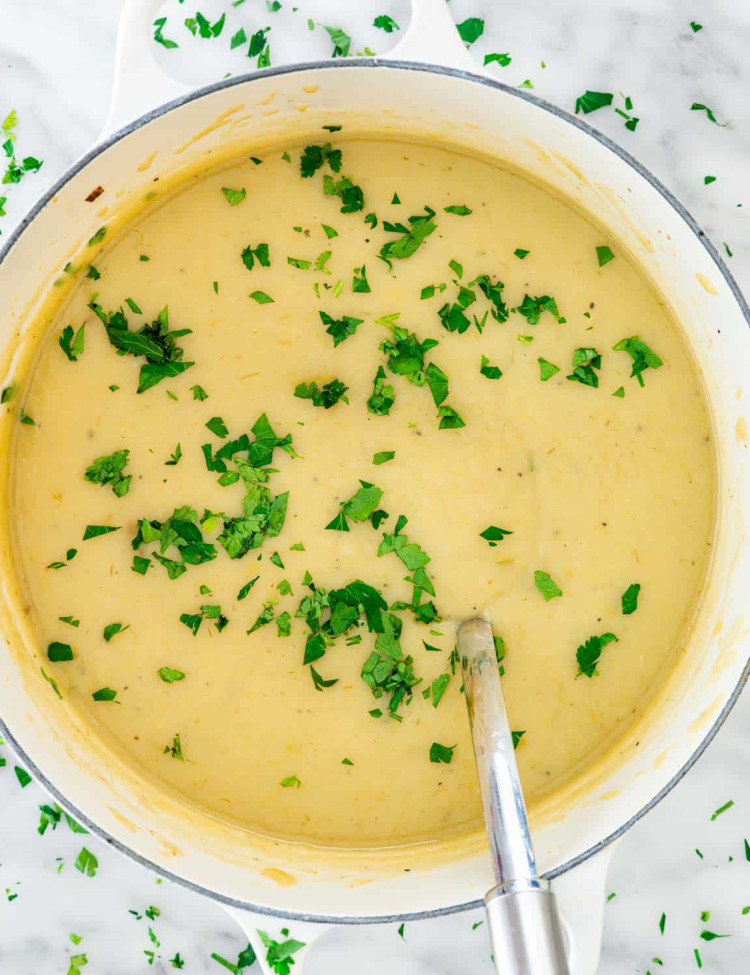
Potato Leek Soup

Tomato Bisque
Summer Fruit Salad with Lemon Dressing

How To Store Leftovers
Refrigerate leftovers within two hours of it coming out of the oven. It keeps for 3 to 4 days. Freeze for up to 3 months, wrap individual slices tightly.
How To Reheat
The best way to reheat quiche is to cover it with aluminum foil and bake it in an oven preheated at 325°F degrees for about 15 minutes.
Frequently Asked Questions
Can I use a store bought crust?
Yes. Follow the package instructions for pre-baking. Homemade is better, but store bought is fine.
Can I substitute the heavy cream?
Half-and-half will work if you need it. The custard will be slightly less rich and may not set quite as firmly. Don’t use milk, it won’t give you the right texture.
Why did my quiche come out rubbery?
It was overbaked. The custard went past the wobble stage. Next time, pull it earlier than you think you need to.
Can I add other ingredients?
You can, try spinach, mushrooms, leeks, smoked salmon all work. Once you add them, it’s not Quiche Lorraine anymore. That’s fine. Just name it something else.
What’s the difference between quiche and frittata?
Quiche has a pastry crust and a cream heavy custard. A frittata is crustless and made with eggs only, started on the stovetop and finished in the oven. Different dishes, both worth knowing.

More Brunch Recipes To Try:
- Quiche Florentine
- Sausage Potato Breakfast Casserole
- Shakshuka
- Cheesy Zucchini Quiche
- Mini Quiche
- Crustless Spinach Quiche
Before You Begin! If you make this, please leave a review and rating letting us know how you liked this recipe! This helps our business thrive & continue providing free recipes.
Quiche Lorraine
Video
Ingredients
- ½ recipe pie crust (or a prepared frozen pie crust)
- 8 strips bacon (chopped)
- 1 medium onion (thinly sliced)
- 1 cup gruyere cheese (shredded, or Swiss cheese)
- 4 large eggs
- 1 ½ cups heavy cream
- ¼ teaspoon nutmeg
- ¼ teaspoon salt (or to taste)
- ¼ teaspoon pepper (or to taste)
- ½ cup Parmesan cheese (freshly grated)
Before You Begin! If you make this, please leave a review and rating letting us know how you liked this recipe! This helps our business thrive & continue providing free recipes.
Instructions
Quiche Crust
- Prepare pie crust: If you're making your own pie crust, roll it out and place it in a deeper 9.5-inch quiche pan or a more shallow 11-inch quiche pan, pressing into the corners.
- Use a rolling pin to roll over the surface of the quiche pan, as seen in the pictures, to cut off the excess dough from the edges. Line the crust with parchment paper and fill it with pie weights or dry beans or rice.
- Blind bake the crust (pre-bake): Preheat the oven to 425°F. Bake for 12 to 15 minutes. Remove the pie weights and parchment paper. Reduce the oven heat to 375°F and bake the crust for an additional 5 minutes.
- If using store bought pastry, follow the instructions on the package.
Prepare filling
- Cook the bacon: While the crust is baking cook the bacon over medium-high heat until the bacon is cooked and crisp, or to your liking. Remove from the pan and drain on a plate lined with paper towels.
- Cook onions: Remove all but 1 tbsp of bacon drippings from the skillet, then add the onion and cook over medium-hight heat. Cook until translucent and starts to brown.
- Whisk the eggs, cream, nutmeg, gruyere cheese, salt and pepper in a bowl together.
Assemble and Bake
- Sprinkle the bacon over the inside of the baked crust, then top with the cooked onion. Carefully pour the egg mixture over the onions. Top with Parmesan cheese evenly.
- Bake: Transfer the quiche onto a baking sheet and bake for 35 to 40 minutes or until the top is golden. The center should be a bit jiggly but the rest should be set.
- Garnish with parsley or chives and serve.
Equipment
Notes
- Store bought pie crust works. Follow the package instructions for pre-baking. Homemade is noticeably better, but a good store bought crust is a legitimate weeknight decision.
- The wobble. Pull the quiche when the centre still moves slightly when you shake the pan. It finishes cooking as it cools. If you wait until it’s completely still, it’s already past its best.
- Make ahead. Bake it completely, let it cool, cover and refrigerate overnight. Reheat at 325°F loosely covered with foil for about 15 minutes. The texture holds well and some would argue it slices cleaner the next day.
- Store your quiche in an airtight container in the fridge for 3 to 4 days. Because it is a custard, quiche must be refrigerated within two hours of cooling.
- Freezing. Cool completely before freezing. Wrap individual slices tightly in plastic wrap then foil. Freeze for up to 3 months. Thaw overnight in the fridge and reheat at 325°F until warmed through. Don’t microwave it. The custard goes rubbery and you’ll be disappointed.
- The best way to reheat quiche is to cover it with aluminum foil and bake it in an oven preheated at 325 F degrees for about 15 minutes.
Nutrition Information
Notice: Nutrition is auto-calculated for your convenience. Where relevant, we recommend using your own nutrition calculations.